
This crucial final unit equips you to handle unexpected situations on the road, including vehicle breakdowns and accidents. Learn vital procedures to ensure your safety and the safety of others. Mastering these skills is essential for passing the Dutch driving theory test and becoming a responsible driver.
Browse all lessons that make up Emergencies, Breakdowns, and Accidents. Each lesson focuses on specific topics, learning objectives, and core concepts, helping you build essential knowledge and follow a clear, structured progression toward your study goals in the Netherlands.
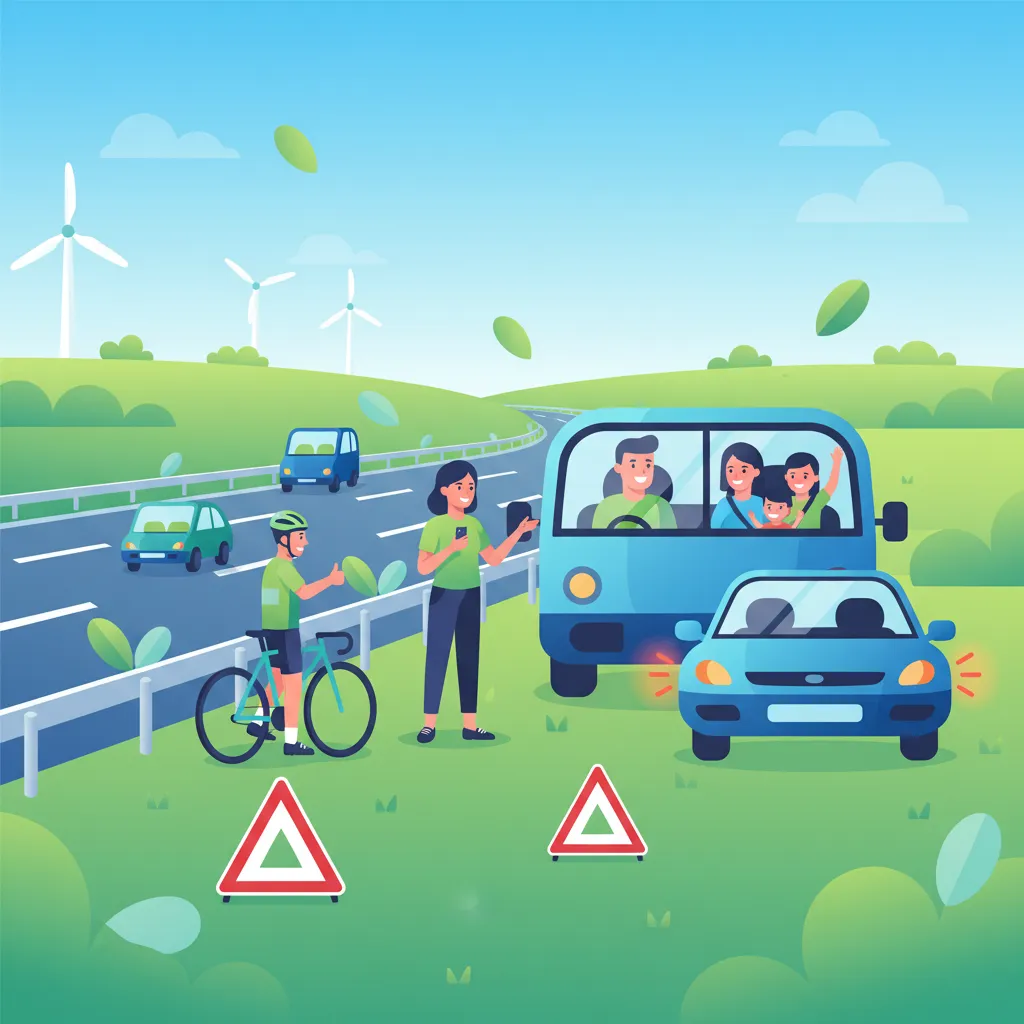
This lesson provides a clear action plan for when your car breaks down. You will learn to pull over to a safe location, preferably the hard shoulder on a motorway, and immediately activate your hazard warning lights. The curriculum explains the legal requirement to place a warning triangle a suitable distance behind the vehicle (if safe to do so) and the strong recommendation to wear a high-visibility jacket. Crucially, it instructs that all occupants should exit the vehicle on the safe side and wait behind the guardrail for assistance.
This lesson outlines the correct protocol to follow after a traffic accident. The first priority is to ensure the safety of everyone involved by securing the scene and checking for injuries. You will learn when it is mandatory to call the emergency services (112), such as when there are injuries or significant road blockage. The curriculum also explains the legal requirement to stop and exchange insurance and contact details with other parties involved. The use of the European Accident Statement form to record the details is also covered.
This lesson provides foundational knowledge in emergency response. While not a full first aid course, it covers the basic principles of assisting an injured person until professional help arrives, such as ensuring their airway is clear. You will learn exactly what information to provide when you call 112, including the precise location, the number of vehicles and people involved, and the nature of any injuries. This ensures that the correct emergency services can be dispatched as quickly as possible.
This lesson introduces the principles of eco-driving, known in the Netherlands as 'Het Nieuwe Rijden'. You will learn practical techniques to reduce fuel consumption and emissions, such as driving smoothly, anticipating traffic to avoid unnecessary braking and accelerating, shifting gears early, and maintaining correct tire pressure. The curriculum also covers the concept of environmental zones (milieuzones) in some cities, which restrict access for older, more polluting vehicles, promoting awareness of the environmental responsibilities of a modern driver.
Explore high-intent keywords and long-tail search topics learners use when researching Emergencies, Breakdowns, and Accidents. These terms reflect how people search for reliable study materials, structured explanations, and unit-level theory preparation support in the Netherlands.
Find clear answers to the most common questions learners ask about Emergencies, Breakdowns, and Accidents. Understand how the unit is organized, what learning goals it supports, and how it contributes to your study progression with structured explanations and practical guidance tailored for learners in the Netherlands.
If your car breaks down on a Dutch motorway, your priority is safety. Activate your hazard warning lights immediately. If possible and safe, steer your vehicle onto the hard shoulder (vluchtstrook) as far to the right as possible. Switch off the engine, exit the vehicle carefully from the side away from traffic, and stand behind the safety barrier. Do not attempt repairs on the hard shoulder. Then, call roadside assistance or the emergency services if it's a dangerous situation.
When calling 112 (the European emergency number), stay calm and clearly state your location, including the road name, direction of travel, and nearest kilometer marker or exit number if possible. Describe the situation (e.g., breakdown, accident, fire), mention if there are any injuries, and provide your name and phone number. Answer all questions from the dispatcher; they will guide you on what to do next.
Even if you are not involved in an accident, if you come across one, you have a duty to help if possible and safe to do so. This includes securing the scene with your hazard lights and warning triangle, checking for injuries, and calling 112. Do not move injured people unless there is immediate danger. Exchange details with other involved parties if it's a minor incident, but wait for police if there are injuries or significant damage.
While a fully stocked first aid kit isn't explicitly mandatory for passing the theory test itself, it is highly recommended for safe driving in the Netherlands. Having one allows you to provide immediate assistance in minor emergencies or accidents. The theory test does cover the importance of being prepared and knowing how to react, including basic first aid principles and contacting emergency services.
Hazard warning lights (knipperlichten) are used to alert other road users that your vehicle is stopped or moving unusually slowly, often due to a breakdown or a hazardous situation. The warning triangle (gevarendriehoek) is used to provide a visual warning from a distance, particularly outside built-up areas and on motorways, to prevent secondary accidents. Proper use of both is crucial for signaling danger and protecting yourself and others.
If you are unsure or the situation appears dangerous, your primary responsibility is to ensure your own safety and the safety of others by not escalating the risk. Use your hazard lights, set up your warning triangle if safe to do so, and call 112 for professional assistance. Let the trained emergency services handle complex or dangerous situations.
All included lessons
Lessons in Emergencies, Breakdowns, and Accidents
See who benefits most from studying Emergencies, Breakdowns, and Accidents. This overview explains how the unit supports different learning needs, what level of knowledge is helpful before starting, and how it fits into the overall study path in the Netherlands.
This unit is vital for all learners preparing for the Dutch Category B driving theory test, especially those who want to be fully prepared for unforeseen events. It is particularly relevant for those who might be anxious about handling emergencies or accidents, providing clear, actionable steps.

See how Dutch Driving Theory B is structured, with key topics, learning objectives, and a step-by-step path for theory preparation in the Netherlands.
Explore all units and lessons included in this driving theory course.