
This lesson focuses on the critical role of vehicle lights, signals, and reflectors for safe driving and legal compliance in the Netherlands. Understanding how to ensure your vehicle's visibility and communication systems are functional is vital, not only for passing the CBR theory exam but also for preventing accidents on Dutch roads. Building on foundational knowledge of vehicle requirements, this section details the specific lights and audible signals that are mandatory and how to use them correctly under various conditions.

Driving safely and legally in the Netherlands requires a thorough understanding of your vehicle's lighting, signaling, and reflective systems. These components are crucial for ensuring your visibility to other road users, communicating your intentions clearly, and complying with Dutch traffic laws, primarily the Rijksverkeerswet (RVV) 1990 and its associated Technical Specifications for Road Vehicles (TSV 1990). This lesson provides a comprehensive guide to mastering these essential aspects of vehicle operation, vital for all drivers, especially those pursuing a driving license in the Netherlands (category B).
Proper illumination and signaling are fundamental pillars of road safety. They serve as the primary means by which a driver communicates their intentions to others and perceives potential hazards in their environment. The regulations governing these systems are rooted in principles of physics, human perception, and safety engineering, all aimed at minimizing collision risks. By ensuring your vehicle is clearly seen and understood, you contribute significantly to the safety of all road users.
Understanding the underlying principles behind vehicle lighting and signaling regulations helps drivers make informed decisions and maintain compliance.
All lighting devices and reflectors on a vehicle must be clean, unobstructed, and correctly oriented to ensure every part of the vehicle is visible under normal conditions. This prevents collisions by allowing other drivers to detect your vehicle's presence early.
Turn indicators (front and rear) and hazard warning lights must provide clear, unambiguous information about your vehicle's intended movements. This communicates actions to other road users, reducing uncertainty and increasing safety, particularly at higher speeds.
Every light, reflector, and horn usage is strictly governed by the RVV 1990 rules and TSV 1990 technical standards in the Netherlands. Adherence ensures uniformity across vehicles, simplifies enforcement, and supports insurance validity. Violations can lead to fines and other penalties.
All lights, reflectors, and the horn must be fully operational and free from defects. Ongoing visibility and communication depend on the mechanical integrity of these components. Faulty equipment compromises safety and can result in your vehicle being deemed unroadworthy.
Modern vehicles often feature systems that adjust headlight beam patterns based on speed, weather (fog, rain), and ambient light conditions. This adapts illumination to meet changing environmental demands, preventing glare for oncoming traffic while ensuring adequate visibility for the driver.
Headlights are the main forward-facing illumination devices, essential for driving at night, dusk, and in adverse weather. Mastering their correct use is critical for both your visibility and that of others.
Definition: Low beam headlights, also known as dipped beams, are the standard setting for illuminating the road ahead without blinding oncoming traffic. They cast a downward and forward light pattern.
Legal Conditions: Low beams must be switched on during the entire night, at dusk, dawn, and whenever visibility is less than 100 metres due to fog, heavy rain, or snow. They provide sufficient illumination for city driving and when other vehicles are present.
Common Misunderstanding: Some drivers mistakenly believe that if streetlights are on, headlights are not necessary. However, legal requirements mandate low beams during darkness or reduced visibility, regardless of external lighting.
Definition: High beam headlights, or full beams, provide a stronger, longer-range illumination than low beams. They are designed for maximum visibility on unlit rural roads.
Legal Conditions: High beams should only be used on roads that are not adequately lit and where there is no oncoming or closely following traffic. You must switch to low beams as soon as you detect an oncoming vehicle or are following another vehicle closely to prevent dazzling other drivers.
Common Misunderstanding: Using high beams on motorways (autosnelwegen) or well-lit roads is generally illegal and unsafe, as they can cause significant glare for other road users. Automated high-beam systems can sometimes fail to detect oncoming traffic if sensors are dirty or obscured, requiring manual intervention.
Definition: Daytime Running Lights (DRLs) are low-intensity lights that automatically turn on when the vehicle is started, designed to increase the vehicle's visibility to others during daylight hours.
Legal Conditions: DRLs are mandatory on new vehicles in the EU. While they enhance daytime visibility, they are not a substitute for low beam headlights in conditions of darkness or reduced visibility, as they do not illuminate the road ahead sufficiently and often do not activate taillights.
Definition: Front fog lamps are specialized low-angle lights mounted low on the vehicle's front bumper. Their low position helps them penetrate fog, heavy rain, or snow without reflecting glare back into the driver's eyes.
Legal Conditions: Front fog lamps may be used in fog, heavy rain, or snow when visibility is less than 100 metres. They can be used in conjunction with or instead of low beam headlights in these conditions.
The rear lighting system is equally vital for communicating your presence and intentions to following traffic.
Definition: Rear traffic lamps, commonly known as taillights, are red lights at the rear of the vehicle that illuminate when headlights or DRLs are active. They indicate the presence of your vehicle to traffic behind you.
Legal Conditions: Taillights must be operational, clean, and bright enough to be recognized at a minimum distance of 150 metres from an approaching vehicle.
Definition: Brake lights are intensified red lights at the rear that activate immediately when the brake pedal is depressed. They signal to following drivers that your vehicle is slowing down or stopping.
Legal Conditions: All brake lights must be fully functional. Some vehicles also feature adaptive brake lights that flash rapidly during emergency braking to provide an enhanced warning. Deliberately disabling brake lights is illegal and extremely dangerous.
Definition: Reverse lights are white lights located at the rear of the vehicle that automatically illuminate when the driver engages reverse gear. They signal to others that the vehicle intends to move backward and provide some illumination when reversing in the dark.
Legal Conditions: Reverse lights must be operational whenever the vehicle is in reverse gear.
Indicators are crucial for communicating your intended lateral movements, while hazard lights warn of potential dangers.
Definition: Turn indicators are amber lights located at the front, sides, and rear of the vehicle that flash to signal an intended turn or lane change.
Legal Conditions: Turn indicators must be engaged well in advance of a manoeuvre.
In the Netherlands, turn indicators must be used at least 150 metres before a desired manoeuvre when driving at speeds up to 80 km/h. When exiting a motorway (autosnelweg) and changing lanes, this distance extends to 250 metres. This ample warning time is crucial for other drivers to anticipate your actions, especially at higher speeds.
Common Misunderstanding: Drivers often fail to use indicators early enough or keep them on after completing a manoeuvre, which can confuse other road users and increase collision risk. Indicators should be turned off promptly once the manoeuvre is finished.
Definition: Hazard warning lights, or hazard lights, cause all four turn indicators to flash simultaneously. They are used to warn other road users of a dangerous situation or a stationary vehicle that poses a hazard.
Legal Conditions: Hazard warning lights should only be used as a safety warning when your vehicle is stationary and creating a danger (e.g., breakdown on the road) or when it is involved in a genuinely hazardous situation. They are not to be used for general parking or for manoeuvres.
Common Misunderstanding: Using hazard lights while driving slowly or for quick parking is prohibited as it misleads other drivers about your vehicle's status.
Reflectors are passive safety devices that enhance your vehicle's visibility by reflecting light from other sources, especially useful when your vehicle's active lights are off or in low light conditions.
Definition: Reflectors are non-illuminating devices designed to reflect light back towards its source, making a vehicle more visible in low light or darkness without consuming power.
Types:
Legal Conditions: Specific requirements exist for the type and placement of reflectors based on vehicle size.
For vehicles with a length of 3.5 metres or less, two roof reflectors must be installed, positioned 12 metres ahead and 12 metres behind the vehicle's centre. For vehicles with a length of 3.5 metres or more, side reflectors must be present along both sides, between 12 metres from the front and 12 metres from the rear. Reflectors must be clean and produce at least twice the brightness of a fully functioning headlight when illuminated.
Common Misunderstanding: Overlooking the maintenance or legal positioning of reflectors is a common error that can compromise side visibility, especially for larger vehicles.
The horn is an audible warning device, strictly reserved for situations of imminent danger.
Definition: The horn is an acoustic signaling device used to alert other road users of immediate danger or to prevent an accident.
Legal Conditions: The horn must only be used in situations of imminent danger. This includes warning oncoming traffic, alerting a vehicle obstructing a lane, or signaling a pedestrian crossing illegally into your path. It is not permitted to use the horn on motorways when your vehicle is moving at less than 120 km/h, unless to avert immediate danger.
Common Misunderstanding: Using the horn aggressively, out of impatience, or as a mere courtesy signal is illegal and can be interpreted as a safety hazard. Its use is strictly regulated to prevent noise pollution and confusion.
In conditions of severely reduced visibility, specialized fog lamps are essential.
Definition: Fog lamps are dedicated low-angle lights designed to cut through dense atmospheric conditions like fog, heavy rain, or snow, providing clearer visibility than standard headlights.
Types:
Legal Conditions:
Common Misunderstanding: Using high beams in fog is illegal and counterproductive, as the light reflects off the fog particles, creating glare and reducing visibility for the driver. Misusing rear fog lights when visibility is adequate can also lead to fines.
Adherence to the Rijksverkeerswet (RVV) 1990 and Technical Specifications for Road Vehicles (TSV 1990) is mandatory. The following summarizes key rules:
Ignoring or misusing vehicle lights and signals can lead to dangerous situations and legal consequences.
The correct use of lights and signals varies significantly depending on driving conditions.
The proper use and maintenance of vehicle lighting and signals are not isolated rules but are deeply integrated with other aspects of safe driving.
Let's explore some practical situations to reinforce correct behavior.
Setting: You are driving at 60 km/h on a single-lane rural road late at night. There's no street lighting, and no other vehicles are in sight. The weather is clear. Correct Behavior: Activate your high beam headlights for maximum forward visibility. Incorrect Behavior: Driving with only low beams, which would limit your ability to see potential hazards far ahead, or using no headlights at all.
Setting: You are approaching a long tunnel where dense fog has reduced visibility to less than 30 metres. It is daytime, but conditions are extremely poor. Correct Behavior: Turn on your low beam headlights and both front and rear fog lamps immediately upon entering the low-visibility conditions. Incorrect Behavior: Relying only on daytime running lights or only headlights, or forgetting to switch off rear fog lamps once visibility improves after exiting the tunnel.
Setting: You are driving at 100 km/h on a motorway (autosnelweg) and wish to change lanes to the left. Correct Behavior: Engage your left turn indicator at least 250 metres before initiating the lane change, check your mirrors and blind spot, then safely merge into the new lane. Incorrect Behavior: Activating the indicator just before or during the lane change, which doesn't give other drivers enough warning at high speeds.
Setting: You are driving in an urban area and notice a pedestrian walking towards a crosswalk ahead, but they are still on the sidewalk, clearly not intending to cross yet. Correct Behavior: Slow down and be prepared to stop if the pedestrian decides to cross. Do not use your horn. Incorrect Behavior: Honking at the pedestrian to "hurry up" or to assert your presence. The horn is only for imminent danger, not for courtesy or impatience.
Setting: Before starting your journey, you perform a routine check of your vehicle's lights and notice that one of your brake lights is not working. Correct Behavior: Do not drive the vehicle until the defective brake light bulb has been replaced or repaired. Driving with non-functional mandatory lights is illegal and unsafe. Incorrect Behavior: Deciding to drive anyway, rationalizing that two other brake lights are still working. This significantly compromises safety for following vehicles.
The regulations surrounding vehicle lighting and signals are meticulously crafted based on scientific principles to maximize road safety.
Mastering vehicle lighting, signals, and reflectors is an indispensable part of responsible driving in the Netherlands.
By integrating this knowledge into your daily driving practices, you will not only comply with Dutch traffic laws but also significantly enhance your safety and the safety of others on the road.
Lesson content overview
Explore all units and lessons included in this driving theory course.
Explore search topics learners often look for when studying Lights, Signals, and Reflectors. These topics reflect common questions about road rules, driving situations, safety guidance, and lesson level theory preparation for learners in the Netherlands.
Browse additional driving theory lessons that cover connected traffic rules, road signs, and common driving situations related to this topic. Improve your understanding of how different rules interact across everyday traffic scenarios.
Understand the specific articles of the Dutch Rijksverkeerswet (RVV 1990) and TSV 1990 that govern vehicle lights, signals, and reflectors. Learn your legal responsibilities as a driver for ensuring compliance and road safety.
This lesson details the functions of the various lights on a car and the legal requirements for their use. You will learn the difference between dipped beams (dimlicht), which are the standard headlights for night driving and poor visibility, and main beams (grootlicht), which can only be used when they won't dazzle other road users. The content also covers the use of sidelights (stadslicht) for parking and the automatic function of Daytime Running Lights (DRLs). Correct usage is vital for visibility and avoiding blinding other drivers.
This lesson covers the mandatory lighting and signaling equipment for A2 motorcycles under Dutch law, ensuring you remain visible and communicate your intentions correctly. You will learn the rules for using headlights, taillights, turn signals, and brake lights in various conditions, including daytime and adverse weather. The content also addresses the importance of maintaining this equipment and using hand signals as a valid secondary method of communication in traffic.

This lesson focuses on the use of specialized lights for specific situations. You will learn the strict conditions under which fog lights may be used: the rear fog light is only permitted when visibility from fog or snow is less than 50 meters, and not in rain. The lesson also explains the correct use of hazard warning lights, which are intended to warn other drivers of a stationary obstruction (like a breakdown or the tail end of a sudden traffic jam) or while being towed.
Effective communication with other road users is vital for safety. This lesson details the legal requirements and proper use of your vehicle's signaling equipment, including headlights, brake lights, and turn signals (indicators). It also explains the specific situations in which using the horn is permitted to avert danger. Finally, it covers the mandatory placement and type of reflectors that ensure your vehicle remains visible to others, especially in low-light conditions.
Your vehicle's lights and horn are your primary tools for seeing, being seen, and communicating warnings. This lesson guides you through a simple but vital check of all electrical components before you ride. You will learn how to verify the function of your headlight (high and low beam), taillight, brake light (using both front and rear brake levers), and turn signals. It also covers checking the horn's operation and ensuring all mandatory reflectors are clean and intact.

Riding at night presents two main challenges: seeing the road and being seen by others. This lesson covers the legal requirements for your vehicle's lighting system and how to use it effectively, including when to use high beams. It also emphasizes strategies to increase your own conspicuity, such as wearing bright or reflective clothing. You will learn how darkness affects your perception of speed and distance and how to adapt your riding to compensate for these limitations.

This lesson details the systematic procedure for checking the functionality of all lights and indicators before a ride. This simple but critical safety check includes verifying the operation of the high and low beam headlight, the taillight, the brake light (using both front and rear brake activators), and all four turn signals. Ensuring all lights are working is a legal requirement and fundamental for visibility and communicating intentions to other road users.
This lesson provides a comprehensive overview of all light and audible signals mandated by Dutch traffic law, detailing when and how each must be used for optimal visibility and communication. It covers the correct use of headlights, turn signals, and hazard lights, as well as the legally appropriate situations for using the horn to alert other road users. The curriculum clarifies legal requirements for lighting equipment and the potential penalties for misuse, ensuring riders can signal their intentions clearly and legally.
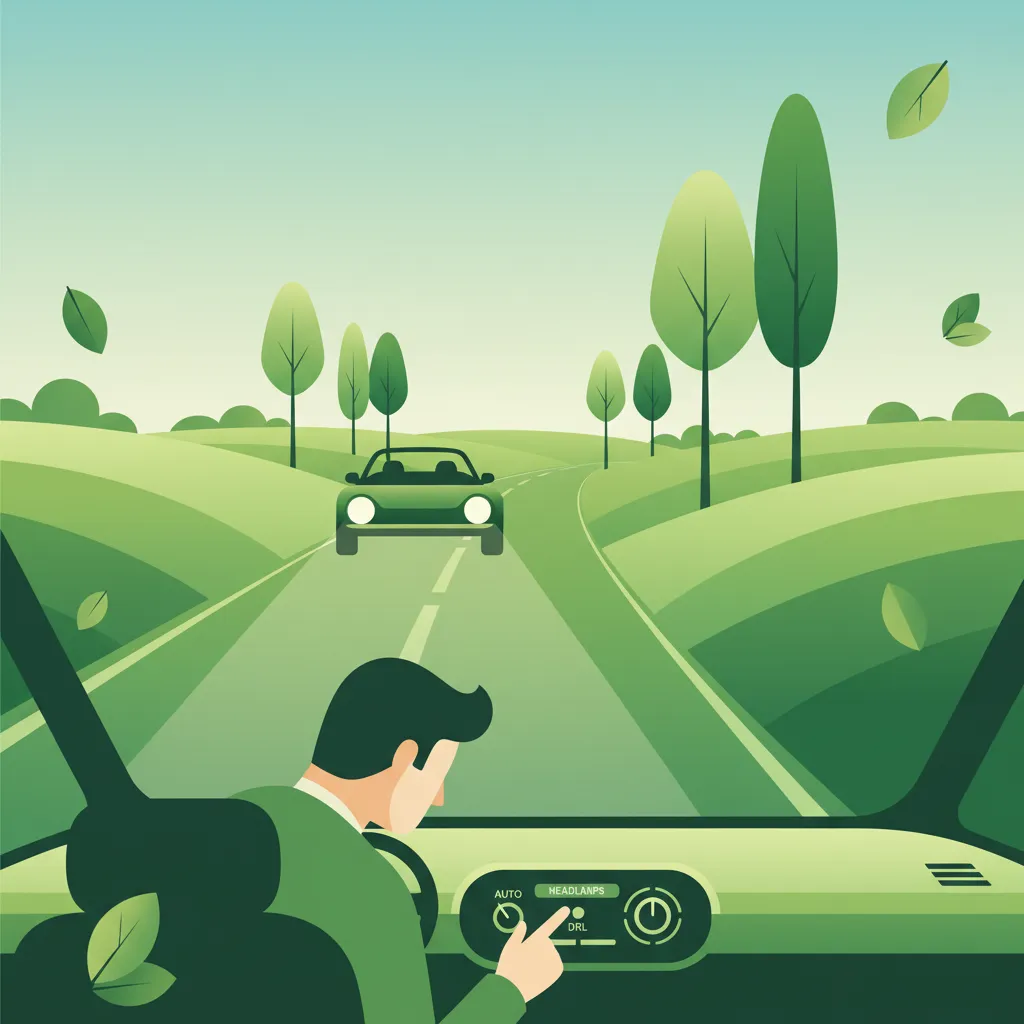
This lesson focuses on the dual challenge of visibility: seeing the road ahead and ensuring other drivers see you. It covers the legal requirements and tactical use of headlights ('koplampen'), including when to use high and low beams, and the importance of daytime running lights. Additionally, it explores strategies for enhancing personal conspicuity through high-visibility and reflective clothing, and using lane positioning to stand out in traffic and avoid blind spots.
Explore practical driving scenarios in the Netherlands, focusing on the correct application of headlights, fog lamps, turn signals, and hazard lights in various conditions like fog, night driving, and motorways. Understand driver communication and visibility.
This lesson focuses on the use of specialized lights for specific situations. You will learn the strict conditions under which fog lights may be used: the rear fog light is only permitted when visibility from fog or snow is less than 50 meters, and not in rain. The lesson also explains the correct use of hazard warning lights, which are intended to warn other drivers of a stationary obstruction (like a breakdown or the tail end of a sudden traffic jam) or while being towed.
This lesson details the functions of the various lights on a car and the legal requirements for their use. You will learn the difference between dipped beams (dimlicht), which are the standard headlights for night driving and poor visibility, and main beams (grootlicht), which can only be used when they won't dazzle other road users. The content also covers the use of sidelights (stadslicht) for parking and the automatic function of Daytime Running Lights (DRLs). Correct usage is vital for visibility and avoiding blinding other drivers.
Effective communication with other road users is vital for safety. This lesson details the legal requirements and proper use of your vehicle's signaling equipment, including headlights, brake lights, and turn signals (indicators). It also explains the specific situations in which using the horn is permitted to avert danger. Finally, it covers the mandatory placement and type of reflectors that ensure your vehicle remains visible to others, especially in low-light conditions.
This lesson provides a comprehensive overview of all light and audible signals mandated by Dutch traffic law, detailing when and how each must be used for optimal visibility and communication. It covers the correct use of headlights, turn signals, and hazard lights, as well as the legally appropriate situations for using the horn to alert other road users. The curriculum clarifies legal requirements for lighting equipment and the potential penalties for misuse, ensuring riders can signal their intentions clearly and legally.
This lesson covers the mandatory lighting and signaling equipment for A2 motorcycles under Dutch law, ensuring you remain visible and communicate your intentions correctly. You will learn the rules for using headlights, taillights, turn signals, and brake lights in various conditions, including daytime and adverse weather. The content also addresses the importance of maintaining this equipment and using hand signals as a valid secondary method of communication in traffic.
This lesson addresses the dual challenge of poor visibility: being able to see the road ahead and ensuring other road users can see you. It covers techniques for riding in fog and heavy rain, such as using appropriate lights and reducing speed to match sight distance. The lesson also discusses practical issues like helmet visor fogging and the importance of wearing high-visibility or reflective clothing to enhance conspicuity in low-light conditions.
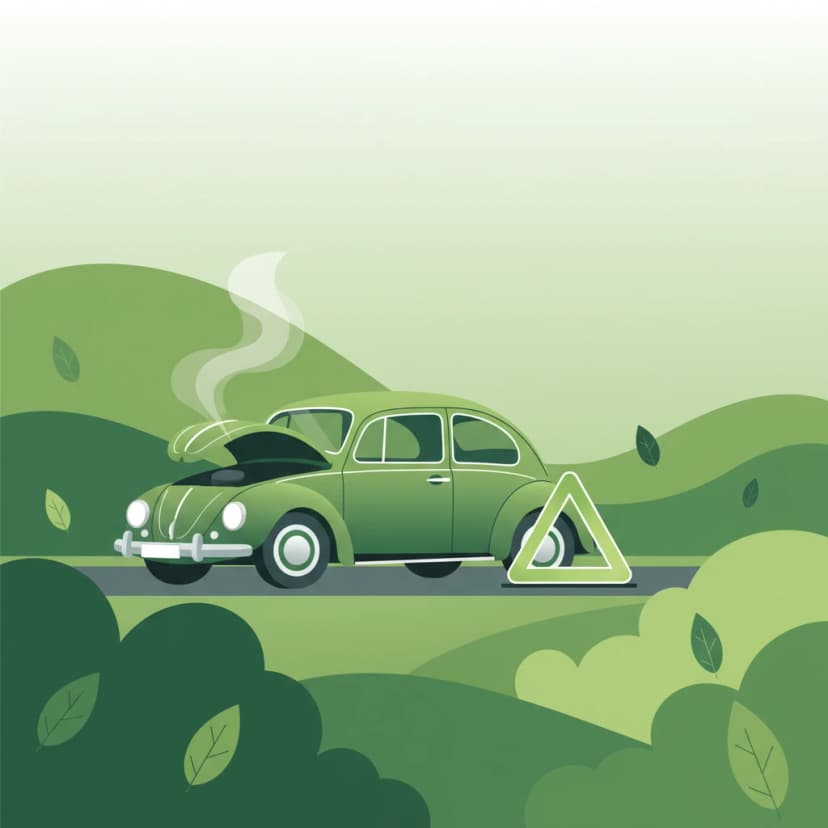
This lesson provides a clear action plan for when your car breaks down. You will learn to pull over to a safe location, preferably the hard shoulder on a motorway, and immediately activate your hazard warning lights. The curriculum explains the legal requirement to place a warning triangle a suitable distance behind the vehicle (if safe to do so) and the strong recommendation to wear a high-visibility jacket. Crucially, it instructs that all occupants should exit the vehicle on the safe side and wait behind the guardrail for assistance.
This lesson focuses on the dual challenge of visibility: seeing the road ahead and ensuring other drivers see you. It covers the legal requirements and tactical use of headlights ('koplampen'), including when to use high and low beams, and the importance of daytime running lights. Additionally, it explores strategies for enhancing personal conspicuity through high-visibility and reflective clothing, and using lane positioning to stand out in traffic and avoid blind spots.
Your vehicle's lights and horn are your primary tools for seeing, being seen, and communicating warnings. This lesson guides you through a simple but vital check of all electrical components before you ride. You will learn how to verify the function of your headlight (high and low beam), taillight, brake light (using both front and rear brake levers), and turn signals. It also covers checking the horn's operation and ensuring all mandatory reflectors are clean and intact.
This lesson covers the universal Dutch road rules with a specific focus on their application to light motorcycles. It details the various speed limits for different road types, from urban areas to motorways, and explains the correct procedures for overtaking and lane positioning. The legal aspects of lane filtering in congestion are also examined, alongside mandatory equipment use like daytime running lights, to ensure riders can integrate safely and legally into traffic flow.
Find clear answers to common questions learners have about Lights, Signals, and Reflectors. Learn how the lesson is structured, which driving theory objectives it supports, and how it fits into the overall learning path of units and curriculum progression in the Netherlands. These explanations help you understand key concepts, lesson flow, and exam focused study goals.
A 'spitsstrook' (rush-hour lane) light is typically a dynamic signal indicating when a special lane is open or closed. Hazard warning lights, activated by the driver with a button showing a red triangle, are used to signal an unexpected stop or dangerous situation to all other road users, regardless of lane usage.
Front and rear fog lights are mandatory only when visibility is severely reduced, typically less than 50 meters due to fog, heavy snow, or heavy rain. They must be switched off as soon as visibility improves to avoid dazzling other drivers, especially from the rear fog light.
The easiest way is to have someone observe your brake lights as you gently apply the brake pedal. Alternatively, you can reverse close to a wall or reflective surface and check the reflection of your brake lights. Ensure both are illuminated.
No, it is not legal. Dutch traffic law requires all lights and reflectors to be clean and functional. Dirty lights significantly reduce visibility, both for you and for others seeing you, and can lead to fines.
The horn is an emergency warning device. It should only be used to alert other road users of immediate danger. Prolonged or unnecessary use is prohibited and can be considered a nuisance.