
This lesson covers the critical aspects of vehicle roadworthiness and legal documentation required for driving in the Netherlands. We'll explain the APK periodic inspection, detailing what's checked and why it's vital, alongside the essential vehicle documents you must always carry. Understanding these requirements is key to passing your theory exam and driving legally and safely.

Driving safely and legally in the Netherlands requires more than just mastering traffic rules; it demands that your vehicle itself meets stringent safety and environmental standards. This lesson will thoroughly explain the APK (Algemene Periodieke Keuring), the mandatory periodic inspection, and the vital vehicle documents you must carry. Understanding these requirements is crucial for all drivers seeking a Dutch driving license (category B), ensuring legal compliance, road safety, and environmental responsibility.
The APK (Algemene Periodieke Keuring), translated as "General Periodic Inspection," is a legally mandated vehicle inspection in the Netherlands. Its primary purpose is to enhance road safety and protect the environment by ensuring that all vehicles on public roads meet minimum safety and emission standards.
The APK inspection serves a dual purpose:
For you as a driver, having a valid APK means your vehicle has passed a comprehensive check, confirming its fitness for the road and adherence to environmental regulations. Failure to maintain a valid APK can lead to significant fines and legal complications.
The frequency of the APK inspection depends on the type, age, and fuel type of your vehicle.
It is the owner's responsibility to ensure the APK is renewed on time. You will typically receive a reminder from the RDW (Rijksdienst voor het Wegverkeer), the Dutch vehicle registration authority, but ultimately, the responsibility rests with you. Driving a vehicle with an expired APK is illegal.
Driving a vehicle with an expired APK is strictly prohibited and can result in substantial fines. Your vehicle's registration can also be suspended, preventing you from using it on public roads until a valid APK is obtained.
The APK is a thorough inspection that covers various aspects of your vehicle, ensuring its safety, functionality, and environmental compliance. Key components checked include:
The RDW is the Dutch government agency responsible for vehicle registration, licensing, and managing inspection data in the Netherlands. They track APK statuses and send renewal notifications.
During the APK, emission tests are a critical component, especially for petrol and diesel vehicles. These tests measure the levels of pollutants like carbon monoxide (CO), nitrogen oxides (NOx), and hydrocarbons emitted by your vehicle's exhaust.
The Netherlands, like other EU member states, adheres to Euro Standards, which are a series of progressively stricter emission limits for new vehicles.
These standards encourage the use of cleaner vehicles and proper maintenance of emission control systems, contributing to better air quality.
Regular vehicle maintenance, such as timely oil changes, spark plug replacements, and checking air filters, can significantly help your vehicle pass the emission test during the APK.
In addition to ensuring your vehicle has a valid APK, you are legally required to carry specific documents whenever you drive. These documents provide proof of ownership, registration, and insurance, which are crucial for legal compliance and in the event of a traffic stop or an accident.
The kentekenbewijs is the official vehicle registration certificate in the Netherlands. It serves as proof of ownership and provides essential information about your vehicle, including its unique registration number (kenteken), technical specifications, and the registered owner's details.
Losing or damaging your kentekenbewijs requires immediate action. You must apply for a replacement through the RDW, as driving without it is illegal and can lead to fines.
In the Netherlands, it is mandatory to have at least third-party liability insurance (WA-verzekering) for any vehicle you drive on public roads. The verzekeringsbewijs is your legal proof that this insurance coverage is active and valid.
While not a separate document in the same sense as the kentekenbewijs or verzekeringsbewijs, proof of a valid APK is essential. When your vehicle passes inspection, the RDW updates its records digitally, and you typically receive an inspection report.
Adhering to the rules regarding APK inspections and vehicle documents is not merely a recommendation; it is a legal obligation with clear consequences for non-compliance.
Rule: Vehicles less than four years old (petrol/hybrid) must renew APK every two years, then annually after eight years. Diesel vehicles require their first APK after three years, then annually. Rationale: This ensures consistent safety and environmental compliance throughout a vehicle's lifespan, preventing deterioration that could compromise road safety. Consequences of Violation:
Rule: Drivers must always carry the valid vehicle registration certificate (kentekenbewijs), proof of insurance (verzekeringsbewijs), and current APK inspection report in the vehicle and present them upon demand by law enforcement. Rationale: Immediate verification by police ensures that the vehicle is legally registered, insured, and has passed safety checks, reinforcing accountability on the roads. Consequences of Violation:
Rule: Vehicles older than four years (petrol/hybrid) or three years (diesel) must undergo emission testing during their APK. This applies to all diesel and petrol vehicles, but not to pure electric vehicles. Rationale: This measure is vital for reducing air pollution and ensuring vehicles comply with environmental protection standards set by the EU (Euro Standards). Consequences of Violation:
Rule: Your vehicle must maintain continuous, valid insurance coverage at all times, specifically third-party liability insurance (WA-verzekering). Rationale: This ensures that all road users are protected from financial hardship in case of an accident caused by an insured driver, upholding the principle of collective responsibility. Consequences of Violation:
The RDW plays a central role in managing vehicle data and ensuring compliance. They send out reminders for upcoming APK inspections and process document replacements.
Maintaining compliance with APK and document requirements is straightforward with a few proactive steps:
Even experienced drivers can sometimes fall prey to common oversights regarding vehicle requirements. Being aware of these can help you avoid penalties.
The integrity of your vehicle, as ensured by APK and proper documentation, directly impacts your safety and that of others in various driving situations.
The APK (Algemene Periodieke Keuring) and maintaining valid vehicle documents are cornerstones of legal and safe driving in the Netherlands.
By understanding and adhering to these requirements, you contribute to a safer, cleaner, and more legally compliant road environment for everyone.
Lesson content overview
Explore all units and lessons included in this driving theory course.
Explore search topics learners often look for when studying APK Inspection and Vehicle Documents. These topics reflect common questions about road rules, driving situations, safety guidance, and lesson level theory preparation for learners in the Netherlands.
Browse additional driving theory lessons that cover connected traffic rules, road signs, and common driving situations related to this topic. Improve your understanding of how different rules interact across everyday traffic scenarios.
Understand the mandatory APK inspection for road safety and emissions, along with essential vehicle documents like the registration certificate and proof of insurance. Essential for legal driving compliance in the Netherlands.
This lesson provides a definitive list of the documents a motorcyclist must carry at all times when riding in the Netherlands. It specifies the requirement for a valid driving license ('rijbewijs') for the correct category, the vehicle registration card ('kentekenbewijs'), and proof of valid third-party liability insurance ('verzekeringsbewijs'). The content clarifies that failure to produce these documents during a police check can result in significant fines and legal complications.

This lesson serves as a critical reinforcement of the legal requirement to carry specific documents ('verkeersdocumenten') while riding. It explicitly lists the mandatory items—driving license, vehicle registration, and proof of insurance—and explains the legal consequences of failing to produce them on demand during a police stop. The content stresses that having these documents readily accessible is a basic and non-negotiable aspect of legal motorcycling in the Netherlands.

This lesson covers the full range of lights and signals required on a vehicle for visibility and communication. You will learn about the mandatory requirements for headlights, taillights, brake lights, indicators, and reflectors. The curriculum emphasizes the driver's legal responsibility to ensure all lights are clean and functional before every journey. The correct use and function of the horn as an audible warning device in case of imminent danger are also explained.

Holding a license and owning a vehicle comes with continuous legal responsibilities. This lesson reminds you of the importance of renewing your driving license before it expires and ensuring your vehicle's insurance policy remains active. It also covers your duty to inform the relevant authorities (like the RDW) of any changes, such as a change of address. Fulfilling these administrative obligations is essential to remaining a legal and responsible road user in the Netherlands.
This lesson prepares riders for the possibility of a routine police check ('verkeerscontrole'). It explains what officers typically inspect, which includes the required documentation, the roadworthiness of the motorcycle (e.g., tire tread depth, exhaust legality), and the rider's sobriety. The curriculum provides guidance on how to interact calmly and cooperatively with law enforcement, ensuring the stop proceeds smoothly and efficiently while being aware of one's basic rights.
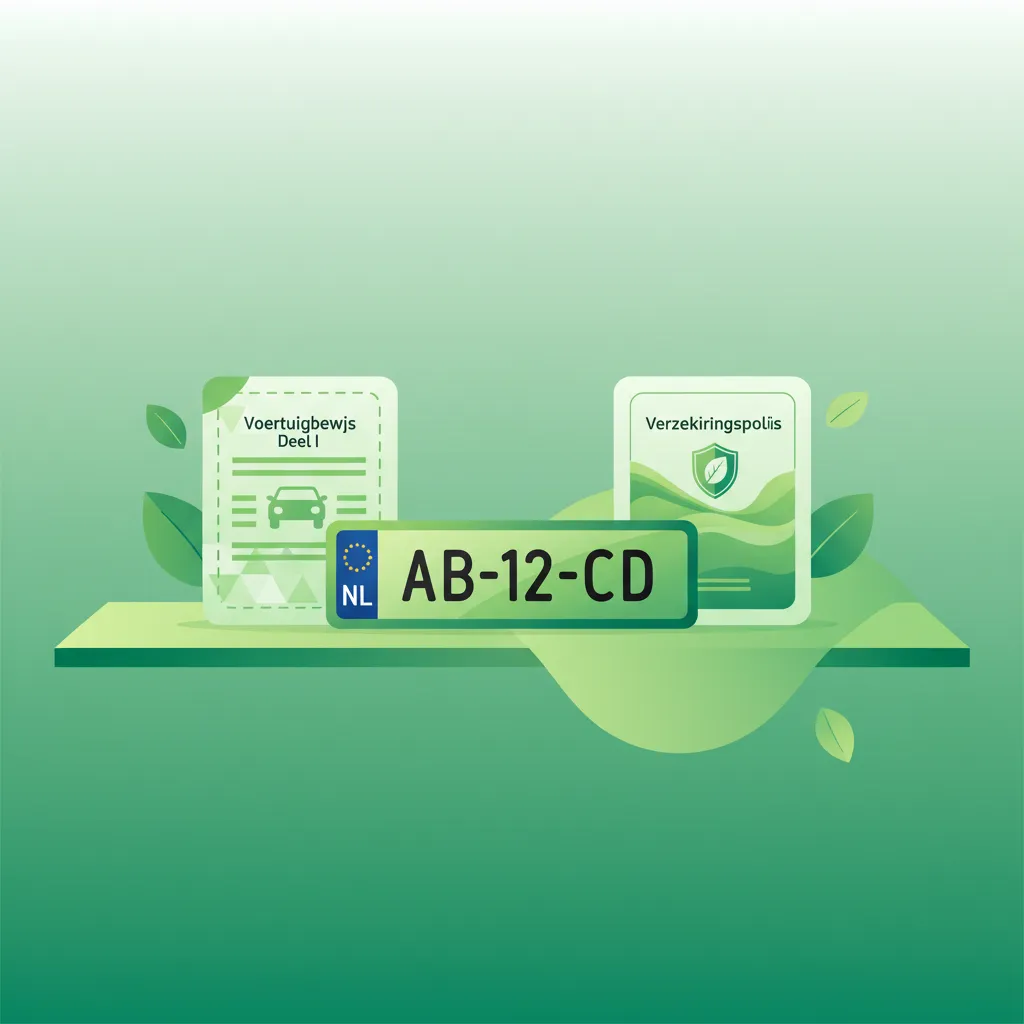
Explore the essential administrative requirements for any Category AM vehicle owner. This lesson covers the mandatory vehicle registration process, the distinction between yellow plates for bromfietsen and blue plates for snorfietsen, and the legal obligation for third-party liability insurance (WA-verzekering). You will learn what documentation is required, the consequences of non-compliance, and how these elements are verified during traffic enforcement, ensuring your vehicle is always road-legal.
This lesson explains the legal framework for the mandatory periodic technical inspection (APK) as it applies to motorcycles in the Netherlands, although noting its specific applicability rules. It outlines the key safety and environmental components that are scrutinized during the inspection, such as brakes, tires, lighting, and exhaust emissions. Understanding these criteria helps riders maintain their vehicle in a constant state of roadworthiness and prepare for the formal inspection when required.
Learn how regular vehicle maintenance, passing the APK inspection, and carrying the correct documents ensure your car is safe and legally compliant on Dutch roads. Understand the importance for traffic safety.
This lesson covers the full range of lights and signals required on a vehicle for visibility and communication. You will learn about the mandatory requirements for headlights, taillights, brake lights, indicators, and reflectors. The curriculum emphasizes the driver's legal responsibility to ensure all lights are clean and functional before every journey. The correct use and function of the horn as an audible warning device in case of imminent danger are also explained.
This lesson focuses on the three most critical safety systems of a car. You will learn the legal minimum tire tread depth (1.6 mm) and the importance of maintaining correct tire pressure for safety and fuel efficiency. The content covers the basics of the braking system, including how to check brake fluid and recognize warning signs of worn brakes. Additionally, the lesson explains the function of the steering system and the importance of ensuring it operates smoothly and without issue.
This lesson explains the legal framework for the mandatory periodic technical inspection (APK) as it applies to motorcycles in the Netherlands, although noting its specific applicability rules. It outlines the key safety and environmental components that are scrutinized during the inspection, such as brakes, tires, lighting, and exhaust emissions. Understanding these criteria helps riders maintain their vehicle in a constant state of roadworthiness and prepare for the formal inspection when required.

This lesson equips you with the knowledge to understand your vehicle's instrument panel and perform simple but vital maintenance checks. You will learn the meaning of common dashboard warning lights, such as those for the engine, oil pressure, battery, and brakes, and what action to take when they illuminate. The content provides a practical guide to checking and topping up essential fluids like engine oil, coolant, and windscreen washer fluid, which is a key part of responsible vehicle ownership.
This lesson prepares riders for the possibility of a routine police check ('verkeerscontrole'). It explains what officers typically inspect, which includes the required documentation, the roadworthiness of the motorcycle (e.g., tire tread depth, exhaust legality), and the rider's sobriety. The curriculum provides guidance on how to interact calmly and cooperatively with law enforcement, ensuring the stop proceeds smoothly and efficiently while being aware of one's basic rights.
Holding a license and owning a vehicle comes with continuous legal responsibilities. This lesson reminds you of the importance of renewing your driving license before it expires and ensuring your vehicle's insurance policy remains active. It also covers your duty to inform the relevant authorities (like the RDW) of any changes, such as a change of address. Fulfilling these administrative obligations is essential to remaining a legal and responsible road user in the Netherlands.
This lesson provides a definitive list of the documents a motorcyclist must carry at all times when riding in the Netherlands. It specifies the requirement for a valid driving license ('rijbewijs') for the correct category, the vehicle registration card ('kentekenbewijs'), and proof of valid third-party liability insurance ('verzekeringsbewijs'). The content clarifies that failure to produce these documents during a police check can result in significant fines and legal complications.
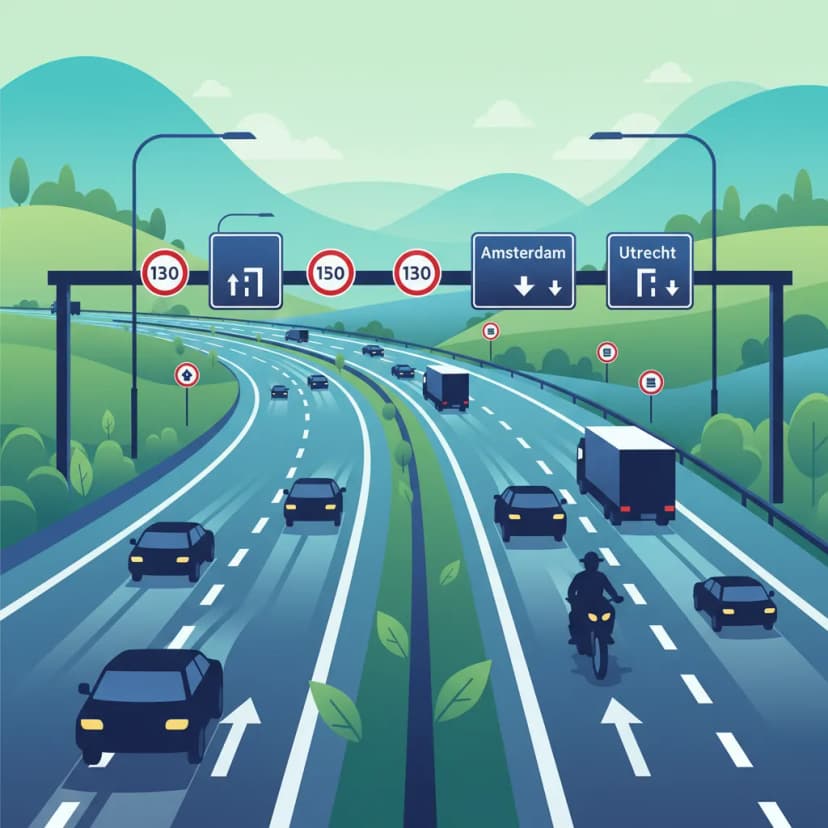
This lesson details the specific regulations for driving on Dutch motorways, identifiable by the G1 sign. You will learn the correct procedure for joining the flow of traffic using the acceleration lane and for leaving via the deceleration lane. The curriculum reinforces the 'keep right unless overtaking' rule for lane discipline. It also explains that stopping is strictly forbidden, and the hard shoulder (vluchtstrook) may only be used for genuine emergencies.
This lesson covers the procedures and safety considerations for driving in reverse and turning around. You will learn that reversing should only be done over short distances and when it does not endanger or obstruct other road users. The curriculum details techniques for turning in the road and identifies situations and locations where U-turns are prohibited. The importance of all-around observation, checking blind spots, and yielding to all other traffic is a central theme.
This lesson details the functions of the various lights on a car and the legal requirements for their use. You will learn the difference between dipped beams (dimlicht), which are the standard headlights for night driving and poor visibility, and main beams (grootlicht), which can only be used when they won't dazzle other road users. The content also covers the use of sidelights (stadslicht) for parking and the automatic function of Daytime Running Lights (DRLs). Correct usage is vital for visibility and avoiding blinding other drivers.
Find clear answers to common questions learners have about APK Inspection and Vehicle Documents. Learn how the lesson is structured, which driving theory objectives it supports, and how it fits into the overall learning path of units and curriculum progression in the Netherlands. These explanations help you understand key concepts, lesson flow, and exam focused study goals.
The APK inspection covers critical safety and environmental aspects of your vehicle. This includes checking the condition and functionality of your brakes, steering system, tires, lights, and emissions levels. The exact components checked depend on the vehicle's age and type, but the goal is always to ensure it meets minimum safety and environmental standards.
You must always carry your vehicle's registration certificate (kentekenbewijs) and proof of valid third-party liability insurance (WA-verzekering). For certain vehicles or drivers, additional documents like a valid driving licence and specific permits might be required, but the registration and insurance are fundamental for all passenger cars.
Driving without a valid APK or failing to carry the required documents (like the kentekenbewijs and insurance proof) can lead to substantial fines from law enforcement. In some cases, it may also result in further inspection requirements or even temporary impoundment of the vehicle. It is crucial to ensure your vehicle is always compliant.
The frequency of APK inspections depends on the type of fuel your car uses and its age. Generally, new petrol cars require their first APK after 4 years, then every 2 years until they are 8 years old, after which they need it annually. Diesel and older cars might have different schedules, often requiring inspection annually or every two years from an earlier stage.
The APK focuses on road safety and emissions, not routine maintenance like oil or fluid levels. While these are crucial for your car's health, they are not typically part of the mandatory APK check. You are responsible as the owner to ensure your vehicle is in good running order beyond the APK requirements.