
This lesson focuses on 'bijzondere verrichtingen' (special maneuvers), specifically reversing and turning around. Building on general road safety principles, it details the correct procedures for safely executing these actions. Understanding and applying these rules is crucial for navigating various traffic situations and passing the practical driving exam, as well as demonstrating responsible driving habits.

Driving safely requires not only moving forward but also adeptly maneuvering your vehicle backward and changing direction effectively. Reversing and turning around are fundamental skills for any driver, especially when navigating the diverse road networks of the Netherlands. These maneuvers, while common, are intrinsically risk-intensive and demand heightened awareness and adherence to specific regulations to prevent accidents, maintain traffic flow, and ensure the safety of all road users.
This lesson provides comprehensive guidance on the procedures, safety considerations, and legal constraints surrounding reversing, turning in the road, and executing U-turns. By understanding these principles, you will gain the confidence to perform these actions safely and responsibly, contributing to smoother and safer traffic environments.
Reversing and turning around involve significant changes in your vehicle's orientation and movement path. These actions can drastically compromise your visibility, alter right-of-way relationships, and impact the integrity of traffic flow. Mastery of these skills is crucial for safe navigation in urban, residential, and uncontrolled environments.
The underlying principles governing these maneuvers stem from several critical areas:
Reglement Verkeersregels en Verkeerstekens - RVV) aimed at minimizing accidents and ensuring orderly conduct.A critical aspect of safe reversing and turning is a thorough understanding of blind spots. These are areas around your vehicle that cannot be seen directly by the driver through the windshield or standard mirrors. Ignoring blind spots is a leading cause of collisions during maneuvers.
To counteract blind spots, drivers must employ a comprehensive observation routine:
When reversing or turning, never rely solely on your mirrors. Always perform a thorough head check to scan your blind spots for unseen vehicles, cyclists, or pedestrians.
Reversing, or driving backward, is a maneuver that demands precision, control, and constant vigilance. It is primarily used for positioning your vehicle in confined spaces, such as parking spots or driveways, or to reposition on a road over a short distance.
In the Netherlands, reversing should only be performed over short distances. While not always defined by an exact meterage in law, it is typically considered to be under 30 metres (RVV § 27). The primary legal constraint is that reversing must never endanger or obstruct other road users.
RVV § 27, often referred to as "Reversen zonder hinder" (reversing without hindrance).autosnelweg), expressways (autoweg), and often in front of traffic lights controlled by the Dutch Highway Police (Reglement). It is also prohibited to reverse onto a traffic light-controlled intersection if the light is green for cross-traffic.Turning in the road involves changing your vehicle's direction at junctions, intersections, or roundabouts while maintaining forward projection (keeping headlights forward) and adhering to traffic rules.
When approaching a turn, precise vehicle positioning and awareness of lane discipline are essential.
One of the most fundamental principles of Dutch traffic law is the right-hand priority rule (Rechts Voorrang). At uncontrolled intersections (those without traffic lights, priority signs, or road markings indicating otherwise), traffic approaching from the right has priority (RVV § 8).
Failure to yield to traffic from the right is a common cause of serious collisions in the Netherlands. Always be prepared to stop and yield unless signs explicitly grant you priority.
Yielding means granting the right-of-way to other road users, allowing them to proceed before you. This is mandatory (RVV § 7) in several situations:
A U-turn involves performing a 180° turn to travel back on the same road in the opposite direction. U-turns can be efficient for changing direction but are heavily regulated due to their potential to disrupt traffic flow and cause accidents.
U-turns are only permitted if no sign or regulation explicitly forbids them. They require extreme caution and a clear understanding of traffic conditions.
D2 sign (U-turn prohibited) explicitly forbids U-turns at that location.C6 sign (No right turn) also often implies that U-turns are forbidden at that intersection, as performing a U-turn might conflict with the intent of prohibiting a right turn.autosnelweg) and expressways (autoweg), U-turns are strictly forbidden due to high speeds.B6 Stop sign, you must come to a complete stop before the stop line, check all traffic, and yield to all other traffic before proceeding with the U-turn.On a one-way street, a U-turn may be permissible if there is no prohibitory signage and traffic conditions allow for it safely. However, this is usually only practical on wider residential streets or if there are specific turning areas. Always check for oncoming traffic on the street you are turning into (if it's a two-way street at that point) and for any restrictions.
RVV § 9).Yielding is a core principle in Dutch traffic law, designed to ensure orderly and safe interactions among all road users. Understanding when and to whom to yield is paramount during reversing and turning maneuvers.
The Netherlands has a high density of cyclists and pedestrians. When reversing or turning, these vulnerable road users demand your highest attention:
When turning, particularly right, remember the "doorway check" – look through your right side window to ensure no cyclist or pedestrian has entered your immediate path.
Proper vehicle positioning involves maintaining a safe lateral and longitudinal position relative to other vehicles and road boundaries. This is crucial for avoiding collisions, maintaining clearance during turns, and indicating your intentions clearly.
The safety of reversing and turning maneuvers can be significantly impacted by external conditions and the type of vehicle you are driving. Adaptive behavior is key.
Understanding common pitfalls can help you anticipate and prevent hazardous situations.
RVV § 27).D2 or C6 sign, leading to conflicts or collisions.RVV § 8).B6 Sign: Proceeding without a full stop, risking collision at uncontrolled intersections.Reversen) is a low-speed, short-distance maneuver. Always perform comprehensive blind spot checks and ensure your vehicle is visible (headlights forward) without dazzling others. (RVV § 27)RVV § 8). Be particularly attentive to cyclists and pedestrians.Keren) where permitted by signage (e.g., absence of D2 or C6 signs) and when traffic conditions allow. Always yield to oncoming traffic (RVV § 9).RVV § 15) to cover all blind spots before and during maneuvers.RVV § 7), especially at intersections and when encountering vulnerable road users. Always stop completely at a B6 sign.autosnelweg vs. residential), and the characteristics of your vehicle.Mastering these maneuvers is fundamental for safe and confident driving on Dutch roads. By consistently applying these principles, you will minimize risk and enhance your overall driving competence.
Lesson content overview
Explore all units and lessons included in this driving theory course.
Explore search topics learners often look for when studying Reversing and Turning Around. These topics reflect common questions about road rules, driving situations, safety guidance, and lesson level theory preparation for learners in the Netherlands.
Browse additional driving theory lessons that cover connected traffic rules, road signs, and common driving situations related to this topic. Improve your understanding of how different rules interact across everyday traffic scenarios.
Explore advanced considerations for reversing and turning maneuvers in Dutch driving theory. Learn about managing blind spots in complex situations, understanding advanced yielding rules, and common errors to avoid during special maneuvers like U-turns.
This lesson focuses on advanced low-speed control required for maneuvers like making a U-turn on a narrow road. It covers the correct procedure, which involves comprehensive observation (checking all around for traffic), signaling, and using a combination of steering input and controlled power to execute the turn smoothly. Mastering these skills is a requirement for the practical test and is useful in many real-world riding situations.

This lesson teaches the technique for swerving when stopping is not possible. You will learn that a swerve is initiated with a decisive counter-steer: press right to go right, press left to go left. The content emphasizes the importance of separating braking from swerving—ideally, you brake first, then release the brakes to execute the swerve, maintaining maximum available traction for steering.
This lesson provides step-by-step instructions for common parking maneuvers. You will learn the techniques for parallel parking along the roadside and for entering a parking bay, both forwards and backwards (reverse bay parking). The content emphasizes the importance of slow, controlled movements and continuous observation for pedestrians and other vehicles. Additionally, the lesson covers how to properly secure the vehicle after parking by using the handbrake and selecting the correct gear.
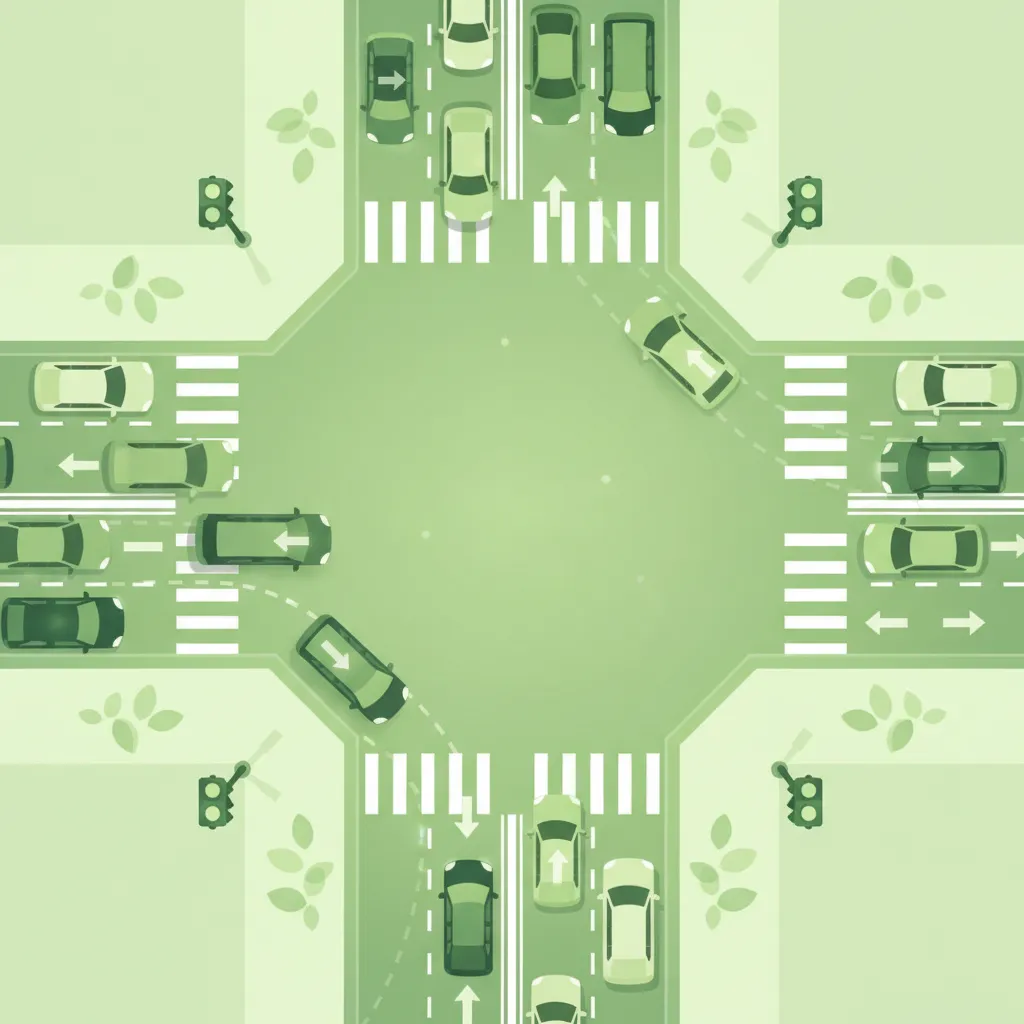
This lesson teaches the important skill of pre-sorting, which involves moving into the correct lane or position on the road well in advance of a turn. You will learn the standard procedure for turning right (keeping to the right) and turning left (moving towards the center of the road). The curriculum explains how to interpret road markings and signs with arrows that designate lanes for specific directions. Correct pre-sorting provides clear signals to other road users and is crucial for safety and traffic efficiency at junctions.
This lesson provides critical instruction on managing blind spots ('dode hoek') to prevent collisions, particularly during lane changes. It covers the correct setup and use of mirrors, but stresses their limitations and the absolute necessity of the 'lifesaver' shoulder check before any lateral movement. Furthermore, it teaches riders how to be aware of the large blind spots around cars and especially trucks, and how to position themselves on the road to remain visible to other drivers at all times.
This lesson provides a detailed guide on the rules and safety precautions for overtaking. You will learn that overtaking must almost always be done on the left and requires careful judgment of speed and distance. The content covers situations where overtaking is forbidden, such as before pedestrian crossings, at intersections, or where there are solid white lines. Key steps like checking mirrors, signaling intention, checking blind spots, and returning to the lane safely are explained thoroughly.
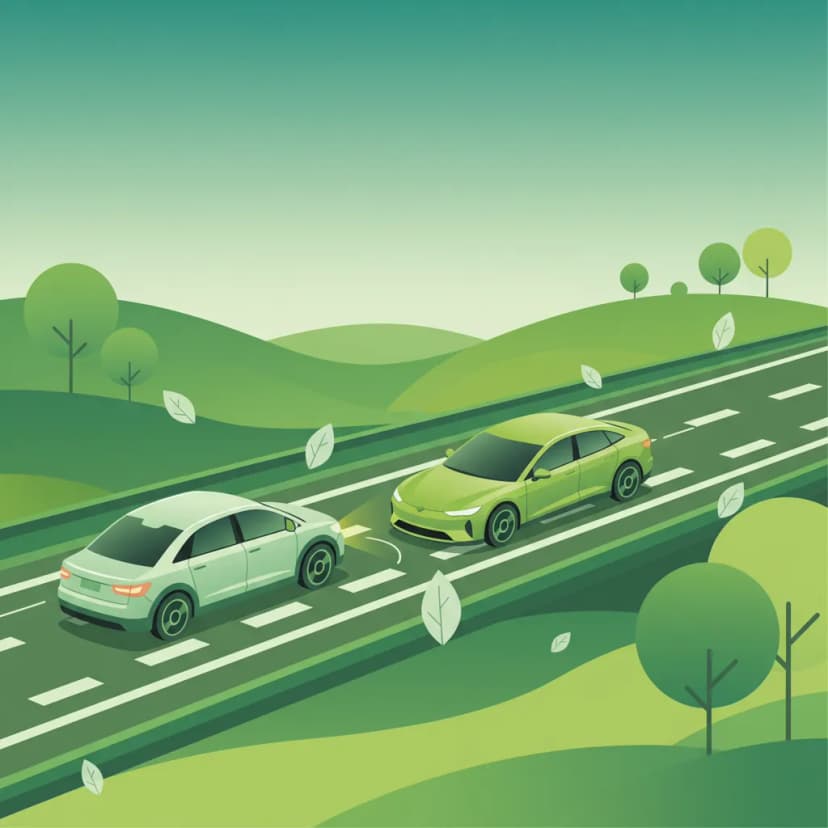
Safely merging and changing lanes requires a systematic approach known as 'mirror-signal-blind spot'. This lesson explains the correct procedure for entering a carriageway from an acceleration lane, ensuring you match the speed of the traffic flow and find a safe gap. It also covers the technique for changing lanes, emphasizing the critical importance of checking your blind spot with a shoulder check (dode hoek) before making any lateral movement to prevent collisions.
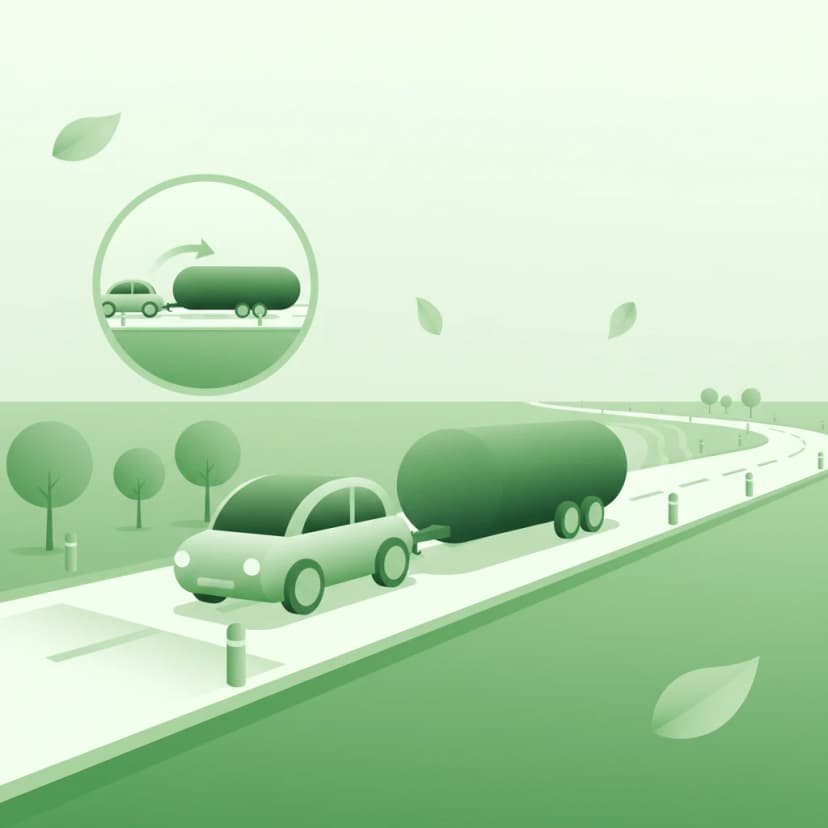
This lesson provides essential techniques for driving safely while towing. You will learn how the added weight increases your braking distance and how the extra length requires you to take wider turns. The curriculum addresses the challenging maneuver of reversing with a trailer and provides tips on how to control it. It also explains the phenomenon of 'snaking' or trailer sway, its causes (like crosswinds or improper loading), and how to correct it by gently reducing speed.
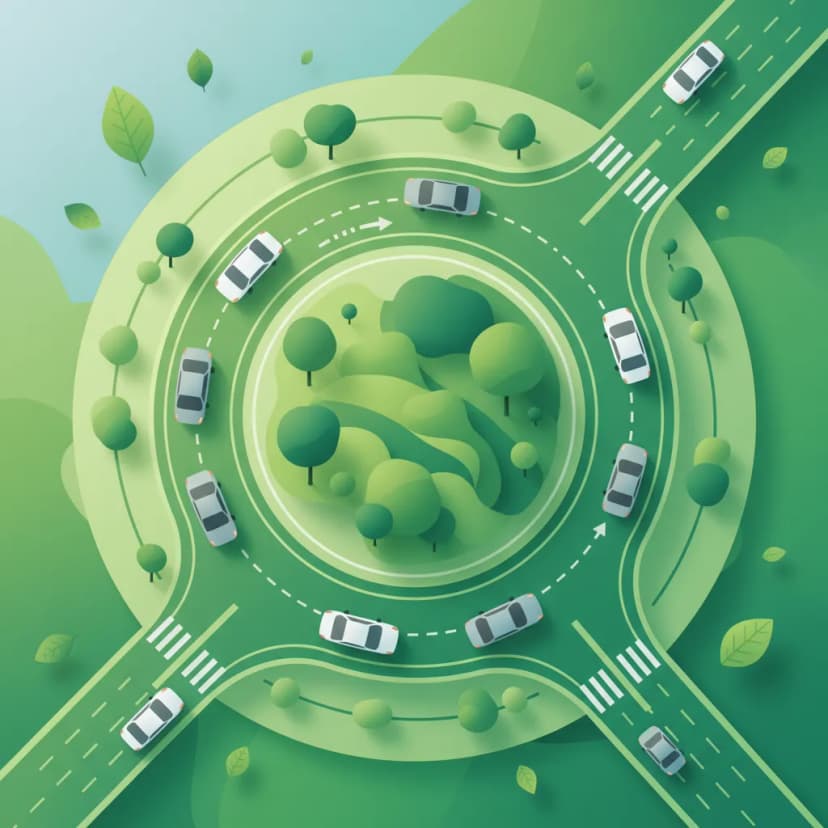
This lesson focuses on the rules and techniques for safely navigating Dutch roundabouts, a common feature of the road network. You will learn that traffic circulating on the roundabout typically has priority and that you must yield before entering. The content covers correct lane selection for your intended exit, proper use of turn signals, and maintaining awareness of cyclists who may have priority on adjacent paths.

This lesson explains how to apply the principle of counter-steering decisively in an emergency situation to perform a rapid swerve. It covers the importance of looking where you want to go, avoiding 'target fixation' on the obstacle, and executing a firm push on the appropriate handlebar to initiate a quick lean and change of direction. This skill is a critical component of collision avoidance for any motorcyclist.
Gain a deeper understanding of Dutch traffic rules for turning maneuvers, including U-turns and junction navigation. Focus on correct vehicle positioning, yielding to priority traffic, and ensuring safety for cyclists and pedestrians at intersections.
This lesson teaches the important skill of pre-sorting, which involves moving into the correct lane or position on the road well in advance of a turn. You will learn the standard procedure for turning right (keeping to the right) and turning left (moving towards the center of the road). The curriculum explains how to interpret road markings and signs with arrows that designate lanes for specific directions. Correct pre-sorting provides clear signals to other road users and is crucial for safety and traffic efficiency at junctions.
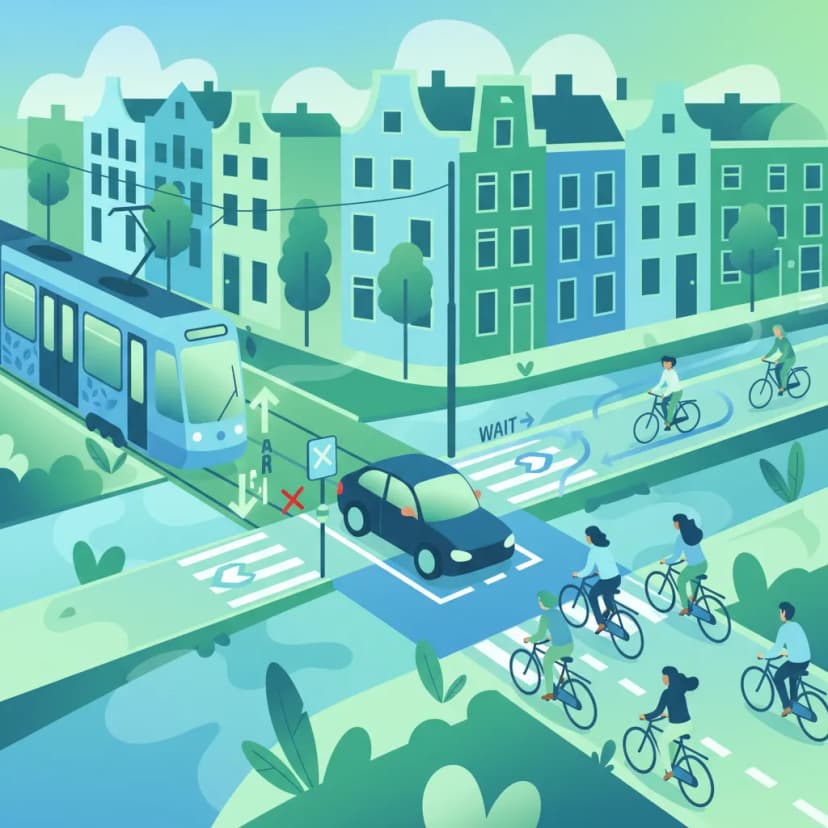
This lesson breaks down the rules of priority at intersections. You will learn to identify an 'equal' intersection where the default rule of giving way to traffic from the right applies. It also explains how priority is regulated by signs (such as the B6 Stop sign and B7 priority road sign) and road markings ('shark's teeth'). Understanding these hierarchies is crucial for making safe and correct decisions when crossing or turning at any junction.
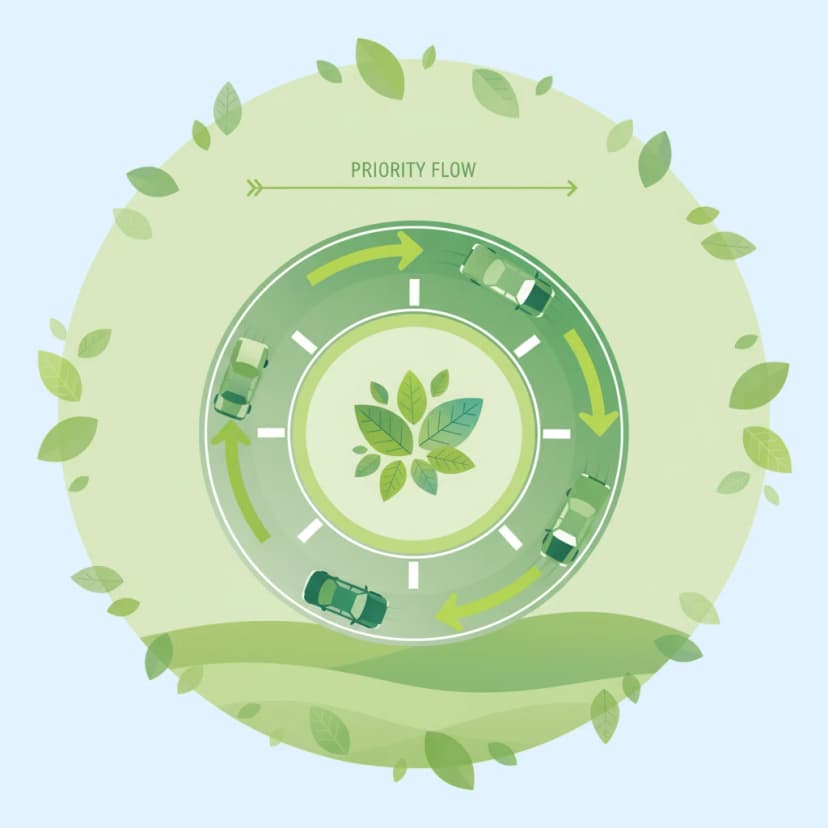
This lesson provides a detailed guide to navigating roundabouts (rotondes) in the Netherlands. You will learn the primary rule: drivers approaching a roundabout must yield to traffic already circulating on it, which is typically indicated by yield signs (B5) and shark teeth. The curriculum also covers the correct use of turn signals when entering and exiting, rules for multi-lane roundabouts, and special considerations for the priority of cyclists who may have a dedicated path around the roundabout. Correct roundabout etiquette is key to maintaining traffic flow and safety.
This lesson focuses on the rules and techniques for safely navigating Dutch roundabouts, a common feature of the road network. You will learn that traffic circulating on the roundabout typically has priority and that you must yield before entering. The content covers correct lane selection for your intended exit, proper use of turn signals, and maintaining awareness of cyclists who may have priority on adjacent paths.
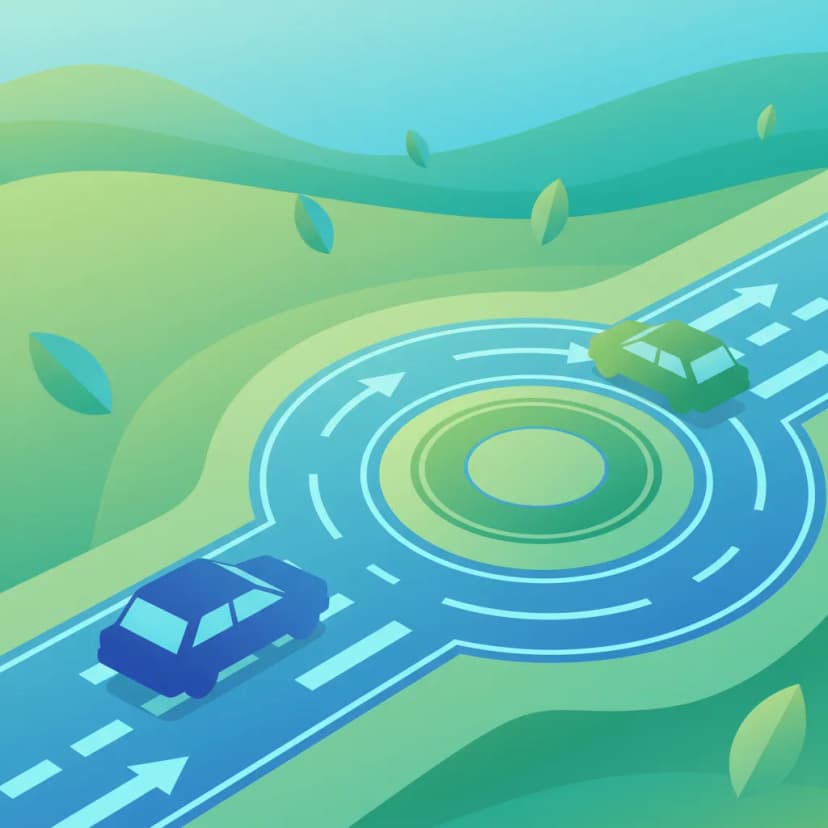
Roundabouts are a common feature of Dutch roads, and they have specific priority rules. This lesson teaches the standard rule of yielding to traffic already circulating on the roundabout before you enter. It also covers correct lane positioning, the importance of signaling your intention to exit, and the specific rules that often apply to cyclists who may have priority when crossing the exits. These skills ensure smooth and safe passage through both large and mini-roundabouts.
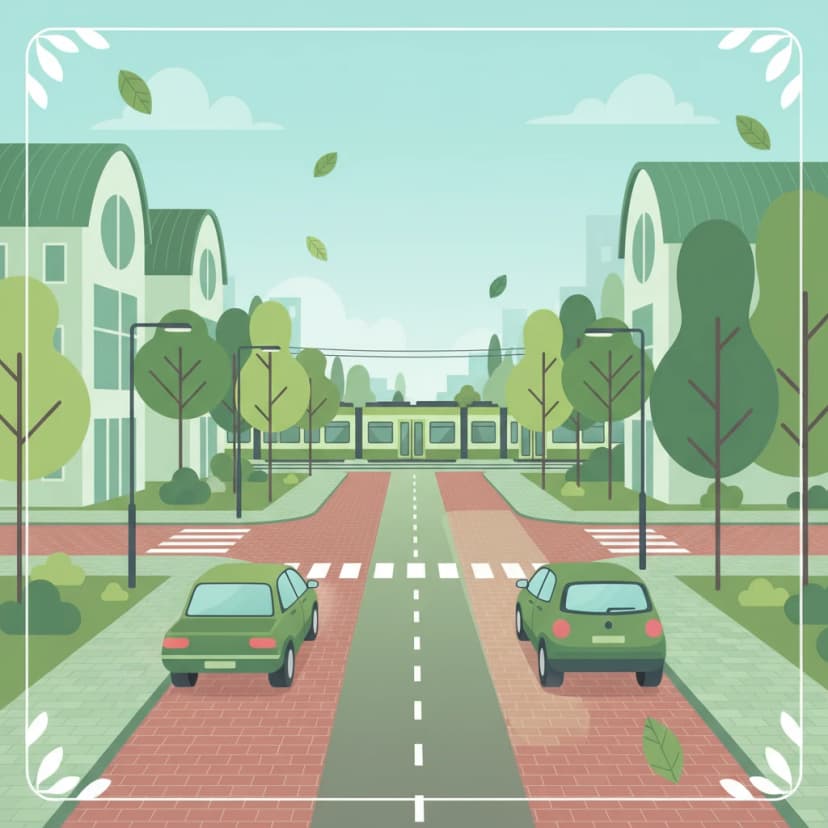
This lesson explains the foundational 'priority to the right' rule, which applies at intersections of equal roads where no other signs or markings dictate priority. You will learn to identify such junctions and understand your obligation to yield to traffic approaching from your right side. The lesson also clarifies important exceptions, such as when exiting a driveway, entering a paved road from an unpaved one, or when encountering a tram. Mastering this rule is crucial for navigating residential areas and city streets where signage is often minimal.
This lesson provides a detailed guide on the rules and safety precautions for overtaking. You will learn that overtaking must almost always be done on the left and requires careful judgment of speed and distance. The content covers situations where overtaking is forbidden, such as before pedestrian crossings, at intersections, or where there are solid white lines. Key steps like checking mirrors, signaling intention, checking blind spots, and returning to the lane safely are explained thoroughly.
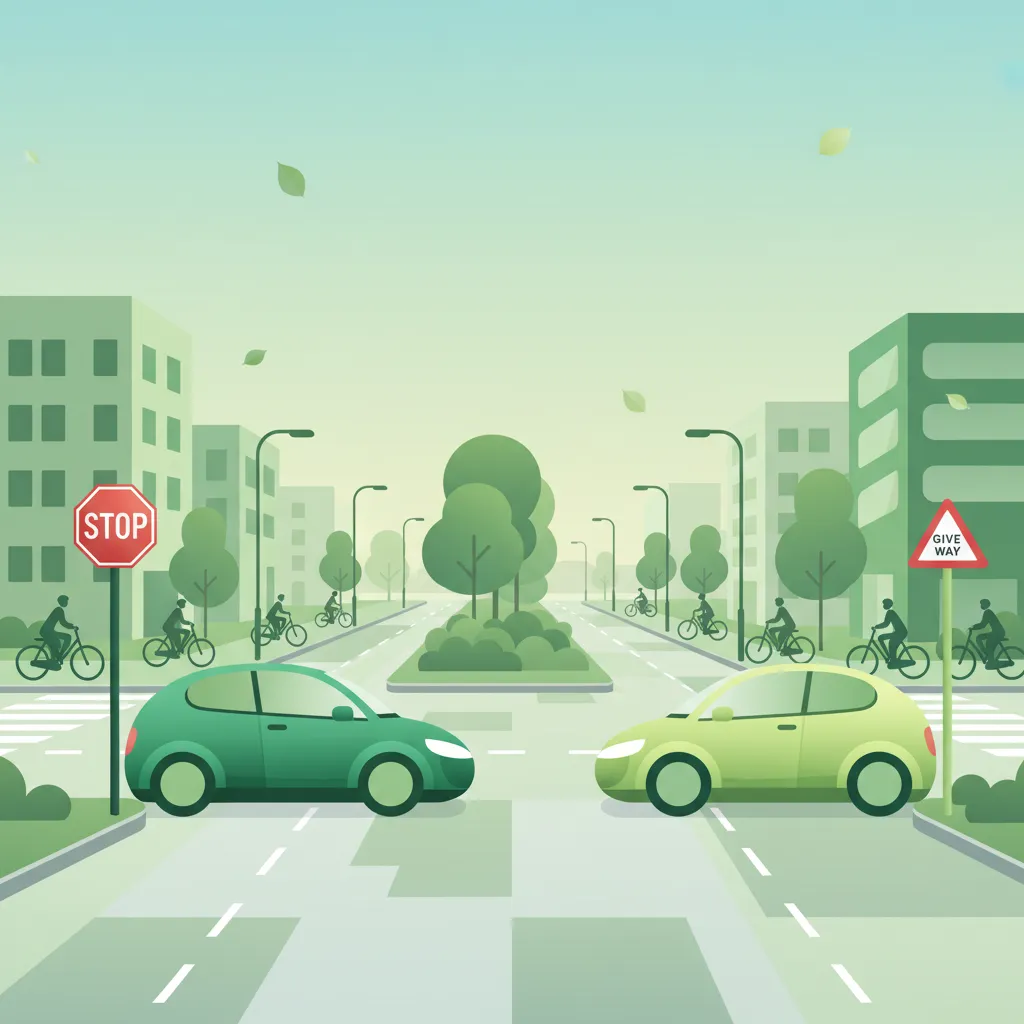
This lesson details the specific actions required at intersections controlled by 'Stop' and 'Give Way' signs. You will learn the legal requirement to come to a complete stop at a stop line (BORD 44) and the obligation to yield to all crossing traffic when encountering give-way markings ('haaientanden'). The content covers safe approach speeds and effective scanning techniques for motorcyclists to accurately assess gaps in traffic before proceeding.
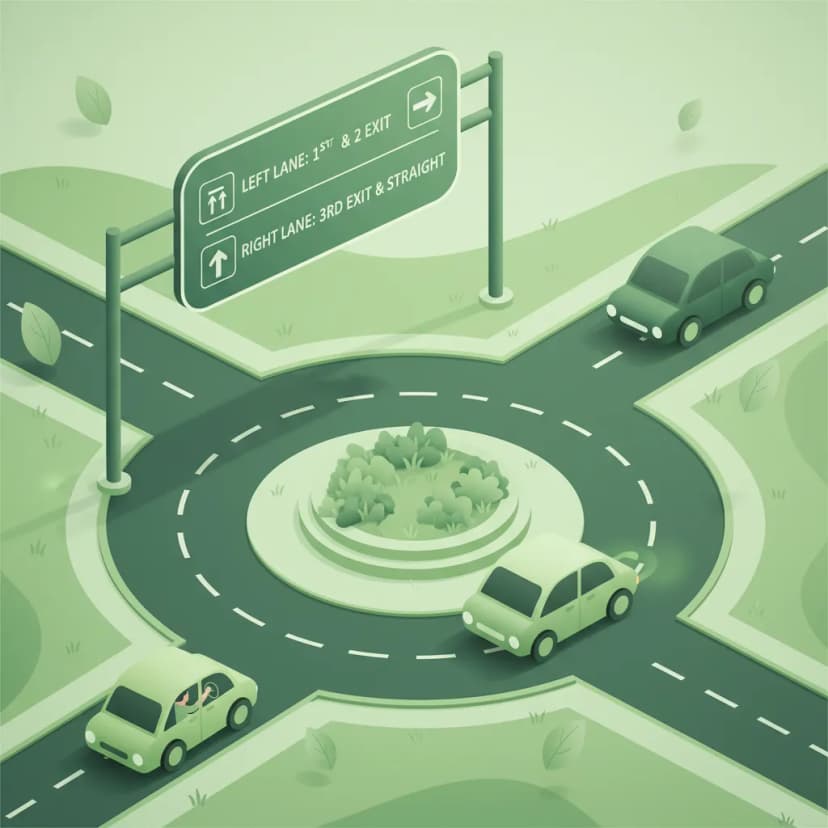
This lesson provides a detailed guide to navigating Dutch roundabouts ('rotondes'), including single-lane, multi-lane, and 'turbo' designs. It clarifies the specific priority rules that apply when entering the roundabout and the critical importance of correct signaling when changing lanes or exiting. Special attention is given to the vulnerable position of motorcyclists and the need to be aware of other vehicles' blind spots and the priority rules concerning cyclists on or near the roundabout.
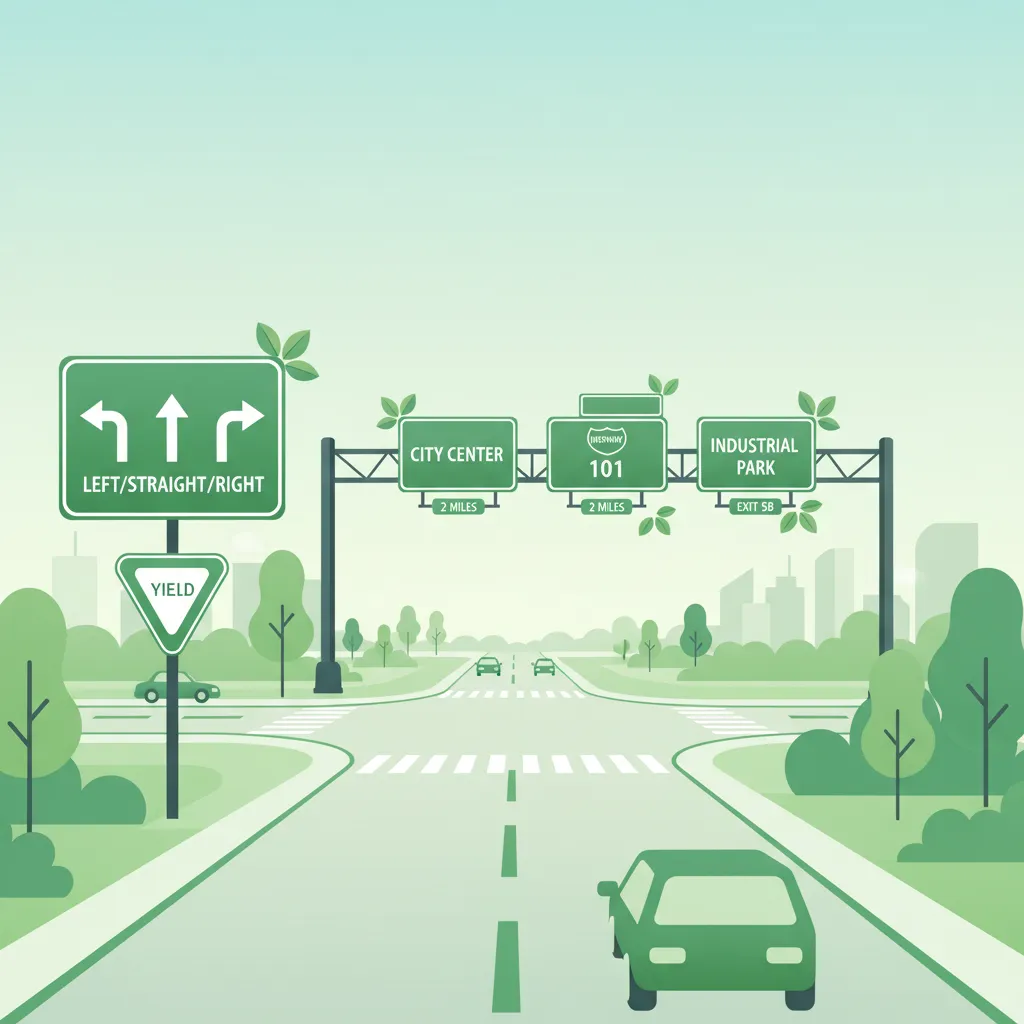
This lesson focuses on the array of signs used to manage traffic at intersections and along multi-lane roads. You will learn to interpret overhead gantry signs, lane designation signs, and markings that guide drivers into the correct lane for their intended direction. The curriculum covers signs indicating priority at upcoming junctions, such as the B3 and B4 signs, which clarify right-of-way rules in complex scenarios. Proper interpretation of these signs is essential for smooth lane changes, efficient navigation, and preventing conflicts at junctions.
Find clear answers to common questions learners have about Reversing and Turning Around. Learn how the lesson is structured, which driving theory objectives it supports, and how it fits into the overall learning path of units and curriculum progression in the Netherlands. These explanations help you understand key concepts, lesson flow, and exam focused study goals.
In the Netherlands, reversing is permitted only over short distances, such as when parking or maneuvering out of a driveway. It is strictly prohibited if it endangers or obstructs other traffic. Always prioritize safety and ensure a clear path before reversing.
When reversing, constant observation is paramount. This includes using your mirrors, looking over your shoulder, and checking your blind spots. You must be aware of all approaching traffic, including cyclists, pedestrians, and vehicles, and be prepared to stop immediately if necessary.
No, U-turns are not allowed everywhere. They are prohibited on highways (autosnelweg), at intersections controlled by traffic lights, where signs prohibit them (e.g., C2 'no entry' or specific 'no U-turn' signs), and on narrow roads where it may cause obstruction or danger.
Turning around typically refers to executing a maneuver to change direction on the road itself, often a three-point turn. Reversing into a driveway or out of a parking spot involves moving backward into or out of a space. Both require extreme caution, observation, and yielding to other traffic.
Yes, when performing special maneuvers like reversing or turning around, you must always give way to all other traffic. This includes vehicles, cyclists, and pedestrians. Your maneuver should not cause any hindrance or danger to others.