
Welcome to the lesson on parking maneuvers, a crucial part of Unit 5: Special Maneuvers. This lesson builds on foundational driving skills and prepares you for practical driving scenarios and specific questions on the Dutch theory test. Understanding these techniques is vital for safe and legal parking on Dutch roads.
Parking a vehicle safely and efficiently is a fundamental skill for every driver, especially in the diverse traffic environments of the Netherlands. This lesson provides a comprehensive guide to common parking maneuvers, including parallel parking, forward bay parking, and reverse bay parking. You will learn the essential techniques, legal requirements, and best practices to navigate constrained spaces, reduce the risk of collisions, and ensure your vehicle is properly secured.
Mastery of these maneuvers contributes significantly to overall road safety, protecting not only your vehicle but also pedestrians, cyclists, and other road users. This section of your driving theory course for category B will equip you with the knowledge needed to execute parking maneuvers confidently and compliantly.
Effective parking goes beyond simply finding an empty spot; it involves precise vehicle control, acute spatial judgment, and continuous awareness of your surroundings. Several core principles underpin all successful parking maneuvers.
Maintaining a low, steady speed, typically below 5 km/h, is paramount during any parking maneuver. This controlled velocity significantly reduces the risk of collisions with other vehicles, fixed objects, or vulnerable road users. It also provides ample time to react to unexpected movements, such as a pedestrian stepping out or another vehicle approaching.
Simultaneously, continuous observation is critical. Drivers must constantly scan their environment, not relying solely on mirrors or cameras. Manually checking blind spots by turning your head allows for the detection of pedestrians, cyclists, or unexpected traffic movements that might be obscured from mirror views. This vigilance ensures that your maneuver does not pose a hazard to anyone.
Spatial awareness refers to your ability to accurately judge the dimensions of your vehicle relative to surrounding objects. This includes understanding your vehicle's length, width, and turning radius, which are crucial for navigating tight parking spaces and avoiding contact with other cars or curbs.
Proper vehicle positioning involves aligning your vehicle accurately within designated parking boundaries. This ensures you do not obstruct traffic flow, block adjacent parking spaces, or create unsafe conditions for pedestrians. Adhering to road markings and maintaining safe distances are key aspects of correct positioning.
After completing any parking maneuver, securing your vehicle is a legal requirement and a critical safety measure. This procedure prevents unintentional movement, which could lead to accidents or damage. It involves two main steps: engaging the handbrake (handrem) and selecting the appropriate gear. The handrem prevents the vehicle from rolling, while engaging a gear provides an additional layer of security, particularly on slopes.
Parallel parking, or Parkeren langs de weg, involves positioning your vehicle parallel to the curb or roadside, typically within a designated parking bay. This maneuver is common in urban and residential areas where on-street parking is prevalent. It requires precision and careful coordination to fit your car into a narrow space between two other vehicles or at the end of a line of parked cars.
handrem and select an appropriate gear (first gear on an uphill slope, reverse gear on a downhill slope, or neutral on flat ground).handrem), and select the correct gear.A frequent error is assuming you can parallel park with high speed. This leads to loss of control, inaccurate positioning, and potential collisions. Always prioritize a slow, controlled maneuver. Another mistake is parking too far from or over the curb line. The vehicle must be kept within the curb or parking lines to avoid obstructing traffic or damaging the curb. Pay close attention to the distance from the curb; generally, a distance of up to 30 cm is acceptable, though local regulations may vary.
Parking too far from the curb can obstruct traffic, while parking too close or on the curb can damage your tires or vehicle undercarriage.
Forward bay parking, or Voorwaarts Inparkeren, involves driving your vehicle head-first into a standard parking bay. This is a common maneuver in supermarket car parks, multi-story car parks, and many public parking facilities. It is generally considered easier than reverse parking, but still requires precision to ensure the vehicle is correctly positioned.
handrem and select neutral or an appropriate gear.One common misunderstanding is using too much speed to "slip in" to a bay. This reduces your ability to make fine adjustments and increases the risk of bumping into other vehicles or objects. Maintain a controlled slow speed. Another error is parking off the lines. Always aim to center your vehicle within the bay, leaving sufficient space on both sides to avoid obstructing adjacent parking spaces and allowing other drivers to open their doors comfortably.
Reverse bay parking, also known as Achteruit inparkeren or backing into a parking bay, involves positioning your vehicle backwards into a parking space. This maneuver is often preferred in crowded car parks because it allows you to drive out of the space forward, providing better visibility of oncoming traffic and pedestrians when exiting. Although it can seem more challenging, with practice, it offers significant advantages.
handrem and select an appropriate gear.handrem) and select the correct gear.A common error in reverse bay parking is turning too sharply in reverse, which can cause the vehicle to swing out widely and hit adjacent cars. Instead, keep your steering smooth and make gradual adjustments. Ignoring lane markings at the end of the bay is also a frequent mistake. Always ensure your vehicle stops completely within the designated parking area, not overhanging into pedestrian walkways or access roads. Remember to continually check blind spots, especially when reversing, as small children or objects might not be visible in mirrors alone.
Adhering to Dutch traffic regulations (RVV 1990) is not just about avoiding fines; it's about ensuring safety and maintaining orderly traffic flow. Several articles of the RVV 1990 directly apply to parking maneuvers.
The RVV 1990 specifies several areas where parking is prohibited or restricted to protect road safety and accessibility.
pedestrianoversteekplaats (pedestrian crossing). This rule, outlined in RVV 1990 §28, ensures that pedestrians have clear sightlines when crossing and that their path is not obstructed.B6 Stop sign during a parking maneuver, you must come to a complete stop before proceeding into the parking space, as per RVV 1990 §15. This prevents accidents at intersections or entry points.RVV 1990 §16 (C2 No entry) prohibits entering specific areas. Ensure that your chosen parking spot does not require you to enter a restricted zone.gemeenten) may have specific ordinances regarding the maximum distance from a parked vehicle to the curb. It is advisable to park as close as reasonably possible, typically within 30 cm, without touching the curb.
RVV 1990 §26 explicitly states that the handrem (handbrake) must be applied after parking to prevent unintended vehicle movement. This is a mandatory safety measure that applies to all parking situations.
A mechanical or electronic brake system designed to keep a vehicle stationary when parked. It typically acts on the rear wheels.
For manual transmission vehicles, it is also best practice to engage a gear in addition to the handrem. On a slight uphill slope, select first gear; on a downhill slope, select reverse gear. For automatic vehicles, ensure the gear selector is in "Park" (P). This dual approach provides redundancy and extra security, especially on sloped surfaces where a handbrake might gradually lose effectiveness.
Always apply the handbrake firmly before releasing the foot brake when parking, especially on a slope. For vehicles with electronic handbrakes, ensure the system activates correctly.
RVV 1990 §9 dictates that vehicles must yield to pedestrians at crosswalks. This rule extends to parking maneuvers near such crossings. If your parking maneuver brings you close to a pedestrianoversteekplaats, you must yield to any pedestrians before completing your parking. Blocking pedestrian paths or forcing them to wait is a violation of their priority and can result in fines.
Parking is not always straightforward; various conditions can add complexity. Being aware of these conditional factors allows you to adjust your approach and maintain safety.
laagdicht (low beam) headlights, or mistlichten (fog lights) if visibility is severely impaired, to make your vehicle more visible to others. Ensure the handrem is firmly engaged, and an appropriate gear is selected to prevent sliding or rolling on wet or icy surfaces.handrem and gear, turning your wheels towards the curb on a slope to prevent rollback.handrem is not fully functional, always rely on engaging the appropriate gear (first gear uphill, reverse gear downhill) to prevent vehicle rollback. Seek repair for the handbrake as soon as possible.Understanding and avoiding common parking violations is essential for responsible driving and preventing fines or accidents.
| Violation | Why It’s Wrong | Correct Behavior | Consequence |
|---|---|---|---|
| Driving too fast into an empty bay | Increases collision risk, reduces control. | Slow, controlled approach. | Fine, accident risk, insurance claims. |
| Ignoring blind spots during reverse bay parking | Can hide pedestrians or other vehicles. | Use mirrors, rear camera, check all blind spots. | Damage to vehicle, injury, potential fines. |
| Parking over a pedestrian crossing within 3m | Obstructs pedestrian access and visibility. | Park outside the specified 3-meter zone. | Fine, possible vehicle removal. |
| Failing to engage handbrake on a slope | Can lead to vehicle rollback onto traffic or objects. | Engage handrem and correct gear immediately. | Legal liability, danger to road users, injury. |
| Blocking a dedicated disabled parking spot | Illegal and discriminatory. | Park only in designated general spots. | Severe fines, vehicle removal. |
| Parking in a non-parking spot (e.g., bus lane) | Violates traffic flow and specific road usage rules. | Park only in approved, marked spots. | Vehicle towing, large fines. |
| Parking in a restricted zone (e.g., no-parking signage) | Illegal and can impede emergency services or traffic. | Observe all signage and road markings. | Fine, vehicle removal. |
| Leaving the vehicle in gear, foot brake still applied | Reduces handrem effectiveness if foot brake fails. | Apply handrem and engage gear (neutral or appropriate gear) before releasing foot brake. | Possible rollback. |
| Parking lights used incorrectly | Can distract or confuse other drivers. | Use parkeerlichten only when required for visibility while stationary. | Minor infraction. |
To successfully and safely perform parking maneuvers for your Dutch driving license, remember these core principles:
handrem and select an appropriate gear (first gear uphill, reverse gear downhill, or neutral on flat ground) to prevent unintentional movement after parking.handrem.Lesson content overview
Explore all units and lessons included in this driving theory course.
Explore search topics learners often look for when studying Parking Maneuvers. These topics reflect common questions about road rules, driving situations, safety guidance, and lesson level theory preparation for learners in the Netherlands.
Browse additional driving theory lessons that cover connected traffic rules, road signs, and common driving situations related to this topic. Improve your understanding of how different rules interact across everyday traffic scenarios.
Explore complex parking situations and advanced techniques for precise vehicle control. Learn how to navigate challenging angles and spaces for safe, effective parking in Dutch traffic environments. Focuses on spatial judgment and smooth maneuver execution.

This lesson provides essential techniques for driving safely while towing. You will learn how the added weight increases your braking distance and how the extra length requires you to take wider turns. The curriculum addresses the challenging maneuver of reversing with a trailer and provides tips on how to control it. It also explains the phenomenon of 'snaking' or trailer sway, its causes (like crosswinds or improper loading), and how to correct it by gently reducing speed.
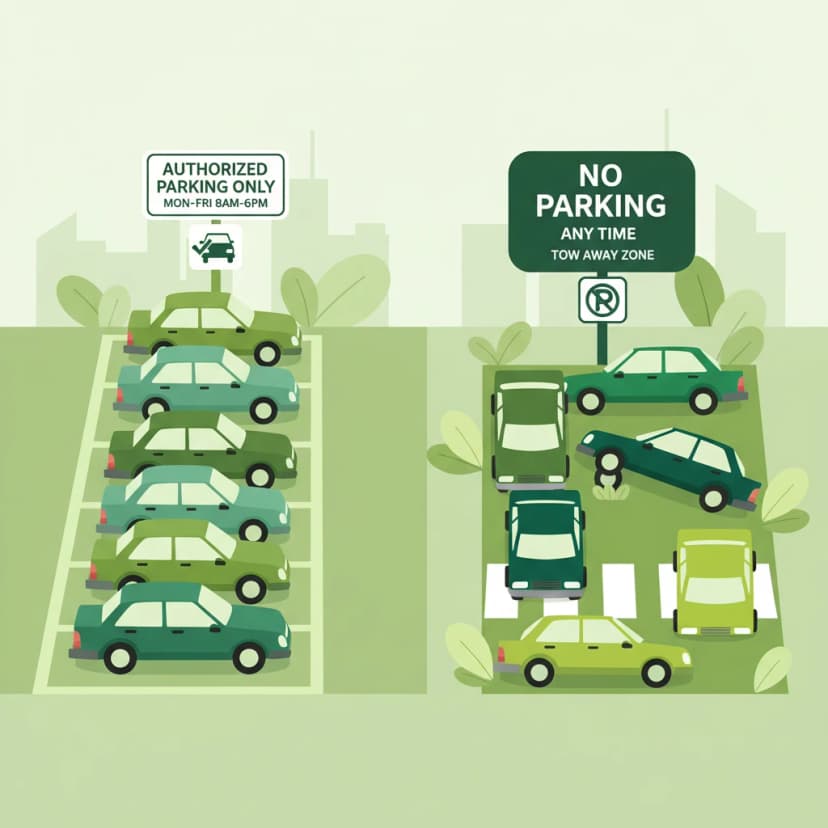
This lesson clarifies the legal distinction between stopping (briefly, while the driver remains with the vehicle) and parking (leaving the vehicle). You will learn to recognize signs and road markings, such as yellow lines, that indicate where stopping or parking is prohibited. The curriculum covers rules for parking in designated zones, such as blue zones requiring a parking disc, and provides a list of locations where parking is always forbidden, for example, on a cycle path or too close to an intersection.
This lesson covers the procedures and safety considerations for driving in reverse and turning around. You will learn that reversing should only be done over short distances and when it does not endanger or obstruct other road users. The curriculum details techniques for turning in the road and identifies situations and locations where U-turns are prohibited. The importance of all-around observation, checking blind spots, and yielding to all other traffic is a central theme.
This lesson provides practical advice for driving in challenging weather. You will learn about the risk of aquaplaning in heavy rain and how to react, as well as how to manage the effects of strong crosswinds. The curriculum covers winter driving, explaining the danger of black ice, the benefits of winter tires, and techniques for avoiding and correcting a skid. A key focus is on adjusting driving style: increasing following distances, reducing speed, and making gentle steering and braking inputs.
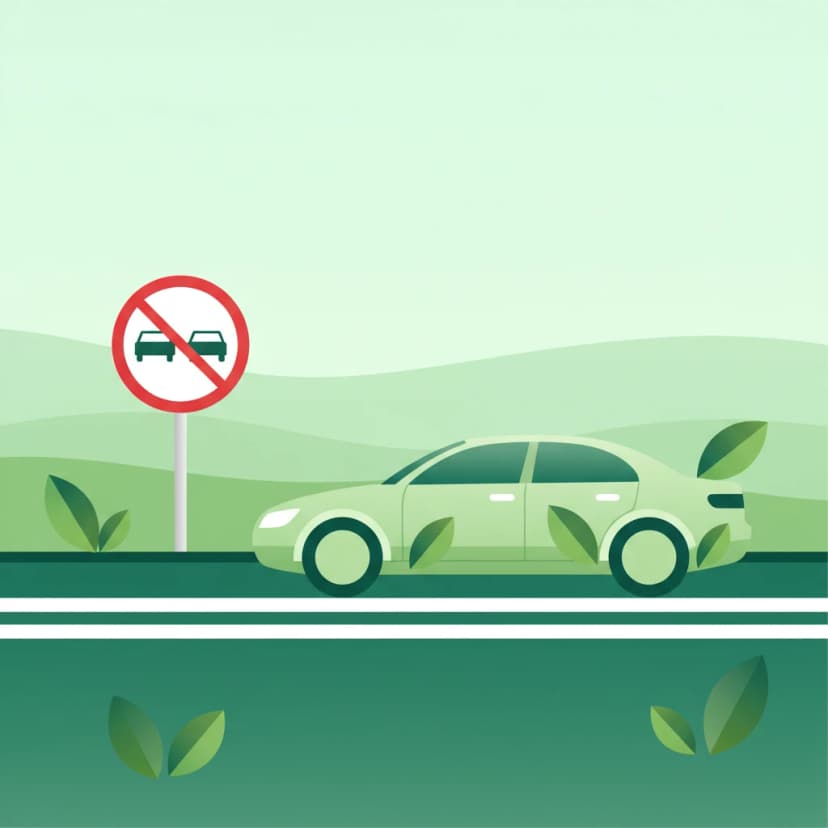
This lesson covers the core principle of road positioning in the Netherlands: drive as far to the right as is safely possible. You will learn why this rule is critical for maintaining traffic flow and preventing conflicts with oncoming and overtaking vehicles. The curriculum explains how to apply this rule on different road types, from single-lane rural roads to multi-lane motorways. It also discusses maintaining a safe lateral distance from the edge of the road, parked cars, and vulnerable road users like cyclists.

This lesson clarifies the specific Dutch regulations concerning stopping and parking for motorcycles, including designated parking bays and rules for parking on pavements. It also covers the mandatory procedures for safely navigating tunnels, such as required lighting, lane discipline, and actions to take during a breakdown or emergency. By understanding these rules, riders can avoid fines and navigate these specific traffic situations with confidence.
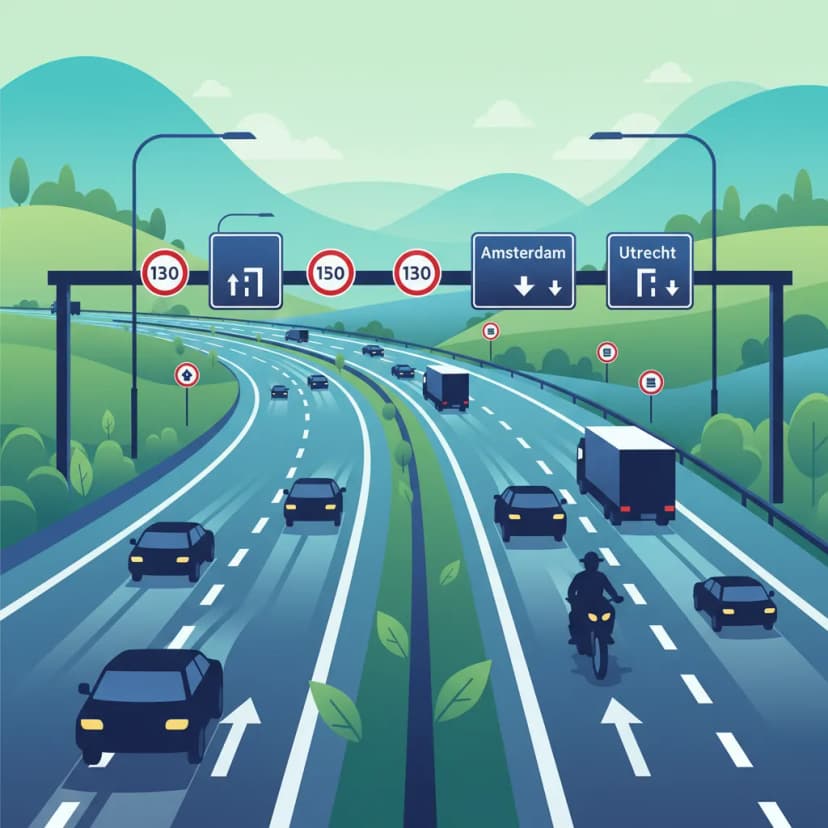
This lesson details the specific regulations for driving on Dutch motorways, identifiable by the G1 sign. You will learn the correct procedure for joining the flow of traffic using the acceleration lane and for leaving via the deceleration lane. The curriculum reinforces the 'keep right unless overtaking' rule for lane discipline. It also explains that stopping is strictly forbidden, and the hard shoulder (vluchtstrook) may only be used for genuine emergencies.

This lesson teaches the procedure for executing an emergency stop in response to a sudden, extreme hazard. You will learn how to apply maximum braking pressure quickly and decisively while keeping the steering wheel straight to maintain control. The role of the Anti-lock Braking System (ABS) in preventing wheel lock-up and allowing the driver to continue steering is explained. The lesson also covers the importance of checking mirrors, if time permits, and securing the vehicle safely after the stop.
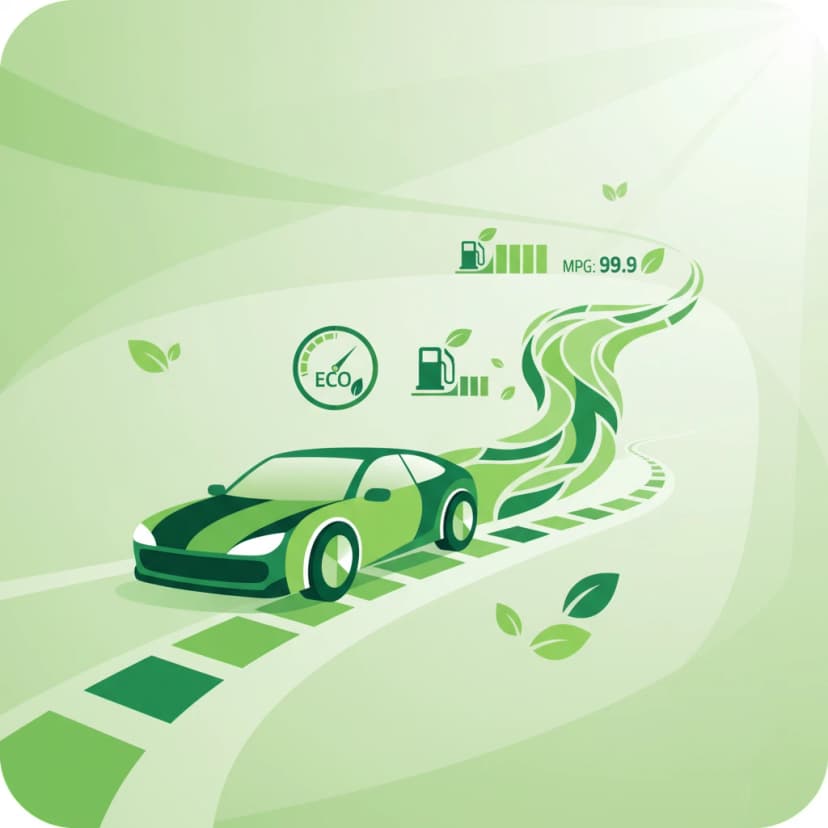
This lesson introduces the principles of eco-driving, known in the Netherlands as 'Het Nieuwe Rijden'. You will learn practical techniques to reduce fuel consumption and emissions, such as driving smoothly, anticipating traffic to avoid unnecessary braking and accelerating, shifting gears early, and maintaining correct tire pressure. The curriculum also covers the concept of environmental zones (milieuzones) in some cities, which restrict access for older, more polluting vehicles, promoting awareness of the environmental responsibilities of a modern driver.
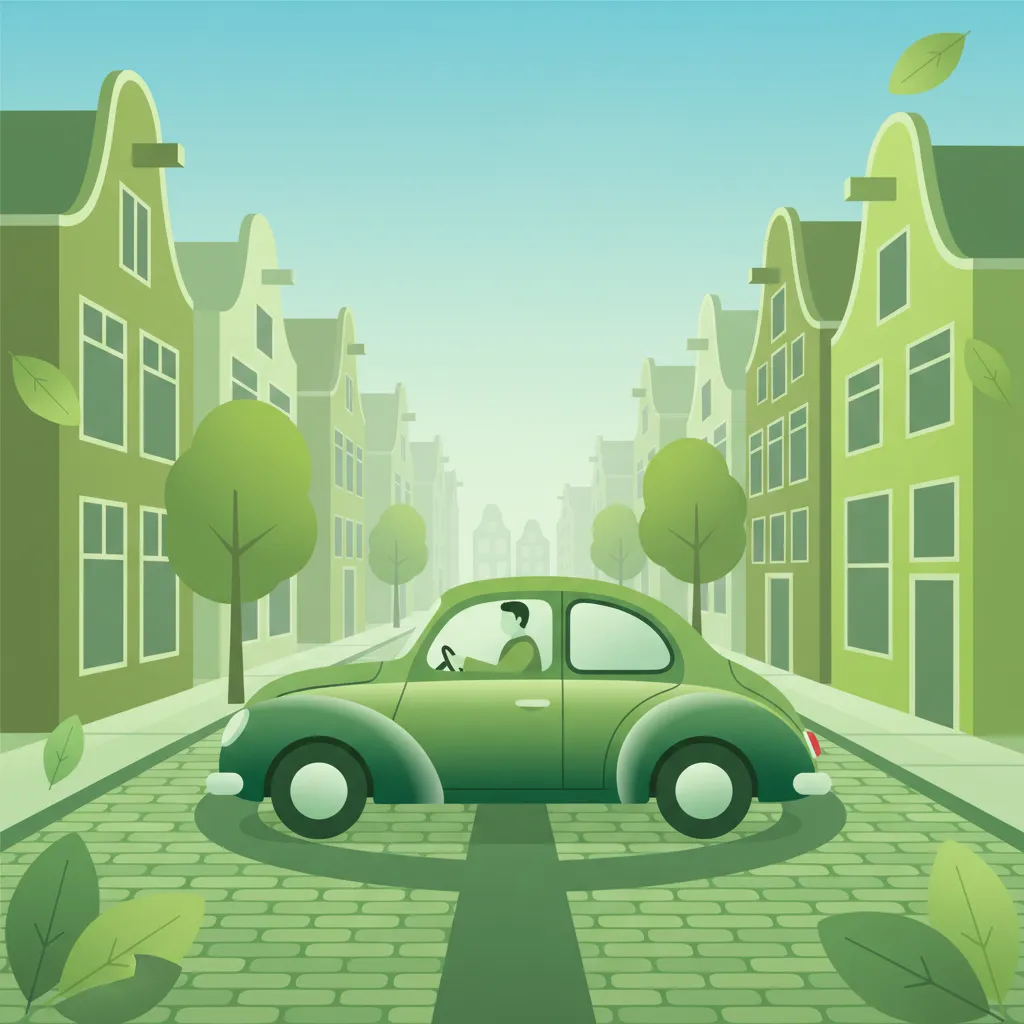
This lesson focuses on advanced low-speed control required for maneuvers like making a U-turn on a narrow road. It covers the correct procedure, which involves comprehensive observation (checking all around for traffic), signaling, and using a combination of steering input and controlled power to execute the turn smoothly. Mastering these skills is a requirement for the practical test and is useful in many real-world riding situations.
Understand the specific Dutch traffic laws (RVV 1990) and regulations governing parking. Covers prohibited zones, vehicle security requirements like handbrake usage, and priority rules relevant to parking maneuvers. Essential knowledge for the theory exam.
This lesson clarifies the legal distinction between stopping (briefly, while the driver remains with the vehicle) and parking (leaving the vehicle). You will learn to recognize signs and road markings, such as yellow lines, that indicate where stopping or parking is prohibited. The curriculum covers rules for parking in designated zones, such as blue zones requiring a parking disc, and provides a list of locations where parking is always forbidden, for example, on a cycle path or too close to an intersection.
This lesson details the specific regulations for driving on Dutch motorways, identifiable by the G1 sign. You will learn the correct procedure for joining the flow of traffic using the acceleration lane and for leaving via the deceleration lane. The curriculum reinforces the 'keep right unless overtaking' rule for lane discipline. It also explains that stopping is strictly forbidden, and the hard shoulder (vluchtstrook) may only be used for genuine emergencies.
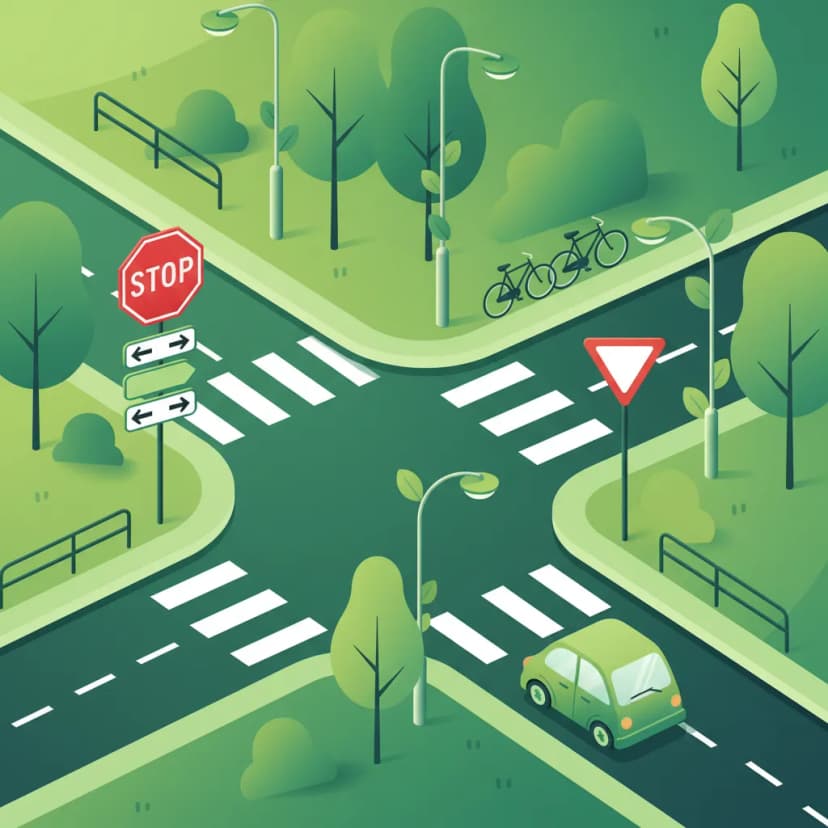
This lesson focuses on regulatory signs, which impose legal obligations on drivers and are essential for maintaining traffic order. You will learn to identify and act upon fundamental signs such as the octagonal B6 Stop sign, the diamond-shaped B1 Priority Road sign, and various compulsory direction arrows. The content explains the legal implications of these signs, detailing when a driver must stop completely, when they have priority, or the required path they must follow. Understanding these commands is crucial for safe and lawful driving at intersections and on designated routes.
This lesson clarifies the specific Dutch regulations concerning stopping and parking for motorcycles, including designated parking bays and rules for parking on pavements. It also covers the mandatory procedures for safely navigating tunnels, such as required lighting, lane discipline, and actions to take during a breakdown or emergency. By understanding these rules, riders can avoid fines and navigate these specific traffic situations with confidence.
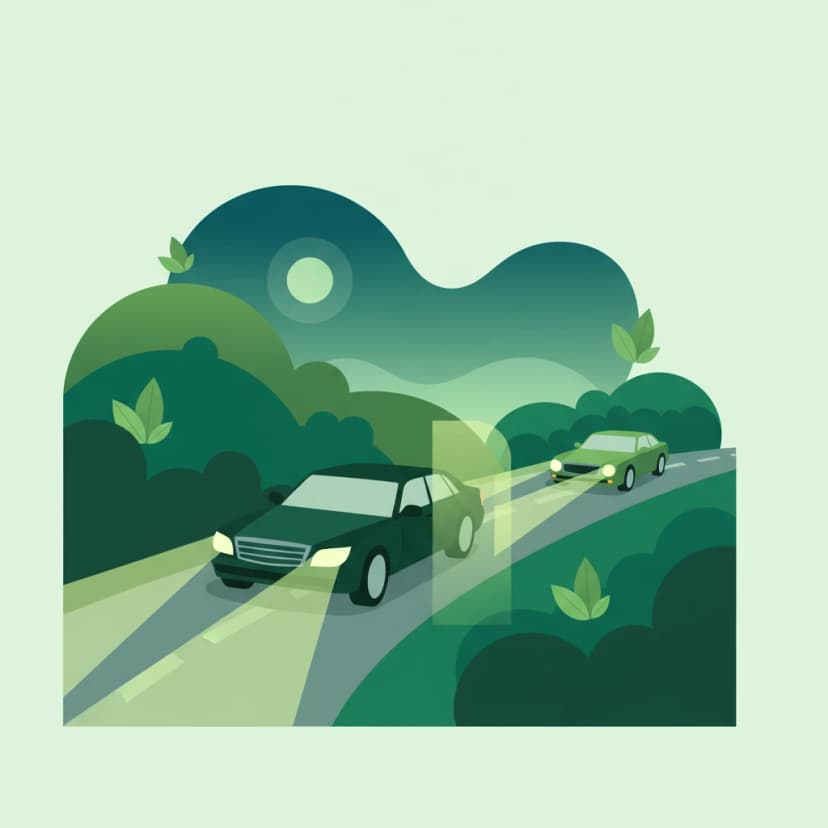
This lesson details the functions of the various lights on a car and the legal requirements for their use. You will learn the difference between dipped beams (dimlicht), which are the standard headlights for night driving and poor visibility, and main beams (grootlicht), which can only be used when they won't dazzle other road users. The content also covers the use of sidelights (stadslicht) for parking and the automatic function of Daytime Running Lights (DRLs). Correct usage is vital for visibility and avoiding blinding other drivers.
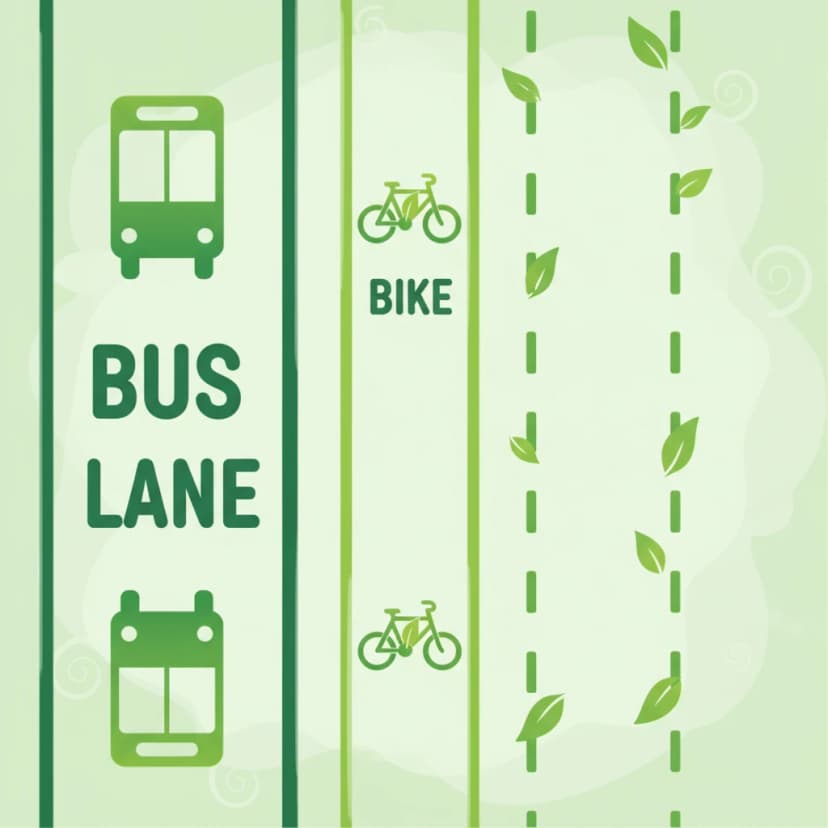
This lesson covers a variety of lanes and markings with specific rules. You will learn to recognize and respect bus lanes, which are reserved for public transport, and rush-hour lanes (spitsstrook), which are only open during busy periods as indicated by electronic signs. The curriculum also explains the meaning of different line types (solid, broken, double lines) that dictate whether lane changes or overtaking are permitted. Understanding these special lanes and markings is key to navigating Dutch infrastructure correctly.

This lesson covers the full range of lights and signals required on a vehicle for visibility and communication. You will learn about the mandatory requirements for headlights, taillights, brake lights, indicators, and reflectors. The curriculum emphasizes the driver's legal responsibility to ensure all lights are clean and functional before every journey. The correct use and function of the horn as an audible warning device in case of imminent danger are also explained.
This lesson covers the core principle of road positioning in the Netherlands: drive as far to the right as is safely possible. You will learn why this rule is critical for maintaining traffic flow and preventing conflicts with oncoming and overtaking vehicles. The curriculum explains how to apply this rule on different road types, from single-lane rural roads to multi-lane motorways. It also discusses maintaining a safe lateral distance from the edge of the road, parked cars, and vulnerable road users like cyclists.
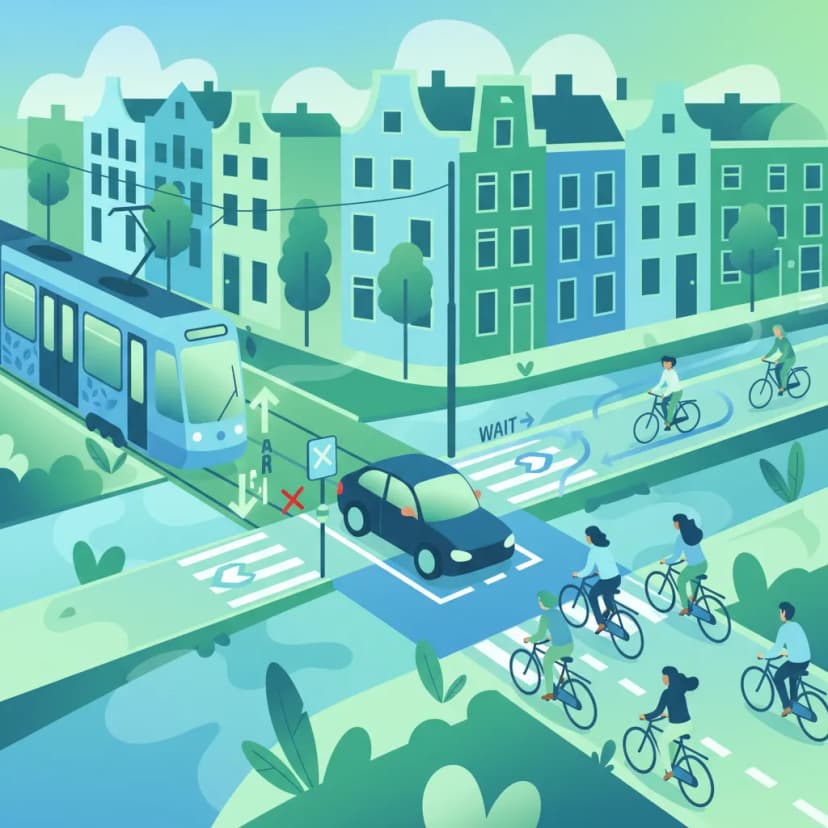
This lesson breaks down the rules of priority at intersections. You will learn to identify an 'equal' intersection where the default rule of giving way to traffic from the right applies. It also explains how priority is regulated by signs (such as the B6 Stop sign and B7 priority road sign) and road markings ('shark's teeth'). Understanding these hierarchies is crucial for making safe and correct decisions when crossing or turning at any junction.

This lesson focuses on the use of specialized lights for specific situations. You will learn the strict conditions under which fog lights may be used: the rear fog light is only permitted when visibility from fog or snow is less than 50 meters, and not in rain. The lesson also explains the correct use of hazard warning lights, which are intended to warn other drivers of a stationary obstruction (like a breakdown or the tail end of a sudden traffic jam) or while being towed.
Find clear answers to common questions learners have about Parking Maneuvers. Learn how the lesson is structured, which driving theory objectives it supports, and how it fits into the overall learning path of units and curriculum progression in the Netherlands. These explanations help you understand key concepts, lesson flow, and exam focused study goals.
The most common mistake is not observing surrounding traffic and pedestrians adequately. Many learners focus only on the car's position and forget to check mirrors and blind spots, which is crucial for safety and a key exam focus in the Netherlands.
In the Netherlands, there isn't a strict distance rule like 'X cm' for parallel parking, but you must leave enough space for the other vehicle to maneuver out easily. Aim for approximately 25-50 cm clearance. More importantly, ensure you are not blocking driveways or intersections.
Forward bay parking involves driving straight into a bay. Reverse bay parking means backing into the bay. Reverse bay parking is often preferred as it allows for better visibility when leaving the bay, which is especially important in busy car parks. The technique for judging the turn and stopping point differs significantly between the two.
Yes, you must always signal your intentions when parking, whether parallel or in a bay. Signal in the direction you intend to move into the parking space or when leaving it. This informs other road users and is a mandatory part of safe parking procedures.
After parking, you must apply the handbrake firmly, especially on inclines. You also need to select an appropriate gear (first gear if facing uphill, reverse gear if facing downhill) or, for automatic transmissions, place it in 'Park' (P). This prevents the vehicle from rolling.