
This lesson explains the correct usage of fog lights and hazard warning lights, crucial for visibility and safety in specific Dutch traffic situations. Understanding these rules is essential for both passing the theory exam and driving responsibly, especially when facing adverse weather or unexpected stops.

Driving safely in the Netherlands requires a comprehensive understanding of your vehicle's lighting systems, especially when faced with challenging visibility conditions or unexpected roadside incidents. This lesson delves into the crucial role of fog lights (mistlichten) and hazard warning lights (alarmlichten), explaining their specific legal applications, practical implications, and the safety rationale behind their use according to Dutch traffic law (RVV 1990). Mastering these specialized lighting functions is not just about legal compliance; it is fundamental for enhancing your visibility to other road users and clearly communicating your vehicle's status, thereby preventing accidents.
Understanding the correct use of these lights helps you navigate safely when standard lighting is insufficient, and ensures you do not inadvertently create a hazard for others. We will cover the strict conditions under which these lights may be activated, clarify common misunderstandings, and highlight how their proper use contributes to overall road safety for all participants in Dutch traffic.
Modern vehicles are equipped with a range of lighting systems, each designed for specific purposes. While standard headlights illuminate the road ahead and taillights ensure you are seen from behind, fog lights and hazard warning lights serve distinct, safety-critical functions under particular circumstances.
Fog lights are specifically engineered to cut through dense atmospheric conditions such as fog or heavy snow, where conventional headlights would cause excessive glare and reflections, actually reducing visibility. They are typically positioned lower on the vehicle to direct light under the fog layer, illuminating the road surface directly ahead without scattering light back into the driver's eyes or blinding oncoming traffic.
Hazard warning lights, on the other hand, are a universal signal. They indicate that your vehicle is temporarily immobile, posing an unexpected obstruction, or is otherwise presenting a danger to following traffic. These rapidly flashing amber lights are crucial for alerting other drivers to sudden changes in road conditions, such as a breakdown or the tail end of a sudden traffic jam, thereby helping to prevent rear-end collisions. Both systems are governed by precise Dutch regulations to ensure their effectiveness and prevent misuse that could lead to confusion or impaired visibility for others.
Fog lights are powerful lamps designed to improve visibility in specific low-visibility weather conditions. They come in two types: front fog lights (voorste mistlichten) and rear fog lights (achterste mistlichten). It is vital to understand that their use is strictly regulated, not optional. Incorrect use can lead to fines and, more importantly, can compromise road safety by dazzling other drivers.
Front fog lights are situated at the front of your vehicle, usually below the main headlights. Their purpose is to illuminate the road surface directly ahead in conditions where standard headlights might be less effective.
You are permitted to use front fog lights in the following situations:
It's important to remember that if visibility improves beyond 50 metres, or if the conditions are merely overcast or slightly damp, front fog lights should be switched off. They are not a substitute for dipped headlights in normal low-light conditions, nor are they for aesthetic use. Misuse can still create unnecessary glare for other road users, especially at night or in light rain.
The rear fog light (achterste mistlicht) is a single, intensely bright red light located at the rear of your vehicle, significantly brighter than a normal taillight. Its sole purpose is to make your vehicle more visible to following traffic in extremely poor visibility. Because of its intensity, the regulations governing its use are particularly strict under Dutch law (RVV 1990, Article 34).
You may only use the rear fog light when:
The rear fog light is significantly brighter than normal taillights and can be extremely dazzling. Using it incorrectly, especially in rain or when visibility is above 50 metres, can temporarily blind following drivers, creating a severe safety hazard. Always switch it off immediately once visibility improves.
The distinction in rules for rain versus fog/snow, especially for rear fog lights, often causes confusion. The reason for this lies in the way light interacts with water droplets compared to fog particles.
Therefore, even in heavy rain with low visibility, you should only use your standard dipped headlights and ensure your taillights are functioning correctly.
The "50-metre rule" is a critical visibility threshold in Dutch traffic law specifically for the activation of rear fog lights. This distance is approximately equivalent to the length of a professional football pitch.
Hazard warning lights (alarmlichten), also commonly known as hazard flashers, activate all of your vehicle's indicator lights simultaneously, causing them to flash rapidly. This distinct, universally recognized signal alerts other road users to an unusual situation involving your vehicle. Unlike fog lights, which deal with environmental visibility, hazard lights communicate a problem with your vehicle's status or position.
The primary purpose of hazard warning lights is to signal a stationary hazard that your vehicle presents to other traffic.
You are permitted and, in many cases, obliged to use hazard warning lights in the following situations:
Always activate your hazard lights as soon as it is safe to do so after a breakdown or an unexpected stop. This immediate action can significantly reduce the risk of a rear-end collision, especially on high-speed roads where reaction times are shorter.
While hazard lights are crucial for safety in specific situations, their misuse can be confusing and dangerous. It is essential to understand when not to use them.
You are prohibited from using hazard warning lights in the following scenarios:
Misusing hazard lights can lead to fines and, more critically, can desensitize other drivers to their warning signal, making them less effective when a genuine hazard arises. Trust is paramount in traffic communication.
When a vehicle is towing another, or is itself being towed, the dynamics change significantly. The combined length, weight, and potentially reduced maneuverability of the vehicles create a different driving situation that requires special attention.
Misunderstanding the rules for fog lights and hazard warning lights is a frequent cause of confusion and traffic violations. Being aware of these common pitfalls can help you avoid them and contribute to safer roads.
Dutch traffic regulations are strict regarding the correct use of vehicle lighting. Incorrect use of fog lights or hazard warning lights can lead to significant fines. Beyond the financial penalty, the safety implications of misuse are substantial, potentially causing accidents or making existing hazards worse.
The detailed rules governing fog lights and hazard warning lights are not arbitrary; they are meticulously designed to optimize road safety by managing driver perception, communication, and reaction times. Understanding this rationale helps reinforce the importance of correct usage.
Optimizing Visibility and Glare Reduction:
Clear and Unambiguous Signalling:
Legal Compliance and Standardisation:
In essence, these lighting regulations are a critical component of defensive driving. They empower you to both see and be seen more effectively, and to communicate your vehicle's status clearly, thereby fostering a safer driving environment for everyone on Dutch roads.
Mastering the use of fog lights and hazard warning lights is a crucial aspect of responsible driving in the Netherlands. These specialized lighting systems are not merely optional extras but are integral safety features governed by strict rules designed to protect all road users.
Fog Lights (Mistlichten):
Hazard Warning Lights (Alarmlichten):
Safety Rationale: The rules are in place to optimize visibility, reduce dangerous glare, provide clear and unambiguous communication to other road users, and maintain standardized safety practices across all traffic.
By diligently adhering to these regulations, you contribute directly to your own safety and that of others, ensuring that your vehicle's signals are correctly interpreted and that you can navigate challenging conditions with confidence and compliance.
Lesson content overview
Explore all units and lessons included in this driving theory course.
Explore search topics learners often look for when studying Fog Lights and Hazard Warning Lights. These topics reflect common questions about road rules, driving situations, safety guidance, and lesson level theory preparation for learners in the Netherlands.
Browse additional driving theory lessons that cover connected traffic rules, road signs, and common driving situations related to this topic. Improve your understanding of how different rules interact across everyday traffic scenarios.
Understand the specific Dutch regulations for using front and rear fog lights and hazard warning lights in adverse weather. Learn when these specialized lights are permitted and prohibited to ensure road safety and compliance.

This lesson covers the full range of lights and signals required on a vehicle for visibility and communication. You will learn about the mandatory requirements for headlights, taillights, brake lights, indicators, and reflectors. The curriculum emphasizes the driver's legal responsibility to ensure all lights are clean and functional before every journey. The correct use and function of the horn as an audible warning device in case of imminent danger are also explained.
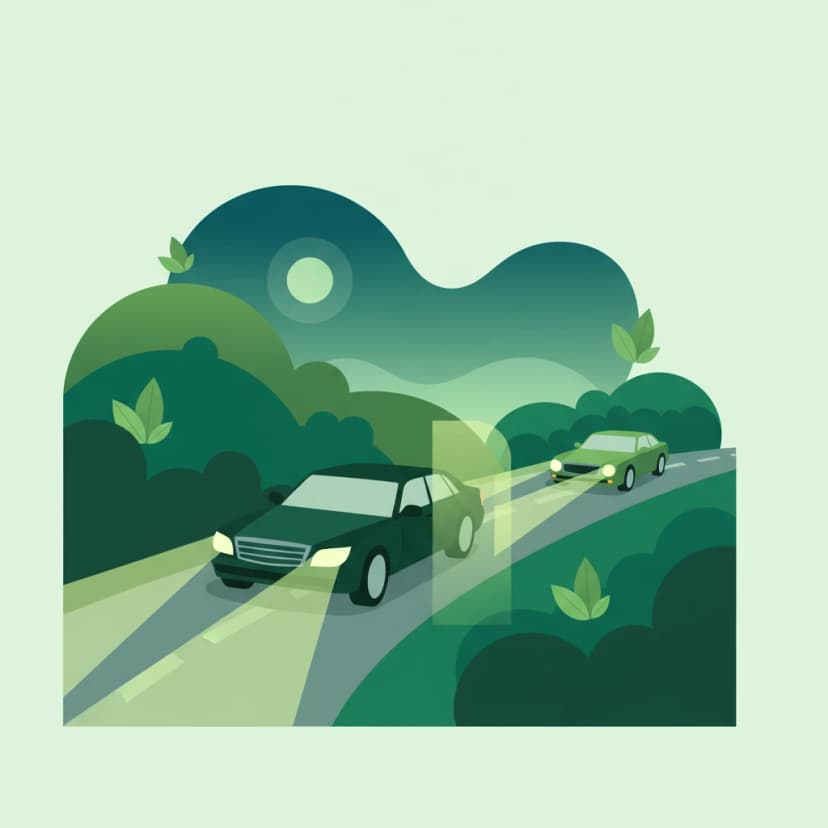
This lesson details the functions of the various lights on a car and the legal requirements for their use. You will learn the difference between dipped beams (dimlicht), which are the standard headlights for night driving and poor visibility, and main beams (grootlicht), which can only be used when they won't dazzle other road users. The content also covers the use of sidelights (stadslicht) for parking and the automatic function of Daytime Running Lights (DRLs). Correct usage is vital for visibility and avoiding blinding other drivers.
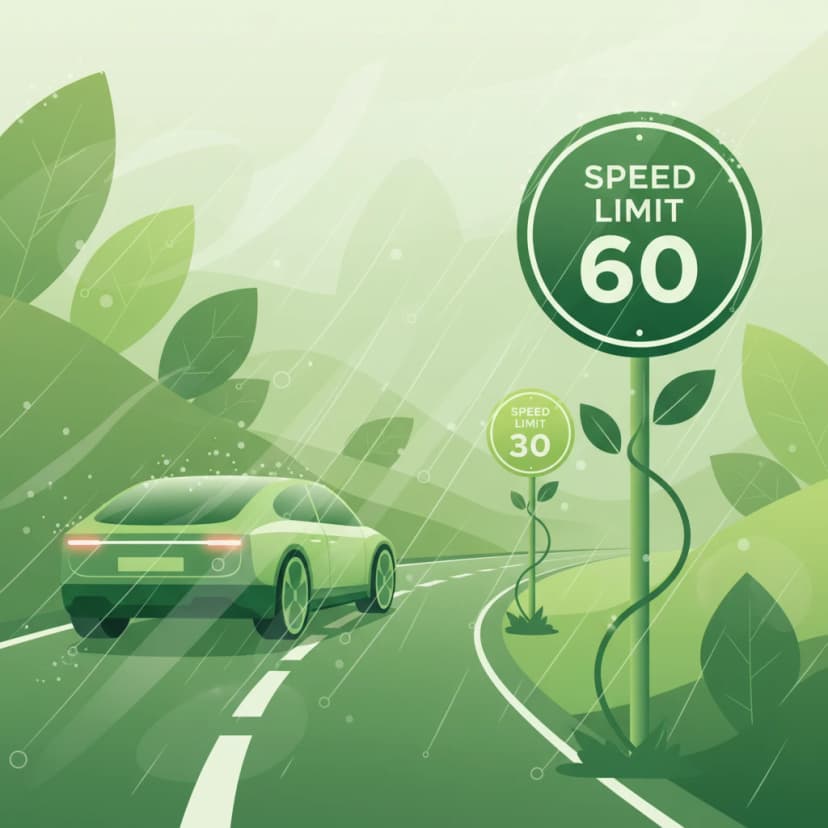
This lesson emphasizes the critical importance of adapting your speed to prevailing conditions, which may require driving slower than the legal limit. You will learn how factors like rain, fog, snow, and darkness significantly increase braking distances and reduce visibility. The curriculum explains the dangers of aquaplaning on wet roads and black ice in winter. The core principle taught is that a safe driver always adjusts their speed to ensure they can stop within the distance they can see to be clear.

Riding at night presents two main challenges: seeing the road and being seen by others. This lesson covers the legal requirements for your vehicle's lighting system and how to use it effectively, including when to use high beams. It also emphasizes strategies to increase your own conspicuity, such as wearing bright or reflective clothing. You will learn how darkness affects your perception of speed and distance and how to adapt your riding to compensate for these limitations.
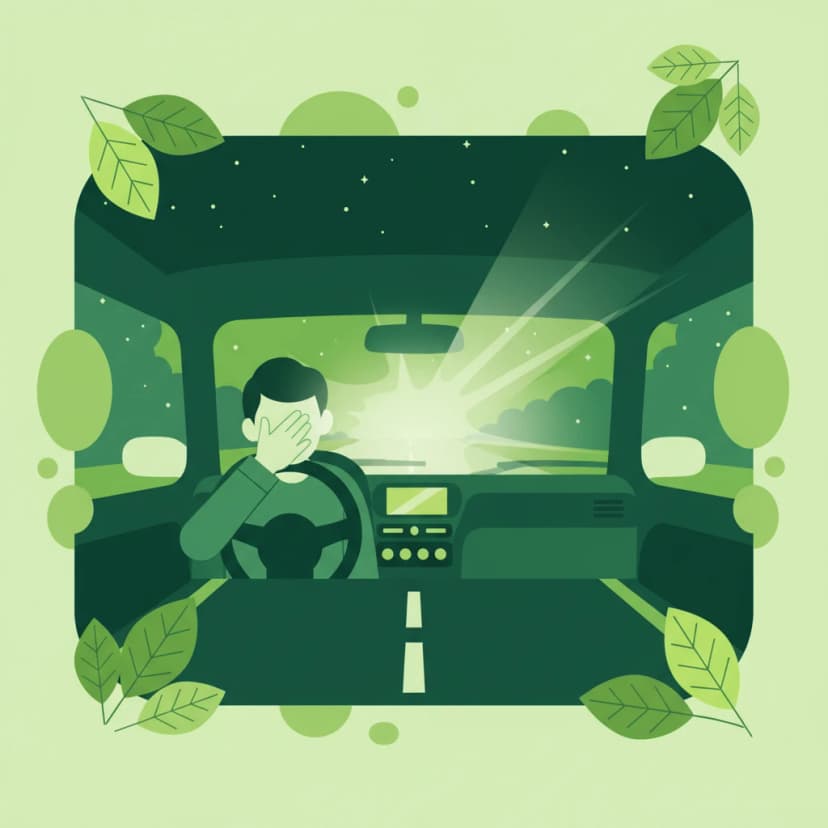
This lesson focuses on the importance of maintaining clear visibility in all directions. You will learn about the legal requirement to have clean windows, mirrors, and lights, and the proper use of demisters and wipers. The content provides strategies for managing sun glare using sun visors and sunglasses. It also addresses the issue of being dazzled by the headlights of other vehicles at night and how to react safely by slowing down and looking towards the right edge of the road.
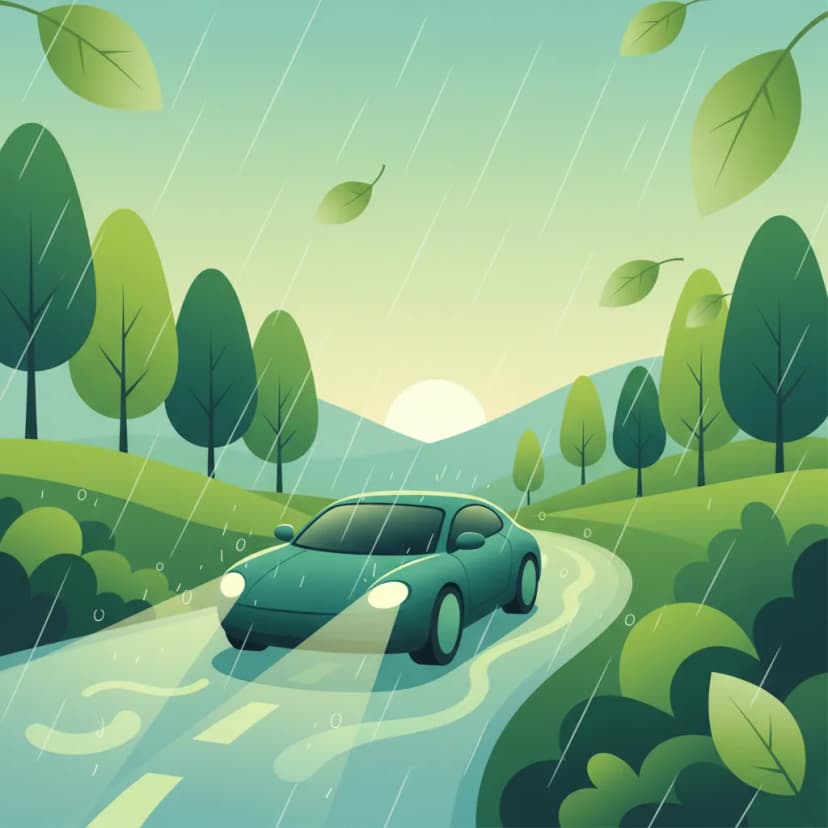
This lesson addresses the dual challenge of poor visibility: being able to see the road ahead and ensuring other road users can see you. It covers techniques for riding in fog and heavy rain, such as using appropriate lights and reducing speed to match sight distance. The lesson also discusses practical issues like helmet visor fogging and the importance of wearing high-visibility or reflective clothing to enhance conspicuity in low-light conditions.

This lesson provides a detailed guide to riding in wet and low-visibility conditions. You will learn to make all your control inputs—braking, accelerating, and steering—exceptionally smooth to avoid breaking traction on slippery surfaces. The content covers the dangers of painted lines and manhole covers when wet, and the importance of increasing your following distance dramatically to account for longer braking distances.
This lesson focuses on the dual challenge of visibility: seeing the road ahead and ensuring other drivers see you. It covers the legal requirements and tactical use of headlights ('koplampen'), including when to use high and low beams, and the importance of daytime running lights. Additionally, it explores strategies for enhancing personal conspicuity through high-visibility and reflective clothing, and using lane positioning to stand out in traffic and avoid blind spots.
This lesson explains why the standard two-second rule is insufficient in adverse conditions and requires extension. It details how factors like rain, fog, and darkness reduce both visibility and tire grip, thereby significantly increasing total stopping distance. The content provides practical guidelines, such as extending the following gap to four seconds or more in the wet, to ensure the rider always has enough time and space to stop safely, regardless of the conditions.
This lesson provides practical advice for driving in challenging weather. You will learn about the risk of aquaplaning in heavy rain and how to react, as well as how to manage the effects of strong crosswinds. The curriculum covers winter driving, explaining the danger of black ice, the benefits of winter tires, and techniques for avoiding and correcting a skid. A key focus is on adjusting driving style: increasing following distances, reducing speed, and making gentle steering and braking inputs.
Learn about frequent misunderstandings and violations regarding the use of fog lights and hazard warning lights in Dutch traffic. Avoid dangerous situations and fines by understanding correct application and prohibited uses.
This lesson details the functions of the various lights on a car and the legal requirements for their use. You will learn the difference between dipped beams (dimlicht), which are the standard headlights for night driving and poor visibility, and main beams (grootlicht), which can only be used when they won't dazzle other road users. The content also covers the use of sidelights (stadslicht) for parking and the automatic function of Daytime Running Lights (DRLs). Correct usage is vital for visibility and avoiding blinding other drivers.
This lesson covers the full range of lights and signals required on a vehicle for visibility and communication. You will learn about the mandatory requirements for headlights, taillights, brake lights, indicators, and reflectors. The curriculum emphasizes the driver's legal responsibility to ensure all lights are clean and functional before every journey. The correct use and function of the horn as an audible warning device in case of imminent danger are also explained.

Effective communication with other road users is vital for safety. This lesson details the legal requirements and proper use of your vehicle's signaling equipment, including headlights, brake lights, and turn signals (indicators). It also explains the specific situations in which using the horn is permitted to avert danger. Finally, it covers the mandatory placement and type of reflectors that ensure your vehicle remains visible to others, especially in low-light conditions.
Your vehicle's lights and horn are your primary tools for seeing, being seen, and communicating warnings. This lesson guides you through a simple but vital check of all electrical components before you ride. You will learn how to verify the function of your headlight (high and low beam), taillight, brake light (using both front and rear brake levers), and turn signals. It also covers checking the horn's operation and ensuring all mandatory reflectors are clean and intact.
This lesson covers the mandatory lighting and signaling equipment for A2 motorcycles under Dutch law, ensuring you remain visible and communicate your intentions correctly. You will learn the rules for using headlights, taillights, turn signals, and brake lights in various conditions, including daytime and adverse weather. The content also addresses the importance of maintaining this equipment and using hand signals as a valid secondary method of communication in traffic.

This lesson equips you with the knowledge to understand your vehicle's instrument panel and perform simple but vital maintenance checks. You will learn the meaning of common dashboard warning lights, such as those for the engine, oil pressure, battery, and brakes, and what action to take when they illuminate. The content provides a practical guide to checking and topping up essential fluids like engine oil, coolant, and windscreen washer fluid, which is a key part of responsible vehicle ownership.
Riding at night presents two main challenges: seeing the road and being seen by others. This lesson covers the legal requirements for your vehicle's lighting system and how to use it effectively, including when to use high beams. It also emphasizes strategies to increase your own conspicuity, such as wearing bright or reflective clothing. You will learn how darkness affects your perception of speed and distance and how to adapt your riding to compensate for these limitations.
This lesson focuses on the importance of maintaining clear visibility in all directions. You will learn about the legal requirement to have clean windows, mirrors, and lights, and the proper use of demisters and wipers. The content provides strategies for managing sun glare using sun visors and sunglasses. It also addresses the issue of being dazzled by the headlights of other vehicles at night and how to react safely by slowing down and looking towards the right edge of the road.
This lesson focuses on the dual challenge of visibility: seeing the road ahead and ensuring other drivers see you. It covers the legal requirements and tactical use of headlights ('koplampen'), including when to use high and low beams, and the importance of daytime running lights. Additionally, it explores strategies for enhancing personal conspicuity through high-visibility and reflective clothing, and using lane positioning to stand out in traffic and avoid blind spots.
Find clear answers to common questions learners have about Fog Lights and Hazard Warning Lights. Learn how the lesson is structured, which driving theory objectives it supports, and how it fits into the overall learning path of units and curriculum progression in the Netherlands. These explanations help you understand key concepts, lesson flow, and exam focused study goals.
In the Netherlands, you may only use your rear fog light when visibility is less than 50 meters due to fog or snow. This is a strict rule intended to prevent confusion and dazzle.
No, fog lights are not permitted in heavy rain, even if visibility is poor. Their intense light can reflect off raindrops and actually worsen visibility for other drivers, and the rules are specific to fog and snow.
Hazard warning lights should be used to indicate a dangerous situation or obstruction. This includes when your vehicle has broken down, you are being towed, or you are stopped unexpectedly at the roadside, for example, at the tail end of a sudden traffic jam.
While an emergency stop itself is a sudden action, hazard lights are typically activated *after* you have stopped in a safe place to warn approaching traffic. For the immediate act of stopping in an emergency, other braking actions are primary.
The theory exam will test your knowledge of these specific rules, often presenting scenarios where you must decide whether fog lights or hazard lights are appropriate. Understanding the exact conditions for use, as taught in this lesson, is key to answering these questions correctly.