
Ensuring you can see and be seen is paramount for safe driving in the Netherlands. This lesson in the 'Lighting, Visibility, and Weather Conditions' unit covers the crucial aspects of maintaining clear visibility, managing glare from the sun and other vehicles, and understanding the legal requirements for clean windows and lights. It prepares you for exam questions and real-world driving challenges.

Ensuring optimal visibility is one of the most fundamental aspects of safe driving in the Netherlands, directly impacting your ability to react to hazards and prevent collisions. This comprehensive lesson for aspiring Dutch drivers will explore the critical elements of visibility, covering your ability to see the road and other users, how clearly your vehicle is seen by others, and effective strategies for managing blinding glare from the sun or other vehicles. Mastering these principles is not just about safety; it is a legal requirement under Dutch traffic law (RVV) and a key component of vehicle inspections.
Visibility is a complex but crucial concept in driving, encompassing three interconnected dimensions that collectively determine road safety:
These three elements are not merely theoretical; they are grounded in the physics of light, human perception limitations, and the explicit requirements of Dutch traffic law. By understanding and actively managing all aspects of visibility, you significantly reduce the likelihood of accidents.
Several core principles dictate how effectively you can see and be seen on the road, and how you manage challenging light conditions. Adhering to these principles is essential for safe driving and legal compliance in the Netherlands.
Definition: All windows, windscreens, and mirror surfaces on your vehicle must be consistently free from dirt, scratches, condensation, ice, or any other obstructions that could impede your clear line of sight.
Purpose: This prevents visual distortion, reduces glare, and ensures you can accurately interpret road conditions, traffic signs, and the movements of other road users. Dirty or damaged glass severely compromises your ability to make timely decisions.
Impact: Regular cleaning and maintenance are mandatory. Your decisions on when to activate demisters, use wipers, or manually clean surfaces are directly influenced by the need for pristine visibility. For instance, even minor scratches on the rear window can obscure vision when reversing or checking blind spots.
Under RVV § 6.1, vehicles must have clear windscreens and side windows. Mirrors must also be in perfect working order. Failure to comply can result in fines and safety risks.
Definition: All vehicle lights, including standard headlights (low and high beam), fog lights, indicators, and hazard warning lights, must operate correctly according to their design specifications, maintaining the right beam pattern, range, and responsiveness.
Purpose: Proper lighting ensures you can adequately see distant hazards, especially at night or in low visibility, and crucially, that your vehicle is clearly visible to all other road users.
Impact: Your choice of lighting (e.g., low beam, high beam, fog lights) is determined by current visibility, time of day, and the presence of other traffic. Correct headlight alignment is also critical to illuminate your path without dazzling others.
Definition: This encompasses a range of techniques and equipment designed to reduce the intensity of light that might hinder your vision. This includes the use of sun visors, sunglasses, adjusting rear-view mirrors, and appropriate selection of vehicle lighting.
Purpose: Minimizing glare helps prevent eye strain, temporary blindness, and delayed reactions, all of which can contribute to accidents.
Impact: You must consciously decide when to use your sun visor, wear sunglasses, or adjust your rear-view mirror to an anti-dazzle setting, particularly during sunrise, sunset, or when encountering strong headlights at night.
Definition: Headlights must be precisely aligned so that the main beam illuminates the road effectively but the 'dark part' (the cutoff line of the low beam) falls on the right edge of the lane or road.
Purpose: This critical adjustment maximizes your forward illumination without dazzling oncoming drivers or those ahead of you, ensuring safety for all.
Impact: If you notice your headlights dazzling others, or if you are being dazzled by an improperly aligned vehicle, immediate action is required. This principle affects decisions regarding safe passing distances and overall awareness of your vehicle's impact on others.
Definition: Your vehicle's wiper blades and washer system (fluid jets) must be fully effective at removing rain, snow, ice, or road spray from the windscreen and, often, the rear window.
Purpose: A properly functioning wiper system ensures your windshield remains clear in all forms of adverse weather, preserving continuous forward visibility.
Impact: You must activate your wipers and washers as soon as precipitation or dirt reduces visibility. Regular inspection and replacement of worn wiper blades are vital for effective operation.
Definition: These are legal thresholds for visibility (e.g., in fog, mist, heavy rain, or snow) that dictate specific lighting usage and maximum permissible speeds.
Purpose: These regulations are designed to protect all road users by reducing collision risk in conditions where reaction times are severely reduced.
Impact: These limits directly inform your decisions on when to activate fog lights (if applicable and legal for the conditions), use hazard warning lights, or significantly reduce your speed, potentially below the posted speed limit.
Maintaining clear vision and ensuring your vehicle is seen is paramount for road safety. This involves a diligent approach to vehicle maintenance and an understanding of Dutch lighting regulations.
Every glass surface on your vehicle plays a vital role in your overall visibility.
Always ensure a clear view of at least 180 degrees through your windscreen and side windows before starting your journey. This includes clearing frost, snow, or excessive dirt.
These mechanical components are crucial for maintaining visibility in challenging weather conditions.
Rule Reminder: Under RVV § 6.4, your vehicle's equipment, including wipers, must be operational. Driving with severely impaired visibility due to non-functioning wipers or uncleaned windows, especially in wet conditions, can lead to a reduced maximum speed being imposed, and potential penalties.
Correct use of your vehicle's lighting system is critical for both seeing and being seen, particularly during periods of low light or adverse weather.
Glare, whether from natural or artificial light sources, can significantly impair your vision, potentially leading to temporary blindness and increasing accident risk. Effective glare management is crucial.
Direct sunlight, especially during sunrise or sunset, can be intensely blinding.
When driving directly into intense sunlight, slow down significantly. Your stopping distance will be much longer if your vision is impaired.
Improperly aimed or misused headlights can dazzle oncoming drivers, leading to dangerous situations.
Weather conditions frequently reduce visibility in the Netherlands, necessitating specific precautions and adherence to stricter rules.
The RVV specifies minimum visibility thresholds that dictate particular driving behaviours and lighting use:
Never use high beams in fog, heavy rain, or snowfall. The light reflects off the water or ice particles, creating a dazzling 'white wall' effect that severely worsens your own visibility.
Snow and ice present unique glare challenges:
The following table summarises key regulations concerning visibility in the Netherlands (Category B driving licence). Adherence is mandatory for safe driving and to avoid penalties.
| Rule Category | Statement | Applicability | Status | Rationale | Example Correct | Example Incorrect |
|---|---|---|---|---|---|---|
| RVV § 6.1 – Clean Windows | All windscreen and side windows must be clear of debris, scratches, and obstructions. | All road types and conditions | Mandatory | Crucial for the driver's accurate perception of the road and surroundings. | Cleaning all windows thoroughly before a long night drive. | Driving with a cracked front window that obstructs the view of a junction. |
| RVV § 6.1 – Functional Mirrors | All mirrors (side and rearview) must be functional, clean, and correctly adjusted. | All road types and conditions | Mandatory | Essential for monitoring surrounding traffic, checking blind spots, and safe maneuvering. | Adjusting side mirrors and rearview mirror after a new driver takes the wheel. | Driving on the motorway with a side mirror that is dirty and offers poor reflection. |
| RVV § 6.4 – Headlight Use (General) | Headlights (low beam) must be on between sunset and sunrise, and during rainfall or reduced visibility. | All conditions | Mandatory | Ensures the vehicle is visible to others and the driver can see ahead. | Activating low beams immediately as dusk begins. | Driving with only daytime running lights on during a moderate rain shower. |
| RVV § 6.4 – Fog Lights (Usage) | Front fog lights may only be used when visibility is severely reduced by fog, snow, or heavy rain. Rear fog lights may only be used when visibility is less than 50 metres due to fog or heavy snow. | Adverse weather conditions | Mandatory | Prevents dazzling and reduces dangerous light scattering when not genuinely needed. | Using front fog lights during dense fog on a rural road. | Activating rear fog lights in light rain with visibility of 100 metres. |
| RVV § 6.4 – High Beam (Usage) | High beams are prohibited when oncoming traffic is present or when closely following another vehicle. | All roads | Mandatory | Prevents dazzling other drivers, which can lead to temporary blindness and accidents. | Using high beam on a dark, deserted country road. | Continuing to use high beam when an oncoming vehicle approaches from around a bend. |
| RVV § 6.4 – Wipers | Wipers must function effectively and be used during rain or any other precipitation that obstructs the view. | All roads, especially in precipitation | Mandatory | Ensures the windshield remains clear, maintaining continuous forward visibility. | Activating wipers on an intermittent setting during a light drizzle. | Driving at speed in moderate rain with wipers switched off, relying on rain repellent. |
| RVV § 6.4 – Visibility Limits & Speed | Drivers must adapt speed significantly when visibility is reduced below specific thresholds (e.g., < 200m in fog, < 75m in heavy rain/snow). | Adverse weather conditions | Mandatory | Reduces collision risk by providing more reaction time in low visibility scenarios. | Reducing speed to 30 km/h in dense fog with 80m visibility on a provincial road. | Maintaining the posted 80 km/h speed limit in heavy snowfall with only 60m visibility. |
| RVV – Sun Visors & Sunglasses | The use of sun visors and appropriate sunglasses is strongly recommended in bright sunshine. | All sunny conditions | Recommended | Mitigates dangerous sun glare, improving driver comfort and safety. | Pulling down the sun visor when driving west during a sunny afternoon. | Driving without any shade during noon glare. |
Ignoring visibility rules or failing to maintain your vehicle's visibility components can lead to dangerous situations and legal consequences.
Driving conditions are rarely static. Your approach to visibility must be dynamic and adaptable.
| Situation | Visibility Principle | Adaptation | Reasoning |
|---|---|---|---|
| Heavy Rainy Day | Wipers & Washers; Headlight Use | Activate wipers at high speed, use washer fluid frequently; switch to low beam headlights (RVV § 6.4). | Heavy rain significantly reduces forward visibility and creates road spray. Low beams ensure you are seen and illuminate the immediate road without excessive glare. |
| Dense Fog | Fog Lights; Speed Management | Use front fog lights; activate rear fog lights if visibility < 50m (RVV § 6.4); drastically reduce speed. | Fog diffuses light, making high beams ineffective and dazzling. Low-set fog lights cut through better. Reduced speed provides crucial reaction time. |
| Night Turn on Rural Road | Headlight Alignment; High Beam | If no oncoming traffic, use high beam briefly to illuminate the turning path, then revert to low beam. | Maximizes visibility for potential hazards (pedestrians, animals) on an unlit path, while respecting rules regarding oncoming traffic. |
| Extreme Low Sun | Sun Glare; Speed Management | Deploy sun visor; wear polarized sunglasses; slow down significantly. | Intense sun can cause temporary blindness (solar glare veil). Reducing speed provides more time to react to unexpected hazards even with impaired vision. |
| Heavy Snowfall | Demisters & Wipers; Lighting | Activate demisters and wipers continuously; use low beams and front fog lights (if fitted). | Snow accumulates rapidly, reducing visibility. Demisters prevent ice/fogging. Low beams and fog lights penetrate snow better than high beams without causing reflected glare. |
| Motorway at Night (Low Traffic) | Headlight Use | Use high beams on unlit stretches, but be prepared to dip for approaching or overtaking vehicles. | Maximizes long-distance visibility for hazards at high speeds. Constant vigilance for other traffic prevents dazzling. |
| Urban Intersection (Busy) | Being Seen; Mirror Use | Ensure brake lights, indicators, and side mirrors are clean and fully functional; actively scan mirrors. | High traffic density and multiple directions of travel necessitate clear signaling and comprehensive situational awareness for all road users. |
Understanding the direct links between your actions (or inactions) and their consequences on visibility is critical for developing safe driving habits.
The stringent rules and recommendations regarding visibility are not arbitrary; they are deeply rooted in scientific understanding and extensive road safety research.
Let's consider some common driving scenarios in the Netherlands and how visibility principles apply.
Situation: You are driving through a busy Dutch city street at night. It's raining heavily, and reflections from streetlights and shop windows are everywhere. Visibility Challenge: Severely reduced forward visibility due to rain, road spray, and reflections. Increased risk to pedestrians and cyclists who are harder to spot. Correct Action:
Reasoning: Maintaining a clear windscreen is paramount. Low beams adequately illuminate your path and make you visible without causing excessive glare from the wet road. Reduced speed provides more time to react to unexpected events in the complex urban environment.
Situation: You are driving westbound on an autosnelweg (motorway) around late afternoon, facing intense low sun.
Visibility Challenge: Direct sun glare can temporarily blind you, making it difficult to see vehicles ahead, brake lights, or road signs.
Correct Action:
Reasoning: Sun visors and sunglasses directly mitigate glare. Increasing following distance and reducing speed compensate for potentially slower reaction times due to visual impairment, enhancing safety on a high-speed road.
Situation: You are driving on a provinciale weg (provincial road) and suddenly enter a patch of dense fog where visibility drops to approximately 40 metres.
Visibility Challenge: Extremely limited forward visibility; risk of dazzling other drivers with incorrect lighting.
Correct Action:
Reasoning: High beams are useless in fog and create dangerous glare. Low beams and fog lights help you see and be seen more effectively without reflecting light back at you. Reducing speed is paramount in such critically low visibility, adhering to the RVV § 6.4 visibility limits.
Mastering visibility is non-negotiable for safe and legal driving in the Netherlands. It requires a combination of proactive maintenance, correct application of lighting, and strategic glare management.
Your attention to these visibility principles will not only help you pass your driving theory test but will also equip you with the essential skills for a lifetime of safer driving on Dutch roads.
Lesson content overview
Explore all units and lessons included in this driving theory course.
Explore search topics learners often look for when studying Visibility: Seeing, Being Seen, and Glare. These topics reflect common questions about road rules, driving situations, safety guidance, and lesson level theory preparation for learners in the Netherlands.
Browse additional driving theory lessons that cover connected traffic rules, road signs, and common driving situations related to this topic. Improve your understanding of how different rules interact across everyday traffic scenarios.
Learn essential Dutch traffic rules for driving in rain, fog, and snow. Understand when to use headlights, fog lights, and how to adapt speed to ensure safety and visibility in challenging weather.
This lesson focuses on the use of specialized lights for specific situations. You will learn the strict conditions under which fog lights may be used: the rear fog light is only permitted when visibility from fog or snow is less than 50 meters, and not in rain. The lesson also explains the correct use of hazard warning lights, which are intended to warn other drivers of a stationary obstruction (like a breakdown or the tail end of a sudden traffic jam) or while being towed.
This lesson details the functions of the various lights on a car and the legal requirements for their use. You will learn the difference between dipped beams (dimlicht), which are the standard headlights for night driving and poor visibility, and main beams (grootlicht), which can only be used when they won't dazzle other road users. The content also covers the use of sidelights (stadslicht) for parking and the automatic function of Daytime Running Lights (DRLs). Correct usage is vital for visibility and avoiding blinding other drivers.
This lesson emphasizes the critical importance of adapting your speed to prevailing conditions, which may require driving slower than the legal limit. You will learn how factors like rain, fog, snow, and darkness significantly increase braking distances and reduce visibility. The curriculum explains the dangers of aquaplaning on wet roads and black ice in winter. The core principle taught is that a safe driver always adjusts their speed to ensure they can stop within the distance they can see to be clear.
This lesson provides practical advice for driving in challenging weather. You will learn about the risk of aquaplaning in heavy rain and how to react, as well as how to manage the effects of strong crosswinds. The curriculum covers winter driving, explaining the danger of black ice, the benefits of winter tires, and techniques for avoiding and correcting a skid. A key focus is on adjusting driving style: increasing following distances, reducing speed, and making gentle steering and braking inputs.

This lesson covers the full range of lights and signals required on a vehicle for visibility and communication. You will learn about the mandatory requirements for headlights, taillights, brake lights, indicators, and reflectors. The curriculum emphasizes the driver's legal responsibility to ensure all lights are clean and functional before every journey. The correct use and function of the horn as an audible warning device in case of imminent danger are also explained.
This lesson addresses the dual challenge of poor visibility: being able to see the road ahead and ensuring other road users can see you. It covers techniques for riding in fog and heavy rain, such as using appropriate lights and reducing speed to match sight distance. The lesson also discusses practical issues like helmet visor fogging and the importance of wearing high-visibility or reflective clothing to enhance conspicuity in low-light conditions.

This lesson provides a detailed guide to riding in wet and low-visibility conditions. You will learn to make all your control inputs—braking, accelerating, and steering—exceptionally smooth to avoid breaking traction on slippery surfaces. The content covers the dangers of painted lines and manhole covers when wet, and the importance of increasing your following distance dramatically to account for longer braking distances.
This lesson explains why the standard two-second rule is insufficient in adverse conditions and requires extension. It details how factors like rain, fog, and darkness reduce both visibility and tire grip, thereby significantly increasing total stopping distance. The content provides practical guidelines, such as extending the following gap to four seconds or more in the wet, to ensure the rider always has enough time and space to stop safely, regardless of the conditions.
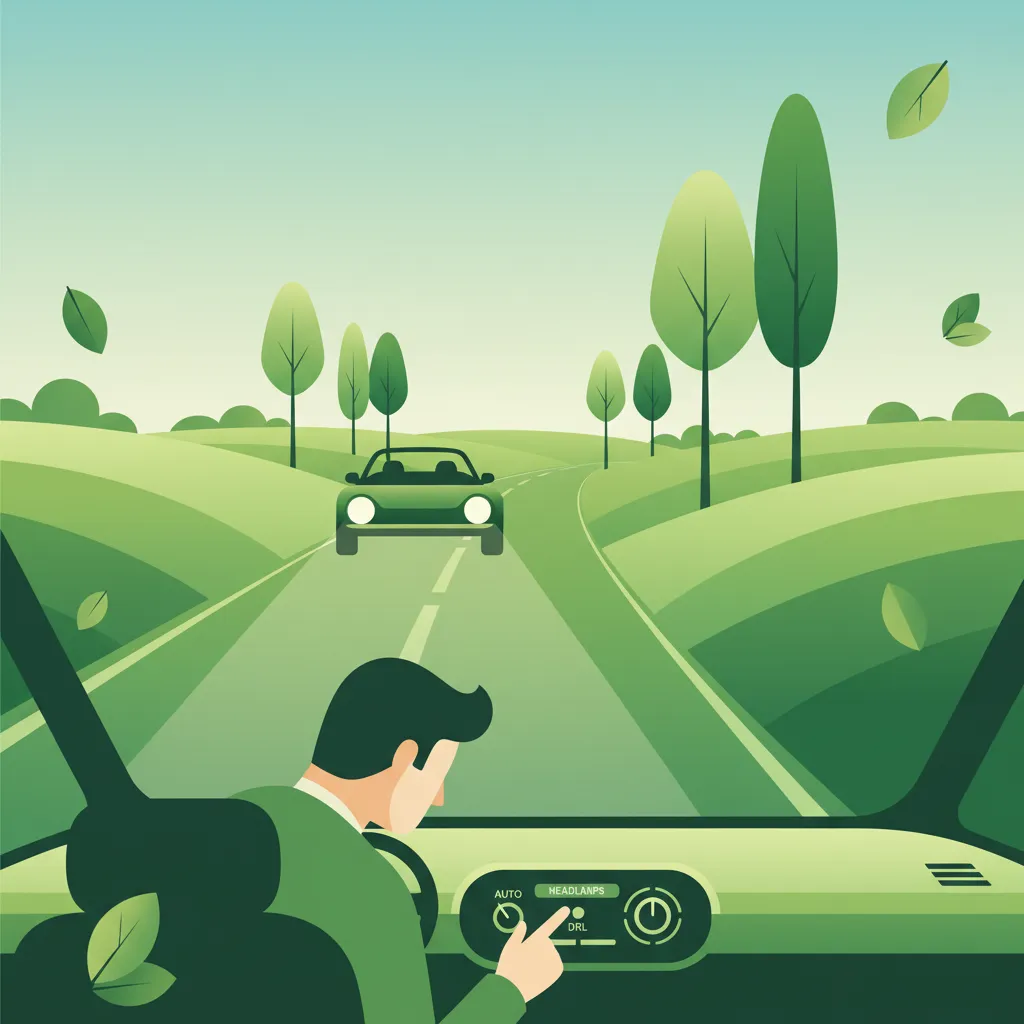
This lesson focuses on the dual challenge of visibility: seeing the road ahead and ensuring other drivers see you. It covers the legal requirements and tactical use of headlights ('koplampen'), including when to use high and low beams, and the importance of daytime running lights. Additionally, it explores strategies for enhancing personal conspicuity through high-visibility and reflective clothing, and using lane positioning to stand out in traffic and avoid blind spots.
Master techniques for managing sun glare and avoiding headlight dazzle in the Netherlands. This lesson covers clean windows, mirrors, and effective strategies for visual comfort and safety.
This lesson details the functions of the various lights on a car and the legal requirements for their use. You will learn the difference between dipped beams (dimlicht), which are the standard headlights for night driving and poor visibility, and main beams (grootlicht), which can only be used when they won't dazzle other road users. The content also covers the use of sidelights (stadslicht) for parking and the automatic function of Daytime Running Lights (DRLs). Correct usage is vital for visibility and avoiding blinding other drivers.
This lesson covers the full range of lights and signals required on a vehicle for visibility and communication. You will learn about the mandatory requirements for headlights, taillights, brake lights, indicators, and reflectors. The curriculum emphasizes the driver's legal responsibility to ensure all lights are clean and functional before every journey. The correct use and function of the horn as an audible warning device in case of imminent danger are also explained.
This lesson focuses on the use of specialized lights for specific situations. You will learn the strict conditions under which fog lights may be used: the rear fog light is only permitted when visibility from fog or snow is less than 50 meters, and not in rain. The lesson also explains the correct use of hazard warning lights, which are intended to warn other drivers of a stationary obstruction (like a breakdown or the tail end of a sudden traffic jam) or while being towed.
This lesson focuses on the dual challenge of visibility: seeing the road ahead and ensuring other drivers see you. It covers the legal requirements and tactical use of headlights ('koplampen'), including when to use high and low beams, and the importance of daytime running lights. Additionally, it explores strategies for enhancing personal conspicuity through high-visibility and reflective clothing, and using lane positioning to stand out in traffic and avoid blind spots.

Riding at night presents two main challenges: seeing the road and being seen by others. This lesson covers the legal requirements for your vehicle's lighting system and how to use it effectively, including when to use high beams. It also emphasizes strategies to increase your own conspicuity, such as wearing bright or reflective clothing. You will learn how darkness affects your perception of speed and distance and how to adapt your riding to compensate for these limitations.
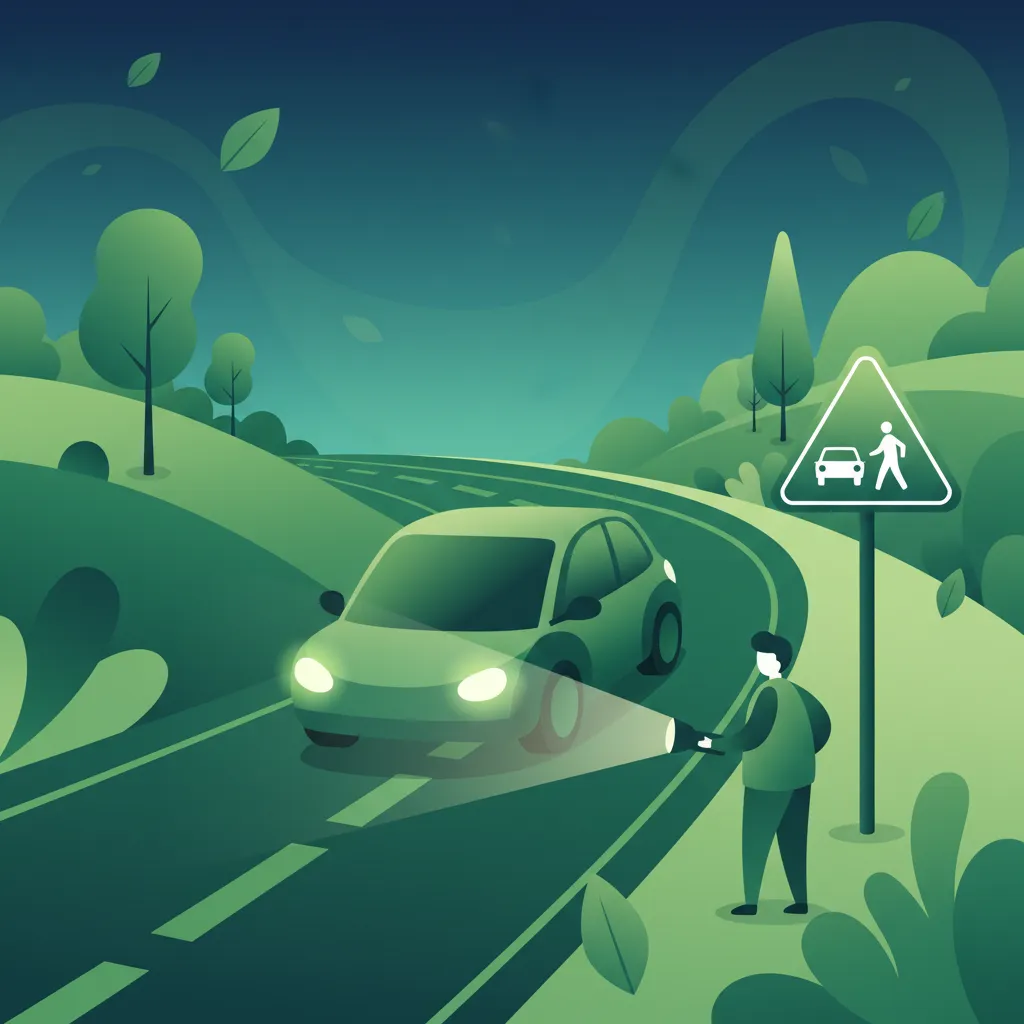
Your vehicle's lights and horn are your primary tools for seeing, being seen, and communicating warnings. This lesson guides you through a simple but vital check of all electrical components before you ride. You will learn how to verify the function of your headlight (high and low beam), taillight, brake light (using both front and rear brake levers), and turn signals. It also covers checking the horn's operation and ensuring all mandatory reflectors are clean and intact.
Find clear answers to common questions learners have about Visibility: Seeing, Being Seen, and Glare. Learn how the lesson is structured, which driving theory objectives it supports, and how it fits into the overall learning path of units and curriculum progression in the Netherlands. These explanations help you understand key concepts, lesson flow, and exam focused study goals.
In the Netherlands, it is a legal requirement that your windows, mirrors, and lights must be clean and free from obstruction to ensure maximum visibility. Dirty windows, mirrors, or lights can significantly impair your ability to see other road users or signals, and make you less visible to others, leading to potential fines.
When dazzled by oncoming headlights at night, you should slow down immediately, avoid looking directly at the bright lights, and instead focus your gaze towards the right edge of the road or the white line marking the side of the carriageway. Continue slowing down until you can see clearly again, and then resume your normal speed if safe to do so.
Front and rear fog lights should only be used when visibility is severely reduced, typically when you cannot see further than 50 meters. Using them in clear conditions can dazzle other drivers, especially those behind you, and is therefore prohibited.
Sun glare, especially when the sun is low on the horizon (morning or evening), can temporarily blind you, making it difficult to see road signs, traffic lights, other vehicles, or pedestrians. This drastically increases the risk of an accident. Always be prepared by using your sun visor and, if necessary, appropriate sunglasses.
Yes, the Dutch theory exam includes questions that test your knowledge of visibility. These often relate to the importance of clean windows and lights, the correct use of vehicle lighting, and how to react safely in situations involving sun glare or dazzling headlights.