
Bad weather can make driving significantly more challenging and dangerous. This lesson focuses on understanding and managing risks associated with rain, fog, ice, and strong winds, crucial topics for your Dutch Category B driving theory exam and everyday safety. It builds upon your knowledge of basic road rules to equip you for these specific conditions.

Driving requires constant adaptation, and adverse weather conditions present some of the most challenging scenarios on the road. From heavy rain and strong winds to ice and snow, these conditions significantly impact vehicle performance, visibility, and overall road safety. In the Netherlands, where weather can change rapidly, understanding how to adjust your driving style is crucial for preventing accidents and ensuring a safe journey for yourself and others.
This lesson explores the specific risks associated with various types of adverse weather and provides practical guidance on how to manage your vehicle effectively. You will learn about phenomena like aquaplaning and black ice, the correct use of vehicle features, and essential techniques for maintaining control in challenging environments.
Successfully navigating adverse weather conditions hinges on a few fundamental principles that mitigate risks by enhancing control and reaction time. These principles are not merely suggestions but critical adjustments to standard driving practices, ensuring your safety and compliance with Dutch traffic laws.
Driving below the posted speed limit, specifically tailoring your speed to the current traction and visibility, is paramount. Reduced speed directly correlates with shorter stopping distances and minimizes the likelihood of losing control due to oversteer or understeer. This requires a slower pace, more careful braking, and a heightened sense of anticipation.
Maintaining a greater space cushion behind the vehicle in front provides crucial extra time to react to unexpected changes in traffic or road conditions. Adverse weather can significantly increase braking distances and alter vehicle dynamics. A longer following distance, often double or triple what is recommended in dry conditions, offers a vital buffer.
Abrupt or sudden inputs can easily upset a vehicle's balance, particularly on slippery surfaces. Applying steering, braking, and acceleration gently prevents rapid weight transfer, which can lead to a loss of tyre traction and control. Smooth, deliberate actions are key to maintaining stability.
Traction is the grip between your tyres and the road surface, and it is severely compromised in adverse weather. Effective traction management involves using appropriate tyres for the conditions (e.g., winter tyres), preventing wheelspin through gentle acceleration, and controlling momentum. Maintaining optimal tyre condition, including correct pressure and adequate tread depth, is fundamental.
Heavy rain is a common occurrence in the Netherlands and significantly increases the risk of road accidents. One of the most dangerous phenomena associated with wet roads is aquaplaning, also known as hydroplaning.
Aquaplaning can occur at speeds as low as 25 km/h, especially if the water depth on the road exceeds the capability of your tyre tread to clear it (typically if water depth is greater than 0.5 mm per millimetre of tyre tread depth). The risk increases with higher speeds, shallower tyre tread, and larger amounts of standing water.
If you experience aquaplaning, it is crucial to remain calm and react correctly:
On wet roads, stopping distances are significantly increased, potentially by 30% or more compared to dry conditions. Always adjust your speed and maintain a larger following distance to account for this.
Strong crosswinds can significantly affect vehicle stability, pushing it sideways and making it difficult to maintain a straight course. This is particularly true for larger vehicles, such as trucks, vans, or cars towing caravans and trailers, which present a larger surface area to the wind.
To manage crosswinds effectively and maintain your lane:
Keeping within your lane and avoiding sudden steering inputs are mandatory requirements under Dutch traffic law to prevent accidents and maintain road safety.
Winter conditions introduce a unique set of challenges, drastically reducing tyre grip and increasing stopping distances. From invisible ice to heavy snow, being prepared for winter driving is essential.
Encountering black ice can lead to a sudden and complete loss of control, even at moderate speeds (above 40 km/h). If you suspect black ice:
It is mandatory for winter tyres to have a minimum tread depth of 4.5 mm to be effective and legal for use in winter conditions, especially where they are legally required (e.g., in neighbouring countries during winter periods). Regularly check your tyre pressure and tread depth, as well as considering the use of snow chains in extreme conditions where permitted and necessary.
A skid occurs when your vehicle's tyres lose traction with the road surface, leading to a loss of directional stability. This can happen due to excessive speed, harsh braking, aggressive steering, or a combination of these factors on a slippery surface.
If your vehicle begins to skid, quick and correct actions can prevent a serious accident:
Reduced visibility due to fog or heavy snow significantly increases the risk of collisions. It impairs your ability to see other vehicles, road signs, and hazards, and it also makes your vehicle less visible to others.
dimlicht). High beam headlights (grootlicht) will reflect off the fog and worsen visibility, creating glare.mistlichten vóór): These can be used when visibility is significantly reduced by fog.mistachterlicht): These are extremely bright and should only be used when visibility is less than 50 metres. Once visibility improves beyond 50 metres, switch them off immediately, as they can severely dazzle drivers behind you.alarmlichten) while driving: These are intended for stationary vehicles to warn of a hazard and can confuse other drivers about your intentions.Heavy snowfall can quickly reduce visibility, cover road markings, and make roads extremely slippery.
Adhering to specific Dutch traffic regulations and best practices is essential for safe driving in adverse weather. These rules are designed to minimise risks and ensure all road users can navigate challenging conditions as safely as possible.
winterbanden) is highly recommended during the colder months (typically 1 November to 31 March). They must have a minimum tread depth of 4.5 mm to be considered effective and legal where required by specific winter road regulations (e.g., in some neighbouring countries).dimlicht). This ensures you are visible to other road users and avoids glare that can occur with high beams in such conditions.mistachterlicht) are only permitted when visibility is less than 50 metres. They must be switched off immediately once visibility improves to prevent dazzling drivers behind you.Understanding common mistakes can significantly enhance your ability to drive safely in adverse weather. Many accidents occur not due to the weather itself, but due to drivers failing to adapt their behaviour.
The relationship between your actions and their consequences is direct:
For example, speeding in heavy rain on wet pavement dramatically increases the likelihood of aquaplaning. This sudden loss of control can rapidly escalate into a severe collision, highlighting why adaptation is not just recommended, but essential for safety.
Driving in adverse weather conditions demands heightened awareness, careful preparation, and a commitment to adjusting your driving style. By understanding the specific risks posed by heavy rain, crosswinds, black ice, snow, and fog, and by applying the core principles of adjusted speed, increased following distance, gentle inputs, and effective traction management, you can significantly reduce your risk of accidents.
Remember to be especially vigilant for black ice, ensure your vehicle is equipped with appropriate tyres for winter, and use your vehicle's lights correctly to maintain visibility. Adhering to Dutch traffic regulations for these conditions is not just a legal requirement but a fundamental aspect of responsible and safe driving. Mastering these concepts will equip you to confidently and safely navigate the challenges that adverse weather presents on Dutch roads.
Lesson content overview
Explore all units and lessons included in this driving theory course.
Explore search topics learners often look for when studying Driving in Adverse Weather Conditions. These topics reflect common questions about road rules, driving situations, safety guidance, and lesson level theory preparation for learners in the Netherlands.
Browse additional driving theory lessons that cover connected traffic rules, road signs, and common driving situations related to this topic. Improve your understanding of how different rules interact across everyday traffic scenarios.
Learn essential techniques for driving safely in rain, fog, ice, and wind. Understand the risks of aquaplaning, black ice, and crosswinds, and how to maintain vehicle control. Essential Dutch driving theory for challenging conditions.
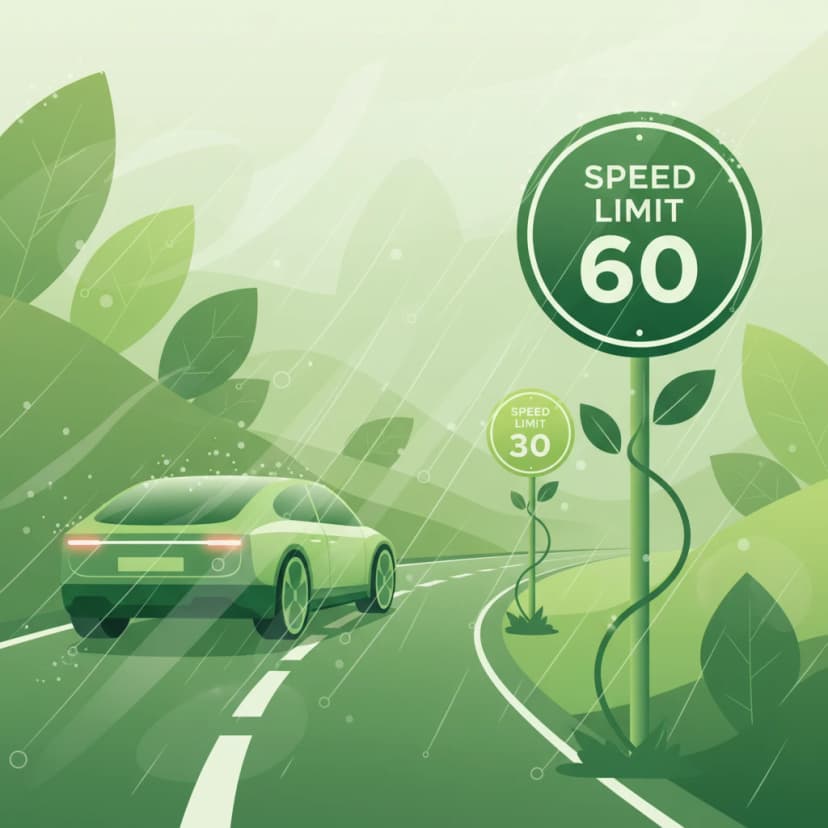
This lesson emphasizes the critical importance of adapting your speed to prevailing conditions, which may require driving slower than the legal limit. You will learn how factors like rain, fog, snow, and darkness significantly increase braking distances and reduce visibility. The curriculum explains the dangers of aquaplaning on wet roads and black ice in winter. The core principle taught is that a safe driver always adjusts their speed to ensure they can stop within the distance they can see to be clear.
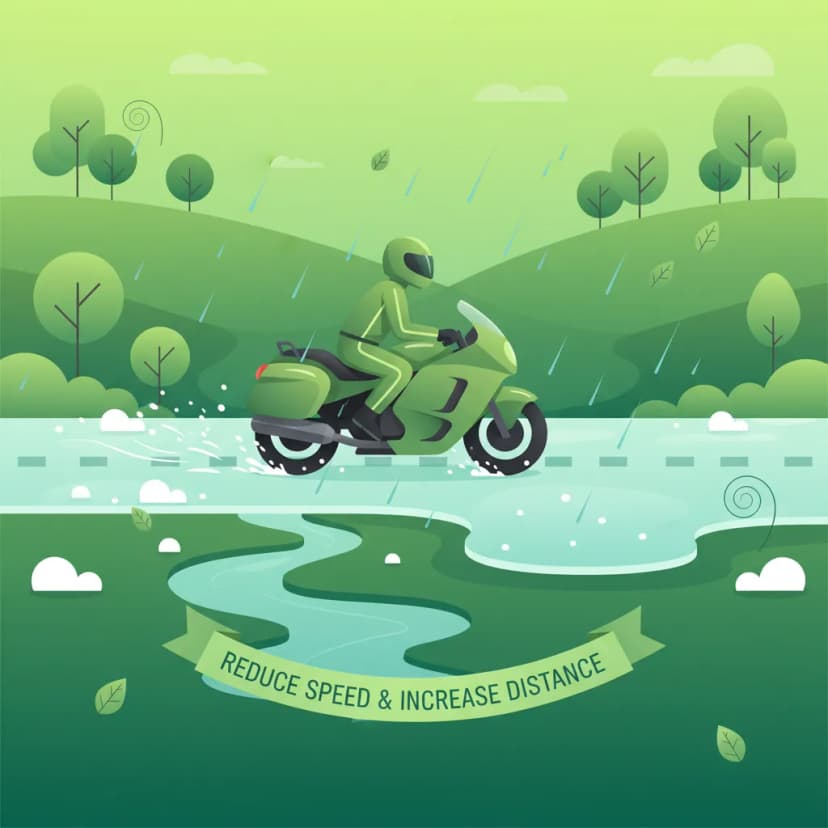
This lesson provides survival strategies for riding in the most challenging weather conditions, including heavy rain, snow, and potential ice. It emphasizes the importance of mental preparation, drastically reduced speeds, and hyper-smooth inputs for throttle, brakes, and steering. The content also covers identifying high-risk areas for 'black ice,' such as bridges and shaded spots, and the critical role of appropriate waterproof and insulated gear in preventing hypothermia and maintaining concentration.
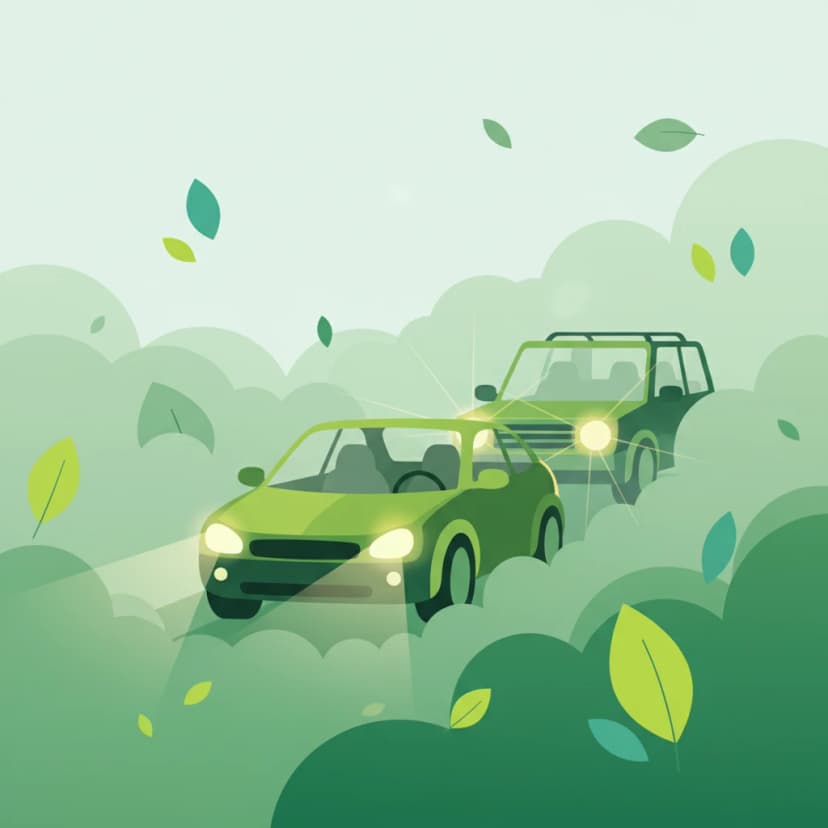
This lesson focuses on the use of specialized lights for specific situations. You will learn the strict conditions under which fog lights may be used: the rear fog light is only permitted when visibility from fog or snow is less than 50 meters, and not in rain. The lesson also explains the correct use of hazard warning lights, which are intended to warn other drivers of a stationary obstruction (like a breakdown or the tail end of a sudden traffic jam) or while being towed.
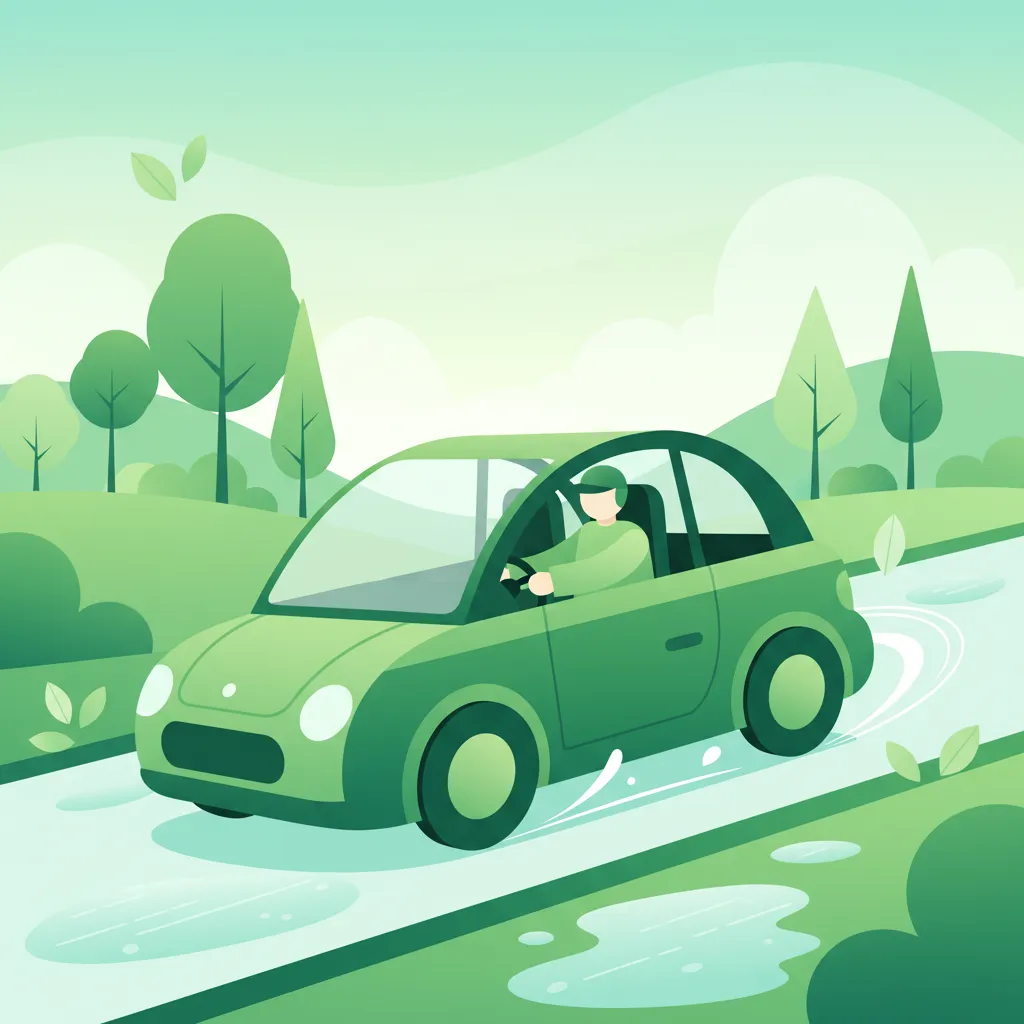
Riding on two wheels requires special care on surfaces with reduced grip. This lesson teaches you how to handle challenging conditions like rain, ice, wet leaves, or tram tracks. Key principles include reducing speed significantly, making all control inputs (braking, accelerating, steering) much more smoothly and gradually, and increasing your following distance to allow for much longer stopping distances. Recognizing potentially slippery areas is a critical part of proactive hazard perception.
This lesson provides a detailed guide to riding in wet and low-visibility conditions. You will learn to make all your control inputs—braking, accelerating, and steering—exceptionally smooth to avoid breaking traction on slippery surfaces. The content covers the dangers of painted lines and manhole covers when wet, and the importance of increasing your following distance dramatically to account for longer braking distances.
This lesson reinforces the critical relationship between adverse conditions, reduced traction, and massively increased stopping distances. It provides a clear framework for how much riders need to increase their following distance and reduce their overall speed to maintain a safe margin for error. The curriculum teaches riders to constantly reassess their speed based on visual feedback from the road surface and the level of visibility, ensuring they can always stop within the distance they can clearly see.
This lesson explains why the standard two-second rule is insufficient in adverse conditions and requires extension. It details how factors like rain, fog, and darkness reduce both visibility and tire grip, thereby significantly increasing total stopping distance. The content provides practical guidelines, such as extending the following gap to four seconds or more in the wet, to ensure the rider always has enough time and space to stop safely, regardless of the conditions.
This lesson addresses the dual challenge of poor visibility: being able to see the road ahead and ensuring other road users can see you. It covers techniques for riding in fog and heavy rain, such as using appropriate lights and reducing speed to match sight distance. The lesson also discusses practical issues like helmet visor fogging and the importance of wearing high-visibility or reflective clothing to enhance conspicuity in low-light conditions.
Rain significantly reduces tire grip and rider visibility. This lesson covers the essential adjustments needed for wet-weather riding, including reducing speed, increasing following distance, and applying all controls more smoothly. It explains the danger of hydroplaning (aquaplaning) when tires lose contact with the road over standing water and how to avoid it. You will also learn about the importance of good tire tread depth for channeling water away and maintaining traction.
This lesson explains how to counteract the effects of strong winds, which can easily upset a motorcycle's stability. It covers techniques like maintaining a relaxed grip on the handlebars and leaning into a steady crosswind. The lesson also addresses the impact of temperature, explaining how cold weather affects both the rider (risk of hypothermia, reduced concentration) and the motorcycle (reduced tire grip until warmed up), and emphasizes the need for appropriate protective gear.
Understand the critical role of vehicle lighting and visibility when driving in fog, heavy snow, or rain. Learn the correct use of headlights, fog lights, and hazard lights according to Dutch traffic law.
This lesson focuses on the use of specialized lights for specific situations. You will learn the strict conditions under which fog lights may be used: the rear fog light is only permitted when visibility from fog or snow is less than 50 meters, and not in rain. The lesson also explains the correct use of hazard warning lights, which are intended to warn other drivers of a stationary obstruction (like a breakdown or the tail end of a sudden traffic jam) or while being towed.
This lesson details the functions of the various lights on a car and the legal requirements for their use. You will learn the difference between dipped beams (dimlicht), which are the standard headlights for night driving and poor visibility, and main beams (grootlicht), which can only be used when they won't dazzle other road users. The content also covers the use of sidelights (stadslicht) for parking and the automatic function of Daytime Running Lights (DRLs). Correct usage is vital for visibility and avoiding blinding other drivers.

This lesson covers the full range of lights and signals required on a vehicle for visibility and communication. You will learn about the mandatory requirements for headlights, taillights, brake lights, indicators, and reflectors. The curriculum emphasizes the driver's legal responsibility to ensure all lights are clean and functional before every journey. The correct use and function of the horn as an audible warning device in case of imminent danger are also explained.
This lesson emphasizes the critical importance of adapting your speed to prevailing conditions, which may require driving slower than the legal limit. You will learn how factors like rain, fog, snow, and darkness significantly increase braking distances and reduce visibility. The curriculum explains the dangers of aquaplaning on wet roads and black ice in winter. The core principle taught is that a safe driver always adjusts their speed to ensure they can stop within the distance they can see to be clear.
This lesson addresses the dual challenge of poor visibility: being able to see the road ahead and ensuring other road users can see you. It covers techniques for riding in fog and heavy rain, such as using appropriate lights and reducing speed to match sight distance. The lesson also discusses practical issues like helmet visor fogging and the importance of wearing high-visibility or reflective clothing to enhance conspicuity in low-light conditions.
This lesson focuses on the importance of maintaining clear visibility in all directions. You will learn about the legal requirement to have clean windows, mirrors, and lights, and the proper use of demisters and wipers. The content provides strategies for managing sun glare using sun visors and sunglasses. It also addresses the issue of being dazzled by the headlights of other vehicles at night and how to react safely by slowing down and looking towards the right edge of the road.

Riding at night presents two main challenges: seeing the road and being seen by others. This lesson covers the legal requirements for your vehicle's lighting system and how to use it effectively, including when to use high beams. It also emphasizes strategies to increase your own conspicuity, such as wearing bright or reflective clothing. You will learn how darkness affects your perception of speed and distance and how to adapt your riding to compensate for these limitations.
This lesson focuses on the dual challenge of visibility: seeing the road ahead and ensuring other drivers see you. It covers the legal requirements and tactical use of headlights ('koplampen'), including when to use high and low beams, and the importance of daytime running lights. Additionally, it explores strategies for enhancing personal conspicuity through high-visibility and reflective clothing, and using lane positioning to stand out in traffic and avoid blind spots.
This lesson provides a detailed guide to riding in wet and low-visibility conditions. You will learn to make all your control inputs—braking, accelerating, and steering—exceptionally smooth to avoid breaking traction on slippery surfaces. The content covers the dangers of painted lines and manhole covers when wet, and the importance of increasing your following distance dramatically to account for longer braking distances.
This lesson explains why the standard two-second rule is insufficient in adverse conditions and requires extension. It details how factors like rain, fog, and darkness reduce both visibility and tire grip, thereby significantly increasing total stopping distance. The content provides practical guidelines, such as extending the following gap to four seconds or more in the wet, to ensure the rider always has enough time and space to stop safely, regardless of the conditions.
Find clear answers to common questions learners have about Driving in Adverse Weather Conditions. Learn how the lesson is structured, which driving theory objectives it supports, and how it fits into the overall learning path of units and curriculum progression in the Netherlands. These explanations help you understand key concepts, lesson flow, and exam focused study goals.
Aquaplaning occurs when a layer of water builds up between your tires and the road surface, causing you to lose steering control. To avoid it, reduce your speed significantly in heavy rain, ensure your tires have sufficient tread depth, and avoid sudden steering or braking.
Black ice is a thin, transparent layer of ice that can be nearly invisible on the road, making it particularly dangerous. It often forms on bridges and shaded areas when temperatures are near freezing. If you encounter black ice, avoid sudden movements; steer gently and brake very lightly, or lift off the accelerator completely to slow down gradually.
Front fog lights should only be used when visibility is less than 50 meters. Rear fog lights must be used when visibility is less than 50 meters, but must be switched off when visibility improves to avoid dazzling other drivers. They are not a substitute for reducing speed and increasing following distance.
Strong crosswinds can push your vehicle sideways, especially on bridges or when passing large vehicles. Maintain a firm grip on the steering wheel, anticipate potential drifts, and be ready to make small corrections. Be particularly cautious when overtaking or being overtaken.
Winter tires are not generally mandatory in the Netherlands, but they are highly recommended for driving in snow and icy conditions as they provide better grip. Always adjust your speed and driving style regardless of tire type when conditions are poor.