
This lesson is crucial for any A1 motorcycle rider facing unexpected hazards. You will learn the principles of counter-steering in an emergency, focusing on how to execute a rapid swerve to avoid collisions. Understanding these techniques is essential for the Dutch CBR theory exam and for ensuring your safety on the road, building upon your knowledge of general cornering dynamics.

Learning to ride a motorcycle safely involves understanding its unique dynamics, especially when faced with unexpected hazards. One of the most critical skills for collision avoidance is counter-steering in an emergency. This advanced technique allows motorcyclists to rapidly change direction and swerve around obstacles, a mandatory competence for the Dutch A1 motorcycle licence (CBR exam). This lesson will delve into the principles, execution, and legal context of counter-steering, preparing you for safe riding on Dutch roads.
Motorcycles react differently to steering inputs compared to cars. While a car driver turns the steering wheel in the desired direction, a motorcyclist initiates a turn by momentarily pushing the handlebar in the opposite direction. This seemingly counter-intuitive action is known as counter-steering, and it is the fastest and most reliable way to lean a motorcycle and execute a rapid evasive manoeuvre, or swerve, to avoid an imminent collision.
The ability to perform an emergency swerve is not merely a skill; it's a fundamental aspect of motorcycle safety. In situations where hard braking alone might not prevent an impact, a decisive counter-steer can provide the necessary clearance to avoid an obstacle and prevent serious injury. Mastering this technique is therefore indispensable for any motorcyclist seeking their A1 licence in the Netherlands.
Counter-steering is the intentional act of pushing the handlebar opposite to the desired direction of turn. For example, to turn left, you briefly push the left handlebar forward. To turn right, you push the right handlebar forward. This action creates a momentary torque on the front wheel, causing the motorcycle to lean quickly into the intended turn. Within fractions of a second (typically 0.2 to 0.3 seconds), the bike achieves a lean angle sufficient to change its direction rapidly.
The purposeful push on the handlebar opposite to the desired direction of turn, which generates a torque that causes the motorcycle to lean and initiate a turn in the intended direction.
This method is crucial for emergency situations because it provides the quickest way to initiate a lean. Unlike simply "pulling" the handlebars or shifting body weight, which are slower and less effective for rapid direction changes at speed, a firm push-steer leverages the bike's inherent physics to achieve an immediate lean. Riders must develop muscle memory for this action, as hesitation or insufficient force can lead to delayed lean and increased collision risk.
When you push the left handlebar forward, the front wheel briefly steers to the right. This causes the motorcycle to quickly lean to the left. Once the desired lean angle is achieved, the rider can relax the counter-steering input, and the motorcycle will continue to turn as long as the lean is maintained. To exit the turn, a gentle counter-steer in the opposite direction (pushing the right handlebar forward to turn the bike upright) is used.
This technique is effective at almost all speeds above walking pace (typically >10 km/h), becoming increasingly more pronounced and essential as speed increases. At higher speeds, body weight shifts have a negligible effect on initiating a rapid lean, making counter-steering the only viable option for quick changes in direction.
In an emergency situation, our natural instinct is often to stare intensely at the obstacle we wish to avoid. On a motorcycle, this common human tendency is known as target fixation, and it can be extremely dangerous.
A cognitive-visual bias where a rider's gaze locks onto a hazard, causing the body and motorcycle to unconsciously follow the line of sight, often steering directly towards the obstacle rather than away from it.
When a rider fixates on a hazard, their body and motorcycle tend to follow their line of sight, inadvertently directing the bike towards the very thing they are trying to avoid. This reduces the effective space for an evasive manoeuvre, increasing the likelihood of a collision. To successfully counter-steer around an obstacle, it is vital to consciously override this instinct.
Instead of staring at the danger, motorcyclists must immediately redirect their focus to the escape path – the clear area where they want the motorcycle to go. By looking where you want to go, your brain and body will naturally guide the motorcycle towards that path, complementing the counter-steering input. This deliberate shift in visual focus is as critical as the physical action of counter-steering itself.
Executing an emergency swerve requires an understanding of the motorcycle's lean angle and the limits of tyre traction. The lean angle is the angle between the motorcycle’s vertical axis and the road surface when it is tilted into a turn. The greater the speed and the sharper the desired turn, the greater the lean angle required.
The angle between the motorcycle's vertical axis and the ground when the bike is tilted into a turn, crucial for determining turn radius and maintaining balance.
For any given obstacle width and speed, there is a lean angle threshold – the minimum lean angle necessary for the motorcycle to physically clear the obstacle without losing traction. If the required lean angle exceeds the safe limit for your motorcycle and road conditions (typically 30-45 degrees for most A1 motorcycles), attempting to swerve might result in a loss of grip. In such cases, alternative actions like emergency braking might be the safer option, or a combination of both if conditions allow.
Every motorcycle tyre has a finite amount of grip, which can be visualized as a traction circle (or friction circle). This concept illustrates the total usable force a tyre can generate in any direction – longitudinal (braking or acceleration) and lateral (cornering).
A graphical representation of the combined longitudinal (braking/acceleration) and lateral (cornering) forces a tyre can generate before losing adhesion with the road surface.
When the tyre is solely used for braking or acceleration, it uses the full longitudinal capacity. When it's solely used for cornering, it uses the full lateral capacity. However, when braking and turning simultaneously, these forces combine. The combined force must remain within the traction circle to maintain grip. If the combined forces exceed the circle's boundary, the tyre will slip, leading to a loss of control.
In an emergency swerve, especially at speed, applying heavy braking while simultaneously initiating a deep lean can overload the tyres, particularly on low-grip surfaces like wet asphalt or gravel. A skilled rider learns to manage these forces, often briefly releasing the brakes before initiating the counter-steer to maximize lateral grip for the swerve, then reapplying gentle braking once the obstacle is cleared.
The rapid response of a motorcycle to counter-steering is largely due to a physical phenomenon called gyroscopic precession. This effect is a property of spinning objects, like the front wheel of your motorcycle.
The physical effect where a spinning front wheel resists changes to its rotational axis, causing a steering input that pushes the handlebars (e.g., left) to generate a lean to the same side (left).
When the front wheel is spinning at speed, it acts like a gyroscope. If you apply a force that tries to tilt its axis (by pushing the handlebars), the wheel doesn't just tilt in the direction of the push; instead, it generates a force at 90 degrees to the applied force, causing the motorcycle to lean. This is why a simple push on the handlebar results in a quick and powerful lean into the turn.
Gyroscopic precession is most effective at speeds above approximately 10 km/h. At very low speeds (e.g., below 5 km/h), the gyroscopic effect is minimal, and riders rely more on subtle shifts in body weight and direct steering inputs to maintain balance and initiate turns. However, for emergency swerves where speed is a factor, gyroscopic precession is the key physical principle that enables rapid direction changes. A firm, swift push on the handlebars fully leverages this effect, generating the necessary lateral force for quick lean.
In the Netherlands, specific traffic laws and regulations govern how road users, including motorcyclists, must respond to hazards and emergencies. These regulations underscore the legal expectation for riders to possess and apply skills like counter-steering.
The Rijkswegvoorschriften (RVV 1990) Article 12.3 states that "A road user must take every reasonable measure to avoid a collision, including appropriate steering and braking actions." This mandates that motorcyclists must be capable of executing evasive manoeuvres, such as counter-steering, to prevent foreseeable accidents. Failing to apply appropriate techniques when an avoidance action was possible could have legal consequences.
Furthermore, RVV 1990 Article 29.4 dictates that "When avoiding an obstacle, the rider must not endanger other road users." This means that while performing an emergency swerve, a motorcyclist must ensure that their action does not create a new hazard for other vehicles, cyclists, or pedestrians. A quick glance into mirrors and over the shoulder (a "lifesaver") before an emergency lane change is therefore crucial, even in high-stress situations.
Under Regulation 7 of the Dutch Motorrijtuigenregeling (MRR), motorcycles up to 125 cc (A1 class) must maintain a minimum ground clearance, typically around 120 mm, when leaning. This is essential during a deep lean in an emergency swerve, as exceeding the bike's maximum lean angle can cause parts of the motorcycle (like footpegs or the exhaust) to scrape the road, leading to a loss of control and a potential crash. Riders must be aware of their bike's limits.
While not directly tied to counter-steering, it's important to understand the correct use of hazard warning lights (Regulation 11). These are intended to be activated when a vehicle is stationary and presents a danger to other road users. Activating hazard lights while moving at high speed during a swerve is generally inappropriate and could confuse other drivers, potentially leading to further complications or even being deemed an illegal act. Use appropriate turn signals after the manoeuvre if changing lanes.
The EU Directive 2006/42/EC (Machinery Safety) ensures that all motorcycles sold in the EU, including A1 class bikes, are equipped with steering mechanisms that allow precise control. This guarantees that the handlebar system can produce the necessary torque for effective counter-steering, contributing to the overall safety design of the vehicle.
Even with a good theoretical understanding, executing an emergency counter-steer under pressure can be challenging. Many common mistakes can compromise the effectiveness of the manoeuvre or lead to a loss of control.
Avoiding Critical Errors in Emergency Swerves:
The precise execution of an emergency counter-steer needs to be adapted to various environmental and vehicle-specific conditions.
When an emergency swerve involves avoiding pedestrians or cyclists, additional considerations apply:
In a critical moment, a structured approach, even if subconscious, can make all the difference. Here’s a breakdown of the optimal steps for executing an emergency swerve using counter-steering:
To solidify your understanding, let's examine practical scenarios where emergency counter-steering is essential.
Setting: You are riding an A1 motorcycle at 30 km/h on a dry, narrow city street. Suddenly, a delivery van pulls out of a parking spot and stops abruptly, blocking your lane approximately 5 metres ahead.
Correct Behaviour: You immediately glance to the clear space to the left of the van (your escape path). Without hesitation, you firmly push the right handlebar for about 0.2 seconds. The motorcycle rapidly leans to the left, achieving a 25-degree lean angle, allowing you to swerve around the van with about 0.8 metres of clearance. Once past the obstacle, you gently ease the push, and the bike straightens, allowing you to safely continue in your lane.
Incorrect Behaviour: You stare directly at the stopped van (target fixation), instinctively pulling the left handlebar towards it. The motorcycle does not lean adequately, and because your gaze is fixed on the hazard, you ride directly into the side of the van.
Setting: You're travelling at 80 km/h on a wet motorway. Ahead, a large truck unexpectedly slows, creating a sudden and immediate blockage in your lane. You need to make an instantaneous decision: brake hard or swerve left.
Correct Behaviour: Recognizing the reduced traction due to the wet asphalt, you momentarily and slightly ease off the front brake. You then execute a very brief, decisive push on the right handlebar (counter-steering left) for approximately 0.15 seconds. The motorcycle leans to a safe 30 degrees for the wet conditions. While there's a slight, controlled slide as the tyres operate near their reduced traction limit, you successfully avoid the truck. You then gently straighten the bike and can re-apply light braking if necessary.
Incorrect Behaviour: You maintain full, hard braking while simultaneously attempting to push hard on the right handlebar. The combined braking and turning forces exceed the now-smaller traction circle for the wet tyres. The rear tyre loses grip, causing an uncontrolled slide, and the motorcycle spins out, leading to a fall.
Setting: You are navigating a gravel parking lot at 20 km/h. A child suddenly darts out from between parked cars directly into your path.
Correct Behaviour: You quickly redirect your gaze to the open space to the right of the child. You push the left handlebar firmly and briefly. The motorcycle leans to about 20 degrees, allowing you to swerve smoothly over the loose gravel and into an adjacent empty space, clearing the child. Crucially, you avoid applying any significant braking during the swerve to preserve the limited traction available on the gravel.
Incorrect Behaviour: You instinctively apply heavy front braking while trying to pull the right handlebar to turn. On the loose gravel, the front wheel immediately locks up, and the motorcycle slides uncontrollably towards the child, leading to an unavoidable collision or fall.
Setting: You are riding at 45 km/h on an illuminated highway at night. Glare from oncoming traffic temporarily impairs your vision, and then you suddenly spot a large oil spill on the road, approximately 8 metres ahead, directly in your path.
Correct Behaviour: Despite the glare, you quickly identify a clear patch of road to the right of the oil spill. You keep your eyes fixed on this escape path. You execute a swift, short push on the left handlebar (counter-steering right). The motorcycle leans efficiently to about 22 degrees, allowing you to smoothly pass the oil spill without losing grip.
Incorrect Behaviour: You look directly at the glistening oil patch (target fixation), attempting to pull the right handlebar to steer around it. Because your gaze is fixed on the hazard, the bike doesn't generate enough lean in the correct direction, and you ride directly into the oil, losing traction and potentially falling.
The emphasis on counter-steering for emergency cornering is rooted in both the physics of motorcycle dynamics and the realities of human perception and reaction.
Understanding counter-steering in emergency cornering is a vital step in becoming a safe and responsible motorcyclist. This skill builds upon foundational knowledge of vehicle controls and motorcycle physics and is crucial for navigating complex traffic situations. Continue to refine your theoretical understanding and prepare for practical application.
Lesson content overview
Explore all units and lessons included in this driving theory course.
Explore search topics learners often look for when studying Counter-Steering in Emergency Cornering. These topics reflect common questions about road rules, driving situations, safety guidance, and lesson level theory preparation for learners in the Netherlands.
Browse additional driving theory lessons that cover connected traffic rules, road signs, and common driving situations related to this topic. Improve your understanding of how different rules interact across everyday traffic scenarios.
Explore the critical theory and physics behind emergency swerving on a motorcycle. Understand target fixation, counter-steering, and legal requirements for collision avoidance in the Netherlands.

This lesson teaches the technique for swerving when stopping is not possible. You will learn that a swerve is initiated with a decisive counter-steer: press right to go right, press left to go left. The content emphasizes the importance of separating braking from swerving—ideally, you brake first, then release the brakes to execute the swerve, maintaining maximum available traction for steering.

This lesson outlines the step-by-step procedure for executing a controlled emergency stop in a straight line. It emphasizes keeping the motorcycle upright, looking ahead, and applying both brakes firmly and progressively up to the point of maximum traction (or ABS activation). Understanding this technique is critical for minimizing stopping distance in a sudden hazard scenario and is a key skill assessed in practical motorcycle training.

This lesson focuses on the physical skill of an emergency stop, building on previous braking lessons. You will learn to adopt a braced body position, keeping your arms straight and looking ahead, not down. The content details the technique of applying both brakes rapidly but progressively to the point of maximum traction, and how to trust and utilize ABS if your motorcycle is equipped with it.

This lesson teaches the principles of performing a controlled emergency stop ('noodsremmen') to achieve the shortest possible stopping distance without losing control. It details the technique of applying both brakes firmly and progressively, managing the forward weight transfer, and maintaining an upright body posture to maximize braking efficiency. The content emphasizes braking in a straight line and looking ahead to where you want to stop, not at the obstacle.

When an emergency vehicle approaches with sirens and blue flashing lights, you are legally required to give way. This lesson explains the correct procedure: check your surroundings, signal your intention, and move to the side of the road as safely and quickly as possible to create a clear path. It also covers the procedure for making an emergency stop due to a vehicle breakdown, including the use of hazard warning lights and positioning your vehicle for maximum safety.

This lesson details the interpretation of Dutch warning signs, which alert riders to potential dangers and changing road conditions. You will study signs indicating sharp curves, road narrowing (BORD 30), and temporary hazards like road works (BORD 36), learning to adjust speed and road position proactively. The content emphasizes how the A2 motorcycle's characteristics require earlier hazard recognition and response compared to other vehicles for maintaining control.

This lesson provides a comprehensive guide to safe and effective deceleration on a motorcycle. You will learn the principles of controlled braking, including the progressive application of both the front and rear brakes to maximize stopping power while maintaining stability. The content also explains the role of engine braking in managing speed and how the Anti-lock Braking System (ABS) helps prevent wheel lock-up during hard braking.

This lesson teaches you to be a proactive rather than a reactive rider by developing superior hazard perception skills. You will learn to scan your environment constantly—near, far, and to the sides—and to identify potential risks, such as a car waiting to turn or a pedestrian looking to cross. The content focuses on asking 'what if?' to predict the actions of others and position yourself for safety in advance.

This lesson provides a step-by-step guide to executing a safe and legal overtaking maneuver. It covers the entire process: assessing the situation for a sufficient gap in oncoming traffic, performing necessary mirror and shoulder checks, signaling intent, and accelerating decisively. The lesson also highlights situations where overtaking is prohibited by law, such as before pedestrian crossings or where there are solid white lines.

This lesson prepares you for a critical situation: performing a maximum-force emergency stop. You will learn the correct body posture and braking technique to stop in the shortest possible distance without losing control. The content provides a clear explanation of how ABS works by rapidly pulsing the brakes to prevent the wheels from locking, allowing you to maintain steering control even during a panic stop.
Learn about the physics of motorcycle grip, including the traction circle and lean angle limits. Essential theory for managing control in emergency manoeuvres and various road conditions in the Netherlands.

This lesson addresses the specific challenge of cornering when road grip is compromised. It teaches riders how to identify potential low-traction surfaces like wet manhole covers, painted lines, gravel, or oil patches. The content focuses on techniques to mitigate risk, such as reducing speed, minimizing lean angle, and applying all control inputs—braking, steering, and throttle—with exceptional smoothness to avoid overwhelming the available grip.
This lesson explains the physics of why wet roads offer significantly less traction than dry ones, highlighting particular hazards like the first rain after a dry spell. It defines aquaplaning (when a tire rides on a layer of water instead of the road) and explains how speed and tire condition contribute to this dangerous phenomenon. The content provides clear strategies for riding in the rain, including reducing speed and applying all controls with extra smoothness.

Riding on two wheels requires special care on surfaces with reduced grip. This lesson teaches you how to handle challenging conditions like rain, ice, wet leaves, or tram tracks. Key principles include reducing speed significantly, making all control inputs (braking, accelerating, steering) much more smoothly and gradually, and increasing your following distance to allow for much longer stopping distances. Recognizing potentially slippery areas is a critical part of proactive hazard perception.

This lesson teaches the crucial skill of assessing road surfaces and adjusting speed accordingly to maintain maximum traction. It covers a variety of hazardous conditions, including wet asphalt, loose gravel, oil patches, metal manhole covers, and painted road markings, all of which can significantly reduce grip. Riders will learn to constantly scan the road ahead, identify potential traction-reducing surfaces, and proactively manage their speed to prevent slides and loss of control.

This lesson focuses on the critical skill of throttle control, which directly influences the motorcycle's stability and traction. It covers the techniques for smooth roll-on and roll-off of the throttle to prevent abrupt weight shifts and potential loss of grip. Learners will understand the relationship between throttle input, engine response, and power delivery to the rear wheel, a concept essential for safe riding in all conditions, especially during cornering and on wet surfaces.
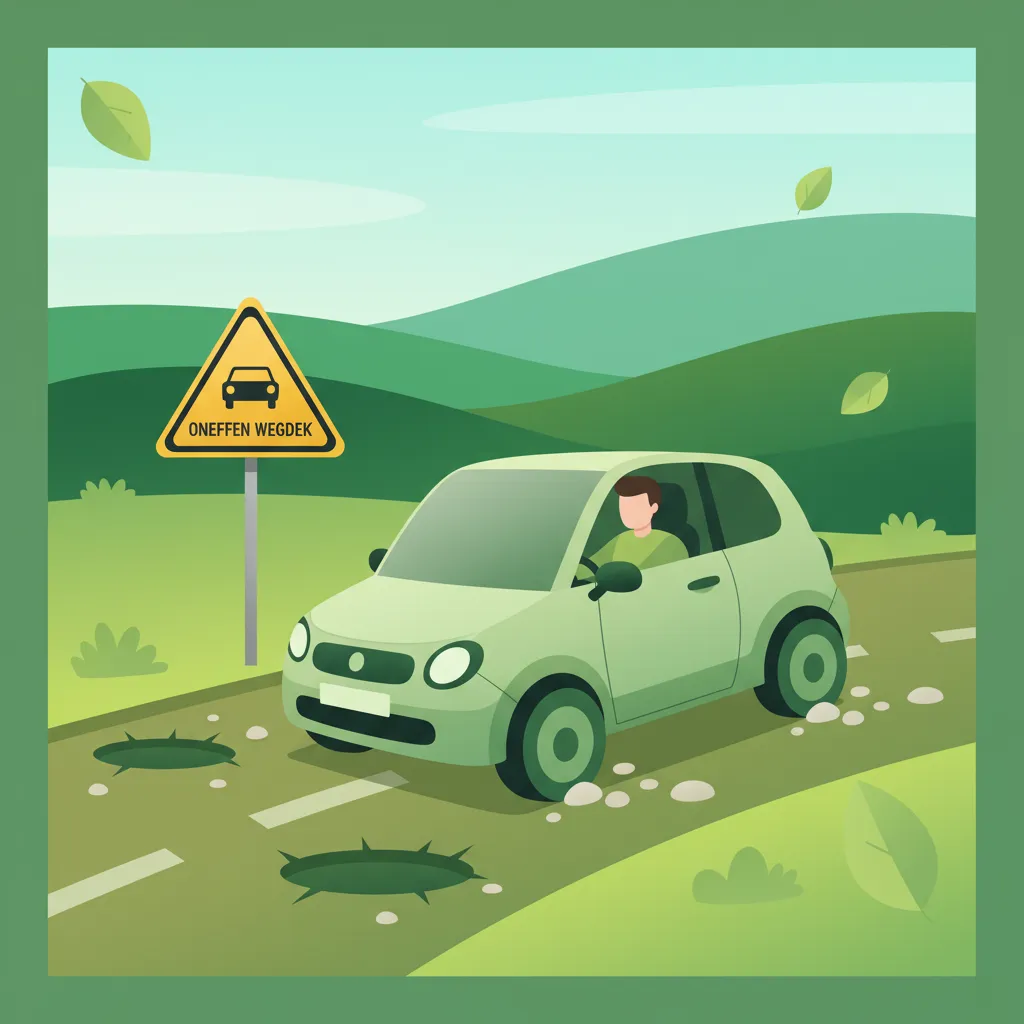
This lesson prepares you to deal with sudden changes in road surface that can cause a loss of traction. You will learn to scan for these hazards and, if they cannot be avoided, how to ride over them safely. The key technique is to keep the motorcycle upright and maintain smooth, steady control inputs—no abrupt braking, accelerating, or steering—to minimize the risk of a skid.
This lesson provides a comprehensive guide to safe and effective deceleration on a motorcycle. You will learn the principles of controlled braking, including the progressive application of both the front and rear brakes to maximize stopping power while maintaining stability. The content also explains the role of engine braking in managing speed and how the Anti-lock Braking System (ABS) helps prevent wheel lock-up during hard braking.

This lesson explains the science behind reduced grip on wet surfaces and the dangerous phenomenon of hydroplaning, where a tire rides on a layer of water instead of the road. It details the critical roles of tire tread depth, tire pressure, and riding speed in maintaining contact with the asphalt. Riders will learn techniques for riding in the rain, including using exceptionally smooth control inputs and proactively reducing speed when approaching standing water.
This lesson focuses on managing the unique acceleration characteristics of a 35 kW A2 motorcycle. You will learn about the relationship between engine power, torque, and acceleration, and how to apply throttle smoothly to maintain traction and stability. The content provides techniques for effective gear selection to ensure you have responsive power when needed for overtaking, while also preventing jerky or uncontrolled acceleration.

This lesson explains the function of the clutch and gearbox in managing the motorcycle's power and speed. It details the correct techniques for upshifting and downshifting, including the concept of rev-matching for smoother transitions. The principles of engine braking are also covered, illustrating how releasing the throttle in gear provides controlled deceleration, which is a key skill for managing speed and reducing brake wear.
Find clear answers to common questions learners have about Counter-Steering in Emergency Cornering. Learn how the lesson is structured, which driving theory objectives it supports, and how it fits into the overall learning path of units and curriculum progression in the Netherlands. These explanations help you understand key concepts, lesson flow, and exam focused study goals.
Target fixation is when a rider's eyes and attention become locked onto an obstacle they are trying to avoid, often leading them to steer directly into it. In emergency counter-steering, it's crucial to look towards your escape path, not the obstacle, as your motorcycle tends to go where your eyes are directed. This helps you initiate the correct swerve and avoid the hazard.
While both use counter-steering, the emergency application requires a much more decisive and forceful push on the handlebar to induce a rapid, sharp lean and directional change. Regular cornering is generally smoother and more gradual. The key in an emergency is the speed and intensity of the input to achieve a quick swerve.
The theory alone won't make you proficient. While this lesson provides the theoretical understanding, actual practice requires professional guidance on a closed course. Consider taking an advanced motorcycle training course in the Netherlands that specifically covers emergency maneuvers to safely develop this critical skill in a controlled setting.
Yes, the CBR theory exam for A1 motorcycles often includes scenario-based questions related to hazard perception and appropriate evasive actions. Understanding emergency counter-steering, target fixation, and rapid swerve techniques is crucial for correctly identifying the safest course of action in such situations and passing your exam.