
This lesson is crucial for understanding how wet roads drastically affect motorcycle handling and safety. You will learn about the physics behind reduced grip and the dangerous phenomenon of aquaplaning, which is essential for safe riding in the Netherlands. Mastering these concepts prepares you for challenging hazard perception questions on the Dutch A1 CBR theory exam and for making informed decisions on the road.
Riding a motorcycle on wet roads presents unique challenges that significantly impact safety. Reduced grip, the risk of aquaplaning, and diminished visibility demand a fundamental shift in riding technique and increased vigilance from all motorcyclists, especially those preparing for their Dutch A1 motorcycle licence. This lesson delves into the critical physics and practical strategies necessary to navigate wet conditions safely, ensuring you are well-prepared for both the CBR theory exam and real-world riding scenarios in the Netherlands.
The interaction between your motorcycle's tires and the road surface is paramount to control. On dry pavement, this interaction provides ample friction, allowing for confident braking, acceleration, and cornering. However, the introduction of water drastically alters this dynamic, creating a hazardous environment where traction can be severely compromised. Understanding why grip is reduced, what aquaplaning is, and how to adapt your riding is crucial for preventing accidents and maintaining control.
The fundamental principle governing a motorcycle’s ability to move, stop, and turn is friction. This force opposes motion between two surfaces in contact. For a motorcycle, this is the friction between its tires and the road. On a dry road, the rubber of the tire directly grips the microscopic asperities (roughness) of the pavement, allowing for a high level of adhesion. When water is present, this direct contact is interrupted.
The friction coefficient (µ) is a dimensionless value that quantifies the available grip. It's the ratio of the frictional force to the normal force (the force pressing the tire against the road). On dry asphalt, the friction coefficient for motorcycle tires is typically quite high, ranging from approximately 0.7 to 0.85. This means that a tire can generate a frictional force equivalent to 70% to 85% of the motorcycle's weight (or the force pushing it down).
When water covers the road surface, this coefficient drops significantly, often to as low as 0.3 to 0.4. Water acts as a lubricant, reducing the direct mechanical interlock between the tire rubber and the road surface. This reduction in available friction directly translates to:
The severity of this grip reduction is not constant; it varies with factors such as water depth, road texture, and the presence of contaminants.
Even a thin film of water can create problems, but as water depth increases, the risk of losing contact entirely becomes greater. When a tire rolls over a wet surface, its tread pattern is designed to displace water, allowing the rubber to maintain contact with the road. However, if the tire encounters more water than it can channel away, a wedge of water can build up beneath it.
This buildup creates hydrodynamic lift, an upward force exerted by the water pressure. If this hydrodynamic lift becomes strong enough, it can entirely separate the tire from the road surface, leading to a complete loss of friction. This dangerous phenomenon is known as aquaplaning. The faster the motorcycle travels and the deeper the water, the less time the tire has to displace the water, making hydrodynamic lift more likely.
Aquaplaning, also known as hydroplaning, is one of the most hazardous conditions a motorcyclist can encounter in wet weather. It represents the ultimate reduction of grip, as the tire is no longer touching the road surface.
A condition where a tire rides on a layer of water instead of the road surface, resulting in a complete loss of mechanical contact and, consequently, all friction.
When aquaplaning occurs, the motorcycle essentially floats on a film of water. This means that any input from the rider—steering, braking, or accelerating—will have little to no effect. The motorcycle will drift uncontrollably in the direction it was last moving.
Aquaplaning can be categorized into:
For motorcyclists, aquaplaning is particularly dangerous due to the inherent instability of two-wheeled vehicles. Unlike a car, a motorcycle relies on its tires maintaining constant contact for stability. A loss of control during aquaplaning almost inevitably leads to a fall. While motorcycles have narrower tires than cars, which can sometimes allow them to cut through water more effectively, they are still highly susceptible to aquaplaning, especially at higher speeds, with worn tires, or in deep standing water.
Several critical factors contribute to the likelihood and severity of aquaplaning:
Understanding the concept of Critical Aquaplaning Speed (Vₐ) is essential for managing risk in wet conditions.
The minimum speed at which a tire can no longer completely displace the water beneath it, leading to hydrodynamic lift and a loss of direct tire-to-road contact.
While not a fixed value, Vₐ provides a theoretical threshold. For motorcycles, a common empirical formula to estimate Vₐ (in km/h) is:
Let's consider an example: If your motorcycle's front tire pressure is 225 kPa (approximately 2.25 bar):
This calculation suggests that with healthy tires and correct pressure, full aquaplaning might occur at speeds around 135 km/h. However, this is a theoretical maximum under ideal conditions. In reality, factors like worn tread, deeper water, or specific road textures can significantly lower the actual critical aquaplaning speed. It's also important to remember that partial aquaplaning can occur at much lower speeds.
Never consider the calculated Vₐ as a safe speed limit. It is an upper theoretical limit. Riders should always operate significantly below this speed in wet conditions, especially when visible standing water is present.
The practical implication for riders is to always ride at a speed well below any estimated Vₐ, providing a wide safety margin. This means significantly reducing your speed in heavy rain or when encountering puddles, even if you are below the posted speed limit.
One of the most deceptive and hazardous conditions for motorcyclists is the "first-rain effect." This occurs during the initial minutes of rainfall after a prolonged dry spell.
During dry periods, various residues accumulate on the road surface:
When light rain begins, these accumulated contaminants do not immediately wash away. Instead, they mix with the water to form an extremely slippery, lubricating film on the road. This film can drastically reduce the friction coefficient to dangerously low levels, often even lower than during a prolonged downpour that has already washed the contaminants away.
When you encounter the first signs of rain after a dry spell, treat the road as if it's covered in ice for the initial 5-10 minutes. Reduce your speed significantly, increase your following distance, and make all control inputs with extreme smoothness.
This phenomenon highlights that "wet" roads are not all equally slippery. The immediate aftermath of the first rain is a distinct and exceptionally dangerous condition that demands heightened caution from every motorcyclist.
Your tires are the only points of contact between your motorcycle and the road. Their condition is paramount to safety, particularly in wet weather.
The grooves and channels (tread pattern) on your tire's surface serve a crucial purpose: to evacuate water from beneath the contact patch, allowing the rubber to grip the road.
In the Netherlands, specific regulations govern minimum tire tread depth for motorcycles:
Motorcycle tires must have a minimum tread depth of 1.0 mm across the main part of the tread.
While 1.0 mm is the legal minimum, for optimal safety in wet conditions, it is strongly recommended to replace tires well before they reach this limit. Many experts suggest replacing motorcycle tires when tread depth falls below 2.0 mm, especially if you frequently ride in rain.
Regularly inspect your tires for wear. Check for signs of uneven wear, cracks, or damage, and always ensure sufficient tread depth.
Correct tire inflation pressure is critical for both dry and wet weather performance. It affects the shape and size of the tire's contact patch – the area of rubber touching the road.
Always inflate your tires to the manufacturer's recommended pressure, which can usually be found in your motorcycle's owner's manual or on a sticker on the swingarm or frame. Check tire pressure frequently, ideally before every ride, and especially before setting out in wet weather.
Beyond the water itself, the properties of the road surface significantly influence how much grip is available in wet conditions. Different types of pavement react differently to water.
Road surfaces possess two main types of texture relevant to wet grip:
The temperature of the road pavement also plays a role in available grip.
Riders should be mindful that different road materials (asphalt, concrete, brick, cobblestones) and their age/wear will offer varying levels of grip when wet. Freshly paved, very smooth asphalt can be deceptively slippery, while older, more textured roads might offer slightly better water drainage. Always assume varying grip levels and adapt your riding continuously.
Safe riding in the Netherlands is not just about technique; it's also about adhering to traffic laws that explicitly or implicitly cover adverse weather conditions. The Dutch traffic regulations, primarily the RVV 1990 (Reglement Verkeersregels en Verkeerstekens 1990), provide the legal framework for safe riding.
"The driver must adapt speed, gear, and driving style to the weather, road conditions and traffic."
This is a cornerstone of safe driving in the Netherlands. In the context of wet roads, it directly mandates that you must reduce your speed and modify your riding style to account for the reduced grip and increased hazards. Failure to do so can lead to fines and, more importantly, put yourself and others at severe risk.
"A driver must keep a safe distance that allows stopping without danger, considering speed, road surface and conditions."
On wet roads, your braking distance will significantly increase. Therefore, it is legally required and vitally important to increase your following distance. A common guideline is to double your following distance in wet conditions, aiming for at least a 2-3 second gap, or even more in very heavy rain or with the first-rain effect.
As discussed, tire condition is critical. The Dutch Vehicle Inspection Regulations (similar to an MOT) mandate minimum tread depth.
"Motorcycle tires must have a minimum tread depth of 1.0 mm and be correctly inflated according to manufacturer specifications."
Riding with excessively worn or improperly inflated tires is not only dangerous but also illegal and will cause you to fail periodic inspections.
"When visibility is reduced, the driver must use appropriate lighting and reduce speed."
Heavy rain significantly reduces visibility. This article requires you to use appropriate lighting (typically dipped beam headlights) and reduce your speed further to compensate for both reduced grip and reduced visual input. Using high beams in heavy rain or fog can often be counterproductive, causing glare from the water droplets and worsening visibility.
While not explicit legislation, the CBR (Centraal Bureau Rijvaardigheidsbewijzen) provides strong recommendations for wet-road riding through their training guidelines. These typically advise riders to:
These guidelines are crucial for developing safe riding habits and are assessed during the practical riding test for your A1 licence.
Adopting a specific set of strategies is vital for safe motorcycle operation in wet conditions. These tactics aim to compensate for reduced grip, extended stopping distances, and decreased stability.
This is the single most important adjustment. Lower speeds:
For Dutch A1 riders, a general guideline is to reduce your speed by at least 20 km/h below the posted limit in rain, and even more during the first-rain period or when standing water is visible.
On wet roads, abrupt actions can easily overwhelm the limited available grip, leading to a loss of control.
Double or even triple your normal dry-weather following distance. This provides crucial extra space and time to react to the vehicle ahead, which will also have a longer braking distance. A minimum of 2-3 seconds is recommended, expanding to 4-5 seconds in heavy rain.
Ensure your dipped beam headlight is on in all wet weather, even during the day, to improve your visibility to other road users. In very heavy rain, avoid using high beams as they can cause distracting glare off the water droplets. Consider wearing high-visibility gear.
By internalizing these strategies and consistently applying them, you significantly enhance your safety and control when riding your motorcycle in wet conditions, preparing you effectively for the challenges of the Dutch roads and the A1 licence exam.
Navigating wet roads as a motorcyclist requires a deep understanding of the forces at play and a disciplined approach to riding. The reduction in friction coefficient, the hazardous phenomenon of aquaplaning, and the deceptive nature of the first-rain effect are not just theoretical concepts; they are critical safety considerations that demand your full attention.
For aspiring A1 category riders in the Netherlands, mastering these challenges is not merely about passing an exam, but about developing the lifelong habits of a responsible and safe motorcyclist. Adhering to Dutch traffic laws like RVV 1990 articles 6, 7, and 8, coupled with vigilant tire maintenance as per inspection regulations, forms the legal backbone of wet-weather riding.
Ultimately, safety in the rain boils down to proactive speed reduction, smooth and progressive control inputs, increasing following distances, and meticulous attention to road conditions and tire health. By integrating these principles into your riding practice, you will build the confidence and skill necessary to ride safely and responsibly, regardless of the weather.
Lesson content overview
Explore all units and lessons included in this driving theory course.
Explore search topics learners often look for when studying Grip Reduction on Wet Roads and Aquaplaning. These topics reflect common questions about road rules, driving situations, safety guidance, and lesson level theory preparation for learners in the Netherlands.
Browse additional driving theory lessons that cover connected traffic rules, road signs, and common driving situations related to this topic. Improve your understanding of how different rules interact across everyday traffic scenarios.
Understand the critical techniques for safe motorcycle riding in rain, including speed reduction, smooth control inputs, hazard anticipation, and lane positioning. Learn how to manage reduced grip and aquaplaning risks on Dutch roads.

This lesson explains the science behind reduced grip on wet surfaces and the dangerous phenomenon of hydroplaning, where a tire rides on a layer of water instead of the road. It details the critical roles of tire tread depth, tire pressure, and riding speed in maintaining contact with the asphalt. Riders will learn techniques for riding in the rain, including using exceptionally smooth control inputs and proactively reducing speed when approaching standing water.

Rain significantly reduces tire grip and rider visibility. This lesson covers the essential adjustments needed for wet-weather riding, including reducing speed, increasing following distance, and applying all controls more smoothly. It explains the danger of hydroplaning (aquaplaning) when tires lose contact with the road over standing water and how to avoid it. You will also learn about the importance of good tire tread depth for channeling water away and maintaining traction.
This lesson prepares you to deal with sudden changes in road surface that can cause a loss of traction. You will learn to scan for these hazards and, if they cannot be avoided, how to ride over them safely. The key technique is to keep the motorcycle upright and maintain smooth, steady control inputs—no abrupt braking, accelerating, or steering—to minimize the risk of a skid.
This lesson provides a detailed guide to riding in wet and low-visibility conditions. You will learn to make all your control inputs—braking, accelerating, and steering—exceptionally smooth to avoid breaking traction on slippery surfaces. The content covers the dangers of painted lines and manhole covers when wet, and the importance of increasing your following distance dramatically to account for longer braking distances.

Riding on two wheels requires special care on surfaces with reduced grip. This lesson teaches you how to handle challenging conditions like rain, ice, wet leaves, or tram tracks. Key principles include reducing speed significantly, making all control inputs (braking, accelerating, steering) much more smoothly and gradually, and increasing your following distance to allow for much longer stopping distances. Recognizing potentially slippery areas is a critical part of proactive hazard perception.
This lesson provides survival strategies for riding in the most challenging weather conditions, including heavy rain, snow, and potential ice. It emphasizes the importance of mental preparation, drastically reduced speeds, and hyper-smooth inputs for throttle, brakes, and steering. The content also covers identifying high-risk areas for 'black ice,' such as bridges and shaded spots, and the critical role of appropriate waterproof and insulated gear in preventing hypothermia and maintaining concentration.

This lesson addresses the specific challenge of cornering when road grip is compromised. It teaches riders how to identify potential low-traction surfaces like wet manhole covers, painted lines, gravel, or oil patches. The content focuses on techniques to mitigate risk, such as reducing speed, minimizing lean angle, and applying all control inputs—braking, steering, and throttle—with exceptional smoothness to avoid overwhelming the available grip.

This lesson teaches the crucial skill of assessing road surfaces and adjusting speed accordingly to maintain maximum traction. It covers a variety of hazardous conditions, including wet asphalt, loose gravel, oil patches, metal manhole covers, and painted road markings, all of which can significantly reduce grip. Riders will learn to constantly scan the road ahead, identify potential traction-reducing surfaces, and proactively manage their speed to prevent slides and loss of control.
This lesson addresses the dual challenge of poor visibility: being able to see the road ahead and ensuring other road users can see you. It covers techniques for riding in fog and heavy rain, such as using appropriate lights and reducing speed to match sight distance. The lesson also discusses practical issues like helmet visor fogging and the importance of wearing high-visibility or reflective clothing to enhance conspicuity in low-light conditions.
This lesson provides theoretical knowledge on how to manage a loss of traction, covering both rear-wheel and the more critical front-wheel skids. It explains the typical causes, such as harsh braking or acceleration, and the correct, often counter-intuitive, recovery inputs. The importance of looking in the desired direction of travel to avoid target fixation and using smooth, measured controls to help the tires regain grip is strongly emphasized.
Explore essential Dutch traffic regulations (RVV 1990) and vehicle inspection requirements relevant to wet road conditions for motorcyclists. Learn about legal speed adaptations, safe distances, and tire requirements in rain.
This lesson provides survival strategies for riding in the most challenging weather conditions, including heavy rain, snow, and potential ice. It emphasizes the importance of mental preparation, drastically reduced speeds, and hyper-smooth inputs for throttle, brakes, and steering. The content also covers identifying high-risk areas for 'black ice,' such as bridges and shaded spots, and the critical role of appropriate waterproof and insulated gear in preventing hypothermia and maintaining concentration.
This lesson covers the critical decision-making process of when to stop riding altogether because weather conditions have become too hazardous to continue safely. It provides procedures for safely pulling off the road, finding suitable shelter, and making yourself and your motorcycle as visible as possible to other traffic. The content emphasizes that there is no shame in stopping, and that rider preservation is the highest priority when faced with extreme conditions like gale-force winds or torrential downpours.
This lesson addresses the dual challenge of poor visibility: being able to see the road ahead and ensuring other road users can see you. It covers techniques for riding in fog and heavy rain, such as using appropriate lights and reducing speed to match sight distance. The lesson also discusses practical issues like helmet visor fogging and the importance of wearing high-visibility or reflective clothing to enhance conspicuity in low-light conditions.
This lesson provides a detailed guide to riding in wet and low-visibility conditions. You will learn to make all your control inputs—braking, accelerating, and steering—exceptionally smooth to avoid breaking traction on slippery surfaces. The content covers the dangers of painted lines and manhole covers when wet, and the importance of increasing your following distance dramatically to account for longer braking distances.

This lesson reinforces the critical relationship between adverse conditions, reduced traction, and massively increased stopping distances. It provides a clear framework for how much riders need to increase their following distance and reduce their overall speed to maintain a safe margin for error. The curriculum teaches riders to constantly reassess their speed based on visual feedback from the road surface and the level of visibility, ensuring they can always stop within the distance they can clearly see.
This lesson explains how to counteract the effects of strong winds, which can easily upset a motorcycle's stability. It covers techniques like maintaining a relaxed grip on the handlebars and leaning into a steady crosswind. The lesson also addresses the impact of temperature, explaining how cold weather affects both the rider (risk of hypothermia, reduced concentration) and the motorcycle (reduced tire grip until warmed up), and emphasizes the need for appropriate protective gear.
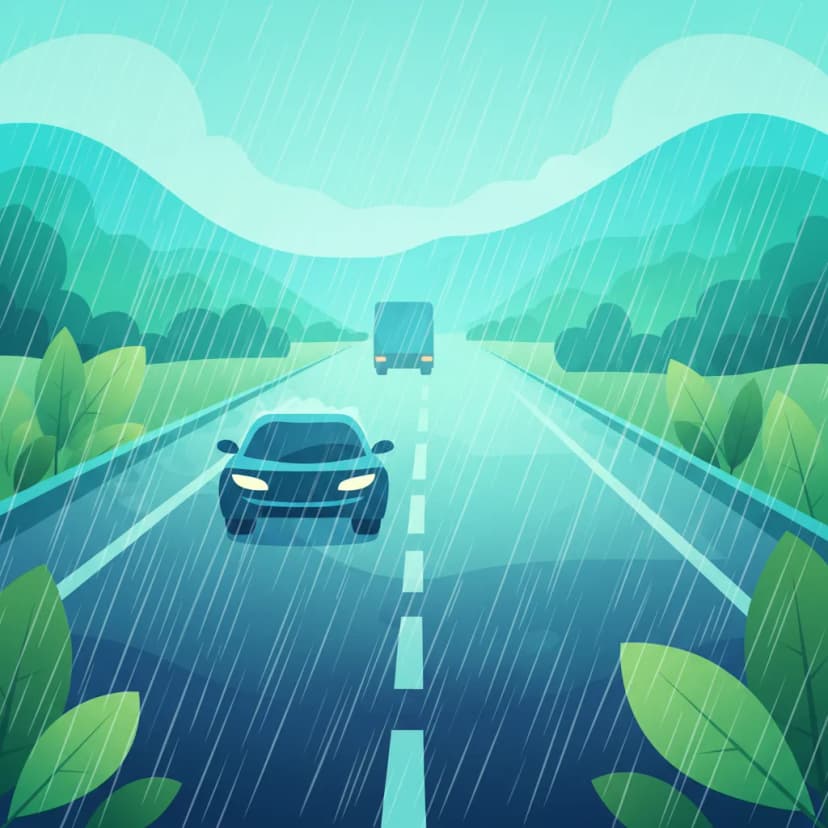
This lesson explains why the standard two-second rule is insufficient in adverse conditions and requires extension. It details how factors like rain, fog, and darkness reduce both visibility and tire grip, thereby significantly increasing total stopping distance. The content provides practical guidelines, such as extending the following gap to four seconds or more in the wet, to ensure the rider always has enough time and space to stop safely, regardless of the conditions.
Riding on two wheels requires special care on surfaces with reduced grip. This lesson teaches you how to handle challenging conditions like rain, ice, wet leaves, or tram tracks. Key principles include reducing speed significantly, making all control inputs (braking, accelerating, steering) much more smoothly and gradually, and increasing your following distance to allow for much longer stopping distances. Recognizing potentially slippery areas is a critical part of proactive hazard perception.
Rain significantly reduces tire grip and rider visibility. This lesson covers the essential adjustments needed for wet-weather riding, including reducing speed, increasing following distance, and applying all controls more smoothly. It explains the danger of hydroplaning (aquaplaning) when tires lose contact with the road over standing water and how to avoid it. You will also learn about the importance of good tire tread depth for channeling water away and maintaining traction.
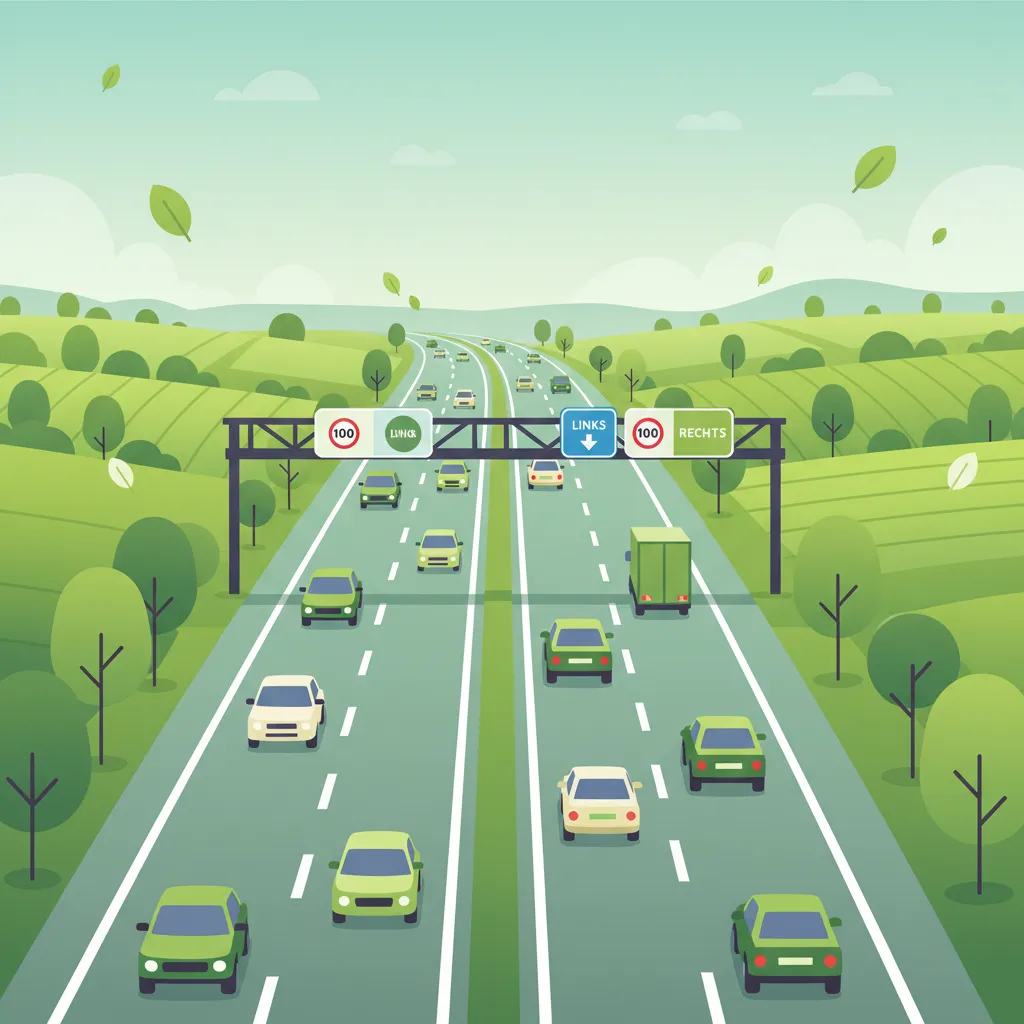
This lesson covers the specific articles of the Dutch Road Traffic Act that apply to motorways, with a primary focus on the strict rule of keeping to the rightmost available lane unless overtaking. It explains the legal and safety reasons for only passing on the left and discusses the correct positioning within a lane for maximum visibility and safety. The content also addresses the nuances of lane usage during heavy congestion, ensuring riders comply with the law and contribute to smooth traffic flow.
Find clear answers to common questions learners have about Grip Reduction on Wet Roads and Aquaplaning. Learn how the lesson is structured, which driving theory objectives it supports, and how it fits into the overall learning path of units and curriculum progression in the Netherlands. These explanations help you understand key concepts, lesson flow, and exam focused study goals.
The first rain after a dry period is highly dangerous because it mixes with oil, dust, and rubber residue accumulated on the road surface, creating a slippery film. This significantly reduces tire grip, making braking and cornering much riskier for lightweight A1 motorcycles until the rain washes away the contaminants.
If your A1 motorcycle is aquaplaning, you might feel a sudden loss of steering control or a sensation that the bike is floating. The engine may rev freely as the drive wheel loses traction. It's crucial to remain calm, ease off the throttle gently, avoid sudden braking, and keep the steering wheel straight until grip returns.
Tires play a critical role. Adequate tire tread depth is essential for channeling water away from beneath the tire, maintaining contact with the road. Under-inflated or worn-out tires are much more susceptible to aquaplaning, as they cannot disperse water effectively, increasing the risk for A1 motorcyclists.
On wet roads, you should apply brakes with significantly more caution and smoothness than on dry surfaces. Hard or sudden braking can easily lock the wheels and cause a skid due to reduced grip. It's best to use both front and rear brakes progressively and gently, increasing pressure gradually to avoid losing control on your A1 motorcycle.
Yes, certain wet surfaces are particularly hazardous. Painted road markings (like crosswalks or arrows), metal manhole covers, tram lines, and cobblestones become extremely slippery when wet. These surfaces offer significantly less grip than asphalt and require extra vigilance and reduced speed from A1 motorcyclists.