
This lesson delves into the crucial physics of riding on wet roads, explaining how reduced grip and hydroplaning affect your Category A motorcycle. Understanding these dynamics is vital for safe riding in Dutch weather conditions and for passing your CBR theory exam. You'll learn essential techniques to maintain control, build confidence, and effectively prepare for scenarios involving rain and standing water.

Riding a motorcycle on wet roads presents unique challenges compared to dry conditions. The reduced grip and the potential for a dangerous phenomenon known as hydroplaning demand a thorough understanding of wet-road dynamics and specific riding techniques. This lesson provides the essential knowledge required for safe riding in rain and for the Dutch Category A motorcycle theory exam.
This topic builds upon foundational knowledge of basic tyre construction, general principles of friction and grip from "Fundamentals of Motorcycle Theory & Dutch Traffic Law," Dutch speed-limit regulations and speed adaptation from "Speed Management and Legal Limits," and basic rider control input smoothness from "Advanced Riding Techniques and High-Speed Control." Mastering these concepts is crucial for managing your motorcycle effectively in adverse weather and fulfilling your legal obligations.
When water is present on the road surface, it acts as a lubricant between the motorcycle's tyres and the asphalt. This significantly reduces the available friction, making it harder to steer, brake, and accelerate safely. Understanding this reduction in grip is the first step towards preventing accidents in wet conditions.
The friction coefficient (µ) is a dimensionless value that quantifies the amount of grip between a tyre and the road. On dry asphalt, this coefficient is typically high (around 0.7–0.8), allowing for strong braking and cornering forces. However, on a wet surface, a thin film of water separates the tyre rubber from the road, causing the friction coefficient to drop considerably, often to 0.4–0.5 even with good tyre tread.
This reduction in friction directly impacts your motorcycle's capabilities. With less grip, the maximum forces you can apply through braking, accelerating, or turning are diminished. This means that every control input you make on a wet road must be executed with greater care and precision to avoid exceeding the available grip and causing a loss of control.
A direct consequence of reduced wet-road friction is a significant increase in stopping distances. On a uniformly wet surface, braking distances can increase by 30-50% compared to dry conditions. This is not merely a suggestion; it's a physical reality dictated by the laws of physics.
Consider a rider travelling at 70 km/h on a wet highway. While they might stop in approximately 45 metres on a dry road, the same manoeuvre on a wet surface could require roughly 70 metres or more. This substantial difference necessitates proactive speed reduction and an increased following distance to provide ample time and space for safe braking.
Beyond a simple reduction in friction, a more severe phenomenon known as hydroplaning (often called aquaplaning in Europe) can occur. This is a critical loss of tyre-road contact where a continuous layer of water lifts the tyre entirely off the road surface, effectively eliminating all mechanical friction. When hydroplaning, your motorcycle loses its ability to steer, brake, or respond to throttle inputs.
Hydroplaning begins when the hydrodynamic lift – the upward pressure generated by water flowing under the tyre – overcomes the tyre's downward load (the weight of the motorcycle pressing on the tyre). Instead of the tyre's tread pushing water aside and contacting the road, the water builds up in front of the tyre, creating a wedge that lifts the tyre.
Once the tyre is separated from the road by this water film, there is no mechanical grip. The tyre is essentially floating on water. This results in a sudden and complete loss of control, which can be particularly dangerous for motorcyclists due to the inherent instability of two-wheeled vehicles. Even a momentary loss of contact can lead to a severe crash.
The speed at which hydroplaning begins is called the critical speed (Vc). Vc is not a fixed value; it depends on several key variables:
A simplified formula for estimating critical speed (Vc) for passenger cars is Vc (km/h) ≈ 10 × √(tyre pressure (psi)). While motorcycles have different tyre characteristics, this formula illustrates the direct relationship between tyre pressure and the onset of hydroplaning. For motorcyclists, Vc is generally lower due to narrower tyres.
Proper tyre maintenance is paramount for safety on wet roads. Two critical aspects, tread depth and tyre pressure, directly influence a tyre's ability to displace water and maintain grip. Neglecting these aspects significantly increases your risk of hydroplaning and losing control.
Tread depth refers to the vertical measurement of the deepest groove on a tyre, typically expressed in millimetres (mm). The primary function of tyre tread is to channel water away from the contact patch, allowing the tyre rubber to maintain direct contact with the road surface.
The effectiveness of your tyres in wet conditions is directly proportional to their tread depth. As tyres wear, their grooves become shallower, reducing their capacity to evacuate water. This means a worn tyre will reach its critical hydroplaning speed much sooner than a new tyre.
In the Netherlands, Dutch road traffic regulations (RVV 1992 art. 22) mandate a minimum tread depth of 1.6 mm for all road-going motorcycle tyres. It is crucial to replace your tyres well before they reach this legal minimum, especially if you frequently ride in wet conditions. Regularly inspect your tyres for wear indicators, which are small raised sections within the tread grooves that become level with the tyre surface when the legal minimum depth is approached.
Tyre pressure is the internal air pressure of a tyre, usually measured in kilopascals (kPa) or bars. Correct tyre pressure is vital for optimal contact patch shape, efficient water evacuation, and overall handling stability. The manufacturer's recommended "cold pressure" (measured before riding) should always be adhered to.
Dutch law (RVV 1992 art. 31) explicitly obliges riders to maintain tyres at the manufacturer's recommended pressure. Under-inflated tyres tend to widen their contact patch and flex excessively, making them less effective at cutting through and displacing water. This increases the risk of hydroplaning at lower speeds and can also lead to tyre overheating and premature wear.
Conversely, over-inflated tyres can become excessively stiff. While this might slightly improve water channeling in some circumstances, it reduces the tyre's ability to conform to uneven road surfaces, potentially reducing overall grip and making the ride harsher. It is crucial to find the balance by adhering to manufacturer specifications, which often include adjusted pressures for carrying a passenger or heavy luggage.
Even with perfectly maintained tyres, riding on wet roads requires significant adjustments to your riding technique. Smooth, deliberate control inputs and proactive speed reduction are essential for maintaining control and safety.
On wet surfaces, the reduced friction makes the tyres much more sensitive to abrupt changes in load or direction. Smooth control inputs mean gradually modulating the throttle, brake levers, and steering rather than making sudden, jerky movements.
The Speed-Adaptation Duty (RVV 1990 art. 7.4) is a legal requirement in the Netherlands for all road users to adjust their speed to prevailing conditions, including weather, visibility, traffic, and road surface. This duty is especially critical on wet roads.
You must proactively reduce your speed significantly below the posted limit when riding in rain. This provides more time to react to hazards, reduces the likelihood of hydroplaning (by staying well below Vc), and shortens your overall stopping distance within the available grip.
Always anticipate potential hazards:
Dutch traffic law places clear responsibilities on motorcyclists to ensure safety, especially in adverse weather conditions. Adhering to these regulations is not just about avoiding fines; it's about safeguarding your life and the lives of other road users.
For example, on a highway with a 100 km/h limit, riding at 70 km/h in heavy rain might be necessary to fulfill your speed-adaptation duty if visibility is low and standing water is present. Maintaining the posted limit under such conditions would be illegal and dangerous.
Compliance with these regulations ensures that your motorcycle is technically capable of handling wet conditions to the best of its design. Ignoring them not only increases your risk but also exposes you to legal penalties, including fines and potential liability in an accident.
Let's consider a few practical scenarios to apply these principles:
You are on a motorway with a 120 km/h limit. A sudden, heavy downpour creates areas of standing water, approximately 5 mm deep. Your tyres have a legal tread depth of 1.8 mm and are correctly inflated.
Correct Behaviour: You observe the standing water and immediately move to the inside lane (where water often drains better), smoothly reducing your speed to approximately 80 km/h. You significantly increase your following distance and avoid any sudden lane changes over puddles. This ensures you stay well below the critical speed for hydroplaning.
Incorrect Behaviour: You maintain 120 km/h, assuming your vehicle's features or skill will compensate. You hit a deep patch of standing water while attempting to overtake, experience front-wheel hydroplaning, and lose control, potentially leading to a severe crash.
You are riding on an urban street with a 50 km/h limit. It's lightly raining, and shallow puddles have formed at intersections and drainage points.
Correct Behaviour: You reduce your speed to around 30-40 km/h. When approaching puddles, you align your motorcycle to ride straight through them, maintaining a steady throttle and steering. You use gentle, progressive braking when slowing down for traffic lights, anticipating reduced grip on road markings.
Incorrect Behaviour: You maintain 50 km/h, thinking it's just "light rain." You swerve abruptly to avoid a puddle at an intersection, causing the tyres to slip due to the sudden lateral load, or brake hard on a painted pedestrian crossing, losing grip and sliding.
You're on a rural road with a 60 km/h limit. It's night, drizzling, and the temperature is 4°C. The road surface is wet concrete, and your tyre tread is nearing the 1.6 mm legal minimum.
Correct Behaviour: Recognizing the combined hazards of reduced visibility, cold temperatures (which can make the road feel slicker), and worn tyres, you slow down significantly, perhaps to 40 km/h. You carefully check your tyre tread before the ride, deciding to replace it if it's below or close to the 1.6 mm legal limit. You use your high-beam where safe to improve visibility of the road surface.
Incorrect Behaviour: You continue riding at 60 km/h, unaware of your worn tyres. Entering a curve, the limited tread depth fails to clear the water, causing an unexpected loss of steering grip and a potential slide-out in the darkness.
Successfully navigating wet roads and preventing hydroplaning requires a combination of vigilance, proper maintenance, and adjusted riding techniques.
By consistently applying these principles, you will significantly enhance your safety and confidence when riding in wet conditions, aligning with the highest standards of the Dutch Motorcycle Theory curriculum.
Lesson content overview
Explore all units and lessons included in this driving theory course.
Explore search topics learners often look for when studying Wet-Road Dynamics and Hydroplaning Prevention. These topics reflect common questions about road rules, driving situations, safety guidance, and lesson level theory preparation for learners in the Netherlands.
Browse additional driving theory lessons that cover connected traffic rules, road signs, and common driving situations related to this topic. Improve your understanding of how different rules interact across everyday traffic scenarios.
Explore essential techniques for riding motorcycles in wet conditions, focusing on preventing hydroplaning. Learn how to adjust speed, maintain smooth control inputs, and navigate slippery surfaces safely, adhering to Dutch traffic laws.
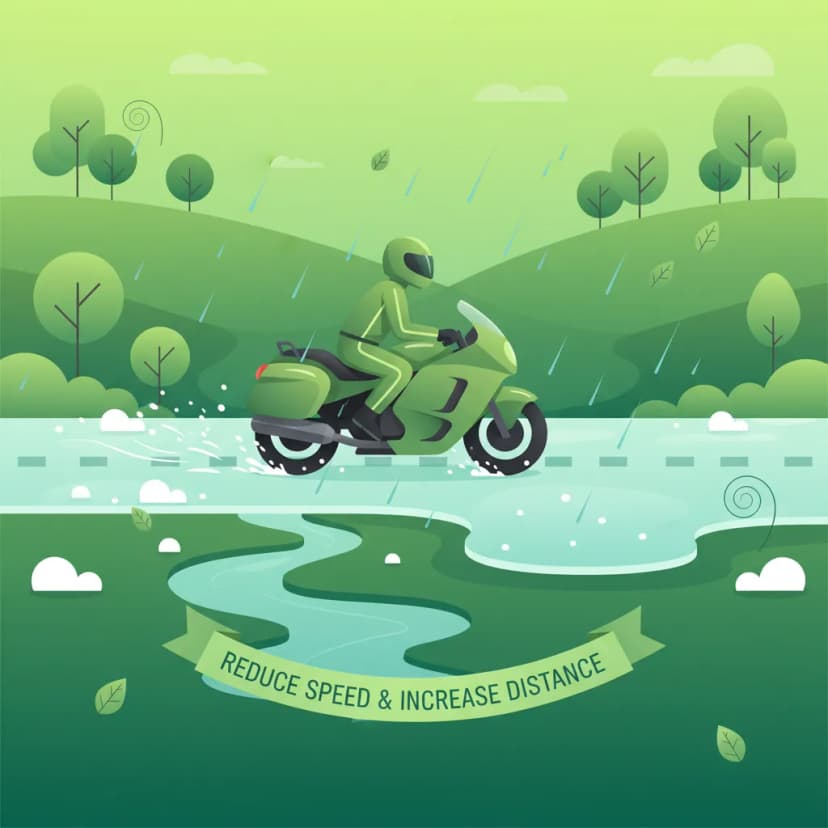
This lesson provides survival strategies for riding in the most challenging weather conditions, including heavy rain, snow, and potential ice. It emphasizes the importance of mental preparation, drastically reduced speeds, and hyper-smooth inputs for throttle, brakes, and steering. The content also covers identifying high-risk areas for 'black ice,' such as bridges and shaded spots, and the critical role of appropriate waterproof and insulated gear in preventing hypothermia and maintaining concentration.

Rain significantly reduces tire grip and rider visibility. This lesson covers the essential adjustments needed for wet-weather riding, including reducing speed, increasing following distance, and applying all controls more smoothly. It explains the danger of hydroplaning (aquaplaning) when tires lose contact with the road over standing water and how to avoid it. You will also learn about the importance of good tire tread depth for channeling water away and maintaining traction.
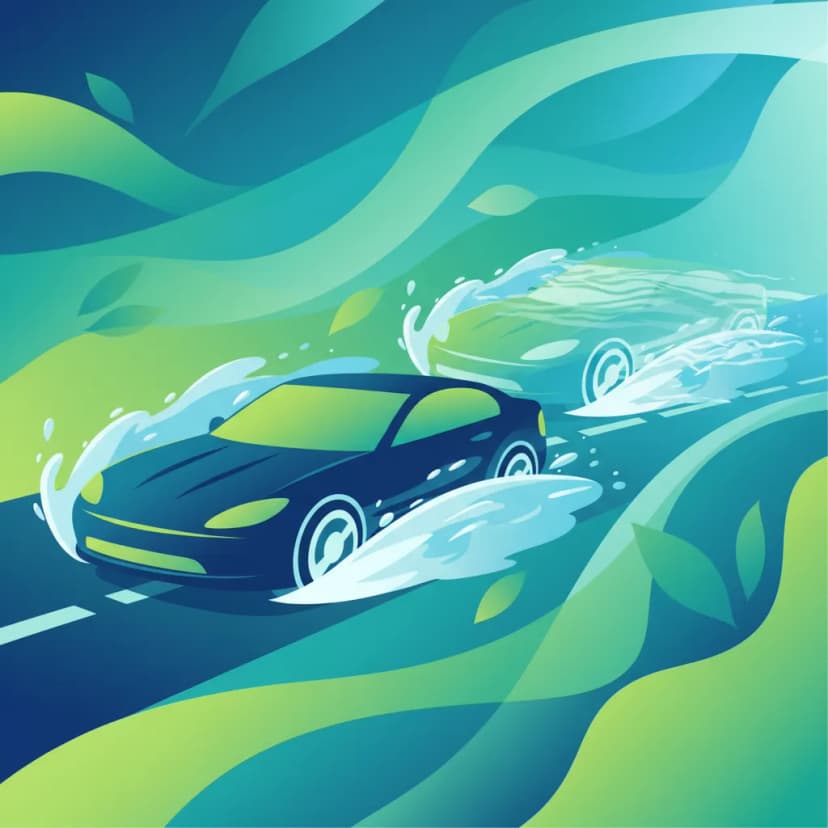
This lesson explains the physics of why wet roads offer significantly less traction than dry ones, highlighting particular hazards like the first rain after a dry spell. It defines aquaplaning (when a tire rides on a layer of water instead of the road) and explains how speed and tire condition contribute to this dangerous phenomenon. The content provides clear strategies for riding in the rain, including reducing speed and applying all controls with extra smoothness.

This lesson provides a detailed guide to riding in wet and low-visibility conditions. You will learn to make all your control inputs—braking, accelerating, and steering—exceptionally smooth to avoid breaking traction on slippery surfaces. The content covers the dangers of painted lines and manhole covers when wet, and the importance of increasing your following distance dramatically to account for longer braking distances.

Riding on two wheels requires special care on surfaces with reduced grip. This lesson teaches you how to handle challenging conditions like rain, ice, wet leaves, or tram tracks. Key principles include reducing speed significantly, making all control inputs (braking, accelerating, steering) much more smoothly and gradually, and increasing your following distance to allow for much longer stopping distances. Recognizing potentially slippery areas is a critical part of proactive hazard perception.

This lesson reinforces the critical relationship between adverse conditions, reduced traction, and massively increased stopping distances. It provides a clear framework for how much riders need to increase their following distance and reduce their overall speed to maintain a safe margin for error. The curriculum teaches riders to constantly reassess their speed based on visual feedback from the road surface and the level of visibility, ensuring they can always stop within the distance they can clearly see.

This lesson teaches the crucial skill of assessing road surfaces and adjusting speed accordingly to maintain maximum traction. It covers a variety of hazardous conditions, including wet asphalt, loose gravel, oil patches, metal manhole covers, and painted road markings, all of which can significantly reduce grip. Riders will learn to constantly scan the road ahead, identify potential traction-reducing surfaces, and proactively manage their speed to prevent slides and loss of control.
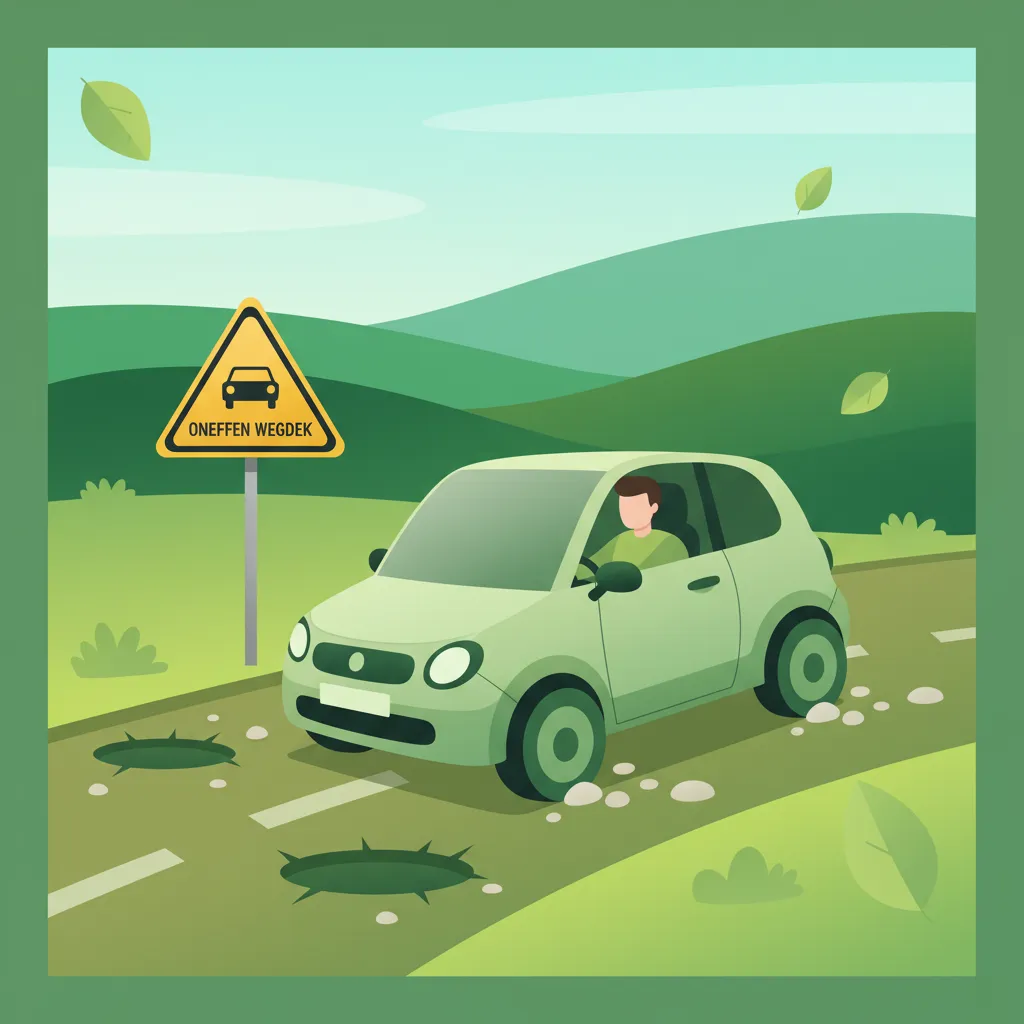
This lesson prepares you to deal with sudden changes in road surface that can cause a loss of traction. You will learn to scan for these hazards and, if they cannot be avoided, how to ride over them safely. The key technique is to keep the motorcycle upright and maintain smooth, steady control inputs—no abrupt braking, accelerating, or steering—to minimize the risk of a skid.

This lesson covers the critical decision-making process of when to stop riding altogether because weather conditions have become too hazardous to continue safely. It provides procedures for safely pulling off the road, finding suitable shelter, and making yourself and your motorcycle as visible as possible to other traffic. The content emphasizes that there is no shame in stopping, and that rider preservation is the highest priority when faced with extreme conditions like gale-force winds or torrential downpours.

This lesson addresses the dual challenge of poor visibility: being able to see the road ahead and ensuring other road users can see you. It covers techniques for riding in fog and heavy rain, such as using appropriate lights and reducing speed to match sight distance. The lesson also discusses practical issues like helmet visor fogging and the importance of wearing high-visibility or reflective clothing to enhance conspicuity in low-light conditions.
Understand the critical role of motorcycle tyre tread depth and pressure for maintaining grip and preventing hydroplaning on wet roads. Covers legal Dutch requirements and their impact on rider safety in rain.
This lesson explains the physics of why wet roads offer significantly less traction than dry ones, highlighting particular hazards like the first rain after a dry spell. It defines aquaplaning (when a tire rides on a layer of water instead of the road) and explains how speed and tire condition contribute to this dangerous phenomenon. The content provides clear strategies for riding in the rain, including reducing speed and applying all controls with extra smoothness.
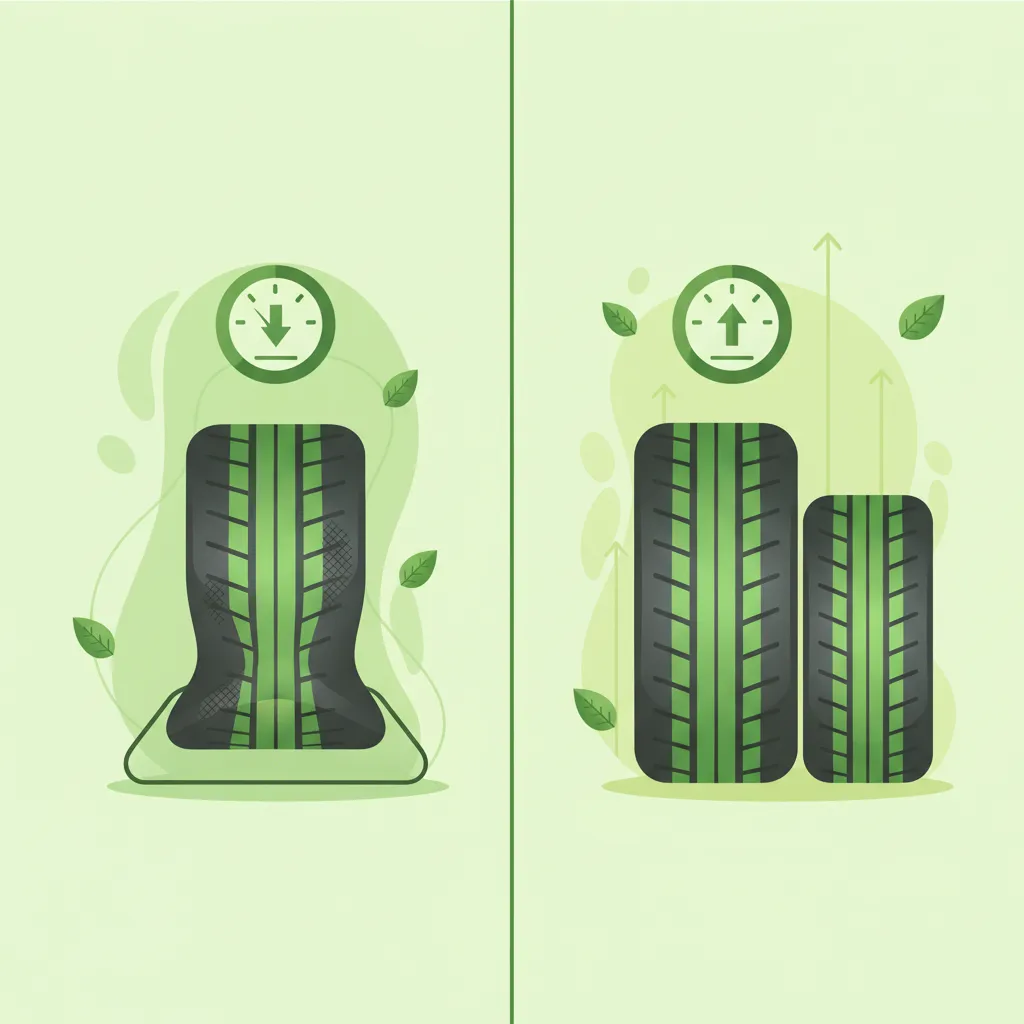
This lesson emphasizes that tires are the single most critical safety component on a motorcycle, being the only connection to the road. It provides detailed instructions on how to correctly check tire pressure ('bandenspanning') when the tires are cold and explains how to read tire wear indicators to assess remaining tread depth. The content also covers the legal minimum tread depth and the severe impact that incorrect pressure or excessive wear has on handling, braking, and overall safety.

This lesson details the critical role that tires play in motorcycle safety, as they are the only connection to the road. It explains the importance of selecting the right type of tire for the season and expected riding conditions. The content provides a guide on how to perform regular pre-ride checks, including inspecting for correct inflation pressure, checking tread depth, and looking for any signs of damage or wear.
Rain significantly reduces tire grip and rider visibility. This lesson covers the essential adjustments needed for wet-weather riding, including reducing speed, increasing following distance, and applying all controls more smoothly. It explains the danger of hydroplaning (aquaplaning) when tires lose contact with the road over standing water and how to avoid it. You will also learn about the importance of good tire tread depth for channeling water away and maintaining traction.
Your tires are your only connection to the road, making their condition critically important for safety. This lesson teaches you how to perform a thorough tire inspection. You will learn how to check tire pressures using a gauge and adjust them to the manufacturer's specification. It also covers how to check for sufficient tread depth above the legal minimum and how to inspect the tire surfaces for cuts, bulges, or embedded objects that could lead to failure.
This lesson prepares you to deal with sudden changes in road surface that can cause a loss of traction. You will learn to scan for these hazards and, if they cannot be avoided, how to ride over them safely. The key technique is to keep the motorcycle upright and maintain smooth, steady control inputs—no abrupt braking, accelerating, or steering—to minimize the risk of a skid.
Riding on two wheels requires special care on surfaces with reduced grip. This lesson teaches you how to handle challenging conditions like rain, ice, wet leaves, or tram tracks. Key principles include reducing speed significantly, making all control inputs (braking, accelerating, steering) much more smoothly and gradually, and increasing your following distance to allow for much longer stopping distances. Recognizing potentially slippery areas is a critical part of proactive hazard perception.

This lesson addresses the specific challenge of cornering when road grip is compromised. It teaches riders how to identify potential low-traction surfaces like wet manhole covers, painted lines, gravel, or oil patches. The content focuses on techniques to mitigate risk, such as reducing speed, minimizing lean angle, and applying all control inputs—braking, steering, and throttle—with exceptional smoothness to avoid overwhelming the available grip.
This lesson teaches the crucial skill of assessing road surfaces and adjusting speed accordingly to maintain maximum traction. It covers a variety of hazardous conditions, including wet asphalt, loose gravel, oil patches, metal manhole covers, and painted road markings, all of which can significantly reduce grip. Riders will learn to constantly scan the road ahead, identify potential traction-reducing surfaces, and proactively manage their speed to prevent slides and loss of control.
This lesson explores the often-overlooked factor of road surface temperature and its direct impact on tire grip and braking efficiency. It explains that cold tires on cold asphalt have significantly less grip, leading to longer stopping distances and a higher risk of skidding. The content discusses the importance of allowing tires to warm up through gentle riding and highlights the danger of isolated icy patches, even on otherwise clear winter days.
Find clear answers to common questions learners have about Wet-Road Dynamics and Hydroplaning Prevention. Learn how the lesson is structured, which driving theory objectives it supports, and how it fits into the overall learning path of units and curriculum progression in the Netherlands. These explanations help you understand key concepts, lesson flow, and exam focused study goals.
Adequate tire tread depth is crucial because it allows water to be channeled away from beneath the tire, maintaining contact with the road. If the tread is too shallow, water cannot escape effectively, increasing the risk of the tire lifting off the road surface, leading to hydroplaning. This is particularly important for high-performance Category A motorcycles due to their speed capabilities.
No, reducing tire pressure is generally not beneficial and can be dangerous. While it might seem counterintuitive, underinflated tires can deform more, making them less effective at channeling water and increasing the risk of hydroplaning. Always maintain the manufacturer's recommended tire pressure for your Category A motorcycle, especially in wet conditions.
On wet roads, braking must be much smoother and more progressive to avoid locking up the wheels, especially with powerful Category A motorcycles. Apply both front and rear brakes gently at first, gradually increasing pressure. Sudden or harsh braking can easily lead to skidding and loss of control due to reduced friction.
Hydroplaning can occur at various speeds depending on factors like water depth, tire condition, and road surface. However, the risk significantly increases at speeds above 60-70 km/h, especially with worn tires or deep standing water. The Dutch CBR exam often tests awareness of appropriate speed reduction in such conditions.
If you begin to hydroplane on your Category A motorcycle, avoid sudden reactions. Keep the handlebars straight, maintain a light and steady throttle (do not chop it off), and gradually reduce speed without sudden braking. Allow the tires to regain contact with the road naturally. Panicking or sudden movements will worsen the situation.