
Riding a motorcycle in cold weather requires specific gear to ensure your comfort, safety, and concentration. This lesson delves into the principles of selecting and using protective clothing that effectively combats low temperatures and wind chill. Understanding these elements is vital for maintaining control and passing your Category A theory exam in the Netherlands.
Riding a motorcycle in low temperatures presents unique challenges that can significantly affect a rider's safety, comfort, and control. Cold weather, combined with wind chill, not only causes discomfort but also impairs physical and mental capabilities, increasing the risk of accidents. This lesson, part of your Dutch Motorcycle Theory – Category A Comprehensive Preparation, provides a detailed guide to selecting and using appropriate protective clothing and gear to effectively combat the effects of cold and wind.
Exposure to low temperatures, especially at speed where wind chill dramatically amplifies the cold, can have severe physiological consequences for motorcyclists. The human body attempts to maintain a core temperature of approximately 37 °C. When exposed to cold, heat loss occurs through four main mechanisms:
These mechanisms can lead to a dangerous drop in core body temperature, known as hypothermia, or even frostbite in extreme conditions. Even before these severe outcomes, cold exposure reduces muscle performance, tactile sensitivity, and cognitive processing. For instance, a drop in skin temperature below 30 °C can reduce muscle strength by about 5% and increase reaction time by roughly 2 milliseconds for every degree lost. This directly translates to impaired braking, throttle control, and overall handling, making quick, precise maneuvers difficult and increasing accident probability.
Cold-induced stress not only affects physical abilities but also impairs judgment and decision-making, leading to a higher perceived risk and potentially dangerous choices on the road.
The most effective strategy for managing warmth and comfort in cold-weather motorcycle riding is the layering system. This systematic approach involves combining distinct layers of clothing, each serving a specific function, to create an insulating micro-climate around the rider's body. Unlike a single thick garment, layering allows for dynamic adjustment to changing temperatures and activity levels, optimizing thermal insulation while efficiently managing moisture.
The three primary components of a proper layering system are the base layer, the mid-layer, and the outer shell.
The base layer is the garment worn closest to your skin. Its primary function is to wick sweat away from your body, transferring it to the outer layers where it can evaporate. This is crucial because wet skin cools rapidly, increasing the risk of hypothermia. Effective base layers also provide a degree of insulation.
The base layer should be snug but not restrictive, allowing for full range of motion without interfering with protective armor.
The mid-layer is designed to provide the bulk of your thermal insulation by trapping a layer of warm air close to your body. Its thickness and material depend on the ambient temperature and your personal comfort levels.
A good mid-layer should be easily removable, allowing you to adjust your insulation if temperatures rise or if you become too warm during a ride, preventing excessive sweating.
The outer shell is your final barrier against the elements – wind, rain, snow, and road spray. Its key features are wind-proofing, waterproofing, and breathability.
For extreme cold conditions, particularly below 0 °C or during extended rides, passive insulation may not be enough. Electrically powered heated clothing and grips provide active warmth, directly combating heat loss and significantly enhancing comfort and safety.
Your hands are critical for controlling the motorcycle – braking, throttle, and clutch. They are also highly exposed to wind chill. Inadequate hand warmth can lead to numbness, reduced dexterity, and a dangerous loss of fine motor control, making precise operations like braking or gear shifting difficult.
When using heated gear, ensure that battery packs are securely mounted and any wires are neatly routed and shielded to prevent entanglement, which could create a serious safety hazard.
Heated jackets, vests, or liners target the core body, ensuring vital organs remain warm. This helps to maintain overall body temperature, reducing the need for the body to divert blood flow from extremities, which can keep hands and feet warmer indirectly. These usually connect directly to the motorcycle's 12V power supply for sustained heating.
When using battery-powered heated gear, always monitor the battery level and plan for recharging. Understanding the battery's capacity and expected run-time is crucial for long-distance rides to avoid unexpected loss of heat.
Beyond the main body, extremities like your feet and head are highly susceptible to cold and require specialized protection.
Motorcycle boots designed for cold weather feature:
Maintaining foot dexterity is crucial for precise control of the rear brake and gear shifter.
A clear field of vision is paramount for safety. In cold and humid conditions, helmet visors can quickly fog up or even ice over, severely obstructing your view.
Under ECE R-22-05 (European standard for helmets), visors must be clear and not tinted beyond legal limits (typically ≤ 15% tint for daytime use, and ≤ 5% for night). Using a dark tinted visor at night or in low-light winter conditions is illegal and highly dangerous as it significantly impairs visibility.
Reduced daylight hours, fog, rain, and snow during winter months significantly decrease a motorcyclist's visibility to other road users. Enhancing your conspicuity becomes a critical safety measure.
Legal Requirement in the Netherlands:
Dutch law (RVV 1990, Article 3.4) mandates that motorcyclists wear conspicuity aids when visibility is reduced, such as at night, in fog, heavy rain, or snow. Always ensure any reflective elements on your gear are clean and not obscured by dirt or other clothing.
While insulation is vital, effective moisture management is equally important. When riding, especially in stop-and-go urban traffic, your body can generate a significant amount of heat and sweat. If this sweat cannot escape, it will saturate your clothing, leading to evaporative cooling when you stop or slow down.
The goal is to maintain a stable internal temperature without overheating and sweating excessively, which undermines the entire layering system.
While Dutch law does not prescribe specific thermal clothing standards, it does have regulations concerning the overall safety and visibility of motorcyclist's equipment.
As mentioned, RVV 1990, Article 3.4, is crucial for winter riding. It makes wearing conspicuity clothing mandatory when visibility is reduced. This means reflective or high-visibility gear is not just recommended but legally required in conditions like fog, heavy rain, snow, or darkness. Failure to comply can result in fines and, more importantly, increase your risk of an accident.
All motorcycle helmets used in the Netherlands must conform to the ECE R-22-05 standard (or its newer versions). This regulation covers impact protection and also dictates requirements for visors. Your visor must be clear and offer an unobstructed view. Tinted visors are subject to strict limits (e.g., maximum 15% tint for day use, and even less for night riding) and should never be used in low-light or night-time conditions. Ensure your visor is always clean and free of scratches, fog, or ice.
EU Regulation 2009/112/EC (and its subsequent amendments regarding Personal Protective Equipment, PPE) stipulates that motorcycle protective clothing and gear must not interfere with vehicle controls or hinder safe operation. This means your gloves should allow for full engagement of brake and clutch levers, your boots should enable precise gear shifting and braking, and your clothing should not restrict movement or obscure mirrors. The Rijksoverheid (Dutch government) also provides guidance advising riders to use thermally protective, windproof, and water-resistant clothing to prevent hypothermia and maintain control.
Understanding common pitfalls can help you avoid dangerous situations on the road.
Using Cotton Base Layers:
Insufficient Layering in Sub-Zero Temperatures:
Ignoring Visor Fogging Issues:
Neglecting Hand and Foot Warmth:
Over-Insulating with Non-Breathable Materials:
Failing to Check Heated Gear Battery Life:
The ideal cold-weather gear setup is not static; it depends on various contextual factors.
Riding a motorcycle in low temperatures requires thoughtful preparation and the right gear. By understanding the principles of heat loss, moisture management, and layering, you can significantly enhance your comfort, concentration, and ultimately, your safety on the road.
By adhering to these guidelines, you can brave the cold confidently, maintaining the crucial concentration and control needed for safe motorcycling in the Netherlands and beyond.
Lesson content overview
Explore all units and lessons included in this driving theory course.
Explore search topics learners often look for when studying Protective Clothing and Gear for Low Temperatures. These topics reflect common questions about road rules, driving situations, safety guidance, and lesson level theory preparation for learners in the Netherlands.
Browse additional driving theory lessons that cover connected traffic rules, road signs, and common driving situations related to this topic. Improve your understanding of how different rules interact across everyday traffic scenarios.
Understand the principles of layering, moisture management, and selecting appropriate gear to combat cold and wind chill. Learn about heated clothing and preventing visor fog for safe riding in winter conditions.
This lesson explains how to counteract the effects of strong winds, which can easily upset a motorcycle's stability. It covers techniques like maintaining a relaxed grip on the handlebars and leaning into a steady crosswind. The lesson also addresses the impact of temperature, explaining how cold weather affects both the rider (risk of hypothermia, reduced concentration) and the motorcycle (reduced tire grip until warmed up), and emphasizes the need for appropriate protective gear.
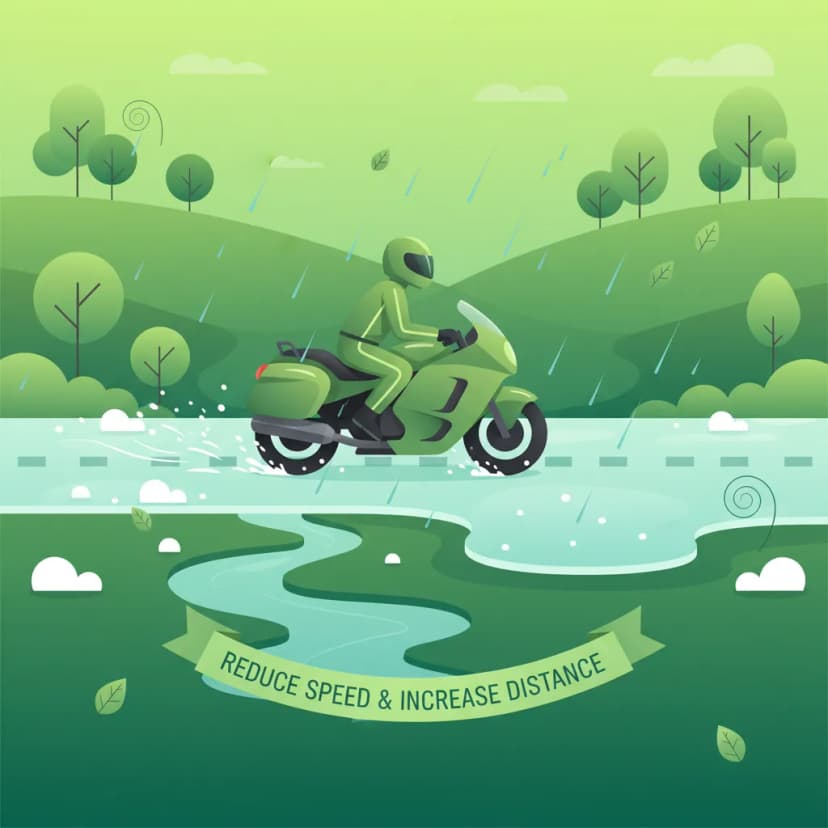
This lesson provides survival strategies for riding in the most challenging weather conditions, including heavy rain, snow, and potential ice. It emphasizes the importance of mental preparation, drastically reduced speeds, and hyper-smooth inputs for throttle, brakes, and steering. The content also covers identifying high-risk areas for 'black ice,' such as bridges and shaded spots, and the critical role of appropriate waterproof and insulated gear in preventing hypothermia and maintaining concentration.
This lesson covers the critical decision-making process of when to stop riding altogether because weather conditions have become too hazardous to continue safely. It provides procedures for safely pulling off the road, finding suitable shelter, and making yourself and your motorcycle as visible as possible to other traffic. The content emphasizes that there is no shame in stopping, and that rider preservation is the highest priority when faced with extreme conditions like gale-force winds or torrential downpours.
This lesson addresses the dual challenge of poor visibility: being able to see the road ahead and ensuring other road users can see you. It covers techniques for riding in fog and heavy rain, such as using appropriate lights and reducing speed to match sight distance. The lesson also discusses practical issues like helmet visor fogging and the importance of wearing high-visibility or reflective clothing to enhance conspicuity in low-light conditions.

This lesson reinforces the critical relationship between adverse conditions, reduced traction, and massively increased stopping distances. It provides a clear framework for how much riders need to increase their following distance and reduce their overall speed to maintain a safe margin for error. The curriculum teaches riders to constantly reassess their speed based on visual feedback from the road surface and the level of visibility, ensuring they can always stop within the distance they can clearly see.
This lesson provides a detailed guide to riding in wet and low-visibility conditions. You will learn to make all your control inputs—braking, accelerating, and steering—exceptionally smooth to avoid breaking traction on slippery surfaces. The content covers the dangers of painted lines and manhole covers when wet, and the importance of increasing your following distance dramatically to account for longer braking distances.

Riding on two wheels requires special care on surfaces with reduced grip. This lesson teaches you how to handle challenging conditions like rain, ice, wet leaves, or tram tracks. Key principles include reducing speed significantly, making all control inputs (braking, accelerating, steering) much more smoothly and gradually, and increasing your following distance to allow for much longer stopping distances. Recognizing potentially slippery areas is a critical part of proactive hazard perception.
This lesson provides practical advice for driving in challenging weather. You will learn about the risk of aquaplaning in heavy rain and how to react, as well as how to manage the effects of strong crosswinds. The curriculum covers winter driving, explaining the danger of black ice, the benefits of winter tires, and techniques for avoiding and correcting a skid. A key focus is on adjusting driving style: increasing following distances, reducing speed, and making gentle steering and braking inputs.
This lesson explains why the standard two-second rule is insufficient in adverse conditions and requires extension. It details how factors like rain, fog, and darkness reduce both visibility and tire grip, thereby significantly increasing total stopping distance. The content provides practical guidelines, such as extending the following gap to four seconds or more in the wet, to ensure the rider always has enough time and space to stop safely, regardless of the conditions.
This lesson goes beyond simply owning safety gear and focuses on its correct use. It explains how to check for a proper helmet fit and the importance of securely fastening the chin strap every time. The content also discusses the features of protective jackets, pants, and gloves, such as abrasion-resistant materials and built-in impact armor, and why a snug fit is crucial for them to function correctly in a crash.
Learn about Dutch legal requirements for conspicuity aids in reduced visibility and helmet visor standards for cold weather riding. Understand how to stay visible and legally compliant in winter conditions.
This lesson covers the mandatory lighting and signaling equipment for A2 motorcycles under Dutch law, ensuring you remain visible and communicate your intentions correctly. You will learn the rules for using headlights, taillights, turn signals, and brake lights in various conditions, including daytime and adverse weather. The content also addresses the importance of maintaining this equipment and using hand signals as a valid secondary method of communication in traffic.
This lesson addresses the dual challenge of poor visibility: being able to see the road ahead and ensuring other road users can see you. It covers techniques for riding in fog and heavy rain, such as using appropriate lights and reducing speed to match sight distance. The lesson also discusses practical issues like helmet visor fogging and the importance of wearing high-visibility or reflective clothing to enhance conspicuity in low-light conditions.
This lesson focuses on the dual challenge of visibility: seeing the road ahead and ensuring other drivers see you. It covers the legal requirements and tactical use of headlights ('koplampen'), including when to use high and low beams, and the importance of daytime running lights. Additionally, it explores strategies for enhancing personal conspicuity through high-visibility and reflective clothing, and using lane positioning to stand out in traffic and avoid blind spots.

Riding at night presents two main challenges: seeing the road and being seen by others. This lesson covers the legal requirements for your vehicle's lighting system and how to use it effectively, including when to use high beams. It also emphasizes strategies to increase your own conspicuity, such as wearing bright or reflective clothing. You will learn how darkness affects your perception of speed and distance and how to adapt your riding to compensate for these limitations.

This lesson covers the full range of lights and signals required on a vehicle for visibility and communication. You will learn about the mandatory requirements for headlights, taillights, brake lights, indicators, and reflectors. The curriculum emphasizes the driver's legal responsibility to ensure all lights are clean and functional before every journey. The correct use and function of the horn as an audible warning device in case of imminent danger are also explained.

This lesson focuses on the use of specialized lights for specific situations. You will learn the strict conditions under which fog lights may be used: the rear fog light is only permitted when visibility from fog or snow is less than 50 meters, and not in rain. The lesson also explains the correct use of hazard warning lights, which are intended to warn other drivers of a stationary obstruction (like a breakdown or the tail end of a sudden traffic jam) or while being towed.
This lesson explains why the standard two-second rule is insufficient in adverse conditions and requires extension. It details how factors like rain, fog, and darkness reduce both visibility and tire grip, thereby significantly increasing total stopping distance. The content provides practical guidelines, such as extending the following gap to four seconds or more in the wet, to ensure the rider always has enough time and space to stop safely, regardless of the conditions.
This lesson goes beyond the legal requirements of lighting to teach you how to use it strategically to stand out in traffic. You will learn the importance of always riding with your low-beam headlight on, and the appropriate, considerate use of the high beam to make yourself more noticeable from a distance. The content also covers using turn signals well in advance and tapping the brakes to flash the brake light before slowing.
This lesson provides survival strategies for riding in the most challenging weather conditions, including heavy rain, snow, and potential ice. It emphasizes the importance of mental preparation, drastically reduced speeds, and hyper-smooth inputs for throttle, brakes, and steering. The content also covers identifying high-risk areas for 'black ice,' such as bridges and shaded spots, and the critical role of appropriate waterproof and insulated gear in preventing hypothermia and maintaining concentration.
This lesson details the functions of the various lights on a car and the legal requirements for their use. You will learn the difference between dipped beams (dimlicht), which are the standard headlights for night driving and poor visibility, and main beams (grootlicht), which can only be used when they won't dazzle other road users. The content also covers the use of sidelights (stadslicht) for parking and the automatic function of Daytime Running Lights (DRLs). Correct usage is vital for visibility and avoiding blinding other drivers.
Find clear answers to common questions learners have about Protective Clothing and Gear for Low Temperatures. Learn how the lesson is structured, which driving theory objectives it supports, and how it fits into the overall learning path of units and curriculum progression in the Netherlands. These explanations help you understand key concepts, lesson flow, and exam focused study goals.
The essential layers are a base layer to wick away moisture, a mid-layer for insulation (like fleece or down), and an outer layer that provides windproofing and waterproofing. This system allows you to adjust your insulation based on changing temperatures and activity levels.
Heated grips and clothing provide direct warmth to extremities, which are most susceptible to cold. This improves comfort, maintains dexterity in your hands for crucial controls, and reduces the risk of cold-induced fatigue, all of which are vital for safe riding and focus during your theory test scenarios.
A Pinlock insert is a secondary visor that attaches to your main visor using small pins. It creates a sealed air gap that significantly reduces condensation and prevents fogging, ensuring clear vision in cold or damp conditions. This is critical for situational awareness and responding correctly in theory exam questions.
Waterproofing is extremely important. Wet gear loses its insulating properties rapidly, making you cold and uncomfortable, which impairs concentration. It also increases wind chill effect. Ensuring your outer layer is effectively waterproof protects you from rain and snow, helping maintain body temperature and focus.
While some elements like layering can be adapted, specialized motorcycle gear is designed with abrasion resistance, impact protection, and specific fits for riding. Regular winter clothing may not offer the necessary protection in case of an accident and might not provide optimal thermal regulation or windproofing for motorcycle speeds.