
This lesson focuses on the critical skill of overtaking for A1 motorcycle riders in the Netherlands. Understanding and correctly applying overtaking rules is vital for both passing the CBR theory exam and ensuring your safety on Dutch roads. We'll guide you through assessing traffic, executing safe maneuvers, and identifying prohibited overtaking situations.

Overtaking another vehicle is one of the most dynamic and potentially hazardous maneuvers a motorcyclist performs. For riders of A1-category motorcycles (up to 125 cc and 11 kW), executing a safe and legal pass on Dutch roads requires a blend of keen observation, precise judgment, and strict adherence to traffic laws. This lesson provides a detailed guide to master the entire overtaking process, from initial situation assessment to post-overtake consolidation, ensuring compliance with CBR exam standards and promoting road safety.
Mastering safe overtaking is crucial for reducing collision risk, preventing legal infractions (such as those outlined in RVV 1990 article 24), and maintaining smooth traffic flow. Incorrect execution accounts for a significant proportion of motorcycle accidents. This guide will equip you with the knowledge to make informed decisions and perform this high-risk maneuver with confidence and competence.
Overtaking fundamentally involves temporarily moving into an adjacent lane, often into opposing traffic or a higher-speed lane, to pass a slower vehicle. For a motorcyclist, the maneuver is amplified by the vehicle's inherent vulnerability and smaller footprint, which can be both an advantage in terms of maneuverability and a disadvantage in terms of visibility to other road users. Effective overtaking demands not only spatial awareness and temporal judgment but also unwavering legal compliance.
The underlying logic behind stringent overtaking rules is multifaceted. Primarily, it's about safety: minimizing exposure to oncoming traffic, preventing blind-spot collisions, and respecting the right-of-way of all road users, especially vulnerable ones. From a physics perspective, sufficient longitudinal and lateral clearance is essential to maintain stability while accelerating and changing lanes. Legally, Dutch traffic regulations ensure that overtaking does not compromise the safety of other road users or obstruct traffic flow, emphasizing "due care" (RVV 1990 article 1.1) in all actions.
Successful overtaking relies on several core principles that must be understood and applied consistently. These principles ensure that every maneuver is performed within legal boundaries and with maximum safety.
Always assume the worst-case scenario. When in doubt about the safety of an overtaking maneuver, it is always safer to wait.
The first step in any overtaking decision is to confirm that the maneuver is legally permissible. This means carefully observing road markings and signage.
A road segment where overtaking is permitted by traffic law and road markings, ensuring adequate visibility and space.
It is a common misunderstanding to assume that a solid line only applies to cars or to ignore "no overtaking" signs placed before intersections. Always verify the markings and signs before initiating a pass.
A "safe gap" is the minimum longitudinal distance required between your motorcycle and the nearest oncoming vehicle to complete the overtaking maneuver without conflict. This critical calculation prevents head-on collisions and ensures you can return to your lane safely.
The minimum longitudinal distance required to complete an overtaking maneuver without creating a conflict with oncoming traffic or the vehicle being overtaken.
Several components factor into this assessment:
Riders must estimate the distance of approaching vehicles using visual cues such as road signs, lamp posts, and mirror checks, while constantly monitoring their speedometer. Relying solely on "feeling" without quantitative assessment, particularly at night or in rain, can lead to dangerous misjudgments.
Before and after any lane change, including overtaking, a structured sequence of visual checks is mandatory to ensure the intended lane is clear. This routine is vital for detecting vehicles in your blind spots, which are areas not visible in your mirrors.
Skipping the second mirror check, or thinking a single glance is enough, is a common error. This routine is explicitly required by safe driving practices and implicitly by RVV 1990 articles 31 and 38, which emphasize safe lane changes and signal usage.
Communicating your intentions to surrounding traffic is paramount for safety. The left turn indicator (or a clear hand signal if the indicator fails) must be activated to signal your intent to overtake.
The use of the left turn indicator or an appropriate hand signal to communicate a driver's intention to overtake to other road users.
Delayed activation or using hand signals on high-speed roads where they are ineffective can surprise other drivers and increase accident risk.
Once you have assessed the situation, confirmed a safe gap, performed your checks, and signaled, the actual overtaking maneuver requires a controlled and decisive increase in speed.
The decisive and controlled application of throttle to increase speed and complete an overtaking maneuver within a safe, predictable distance.
Over-acceleration can lead to loss of traction, while "speeding up" beyond the posted limit, even for overtaking, is a punishable offense.
Completing the overtaking maneuver safely means returning to your original lane without creating new hazards.
Failure to consolidate properly, such as lingering in the overtaking lane or cutting off the overtaken vehicle, can lead to unintended obstruction or create a "half-lane" hazard.
Dutch traffic law explicitly prohibits overtaking in certain situations due to heightened collision risk. Violating these prohibitions can result in significant fines and demerit points.
These locations are particularly dangerous for overtaking:
These visual cues explicitly communicate where overtaking is illegal:
Never assume you have permission to overtake if signage or road markings conflict with your judgment. Always prioritize the explicit prohibition.
Overtaking situations are rarely identical. Various factors require adjustments to your approach, particularly on Dutch roads with their unique infrastructure and traffic mix.
Vulnerable Road Users (VRUs) include pedestrians, cyclists, other motorcyclists, and horse-drawn vehicles. Overtaking them requires extra caution due to their lack of protection and potentially less predictable movements.
Motorways (autosnelwegen) in the Netherlands have specific rules for overtaking:
Rain, fog, snow, or strong winds significantly impact visibility, road friction, and motorcycle stability, demanding adjusted overtaking strategies:
While no specific law dictates "increased gap in rain," non-compliance with the general "due care" principle (RVV 1990 article 1.1) can be cited in case of an incident.
Carrying a passenger or heavy luggage significantly alters your motorcycle's dynamics:
Always recalculate your safe gap and adjust your riding style when carrying additional weight.
Understanding common mistakes helps in preventing them:
Many overtaking violations are not just illegal but are direct precursors to serious accidents.
| Violation / Edge Case | Why It’s Wrong | Correct Behaviour | Potential Consequence |
|---|---|---|---|
| Overtaking on a solid white line | Violates RVV 1990 art. 24; signals no crossing. | Wait for a broken line or a designated overtaking zone. | Fine, potential demerit points, high crash risk. |
| Insufficient gap on a wet road | Reduced friction extends stopping distance; PRT increases. | Increase safe gap by ≥30% in wet conditions. | Skidding, loss of control, collision. |
| Skipping the left indicator | Lacks communication; surprises drivers behind. | Activate left indicator ≥3s before lane change. | Near-miss, potential fine for unsafe maneuver. |
| Overtaking a cyclist too close (<1.5m) | Endangers vulnerable user; violates lateral clearance guideline. | Maintain ≥1.5m when on a bike lane, or overtake well ahead. | Injury to cyclist, legal liability. |
| Overtaking within 20m of a pedestrian crossing | Visibility limited; high risk of hitting pedestrians. | Stop before the crossing, wait for a clear view. | Collision with pedestrians, severe penalties. |
| Overtaking on a motorway at 100 km/h (A1 limit) | Exceeds legal speed for A1 motorcycles (80 km/h). | Keep speed ≤80 km/h; wait for a legal opportunity. | Fine, penalty points, dangerous speed. |
| Overtaking on a curve with <50m sight | Insufficient reaction time for oncoming traffic. | Remain behind the slower vehicle until on a straight section. | Head-on collision. |
| Overtaking with a passenger while ignoring increased length | Longer vehicle requires increased gap. | Recalculate safe gap based on added length and weight. | Collision with oncoming traffic. |
| Overtaking in a tunnel with "no overtaking" sign | Violates explicit signage and confined space rules. | Remain in lane; wait for exit or an allowed zone. | Fine, increased risk in confined space. |
Safe overtaking is rooted in fundamental principles of physics and human psychology.
To further enhance your understanding of traffic rules and riding techniques, consider reviewing these related topics.
Lesson content overview
Explore all units and lessons included in this driving theory course.
Explore search topics learners often look for when studying Overtaking Rules and Safe Maneuvers. These topics reflect common questions about road rules, driving situations, safety guidance, and lesson level theory preparation for learners in the Netherlands.
Browse additional driving theory lessons that cover connected traffic rules, road signs, and common driving situations related to this topic. Improve your understanding of how different rules interact across everyday traffic scenarios.
Understand where and when overtaking is illegal on Dutch roads, including rules for intersections, pedestrian crossings, solid lines, and adverse conditions. Essential theory for safe motorcycle riding.
This lesson reinforces the fundamental rule of Dutch highway driving: use the rightmost lane available and use the lanes to the left only for overtaking. You will learn the complete, safe overtaking procedure: check mirrors, signal, perform a shoulder check for the blind spot, smoothly move over, accelerate past the vehicle, and then return to the right lane when safe.
This lesson details the systematic process for safely overtaking on a multi-lane motorway, leveraging the acceleration capabilities of a Category A motorcycle. It covers the 'mirror, signal, maneuver' sequence, with a strong emphasis on the critical shoulder check to clear the blind spot before moving out. The content also discusses how to judge closing speeds, ensure adequate space before returning to the lane, and how to handle situations involving multiple lanes and slower-moving heavy vehicles.

Overtaking is a high-risk maneuver that must be executed correctly. This lesson provides a step-by-step guide: assess if it is safe and legal, check mirrors and blind spots, signal your intention, accelerate smoothly past the other vehicle, and return to your lane leaving adequate space. You will also learn to identify situations where overtaking is prohibited, such as before a pedestrian crossing or when approaching a blind corner.
This lesson provides a detailed guide on the rules and safety precautions for overtaking. You will learn that overtaking must almost always be done on the left and requires careful judgment of speed and distance. The content covers situations where overtaking is forbidden, such as before pedestrian crossings, at intersections, or where there are solid white lines. Key steps like checking mirrors, signaling intention, checking blind spots, and returning to the lane safely are explained thoroughly.
This lesson covers the universal Dutch road rules with a specific focus on their application to light motorcycles. It details the various speed limits for different road types, from urban areas to motorways, and explains the correct procedures for overtaking and lane positioning. The legal aspects of lane filtering in congestion are also examined, alongside mandatory equipment use like daytime running lights, to ensure riders can integrate safely and legally into traffic flow.
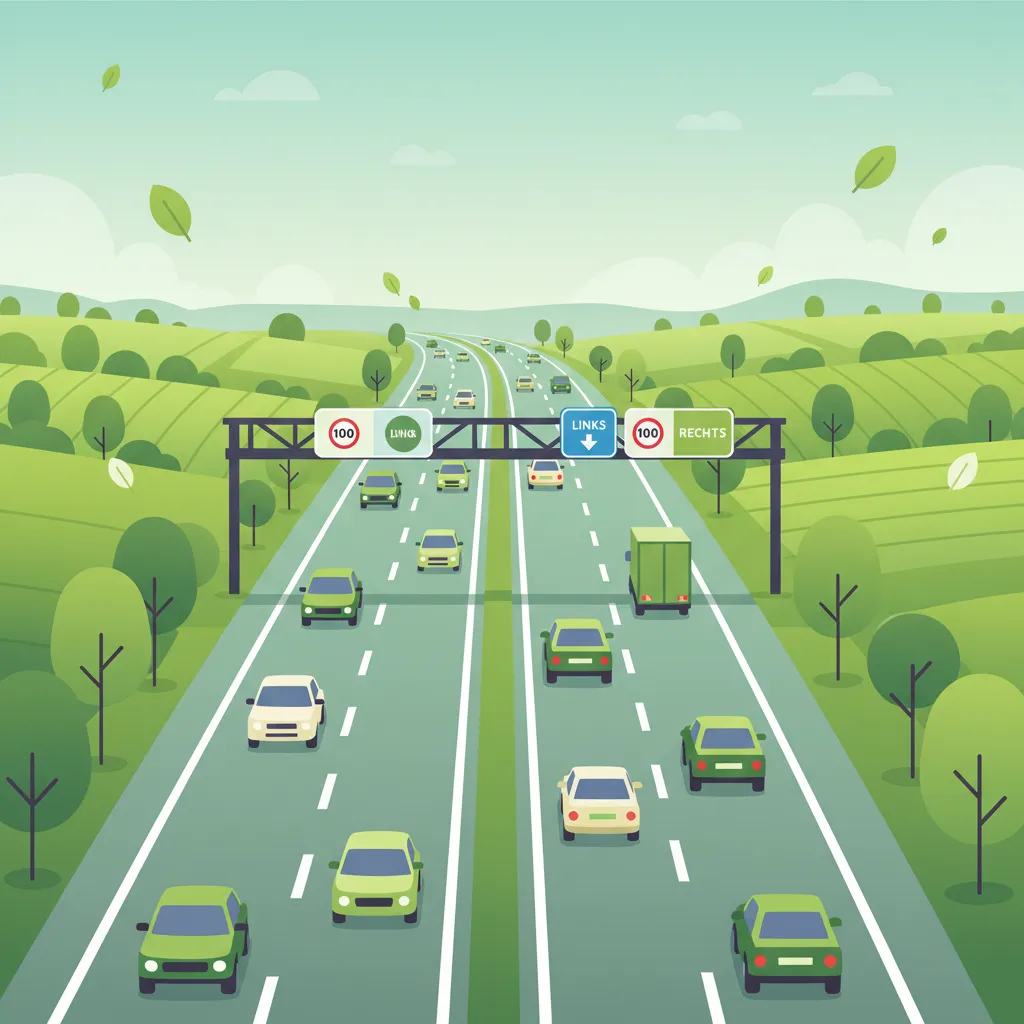
This lesson covers the specific articles of the Dutch Road Traffic Act that apply to motorways, with a primary focus on the strict rule of keeping to the rightmost available lane unless overtaking. It explains the legal and safety reasons for only passing on the left and discusses the correct positioning within a lane for maximum visibility and safety. The content also addresses the nuances of lane usage during heavy congestion, ensuring riders comply with the law and contribute to smooth traffic flow.
This lesson focuses on the unique demands of riding at sustained high speeds on motorways ('snelwegen'). It covers essential topics such as strict lane discipline, safe overtaking procedures, and maintaining a greater following distance to compensate for higher reaction and braking times. The content also addresses the physical and mental challenges, including managing wind blast, increased noise levels, and maintaining heightened situational awareness over long distances to combat fatigue.
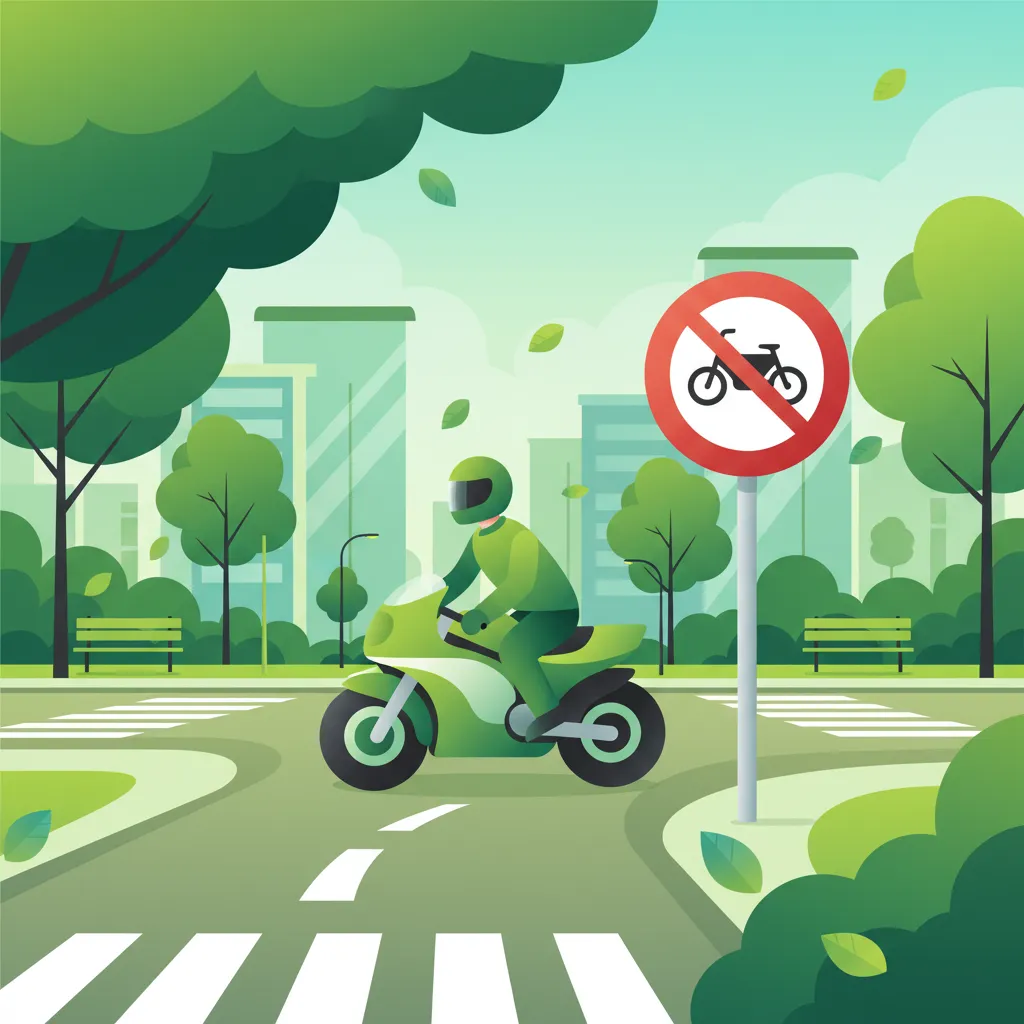
This lesson focuses on Dutch regulatory signs that enforce mandatory rules and restrictions, particularly those impacting A2 motorcyclists. You will learn to recognize and obey prohibition signs, such as those indicating a motorcycle ban (BORD 40), speed limits, and overtaking restrictions (BORD 21). The content explains the legal consequences of non-compliance and how to apply these rules in practical riding scenarios to ensure full adherence to Dutch traffic law.
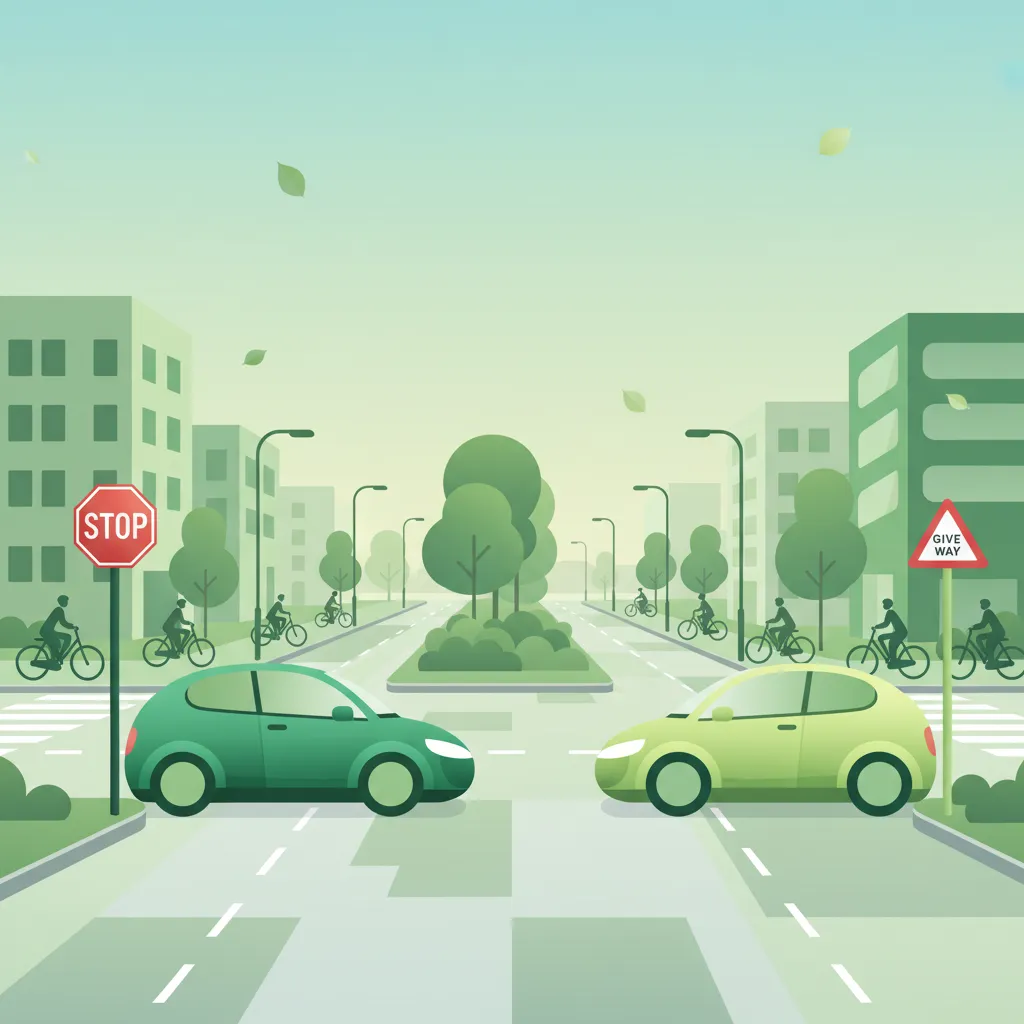
This lesson details the specific actions required at intersections controlled by 'Stop' and 'Give Way' signs. You will learn the legal requirement to come to a complete stop at a stop line (BORD 44) and the obligation to yield to all crossing traffic when encountering give-way markings ('haaientanden'). The content covers safe approach speeds and effective scanning techniques for motorcyclists to accurately assess gaps in traffic before proceeding.
This lesson delves into the hierarchy of priority rules on Dutch roads, clarifying who has the right-of-way in various intersection scenarios. It explains the meaning of signs like 'voorrangsweg' and road markings such as shark's teeth ('haaientanden'). Special attention is given to the correct procedure for entering, navigating, and exiting roundabouts on a motorcycle, including proper signaling and lane choice to ensure safe and efficient passage.
Explore the science behind safe overtaking: understanding perception-reaction time, acceleration physics, grip limits, and psychological biases to make safer decisions on Dutch roads.

This lesson provides a structured methodology for assessing the safety and legality of an overtaking maneuver, particularly on two-lane roads. It teaches riders how to accurately judge the speed and distance of oncoming traffic, calculate the time and space needed to complete the pass safely, and check for hidden hazards. This systematic risk assessment process helps eliminate guesswork and ensures that every decision to overtake is a well-informed and safe one.
This lesson details the systematic process for safely overtaking on a multi-lane motorway, leveraging the acceleration capabilities of a Category A motorcycle. It covers the 'mirror, signal, maneuver' sequence, with a strong emphasis on the critical shoulder check to clear the blind spot before moving out. The content also discusses how to judge closing speeds, ensure adequate space before returning to the lane, and how to handle situations involving multiple lanes and slower-moving heavy vehicles.
Overtaking is a high-risk maneuver that must be executed correctly. This lesson provides a step-by-step guide: assess if it is safe and legal, check mirrors and blind spots, signal your intention, accelerate smoothly past the other vehicle, and return to your lane leaving adequate space. You will also learn to identify situations where overtaking is prohibited, such as before a pedestrian crossing or when approaching a blind corner.
This lesson provides a detailed guide on the rules and safety precautions for overtaking. You will learn that overtaking must almost always be done on the left and requires careful judgment of speed and distance. The content covers situations where overtaking is forbidden, such as before pedestrian crossings, at intersections, or where there are solid white lines. Key steps like checking mirrors, signaling intention, checking blind spots, and returning to the lane safely are explained thoroughly.
This lesson delves into the mental side of safe riding. You will explore how a rider's emotional state, attitude, and level of experience can influence their perception of risk. The content addresses the common pitfall of overconfidence, especially among newer riders, and the importance of resisting peer pressure to ride beyond your skill level, emphasizing a mature and responsible approach to risk management.
This lesson reinforces the fundamental rule of Dutch highway driving: use the rightmost lane available and use the lanes to the left only for overtaking. You will learn the complete, safe overtaking procedure: check mirrors, signal, perform a shoulder check for the blind spot, smoothly move over, accelerate past the vehicle, and then return to the right lane when safe.
This lesson focuses on the critical relationship between speed, braking, and throttle control in cornering. You will learn the golden rule: complete your braking while the motorcycle is still upright, before initiating your lean. The content then explains how to use a neutral or slightly positive 'maintenance throttle' to keep the suspension settled mid-corner, followed by smoothly rolling on the throttle as you exit the turn to aid stability.

This lesson explains that where you ride in your lane is a critical safety choice. You will learn to avoid lingering in the blind spots ('dode hoek') of cars and trucks, and how to position yourself to be clearly visible in their mirrors. The content teaches you to constantly adjust your lane position to create a space cushion and ensure you always have a planned escape path in case of an emergency.

This lesson demystifies the concept of counter-steering, the primary method for steering a motorcycle at speed. It explains how a small push on the handlebar initiates a lean, allowing the bike to turn effectively. The lesson also details how a rider's body position and weight shifting are used in conjunction with steering inputs to control the motorcycle's center of gravity, ensuring stability and precision while cornering.

This lesson introduces the Dutch concept of 'voorspellend rijgedrag,' or anticipatory riding, a proactive approach to safety. It teaches motorcyclists how to look beyond the immediate vehicle in front and scan for clues that predict the actions of other road users, such as turn signals, wheel direction, and driver head movement. By anticipating potential conflicts before they happen, riders can position themselves to avoid danger and ensure a smoother, safer journey through complex traffic.
Find clear answers to common questions learners have about Overtaking Rules and Safe Maneuvers. Learn how the lesson is structured, which driving theory objectives it supports, and how it fits into the overall learning path of units and curriculum progression in the Netherlands. These explanations help you understand key concepts, lesson flow, and exam focused study goals.
On a two-way road, you may generally overtake on the left, provided there is sufficient space and it is safe to do so. You must ensure there is no oncoming traffic that could be endangered, and you must not overtake if it is prohibited by road signs or markings.
Overtaking is forbidden at places where visibility is limited (e.g., blind bends, crests of hills), at pedestrian crossings, at intersections controlled by traffic lights unless directed otherwise, and on roads marked with a solid white line on your side. Always check for specific prohibitions indicated by C-series signs.
Before overtaking, you must use your mirrors. Crucially, you must also perform a physical check by turning your head to look over your shoulder in the direction you intend to move. This shoulder check ensures you see any vehicles or hazards in your blind spot that mirrors might miss.
Filtering, or 'lane splitting', between slow-moving or stationary traffic in the same direction is often permitted in the Netherlands, but it must be done safely and cautiously. Ensure there is adequate space, proceed at a slow speed, and remain highly aware of your surroundings. It is not allowed if it endangers other road users or if prohibited by signs.
Road markings, particularly white lines, are critical. A solid white line on your side of the carriageway means you must not cross it to overtake. If there is a broken white line, you may cross it if it is safe to do so, but you must always yield to oncoming traffic. Double white lines, whether solid or one solid and one broken, also prohibit overtaking.
The CBR exam will present you with various traffic scenarios involving motorcycles. You'll need to identify if an overtake is possible, safe, and legal, or if it's prohibited. Questions often focus on recognizing dangerous situations, understanding prohibited zones, and correctly interpreting road signs and markings relevant to overtaking.