
This lesson introduces you to the essential Dutch regulatory signs and specific restrictions for A2 motorcyclists. Understanding these mandatory rules, like speed limits and motorcycle bans, is crucial for safe riding and passing your CBR theory exam. It forms the foundation of road sign interpretation, building directly into more complex hazard anticipation and navigation scenarios.
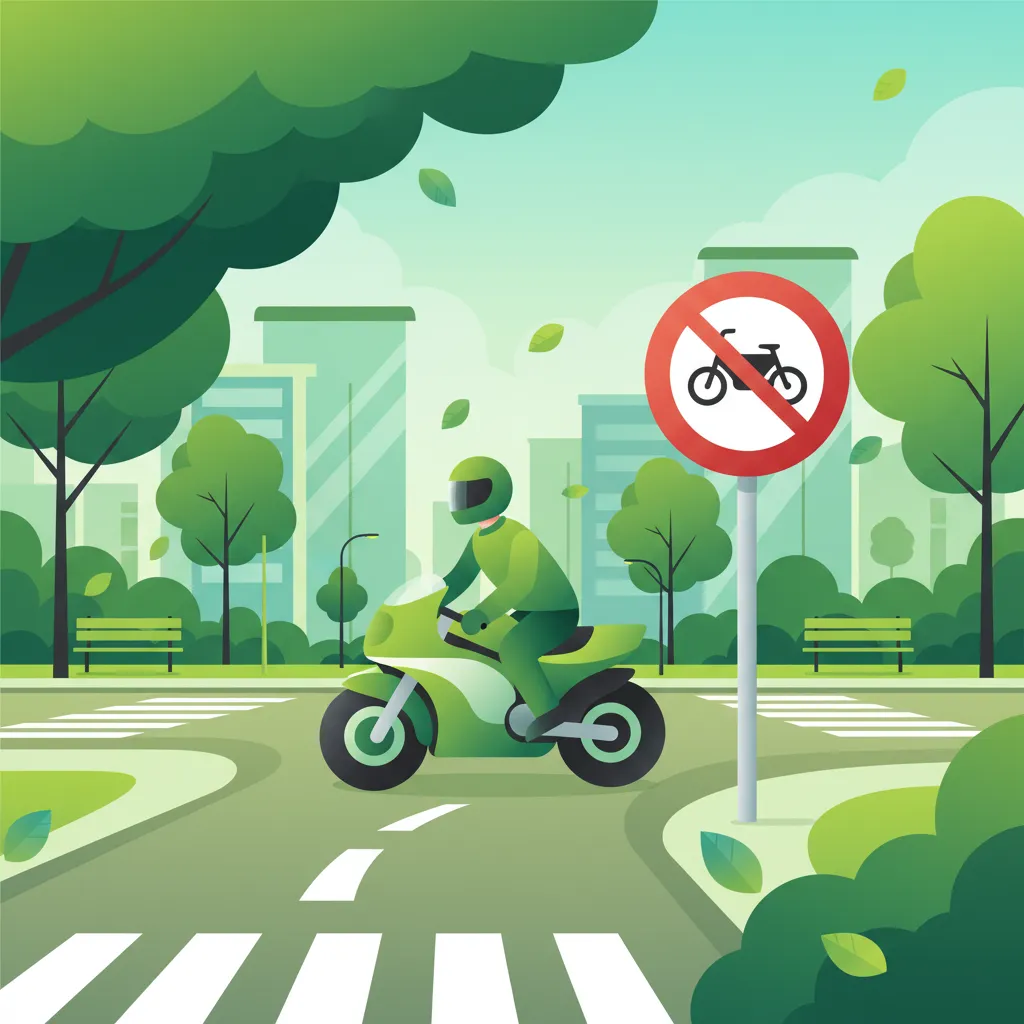
Preparing for the Dutch Motorcycle License (Category A2) theory exam requires a thorough understanding of traffic regulations, especially those conveyed by regulatory signs. These signs are not merely suggestions; they are legally binding instructions that dictate how you must behave on the road. For A2 motorcyclists, specific signs impose restrictions that differ from other vehicle categories, making their correct interpretation crucial for safety and legal compliance.
This lesson delves into Dutch regulatory signs, focusing on their identification, interpretation, and the mandatory compliance required from Category A2 motorcyclists. You will learn to recognize prohibition signs, such as those indicating a motorcycle ban (BORD 40), speed limits (BORD 32), and overtaking restrictions (BORD 21), understanding their legal ramifications and how to apply these rules in practical riding scenarios.
Regulatory signs serve as the backbone of orderly traffic flow and road safety. They translate the intent of traffic laws into clear visual instructions for all road users, including motorcyclists. Mastering these signs is not just about passing your theory exam; it's about developing the foundational knowledge to ride safely, confidently, and legally on Dutch roads.
Regulatory signs are a fundamental component of the Dutch traffic law hierarchy, deriving their authority primarily from the Road Traffic Act and the Reglement Verkeersregels en Verkeerstekens 1990 (RVV 1990). They are designed to achieve several critical objectives: protecting vulnerable road users, ensuring smooth and safe traffic movement, and mitigating environmental impacts such as noise and emissions. For motorcyclists, understanding these signs means navigating the road network correctly, avoiding hazards, and preventing potential fines or even license suspension. Misinterpreting or ignoring them can lead to serious legal consequences and significantly increase the risk of accidents.
Several core principles underpin the effectiveness and legal force of regulatory signs. First, the Legal Hierarchy principle establishes that Dutch traffic regulations are structured, with signs having legal backing from higher-level laws like the RVV 1990. This means a sign's instruction is mandatory and legally enforceable. Second, Regulatory Sign Classification helps riders quickly understand the sign's intent: blue circles denote mandatory actions, red circles with a slash indicate prohibitions, and red circles with numbers or specific symbols impose restrictions. This visual language is universal and demands immediate recognition.
The Prohibition Principle means a sign explicitly forbids a specific action or vehicle type, while the Restriction/Limitation Principle sets quantitative limits, such as speed or overtaking. For A2 motorcyclists, the Category-Specific Regulation Principle is particularly relevant, as certain signs, like BORD 40, apply specifically to motorcycles or may have supplementary plates defining rules for specific power categories. Finally, the Visibility and Legibility Principle highlights that signs must be designed and placed to be clearly visible under all conditions, and riders are expected to perceive them, irrespective of environmental challenges.
Regulatory signs are distinguished by their shapes, colors, and symbols, providing immediate cues about the type of rule being enforced. Recognizing these visual patterns is the first step toward compliance.
Mandatory signs are typically blue circular signs with white symbols, indicating actions that road users must take. They compel a specific behaviour, such as turning in a particular direction or using a specific lane. Examples include signs for "Turn left ahead" or "Pass on this side." For motorcyclists, these signs streamline traffic flow and direct movement, reducing uncertainty at complex junctions. Failure to obey a mandatory sign can disrupt traffic, create dangerous situations, and lead to fines.
Prohibition signs are among the most critical regulatory signs for motorcyclists. They are generally red circular signs with a white background and a black symbol, often with a diagonal red line crossing through it. These signs forbid specific actions or vehicle access.
This sign, known as BORD 40 in the Netherlands, explicitly bans all motorcycles from the road segment beyond the sign. It is a critical restriction that A2 motorcyclists must always respect. Ignoring this sign means entering an area where motorcycles are deemed unsafe or undesirable, such as pedestrian zones or areas with strict noise regulations.
Restriction or limitation signs typically feature a red circle with a white background and a black number or symbol inside. These signs impose quantitative limits or specific conditions.
Speed limit signs, such as BORD 32 (general speed limit), are prime examples of restriction signs. They dictate the maximum speed allowed, which motorcyclists must adhere to. Sometimes, a supplementary plate might modify this limit specifically for motorcycles or A2 category vehicles.
BORD 21, the "No overtaking" sign, is another crucial restriction sign. It prohibits all vehicles, including motorcycles, from overtaking other motor vehicles on the designated stretch of road. This restriction is often placed where visibility is limited, or the road conditions make overtaking unsafe.
Certain regulatory signs have a direct and significant impact on how A2 motorcyclists operate. Understanding these specific rules is essential for safe and lawful riding.
BORD 40, easily identified as a red circular sign with a white background depicting a black motorcycle silhouette crossed by a red diagonal line, signifies a complete prohibition for motorcycles. This ban applies to all motorcycles, regardless of their engine power or license category, unless explicitly stated otherwise by a supplementary plate. When encountering BORD 40, an A2 motorcyclist must not enter the road segment beyond the sign. This often means finding an alternative route or stopping safely if no detour is available. Violating BORD 40 can lead to substantial fines and penalty points, in addition to increased risks in areas designated for pedestrians or other sensitive traffic.
The "No overtaking" sign, BORD 21, is a red circular sign featuring two car silhouettes, one black and one red, with a red diagonal line crossing the red car. This sign prohibits all vehicles from overtaking other motor vehicles, irrespective of the number of lanes. For A2 motorcyclists, this means you must remain in your lane behind the vehicle ahead, even if the road appears wide or offers ample space. Overtaking restrictions are commonly found on roads with limited visibility, such as blind curves, steep hills, or in areas with high pedestrian activity. While sometimes a supplementary plate might specify exceptions, the general rule is strict adherence to BORD 21. Violation carries legal penalties and significantly elevates the risk of head-on collisions.
Speed limit signs (BORD 32, BORD 33, BORD 34) are red circular signs displaying a numeric speed limit in kilometres per hour. These limits are mandatory for all vehicles. For A2 motorcyclists, it's crucial to remember that while a general speed limit may be posted (e.g., 50 km/h), your statutory maximum speed as an A2 rider might have specific limitations. This can be influenced by local regulations or, in some rare instances, a supplementary plate explicitly stating a different limit for A2 category motorcycles (e.g., "A2 = 45 km/h"). Always be attentive to these details. Exceeding posted speed limits is a serious offense that contributes significantly to accident severity and carries hefty fines and penalty points. Even a slight increase in speed dramatically increases kinetic energy, making stopping more difficult and crashes more severe.
Many regulatory signs, including bans and restrictions, are not active 24 hours a day. Their applicability can be modified by rectangular supplementary plates placed directly beneath the main sign. These plates indicate specific timeframes (e.g., "08–18h"), days of the week (e.g., "Mo–Fr"), or seasonal conditions during which the primary rule is enforced. Outside these specified periods, the restriction does not apply, and normal traffic rules govern the road. For A2 motorcyclists, careful reading of these supplementary plates is essential. Misinterpreting the timings can lead to accidental violations and penalties. Always double-check if a restriction applies to your current time and day.
Beyond general prohibitions, A2 motorcyclists may encounter zones or signs that impose restrictions based on environmental impact or specific vehicle characteristics.
Dutch cities are increasingly implementing Environmental Zones, also known as Low-Emission Zones (LEZ), to improve air quality and reduce noise pollution. These zones are indicated by specific signs, often a green circular sign with an "E" symbol. Entry into these areas is restricted based on a vehicle's emission standards (e.g., Euro 5 or higher). While motorcycles have historically been less targeted than cars or heavy goods vehicles, it is crucial for A2 riders to verify if their motorcycle meets the required Euro class before entering such a zone. Non-compliant vehicles caught by ANPR (Automatic Number Plate Recognition) cameras face significant fines. Staying informed about local environmental regulations is therefore vital.
Occasionally, regulatory signs may include supplementary plates that define prohibitions for specific sub-categories of motorcycles, such as "No motorcycles > 35 kW." This is particularly relevant for A2 riders who, by definition, operate motorcycles with a maximum power output of 35 kW. While these specific bans are less common, they might be encountered in areas sensitive to noise, specific types of traffic, or where higher-powered vehicles are deemed inappropriate for safety reasons. An A2 rider might be exempt from a general "no heavy motorcycles" ban but should always confirm the exact wording of any supplementary plate to avoid violations.
Adherence to regulatory signs is not just a safety recommendation; it is a legal obligation under Dutch traffic law. Non-compliance carries specific penalties designed to deter violations and maintain road order.
The core legal framework for road signs in the Netherlands is the Reglement Verkeersregels en Verkeerstekens 1990 (RVV 1990). This regulation outlines the types of signs, their meanings, and the legal obligations they create. For instance, Article 32 RVV 1990 covers mandatory signs, while Article 14 (2) RVV 1990 stipulates the binding nature of prohibition signs. Traffic police and enforcement authorities use these articles to issue fines and enforce compliance. Riders must understand that ignorance of a sign or traffic rule is not a valid legal defense.
Violating regulatory signs can result in various penalties, including monetary fines and the accumulation of penalty points on your driving license, which can ultimately lead to license suspension.
Important: Fine amounts and penalty point allocations can change. Always verify the most current figures from official sources.
These penalties underscore the legal seriousness of regulatory signs. Consistent compliance is key to maintaining a clean driving record and ensuring your right to ride.
The effectiveness of regulatory signs hinges on their visibility and legibility under all conditions. As a motorcyclist, your responsibility extends to actively scanning for and interpreting these signs, especially when conditions are challenging.
Motorcyclists face unique challenges in perceiving road signs. Factors such as helmet vision, environmental conditions, and the dynamics of riding itself can affect how signs are seen and processed. Sign design (size, shape, color contrast), placement (height, distance from junction), and illumination (retro-reflective materials for night visibility) are all critical for ensuring that signs can be recognized from an adequate distance, allowing sufficient reaction time.
Under adverse weather conditions like rain, fog, or snow, visibility significantly diminishes. Similarly, at night, human visual acuity decreases, making reliance on the retro-reflective properties of signs crucial. Motorcyclists should always be proactive, using their headlights and maintaining a vigilant lookout, particularly on unfamiliar roads or in challenging environments.
While road authorities are responsible for sign maintenance, the ultimate responsibility for perceiving and obeying signs lies with the rider. Failure to see a sign due to poor visibility, whether from adverse weather or insufficient lighting, is generally not accepted as a legal defense for non-compliance. Therefore, A2 motorcyclists must adopt a precautionary approach: reduce speed, increase following distance, and enhance personal visibility by using appropriate lighting and gear. If a sign cannot be clearly identified, the safest course of action is to assume a restriction exists and proceed with extreme caution, ready to react to potential hazards or unknown rules.
Understanding the theory behind regulatory signs is vital, but applying this knowledge in real-world scenarios is where true competency lies. This section provides insights into how these rules contribute to overall road safety.
Remember the 'What If': Always mentally rehearse potential scenarios. What if this sign is obscured? What if the time restriction changes? This prepares you for dynamic road conditions.
Consider how the rules interact in typical riding situations:
Urban Pedestrian Zone (BORD 40): A motorcyclist sees BORD 40 with a supplementary plate "08-18h" at the entrance to a city center street. If it's 10:00, the rider must exit the road and find an alternative route, respecting the ban during active hours. Ignoring it would lead to a fine and potential pedestrian conflict. If it's 20:00, the rider is permitted to enter as the restriction is not active. This demonstrates the critical nature of time-dependent restrictions.
Overtaking on a Hill (BORD 21): While ascending a rural hill, an A2 motorcyclist encounters BORD 21, but it's partially obscured by overgrown foliage. Even though the sign isn't perfectly clear, the rider's responsibility is to proceed cautiously, assume the restriction applies, and refrain from overtaking. This scenario highlights the "no-defence for non-visibility" principle and the inherent dangers of overtaking on limited-visibility stretches.
Speed Limits with A2-Specific Plates: On a residential street, BORD 32 shows a 30 km/h speed limit, but a supplementary plate indicates "A2 = 45 km/h". An A2 rider can legally travel up to 45 km/h, while other vehicles are restricted to 30 km/h. This demonstrates category-specific regulations. The rider must adjust their speed accordingly and be aware of other road users' differing speed limits.
Understanding and complying with Dutch regulatory signs is paramount for any A2 motorcyclist. These signs are legal directives designed to ensure safety and orderly traffic flow.
This lesson builds a crucial foundation for other topics in your Dutch Motorcycle License (Category A2) theory course. The knowledge gained here will be essential for interpreting directional and informational signs, safely negotiating curves, and planning effective emergency evasive manoeuvres.
Lesson content overview
Explore all units and lessons included in this driving theory course.
Explore search topics learners often look for when studying Regulatory Signs and Motorcycle Restrictions. These topics reflect common questions about road rules, driving situations, safety guidance, and lesson level theory preparation for learners in the Netherlands.
Browse additional driving theory lessons that cover connected traffic rules, road signs, and common driving situations related to this topic. Improve your understanding of how different rules interact across everyday traffic scenarios.
Explore nuanced interpretations and specific exceptions to common Dutch regulatory signs that affect A2 motorcyclists. This lesson clarifies situations where standard rules may be modified by supplementary plates or specific road conditions, ensuring you can navigate complex signage confidently.

This lesson covers A-code signs, which are designed to warn drivers of potential hazards on the road ahead. For motorcyclists, warnings about sharp bends, slippery surfaces, crosswinds, or falling rocks are especially critical for maintaining control and stability. The content explains how to interpret these triangular signs to anticipate changing conditions, adjust speed, and adopt a defensive riding posture well in advance of the hazard.
This lesson covers the mandatory lighting and signaling equipment for A2 motorcycles under Dutch law, ensuring you remain visible and communicate your intentions correctly. You will learn the rules for using headlights, taillights, turn signals, and brake lights in various conditions, including daytime and adverse weather. The content also addresses the importance of maintaining this equipment and using hand signals as a valid secondary method of communication in traffic.
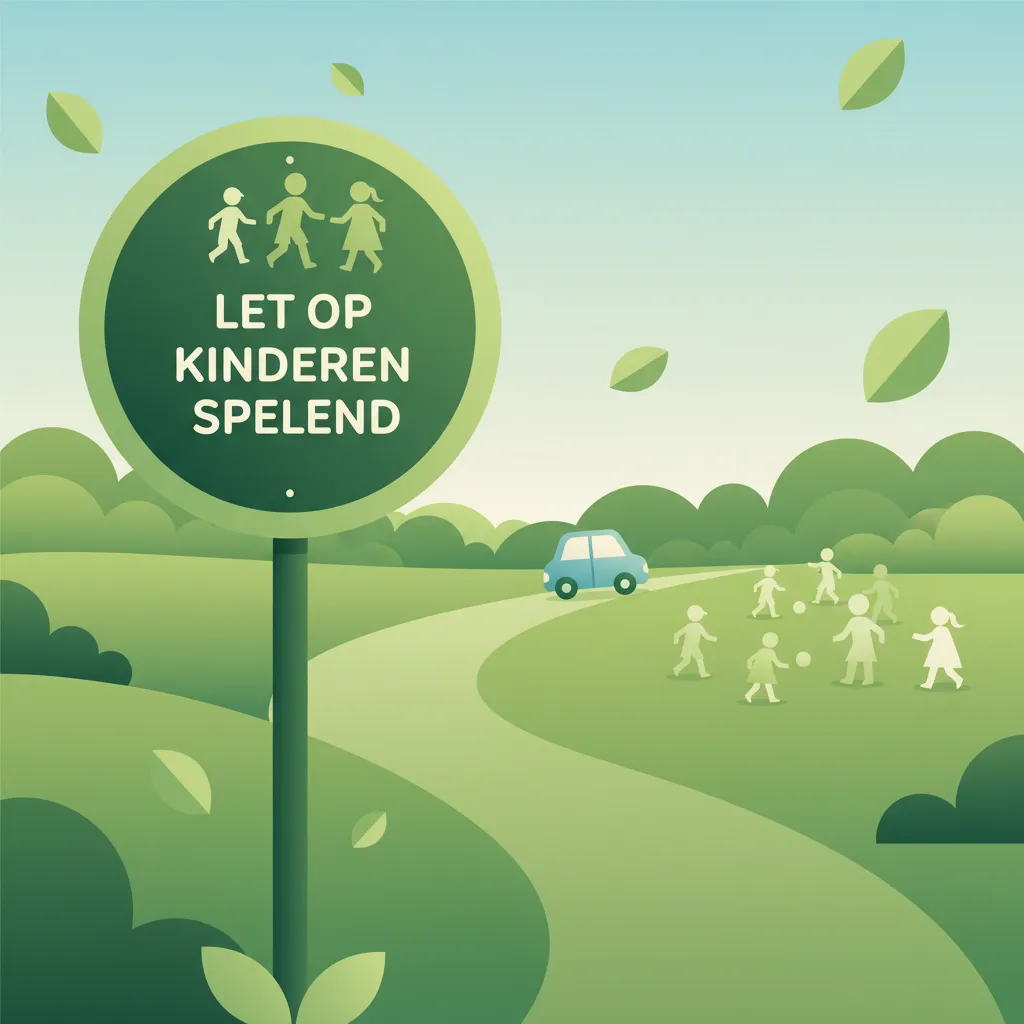
This lesson details the interpretation of Dutch warning signs, which alert riders to potential dangers and changing road conditions. You will study signs indicating sharp curves, road narrowing (BORD 30), and temporary hazards like road works (BORD 36), learning to adjust speed and road position proactively. The content emphasizes how the A2 motorcycle's characteristics require earlier hazard recognition and response compared to other vehicles for maintaining control.
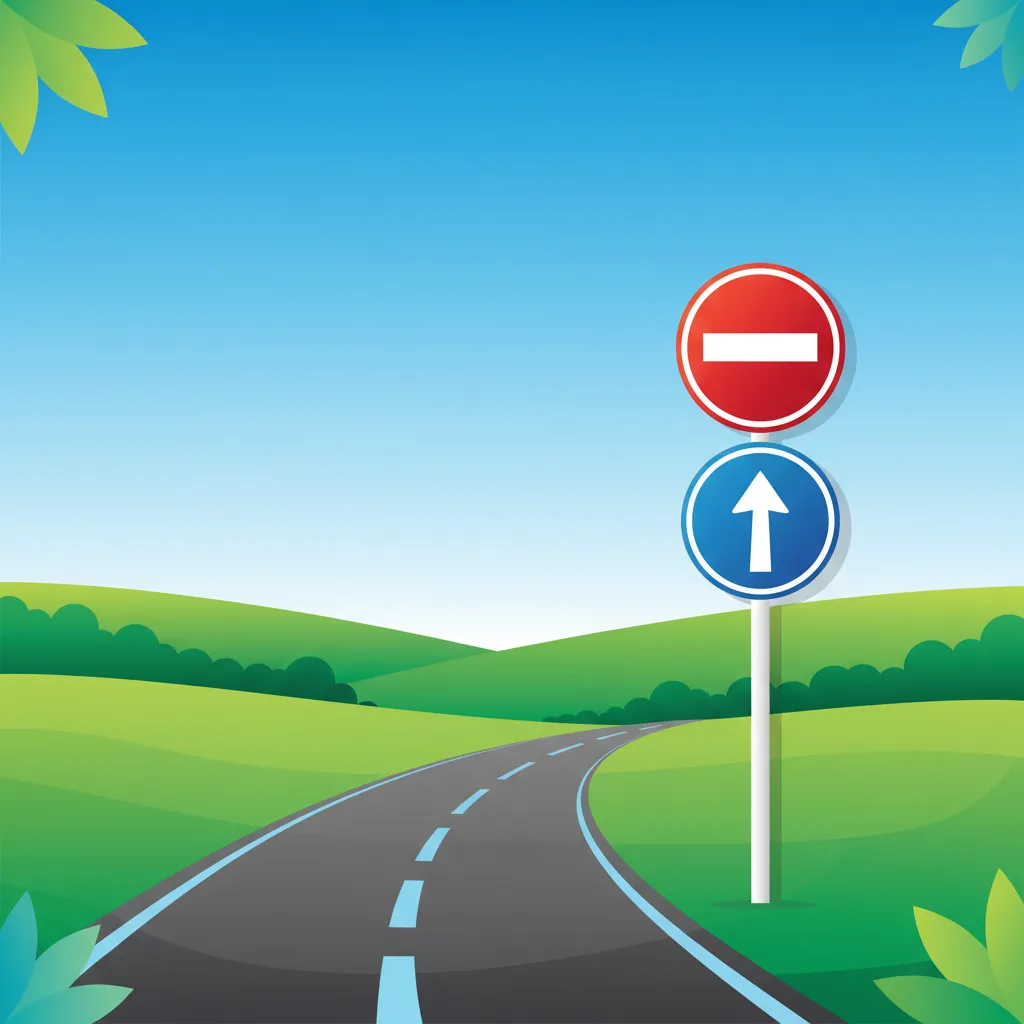
This lesson offers an in-depth study of Dutch regulatory signs, which impose mandatory actions or prohibitions on road users, with a specific focus on their impact on motorcyclists. It explains the visual language of prohibition symbols ('verbodsborden') and obligation symbols ('verplichtingsborden'), the contexts in which they appear, and the strict statutory consequences of non-compliance. Real-world examples are used to illustrate how these signs directly influence route planning, overtaking decisions, and speed management.
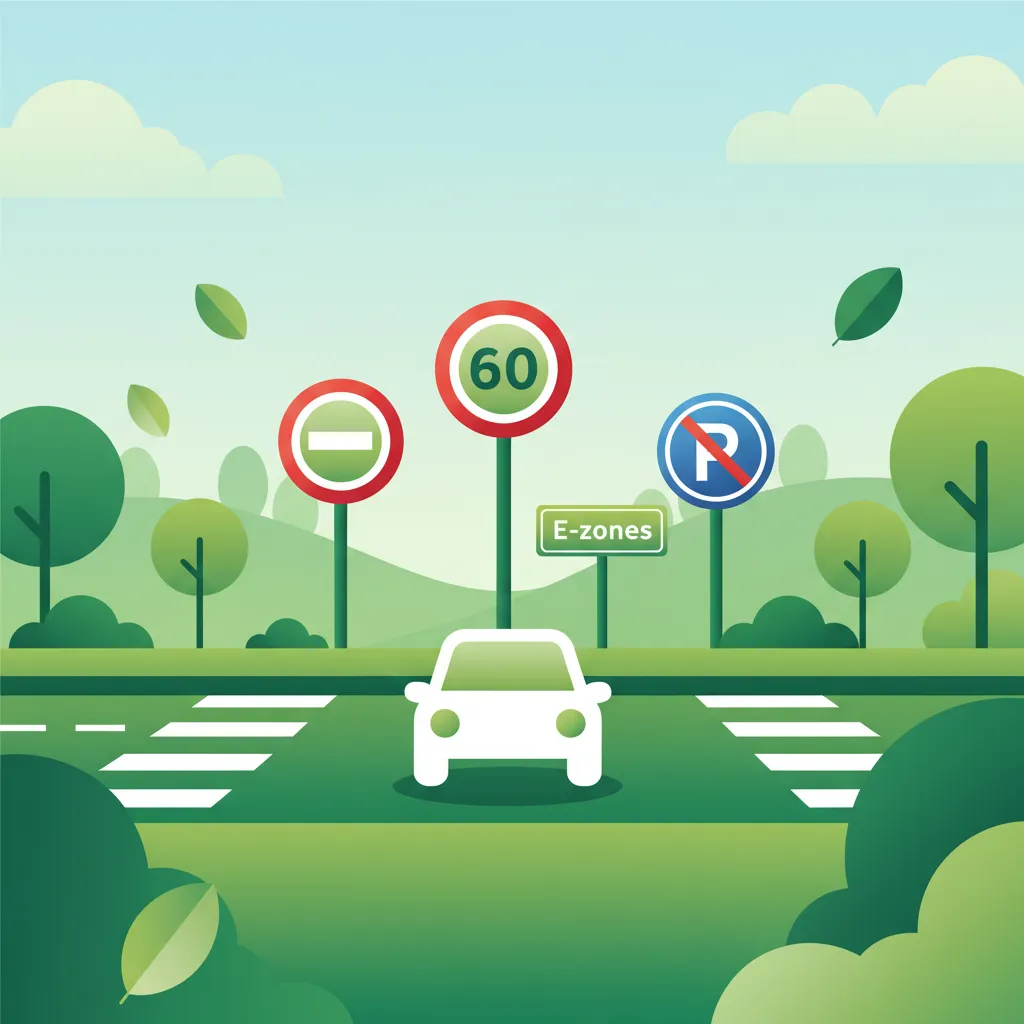
This lesson focuses on C-code regulatory signs, which impose legal obligations and prohibitions on road users. Learners will study signs that establish speed limits, forbid entry, mandate specific directions, and restrict overtaking or parking. Understanding these signs is non-negotiable for legal compliance and safety, as they form the basis of traffic regulation and are a major component of the CBR theory exam for motorcyclists.
This lesson prepares riders for navigating the unique challenges of construction zones and temporary road layouts. It covers the identification of orange-colored temporary signs, understanding detour (omleiding) routes, and adhering to reduced speed limits. Special attention is given to the hazards common in work zones, such as loose gravel, uneven surfaces, and the presence of workers, emphasizing the need for heightened awareness and caution.
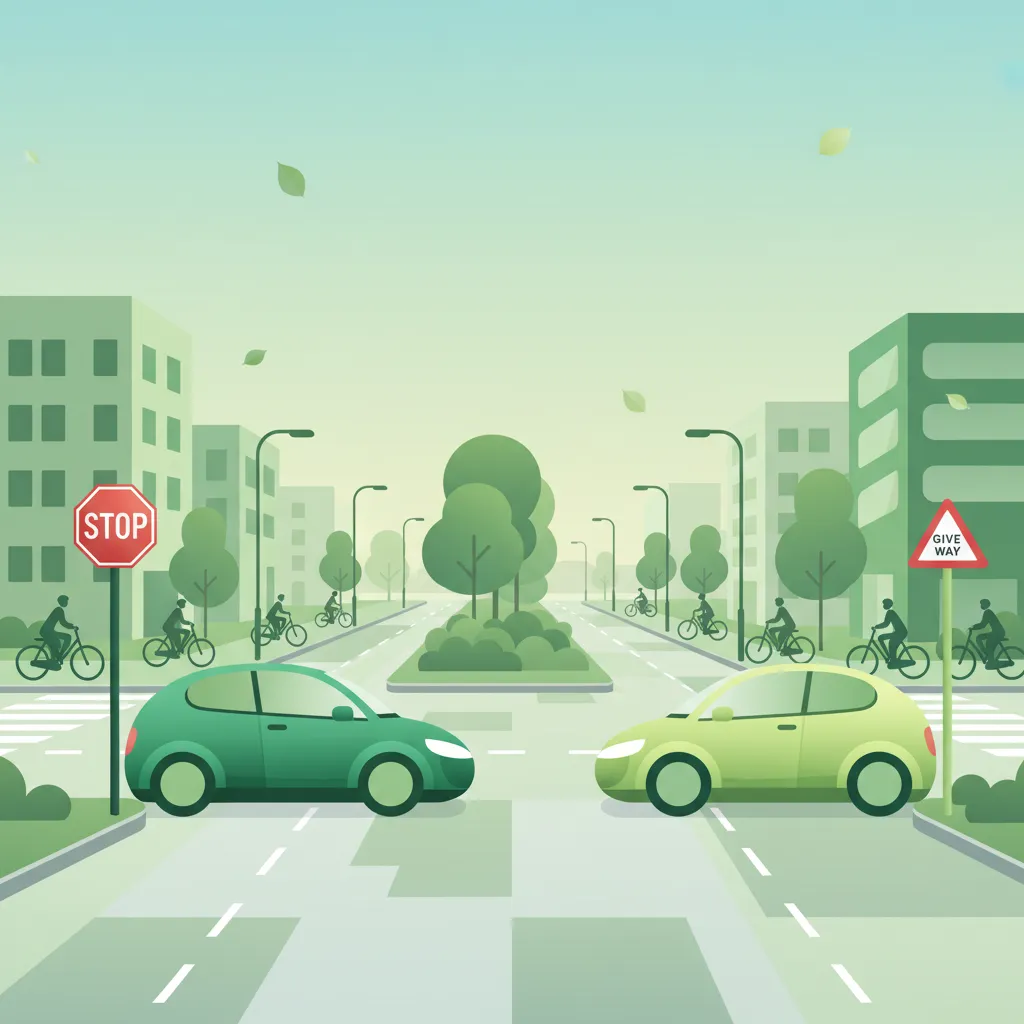
This lesson details the specific actions required at intersections controlled by 'Stop' and 'Give Way' signs. You will learn the legal requirement to come to a complete stop at a stop line (BORD 44) and the obligation to yield to all crossing traffic when encountering give-way markings ('haaientanden'). The content covers safe approach speeds and effective scanning techniques for motorcyclists to accurately assess gaps in traffic before proceeding.

This lesson covers the universal Dutch road rules with a specific focus on their application to light motorcycles. It details the various speed limits for different road types, from urban areas to motorways, and explains the correct procedures for overtaking and lane positioning. The legal aspects of lane filtering in congestion are also examined, alongside mandatory equipment use like daytime running lights, to ensure riders can integrate safely and legally into traffic flow.
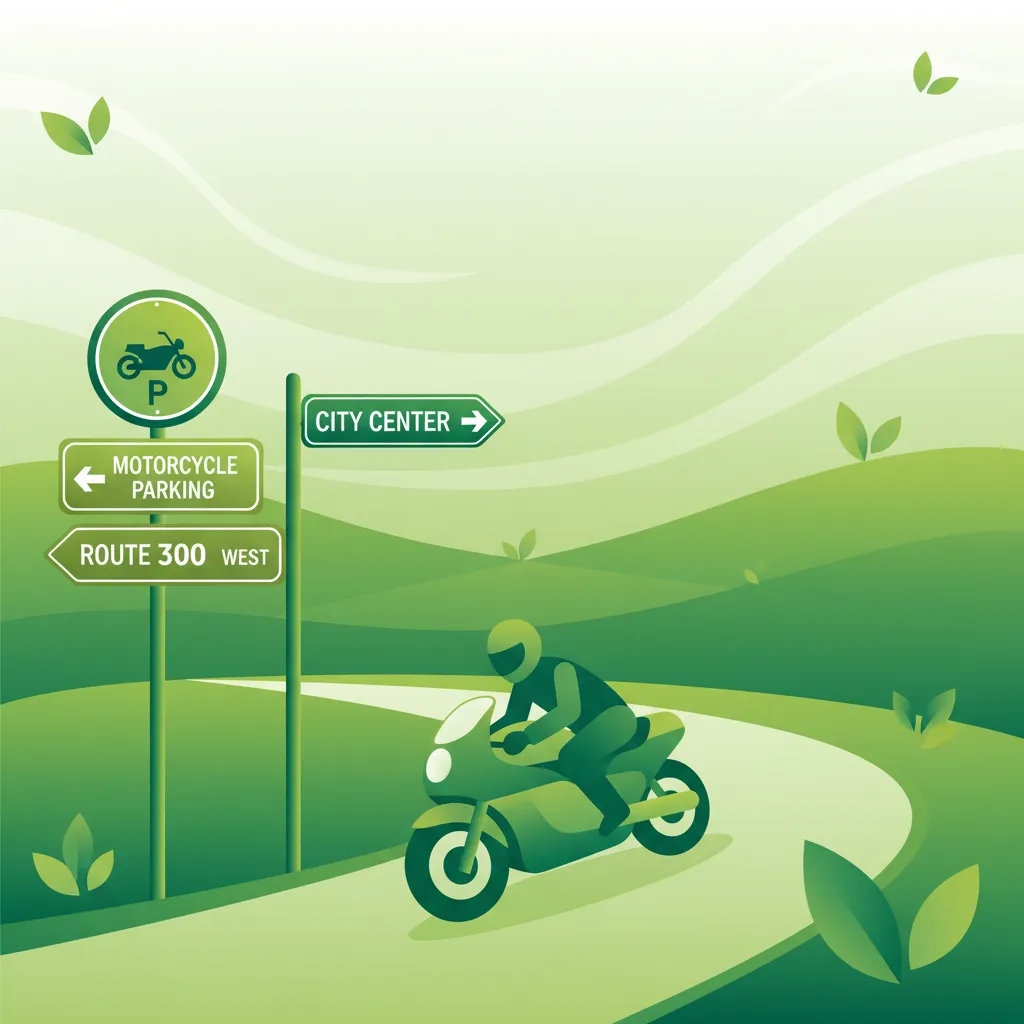
This lesson explains how to interpret directional and informational signs to navigate the Dutch road network effectively. You will learn to read route signs on highways, understand lane guidance arrows for complex intersections, and identify panels indicating services like fuel stations or rest areas. The content focuses on how motorcyclists can use this information for safe and efficient route planning, including adapting to real-time information from electronic signs.
This lesson explains how to respond to variable speed limits shown on overhead electronic signs, which are used to manage traffic flow in real-time. You will learn why these limits are adjusted for factors like congestion, accidents, or bad weather, and the legal requirement to obey them. The content focuses on the importance of anticipatory riding, scanning far ahead for these signs to allow for smooth and safe speed adjustments.
Learn to interpret and apply Dutch regulatory signs in practical riding scenarios. This lesson uses realistic examples to illustrate how signs like BORD 40 and BORD 21 function in traffic, helping A2 riders make safe and legal decisions on the road.
This lesson offers an in-depth study of Dutch regulatory signs, which impose mandatory actions or prohibitions on road users, with a specific focus on their impact on motorcyclists. It explains the visual language of prohibition symbols ('verbodsborden') and obligation symbols ('verplichtingsborden'), the contexts in which they appear, and the strict statutory consequences of non-compliance. Real-world examples are used to illustrate how these signs directly influence route planning, overtaking decisions, and speed management.
This lesson details the interpretation of Dutch warning signs, which alert riders to potential dangers and changing road conditions. You will study signs indicating sharp curves, road narrowing (BORD 30), and temporary hazards like road works (BORD 36), learning to adjust speed and road position proactively. The content emphasizes how the A2 motorcycle's characteristics require earlier hazard recognition and response compared to other vehicles for maintaining control.
This lesson covers the mandatory lighting and signaling equipment for A2 motorcycles under Dutch law, ensuring you remain visible and communicate your intentions correctly. You will learn the rules for using headlights, taillights, turn signals, and brake lights in various conditions, including daytime and adverse weather. The content also addresses the importance of maintaining this equipment and using hand signals as a valid secondary method of communication in traffic.
This lesson explains how to respond to variable speed limits shown on overhead electronic signs, which are used to manage traffic flow in real-time. You will learn why these limits are adjusted for factors like congestion, accidents, or bad weather, and the legal requirement to obey them. The content focuses on the importance of anticipatory riding, scanning far ahead for these signs to allow for smooth and safe speed adjustments.
This lesson focuses on C-code regulatory signs, which impose legal obligations and prohibitions on road users. Learners will study signs that establish speed limits, forbid entry, mandate specific directions, and restrict overtaking or parking. Understanding these signs is non-negotiable for legal compliance and safety, as they form the basis of traffic regulation and are a major component of the CBR theory exam for motorcyclists.
This lesson explains how to interpret directional and informational signs to navigate the Dutch road network effectively. You will learn to read route signs on highways, understand lane guidance arrows for complex intersections, and identify panels indicating services like fuel stations or rest areas. The content focuses on how motorcyclists can use this information for safe and efficient route planning, including adapting to real-time information from electronic signs.
This lesson covers A-code signs, which are designed to warn drivers of potential hazards on the road ahead. For motorcyclists, warnings about sharp bends, slippery surfaces, crosswinds, or falling rocks are especially critical for maintaining control and stability. The content explains how to interpret these triangular signs to anticipate changing conditions, adjust speed, and adopt a defensive riding posture well in advance of the hazard.
This lesson examines the function and interpretation of variable message signs (VMS) and other digital displays that provide real-time traffic information on Dutch roads. It explains how these systems communicate dynamic speed limits, congestion alerts, lane closures, and diversion routes, and how motorcyclists must legally comply with these instructions. Understanding these 'matrixborden' is critical for adapting to changing road conditions and ensuring safety on motorways and in tunnels.
This lesson covers the universal Dutch road rules with a specific focus on their application to light motorcycles. It details the various speed limits for different road types, from urban areas to motorways, and explains the correct procedures for overtaking and lane positioning. The legal aspects of lane filtering in congestion are also examined, alongside mandatory equipment use like daytime running lights, to ensure riders can integrate safely and legally into traffic flow.

This lesson provides essential guidance on recognizing and interpreting traffic signs that may differ from Dutch standards but are commonly encountered when riding across borders within the European Union. It highlights key differences based on the Vienna Convention on Road Signs and Signals, helping riders understand variations in regulatory, warning, and informational signs. This knowledge is crucial for maintaining legal compliance and safety when navigating foreign road systems, ensuring a confident international riding experience.
Find clear answers to common questions learners have about Regulatory Signs and Motorcycle Restrictions. Learn how the lesson is structured, which driving theory objectives it supports, and how it fits into the overall learning path of units and curriculum progression in the Netherlands. These explanations help you understand key concepts, lesson flow, and exam focused study goals.
Regulatory signs, often round with red borders or blue backgrounds, enforce mandatory rules like speed limits or prohibitions (e.g., no motorcycles allowed). Warning signs, usually triangular with red borders, alert you to potential hazards ahead (e.g., sharp bend), requiring you to adjust your riding, but not necessarily imposing a direct rule.
Generally, speed limits apply to all vehicles unless a specific sub-sign (onderbord) indicates a different rule for a particular vehicle type or category. For A2 motorcycles, if a speed limit applies to a specific area or lane, it will be indicated with text or a motorcycle symbol on an additional sign.
No, regulatory signs enforce mandatory rules and must always be obeyed, regardless of perceived traffic conditions. Ignoring them is a serious offense that can lead to fines and points, and significantly increases accident risk, as well as failing your CBR theory exam.
Bord 40 is a circular regulatory sign with a red border and a motorcycle symbol with a red diagonal line through it. It means "no motorcycles allowed." For A2 riders, this sign prohibits entry or passage for all motorcycles, regardless of their engine capacity, in that specific area or road section.
Most regulatory signs are universal, applying to all vehicle types. However, some regulatory signs feature specific vehicle symbols (like a motorcycle) or have "onderborden" (sub-signs) to indicate that the rule applies only to certain categories, such as "no motorcycles allowed" (Bord 40) or "motorcycles exempted."