
Welcome to the 'Regulatory Signs (C-codes)' lesson, a key part of the 'Road Signs and Markings' unit for your Dutch A1 motorcycle licence theory exam. These signs are crucial as they impose legal obligations and prohibitions you must follow on Dutch roads. Mastering them is essential for safe riding and passing your CBR theory test.
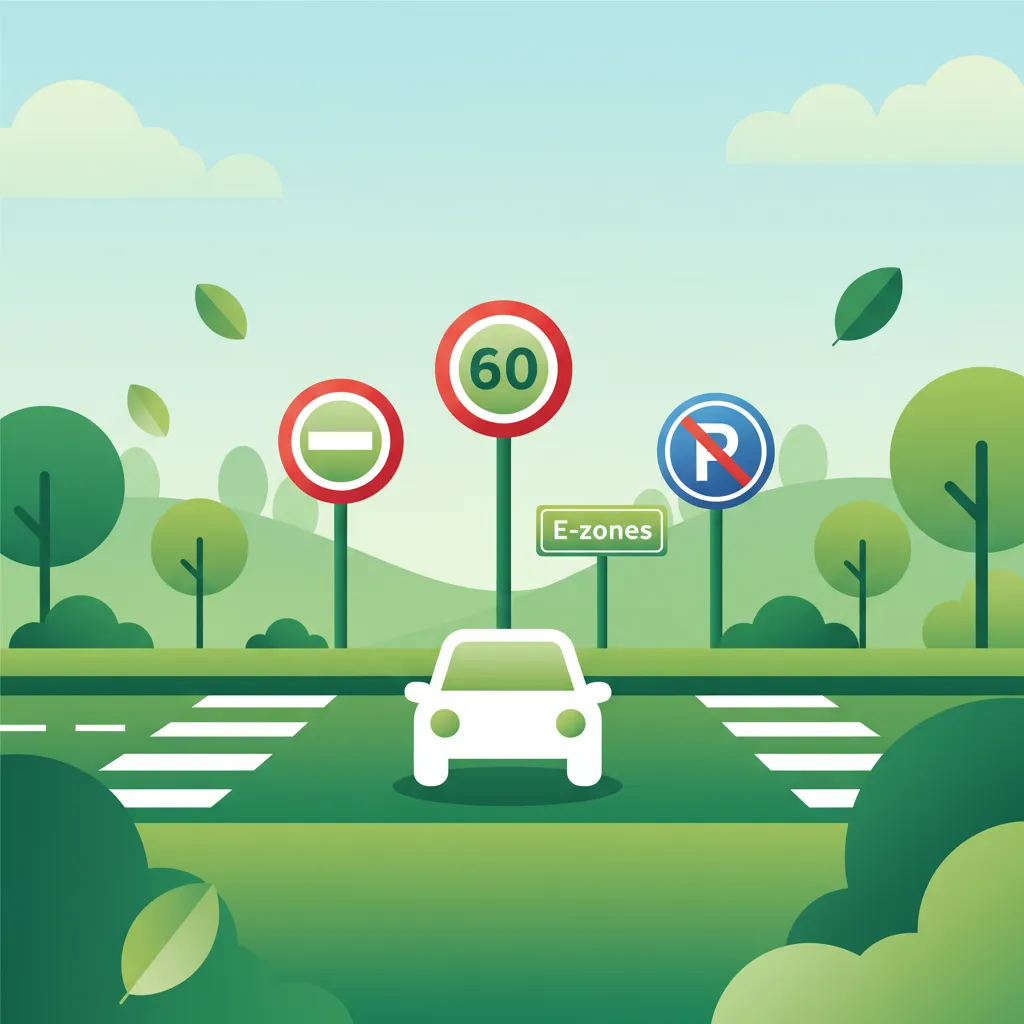
Welcome to this comprehensive lesson on Regulatory Signs, specifically the 'C-codes', which are a cornerstone of Dutch traffic law. For anyone preparing for the Dutch A1 Motorcycle Theory exam, mastering these signs is not just a recommendation, but a mandatory requirement for safe riding and legal compliance. These signs dictate the legal obligations and prohibitions that all road users, including motorcyclists, must adhere to without exception.
This lesson will delve into the various types of C-code signs, explaining their practical meaning, associated rules, common misunderstandings, and the legal implications of non-compliance. By the end, you will have a thorough understanding of how these signs regulate traffic flow, enhance safety, and protect vulnerable road users across the Netherlands.
C-code signs are a specific category within Dutch traffic signage that directly translate legal traffic regulations into visual commands. They are easily recognizable by their typically circular shape, white background with a red border, or blue background with white symbols, depending on whether they prohibit or mandate an action. These signs are binding regulatory devices, meaning they impose mandatory requirements or prohibitions that road users must obey under the Reglement Verkeersregels en Verkeerstekens 1990 (RVV 1990), the primary Dutch traffic law.
The underlying logic behind C-code signs is multifaceted. Firstly, they enhance safety by limiting speeds, prohibiting dangerous manoeuvres, and enforcing orderly directional flow, thereby reducing conflict points. Secondly, they foster predictability by establishing uniform expectations for all road users, which is crucial for coordinated movements, especially for motorcyclists who require clear intentions from other drivers. Lastly, their legal intent means that any non-compliance constitutes a statutory offence, subject to fines and penalties.
Mastery of C-code signs is fundamental for the Dutch A1 Motorcycle Theory exam. These signs are frequently tested, and an incorrect understanding can lead to significant errors.
Core Principles of C-Code Regulatory Signs:
The diverse range of C-code signs addresses various aspects of traffic regulation. Below, we explore the most common and critical types, with a focus on their relevance for A1 motorcyclists.
Speed limit signs are among the most frequently encountered C-code signs. They are circular, white with a red border, and display a numeric value indicating the maximum permissible speed in kilometres per hour (km/h).
Practical Meaning for Motorcyclists: You must never exceed the indicated speed, even if road conditions seem to permit higher speeds. Exceeding the limit is a moving violation with potential fines and de-merit points. Always consider your stopping distance (covered in Unit 4: Speed, Distance and Stopping) and current road conditions, as the legal limit is often the absolute maximum, not necessarily the safest speed.
A common misunderstanding is treating the speed limit as a recommended speed. It is a strict maximum. Ignoring sudden changes in speed limits, such as when entering a village or a new zone, is a frequent cause of violations.
These signs are crucial for preventing dangerous conflicts, especially on one-way streets or restricted access roads.
Practical Meaning: If you encounter a 'No Entry' sign, you must not proceed. This often happens when approaching a one-way street from the wrong direction. Incorrectly assuming it only applies to cars, or confusing it with a 'One Way' sign, can lead to dangerous head-on collisions.
These signs are fundamental for managing right-of-way at junctions, preventing collisions, and ensuring smooth traffic flow.
Practical Meaning: Misunderstanding these signs is a major cause of intersection accidents. Always remember that these signs override the general "right-hand priority" rule (traffic coming from the right has priority) when they are present.
These blue circular signs with white arrows indicate the only permissible direction(s) of travel.
Practical Meaning: As a motorcyclist, you must follow the indicated direction. Deviating from a mandatory direction is a violation and can lead to dangerous conflicts with other road users expecting you to follow the rules. These signs are commonly placed at junctions to ensure orderly traffic flow.
Overtaking can be one of the riskiest manoeuvres, and C-code signs often restrict it in dangerous areas.
Practical Meaning: You must not overtake another vehicle (except possibly bicycles or mopeds, depending on the specific sign variant and road context) within the zone indicated by this sign. The prohibition begins at the sign and ends only when a corresponding 'End of Overtaking Prohibition' sign is displayed. These signs are often found on narrow roads, near bridges, tunnels, or in areas with limited visibility.
These signs regulate where you can legally stop or park your motorcycle, especially important in urban environments.
Practical Meaning: These signs are critical for keeping traffic lanes clear and ensuring emergency vehicle access. Misinterpreting them can lead to significant fines. Always check for supplementary plates, as these prohibitions can be time-limited (e.g., "Mon-Fri 08:00-18:00"). The ban typically applies until the next intersection or until a 'End of Prohibition' sign.
These signs ensure that certain roads or structures are only used by appropriate vehicles, protecting infrastructure and road users.
Practical Meaning: While many of these signs apply to larger, heavier vehicles, it's essential for motorcyclists to be aware of them. If a sign shows a motorcycle silhouette with a red diagonal line, it prohibits motorcycle access. Otherwise, signs like "3.5t" generally allow motorcycles to pass. Always be aware of your motorcycle's total weight if towing a trailer or carrying a heavy load, though this is less common for A1 category.
With increasing environmental awareness, many Dutch cities have introduced low-emission zones.
Practical Meaning: As a motorcyclist, you must ensure your bike meets the specified emission class if you intend to enter these zones. While many modern motorcycles comply, older models (especially some two-stroke bikes) might be prohibited, leading to fines if you enter illegally. These rules are often governed by local municipal ordinances.
Roadworks are a constant feature, and temporary signs are used to manage traffic safely through these areas.
Practical Meaning: Temporary C-code signs (like a reduced speed limit) always take precedence over permanent signs. These restrictions are in effect from the point of the sign until an "End of Temporary Restriction" sign is displayed. Ignoring temporary signs endangers road workers and yourself, and constitutes a serious violation.
The authority and enforceability of all C-code regulatory signs are rooted in the Reglement Verkeersregels en Verkeerstekens 1990 (RVV 1990). This legal framework defines the meaning, placement, and legal consequences associated with all Dutch traffic signs and road markings.
Every C-code sign represents a specific article within the RVV 1990. Non-compliance is not merely a suggestion; it is a mandatory offence. For motorcyclists, this means:
In situations where multiple signs might seem to give conflicting instructions, the most restrictive applicable sign always takes precedence. For example, if a general 80 km/h speed limit is usually in effect, but a temporary sign in a construction zone displays 30 km/h, the 30 km/h limit must be obeyed. This principle ensures maximum safety in complex or changing road environments.
Many C-code signs are accompanied by supplementary plates. These rectangular plates provide additional conditions that modify the main sign's application. They can specify:
As a motorcyclist, always check these plates, as ignoring them can lead to an incorrect interpretation of the rule and a potential violation.
Understanding the theoretical meaning of C-code signs is one thing; applying that knowledge in dynamic traffic situations is another. Here are some practical scenarios and frequent errors:
Always assume the most restrictive interpretation of a C-code sign, especially when unsure. Prioritise safety and legal compliance over convenience or speed.
The design and enforcement of C-code signs are deeply rooted in principles of road safety and human factors.
Regulatory signs, or C-codes, are an indispensable part of the Dutch road network, dictating lawful and safe conduct for all road users. For A1 motorcyclists, a comprehensive understanding and unwavering adherence to these signs are not negotiable. They are vital for passing your CBR theory exam, ensuring your personal safety, and contributing to the overall order and efficiency of traffic in the Netherlands.
Remember, C-code signs are legally binding, universally standardized, and often subject to conditional applications. Always be vigilant for supplementary plates and temporary signage. By internalizing these rules and their underlying safety rationale, you will not only become a more compliant driver but a significantly safer and more confident motorcyclist on Dutch roads.
Lesson content overview
Explore all units and lessons included in this driving theory course.
Explore search topics learners often look for when studying Regulatory Signs (C-codes). These topics reflect common questions about road rules, driving situations, safety guidance, and lesson level theory preparation for learners in the Netherlands.
Browse additional driving theory lessons that cover connected traffic rules, road signs, and common driving situations related to this topic. Improve your understanding of how different rules interact across everyday traffic scenarios.
Explore the nuances of Dutch C-code regulatory signs, focusing on how supplementary plates and specific conditions modify their application. Learn about common exceptions and contexts for signs like speed limits, no entry, and parking restrictions.
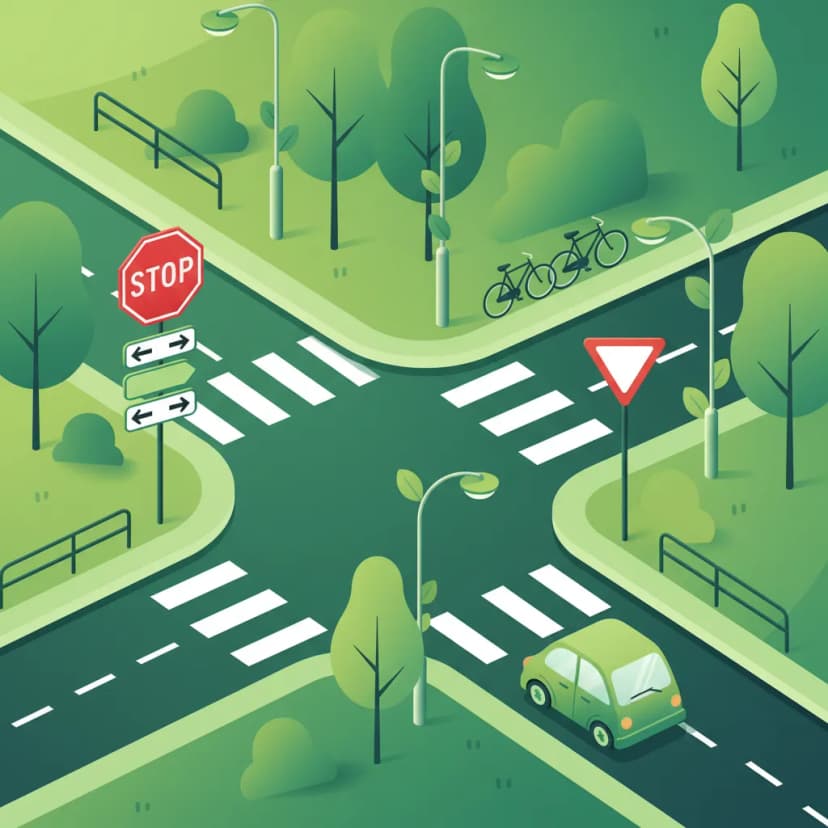
This lesson focuses on regulatory signs, which impose legal obligations on drivers and are essential for maintaining traffic order. You will learn to identify and act upon fundamental signs such as the octagonal B6 Stop sign, the diamond-shaped B1 Priority Road sign, and various compulsory direction arrows. The content explains the legal implications of these signs, detailing when a driver must stop completely, when they have priority, or the required path they must follow. Understanding these commands is crucial for safe and lawful driving at intersections and on designated routes.

This lesson introduces warning signs, which are designed to alert drivers to potential dangers or changes in road layout ahead. You will learn to interpret the triangular-shaped signs that indicate hazards such as sharp curves, slippery road surfaces (J27), or upcoming road works (J8). The curriculum explains how these signs help in anticipating risks and adjusting driving behavior accordingly, such as reducing speed or increasing alertness. A thorough understanding of warning signs is vital for proactive and defensive driving in various environments.

This lesson covers the most critical category of traffic signs: regulatory signs, which impose a legal obligation or prohibition. You will learn the precise meaning and required action for essential signs such as the B6 Stop sign, which mandates a full stop, and the C2 No Entry sign, which forbids access. Understanding the shapes, colors, and symbols of these signs is fundamental to safe driving and a major focus of the official CBR theory test.

This lesson offers an in-depth study of Dutch regulatory signs, which impose mandatory actions or prohibitions on road users, with a specific focus on their impact on motorcyclists. It explains the visual language of prohibition symbols ('verbodsborden') and obligation symbols ('verplichtingsborden'), the contexts in which they appear, and the strict statutory consequences of non-compliance. Real-world examples are used to illustrate how these signs directly influence route planning, overtaking decisions, and speed management.

This lesson covers prohibition signs, which are used to forbid specific maneuvers or restrict access for certain vehicles. You will study the characteristics of these signs, typically circular with a red border, such as the C2 'No Entry for any vehicle' or the F1 'No Parking' sign. The content details the legal consequences of ignoring these prohibitions and explains how they contribute to traffic flow and safety in congested or sensitive areas. Recognizing these signs is fundamental to avoiding fines and dangerous situations on the road.

This lesson focuses on the array of signs used to manage traffic at intersections and along multi-lane roads. You will learn to interpret overhead gantry signs, lane designation signs, and markings that guide drivers into the correct lane for their intended direction. The curriculum covers signs indicating priority at upcoming junctions, such as the B3 and B4 signs, which clarify right-of-way rules in complex scenarios. Proper interpretation of these signs is essential for smooth lane changes, efficient navigation, and preventing conflicts at junctions.

This lesson covers the full range of lights and signals required on a vehicle for visibility and communication. You will learn about the mandatory requirements for headlights, taillights, brake lights, indicators, and reflectors. The curriculum emphasizes the driver's legal responsibility to ensure all lights are clean and functional before every journey. The correct use and function of the horn as an audible warning device in case of imminent danger are also explained.

This lesson focuses on Dutch regulatory signs that enforce mandatory rules and restrictions, particularly those impacting A2 motorcyclists. You will learn to recognize and obey prohibition signs, such as those indicating a motorcycle ban (BORD 40), speed limits, and overtaking restrictions (BORD 21). The content explains the legal consequences of non-compliance and how to apply these rules in practical riding scenarios to ensure full adherence to Dutch traffic law.

This lesson explains how to interpret informational signs that provide guidance and navigational aid. You will learn to read directional signs indicating cities and locations, understand route numbering on major roads, and recognize signs for services like fuel stations or parking areas. It also covers the signs that mark the beginning and end of a built-up area ('bebouwde kom'), which have important implications for speed limits and traffic rules.

This lesson explains how to respond to variable speed limits shown on overhead electronic signs, which are used to manage traffic flow in real-time. You will learn why these limits are adjusted for factors like congestion, accidents, or bad weather, and the legal requirement to obey them. The content focuses on the importance of anticipatory riding, scanning far ahead for these signs to allow for smooth and safe speed adjustments.
Learn how to correctly apply Dutch C-code regulatory signs in real traffic scenarios. This lesson highlights typical misunderstandings and errors made by motorcyclists, focusing on speed limits, overtaking prohibitions, and intersection rules.
This lesson focuses on regulatory signs, which impose legal obligations on drivers and are essential for maintaining traffic order. You will learn to identify and act upon fundamental signs such as the octagonal B6 Stop sign, the diamond-shaped B1 Priority Road sign, and various compulsory direction arrows. The content explains the legal implications of these signs, detailing when a driver must stop completely, when they have priority, or the required path they must follow. Understanding these commands is crucial for safe and lawful driving at intersections and on designated routes.
This lesson covers the most critical category of traffic signs: regulatory signs, which impose a legal obligation or prohibition. You will learn the precise meaning and required action for essential signs such as the B6 Stop sign, which mandates a full stop, and the C2 No Entry sign, which forbids access. Understanding the shapes, colors, and symbols of these signs is fundamental to safe driving and a major focus of the official CBR theory test.
This lesson offers an in-depth study of Dutch regulatory signs, which impose mandatory actions or prohibitions on road users, with a specific focus on their impact on motorcyclists. It explains the visual language of prohibition symbols ('verbodsborden') and obligation symbols ('verplichtingsborden'), the contexts in which they appear, and the strict statutory consequences of non-compliance. Real-world examples are used to illustrate how these signs directly influence route planning, overtaking decisions, and speed management.
This lesson introduces warning signs, which are designed to alert drivers to potential dangers or changes in road layout ahead. You will learn to interpret the triangular-shaped signs that indicate hazards such as sharp curves, slippery road surfaces (J27), or upcoming road works (J8). The curriculum explains how these signs help in anticipating risks and adjusting driving behavior accordingly, such as reducing speed or increasing alertness. A thorough understanding of warning signs is vital for proactive and defensive driving in various environments.
This lesson covers prohibition signs, which are used to forbid specific maneuvers or restrict access for certain vehicles. You will study the characteristics of these signs, typically circular with a red border, such as the C2 'No Entry for any vehicle' or the F1 'No Parking' sign. The content details the legal consequences of ignoring these prohibitions and explains how they contribute to traffic flow and safety in congested or sensitive areas. Recognizing these signs is fundamental to avoiding fines and dangerous situations on the road.

This lesson covers A-code signs, which are designed to warn drivers of potential hazards on the road ahead. For motorcyclists, warnings about sharp bends, slippery surfaces, crosswinds, or falling rocks are especially critical for maintaining control and stability. The content explains how to interpret these triangular signs to anticipate changing conditions, adjust speed, and adopt a defensive riding posture well in advance of the hazard.
This lesson focuses on Dutch regulatory signs that enforce mandatory rules and restrictions, particularly those impacting A2 motorcyclists. You will learn to recognize and obey prohibition signs, such as those indicating a motorcycle ban (BORD 40), speed limits, and overtaking restrictions (BORD 21). The content explains the legal consequences of non-compliance and how to apply these rules in practical riding scenarios to ensure full adherence to Dutch traffic law.
This lesson focuses on B-code signs, which provide essential information for navigation and route planning. It explains how to read directional signs for cities and motorways, understand route numbering, and identify signs for services like fuel stations or rest areas. For motorcyclists, clear and quick interpretation of these signs is vital for smooth navigation, especially when making decisions about lane changes for upcoming exits or junctions.
This lesson explains how to interpret informational signs that provide guidance and navigational aid. You will learn to read directional signs indicating cities and locations, understand route numbering on major roads, and recognize signs for services like fuel stations or parking areas. It also covers the signs that mark the beginning and end of a built-up area ('bebouwde kom'), which have important implications for speed limits and traffic rules.
This lesson covers the full range of lights and signals required on a vehicle for visibility and communication. You will learn about the mandatory requirements for headlights, taillights, brake lights, indicators, and reflectors. The curriculum emphasizes the driver's legal responsibility to ensure all lights are clean and functional before every journey. The correct use and function of the horn as an audible warning device in case of imminent danger are also explained.
Find clear answers to common questions learners have about Regulatory Signs (C-codes). Learn how the lesson is structured, which driving theory objectives it supports, and how it fits into the overall learning path of units and curriculum progression in the Netherlands. These explanations help you understand key concepts, lesson flow, and exam focused study goals.
C-code signs are regulatory signs that impose a legal obligation or prohibition. Unlike warning signs (A-codes) that alert you to potential dangers, or information signs (B-codes) that provide guidance, C-code signs tell you precisely what you must or must not do. For example, a speed limit sign (C1) mandates a maximum speed, while a no-entry sign (C7) forbids passage.
All C-code signs are important for A1 riders as they are legally binding. However, signs related to speed limits, mandatory directions (e.g., turn left only), overtaking prohibitions, and restricted zones are especially critical for ensuring safe and legal motorcycle operation within traffic.
In the CBR theory exam, you will typically see images of C-code signs and be asked to interpret their meaning or choose the correct action based on the sign. Questions often involve scenarios where you must understand the implication of a sign for your intended manoeuvre, such as overtaking or changing lanes.
Ignoring a regulatory sign in the Netherlands can lead to fines, penalty points on your licence, or even immediate revocation of your riding privileges, depending on the severity of the violation. For the theory exam, failing to correctly identify or interpret these signs will result in incorrect answers and a potential failure to pass.
Generally, C-code signs apply to all vehicles unless specifically stated otherwise. For example, some signs might have additional panels indicating exemptions for certain vehicle types. However, the general rule is that if a sign is displayed, it applies to your A1 motorcycle.