
This lesson focuses on understanding Dutch warning signs, which are crucial for anticipating potential dangers and adapting your riding. You'll learn to interpret signs that indicate hazards like sharp curves, narrowing roads, or temporary road works, enabling you to adjust your speed and position proactively. For A2 motorcycle riders, early recognition and response to these hazards are vital for maintaining control and safety on Dutch roads.
Driving a motorcycle requires constant vigilance and proactive decision-making, especially when encountering unexpected road conditions. This lesson provides an in-depth guide to interpreting Dutch warning signs and developing effective hazard anticipation skills, crucial for every rider seeking their Category A2 motorcycle license. You will learn to identify common warning signs, understand their implications for a 35 kW motorcycle, and master the techniques for adjusting your speed, road position, and overall riding strategy to maintain control and safety on Dutch roads.
Warning signs are essential components of the Dutch road network, designed to alert road users to potential dangers, obstacles, or changes in road conditions ahead. For motorcyclists, particularly those riding A2-class motorcycles, these signs serve as critical pre-emptive risk communication devices. They provide the necessary lead time to evaluate an upcoming situation, decide on the safest course of action, and smoothly execute adjustments before a hazard materializes.
The early recognition of these signs is paramount for maintaining stability, traction, and control. Due to their lighter weight and different dynamics compared to cars, A2 motorcycles demand earlier reaction and more precise inputs for braking, steering, and body positioning. Proactive anticipation allows a rider to stay within the margins of stability dictated by physics, such as the friction circle and lean angle limits, significantly reducing the risk of an accident.
Effective hazard anticipation is a multi-faceted cognitive and physical process. It involves more than just spotting a sign; it requires deep understanding, immediate decision-making, and precise execution. For A2 motorcyclists, mastering these core principles is foundational for safe and confident riding.
This principle is about actively looking ahead and interpreting what the road might present. By identifying warning signs early, motorcyclists can begin to plan their response long before reaching the hazard itself. This includes processing the sign's meaning, assessing the road environment, and predicting how these factors might combine to create a challenging situation. For an A2 motorcycle, which reacts quickly to inputs but has less mass to absorb mistakes, this foresight is vital for controlled and stable riding.
Once a hazard is anticipated, the next critical step is to adapt your speed. Warning signs do not typically impose a numeric speed limit, but they demand a safe speed. This means reducing your speed sufficiently to keep the required centripetal force within your tyres' grip limits, especially on curves, or to safely navigate narrowed sections or temporary obstacles. Correct speed adaptation reduces braking distance, minimizes the likelihood of losing traction, and allows for smoother, more controlled steering inputs.
Motorcyclists have the unique ability to influence their vehicle's dynamics through body positioning. Adjusting your riding position, such as shifting your body weight, can enhance grip on the front tyre, lower the centre of gravity, and aid in quick directional changes. For a sharp curve, this might involve slightly offsetting your body to the inside of the turn. In a road narrowing scenario, it could mean adopting a wider stance to better manage balance if lane positioning becomes tight.
Lead-time is your crucial buffer. It's the period during which you perceive a sign, process its implications, make a decision, and then act. For an A2 motorcycle, which requires precise and timely inputs, maximizing this lead-time is essential. Warning signs in the Netherlands are typically placed 150-200 metres before the hazard. This distance must be actively used for deceleration and preparing for the manoeuvre, ensuring you have ample reaction time even with the motorcycle's quicker visual processing demands.
On the road, you are bombarded with visual information. The sign visibility hierarchy helps you filter this noise. Warning signs, characterized by their triangular shape and red border (or yellow for temporary hazards), are designed to stand out. They take precedence over less critical informational or directional signs. This principle ensures that you concentrate your attention on the most immediate safety information, preventing distraction from less urgent cues.
Dutch road signs are standardized according to the Reglement Verkeersregels en Verkeerstekens 1990 (RVV 1990). Warning signs (waarschuwingsborden) are predominantly triangular with a red border and black pictogram on a white background, signaling a variety of potential dangers. Temporary warning signs, however, often feature a yellow background with black pictograms, making them distinct from permanent warnings.
These signs alert riders to upcoming bends in the road, necessitating a reduction in speed and careful negotiation. For an A2 motorcycle, which relies heavily on lean angle and tyre grip for cornering, these signs are critical indicators.
Practical Meaning: These signs indicate that the road ahead has a reduced turning radius. Motorcyclists must prepare to reduce speed, adjust their riding position, and smoothly lean the bike into the curve. The severity of the curve (single vs. double, and the radius itself) will dictate the necessary speed reduction.
Motorcycle-Specific Considerations: Unlike cars, motorcycles negotiate curves by leaning. Entering a curve too fast can exceed the tyre's grip limits, leading to understeer, loss of control, or needing an excessive lean angle that reduces ground clearance. An A2 motorcycle's lower power means correcting a line mid-corner with acceleration is less effective, emphasizing the need for proper entry speed.
Common Misunderstanding: Assuming these signs impose a fixed speed limit (e.g., "30 km/h"). They do not. The rider must evaluate a safe speed based on the curve's radius, road surface condition, weather, and their motorcycle's dynamics.
Road narrowing signs warn of a reduction in the available road width, which can occur symmetrically or on one side.
Practical Meaning: This sign requires the rider to anticipate less space and prepare to adjust their lane position. The narrowing could be due to physical changes in the road structure, parked vehicles, or temporary obstacles. It necessitates a speed reduction to maintain a safe margin and prevent encroachment into oncoming traffic lanes or collisions with roadside obstacles.
Motorcycle-Specific Considerations: Riding a motorcycle in a narrowed section demands precise lane positioning. Habitually riding in the exact centre of a lane can be risky if the lane itself narrows significantly, potentially bringing the rider too close to oncoming traffic or fixed objects. Shifting slightly towards the available space, often the outer edge (e.g., closer to the curb if narrowing from the left), can provide a safer buffer.
Common Misunderstanding: Staying rigidly in the centre of the lane, which reduces the effective safe width for the motorcycle and increases the risk of side-swiping.
These signs are crucial for alerting riders to construction zones, which often involve uneven surfaces, loose gravel, equipment, and changed lane layouts.
Practical Meaning: Road works zones are dynamic and unpredictable environments. Riders must be prepared for abrupt changes in road surface, potential obstacles (e.g., cones, barriers, machinery), reduced lane width, and even the presence of workers. A significant reduction in speed is mandatory, along with heightened vigilance.
Motorcycle-Specific Considerations: Uneven surfaces, gravel, or freshly laid asphalt can drastically reduce tyre grip, making road works particularly hazardous for motorcycles. Loose gravel can easily cause a front-wheel slide. Riders should anticipate lane shifts, be prepared to stop suddenly, and watch out for workers who may step into the road. Overtaking within marked work zones is generally prohibited unless explicitly allowed, as workers have priority.
Common Misunderstanding: Assuming the work area is entirely confined to a specific lane or shoulder. Equipment, materials, or workers may unexpectedly encroach into the rider's path, especially at night or in low visibility.
These signs warn of upcoming junctions or slip roads, signaling potential merging or crossing traffic.
Practical Meaning: This sign warns of traffic potentially entering your lane from a side road or slip road. You must be prepared to adjust your speed and position to facilitate a safe merge, or to yield to traffic if you are on the merging road.
Motorcycle-Specific Considerations: Motorcycles can be less visible to drivers in other vehicles, especially during merging manoeuvres. Riders must be acutely aware of their blind spots and actively check for merging traffic. It's crucial to maintain a consistent speed or gently decelerate to allow merging vehicles to find a gap, rather than accelerating unpredictably.
Common Misunderstanding: Failing to actively check blind spots and assuming merging traffic will yield, which can lead to collisions.
This sign warns of conditions that reduce tyre grip, such as ice, wet roads, or oil spills.
Practical Meaning: A low-friction surface is highly dangerous for motorcycles due to their smaller tyre contact patch and dependence on lean for cornering. This sign demands an immediate and substantial reduction in speed, extremely smooth throttle control, and gentle braking.
Motorcycle-Specific Considerations: On slippery surfaces, sudden braking, sharp steering inputs, or aggressive acceleration can easily lead to a loss of traction and a fall. Both brakes should be applied progressively and smoothly, with less emphasis on the front brake to avoid locking the wheel. Maintaining an upright position and avoiding excessive lean angles are also crucial.
Often seen in rural or forested areas, this sign warns of wildlife that may suddenly enter the road.
Practical Meaning: This sign signals the need for increased vigilance, especially during dawn and dusk when animals are most active. Riders must anticipate sudden animal crossings and be prepared to take evasive action.
Motorcycle-Specific Considerations: A collision with an animal, even a small one, can cause a serious motorcycle accident. Reducing speed significantly provides more time to react. If an animal appears, the safest course of action is often to brake firmly and progressively, while maintaining your line. Swerving should only be considered if there is clear space and it can be done without losing control or colliding with other traffic.
In the Netherlands, specific articles within the Reglement Verkeersregels en Verkeerstekens 1990 (RVV 1990) govern how road users, including A2 motorcyclists, must respond to warning signs and associated hazards. Adherence to these regulations is not only a legal obligation but also a fundamental aspect of safe riding.
The exact wording of these articles should always be cross-checked with the latest official version of RVV 1990, as interpretations and specific clauses can be updated.
Applicability: This article applies to all road users, including A2 motorcyclists, whenever a triangular warning sign with a red border (or yellow for temporary signs) is present.
Rationale: This mandatory rule ensures that drivers adapt to imminent hazards, protecting themselves and others. It places the legal responsibility on the driver to interpret and respond appropriately to the warning provided.
Applicability: This article specifically relates to situations indicated by BORD 30 (road narrowing) and any other temporary narrowing of the road.
Rationale: It aims to prevent vehicles from encroaching onto the opposite lane, colliding with obstacles, or losing control due to insufficient space. For motorcycles, precise speed and positioning are critical to navigate narrowed sections safely.
Applicability: This article applies to situations indicated by BORD 36 (road works) and any supplementary plates indicating temporary works or hazards.
Rationale: This mandatory rule protects road workers and mitigates the risks posed by unexpected obstacles, uneven surfaces, or changed traffic flows within construction zones. It emphasizes a heightened state of alert and readiness to react.
Applicability: This article is relevant when approaching junctions or slip roads indicated by BORD 35 (junction approach). While BORD 35 is a warning, Article 23 defines the mandatory yielding behavior for merging traffic.
Rationale: This rule guarantees orderly merging and prevents side-swipes or collisions when traffic streams converge. For motorcyclists, ensuring a safe gap and clear merge is paramount due to their relative vulnerability.
Applicability: This article applies specifically to motorcyclists when navigating curves or sections of road with reduced lane width.
Rationale: This rule addresses motorcycle stability issues that can arise from riding too close to the lane edge, where debris, uneven surfaces, or painted lines might compromise traction. It encourages riders to position themselves optimally within the usable lane width to maximize stability and control.
Beyond simply understanding signs and rules, safe riding involves adapting your strategies to varying environmental conditions and vehicle states. This contextual awareness enhances your ability to anticipate and respond to hazards.
The principles of warning signs and hazard anticipation are deeply rooted in human factors, physics, and empirical safety data. Understanding the underlying reasons reinforces their importance.
Mastering warning signs and hazard anticipation is a cornerstone of responsible and safe motorcycle riding. For your Dutch Category A2 motorcycle license, it’s not enough to simply memorize the signs; you must internalize their meaning and understand the proactive adjustments they demand. By developing a habit of early perception, informed decision-making, and smooth execution, you can effectively manage risks, maintain control, and enjoy a safer riding experience on all types of roads. This foundational knowledge will serve you well, not only for your theory exam but throughout your entire riding career, preparing you for more complex scenarios such as emergency evasive manoeuvres and navigating diverse weather conditions.
Lesson content overview
Explore all units and lessons included in this driving theory course.
Explore search topics learners often look for when studying Warning Signs and Hazard Anticipation. These topics reflect common questions about road rules, driving situations, safety guidance, and lesson level theory preparation for learners in the Netherlands.
Browse additional driving theory lessons that cover connected traffic rules, road signs, and common driving situations related to this topic. Improve your understanding of how different rules interact across everyday traffic scenarios.
Understand Dutch warning signs like BORD 35 that indicate upcoming junctions and merging traffic. Learn how these signs impact motorcycle rider behaviour and required speed adaptations for safe navigation in complex Dutch traffic situations.

This lesson details the specific actions required at intersections controlled by 'Stop' and 'Give Way' signs. You will learn the legal requirement to come to a complete stop at a stop line (BORD 44) and the obligation to yield to all crossing traffic when encountering give-way markings ('haaientanden'). The content covers safe approach speeds and effective scanning techniques for motorcyclists to accurately assess gaps in traffic before proceeding.

This lesson introduces warning signs, which are designed to alert drivers to potential dangers or changes in road layout ahead. You will learn to interpret the triangular-shaped signs that indicate hazards such as sharp curves, slippery road surfaces (J27), or upcoming road works (J8). The curriculum explains how these signs help in anticipating risks and adjusting driving behavior accordingly, such as reducing speed or increasing alertness. A thorough understanding of warning signs is vital for proactive and defensive driving in various environments.
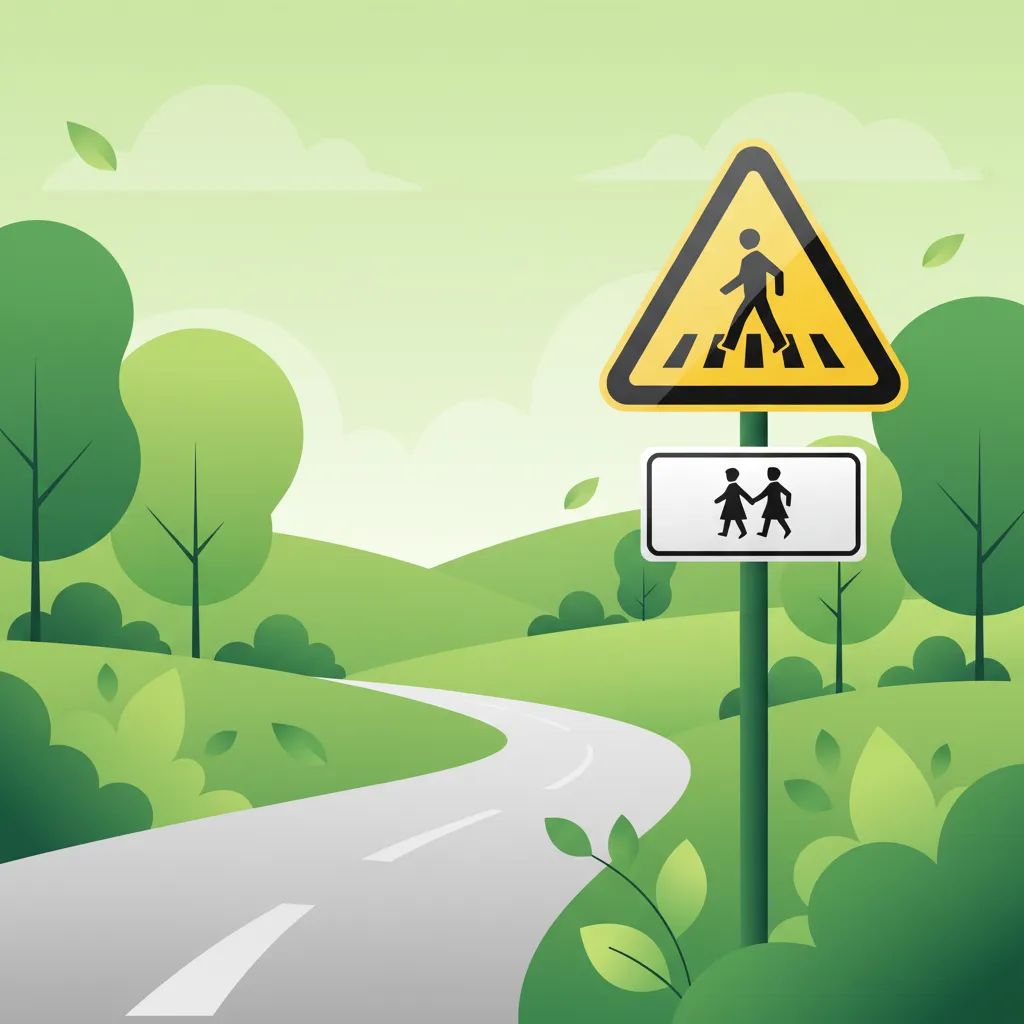
This lesson details the purpose and visual design of Dutch warning signs ('gevarendriehoeken') that alert riders to potential hazards ahead. It covers a wide range of scenarios, from road narrowing and dangerous curves to construction zones and the risk of falling rocks, emphasizing the need for early anticipation and speed adaptation. The content also explains how these warning signs integrate with other traffic information to help a rider form an accurate risk assessment and make safer decisions.

Safely merging and changing lanes requires a systematic approach known as 'mirror-signal-blind spot'. This lesson explains the correct procedure for entering a carriageway from an acceleration lane, ensuring you match the speed of the traffic flow and find a safe gap. It also covers the technique for changing lanes, emphasizing the critical importance of checking your blind spot with a shoulder check (dode hoek) before making any lateral movement to prevent collisions.

This lesson focuses on Dutch regulatory signs that enforce mandatory rules and restrictions, particularly those impacting A2 motorcyclists. You will learn to recognize and obey prohibition signs, such as those indicating a motorcycle ban (BORD 40), speed limits, and overtaking restrictions (BORD 21). The content explains the legal consequences of non-compliance and how to apply these rules in practical riding scenarios to ensure full adherence to Dutch traffic law.

This lesson examines the function and interpretation of variable message signs (VMS) and other digital displays that provide real-time traffic information on Dutch roads. It explains how these systems communicate dynamic speed limits, congestion alerts, lane closures, and diversion routes, and how motorcyclists must legally comply with these instructions. Understanding these 'matrixborden' is critical for adapting to changing road conditions and ensuring safety on motorways and in tunnels.

This lesson covers A-code signs, which are designed to warn drivers of potential hazards on the road ahead. For motorcyclists, warnings about sharp bends, slippery surfaces, crosswinds, or falling rocks are especially critical for maintaining control and stability. The content explains how to interpret these triangular signs to anticipate changing conditions, adjust speed, and adopt a defensive riding posture well in advance of the hazard.

This lesson offers an in-depth study of Dutch regulatory signs, which impose mandatory actions or prohibitions on road users, with a specific focus on their impact on motorcyclists. It explains the visual language of prohibition symbols ('verbodsborden') and obligation symbols ('verplichtingsborden'), the contexts in which they appear, and the strict statutory consequences of non-compliance. Real-world examples are used to illustrate how these signs directly influence route planning, overtaking decisions, and speed management.

This lesson focuses on the array of signs used to manage traffic at intersections and along multi-lane roads. You will learn to interpret overhead gantry signs, lane designation signs, and markings that guide drivers into the correct lane for their intended direction. The curriculum covers signs indicating priority at upcoming junctions, such as the B3 and B4 signs, which clarify right-of-way rules in complex scenarios. Proper interpretation of these signs is essential for smooth lane changes, efficient navigation, and preventing conflicts at junctions.

This lesson explores the legal meaning of various road surface markings, including solid and broken lane delimiters, directional arrows, and special-purpose lane indicators. It describes how markings dictate permitted maneuvers, such as overtaking and lane changes, and alert riders to upcoming hazards or changes in road layout. The content also examines the relationship between markings and road design in the Netherlands, emphasizing how a motorcyclist must interpret these visual cues for safe positioning.
Learn essential hazard anticipation and speed adaptation techniques for A2 motorcyclists. This lesson focuses on interpreting signs for road works, curves, and slippery surfaces to ensure safe riding and control in varied Dutch road conditions.
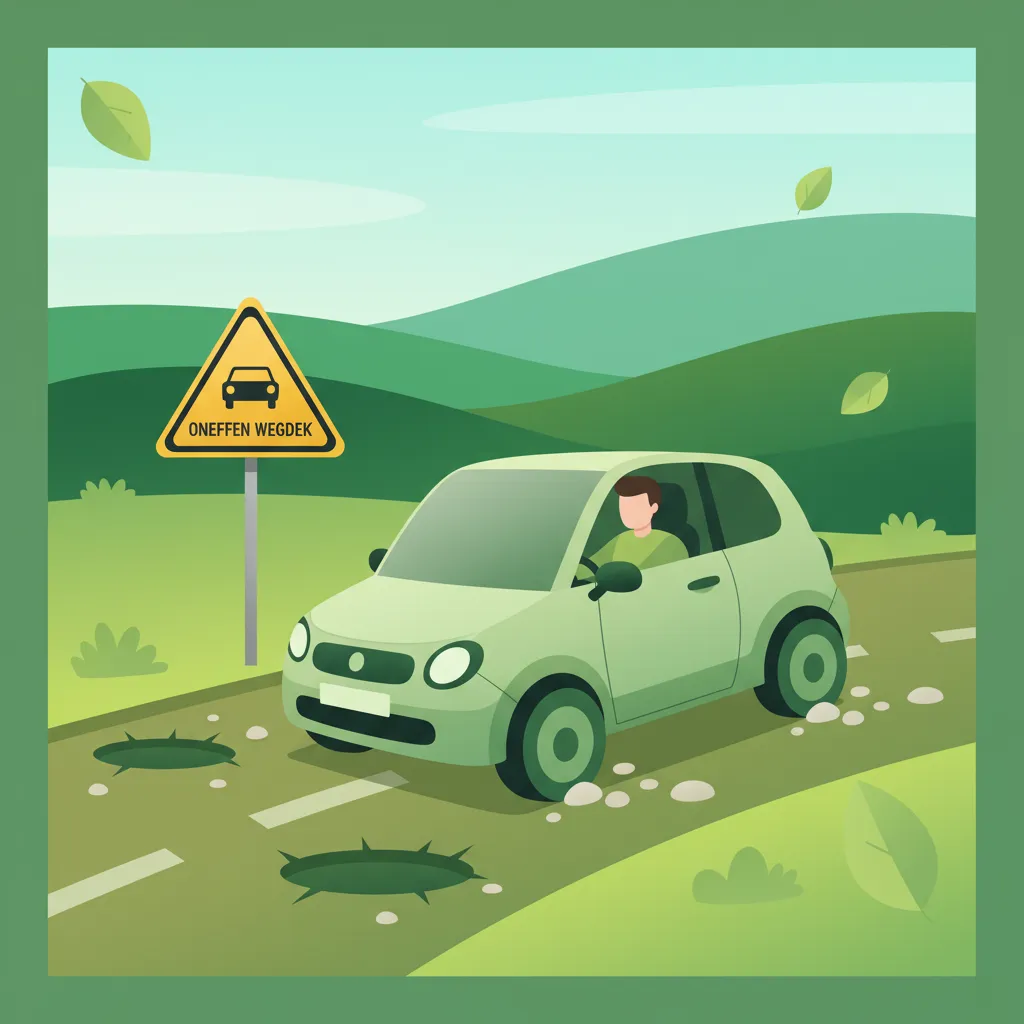
This lesson prepares you to deal with sudden changes in road surface that can cause a loss of traction. You will learn to scan for these hazards and, if they cannot be avoided, how to ride over them safely. The key technique is to keep the motorcycle upright and maintain smooth, steady control inputs—no abrupt braking, accelerating, or steering—to minimize the risk of a skid.

This lesson explains how to respond to variable speed limits shown on overhead electronic signs, which are used to manage traffic flow in real-time. You will learn why these limits are adjusted for factors like congestion, accidents, or bad weather, and the legal requirement to obey them. The content focuses on the importance of anticipatory riding, scanning far ahead for these signs to allow for smooth and safe speed adjustments.

This lesson focuses on hazard perception ('gevaarherkenning'), a critical section of the CBR exam. It explains how increasing speed reduces a rider's field of vision and shortens the time available to identify, process, and react to potential dangers. The content explores techniques for actively scanning the road ahead and anticipating the actions of other road users to make safe, proactive decisions rather than reactive ones.

This lesson introduces the Dutch concept of 'voorspellend rijgedrag,' or anticipatory riding, a proactive approach to safety. It teaches motorcyclists how to look beyond the immediate vehicle in front and scan for clues that predict the actions of other road users, such as turn signals, wheel direction, and driver head movement. By anticipating potential conflicts before they happen, riders can position themselves to avoid danger and ensure a smoother, safer journey through complex traffic.
This lesson covers A-code signs, which are designed to warn drivers of potential hazards on the road ahead. For motorcyclists, warnings about sharp bends, slippery surfaces, crosswinds, or falling rocks are especially critical for maintaining control and stability. The content explains how to interpret these triangular signs to anticipate changing conditions, adjust speed, and adopt a defensive riding posture well in advance of the hazard.

Riding on two wheels requires special care on surfaces with reduced grip. This lesson teaches you how to handle challenging conditions like rain, ice, wet leaves, or tram tracks. Key principles include reducing speed significantly, making all control inputs (braking, accelerating, steering) much more smoothly and gradually, and increasing your following distance to allow for much longer stopping distances. Recognizing potentially slippery areas is a critical part of proactive hazard perception.
This lesson details the purpose and visual design of Dutch warning signs ('gevarendriehoeken') that alert riders to potential hazards ahead. It covers a wide range of scenarios, from road narrowing and dangerous curves to construction zones and the risk of falling rocks, emphasizing the need for early anticipation and speed adaptation. The content also explains how these warning signs integrate with other traffic information to help a rider form an accurate risk assessment and make safer decisions.

The posted speed limit is a maximum, not a target. This lesson teaches the crucial skill of adapting your speed to prevailing conditions. You will learn how to assess factors like traffic density, poor weather (rain, fog), limited visibility (at night), and slippery road surfaces. Adjusting your speed downwards in these situations provides you with more time to react to hazards and significantly reduces the risk of losing control or being involved in a collision.

This lesson prepares riders for navigating the unique challenges of construction zones and temporary road layouts. It covers the identification of orange-colored temporary signs, understanding detour (omleiding) routes, and adhering to reduced speed limits. Special attention is given to the hazards common in work zones, such as loose gravel, uneven surfaces, and the presence of workers, emphasizing the need for heightened awareness and caution.
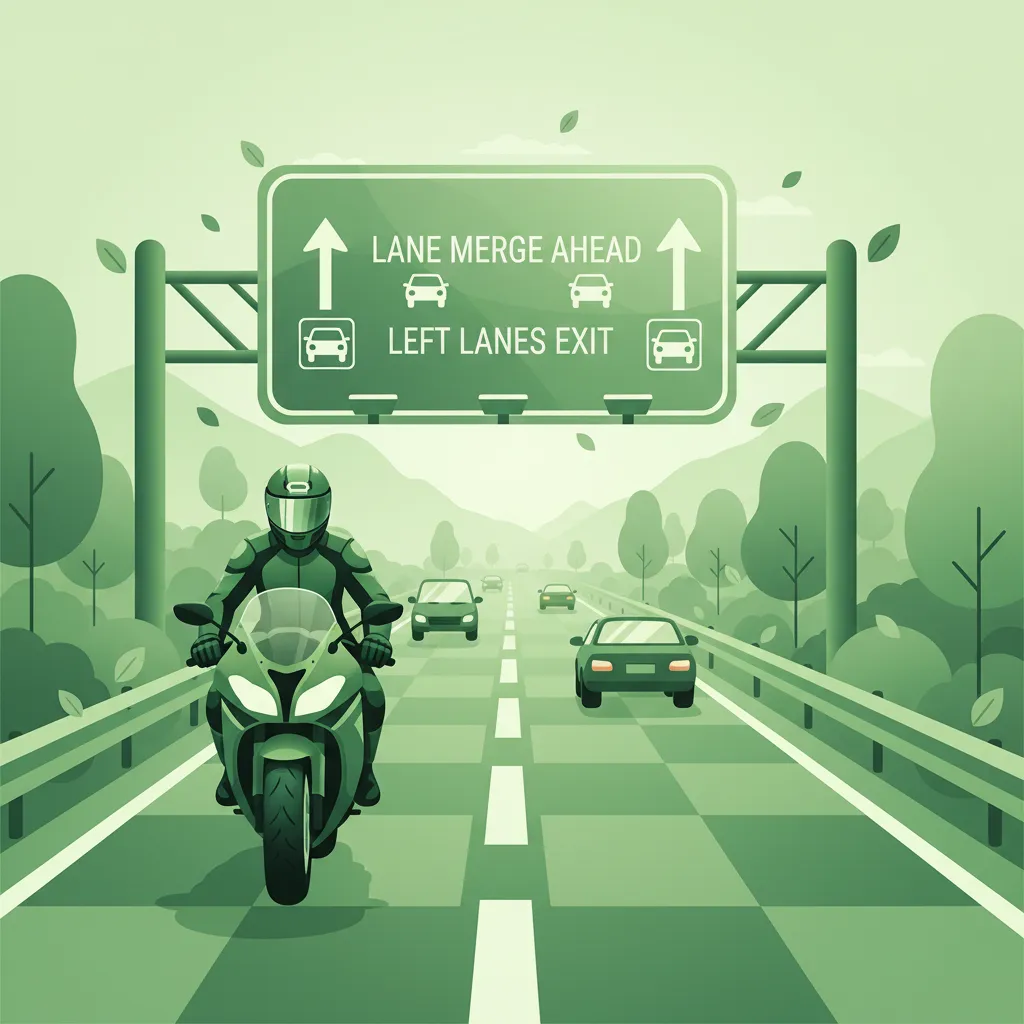
This lesson prepares you for the unique dangers of high-speed highway riding. You will learn to scan for and navigate road hazards like debris, potholes, and slippery steel expansion joints on bridges. The content also addresses the powerful air turbulence created by large trucks that can upset a motorcycle's stability and the mental challenge of maintaining focus on long, monotonous stretches of road.
Find clear answers to common questions learners have about Warning Signs and Hazard Anticipation. Learn how the lesson is structured, which driving theory objectives it supports, and how it fits into the overall learning path of units and curriculum progression in the Netherlands. These explanations help you understand key concepts, lesson flow, and exam focused study goals.
Mandatory signs (like speed limits or prohibitions) require you to obey them directly. Warning signs alert you to potential dangers ahead, requiring you to anticipate and adjust your riding behaviour proactively. For A2 motorcycle riders, understanding the urgency of warning signs is key to safe riding.
A2 motorcycles can accelerate and change direction quickly, but they also have specific vulnerabilities. Warning signs indicating hazards like sharp curves or slippery surfaces require earlier anticipation and smoother adjustments than might be needed for a car. Your ability to react swiftly and precisely is crucial.
When you see a road works sign (BORD 36), anticipate changes in the road ahead. This could include narrowed lanes, uneven surfaces, or temporary traffic management. Reduce your speed, be prepared to stop or manoeuvre, and scan for workers or equipment near the carriageway. Always maintain a safe distance.
Focus on understanding the specific risks each warning sign represents for motorcyclists. Practice visualising the hazard and deciding on the appropriate action (slowing down, checking mirrors, changing lane position). Our practice questions simulate these scenarios to build your confidence for the exam.
Yes, signs indicating sharp curves, slippery surfaces (like wet leaves or oil), road narrowing, and temporary hazards like road works are particularly critical. These demand increased attention and proactive adjustments from A2 motorcycle riders to maintain stability and control.