
This lesson introduces you to Dutch warning signs, known as 'gevarendriehoeken' or 'waarschuwingstekens', crucial for Category A motorcyclists. You will learn to recognize signs indicating upcoming hazards like narrow roads, dangerous curves, or construction zones. Understanding these signs is vital for anticipating risks, adapting your speed, and making safe decisions, preparing you thoroughly for relevant questions on the CBR motorcycle theory exam and real-world riding.
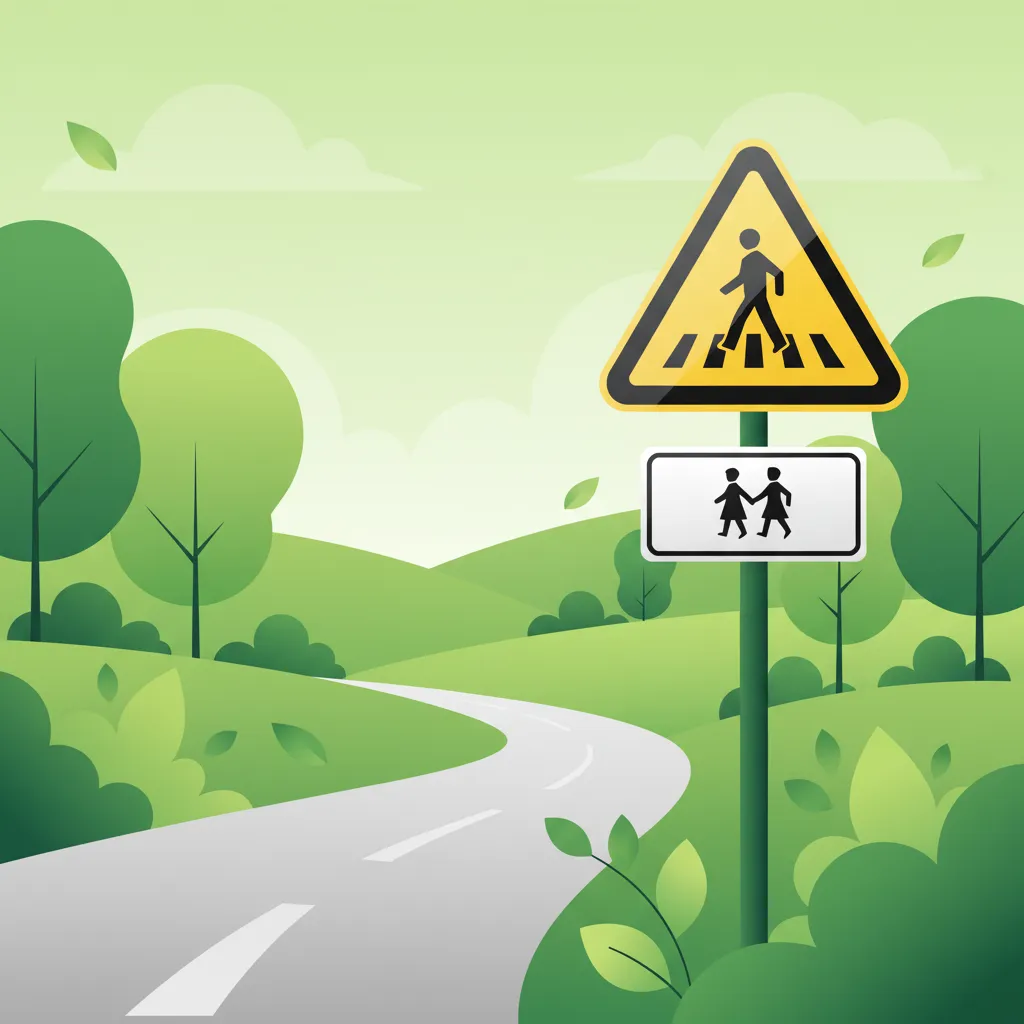
Welcome to this comprehensive lesson on Dutch warning signs, known officially as gevarendriehoeken and waarschuwingstekens. For motorcyclists navigating the roads of the Netherlands, a thorough understanding of these signs is paramount. They serve as critical pre-emptive communication tools, alerting riders to potential hazards well in advance, thereby extending your perception-reaction window and enabling safer decisions. This lesson delves into their design, meaning, legal context, and practical application, ensuring you are well-prepared for the Dutch CBR Category A motorcycle theory exam and, more importantly, for safe riding.
Warning signs are fundamental to proactive risk management on the road. Unlike regulatory signs that command specific actions, warning signs advise you of an upcoming situation requiring heightened attention and adaptation. For motorcyclists, whose exposure to road conditions is direct and whose vehicle dynamics (braking distance, handling on reduced traction) demand precise control, these early alerts are indispensable. By signaling a hazard ahead—often 150 to 300 metres before the danger itself—a warning sign provides the crucial time needed to evaluate options, adjust speed, choose a safe line, or prepare for emergency maneuvers.
The underlying logic of these signs is rooted in a safety-first intent. Reduced speed directly lowers kinetic energy, thereby shortening braking distances and increasing the margin for error. The Dutch traffic regulations (RVV 1990) reflect this, obliging all road users to adjust their behaviour in accordance with warning signs. Failure to do so can be deemed negligent, underscoring the legal duty of care every rider holds. This lesson integrates principles from previous studies on regulatory signs and lays the groundwork for advanced topics like hazard perception and emergency braking techniques.
The effectiveness of warning signs hinges on their immediate recognition and universal interpretation. The Netherlands, adhering to international conventions while maintaining specific national distinctions, employs a highly standardized visual grammar for these critical roadside alerts. This uniformity ensures that regardless of language or background, a rider can instantly comprehend the nature of an upcoming hazard.
The primary form of warning sign in the Netherlands is the gevarendriehoek, meaning "hazard triangle." These are equilateral triangles characterized by a distinct red border, a white background, and a bold black pictogram in the centre. This design is immediately identifiable as a warning signal, prompting subconscious alertness even before the specific pictogram is fully processed. The triangular shape is universally recognized as a symbol of caution or danger.
The consistent use of this shape and colour scheme throughout the Dutch road network eliminates ambiguity, ensuring that motorcyclists can quickly differentiate warning signs from regulatory signs (which are often circular or rectangular) or information signs (which are typically rectangular and blue or white).
While gevarendriehoeken convey the primary hazard, sometimes additional context or specific, non-standard warnings are necessary. This is where waarschuwingstekens, or supplementary warning symbols, come into play. These signs are often rectangular or square, and they provide additional information about a hazard that might not be fully captured by a standard triangle, or they can warn of specific situations not covered by triangular signs. They can accompany a gevarendriehoek or, in some cases, stand alone.
For instance, a waarschuwingsteken might specify "Road Works" (Wegenwerken) or "Police Control Ahead" (Politiecontrole verderop), giving a precise context to a more general triangular warning like "Other Dangers" (Andere gevaren). It is crucial for motorcyclists to understand that these supplementary symbols complement, rather than replace, the primary warning message. When present, they must be obeyed in conjunction with any nearby gevarendriehoek, providing a more complete picture of the road ahead.
Gevarendriehoeken are designed to inform you about a specific, identifiable dangerous situation that lies ahead. Each black pictogram within the red-bordered triangle communicates a distinct type of hazard. Mastering these is crucial for anticipatory riding and successful completion of your motorcycle theory exam.
Many gevarendriehoeken depict a single, straightforward hazard. Recognizing these at a glance is a core skill for any rider.
This sign shows a black arrow curving sharply to the left. Upon seeing it, a motorcyclist must be prepared to reduce speed significantly, adjust lane position, and prepare for the appropriate lean angle. Early deceleration is key to maintaining stability through the curve.
This sign features two converging lines, signaling that the road ahead will become narrower. This often necessitates adjusting speed, being prepared for potential bottlenecks, and, crucially, refraining from overtaking within the narrowing zone to prevent head-on or side collisions.
Depicting a stylized rock silhouette, this sign warns of potential rockfalls from adjacent slopes. Riders should reduce speed, increase vigilance for debris on the road, and maintain a safe distance from cliffs or rock faces, especially after heavy rain or wind.
This sign shows a car skidding, alerting you to a slippery road surface. This could be due to rain, ice, oil spills, or loose gravel. Motorcyclists must reduce speed, avoid sudden braking or acceleration, and handle controls smoothly to prevent loss of traction.
The uneven road sign depicts a bumpy surface. This warns of potholes, ruts, or other surface irregularities that can affect motorcycle stability and comfort. Riders should adjust speed, be prepared to absorb impacts, and potentially alter their line to avoid major imperfections.
Sometimes, hazards are more complex or extended. Compound-hazard signs combine two or more symbols within a single triangle to indicate multiple interacting risks, such as a "Curve + Slippery Surface." In other instances, a sequence of triangles with supplementary distance indicators might be used to warn of a prolonged hazardous section. Recognizing these nuances allows for a more comprehensive risk assessment and appropriate riding adjustments.
Waarschuwingstekens are vital for providing specific context to a general warning or alerting you to hazards that don't fit the standard triangular format. These signs, often rectangular or square, demand your attention and compliance just like the gevarendriehoeken.
Supplementary symbols enhance your understanding of the road environment. They can clarify the nature of a danger, indicate the presence of vulnerable road users, or signal temporary conditions that require special attention.
This sign, depicting a black excavator silhouette on a white background, warns of road works ahead. In these zones, expect changes in lane configuration, temporary speed limits, loose surfaces, and the presence of workers or heavy machinery. Reduce speed and be prepared for sudden stops or diversions.
Showing two stick figures, this sign indicates a pedestrian crossing. Motorcyclists must reduce speed, be highly vigilant for pedestrians, and be prepared to stop to yield right-of-way. This is especially crucial near schools or residential areas.
This sign, depicting two children, alerts drivers to areas where children are likely to be, such as near schools, parks, or residential zones. Children can be unpredictable, so motorcyclists must significantly reduce speed and be ready to react to sudden movements.
This symbol warns of the presence of cyclists. Similar to pedestrians, cyclists are vulnerable road users. Motorcyclists should anticipate their movements, maintain a safe distance, and be prepared to yield, especially at designated cycle crossings.
Depicting a deer or similar animal, this sign warns of animal crossings. This is common in rural or forested areas. Riders should reduce speed, be extra vigilant, especially at dawn and dusk, and be prepared for sudden animal movements onto the roadway.
One of the most critical aspects of reacting to warning signs is understanding the hazard anticipation distance. This is the distance between where a warning sign is placed and the actual beginning of the hazard it describes. This distance is explicitly designed to provide a motorcyclist with sufficient time to perceive the sign, process the information, decide on a course of action, and execute that action safely.
According to the Dutch traffic regulations (RVV 1990), warning signs are typically placed:
This distance directly translates into your reaction window. At 100 km/h, a motorcycle covers approximately 27.8 metres per second. If your perception-reaction time is 1.5 to 2.5 seconds, you could travel 40 to 70 metres before even beginning to react. The anticipation distance ensures that even with this reaction time, you still have ample room for deceleration and maneuvering.
Sometimes, the road ahead presents more than one challenge simultaneously. In such scenarios, compound warning signs are used. These are triangular signs that combine two or more hazard symbols within a single unit, indicating a higher level of complexity and interaction between multiple risk factors.
The structure of these signs typically involves placing the icons side-by-side or stacked, each retaining its standard appearance. For example, a single triangle might show both a "Sharp Curve Left" and "Slippery Road" pictogram.
When you encounter a compound warning sign, your responsibility as a motorcyclist is to consider all indicated hazards. You must not prioritize one element over another simply because it seems more "dangerous." Instead, your actions should be governed by the most restrictive advice or the most severe potential outcome among the depicted risks.
For example, if a sign warns of a "Sharp Curve Left" and "Falling Rocks," you must:
The interaction of multiple hazards amplifies the overall risk. Therefore, your response must be more cautious and comprehensive than for a single hazard alone. Effective risk assessment in these situations involves evaluating how each hazard might influence the others and preparing for the worst-case scenario.
In the Netherlands, the Reglement Verkeersregels en Verkeerstekens 1990 (RVV 1990), or Regulations on Traffic Rules and Traffic Signs, outlines the legal framework for all road users, including motorcyclists. While warning signs do not mandate a specific action like "Stop" or "No Entry," they create a clear legal obligation to adapt your driving behaviour.
Adjust Speed Accordingly: Whenever a warning sign is visible, you must adapt your speed to the indicated hazard. This is not optional. Reducing kinetic energy is paramount for motorcycle safety, allowing for shorter braking distances and safer maneuvering.
No Overtaking Within Hazardous Zones: In areas specifically marked by signs such as "Road Narrows" or "Double Curve," overtaking is generally prohibited or highly inadvisable. This rule prevents collisions in situations where visibility or lane width is limited.
Yield to Vulnerable Users When Signaled: If a warning sign includes symbols for pedestrians or cyclists, you have a mandatory duty to give way as appropriate. Vulnerable road users have a higher injury risk, and the law prioritizes their safety.
Sign Placement and Visibility Standards: Road authorities are legally obligated to place warning signs at specific minimum distances from the hazard (e.g., 150 m in urban areas, 200-300 m in rural/high-speed areas). They must also ensure signs are unobstructed and meet reflectivity standards (e.g., EN 12368) for night visibility. While this is an obligation for authorities, it also implies that riders should expect and rely on these standards for safe reaction times.
Use of Supplementary Signage: Any warning sign may be accompanied by supplementary signs for clarification. These supplementary signs carry the same legal weight as the primary warning and must be observed.
Night Illumination and Reflectivity: Warning signs on roads with speed limits above 80 km/h must incorporate retroreflective material or be illuminated. This ensures they are clearly visible under low-light conditions, allowing motorcyclists to react safely even after dusk.
Non-compliance with these principles can lead to legal penalties, including fines and penalty points. More critically, it can result in severe accidents, with potential liability for negligence if your failure to respond to a warning sign causes harm.
Despite their clear purpose, warning signs are sometimes misinterpreted or ignored, leading to dangerous situations, particularly for motorcyclists. Awareness of these common violations and edge cases can enhance your defensive riding strategy.
The interpretation and appropriate response to warning signs are not static; they depend heavily on various conditions and contexts. As a motorcyclist, your ability to adapt your riding style based on these variations is crucial for safety.
Beyond legal compliance, understanding the deeper reasoning behind warning signs empowers you to be a safer, more confident motorcyclist.
Warning signs effectively extend your visual horizon. They allow your brain to complete the perception-decision-action cycle (seeing the sign, understanding the hazard, deciding on a response, and physically acting) well before the hazard itself is physically present. This is crucial for motorcyclists, who typically have a slightly higher perception-reaction time than drivers in enclosed vehicles due to greater exposure and the immediate physical consequences of errors.
The physics of motion, specifically kinetic energy (½ mv²), underpins the need for early speed reduction. Halving your speed reduces your kinetic energy to a quarter, dramatically lowering the force required to stop or change direction. This translates directly into shorter braking distances and less severe impacts if a collision becomes unavoidable. For a motorcycle, where traction limits are lower than cars, this principle is vital.
Warning signs help manage cognitive load. By providing information early, they reduce the sudden onset of stress and panic that can lead to abrupt, uncontrolled inputs (like sudden braking or steering). Early awareness promotes smoother, more controlled actions, which are essential for maintaining motorcycle stability. Riders can fall prey to confirmation bias, underestimating a sign's seriousness if they have previously passed similar locations without incident. Training and varied scenarios combat this, reinforcing the importance of every warning.
Dutch CBR data consistently highlights the critical role of warning signs. A significant percentage of motorcycle accidents on rural roads involve inadequate responses to warning signs, particularly those for curves and slippery surfaces. This statistical evidence reinforces that misinterpreting or ignoring these signs has real, often severe, consequences.
Lesson content overview
Explore all units and lessons included in this driving theory course.
Explore search topics learners often look for when studying Warning Signs (gevarendriehoeken, waarschuwingstekens). These topics reflect common questions about road rules, driving situations, safety guidance, and lesson level theory preparation for learners in the Netherlands.
Browse additional driving theory lessons that cover connected traffic rules, road signs, and common driving situations related to this topic. Improve your understanding of how different rules interact across everyday traffic scenarios.
Explore how Dutch warning signs (gevarendriehoeken) are interpreted in different conditions like night, rain, and specific road types. Understand variations and conditional logic relevant to motorcycle theory and safe riding.
This lesson details the interpretation of Dutch warning signs, which alert riders to potential dangers and changing road conditions. You will study signs indicating sharp curves, road narrowing (BORD 30), and temporary hazards like road works (BORD 36), learning to adjust speed and road position proactively. The content emphasizes how the A2 motorcycle's characteristics require earlier hazard recognition and response compared to other vehicles for maintaining control.

This lesson covers A-code signs, which are designed to warn drivers of potential hazards on the road ahead. For motorcyclists, warnings about sharp bends, slippery surfaces, crosswinds, or falling rocks are especially critical for maintaining control and stability. The content explains how to interpret these triangular signs to anticipate changing conditions, adjust speed, and adopt a defensive riding posture well in advance of the hazard.
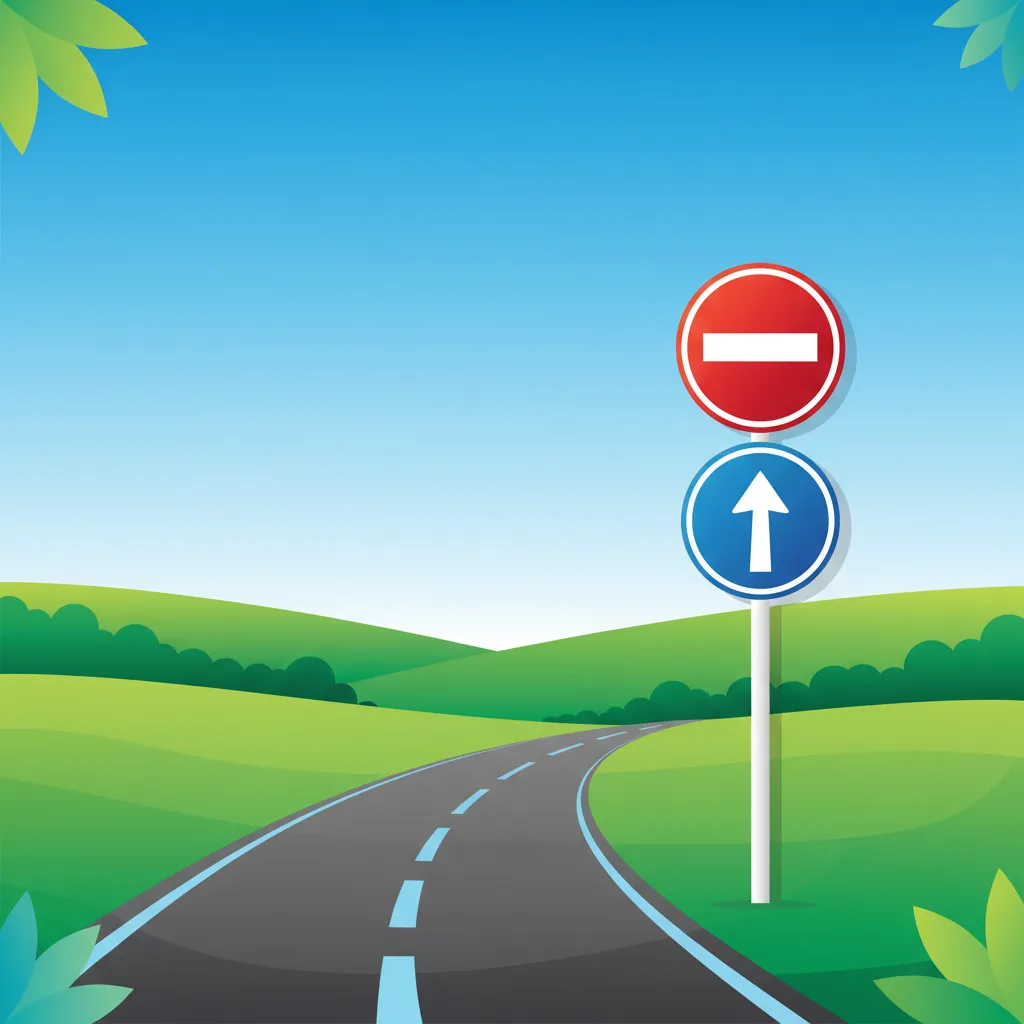
This lesson offers an in-depth study of Dutch regulatory signs, which impose mandatory actions or prohibitions on road users, with a specific focus on their impact on motorcyclists. It explains the visual language of prohibition symbols ('verbodsborden') and obligation symbols ('verplichtingsborden'), the contexts in which they appear, and the strict statutory consequences of non-compliance. Real-world examples are used to illustrate how these signs directly influence route planning, overtaking decisions, and speed management.
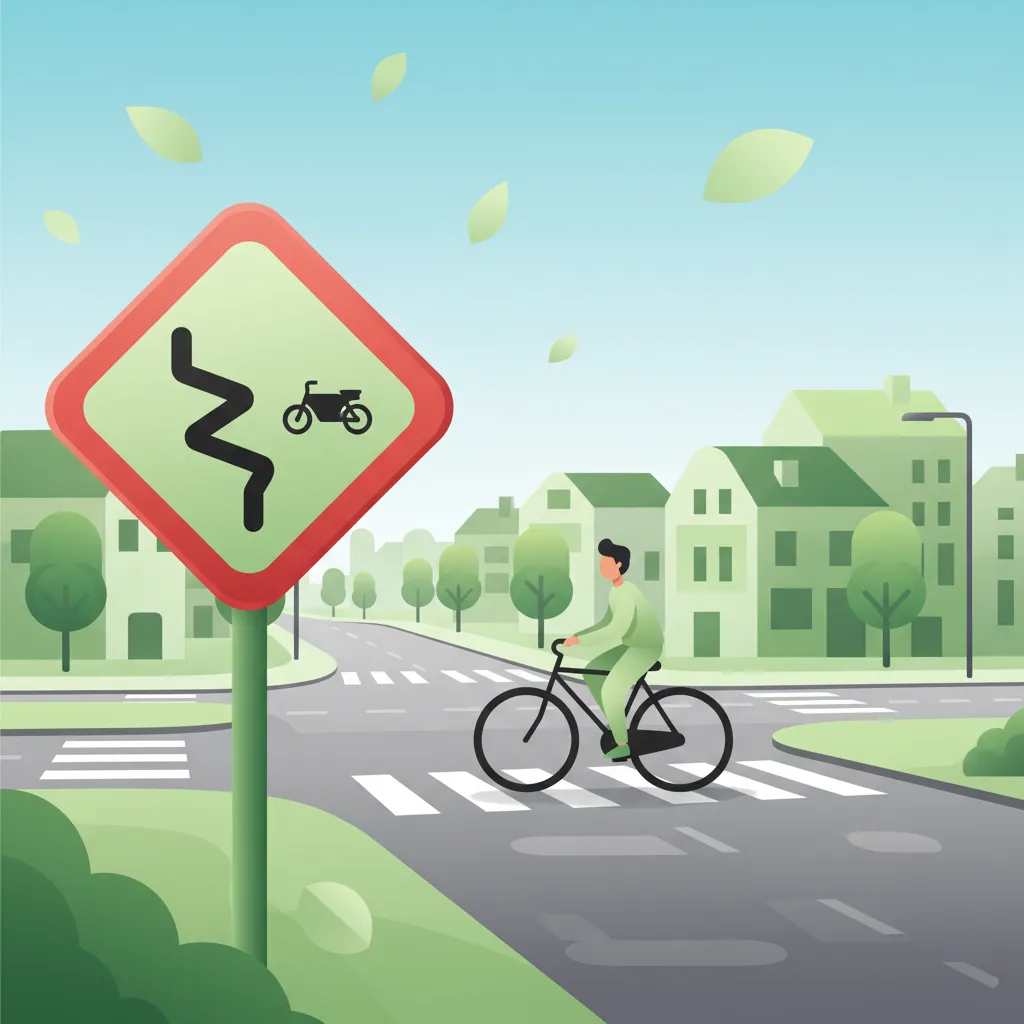
Warning signs are designed to enhance your safety by alerting you to potential hazards. This lesson focuses on signs of particular relevance to moped and scooter riders, such as warnings for sharp bends, slippery road surfaces, crosswinds, and level crossings. You will learn to recognize the standard triangular shape of Dutch warning signs and understand how to adjust your speed and positioning in response to these alerts, a key skill in hazard perception.
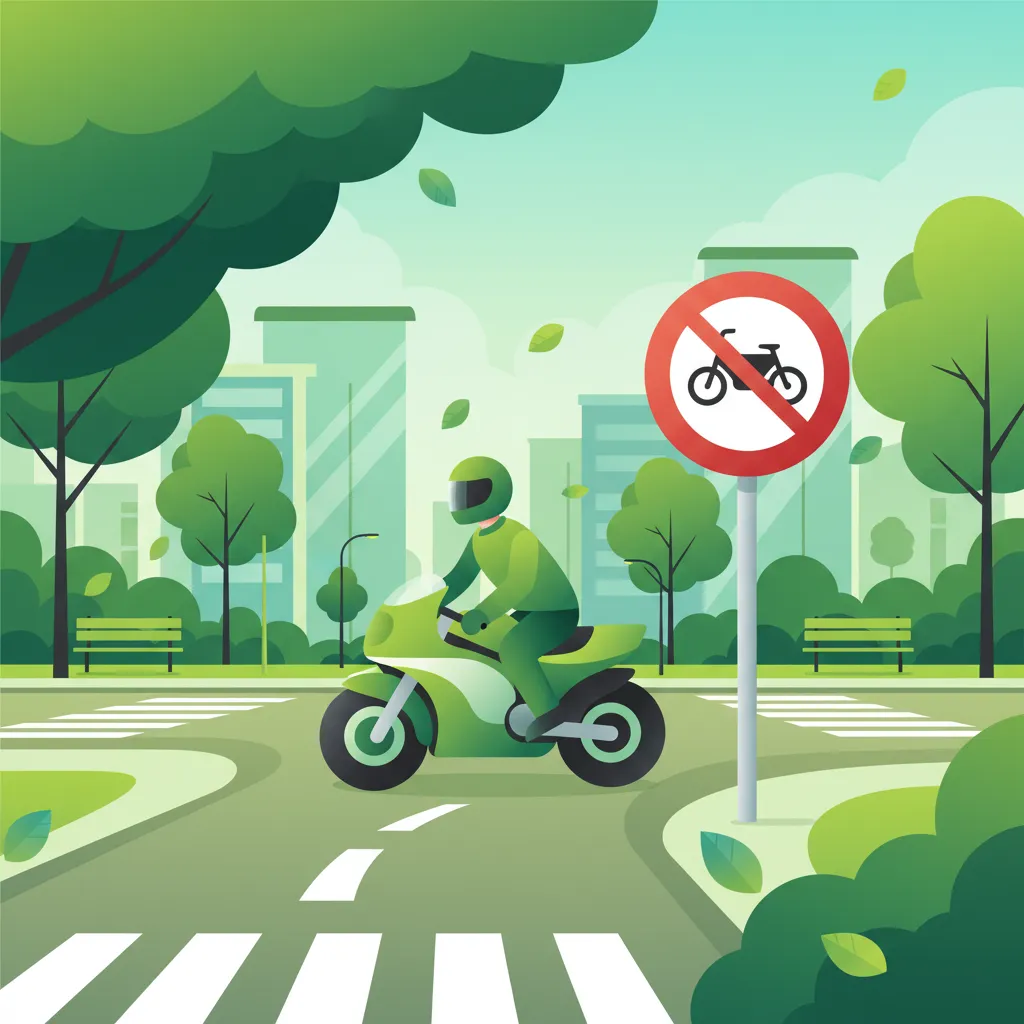
This lesson focuses on Dutch regulatory signs that enforce mandatory rules and restrictions, particularly those impacting A2 motorcyclists. You will learn to recognize and obey prohibition signs, such as those indicating a motorcycle ban (BORD 40), speed limits, and overtaking restrictions (BORD 21). The content explains the legal consequences of non-compliance and how to apply these rules in practical riding scenarios to ensure full adherence to Dutch traffic law.

This lesson introduces warning signs, which are designed to alert drivers to potential dangers or changes in road layout ahead. You will learn to interpret the triangular-shaped signs that indicate hazards such as sharp curves, slippery road surfaces (J27), or upcoming road works (J8). The curriculum explains how these signs help in anticipating risks and adjusting driving behavior accordingly, such as reducing speed or increasing alertness. A thorough understanding of warning signs is vital for proactive and defensive driving in various environments.
This lesson examines the function and interpretation of variable message signs (VMS) and other digital displays that provide real-time traffic information on Dutch roads. It explains how these systems communicate dynamic speed limits, congestion alerts, lane closures, and diversion routes, and how motorcyclists must legally comply with these instructions. Understanding these 'matrixborden' is critical for adapting to changing road conditions and ensuring safety on motorways and in tunnels.

This lesson focuses on informational signs that guide motorcyclists in navigation, route planning, and locating essential services while on the road. It examines the standardized symbols and color-coding for directions ('richtingsborden'), destinations, distances, and amenities, explaining how these signs support efficient and safe travel. Learners will understand how to use this information for strategic route selection, especially on long journeys or in unfamiliar areas, ensuring a smooth and predictable trip.
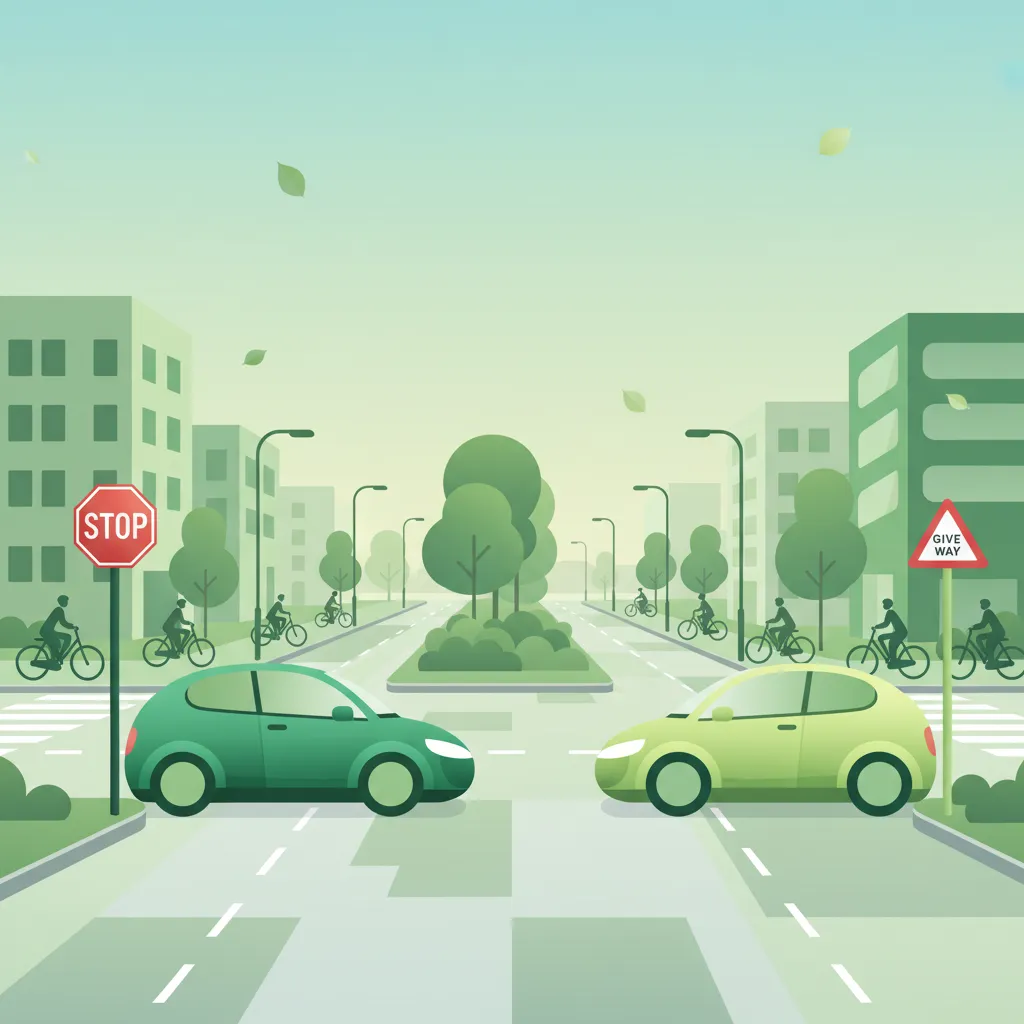
This lesson details the specific actions required at intersections controlled by 'Stop' and 'Give Way' signs. You will learn the legal requirement to come to a complete stop at a stop line (BORD 44) and the obligation to yield to all crossing traffic when encountering give-way markings ('haaientanden'). The content covers safe approach speeds and effective scanning techniques for motorcyclists to accurately assess gaps in traffic before proceeding.

This lesson introduces the Dutch concept of 'voorspellend rijgedrag,' or anticipatory riding, a proactive approach to safety. It teaches motorcyclists how to look beyond the immediate vehicle in front and scan for clues that predict the actions of other road users, such as turn signals, wheel direction, and driver head movement. By anticipating potential conflicts before they happen, riders can position themselves to avoid danger and ensure a smoother, safer journey through complex traffic.
Understand the legal framework (RVV 1990) for Dutch warning signs. Learn about rider responsibilities and common mistakes to avoid when interpreting hazard alerts like 'gevarendriehoeken' in motorcycle theory.
This lesson offers an in-depth study of Dutch regulatory signs, which impose mandatory actions or prohibitions on road users, with a specific focus on their impact on motorcyclists. It explains the visual language of prohibition symbols ('verbodsborden') and obligation symbols ('verplichtingsborden'), the contexts in which they appear, and the strict statutory consequences of non-compliance. Real-world examples are used to illustrate how these signs directly influence route planning, overtaking decisions, and speed management.
This lesson focuses on Dutch regulatory signs that enforce mandatory rules and restrictions, particularly those impacting A2 motorcyclists. You will learn to recognize and obey prohibition signs, such as those indicating a motorcycle ban (BORD 40), speed limits, and overtaking restrictions (BORD 21). The content explains the legal consequences of non-compliance and how to apply these rules in practical riding scenarios to ensure full adherence to Dutch traffic law.
This lesson details the interpretation of Dutch warning signs, which alert riders to potential dangers and changing road conditions. You will study signs indicating sharp curves, road narrowing (BORD 30), and temporary hazards like road works (BORD 36), learning to adjust speed and road position proactively. The content emphasizes how the A2 motorcycle's characteristics require earlier hazard recognition and response compared to other vehicles for maintaining control.

This lesson covers the mandatory lighting and signaling equipment for A2 motorcycles under Dutch law, ensuring you remain visible and communicate your intentions correctly. You will learn the rules for using headlights, taillights, turn signals, and brake lights in various conditions, including daytime and adverse weather. The content also addresses the importance of maintaining this equipment and using hand signals as a valid secondary method of communication in traffic.
This lesson covers A-code signs, which are designed to warn drivers of potential hazards on the road ahead. For motorcyclists, warnings about sharp bends, slippery surfaces, crosswinds, or falling rocks are especially critical for maintaining control and stability. The content explains how to interpret these triangular signs to anticipate changing conditions, adjust speed, and adopt a defensive riding posture well in advance of the hazard.

This lesson provides a definitive list of the documents a motorcyclist must carry at all times when riding in the Netherlands. It specifies the requirement for a valid driving license ('rijbewijs') for the correct category, the vehicle registration card ('kentekenbewijs'), and proof of valid third-party liability insurance ('verzekeringsbewijs'). The content clarifies that failure to produce these documents during a police check can result in significant fines and legal complications.
This lesson examines the function and interpretation of variable message signs (VMS) and other digital displays that provide real-time traffic information on Dutch roads. It explains how these systems communicate dynamic speed limits, congestion alerts, lane closures, and diversion routes, and how motorcyclists must legally comply with these instructions. Understanding these 'matrixborden' is critical for adapting to changing road conditions and ensuring safety on motorways and in tunnels.

This lesson examines the statutory duties imposed on motorcyclists, with a strong emphasis on the 'duty of care' (zorgplicht) and the conditions under which legal liability arises after a traffic incident. It clarifies the relationship between personal responsibility, mandatory insurance coverage, and the legal expectation for proactive risk mitigation to prevent accidents. The content also analyzes scenarios to illustrate how liability is typically determined within Dutch traffic jurisprudence, preparing riders for their legal responsibilities.
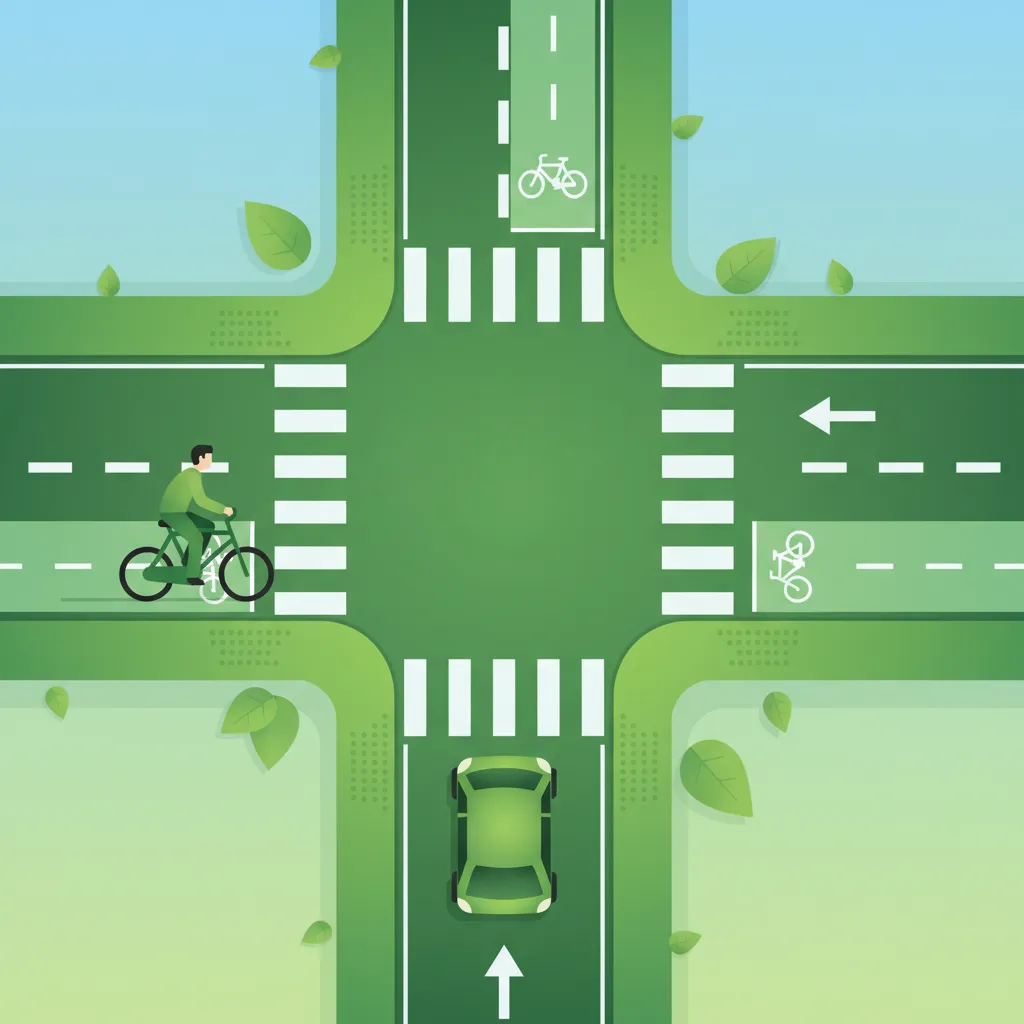
This lesson explores the legal meaning of various road surface markings, including solid and broken lane delimiters, directional arrows, and special-purpose lane indicators. It describes how markings dictate permitted maneuvers, such as overtaking and lane changes, and alert riders to upcoming hazards or changes in road layout. The content also examines the relationship between markings and road design in the Netherlands, emphasizing how a motorcyclist must interpret these visual cues for safe positioning.
This lesson details the specific actions required at intersections controlled by 'Stop' and 'Give Way' signs. You will learn the legal requirement to come to a complete stop at a stop line (BORD 44) and the obligation to yield to all crossing traffic when encountering give-way markings ('haaientanden'). The content covers safe approach speeds and effective scanning techniques for motorcyclists to accurately assess gaps in traffic before proceeding.
Find clear answers to common questions learners have about Warning Signs (gevarendriehoeken, waarschuwingstekens). Learn how the lesson is structured, which driving theory objectives it supports, and how it fits into the overall learning path of units and curriculum progression in the Netherlands. These explanations help you understand key concepts, lesson flow, and exam focused study goals.
Warning signs (gevarendriehoeken) alert you to potential dangers ahead, prompting you to adjust your speed or awareness. Regulatory signs (verbods- en verplichtingsborden), however, impose specific obligations or prohibitions, such as speed limits or mandatory directions, which you must strictly obey. For Category A riders, correctly distinguishing these is vital for both safety and CBR exam success.
While not all warning signs require an immediate, drastic speed reduction, they always demand increased attention and preparation. For Category A motorcyclists, it's crucial to assess the specific hazard indicated (e.g., wet road, sharp bend) and adjust your speed proactively to maintain control and safety, especially since motorcycles are more vulnerable to road conditions.
These warning signs (e.g., 'wildoversteekplaats') indicate areas where animals may suddenly appear on the road. For motorcyclists, this means reducing speed, scanning the road edges, and being prepared to react quickly. Hitting an animal can be extremely dangerous for a rider, so increased vigilance in these zones is essential, particularly during dawn and dusk.
In the Netherlands, most warning signs (gevarendriehoeken) apply universally to all road users, including Category A motorcyclists, as they indicate general road hazards. However, a motorcyclist's response might differ due to the vehicle's unique dynamics and vulnerability. For instance, a 'slippery road' sign demands a more cautious approach from a biker than from a car driver.
A 'falling rocks' sign (or often, a general 'falling objects' symbol within a warning triangle) indicates zones where loose debris may be on the road or fall from cliffs. Motorcyclists should significantly reduce speed, scan the road surface carefully for obstacles, and be prepared for sudden changes in road conditions or the appearance of rocks, which can cause severe accidents. This is particularly relevant for Category A riders exploring diverse Dutch landscapes.