Logo
Dutch Driving Theory Courses

Lesson 3 of the Rights of Way and Priority Situations unit

Dutch Motorcycle Theory (A2): Roundabout Navigation and Right-of-Way

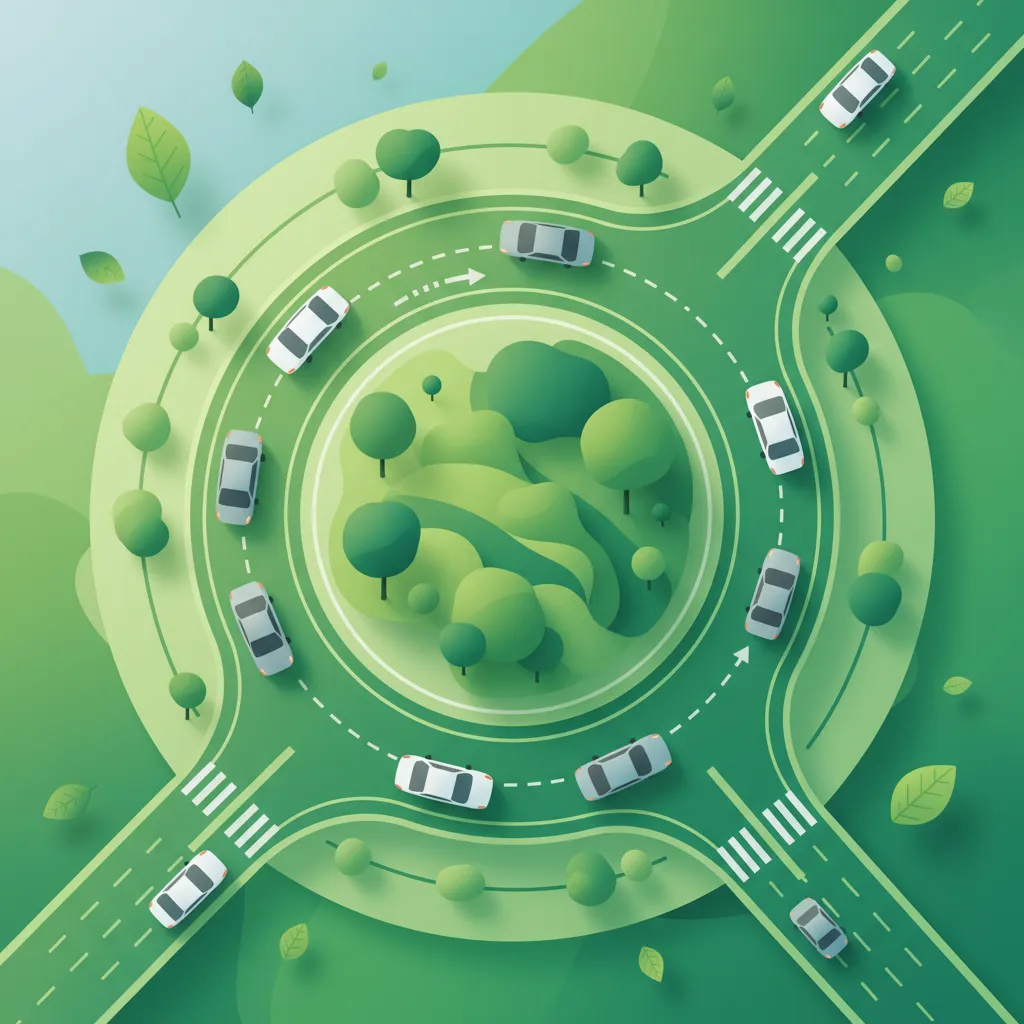
Roundabouts are common in the Netherlands and often present challenging priority situations. This lesson, part of the 'Rights of Way and Priority Situations' unit, will equip you with the knowledge to navigate them safely and correctly according to Dutch law. Understanding who has priority and how to signal your intentions is crucial for both your theory exam and real-world riding.
roundabout rulespriority situationsdutch traffic lawcbr theorymotorcycle license
Dutch Motorcycle Theory (A2): Roundabout Navigation and Right-of-Way
Dutch Motorcycle Theory (A2)

Safe Roundabout Navigation for Dutch Motorcycle Riders

Navigating roundabouts is a fundamental skill for any rider in the Netherlands, a country where these circular intersections are a ubiquitous feature of the road network. For those preparing for the Dutch Category A2 motorcycle theory exam, mastering roundabout procedures is essential, not only for passing the exam but, more importantly, for ensuring safety on the road. This lesson delves into the rules, techniques, and critical decision-making required to safely enter, circulate, and exit Dutch roundabouts, with a specific focus on the unique challenges and responsibilities of motorcyclists.

Note

This lesson connects closely with your understanding of basic right-of-way and priority rules (Lesson 2.1) and specific intersection priority (Lesson 2.2). Familiarity with Dutch road signs, particularly roundabout symbols, is also assumed (Lesson 1).

Understanding Roundabouts and Their Purpose in Dutch Traffic

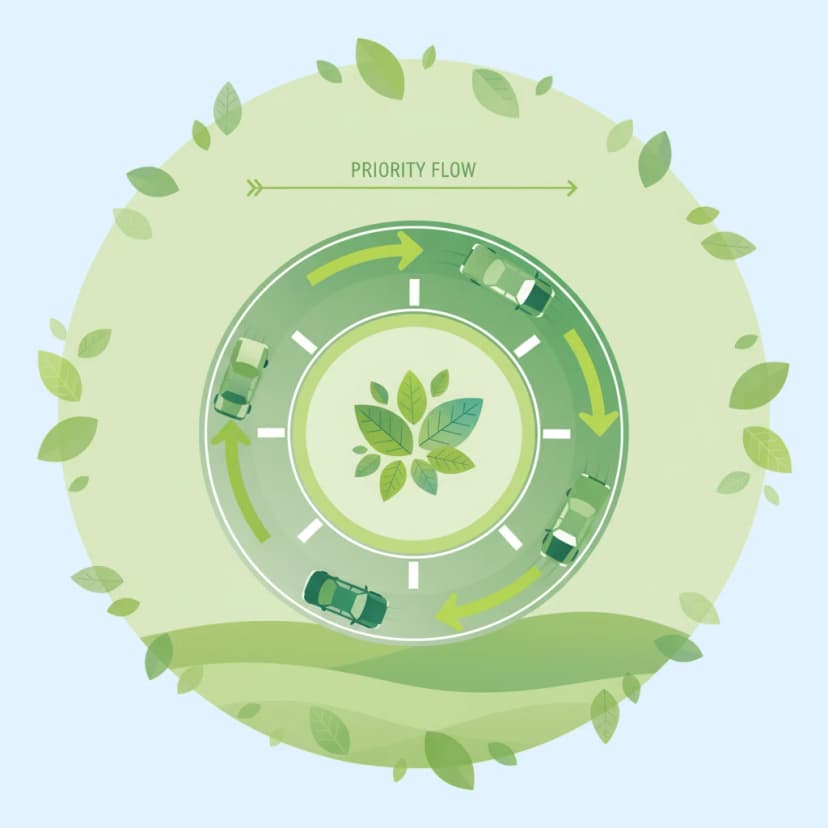
A roundabout is a circular intersection designed to improve traffic flow and reduce the severity of collisions compared to traditional cross-intersections. Traffic moves in a single direction (counter-clockwise in the Netherlands, which practices right-hand traffic) around a central island. Their design encourages lower speeds and continuous movement, minimizing the need for full stops.

Why Roundabouts are Crucial for Road Safety

The underlying logic of roundabouts is rooted in safety and efficiency. By converting perpendicular conflict points into glancing collisions, they significantly reduce the risk of severe T-bone crashes. The continuous flow, regulated by specific priority rules, prevents the sudden decelerations and accelerations that can lead to rear-end collisions. For motorcyclists, maintaining a steady, moderate speed within a roundabout helps stabilize the two-wheeled vehicle, reducing the need for heavy braking or sharp turns which can compromise balance.

Key Elements of Dutch Roundabout Geometry

Dutch roundabouts come in various forms, and understanding their geometry is the first step to safe navigation.

Single-Lane Roundabouts

These are the simplest type, featuring only one circulating lane around the central island. All vehicles use this same lane for entry, circulation, and exit. They are common in residential areas and often have lower speed limits.

Multi-Lane Roundabouts

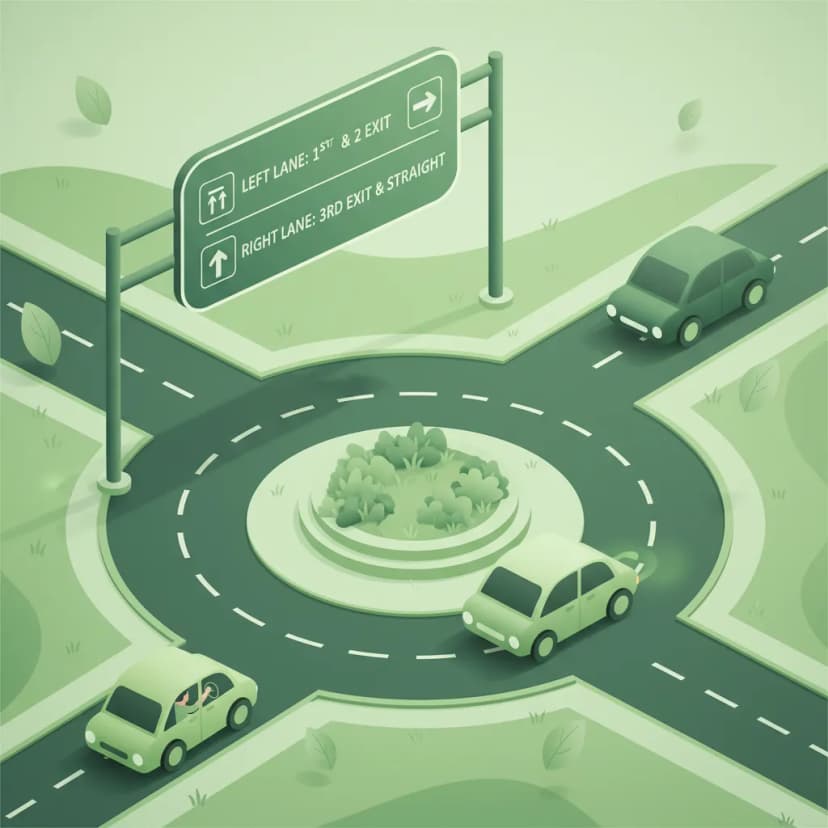
These feature two or more circulating lanes. Lane choice is crucial here, as it dictates your intended exit. Lane markings and arrows on the road surface or accompanying signs indicate the correct lane for turning right, going straight, or turning left. Misjudging or incorrectly selecting a lane on a multi-lane roundabout can lead to unsafe lane changes or conflicts with other road users.

Mini-Roundabouts

As the name suggests, these are smaller in diameter, typically found in lower-speed zones such as residential streets or car parks. The central island is often traversable for larger vehicles, but motorcyclists should treat it as a solid barrier. Despite their size, mini-roundabouts are still governed by the same fundamental priority rules as larger ones, though speeds should be even lower (around 15 km/h).

Roundabouts with Cycle Tracks

Many Dutch roundabouts are integrated with bicycle infrastructure. This can take several forms:

  • Shared Carriageway: Cyclists share the main road with motorized traffic.
  • Adjacent Cycle Track: A separate cycle path runs alongside the roundabout, often with its own priority rules.
  • Integrated Cycle Track: The cycle track is physically separated but still crosses the entry or exit points of the roundabout.

Identifying the specific type of roundabout and its integration with cycle paths is vital for understanding who has priority at various points.

Right-of-Way and Yielding: The Core Principles of Roundabout Entry

The most fundamental rule governing Dutch roundabouts, established by the RVV 1990 (Reglement Verkeersregels en Verkeersmaatregelen), is the priority of circulating traffic.

Definition

Circulating Traffic

Vehicles already travelling within a roundabout have the legal right-of-way over vehicles attempting to enter.

This means that as you approach a roundabout, you must always yield (give way) to traffic already on the roundabout. This principle, outlined in RVV 1990 §5-31, is paramount for maintaining continuous flow and preventing collisions.

The Entry Yielding Procedure for Motorcyclists

Approaching and entering a roundabout safely requires a systematic procedure:

Roundabout Entry Procedure

  1. Approach and Observe: As you near the roundabout, reduce your speed. Scan the road markings for lane arrows and any specific signage. Observe the central island and the traffic circulating on it.
  2. Check for Hazards: Look for circulating traffic from your left (in right-hand traffic countries like the Netherlands). Also, crucially, check for cyclists on adjacent cycle tracks and pedestrians at nearby crossings.
  3. Signal Your Intent (if applicable): While not always required for entry, if you intend to take a left exit and therefore need to use an inner lane on a multi-lane roundabout, signal left before entering to inform other road users of your intention. For straight-ahead or right exits using outer lanes, no entry signal is typically required.
  4. Assess the Gap: Wait for a sufficient gap in the circulating traffic. A safe gap generally provides enough time for you to enter smoothly and complete at least one quarter of the roundabout's turn without causing circulating vehicles to brake or swerve. For motorcyclists, this often means a gap of at least 3-4 seconds.
  5. Yield and Enter: Only proceed when a safe gap exists. Merge smoothly into the roundabout, maintaining a safe distance from the vehicle ahead in your chosen lane. Avoid abrupt acceleration or braking, which can destabilize a motorcycle.

Warning

Common Misunderstanding: Never assume that "continuous flow" means you should never stop. If there is no safe gap, you must stop and wait. Forcing your way into a gap will compel circulating traffic to take evasive action, which is dangerous and illegal (violating RVV 1990 §5-13 on yielding distance).

Lane Discipline and Correct Signal Usage for Motorcyclists

Once you've safely entered the roundabout, maintaining correct lane discipline and using your turn signals appropriately are critical for communicating your intentions and ensuring a smooth, predictable journey.

Choosing the Right Lane for Your Exit

On multi-lane roundabouts, selecting the correct entry lane according to your intended exit is mandated by RVV 1990 §5-32. This minimizes the need for risky lane changes within the roundabout itself, which is particularly hazardous for motorcyclists due to limited stability at low speeds and smaller visual footprint.

  • Right Exit (First Exit): Use the outermost lane (or the lane explicitly marked with a right-turn arrow).
  • Straight Ahead (Second Exit): Use the middle lane (if present and marked for straight ahead). If it's a two-lane roundabout, this often means the outer lane, as the inner lane would be for left turns.
  • Left Exit (Third Exit or Beyond): Use the innermost lane (or the lane marked with a left-turn arrow).

Masterful Turn Signal Usage in Roundabouts

Proper turn signal (indicator) use is crucial for safety and communication, especially with vulnerable road users.

  • Before Entry:
    • Signal left if you intend to take a left exit and therefore need to use an inner lane. This tells other drivers and cyclists that you are moving towards the centre of the roundabout.
    • No signal is typically required if you are taking a straight-ahead or right exit and using an outer lane, as your general direction of travel is maintained.
  • During Circulation:
    • No signal is needed while circulating within your chosen lane, unless you are changing lanes (which should generally be avoided if possible).
  • Before Exit:
    • Signal right after passing the exit immediately preceding your intended exit. This informs all other road users, particularly cyclists on adjacent tracks and vehicles behind you, of your intention to leave the roundabout.
    • Exception: For an immediate right exit from the outermost lane, you may keep your right signal on continuously from your approach to your exit.

Tip

Visibility and Positioning: As a motorcyclist, you have a smaller visual presence. Maximize your visibility by using dipped headlights, ensuring a clean helmet visor, and positioning yourself in the centre of your chosen lane. This makes you easier to spot and allows for greater manoeuvring space.

Interacting with Vulnerable Road Users: Cyclists and Pedestrians

The Netherlands places a high emphasis on the safety of vulnerable road users. This is particularly evident around roundabouts, where interactions between motorcycles, bicycles, and pedestrians are common.

Cyclist Priority on Cycle Tracks

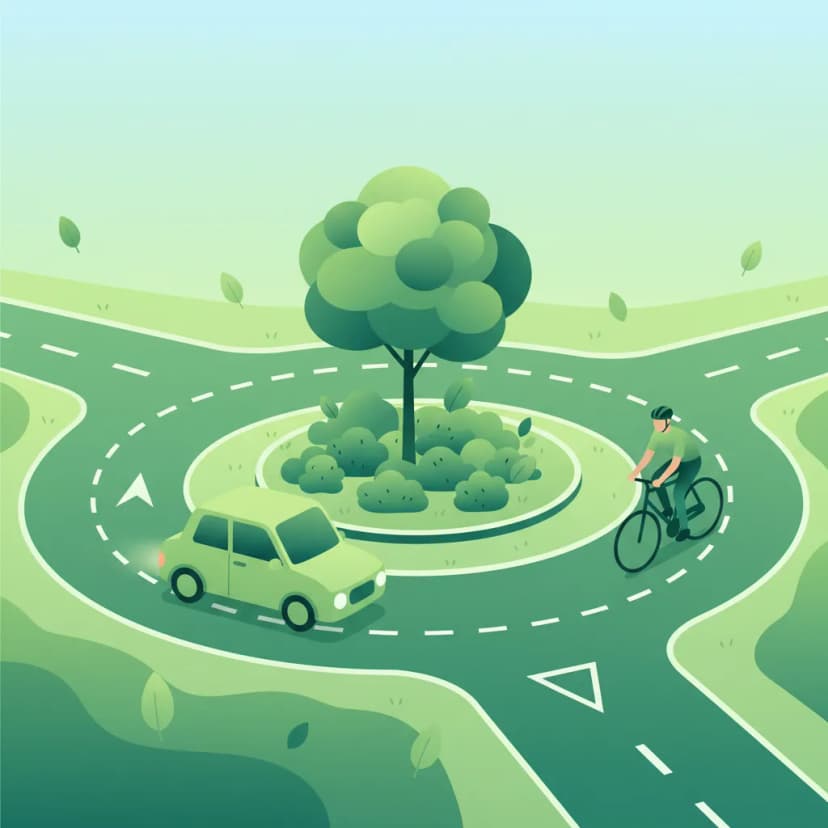
A critical rule to remember, outlined in RVV 1990 §5-30, is that cyclists on designated cycle tracks often have priority when crossing the roundabout or merging onto it. This is a common point of confusion and a frequent cause of accidents.

  • Scenario: If a cycle track runs adjacent to the roundabout, cyclists on that track typically have priority over vehicles entering or exiting the roundabout, unless clearly indicated otherwise by specific signage (e.g., a "yield to motorized traffic" sign for cyclists).
  • Your Responsibility: As a motorcyclist, you must yield to these cyclists, even if they appear slower or are coming from your left. Always scan for cyclists, anticipate their movements, and give them ample space.
  • Visual Check: Always perform a head check and thorough mirror check for cyclists before initiating an exit manoeuvre. They might be in your blind spot or approaching faster than anticipated.

Pedestrian Crossings Near Roundabouts

Pedestrian crossings (zebra crossings or crossings with traffic lights) adjacent to roundabouts operate under their own priority rules.

  • Yielding to Pedestrians: If a pedestrian crossing is present at a roundabout entry or exit, you must yield to pedestrians who are waiting to cross or are already crossing, regardless of whether a traffic light is present or if it is a zebra crossing.
  • Traffic Light Interaction: If a pedestrian crossing has traffic lights, you must stop if the light is red for vehicular traffic, even if no pedestrian is currently visible.

Warning

Never assume a pedestrian will wait. Always be prepared to stop for them.

Speed Management and Traction Control for Motorcycle Stability

Maintaining the correct speed is paramount for safe roundabout navigation, especially on a motorcycle where stability is directly linked to balance and traction.

While no universal speed limit applies to all roundabouts, a general guideline for most urban Dutch roundabouts is 15-30 km/h. Larger, high-capacity roundabouts (e.g., near motorways) may allow slightly higher speeds, but always observe posted limits and adapt to conditions.

Physics of Cornering and Motorcycle Stability

The curved path of a roundabout requires a constant centripetal force to keep the motorcycle on its intended trajectory. This force is derived from the friction between your tires and the road surface.

Definition

Centripetal Force

The inward force required to keep an object moving in a circular path. On a motorcycle, this force is primarily generated by leaning the bike and tire grip.

The faster you go, the greater the centripetal force required. If you exceed the available friction (e.g., due to excessive speed, worn tires, or a wet surface), you risk losing traction and control.

Smooth Control Techniques

  • Engine Braking: Use engine braking (gently rolling off the throttle, downshifting appropriately) to reduce speed before and within the roundabout. This keeps the motorcycle more stable than heavy use of the rear brake alone.
  • Smooth Throttle Application: Maintain a smooth, consistent throttle input through the curve. Abrupt acceleration or deceleration can upset the motorcycle's balance.
  • Gentle Braking: If braking is necessary within the roundabout, apply both front and rear brakes gently and progressively. Avoid hard braking, especially with the rear brake, as this can lead to wheel lock-up and a loss of control.

Roundabout navigation is dynamic and requires constant adaptation to changing conditions.

Weather Conditions

  • Rain / Wet Surface: Water drastically reduces tire grip. Increase your perceived stopping distance by at least 30% and reduce your entry speed by at least 5 km/h. Use exceptionally smooth throttle control, braking, and steering inputs to avoid wheel slip. Puddles can hide potholes, so approach with caution.
  • Snow / Ice: These conditions demand extreme caution. Treat every roundabout as a "stop-and-go" intersection. Come to a complete stop before entry, and proceed only when a very large gap is present. Maintain minimal speeds (e.g., 5-10 km/h) and avoid any sudden movements.
  • Fog / Low Visibility: Reduce speed significantly. Use dipped beams (never high beams in fog). Consider a high-visibility vest. Rely more on auditory cues and be prepared to stop much earlier than usual.

Lighting Conditions

  • Night: Ensure your dipped beam headlights are always on. Avoid using high beams inside a roundabout, as they can blind other drivers and are illegal in built-up areas. Poorly lit roundabouts require increased following distance and a readiness to stop earlier. Actively scan for unlit bicycles or pedestrians.

Road Type and Geometry

  • Urban Small-Diameter Roundabout: These often have lower design speeds and may have central islands that are subtly marked. Be particularly aware that cyclists might be sharing the carriageway or that priority signs for cyclists might be less obvious.
  • Large Multi-Lane Roundabout (e.g., motorway exits): These typically allow higher speeds (up to 50 km/h) and have very clear lane markings. Cyclists are usually on separate tracks here, but always confirm this with signage.

Vehicle State

  • Heavy Load / Passenger: Carrying a passenger or heavy luggage alters your motorcycle's centre of gravity and increases braking distance. Enter roundabouts at the lower end of the recommended speed range and ensure even smoother inputs.
  • Worn Tires / Brake Issues: If your motorcycle's tires are worn or brakes are not fully effective, reduce speed dramatically before entry. Avoid any sudden braking. You may need to treat the roundabout as if it were a stop-sign intersection to ensure safety.

Common Roundabout Violations and How to Avoid Them

Understanding common mistakes helps in preventing them. Many violations relate directly to ignoring the core principles discussed.

Violation / Edge CaseWhy It’s WrongCorrect BehaviourPotential Consequence
Entering without yieldingViolates RVV 1990 §5-31; forces circulating traffic to brake.Stop, assess gap, then merge when safe.Rear-end collision, fine, penalty points.
Wrong lane selection for exitContravenes RVV 1990 §5-32; leads to unsafe lane changes.Choose lane that matches exit before entry.Side-swipe or near-miss with vehicles and cyclists.
No right-turn signal before exitBreaks RVV 1990 §9-22; other users cannot anticipate.Signal right after passing the intended exit.Cyclist or vehicle may collide on merging path.
Excessive speed in wet conditionsReduces traction, increases stopping distance.Adjust speed to surface condition; use engine braking.Loss of control, slide, possible crash, severe injury.
Overtaking inside the roundaboutIllegal; roundabouts are not overtaking zones.Remain in lane, exit, then overtake if needed and safe.Conflict with other road users, fine.
Failing to yield to cyclists from trackViolates cyclist priority (RVV 1990 §5-30).Yield, allow cyclist to merge safely.Collision with cyclist; severe injury, legal penalties.
Entering a mini-roundabout at road speedMini-roundabouts have tighter radii; high speed defeats geometry.Reduce speed to ~15 km/h, treat as stop-sign.Skidding, losing control, high impact forces.
Abrupt rear-brake application before entryCan cause rear-wheel lock-up and instability on two-wheelers.Use engine braking, gentle throttle roll-off, smooth front/rear brake.Wheel lock, loss of balance, fall.
Not checking for pedestriansPedestrians have right-of-way; leads to accidents.Visually scan for pedestrians; stop if crossing.Pedestrian injury, liability, severe penalties.

Safety and Reasoning Insights: Why These Rules Matter

The rules and guidelines for roundabout navigation are not arbitrary; they are rooted in a combination of physics, psychology, and legal duty of care to ensure the safety and efficiency of all road users.

  • Visibility and Reaction Time: Motorcycles, being smaller, are less visible. Proper signaling and lane positioning are vital. The average human perception-reaction time is approximately 1.5 seconds. At 30 km/h, a motorcycle covers about 12.5 metres in this time. Therefore, maintaining a gap of at least 4 seconds (roughly 33-50 metres depending on speed) provides a crucial safety buffer.
  • Physics of Cornering (Revisited): The centripetal force required to maintain a circular path increases with the square of your speed. Doubling your speed quadruples the required grip. On wet or icy surfaces, the available friction coefficient drops significantly, making even moderate speeds dangerous.
  • Psychology of Gap Acceptance: Drivers often exhibit an "optimistic bias," overestimating their ability to fit into small gaps. Systematic visual scanning (left-right-left) and adherence to a strict gap acceptance rule (e.g., 3-5 seconds) helps counteract this bias.
  • Legal Duty of Care: The RVV 1990 explicitly defines responsibilities. Your duty of care as a motorcyclist includes proactive yielding and signaling to mitigate inherent physical risks and protect vulnerable road users.
  • Dutch Road Safety Data: Statistics from Rijkswaterstaat consistently show that a significant percentage of roundabout-related collisions involve motorcycles, with "failure to yield to circulating traffic" being a leading cause. This underscores the importance of strict adherence to priority rules.

By understanding the "why" behind these rules, you can develop a deeper, more intuitive sense of safe roundabout navigation, preparing you thoroughly for your Dutch Category A2 motorcycle theory exam and beyond.

Roundabout
A circular intersection designed for continuous traffic flow, where vehicles move around a central island.
Circulating Traffic
Vehicles already present and moving within a roundabout, which legally have priority over entering traffic.
Yield / Give-Way
The legal obligation to allow another road user to proceed first, required before entering a Dutch roundabout.
Lane Discipline
The practice of selecting and remaining in the appropriate lane based on one's intended exit from a multi-lane roundabout.
Turn Signal (Indicator)
An electrical light used to communicate a rider's intended change of direction to other road users.
Cyclist Priority
The legal right for cyclists on designated paths to proceed before motorized traffic at certain junctions, including some roundabout entries/exits.
Speed Management
The active adjustment of a vehicle's speed to maintain control and safety, particularly when negotiating curves like roundabouts.
Centripetal Force
The inward force necessary to keep a vehicle moving in a curved path, relying on tire grip and lean angle for motorcycles.
Gap Acceptance
The process of accurately judging whether a sufficient space exists in traffic to safely enter or merge without causing conflict.
Mini-Roundabout
A smaller diameter roundabout, often found in residential areas, requiring even lower speeds due to its tighter curvature.

Learn more with these articles

Check out these practice sets


Search topics related to Roundabout Navigation and Right-of-Way

Explore search topics learners often look for when studying Roundabout Navigation and Right-of-Way. These topics reflect common questions about road rules, driving situations, safety guidance, and lesson level theory preparation for learners in the Netherlands.

dutch roundabout rules motorcyclea2 motorcycle theory roundabout priorityhow to navigate roundabouts in netherlands for riderscbr theory exam roundabout questionsmotorcycle signalling roundabouts netherlandsyielding on roundabouts netherlandspriority on roundabout with cyclists netherlandsdutch road signs roundabout

Related driving theory lessons for Roundabout Navigation and Right-of-Way

Browse additional driving theory lessons that cover connected traffic rules, road signs, and common driving situations related to this topic. Improve your understanding of how different rules interact across everyday traffic scenarios.

Advanced Roundabout Navigation and Priority Rules in NL

Explore complex roundabout scenarios in the Netherlands beyond basic entry. Understand advanced lane selection, signaling strategies, and nuanced priority interactions with cyclists and other traffic for motorcycle riders.
roundaboutspriority situationsadvancedmotorcycle theorydutch traffic lawcyclists
Roundabouts and Traffic Circles lesson image

Roundabouts and Traffic Circles

This lesson provides a detailed guide to navigating Dutch roundabouts ('rotondes'), including single-lane, multi-lane, and 'turbo' designs. It clarifies the specific priority rules that apply when entering the roundabout and the critical importance of correct signaling when changing lanes or exiting. Special attention is given to the vulnerable position of motorcyclists and the need to be aware of other vehicles' blind spots and the priority rules concerning cyclists on or near the roundabout.
Dutch Motorcycle Theory APriority Rules and Intersection Navigation
View lesson
Priority Rules & Roundabout Navigation lesson image

Priority Rules & Roundabout Navigation

This lesson delves into the hierarchy of priority rules on Dutch roads, clarifying who has the right-of-way in various intersection scenarios. It explains the meaning of signs like 'voorrangsweg' and road markings such as shark's teeth ('haaientanden'). Special attention is given to the correct procedure for entering, navigating, and exiting roundabouts on a motorcycle, including proper signaling and lane choice to ensure safe and efficient passage.
Dutch A1 Motorcycle TheoryDutch Traffic Laws for A1 Motorcycles
View lesson
Roundabout Priorities lesson image

Roundabout Priorities

This lesson provides a detailed guide to navigating roundabouts (rotondes) in the Netherlands. You will learn the primary rule: drivers approaching a roundabout must yield to traffic already circulating on it, which is typically indicated by yield signs (B5) and shark teeth. The curriculum also covers the correct use of turn signals when entering and exiting, rules for multi-lane roundabouts, and special considerations for the priority of cyclists who may have a dedicated path around the roundabout. Correct roundabout etiquette is key to maintaining traffic flow and safety.
Dutch Driving Theory BRight-of-Way and Priority Rules
View lesson
Roundabouts and Mini‑Roundabouts lesson image

Roundabouts and Mini‑Roundabouts

Roundabouts are a common feature of Dutch roads, and they have specific priority rules. This lesson teaches the standard rule of yielding to traffic already circulating on the roundabout before you enter. It also covers correct lane positioning, the importance of signaling your intention to exit, and the specific rules that often apply to cyclists who may have priority when crossing the exits. These skills ensure smooth and safe passage through both large and mini-roundabouts.
Dutch Driving Theory AMRight‑of‑Way & Priority Situations
View lesson
Lane Discipline and High-Speed Overtaking lesson image

Lane Discipline and High-Speed Overtaking

This lesson reinforces the fundamental rule of Dutch highway driving: use the rightmost lane available and use the lanes to the left only for overtaking. You will learn the complete, safe overtaking procedure: check mirrors, signal, perform a shoulder check for the blind spot, smoothly move over, accelerate past the vehicle, and then return to the right lane when safe.
Dutch Motorcycle Theory (A2)Highway (Autosnelweg) Rules for Motorcycles
View lesson
Intersection Priority: Stop and Give-Way Signs lesson image

Intersection Priority: Stop and Give-Way Signs

This lesson details the specific actions required at intersections controlled by 'Stop' and 'Give Way' signs. You will learn the legal requirement to come to a complete stop at a stop line (BORD 44) and the obligation to yield to all crossing traffic when encountering give-way markings ('haaientanden'). The content covers safe approach speeds and effective scanning techniques for motorcyclists to accurately assess gaps in traffic before proceeding.
Dutch Motorcycle Theory (A2)Rights of Way and Priority Situations
View lesson
Equal-Priority Intersections and Advanced Decision-Making lesson image

Equal-Priority Intersections and Advanced Decision-Making

This lesson addresses the challenge of navigating equal-priority intersections, where no signs or markings dictate the right-of-way. You will master the fundamental Dutch traffic rule of giving priority to all drivers approaching from your right ('rechts voor'). The content focuses on developing advanced observational skills and clear communication to safely manage these situations, which are common in residential and urban areas.
Dutch Motorcycle Theory (A2)Rights of Way and Priority Situations
View lesson
Interacting with Cyclists and Mopeds lesson image

Interacting with Cyclists and Mopeds

This lesson is critical for driving in the Netherlands, a country with more bicycles than people. You will learn about the different types of cycle paths and how priority rules apply, especially at junctions. The content stresses the importance of checking the blind spot for cyclists before turning right ('dode hoek'). It also covers the rules for different types of mopeds (snorfiets and bromfiets) and the importance of giving all two-wheeled road users ample space when overtaking.
Dutch Driving Theory BVulnerable Road Users
View lesson
General Road Rules for Light Motorcycles lesson image

General Road Rules for Light Motorcycles

This lesson covers the universal Dutch road rules with a specific focus on their application to light motorcycles. It details the various speed limits for different road types, from urban areas to motorways, and explains the correct procedures for overtaking and lane positioning. The legal aspects of lane filtering in congestion are also examined, alongside mandatory equipment use like daytime running lights, to ensure riders can integrate safely and legally into traffic flow.
Dutch A1 Motorcycle TheoryDutch Traffic Laws for A1 Motorcycles
View lesson
Motorcyclists and Other Vehicle Types lesson image

Motorcyclists and Other Vehicle Types

This lesson addresses interactions with other types of road users. You will learn about motorcyclists, who can accelerate and brake quickly and may filter through slow traffic. The curriculum explains how to anticipate their movements and check for them carefully at junctions. It also covers how to safely approach and overtake slow-moving vehicles, such as agricultural tractors, and how to behave around horse riders, which requires slowing down and giving a very wide berth.

Dutch Driving Theory BVulnerable Road Users
View lesson

Common Roundabout Errors and Correct Procedures for Riders

Learn about frequent mistakes motorcyclists make at Dutch roundabouts, such as incorrect yielding or lane choice. Understand the theory behind these errors and the safe, legal procedures to follow.

roundaboutscommon mistakestraffic rulesmotorcycle safetydutch driving theorylegal procedures
Roundabouts and Traffic Circles lesson image

Roundabouts and Traffic Circles

This lesson provides a detailed guide to navigating Dutch roundabouts ('rotondes'), including single-lane, multi-lane, and 'turbo' designs. It clarifies the specific priority rules that apply when entering the roundabout and the critical importance of correct signaling when changing lanes or exiting. Special attention is given to the vulnerable position of motorcyclists and the need to be aware of other vehicles' blind spots and the priority rules concerning cyclists on or near the roundabout.

Dutch Motorcycle Theory APriority Rules and Intersection Navigation
View lesson
Priority Rules & Roundabout Navigation lesson image

Priority Rules & Roundabout Navigation

This lesson delves into the hierarchy of priority rules on Dutch roads, clarifying who has the right-of-way in various intersection scenarios. It explains the meaning of signs like 'voorrangsweg' and road markings such as shark's teeth ('haaientanden'). Special attention is given to the correct procedure for entering, navigating, and exiting roundabouts on a motorcycle, including proper signaling and lane choice to ensure safe and efficient passage.
Dutch A1 Motorcycle TheoryDutch Traffic Laws for A1 Motorcycles
View lesson
Dutch Motorway Law (snelwegwet) and Lane Discipline lesson image

Dutch Motorway Law (snelwegwet) and Lane Discipline

This lesson covers the specific articles of the Dutch Road Traffic Act that apply to motorways, with a primary focus on the strict rule of keeping to the rightmost available lane unless overtaking. It explains the legal and safety reasons for only passing on the left and discusses the correct positioning within a lane for maximum visibility and safety. The content also addresses the nuances of lane usage during heavy congestion, ensuring riders comply with the law and contribute to smooth traffic flow.

Dutch Motorcycle Theory AHighway and Tunnel Riding Strategies
View lesson
Stopping, Parking, and Tunnels lesson image

Stopping, Parking, and Tunnels

This lesson clarifies the specific Dutch regulations concerning stopping and parking for motorcycles, including designated parking bays and rules for parking on pavements. It also covers the mandatory procedures for safely navigating tunnels, such as required lighting, lane discipline, and actions to take during a breakdown or emergency. By understanding these rules, riders can avoid fines and navigate these specific traffic situations with confidence.

Dutch A1 Motorcycle TheoryDutch Traffic Laws for A1 Motorcycles
View lesson
Overtaking Rules and Safe Maneuvers lesson image

Overtaking Rules and Safe Maneuvers

This lesson provides a step-by-step guide to executing a safe and legal overtaking maneuver. It covers the entire process: assessing the situation for a sufficient gap in oncoming traffic, performing necessary mirror and shoulder checks, signaling intent, and accelerating decisively. The lesson also highlights situations where overtaking is prohibited by law, such as before pedestrian crossings or where there are solid white lines.

Dutch A1 Motorcycle TheoryRoad Positioning, Lane Discipline & Overtaking
View lesson
General Road Rules for Light Motorcycles lesson image

General Road Rules for Light Motorcycles

This lesson covers the universal Dutch road rules with a specific focus on their application to light motorcycles. It details the various speed limits for different road types, from urban areas to motorways, and explains the correct procedures for overtaking and lane positioning. The legal aspects of lane filtering in congestion are also examined, alongside mandatory equipment use like daytime running lights, to ensure riders can integrate safely and legally into traffic flow.

Dutch A1 Motorcycle TheoryDutch Traffic Laws for A1 Motorcycles
View lesson
Lane Discipline and High-Speed Overtaking lesson image

Lane Discipline and High-Speed Overtaking

This lesson reinforces the fundamental rule of Dutch highway driving: use the rightmost lane available and use the lanes to the left only for overtaking. You will learn the complete, safe overtaking procedure: check mirrors, signal, perform a shoulder check for the blind spot, smoothly move over, accelerate past the vehicle, and then return to the right lane when safe.
Dutch Motorcycle Theory (A2)Highway (Autosnelweg) Rules for Motorcycles
View lesson
Road Markings and Lane Discipline for Motorcyclists lesson image

Road Markings and Lane Discipline for Motorcyclists

This lesson focuses on the meaning of different road markings and their implications for motorcycle lane discipline. You will learn the legal distinction between solid and broken lines regarding overtaking, how to interpret directional arrows for lane choice, and the rules for using special lanes. The content emphasizes maintaining a safe and strategic position within the lane to maximize visibility and create a safety buffer from other vehicles.

Dutch Motorcycle Theory (A2)Road Signs and Motorcycle-Specific Indicators
View lesson
Roundabout Priorities lesson image

Roundabout Priorities

This lesson provides a detailed guide to navigating roundabouts (rotondes) in the Netherlands. You will learn the primary rule: drivers approaching a roundabout must yield to traffic already circulating on it, which is typically indicated by yield signs (B5) and shark teeth. The curriculum also covers the correct use of turn signals when entering and exiting, rules for multi-lane roundabouts, and special considerations for the priority of cyclists who may have a dedicated path around the roundabout. Correct roundabout etiquette is key to maintaining traffic flow and safety.
Dutch Driving Theory BRight-of-Way and Priority Rules
View lesson
Pedestrian Crossings and School Zones lesson image

Pedestrian Crossings and School Zones

This lesson focuses on the legal requirements and safe practices for riding near pedestrian crossings ('zebrapaden') and designated school zones. It details the absolute obligation to yield to pedestrians on or about to use a crossing and the need for significantly reduced speeds and heightened vigilance in areas with children. The content underscores the importance of anticipation and being prepared for unpredictable movements from vulnerable road users to prevent serious incidents.

Dutch Motorcycle Theory APriority Rules and Intersection Navigation
View lesson

Frequently asked questions about Roundabout Navigation and Right-of-Way

Find clear answers to common questions learners have about Roundabout Navigation and Right-of-Way. Learn how the lesson is structured, which driving theory objectives it supports, and how it fits into the overall learning path of units and curriculum progression in the Netherlands. These explanations help you understand key concepts, lesson flow, and exam focused study goals.

Who always has priority on a Dutch roundabout for motorcycles?

Generally, vehicles already circulating on the roundabout have priority over those entering. You must always yield to traffic on the roundabout before entering, regardless of your intended exit. Pay close attention to priority signs and road markings.

How do I choose the correct lane when entering a roundabout in the Netherlands?

Your lane choice depends on your intended exit. For right exits, usually use the right lane. For left exits or going straight ahead, you may need to use the left lane, but always check for specific lane markings and signs. Always signal your exit intention.

What is the rule for cyclists at roundabouts in the Netherlands?

Cyclists may have their own paths or lanes on the approach to or exit from a roundabout. They might have priority on these paths, even when you are entering or exiting the roundabout. Always be aware of cyclists and be prepared to yield if they have priority.

When should I use my indicators on a roundabout?

You must signal right before entering if you intend to take the first exit on the right. For other exits, you generally signal right before your intended exit. You must signal your departure from the roundabout to the right.

Are there differences for motorcycles compared to cars at Dutch roundabouts?

The fundamental priority rules are the same. However, motorcyclists must be extra vigilant about cyclists and pedestrians, and consider how their smaller size might affect visibility to other drivers. Lane positioning and signalling are critical for clear communication.

Continue your Dutch driving theory learning journey

Dutch road signsDutch article topicsSearch Dutch road signsDutch driving theory homeDutch road sign categoriesSearch Dutch theory articlesDutch driving theory coursesDutch Driving Theory B courseDutch driving theory articlesDutch driving theory practiceDutch practice set categoriesDutch Driving Theory AM courseDutch Motorcycle Theory A courseDutch A1 Motorcycle Theory courseDutch Motorcycle Theory (A2) courseSearch Dutch driving theory practiceTowing, Trailers, and Loads unit in Dutch Driving Theory BRoadway Access & Navigation unit in Dutch Driving Theory AMVehicle Positioning and Lane Use unit in Dutch Driving Theory BHuman Factors & Risk Management unit in Dutch Driving Theory AMInfrastructure and Special Roads unit in Dutch Driving Theory BLegal Foundations & Vehicle Types unit in Dutch Driving Theory AMLegal Responsibilities & Incident Procedures unit in Dutch Driving Theory AMHighway (Autosnelweg) Rules for Motorcycles unit in Dutch Motorcycle Theory (A2)Advanced Riding Techniques and High-Speed Control unit in Dutch Motorcycle Theory ARoundabout Navigation and Right-of-Way lesson in Rights of Way and Priority SituationsGeneral Priority Rules and Road Hierarchy lesson in Rights of Way and Priority SituationsAccident Management, Legal Responsibilities & Substance Use unit in Dutch A1 Motorcycle TheoryIntersection Priority: Stop and Give-Way Signs lesson in Rights of Way and Priority SituationsPriority at Pedestrian Crossings and Bicycle Lanes lesson in Rights of Way and Priority SituationsEqual-Priority Intersections and Advanced Decision-Making lesson in Rights of Way and Priority Situations