
In the Netherlands, you'll share the road with a variety of users beyond cars and trucks. This lesson focuses on safely interacting with motorcyclists, slow-moving vehicles like tractors, and even horse riders. Understanding their unique characteristics and potential behaviours is crucial for preventing accidents and passing your theory exam.

Driving on public roads requires constant awareness of all road users. While cars make up a significant portion of traffic, many other vehicle types, including motorcyclists, agricultural tractors, and even horse riders, demand special consideration. Understanding their unique characteristics, capabilities, and the specific Dutch traffic rules governing interactions with them is crucial for obtaining your Dutch driving license and ensuring road safety for everyone.
This lesson delves into the nuances of anticipating, interpreting, and safely interacting with these diverse road users. By the end, you will be equipped to make informed decisions that prevent collisions, respect right-of-way, and maintain a high level of situational awareness, contributing to safer roads for all.
In the Dutch driving theory curriculum, particular emphasis is placed on vulnerable road users. This category includes pedestrians, cyclists, and mopeds, but it also extends to motorcyclists, agricultural vehicles, and horse riders. The underlying principle is that drivers of larger, more protective vehicles (like cars) bear a greater responsibility to protect those who are less protected or whose movements might be less predictable.
By grasping the physics of these different vehicle types and the legal frameworks that govern their use, car drivers can make safer decisions. This lesson connects directly to broader driving concepts such as collision avoidance, effective lighting, appropriate speed management, and correct vehicle positioning.
Motorcyclists, for example, can accelerate and decelerate much faster than cars, yet they are inherently less stable. Their smaller profile also makes them less visible to car drivers. Similarly, large or heavy vehicles like agricultural tractors move slowly, often have limited visibility for their drivers, and can exhibit unexpected braking or turning behaviors due to their size and attached implements. Horse riders, while not operating a "vehicle" in the traditional sense, also require significant space and a cautious approach due to the unpredictable nature of animals.
Several core principles guide safe interactions with these specific road users:
Estimating the future position and speed of a motorcyclist or large slow-moving vehicle based on their current velocity, trajectory, and surrounding traffic conditions. This is vital because motorcycles accelerate and brake sharply, while large vehicles may brake slowly or unpredictably.
Maintaining an adequate lateral (side-to-side) separation when approaching or passing other road users, especially vulnerable ones or large, slow-moving vehicles. This ensures a sufficient safety buffer for unexpected movements, turning, or stopping.
Recognizing that motorcyclists may weave between closely spaced vehicles, utilizing minimal gaps in traffic. Drivers must be vigilant and not assume fixed lane positions when merging, turning, or in slow-moving traffic.
Actively managing how weather, light conditions, and vehicle features (like blind spots) affect the detection of motorcycles and other large vehicles. Reduced visibility significantly increases collision risk, necessitating adjustments in speed, use of headlights, and heightened alertness.
Motorcyclists are a common sight on Dutch roads, and while they share many rules with car drivers, their vehicle's characteristics demand specific awareness.
A motorcycle is a two-wheeled vehicle, powered by an engine, capable of rapid acceleration and deceleration. This high performance, combined with their smaller size, leads to several unique considerations:
Common Misunderstanding: It is false to assume motorcyclists can stop as quickly as cars in all situations. While their brakes can be powerful, achieving maximum braking on two wheels requires significant skill and ideal conditions. Always give them ample braking distance.
The practice used by motorcyclists to navigate between closely spaced, often stationary or slow-moving, vehicles. This allows them to make progress through congested traffic.
While filtering (also known as "lane splitting" in some regions) is not explicitly prohibited in the Netherlands, it requires caution from both the motorcyclist and surrounding drivers. Drivers should actively scan for vehicles that may filter unexpectedly, especially in the following scenarios:
Drivers must remain vigilant and avoid sudden lane changes or swerves that could endanger a filtering motorcyclist. Always check your mirrors and blind spots thoroughly before making any lateral movements.
When approaching or overtaking a motorcyclist, specific rules and best practices apply to ensure safety:
Anticipate the Unexpected: Because motorcyclists are less stable, they may need to make sudden adjustments to avoid potholes, debris, or strong crosswinds. Giving them extra space allows for these unpredictable movements.
Slow-moving vehicles, particularly agricultural tractors, present a different set of challenges for car drivers. Their size, weight, and operational speed require heightened awareness and specific overtaking procedures.
A motorised vehicle primarily used for farming tasks, often heavy, slow-moving, and potentially towing large implements.
Tractors typically operate at speeds significantly lower than other traffic, often below 30 km/h. They have:
Overtaking a tractor requires significant caution and adherence to specific rules:
Common Misunderstanding: Assuming passing a slow vehicle is always safe if the lane appears clear. You must account for the tractor's size, speed, and potential for unexpected movements, as well as the extended time you'll spend in the oncoming lane.
Horse riders are also considered vulnerable road users and require an exceptionally careful and respectful approach from drivers.
The safety of the horse and rider is paramount. Therefore, strict rules apply:
Common Misunderstanding: Mistaking a horse-drawn cart for a normal vehicle can lead to insufficient distance. Always treat horse-drawn carts with the same caution as solo horse riders. Also, never assume a horse will stay strictly in its lane; it might veer unexpectedly.
The Dutch Reglement Verkeersregels en Verkeerstekens (RVV) sets out the core traffic rules. Several sections are particularly relevant to interacting with motorcyclists and other special vehicles.
| Vehicle Type | Minimum Lateral Distance (Normal Conditions) | Minimum Lateral Distance (Adverse Conditions) | Relevant RVV Principle |
|---|---|---|---|
| Motorcyclists | 1 metre | 1.5 metres (rain/snow) | RVV §75 |
| Agricultural Tractors | 2.5 metres | 3 metres (low visibility/wet) | RVV §60 |
| Horse Riders/Carts | 2 metres | 2 metres (always generous) | RVV §51 |
Pedestrian Priorities: Remember that motorcyclists, just like car drivers, must yield to pedestrians at marked and unmarked crosswalks. Pedestrian safety is paramount.
Failing to properly interact with motorcyclists and other vehicle types can lead to serious consequences. Here are some common violations and safer alternatives:
Cutting in behind a motorcycle: Maintaining insufficient distance (e.g., 0.5 m) behind a motorcycle is extremely dangerous. They may brake suddenly or need to swerve.
Correct Behavior: Always maintain at least a 1-metre gap, and aim for more space if conditions allow. Wait until there is a safe gap before returning to your lane after overtaking.
Overtaking a tractor on a wet road too closely: Wet conditions drastically increase stopping distances for all vehicles, especially heavy tractors with potentially limited traction. Overtaking too close (e.g., 1 m) is highly risky.
Correct Behavior: Increase your lateral distance to 3 metres, reduce your speed, and carefully assess the road ahead. If visibility is poor or the road is very slick, consider not overtaking.
Passing a horse rider on a narrow lane without sufficient berth: Attempting to squeeze past a horse with minimal clearance (e.g., less than 2 m) can startle the animal, causing it to react unpredictably and potentially leading to injury to the rider or horse, or even a collision.
Correct Behavior: Always ensure at least 2 metres of clearance. If the lane is too narrow, slow down, stop if necessary, and wait for a safe opportunity or move completely into the other lane if it's safe to do so.
Approaching a motorcyclist without checking blind spots: Motorcycles are easily missed in rearview mirrors. Assuming the lane is clear without a physical blind spot check is a leading cause of collisions during lane changes.
Correct Behavior: Always use your rearview mirrors and perform a manual blind spot check (looking over your shoulder) before changing lanes, merging, or turning.
Ignoring traffic signs requiring yielding: Disregarding signs like a B6 Stop sign for any vehicle, including a motorcycle, is a direct violation of traffic law and a high collision risk.
Correct Behavior: Always obey traffic signs. If a sign requires yielding, do so to all relevant traffic, including motorcycles.
Your interaction strategy must adapt to various driving environments and conditions.
Safe interaction with motorcyclists and other vehicle types boils down to proactive, defensive driving.
Empirical Background: Statistical data consistently shows that collisions involving motorcycles are significantly reduced when car drivers maintain the recommended 1-metre clearance. Similarly, injuries to horse riders decrease when the 2-metre wide berth is respected. These rules are grounded in real-world safety data.
By internalizing these principles and practicing safe driving habits, you will not only improve your chances of passing your Dutch driving theory exam but, more importantly, contribute to a safer environment for all road users.
Lesson content overview
Explore all units and lessons included in this driving theory course.
Explore search topics learners often look for when studying Motorcyclists and Other Vehicle Types. These topics reflect common questions about road rules, driving situations, safety guidance, and lesson level theory preparation for learners in the Netherlands.
Browse additional driving theory lessons that cover connected traffic rules, road signs, and common driving situations related to this topic. Improve your understanding of how different rules interact across everyday traffic scenarios.
Understand crucial Dutch traffic rules for safely interacting with motorcyclists, tractors, and horse riders. Learn anticipation, overtaking, and right-of-way principles to ensure safety on the road.
This lesson covers strategies for safely navigating around vehicles at both ends of the size spectrum. It details the large blind spots ('no-zones') around trucks and buses and advises on where to position a motorcycle to remain visible. Equally, it emphasizes the duty of care towards vulnerable road users, teaching riders to anticipate the movements of pedestrians and cyclists and to always provide them with ample space when passing.
This lesson provides a detailed framework for how motorcyclists must safely and legally interact with diverse road users, including cars, trucks, cyclists, and pedestrians. It covers the required communication signals, anticipatory behaviors, and specific positioning techniques necessary to coexist in complex traffic environments like urban centers and shared spaces. Emphasis is placed on legal expectations and practical methods that actively reduce collision risk and promote smooth traffic flow.
This lesson focuses on the specific hazards and techniques for safely sharing the road with heavy goods vehicles (HGVs) and buses. It provides a detailed explanation of their extensive blind spots ('dode hoek') and teaches riders where to position themselves to remain visible. The curriculum also covers how to manage the significant air turbulence created by these vehicles when overtaking and how to anticipate their wide turning circles at junctions and roundabouts.
This lesson is critical for driving in the Netherlands, a country with more bicycles than people. You will learn about the different types of cycle paths and how priority rules apply, especially at junctions. The content stresses the importance of checking the blind spot for cyclists before turning right ('dode hoek'). It also covers the rules for different types of mopeds (snorfiets and bromfiets) and the importance of giving all two-wheeled road users ample space when overtaking.

This lesson focuses on the legal and moral responsibility to be extra vigilant around certain groups of vulnerable road users. You will learn that children can be impulsive and have poor traffic awareness, requiring drivers to be prepared to stop suddenly, especially near schools and playgrounds. The content also discusses the need for patience with elderly or disabled road users, who may move more slowly. You will learn to recognize signs of disability, like a white cane or a guide dog, and give these individuals extra space and time.
This lesson synthesizes many of the course's concepts into the overarching philosophy of advanced defensive riding ('verdedigend rijden'). It defines this as a proactive mindset where the rider constantly scans for potential hazards, anticipates the worst-case scenario from other road users, and positions themselves to have time and space to react. This approach moves beyond simply following the rules to actively managing the environment to ensure personal safety at all times.
This lesson equips riders with strategies for dealing with aggressive driving or 'road rage' from other road users. It teaches techniques for de-escalation, which primarily involve not engaging with the aggressor, creating space, and letting the other vehicle pass. The core principle is to prioritize personal safety over ego, recognizing that winning a confrontation on the road is never as important as arriving safely at your destination.
This lesson reinforces the fundamental rule of Dutch highway driving: use the rightmost lane available and use the lanes to the left only for overtaking. You will learn the complete, safe overtaking procedure: check mirrors, signal, perform a shoulder check for the blind spot, smoothly move over, accelerate past the vehicle, and then return to the right lane when safe.
This lesson focuses on the unique demands of riding at sustained high speeds on motorways ('snelwegen'). It covers essential topics such as strict lane discipline, safe overtaking procedures, and maintaining a greater following distance to compensate for higher reaction and braking times. The content also addresses the physical and mental challenges, including managing wind blast, increased noise levels, and maintaining heightened situational awareness over long distances to combat fatigue.
This lesson focuses on the legal requirements and safe practices for riding near pedestrian crossings ('zebrapaden') and designated school zones. It details the absolute obligation to yield to pedestrians on or about to use a crossing and the need for significantly reduced speeds and heightened vigilance in areas with children. The content underscores the importance of anticipation and being prepared for unpredictable movements from vulnerable road users to prevent serious incidents.
Learn specific Dutch theory on how to safely approach, overtake, and interact with slow-moving vehicles like tractors and large machinery, focusing on distance and visibility.
This lesson provides a detailed guide on the rules and safety precautions for overtaking. You will learn that overtaking must almost always be done on the left and requires careful judgment of speed and distance. The content covers situations where overtaking is forbidden, such as before pedestrian crossings, at intersections, or where there are solid white lines. Key steps like checking mirrors, signaling intention, checking blind spots, and returning to the lane safely are explained thoroughly.
This lesson reinforces the fundamental rule of Dutch highway driving: use the rightmost lane available and use the lanes to the left only for overtaking. You will learn the complete, safe overtaking procedure: check mirrors, signal, perform a shoulder check for the blind spot, smoothly move over, accelerate past the vehicle, and then return to the right lane when safe.
This lesson covers the procedures and safety considerations for driving in reverse and turning around. You will learn that reversing should only be done over short distances and when it does not endanger or obstruct other road users. The curriculum details techniques for turning in the road and identifies situations and locations where U-turns are prohibited. The importance of all-around observation, checking blind spots, and yielding to all other traffic is a central theme.
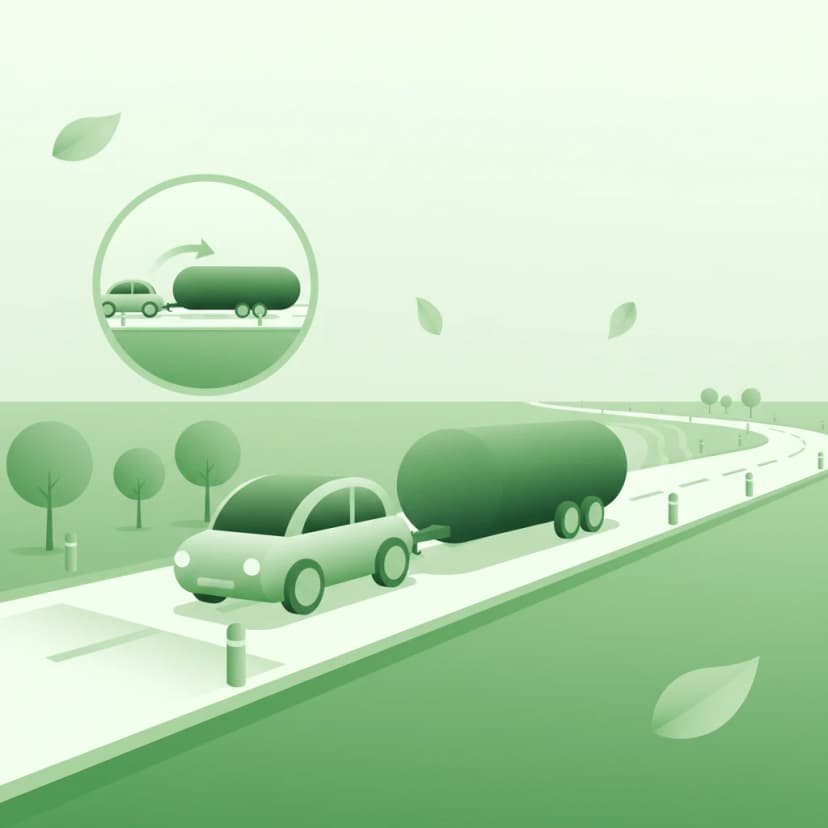
This lesson provides essential techniques for driving safely while towing. You will learn how the added weight increases your braking distance and how the extra length requires you to take wider turns. The curriculum addresses the challenging maneuver of reversing with a trailer and provides tips on how to control it. It also explains the phenomenon of 'snaking' or trailer sway, its causes (like crosswinds or improper loading), and how to correct it by gently reducing speed.
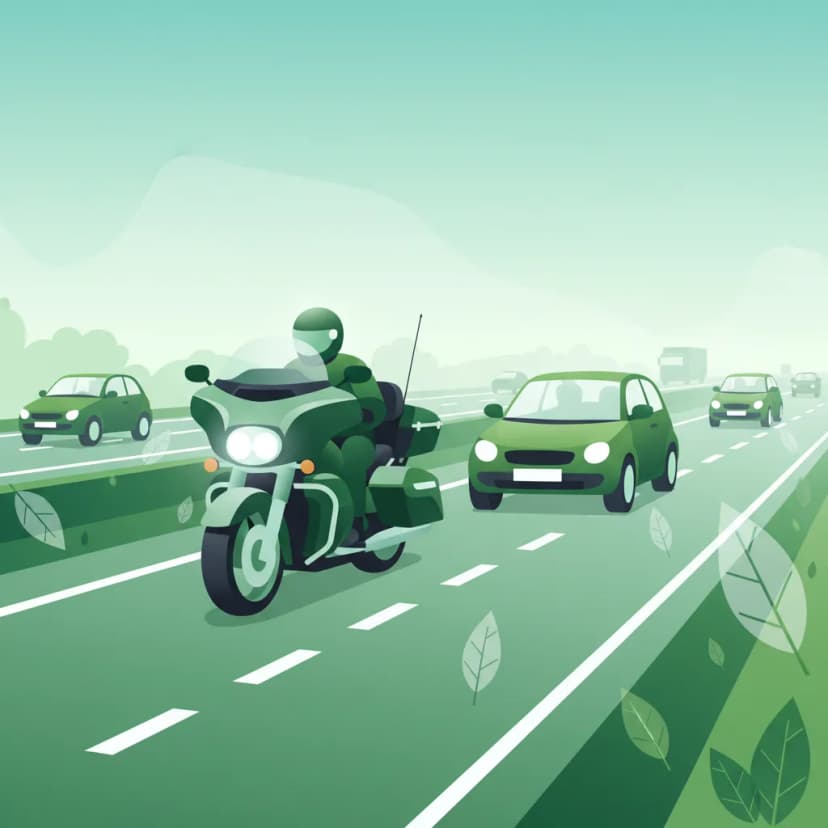
This lesson details the systematic process for safely overtaking on a multi-lane motorway, leveraging the acceleration capabilities of a Category A motorcycle. It covers the 'mirror, signal, maneuver' sequence, with a strong emphasis on the critical shoulder check to clear the blind spot before moving out. The content also discusses how to judge closing speeds, ensure adequate space before returning to the lane, and how to handle situations involving multiple lanes and slower-moving heavy vehicles.
Overtaking is a high-risk maneuver that must be executed correctly. This lesson provides a step-by-step guide: assess if it is safe and legal, check mirrors and blind spots, signal your intention, accelerate smoothly past the other vehicle, and return to your lane leaving adequate space. You will also learn to identify situations where overtaking is prohibited, such as before a pedestrian crossing or when approaching a blind corner.
This lesson focuses on the specific hazards and techniques for safely sharing the road with heavy goods vehicles (HGVs) and buses. It provides a detailed explanation of their extensive blind spots ('dode hoek') and teaches riders where to position themselves to remain visible. The curriculum also covers how to manage the significant air turbulence created by these vehicles when overtaking and how to anticipate their wide turning circles at junctions and roundabouts.
This lesson covers strategies for safely navigating around vehicles at both ends of the size spectrum. It details the large blind spots ('no-zones') around trucks and buses and advises on where to position a motorcycle to remain visible. Equally, it emphasizes the duty of care towards vulnerable road users, teaching riders to anticipate the movements of pedestrians and cyclists and to always provide them with ample space when passing.
This lesson provides a step-by-step guide to executing a safe and legal overtaking maneuver. It covers the entire process: assessing the situation for a sufficient gap in oncoming traffic, performing necessary mirror and shoulder checks, signaling intent, and accelerating decisively. The lesson also highlights situations where overtaking is prohibited by law, such as before pedestrian crossings or where there are solid white lines.
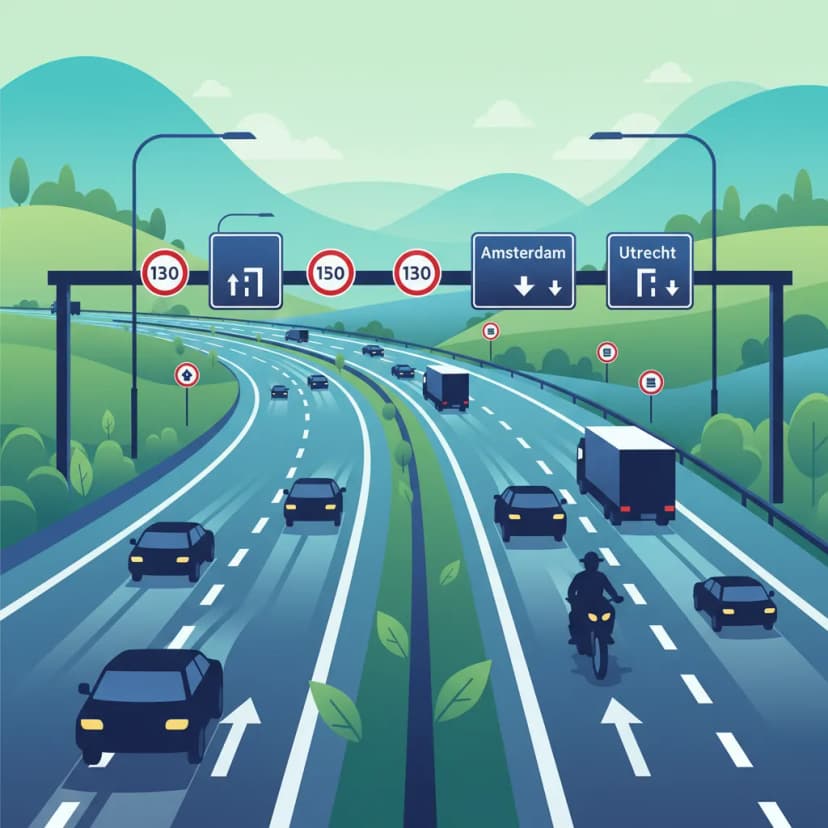
This lesson details the specific regulations for driving on Dutch motorways, identifiable by the G1 sign. You will learn the correct procedure for joining the flow of traffic using the acceleration lane and for leaving via the deceleration lane. The curriculum reinforces the 'keep right unless overtaking' rule for lane discipline. It also explains that stopping is strictly forbidden, and the hard shoulder (vluchtstrook) may only be used for genuine emergencies.
Find clear answers to common questions learners have about Motorcyclists and Other Vehicle Types. Learn how the lesson is structured, which driving theory objectives it supports, and how it fits into the overall learning path of units and curriculum progression in the Netherlands. These explanations help you understand key concepts, lesson flow, and exam focused study goals.
Overtaking a motorcyclist follows the same general rules as overtaking any other vehicle, but with extra caution. Ensure you have ample space, check mirrors and blind spots thoroughly, and give a wider berth than you might for a car. Remember, motorcyclists can accelerate and brake quickly, and may be filtering through traffic, so always be aware of their position and potential movements.
Tractors are slow-moving vehicles and can significantly impede traffic. When approaching one, check if overtaking is safe and legal, considering oncoming traffic and road width. If you do overtake, ensure you provide a very wide berth due to their size and potential for unpredictable movements. Do not sound your horn unless absolutely necessary, as it could startle the driver.
When encountering horse riders, you must slow down significantly and give them as much space as possible – ideally at least 1.5 meters. Pass them very slowly and calmly, avoiding any sudden acceleration or braking. Your goal is to not startle the horse. Be aware that horses can be unpredictable, especially in busy traffic.
Motorcyclists are considered vulnerable road users. They can accelerate and brake much faster than cars and may position themselves differently on the road, for instance, by filtering between lanes of slow-moving traffic. The theory test assesses your awareness of these differences and your ability to anticipate their actions to prevent accidents.
Yes, the rules for horse-drawn vehicles are very similar to those for horse riders. You should slow down considerably, give a wide berth, and pass calmly without alarming the horse. Always prioritize the safety of the horse and rider above your own convenience.