
Navigating roundabouts and mini-roundabouts is a crucial skill for AM category drivers in the Netherlands. This lesson builds on understanding priority rules by focusing specifically on these common traffic features. You'll learn how to safely enter, circulate, and exit roundabouts, ensuring you're prepared for this key section of the CBR theory exam.
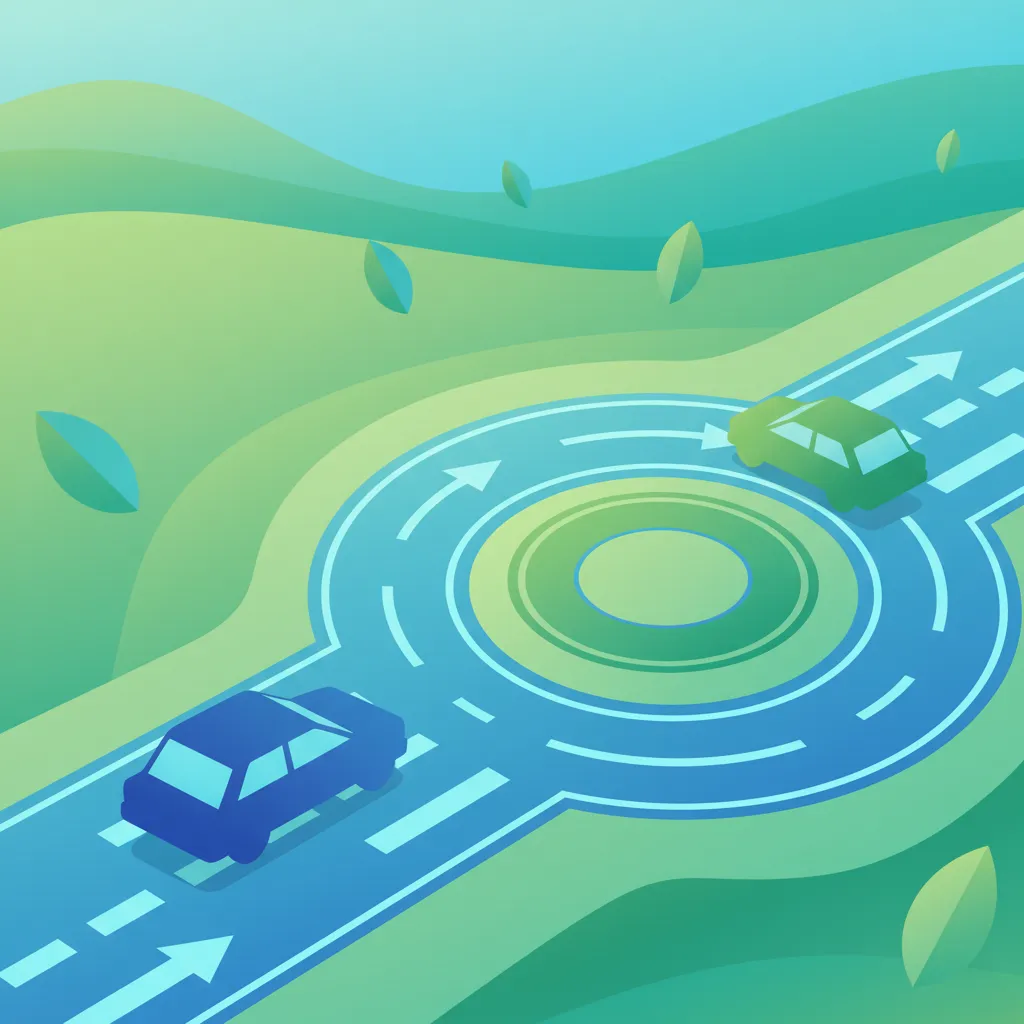
Roundabouts are a ubiquitous feature of the Dutch road network, designed to enhance traffic flow and improve safety compared to traditional intersections. For anyone preparing for their Dutch Category AM driving license theory exam, mastering the rules and techniques for navigating these circular intersections is paramount. This lesson will provide an in-depth understanding of standard roundabouts and mini-roundabouts, focusing on the specific priority rules, correct lane positioning, effective signaling, and special considerations for vulnerable road users, particularly cyclists.
A roundabout (known as a rotonde in Dutch) is a circular intersection where traffic flows in one direction around a central island. Instead of stopping at traffic lights or stop signs, vehicles typically yield to traffic already circulating before entering. This continuous flow design helps to reduce congestion, minimize conflict points, and lower the severity of collisions by encouraging slower speeds and eliminating perpendicular crashes.
The core principle governing all Dutch roundabouts is straightforward: you must give way to all traffic already present on the roundabout. This is enshrined in RVV 1990 article 8a. This fundamental rule ensures predictable behavior and prevents gridlock.
The most critical rule when approaching any roundabout in the Netherlands is to yield to traffic already circulating on the roundabout. This means you must:
Do not enter a roundabout if you would cause a circulating vehicle to brake or swerve. The circulating traffic has priority.
This rule applies universally to all roundabouts and mini-roundabouts for all vehicle types, including mopeds and scooters (Category AM vehicles). Ignoring this rule is a common cause of collisions and a serious traffic violation.
Maintaining an appropriate speed is crucial for safe roundabout navigation.
Proper lane selection and discipline are vital, especially on multi-lane roundabouts, to ensure smooth and safe passage.
On a single-lane roundabout, your lane choice is simple as there's only one path to follow. However, correct positioning within that lane is still important. Ride centrally enough to be seen and to deter other vehicles from squeezing past you.
Multi-lane roundabouts require careful planning before you enter. The general principle is to choose your lane based on your intended exit.
Anticipate Early: The key to successful navigation of multi-lane roundabouts is to make your lane selection early, well before the roundabout itself, based on signage and road markings.
Clear and timely signaling is essential for communicating your intentions to other road users and is a legal requirement (RVV 1990 article 66).
Example: If you are taking the second exit on a three-exit roundabout, activate your right indicator after you have passed the first exit. This tells drivers waiting to enter that you are about to leave the roundabout, and they can prepare to enter safely.
Mini-roundabouts are compact versions of standard roundabouts, typically with a diameter of 15 metres or less. They often lack a raised central island, instead featuring a painted central circle and chevron markings. They are frequently found in residential areas, often with lower speed limits.
While the fundamental rule of yielding to circulating traffic remains, mini-roundabouts in the Netherlands often have a crucial difference, especially concerning cyclists: cyclist priority at exits.
In many Dutch mini-roundabouts, particularly those integrated into residential streets or with dedicated cycle lanes, cyclists have priority when crossing the exit path. This means that if a cyclist is on the roundabout and intends to exit, or is already crossing the exit, vehicles exiting the roundabout (including mopeds and scooters) must yield to them.
Always be extra vigilant for cyclists when exiting a mini-roundabout. They are vulnerable road users, and local regulations often grant them priority at these intersections. Even if there isn't a dedicated cycle lane, always be prepared to yield to a cyclist.
This rule is a local adaptation, often stipulated in municipal supplementary regulations (to RVV 1990 article 8a), and is designed to protect vulnerable road users. Moped and scooter riders must always be prepared to stop if a cyclist is on or about to step onto the exit line.
Familiarity with roundabouts can sometimes lead to complacency. Here are common errors made by Category AM drivers and how to avoid them:
Driving conditions can significantly impact how you should navigate a roundabout. Always adjust your behavior for safety.
The design and rules of roundabouts are rooted in principles of traffic engineering and human psychology, all aimed at enhancing road safety.
By understanding these principles, you not only learn the rules but also grasp the reasoning behind them, enabling you to become a safer and more confident driver on Dutch roads.
Lesson content overview
Explore all units and lessons included in this driving theory course.
Explore search topics learners often look for when studying Roundabouts and Mini‑Roundabouts. These topics reflect common questions about road rules, driving situations, safety guidance, and lesson level theory preparation for learners in the Netherlands.
Browse additional driving theory lessons that cover connected traffic rules, road signs, and common driving situations related to this topic. Improve your understanding of how different rules interact across everyday traffic scenarios.
Explore complex priority situations at Dutch roundabouts, focusing on advanced lane discipline, specific cyclist priority rules at mini-roundabouts, and how to navigate challenging scenarios safely and confidently for your theory exam.
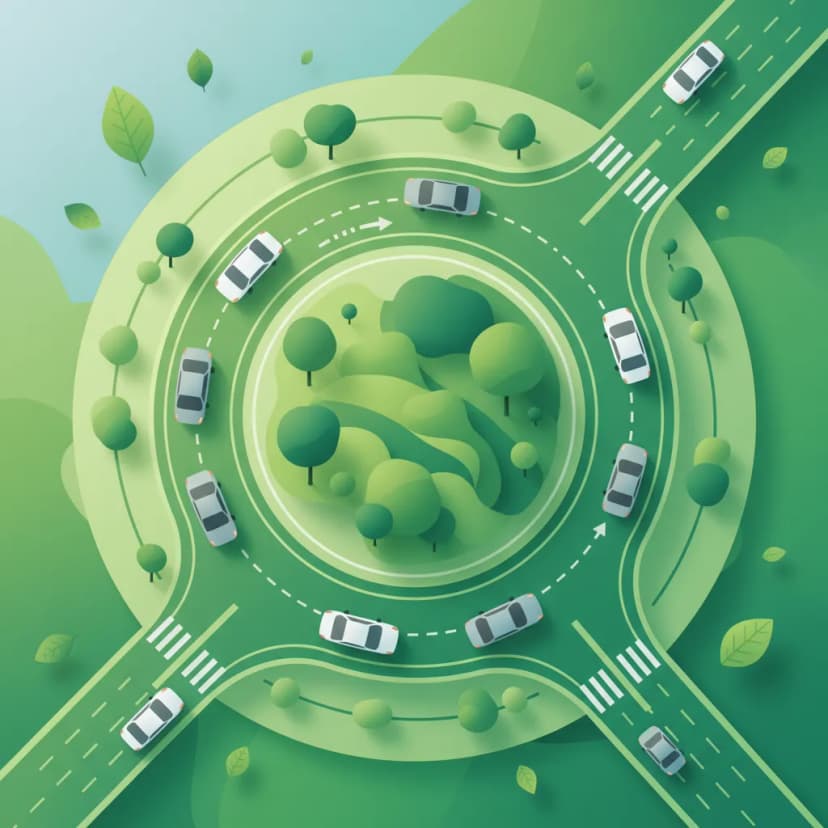
This lesson focuses on the rules and techniques for safely navigating Dutch roundabouts, a common feature of the road network. You will learn that traffic circulating on the roundabout typically has priority and that you must yield before entering. The content covers correct lane selection for your intended exit, proper use of turn signals, and maintaining awareness of cyclists who may have priority on adjacent paths.
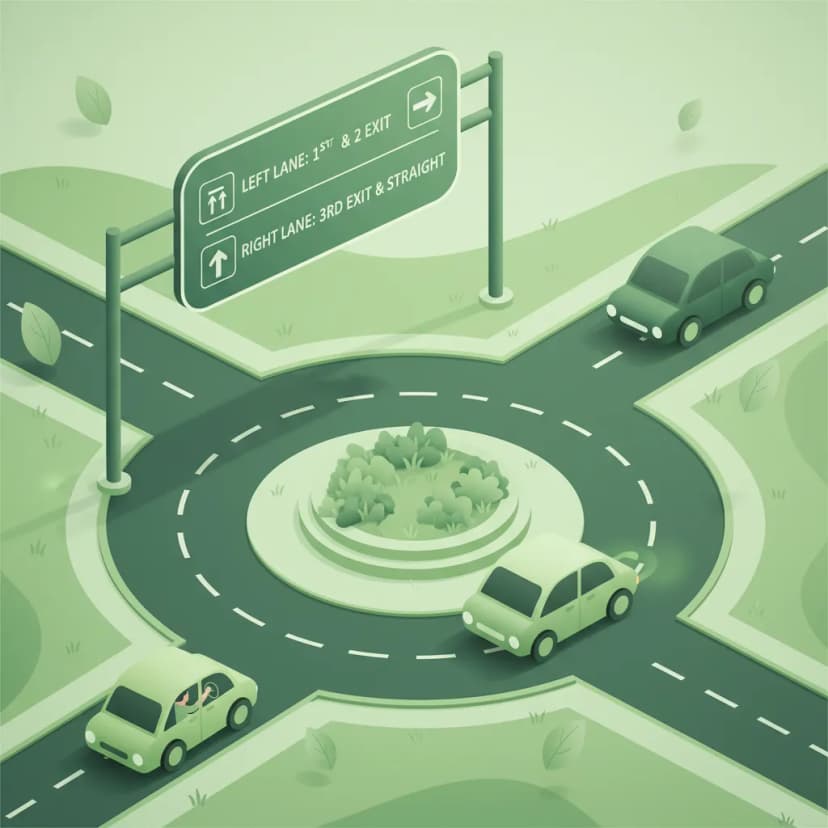
This lesson provides a detailed guide to navigating Dutch roundabouts ('rotondes'), including single-lane, multi-lane, and 'turbo' designs. It clarifies the specific priority rules that apply when entering the roundabout and the critical importance of correct signaling when changing lanes or exiting. Special attention is given to the vulnerable position of motorcyclists and the need to be aware of other vehicles' blind spots and the priority rules concerning cyclists on or near the roundabout.
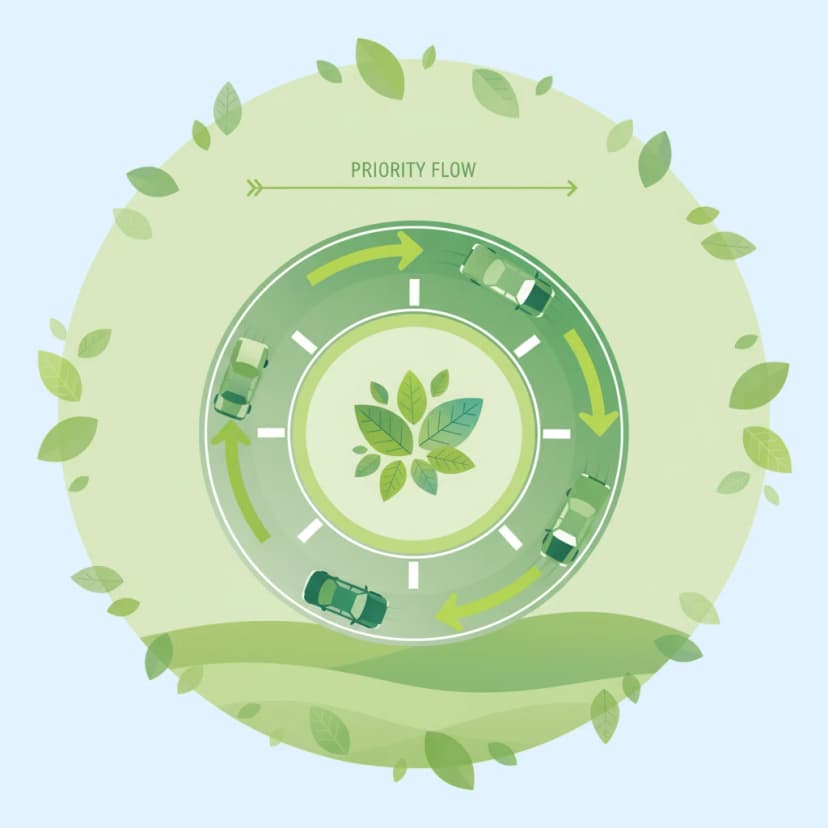
This lesson provides a detailed guide to navigating roundabouts (rotondes) in the Netherlands. You will learn the primary rule: drivers approaching a roundabout must yield to traffic already circulating on it, which is typically indicated by yield signs (B5) and shark teeth. The curriculum also covers the correct use of turn signals when entering and exiting, rules for multi-lane roundabouts, and special considerations for the priority of cyclists who may have a dedicated path around the roundabout. Correct roundabout etiquette is key to maintaining traffic flow and safety.
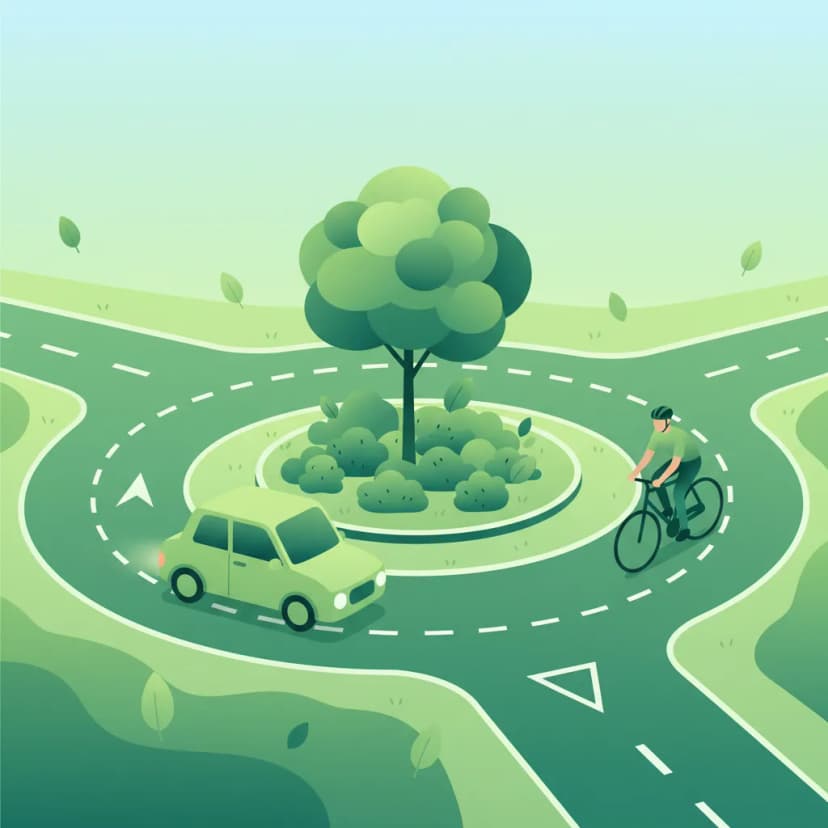
This lesson delves into the hierarchy of priority rules on Dutch roads, clarifying who has the right-of-way in various intersection scenarios. It explains the meaning of signs like 'voorrangsweg' and road markings such as shark's teeth ('haaientanden'). Special attention is given to the correct procedure for entering, navigating, and exiting roundabouts on a motorcycle, including proper signaling and lane choice to ensure safe and efficient passage.

Understand the meaning of various road markings and how they dictate your position on the road. This lesson covers the rules associated with solid and broken white lines, bicycle lane symbols, suggestion strips, and arrows painted on the road surface. Proper lane discipline, including when overtaking is permitted and how to position yourself correctly within a lane or on a cycle path, is a fundamental skill for safe and predictable riding that is tested by the CBR.
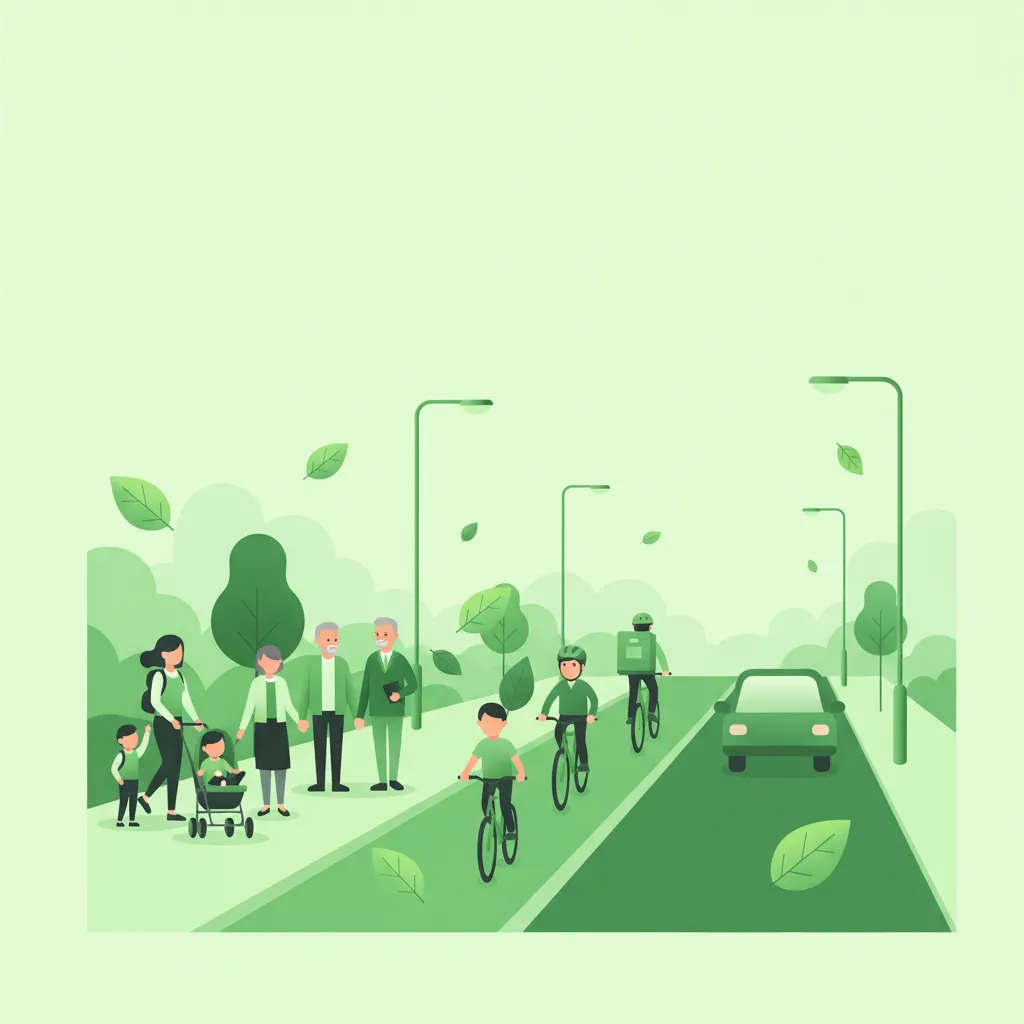
As a motorized road user, you have a special responsibility towards more vulnerable participants. This lesson focuses on the rules giving priority to pedestrians at marked zebra crossings and the importance of anticipating the movements of cyclists, children, and the elderly. You will learn about maintaining a safe lateral distance when overtaking cyclists and how to navigate shared spaces with heightened awareness, a key component of social and safe driving behavior.
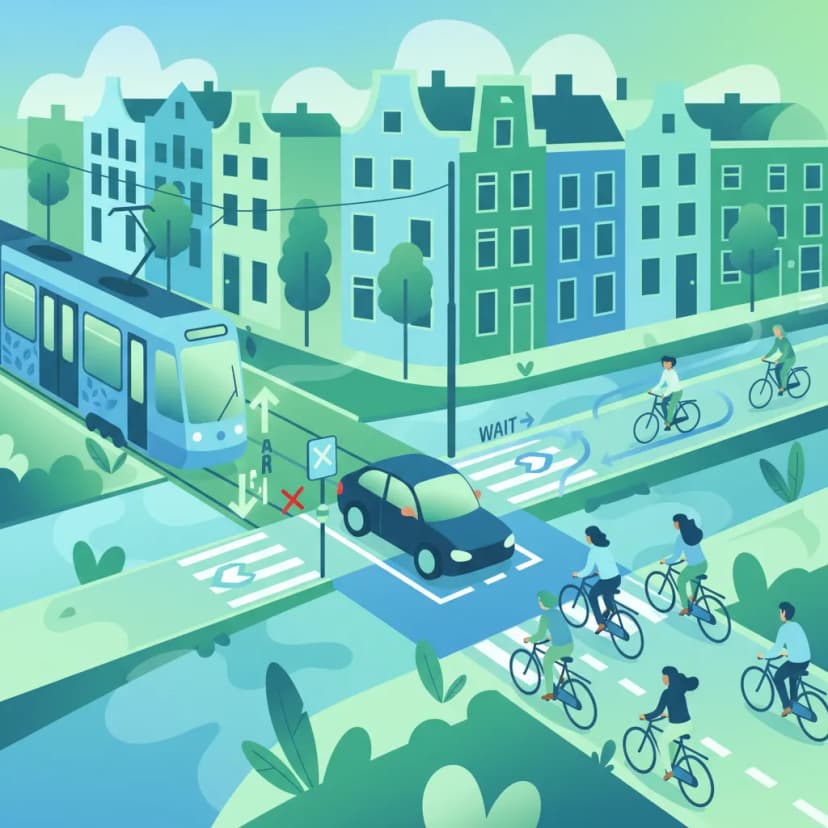
This lesson breaks down the rules of priority at intersections. You will learn to identify an 'equal' intersection where the default rule of giving way to traffic from the right applies. It also explains how priority is regulated by signs (such as the B6 Stop sign and B7 priority road sign) and road markings ('shark's teeth'). Understanding these hierarchies is crucial for making safe and correct decisions when crossing or turning at any junction.

This lesson explains the critical rules of priority involving pedestrians and cyclists to ensure the safety of vulnerable road users. You will learn the absolute requirement to stop for pedestrians on or waiting to use a 'zebrapad' (zebra crossing). The content also covers situations where you must yield to cyclists crossing your path, such as when turning across a dedicated bicycle lane (fietspad).
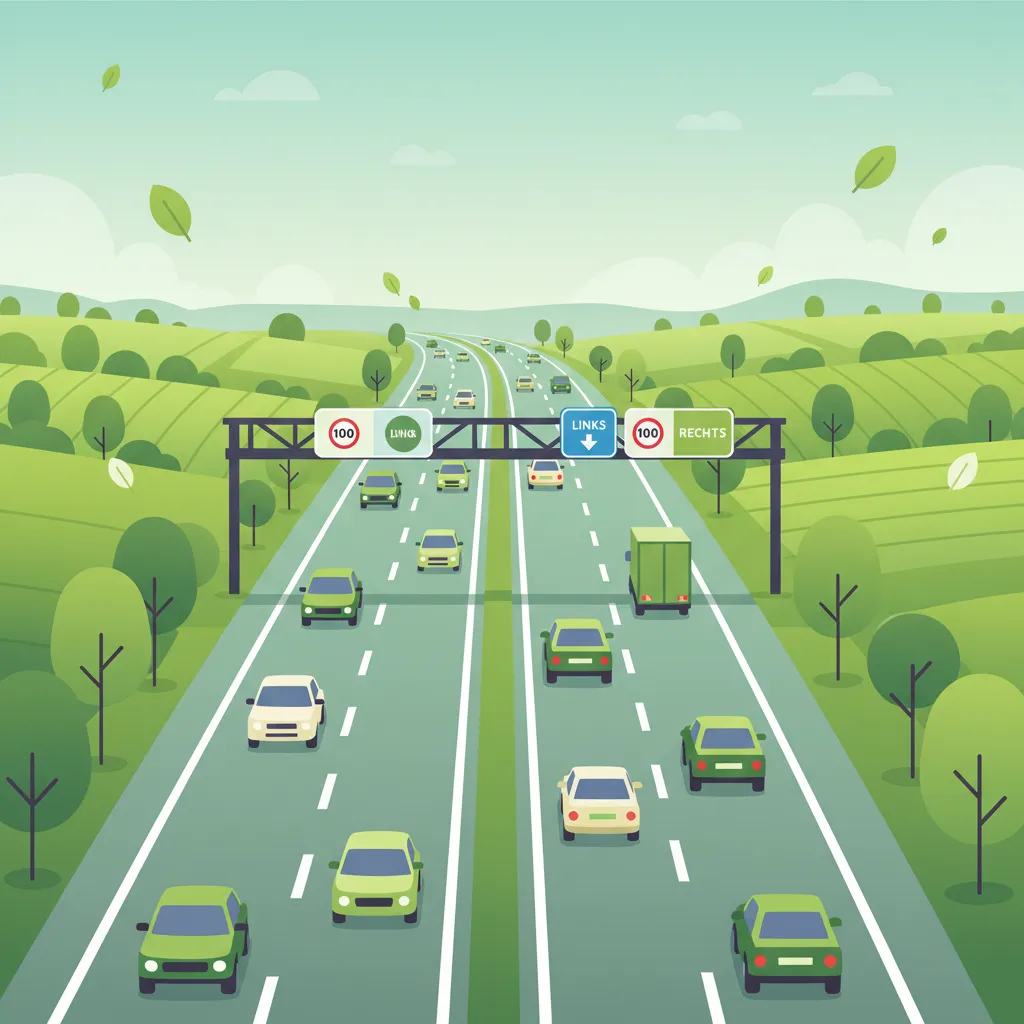
This lesson covers the specific articles of the Dutch Road Traffic Act that apply to motorways, with a primary focus on the strict rule of keeping to the rightmost available lane unless overtaking. It explains the legal and safety reasons for only passing on the left and discusses the correct positioning within a lane for maximum visibility and safety. The content also addresses the nuances of lane usage during heavy congestion, ensuring riders comply with the law and contribute to smooth traffic flow.
Safely merging and changing lanes requires a systematic approach known as 'mirror-signal-blind spot'. This lesson explains the correct procedure for entering a carriageway from an acceleration lane, ensuring you match the speed of the traffic flow and find a safe gap. It also covers the technique for changing lanes, emphasizing the critical importance of checking your blind spot with a shoulder check (dode hoek) before making any lateral movement to prevent collisions.
Learn to identify and avoid common errors when navigating Dutch roundabouts. Understand how to adapt your approach and behavior based on weather, lighting, and traffic conditions for safer theory exam preparation.
This lesson focuses on the rules and techniques for safely navigating Dutch roundabouts, a common feature of the road network. You will learn that traffic circulating on the roundabout typically has priority and that you must yield before entering. The content covers correct lane selection for your intended exit, proper use of turn signals, and maintaining awareness of cyclists who may have priority on adjacent paths.
This lesson provides a detailed guide to navigating Dutch roundabouts ('rotondes'), including single-lane, multi-lane, and 'turbo' designs. It clarifies the specific priority rules that apply when entering the roundabout and the critical importance of correct signaling when changing lanes or exiting. Special attention is given to the vulnerable position of motorcyclists and the need to be aware of other vehicles' blind spots and the priority rules concerning cyclists on or near the roundabout.
Safely merging and changing lanes requires a systematic approach known as 'mirror-signal-blind spot'. This lesson explains the correct procedure for entering a carriageway from an acceleration lane, ensuring you match the speed of the traffic flow and find a safe gap. It also covers the technique for changing lanes, emphasizing the critical importance of checking your blind spot with a shoulder check (dode hoek) before making any lateral movement to prevent collisions.

The posted speed limit is a maximum, not a target. This lesson teaches the crucial skill of adapting your speed to prevailing conditions. You will learn how to assess factors like traffic density, poor weather (rain, fog), limited visibility (at night), and slippery road surfaces. Adjusting your speed downwards in these situations provides you with more time to react to hazards and significantly reduces the risk of losing control or being involved in a collision.
This lesson provides a detailed guide to navigating roundabouts (rotondes) in the Netherlands. You will learn the primary rule: drivers approaching a roundabout must yield to traffic already circulating on it, which is typically indicated by yield signs (B5) and shark teeth. The curriculum also covers the correct use of turn signals when entering and exiting, rules for multi-lane roundabouts, and special considerations for the priority of cyclists who may have a dedicated path around the roundabout. Correct roundabout etiquette is key to maintaining traffic flow and safety.

This lesson covers the procedures and safety considerations for driving in reverse and turning around. You will learn that reversing should only be done over short distances and when it does not endanger or obstruct other road users. The curriculum details techniques for turning in the road and identifies situations and locations where U-turns are prohibited. The importance of all-around observation, checking blind spots, and yielding to all other traffic is a central theme.

Riding on two wheels requires special care on surfaces with reduced grip. This lesson teaches you how to handle challenging conditions like rain, ice, wet leaves, or tram tracks. Key principles include reducing speed significantly, making all control inputs (braking, accelerating, steering) much more smoothly and gradually, and increasing your following distance to allow for much longer stopping distances. Recognizing potentially slippery areas is a critical part of proactive hazard perception.
Understand the meaning of various road markings and how they dictate your position on the road. This lesson covers the rules associated with solid and broken white lines, bicycle lane symbols, suggestion strips, and arrows painted on the road surface. Proper lane discipline, including when overtaking is permitted and how to position yourself correctly within a lane or on a cycle path, is a fundamental skill for safe and predictable riding that is tested by the CBR.
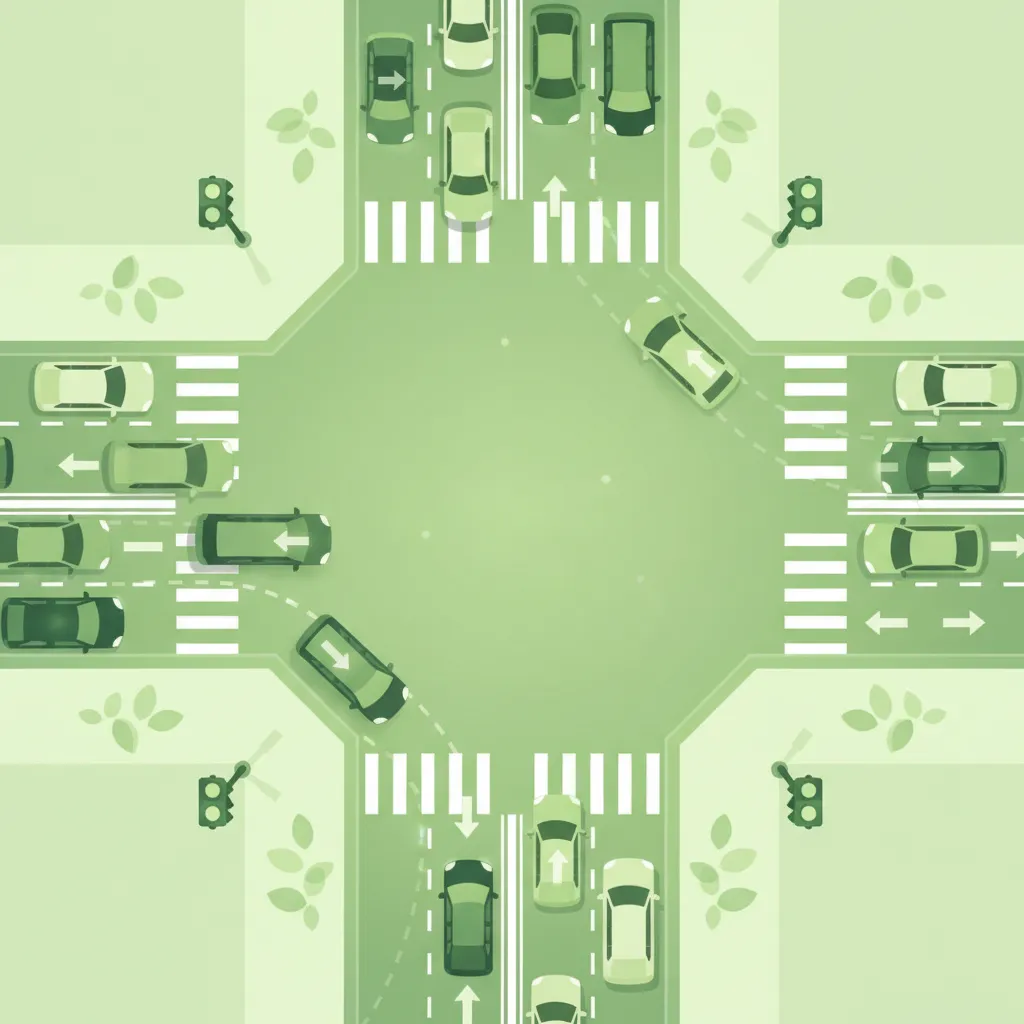
This lesson teaches the important skill of pre-sorting, which involves moving into the correct lane or position on the road well in advance of a turn. You will learn the standard procedure for turning right (keeping to the right) and turning left (moving towards the center of the road). The curriculum explains how to interpret road markings and signs with arrows that designate lanes for specific directions. Correct pre-sorting provides clear signals to other road users and is crucial for safety and traffic efficiency at junctions.

This lesson focuses on advanced low-speed control required for maneuvers like making a U-turn on a narrow road. It covers the correct procedure, which involves comprehensive observation (checking all around for traffic), signaling, and using a combination of steering input and controlled power to execute the turn smoothly. Mastering these skills is a requirement for the practical test and is useful in many real-world riding situations.
Find clear answers to common questions learners have about Roundabouts and Mini‑Roundabouts. Learn how the lesson is structured, which driving theory objectives it supports, and how it fits into the overall learning path of units and curriculum progression in the Netherlands. These explanations help you understand key concepts, lesson flow, and exam focused study goals.
In most cases in the Netherlands, traffic already circulating on the roundabout has priority. You must yield to vehicles already on the roundabout before entering. This is a fundamental rule for safe navigation.
Mini-roundabouts are smaller and often have raised central islands that vehicles (especially larger ones) must drive around. For mopeds and scooters, the main difference is often the speed and maneuverability required, but the core priority rule of yielding to circulating traffic generally still applies. Always check road markings and signs.
You generally do not need to signal upon entering a roundabout unless specific signs or markings indicate otherwise. However, it is crucial to signal your intention to exit the roundabout to other traffic. Signal right as you approach your intended exit.
At roundabout exits, cyclists and often other mopeds (like your own category AM vehicle) may have priority. Be particularly attentive to their presence and be prepared to yield if they are crossing the exit path. Always check for specific priority signs ('paddestoel' markings).
Lane choice depends on your intended exit. For exits on the right, stay in the right-hand lane. For exits on the left or a U-turn, use the left-hand lane. For straight ahead, you can often use either lane, but observe road markings and signs. Always signal your exit clearly.