
As a motorized road user, you share the road with many different participants. This lesson in Unit 4, Right-of-Way & Priority Situations, focuses specifically on your responsibilities towards vulnerable road users like pedestrians and cyclists. Understanding these rules is crucial for your AM moped theory exam and for safe riding in the Netherlands.
As a motorized road user preparing for your Dutch Category AM theory exam, understanding your special responsibility towards more vulnerable participants is paramount. This lesson delves into the specific rules, safety considerations, and legal obligations that ensure the safety of pedestrians, cyclists, and other vulnerable road users (VRUs) on Dutch public roads. Adhering to these principles is not merely a legal requirement but a cornerstone of safe and social driving behavior, reflecting the Dutch emphasis on protecting those with limited physical protection.
Vulnerable Road Users (VRUs) are defined as road participants who, due to their limited physical protection or slower reaction capabilities, are at a higher risk of injury in the event of a collision. This category primarily includes pedestrians and cyclists, but can also extend to users of mobility scooters, rollerblades, or even horse riders in certain contexts. In the Netherlands, where cycling is an integral part of daily life and urban areas are densely populated, the interaction between motorized vehicles and VRUs is frequent and requires heightened awareness.
The legal framework and traffic safety philosophy in the Netherlands are built on the premise of protecting VRUs. This allocation of priority and imposition of heightened caution on motorized users stems from several crucial factors:
One of the most fundamental rules for motorized vehicle operators in the Netherlands is yielding to pedestrians at marked zebra crossings. This rule is designed to ensure that pedestrians can cross roads safely at designated points.
A zebra crossing, also known as a pedestrian crossing, is legally designated by distinct white longitudinal stripes on the road surface. Often, but not always, it is accompanied by a specific traffic sign.
When approaching such a crossing, you, as a motorized road user, have a clear legal obligation. According to RVV 1990 Article 39 (1), you must yield to any pedestrian who is on, or clearly about to step onto, a marked zebra crossing. This means you must:
This priority is absolute at marked zebra crossings, overriding other traffic rules such as a green traffic light for vehicles. Even if a traffic light is green for motorized traffic, if a pedestrian is on the zebra crossing, you must wait until they have finished crossing.
Several common errors can lead to dangerous situations or violations at zebra crossings:
Overtaking cyclists requires particular care and adherence to specific lateral safety distances to prevent collisions. Cyclists can be easily destabilized by wind turbulence from passing vehicles, sudden swerves to avoid obstacles, or unexpected movements.
The Dutch traffic regulations (RVV 1990 Article 36 (1-b)) specify minimum lateral (side) clearances you must maintain when overtaking a cyclist:
To ensure this distance, you must assess the available space before initiating the overtaking maneuver. If the gap is insufficient, you must wait for a safe opportunity, which might mean slowing down and staying behind the cyclist until the road widens or oncoming traffic clears. Always use your turn indicators to signal your intention to overtake and move back into your lane safely.
The rules regarding overtaking cyclists also depend on the presence and type of bicycle lane:
Proactive anticipation is a critical skill for safe driving, especially when interacting with vulnerable road users. You must predict likely actions of children, the elderly, and cyclists based on environmental cues, age-related behavior patterns, and contextual factors.
According to RVV 1990 Article 41 (2), drivers must adjust their speed according to the presence of vulnerable road users and may not exceed the speed limit set for that area. This means:
The Netherlands employs various innovative road designs, including "shared spaces" and "woonerven" (living streets), to prioritize vulnerable road users and foster a safer, more communal environment.
A Woonerf is a specifically designated residential area designed to physically slow traffic and give precedence to pedestrians and cyclists. These zones are characterized by:
In a woonerf, you must drive at a speed that allows you to stop safely within the distance you can see. You should make eye contact with other users and proceed with mutual respect. The underlying philosophy is that pedestrians have implicit priority in these low-speed, mixed-traffic environments.
Shared streets are similar to woonerven but might be found in more varied urban contexts, sometimes with slightly higher speed limits (up to 30 km/h). The core principle remains:
Visibility is a two-way street: you need to see vulnerable road users, and they need to see you. Proper use of your vehicle's lighting and maintaining clear visibility are crucial for safe interaction with VRUs, especially in challenging conditions.
According to RVV 1990 Article 29, all vehicles must be equipped with functional lighting devices and must use appropriate lights, especially when approaching pedestrians and cyclists.
Beyond lighting, your ability to observe VRUs depends on maintaining clear vision:
Understanding the specific articles within the Reglement verkeersregels en verkeerstekens 1990 (RVV 1990) is crucial for passing your Dutch Category AM theory exam and for safe riding.
Failing to adhere to the rules designed to protect vulnerable road users can lead to significant legal and financial consequences, in addition to the obvious risk of causing severe injury or fatality.
Safe driving around vulnerable road users requires continuous adaptation to the environment and your vehicle's condition.
The rules and guidelines for protecting vulnerable road users are deeply rooted in the physics of collisions and human psychological factors.
The kinetic energy () of a moving object is calculated as , where is mass and is velocity (speed). This formula highlights that speed has a squared impact on energy.
Protecting pedestrians, cyclists, and other vulnerable road users is a core responsibility for every motorized vehicle operator in the Netherlands. By understanding and consistently applying the rules for pedestrian priority at zebra crossings, maintaining safe lateral distances when overtaking cyclists, anticipating unpredictable movements, and exercising caution in shared spaces, you contribute significantly to road safety. Always adjust your behavior based on weather, road type, and the specific needs of children and the elderly. Adhering to these regulations is not just about avoiding fines and penalty points; it is about embracing a social and defensive riding style that values life and safety above all else, preparing you to ride safely and confidently on Dutch roads.
Lesson content overview
Explore all units and lessons included in this driving theory course.
Explore search topics learners often look for when studying Pedestrians, Cyclists, and Vulnerable Users. These topics reflect common questions about road rules, driving situations, safety guidance, and lesson level theory preparation for learners in the Netherlands.
Browse additional driving theory lessons that cover connected traffic rules, road signs, and common driving situations related to this topic. Improve your understanding of how different rules interact across everyday traffic scenarios.
Explore complex interactions and advanced considerations for pedestrians, cyclists, and other vulnerable road users in the Netherlands. Learn how to navigate challenging urban environments and specific Dutch traffic scenarios safely and legally, beyond basic priority rules.
This lesson explains the critical rules of priority involving pedestrians and cyclists to ensure the safety of vulnerable road users. You will learn the absolute requirement to stop for pedestrians on or waiting to use a 'zebrapad' (zebra crossing). The content also covers situations where you must yield to cyclists crossing your path, such as when turning across a dedicated bicycle lane (fietspad).
This lesson focuses on the rules governing interactions with pedestrians. You will learn the absolute requirement to stop for pedestrians who are on or clearly intending to cross at a designated zebra crossing. The curriculum also covers how to share the road in a 'woonerf' (home zone) where pedestrians have priority. It emphasizes being particularly cautious around children, the elderly, and disabled pedestrians, who may require more time or behave unpredictably.

This lesson focuses on the legal and moral responsibility to be extra vigilant around certain groups of vulnerable road users. You will learn that children can be impulsive and have poor traffic awareness, requiring drivers to be prepared to stop suddenly, especially near schools and playgrounds. The content also discusses the need for patience with elderly or disabled road users, who may move more slowly. You will learn to recognize signs of disability, like a white cane or a guide dog, and give these individuals extra space and time.
This lesson addresses special situations where standard priority rules are superseded. You will learn the absolute priority of emergency vehicles using sirens and flashing lights, and the correct procedure for giving them way safely. The content also explains the specific priority rules for trams, which often have right-of-way over other traffic, as well as for military columns and official funeral processions. Furthermore, the lesson reinforces the rules for yielding to pedestrians at designated zebra crossings.
This lesson is critical for driving in the Netherlands, a country with more bicycles than people. You will learn about the different types of cycle paths and how priority rules apply, especially at junctions. The content stresses the importance of checking the blind spot for cyclists before turning right ('dode hoek'). It also covers the rules for different types of mopeds (snorfiets and bromfiets) and the importance of giving all two-wheeled road users ample space when overtaking.
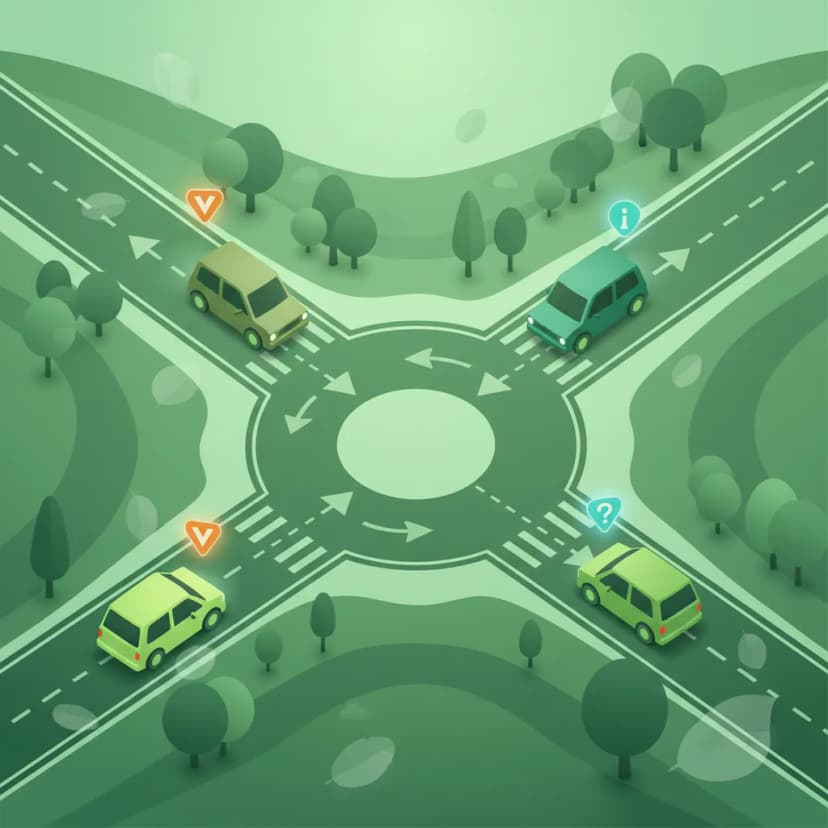
This lesson addresses the challenge of navigating equal-priority intersections, where no signs or markings dictate the right-of-way. You will master the fundamental Dutch traffic rule of giving priority to all drivers approaching from your right ('rechts voor'). The content focuses on developing advanced observational skills and clear communication to safely manage these situations, which are common in residential and urban areas.
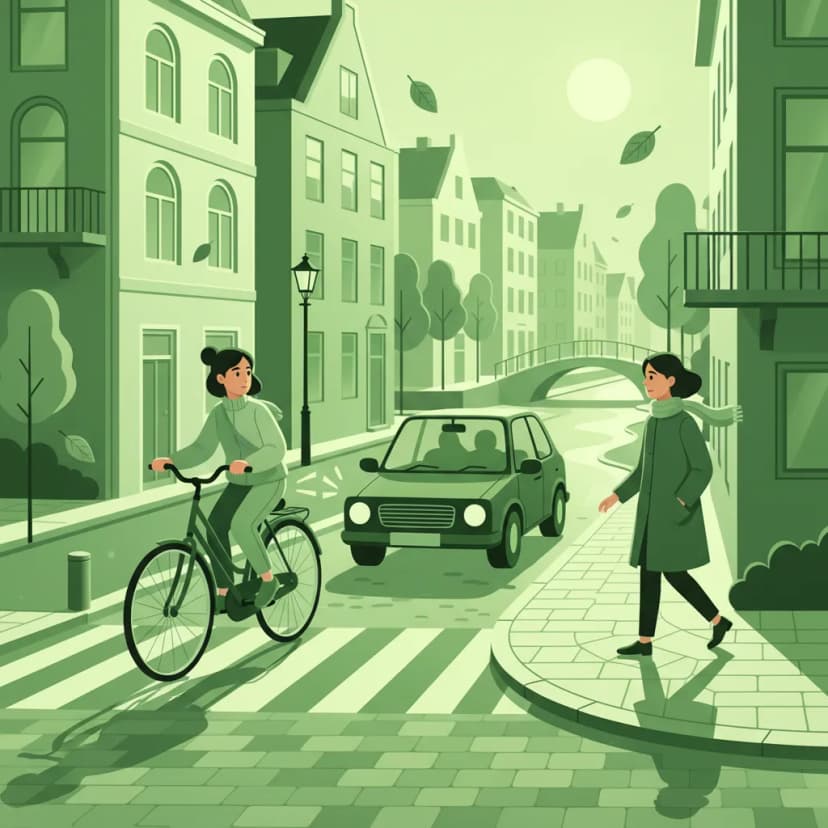
This lesson focuses on the unique and densely packed hazards found in urban traffic environments. It teaches riders to develop a systematic scanning pattern to identify potential risks from multiple sources simultaneously, such as pedestrians stepping off curbs, car doors opening unexpectedly, and buses pulling out. The content also emphasizes the importance of managing speed and always having an 'escape route' planned in case a hazard suddenly materializes in the complex city landscape.
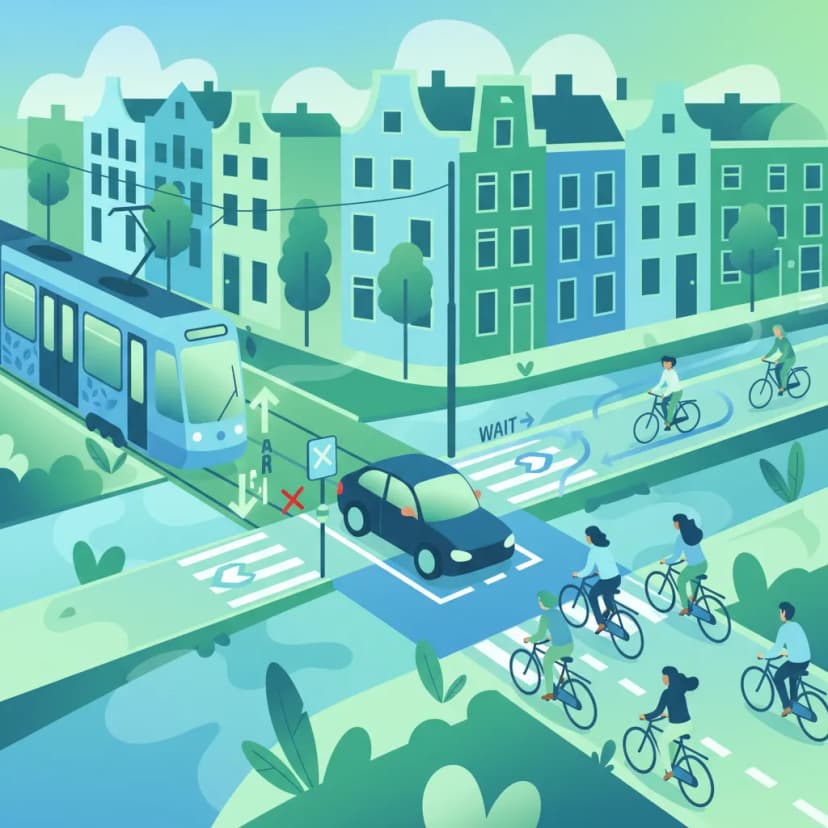
This lesson breaks down the rules of priority at intersections. You will learn to identify an 'equal' intersection where the default rule of giving way to traffic from the right applies. It also explains how priority is regulated by signs (such as the B6 Stop sign and B7 priority road sign) and road markings ('shark's teeth'). Understanding these hierarchies is crucial for making safe and correct decisions when crossing or turning at any junction.
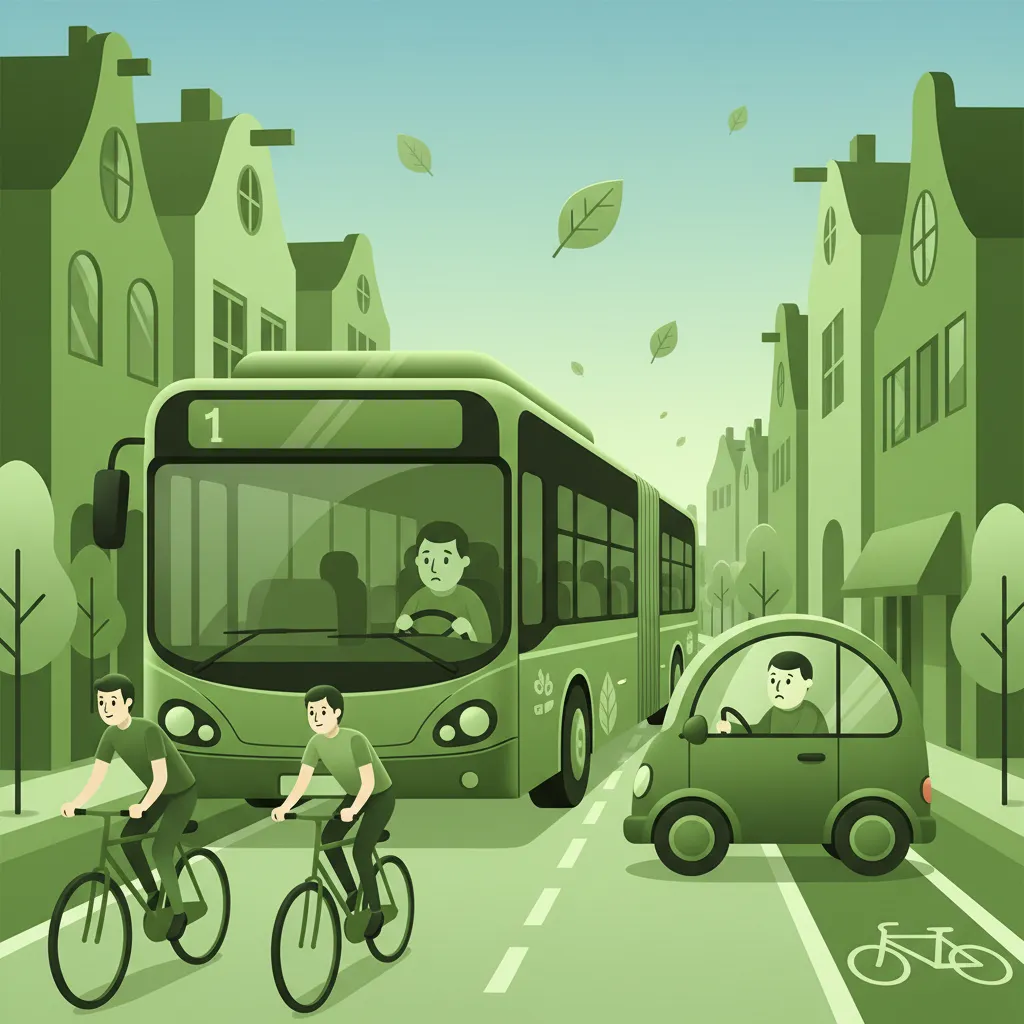
This lesson covers strategies for safely navigating around vehicles at both ends of the size spectrum. It details the large blind spots ('no-zones') around trucks and buses and advises on where to position a motorcycle to remain visible. Equally, it emphasizes the duty of care towards vulnerable road users, teaching riders to anticipate the movements of pedestrians and cyclists and to always provide them with ample space when passing.
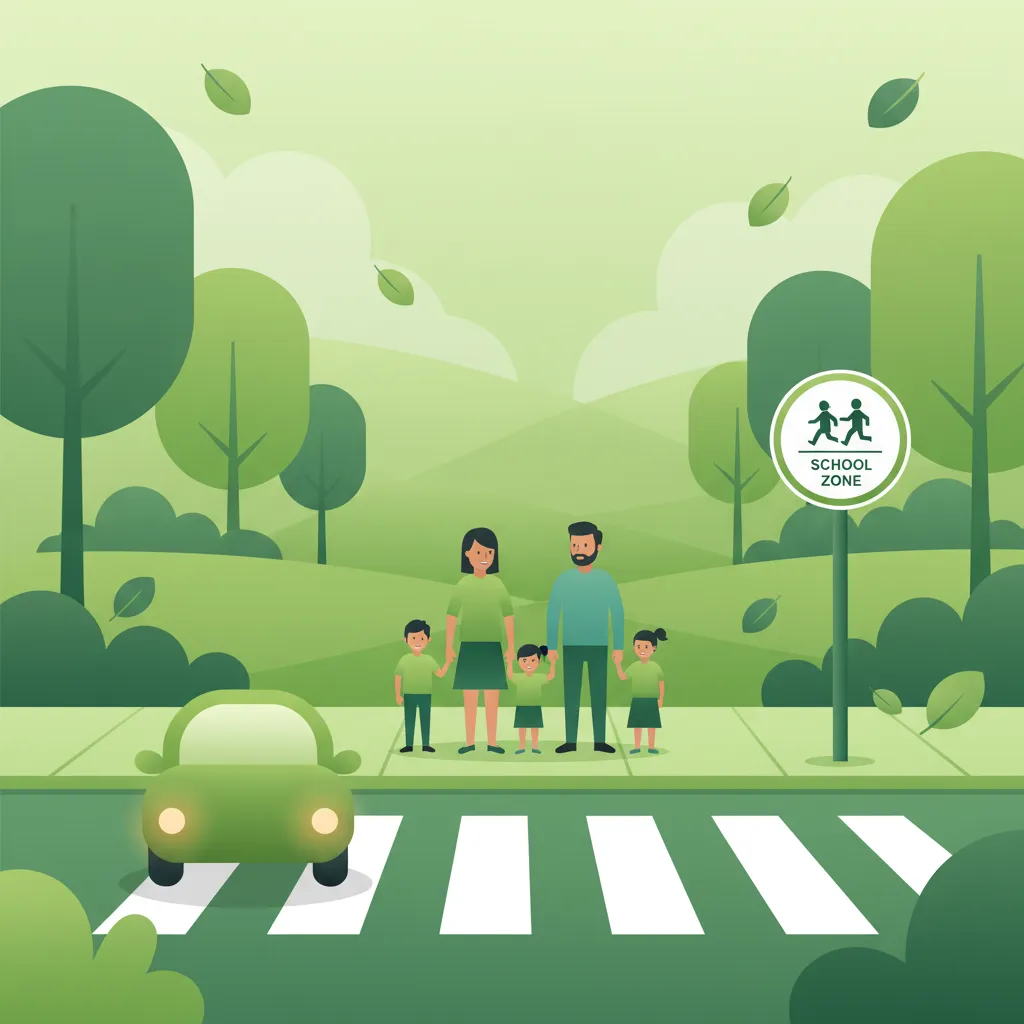
This lesson focuses on the legal requirements and safe practices for riding near pedestrian crossings ('zebrapaden') and designated school zones. It details the absolute obligation to yield to pedestrians on or about to use a crossing and the need for significantly reduced speeds and heightened vigilance in areas with children. The content underscores the importance of anticipation and being prepared for unpredictable movements from vulnerable road users to prevent serious incidents.
Understand the specific rules and best practices for driving in Dutch woonerven (living streets) and other shared road spaces. Learn how to interact safely with pedestrians and cyclists in environments designed for mixed use and reduced vehicle speeds.
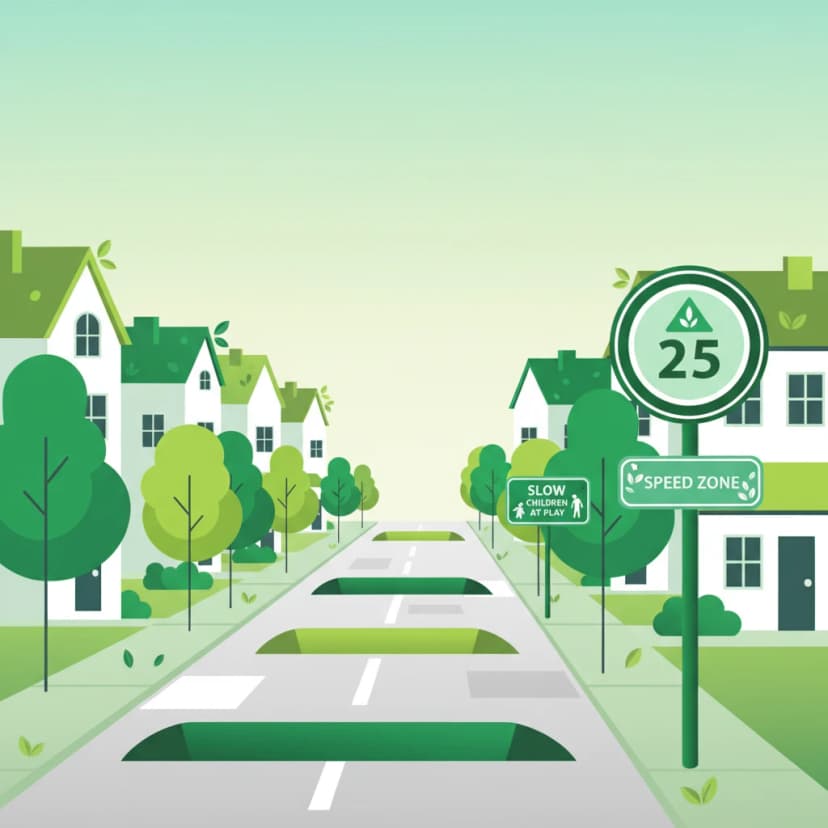
This lesson explains speed limits in specially designated zones designed to protect vulnerable road users. You will learn the rules of a 'woonerf' (home zone), where the speed limit is walking pace (max 15 km/h) and pedestrians can use the full width of the road. The content also covers 30 km/h zones, common in residential areas and around schools, which are often enforced through road design like speed bumps. Understanding the purpose and rules of these zones is key to driving responsibly in urban environments.
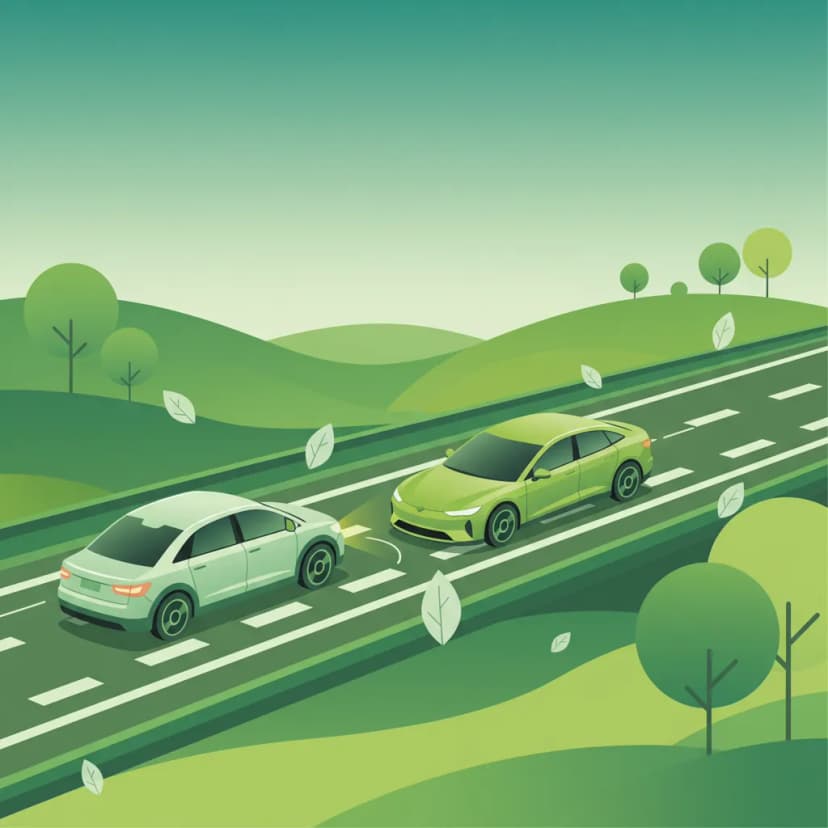
Safely merging and changing lanes requires a systematic approach known as 'mirror-signal-blind spot'. This lesson explains the correct procedure for entering a carriageway from an acceleration lane, ensuring you match the speed of the traffic flow and find a safe gap. It also covers the technique for changing lanes, emphasizing the critical importance of checking your blind spot with a shoulder check (dode hoek) before making any lateral movement to prevent collisions.
This lesson focuses on the rules governing interactions with pedestrians. You will learn the absolute requirement to stop for pedestrians who are on or clearly intending to cross at a designated zebra crossing. The curriculum also covers how to share the road in a 'woonerf' (home zone) where pedestrians have priority. It emphasizes being particularly cautious around children, the elderly, and disabled pedestrians, who may require more time or behave unpredictably.
This lesson breaks down the rules of priority at intersections. You will learn to identify an 'equal' intersection where the default rule of giving way to traffic from the right applies. It also explains how priority is regulated by signs (such as the B6 Stop sign and B7 priority road sign) and road markings ('shark's teeth'). Understanding these hierarchies is crucial for making safe and correct decisions when crossing or turning at any junction.
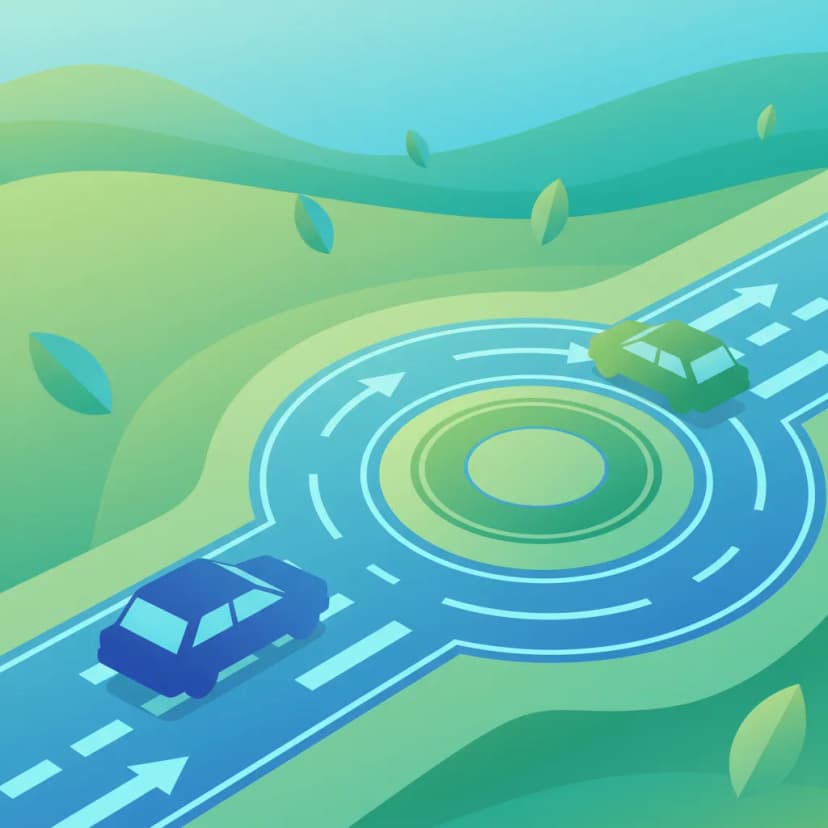
Roundabouts are a common feature of Dutch roads, and they have specific priority rules. This lesson teaches the standard rule of yielding to traffic already circulating on the roundabout before you enter. It also covers correct lane positioning, the importance of signaling your intention to exit, and the specific rules that often apply to cyclists who may have priority when crossing the exits. These skills ensure smooth and safe passage through both large and mini-roundabouts.
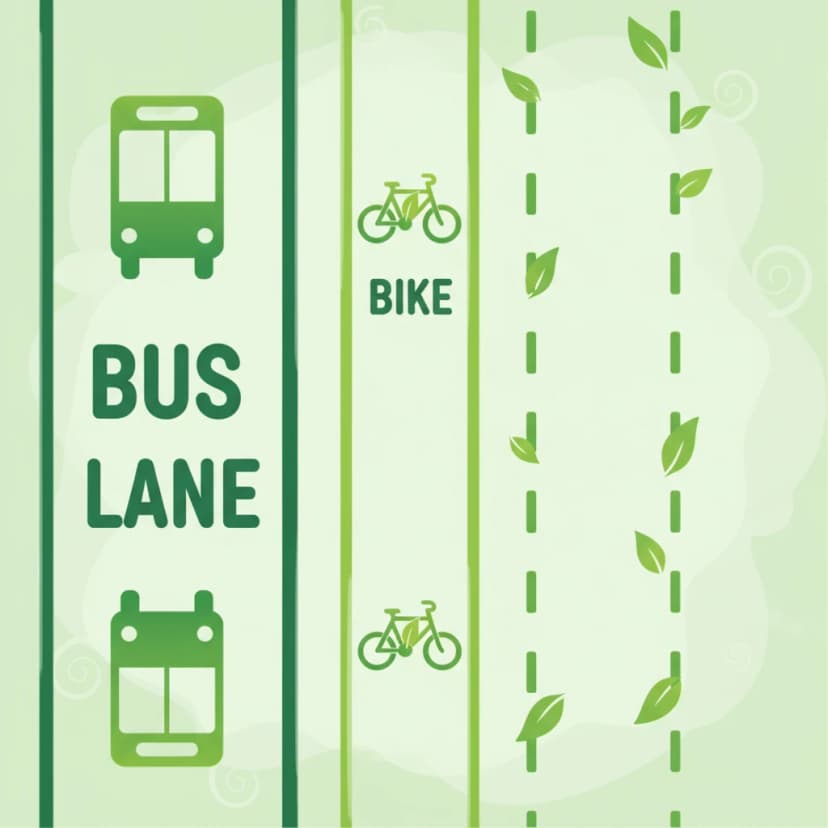
This lesson covers a variety of lanes and markings with specific rules. You will learn to recognize and respect bus lanes, which are reserved for public transport, and rush-hour lanes (spitsstrook), which are only open during busy periods as indicated by electronic signs. The curriculum also explains the meaning of different line types (solid, broken, double lines) that dictate whether lane changes or overtaking are permitted. Understanding these special lanes and markings is key to navigating Dutch infrastructure correctly.
This lesson focuses on the legal and moral responsibility to be extra vigilant around certain groups of vulnerable road users. You will learn that children can be impulsive and have poor traffic awareness, requiring drivers to be prepared to stop suddenly, especially near schools and playgrounds. The content also discusses the need for patience with elderly or disabled road users, who may move more slowly. You will learn to recognize signs of disability, like a white cane or a guide dog, and give these individuals extra space and time.
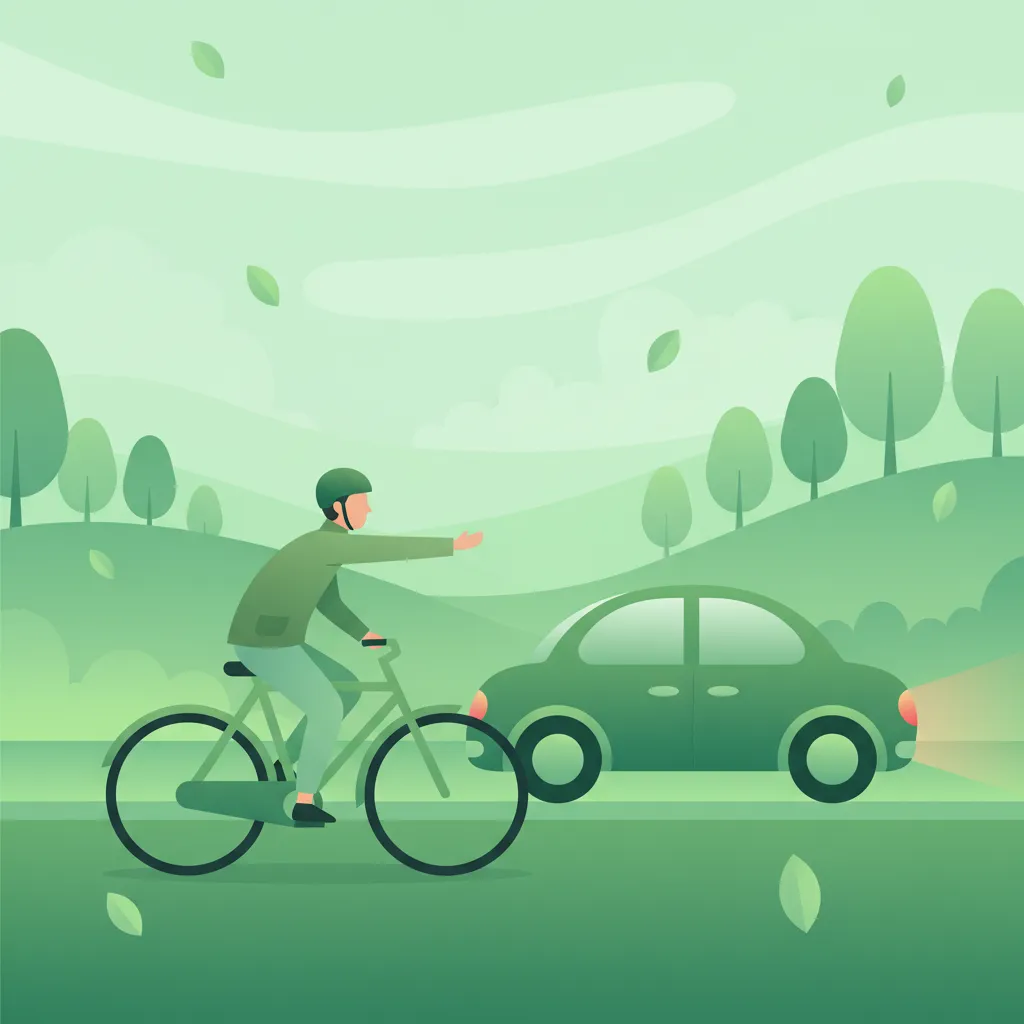
This lesson provides a detailed framework for how motorcyclists must safely and legally interact with diverse road users, including cars, trucks, cyclists, and pedestrians. It covers the required communication signals, anticipatory behaviors, and specific positioning techniques necessary to coexist in complex traffic environments like urban centers and shared spaces. Emphasis is placed on legal expectations and practical methods that actively reduce collision risk and promote smooth traffic flow.
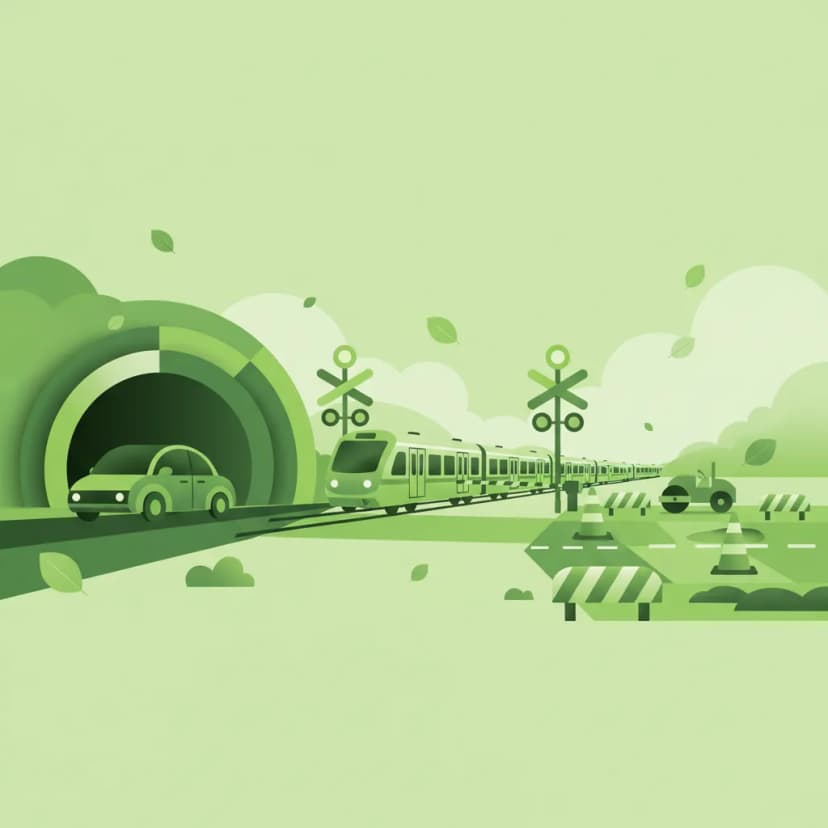
This lesson equips you with the knowledge to safely navigate special traffic situations. It covers the rules for riding through tunnels, including mandatory lighting, and the absolute priority of trains at level crossings, indicated by warning lights and barriers. You will also learn to recognize and react to the temporary signage and altered lane configurations typically found in road work zones, ensuring you can adapt your riding to maintain safety in these potentially hazardous environments.
This lesson covers the specific articles of the Dutch Road Traffic Act that apply to motorways, with a primary focus on the strict rule of keeping to the rightmost available lane unless overtaking. It explains the legal and safety reasons for only passing on the left and discusses the correct positioning within a lane for maximum visibility and safety. The content also addresses the nuances of lane usage during heavy congestion, ensuring riders comply with the law and contribute to smooth traffic flow.
Find clear answers to common questions learners have about Pedestrians, Cyclists, and Vulnerable Users. Learn how the lesson is structured, which driving theory objectives it supports, and how it fits into the overall learning path of units and curriculum progression in the Netherlands. These explanations help you understand key concepts, lesson flow, and exam focused study goals.
At a marked zebra crossing, pedestrians always have priority. As a moped rider (AM category), you must always yield to pedestrians who are on, or clearly intend to step onto, the zebra crossing. This applies even if they are not yet on the crossing but show clear intent to cross.
When overtaking a cyclist on a road where there isn't much space, you must maintain a safe lateral distance. In the Netherlands, this is generally at least 1 meter in built-up areas and 2 meters outside built-up areas. If you cannot overtake safely with this distance, you must wait until it is safe, potentially by slowing down behind the cyclist or waiting for an opportunity to pass when the road widens or you reach an intersection where overtaking is permitted and safe.
Yes, absolutely. While cyclists have dedicated paths in many areas, they may also ride on the main carriageway. You must be aware of them in all road situations, especially when turning, changing lanes, or entering/exiting junctions. Always scan for cyclists, especially in urban environments.
Children and the elderly can be less predictable. They might suddenly step into the road without looking or make unexpected movements. Always anticipate this by reducing your speed when passing them and maintaining a greater distance, ready to brake or stop if necessary. Assume they might not see you or react appropriately.
When cyclists share road space with trams, especially in busy urban areas, extra caution is needed. Trams have a very wide turning circle and may move unpredictably. Cyclists might also be navigating around tram tracks or traffic. Always maintain a safe distance from both trams and cyclists, and be aware that their movements might be influenced by the tram lines.