
Following a road accident, understanding the legal and insurance ramifications is crucial for any Category A motorcyclist. This lesson details the post-accident process, from determining liability to filing claims and understanding potential legal consequences. It's a vital part of preparing for real-world scenarios and the CBR theory exam.

Understanding the procedures and legal framework that follow a road accident is crucial for every motorcyclist in the Netherlands. This comprehensive guide, part of your Dutch Motorcycle Theory – Category A preparation, delves into how liability is determined, the step-by-step process for filing an insurance claim, and the potential legal outcomes you might face. By mastering these post-accident processes, you can protect your financial interests, ensure compliance with Dutch traffic law, and mitigate further risks.
Liability determination is the process of establishing which party is legally responsible for causing an accident and to what extent. This crucial assessment dictates who bears the financial burden for damages and who might face legal penalties. In the Netherlands, this process involves a nuanced approach, often combining different legal principles.
Dutch law primarily operates on a comparative fault system. This means that if multiple parties contribute to an accident, liability is divided proportionally according to each party’s contribution. For instance, if an investigation concludes that you were 30% at fault and the other party 70%, the damages and any associated penalties would be split accordingly. This system aims for a fair distribution of consequences based on actual behavior.
However, certain situations fall under strict liability. This principle imposes liability regardless of intent or negligence, meaning fault does not need to be proven. It is typically applied to specific, high-risk offences that severely threaten public safety, such as driving under the influence (DUI). If you are involved in an accident while under the influence, you will automatically face financial responsibility and potential criminal prosecution, irrespective of other contributing factors.
Beyond direct involvement, liability can sometimes extend to others. Vicarious liability means that an employer or vehicle owner might be held responsible for a rider’s actions, particularly if the accident occurred while the rider was performing duties for the employer or if the vehicle was loaned out. This adds another layer of complexity to liability assessments.
A common misunderstanding is assuming that "who hit whom first" automatically decides fault. This is not always the case, as contributory negligence from the claimant can significantly alter the outcome. For example, if Rider A runs a red light and collides with Rider B, Rider A typically holds 100% liability. However, if an investigation shows Rider C was 30% at fault and Rider D 70% in an intersection collision due to both failing to yield, comparative liability applies.
Insurance contracts are vital mechanisms that provide financial compensation for loss or damage resulting from an accident. Understanding the types of insurance available and their coverage is fundamental for any motorcyclist in the Netherlands.
The Wettelijke Aansprakelijkheid (WA), or Third-Party Liability insurance, is mandatory for all motor vehicles in the Netherlands, including motorcycles. This policy covers damage caused to other persons or their property. It is crucial for guaranteeing that third parties who suffer damage due to your actions on the road receive compensation.
A common misunderstanding among new riders is believing that WA insurance covers damage to their own motorcycle. This is incorrect; WA only covers the costs incurred by the other party. If you are at fault in an accident, your WA policy will pay for the other party’s vehicle repairs and any medical expenses, but you will be responsible for your own motorcycle's repair costs.
For broader protection, many motorcyclists opt for WA+ (Beperkt Casco), or Limited Comprehensive insurance. This policy extends the mandatory WA coverage to include certain damages to your own vehicle. These typically include incidents like fire, theft, storm damage, or collisions with animals.
However, it's important to note the limitations. If you have a WA+ policy, you can claim repair costs for your own motorcycle if it was stolen or damaged by fire, but not for collision damage unless the other party is proven to be at fault. If you cause a collision and damage your own bike, WA+ will not cover your repair costs.
The most extensive coverage available is All-Risk (Volledig Casco), or Full Comprehensive insurance. This policy covers damage to your own vehicle regardless of fault, in addition to fulfilling your WA obligations. This means that even if you are entirely responsible for an accident, your All-Risk policy will pay for your motorcycle’s damage.
While All-Risk policies come with higher premiums, they significantly reduce your personal financial risk. For example, if you are 50% at fault in an accident, an All-Risk policy will cover your bike’s damage, whereas a WA or WA+ policy might leave you with substantial out-of-pocket expenses. All policies typically include a deductible (eigen risico), which is the amount you must pay yourself before your insurer covers the remaining loss. This amount is specified in your policy contract.
Always thoroughly review your insurance policy documents to understand your specific coverage, deductibles, and reporting requirements. This knowledge can save you significant financial stress after an accident.
The insurance claim process is the sequence of actions a policyholder must follow to request compensation from their insurer after an incident. Adhering to these steps diligently is essential for a smooth and successful claim.
Your first priority after any accident is safety. According to RVV 1990 Article 68, all drivers involved in an accident must stop their vehicle safely and render assistance. This prevents further injury and helps preserve crucial evidence.
Secure the Scene: Stop your motorcycle safely, activate hazard warning lights, and ensure the safety of yourself and all other parties. If possible and safe, move vehicles to the side of the road to prevent secondary collisions.
Check for Injuries: Assess yourself and others for injuries. If anyone is injured, call emergency services immediately (112 in the Netherlands).
Notify Police: If there are injuries, significant property damage, or if the other driver refuses to exchange details, you must notify the police.
After ensuring safety and assisting any injured parties, the next critical step is to fulfill your reporting obligations.
Exchange Information: As per RVV 1990 Article 69, you must exchange name, address, licence number, vehicle registration, and insurance details with any other road users involved.
Obtain Police Report: If the police are called to the scene, they will create an Ongevallenrapport (Accident Report). This official document, which includes the officer’s assessment and any citations issued, is essential for liability assessment and insurance claims.
Report to Insurer Promptly: You must report the accident to your insurer as soon as possible, usually within 24 hours. This is a contractual obligation and failure to meet this deadline can lead to claim denial. Use the standardized Schadeformulier (claim form) for initial notification.
The integrity of your claim hinges on the information and evidence you collect at the scene.
Collect Evidence: Take comprehensive photographs of vehicle damage, the surrounding environment, traffic signs, road conditions, skid marks, and weather conditions.
Witness Contacts: If there are any witnesses, obtain their names, contact details, and a brief narrative of what they observed. Preferably, ask them to sign their statement or record it.
Video Evidence: If you have a helmet camera or dashcam footage, secure it immediately. This can provide irrefutable evidence.
It is a common misunderstanding to assume a verbal agreement at the scene settles liability. Verbal agreements are not legally binding and can be contested later, leading to future legal disputes and potential civil lawsuits. Always obtain a written police report or a signed settlement agreement, preferably with witness signatures.
Once your claim is filed, your insurer will assign an adjuster to investigate the incident.
Provide Supporting Documents: Submit all collected evidence, including medical certificates (if injured), repair estimates from an authorized workshop, and any relevant receipts.
Cooperate with Adjuster: Allow the adjuster reasonable access to inspect your vehicle, answer all questions truthfully, and provide any further requested documentation promptly.
Receive Settlement Decision: The insurer will provide a decision based on liability and your policy terms.
Appeal if Disputed: If you disagree with the settlement decision, you can appeal through your insurer’s internal process. Further legal action, such as through the Kantongerecht or Civiele Rechtszaak, may be pursued if necessary.
Delaying your claim notification beyond the insurer's deadline, providing inaccurate information, or failing to keep original receipts are common mistakes that can lead to claim denial or reduced payouts.
Comprehensive and accurate documentation is the bedrock of any successful insurance claim or legal proceeding after an accident. It provides objective grounds for liability assessment, claim valuation, and supports any potential legal actions.
Photographs are invaluable. They offer an objective, timestamped record of the accident scene.
You should take photos of: * Vehicle damage: Capture all visible damage on both your motorcycle and any other involved vehicles, from various angles and distances.
Under poor lighting conditions, use your phone’s flash or an external light source to ensure clarity. Neglecting to adequately photograph the scene can weaken your evidence and lead to disputed liability or reduced settlements.
Witness statements provide an independent account of the accident, strengthening your evidence of fault. Ensure you collect full names and contact details, and ideally, a signed, brief narrative from any witnesses. Even seemingly minor details from a witness can prove critical.
The Police Report (Ongevallenrapport) is often the most authoritative document. It contains the officer's assessment, a detailed account of the incident, and any citations issued. This report is fundamental for liability assessment and claim processing. Make sure to obtain a reference number for the report.
If you sustain injuries, medical reports are crucial. These documents from doctors or hospitals will detail your diagnosis, treatment dates, estimated recovery time, and associated costs. They are essential for claiming compensation for medical expenses, pain, and suffering.
For vehicle damage, repair estimates from authorized workshops are required by insurers. These estimates should clearly itemize parts, labor, and the projected timeline for repairs. Always keep original receipts for all expenses related to the accident, as these are needed for reimbursement.
An accident often reveals or results from traffic law breaches, which can lead to a range of legal consequences in the Netherlands. These sanctions are imposed by the legal system to deter repeat offences and promote safer driving behavior.
For minor to moderate traffic violations, you may receive administrative fines (monetary penalties). Examples include failure to stop, minor speeding, or incorrect lane usage.
In addition to fines, the Netherlands operates a penalty points system (Verkeersboetes en Punten) for specific traffic offences. Demerit points are added to your driving licence for violations such as reckless riding, running a red light, or driving under the influence. Accumulating 8 points can lead to a licence suspension or even revocation. These points affect your licence status and can also significantly increase your insurance premiums.
More serious offences, especially those leading to severe injury or death, can result in criminal prosecution. Examples include aggravated dangerous driving, hit-and-run incidents, or driving under the influence with a high blood alcohol concentration (BAC).
According to RVV 1990 Article 101, driving under the influence (with a BAC of ≥ 0.5 ‰ for experienced drivers) is punishable by fine, points, and possible imprisonment. A conviction can lead to a criminal record, substantial fines, licence suspension, and even jail time, independent of any civil settlement.
Beyond fines and criminal charges, you may also face civil liability. This refers to court-ordered damages payable to the injured party to compensate for their losses, which can include medical expenses, lost income, pain and suffering, and property damage. Your insurance will typically cover these civil damages up to your policy limits, provided you have not breached your policy terms (e.g., by driving under the influence).
It's a common misunderstanding to believe that a civil settlement, either through insurance or a direct agreement, eliminates criminal liability. Criminal charges are brought by the state for breaking laws, while civil claims concern compensation for private damages. Both can run concurrently.
Your interaction with law enforcement after an accident is governed by specific rules and obligations. Knowing your duties and rights can prevent further legal complications.
Article 68 of the RVV 1990 clearly states that all drivers involved in an accident must stop their vehicle safely and, if necessary, render assistance to injured persons. This obligation is immediate and applies regardless of who is at fault. Failing to stop after an accident, even a minor one, is a serious offence that can result in administrative fines and penalty points.
Following your duty to stop, RVV 1990 Article 69 requires you to exchange crucial information with other involved parties. This includes your name, address, driver's licence number, vehicle registration number, and insurance details. Obtaining the same information from others is equally important for your claim process. Refusing to provide this information can lead to additional charges, such as obstruction or a failure to comply with legal obligations.
While not every minor fender-bender requires police involvement, RVV 1990 Article 71 outlines specific circumstances under which an accident must be reported to the police:
Never assume that a minor incident can be handled entirely without police, especially if the other party is uncooperative or if damage appears to exceed the reporting threshold. Delayed or absent police reports can severely hinder your insurance claim.
For example, after a low-speed collision with damage estimated at €500, riders might agree to exchange details and not involve the police. However, if one rider later disputes fault or the damage is underestimated, the absence of an official report can cause significant complications. Always err on the side of caution and involve the police if any of these criteria are met.
Strict time limits govern various actions following an accident. Missing these deadlines can have severe consequences, including the denial of your insurance claim or the inability to pursue legal action.
The most immediate time limit you'll face is your insurance company's claim notification deadline. Most Dutch insurers require you to report an accident within 24 hours. While some policies might stipulate 48 hours, adhering to the 24-hour rule is always the safest approach. This timely notification allows insurers to conduct prompt assessments and helps prevent fraudulent claims. Failure to report within this contractual period can result in your insurer refusing to cover damages, leaving you financially liable for all costs.
Beyond insurance notification, there are legally defined maximum times, known as statutory limitation periods, within which a claim or lawsuit must be initiated.
Never assume that a lack of immediate injury means "no claim needed" and therefore extends the deadlines. Injuries, especially whiplash or psychological trauma, can manifest days or weeks after an accident. Always report potential injuries to medical professionals and your insurer promptly.
Navigating the aftermath of a motorcycle accident can be stressful, leading to common errors that can jeopardize your claim or deepen legal woes.
The circumstances surrounding an accident – from environmental conditions to the legal status of the other party – can significantly influence liability assessment and the claim process.
Understanding the complexities of legal consequences and insurance claims is paramount for any motorcyclist in the Netherlands. The immediate aftermath of an accident is often stressful, and knowing the correct steps can alleviate much of this burden. Always prioritize safety, gather thorough documentation, and fulfill your legal and contractual obligations promptly. This proactive approach not only facilitates smoother claim processing but also safeguards your legal and financial well-being.
By internalizing the principles of comparative fault, strict liability, your good-faith duty to insurers, and the importance of accurate evidence, you are better prepared to navigate the post-accident landscape effectively. Remember the critical time limits for reporting and claiming, and always be aware of how environmental factors and the actions of others can impact your situation. These insights empower you to make informed decisions and act responsibly, aligning with the principles of safe and legal riding within the Dutch traffic system.
Lesson content overview
Explore all units and lessons included in this driving theory course.
Explore search topics learners often look for when studying Legal Consequences and Insurance Claims. These topics reflect common questions about road rules, driving situations, safety guidance, and lesson level theory preparation for learners in the Netherlands.
Browse additional driving theory lessons that cover connected traffic rules, road signs, and common driving situations related to this topic. Improve your understanding of how different rules interact across everyday traffic scenarios.
Navigate the Dutch motorcycle insurance claim process. This lesson covers mandatory WA, WA+, and All-Risk policies, evidence collection, and reporting requirements to your insurer after an accident.

This lesson provides an overview of the motor vehicle insurance system in the Netherlands, explaining the mandatory third-party liability insurance ('WA-verzekering'). It outlines the process for filing an insurance claim after an accident and the factors that are considered when determining liability or fault. Understanding this process is important for navigating the financial and legal consequences of a collision.

This lesson explains the fundamental concepts of legal liability in traffic accidents and the role of mandatory third-party insurance (WA-verzekering) in the Netherlands. You will learn how insurance companies use the accident statement form and other evidence to determine fault and process claims for damages. Understanding this process helps you appreciate the financial responsibilities associated with riding and the importance of having correct and valid insurance cover at all times.
In the event of an accident, a calm and methodical approach is essential. This lesson details the necessary actions, from stopping safely and assessing the situation to exchanging driver and insurance details with the other party. It explains how to fill out the European Accident Statement form ('schadeformulier'), which is a vital document for insurance claims. You will also learn when it is mandatory to call the police and the importance of gathering evidence like photos and witness contact information.

This lesson provides a clear, step-by-step guide for actions to take immediately following a traffic accident. It covers the priorities of personal safety, securing the scene to prevent further incidents, and providing aid to the injured. The curriculum details the legal requirements for reporting an accident ('ongevalrapportage') and the correct procedure for exchanging information with other parties involved, including the use of the European Accident Statement form.
This lesson details the legal requirements for reporting a traffic accident in the Netherlands, including the circumstances under which you must involve the police. It explains the correct procedure for exchanging personal, vehicle, and insurance information with any other parties involved. The lesson also covers the use of the European Accident Statement form to document the facts of the incident for insurance purposes.

This lesson provides a practical guide for the unfortunate event of an accident while riding abroad. It outlines the steps for contacting local emergency services, the importance of involving local police, and how to use the European Accident Statement form, which is standardized across languages. The content offers advice on overcoming potential language barriers and the critical steps for gathering evidence and notifying your insurance provider promptly to ensure a smooth claims process.

This lesson examines the statutory duties imposed on motorcyclists, with a strong emphasis on the 'duty of care' (zorgplicht) and the conditions under which legal liability arises after a traffic incident. It clarifies the relationship between personal responsibility, mandatory insurance coverage, and the legal expectation for proactive risk mitigation to prevent accidents. The content also analyzes scenarios to illustrate how liability is typically determined within Dutch traffic jurisprudence, preparing riders for their legal responsibilities.
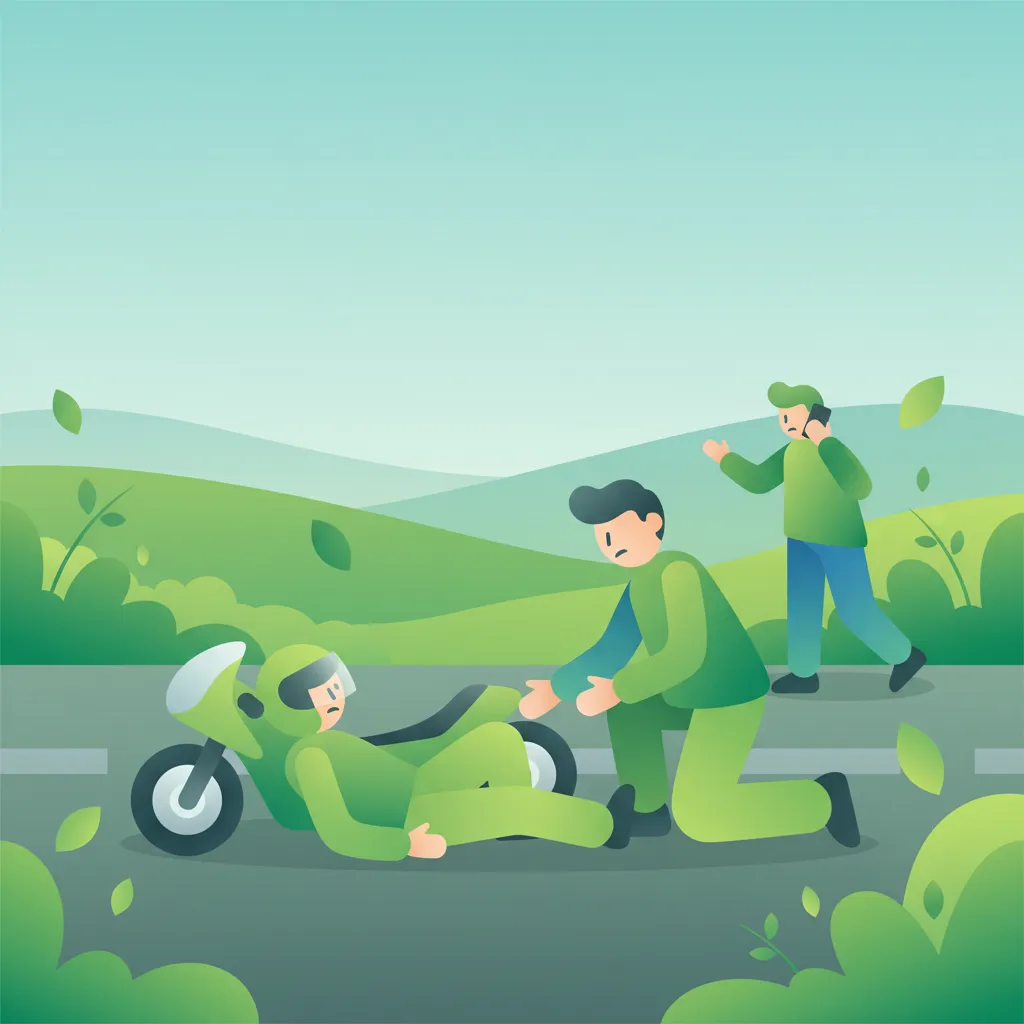
This lesson provides a clear, prioritized list of actions to take in the immediate aftermath of an accident. The primary focus is on safety: securing the scene to prevent further incidents, checking for injuries on yourself and others, and calling emergency services (112). It provides the essential knowledge required to manage a stressful and potentially dangerous situation calmly and effectively until professional help arrives.
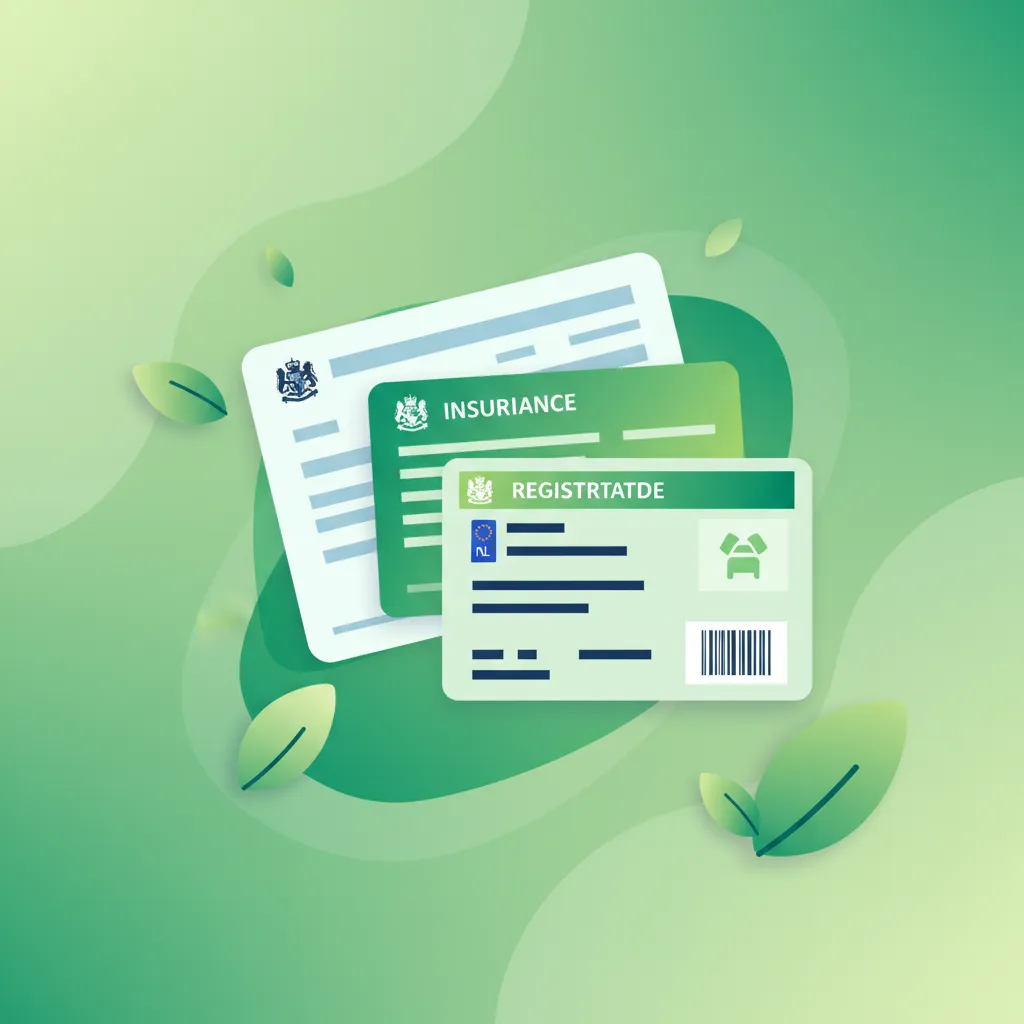
This lesson provides a definitive list of the documents a motorcyclist must carry at all times when riding in the Netherlands. It specifies the requirement for a valid driving license ('rijbewijs') for the correct category, the vehicle registration card ('kentekenbewijs'), and proof of valid third-party liability insurance ('verzekeringsbewijs'). The content clarifies that failure to produce these documents during a police check can result in significant fines and legal complications.
Understand how liability is determined in the Netherlands after a motorcycle accident. Learn about administrative fines, penalty points, criminal prosecution, and civil liability according to Dutch traffic law.
This lesson provides an overview of the motor vehicle insurance system in the Netherlands, explaining the mandatory third-party liability insurance ('WA-verzekering'). It outlines the process for filing an insurance claim after an accident and the factors that are considered when determining liability or fault. Understanding this process is important for navigating the financial and legal consequences of a collision.
This lesson explains the fundamental concepts of legal liability in traffic accidents and the role of mandatory third-party insurance (WA-verzekering) in the Netherlands. You will learn how insurance companies use the accident statement form and other evidence to determine fault and process claims for damages. Understanding this process helps you appreciate the financial responsibilities associated with riding and the importance of having correct and valid insurance cover at all times.
This lesson examines the statutory duties imposed on motorcyclists, with a strong emphasis on the 'duty of care' (zorgplicht) and the conditions under which legal liability arises after a traffic incident. It clarifies the relationship between personal responsibility, mandatory insurance coverage, and the legal expectation for proactive risk mitigation to prevent accidents. The content also analyzes scenarios to illustrate how liability is typically determined within Dutch traffic jurisprudence, preparing riders for their legal responsibilities.
This lesson details the legal requirements for reporting a traffic accident in the Netherlands, including the circumstances under which you must involve the police. It explains the correct procedure for exchanging personal, vehicle, and insurance information with any other parties involved. The lesson also covers the use of the European Accident Statement form to document the facts of the incident for insurance purposes.
This lesson provides a clear, step-by-step guide for actions to take immediately following a traffic accident. It covers the priorities of personal safety, securing the scene to prevent further incidents, and providing aid to the injured. The curriculum details the legal requirements for reporting an accident ('ongevalrapportage') and the correct procedure for exchanging information with other parties involved, including the use of the European Accident Statement form.

This lesson provides an in-depth exploration of Article 5 of the Dutch Road Traffic Act, which establishes the general 'duty of care' ('zorgplicht'). It explains that every road user has a fundamental obligation to behave in a way that does not cause danger or hindrance to others. The curriculum clarifies how this broad principle is applied in determining legal liability after an accident, especially in incidents involving vulnerable road users, reinforcing the rider's constant accountability.
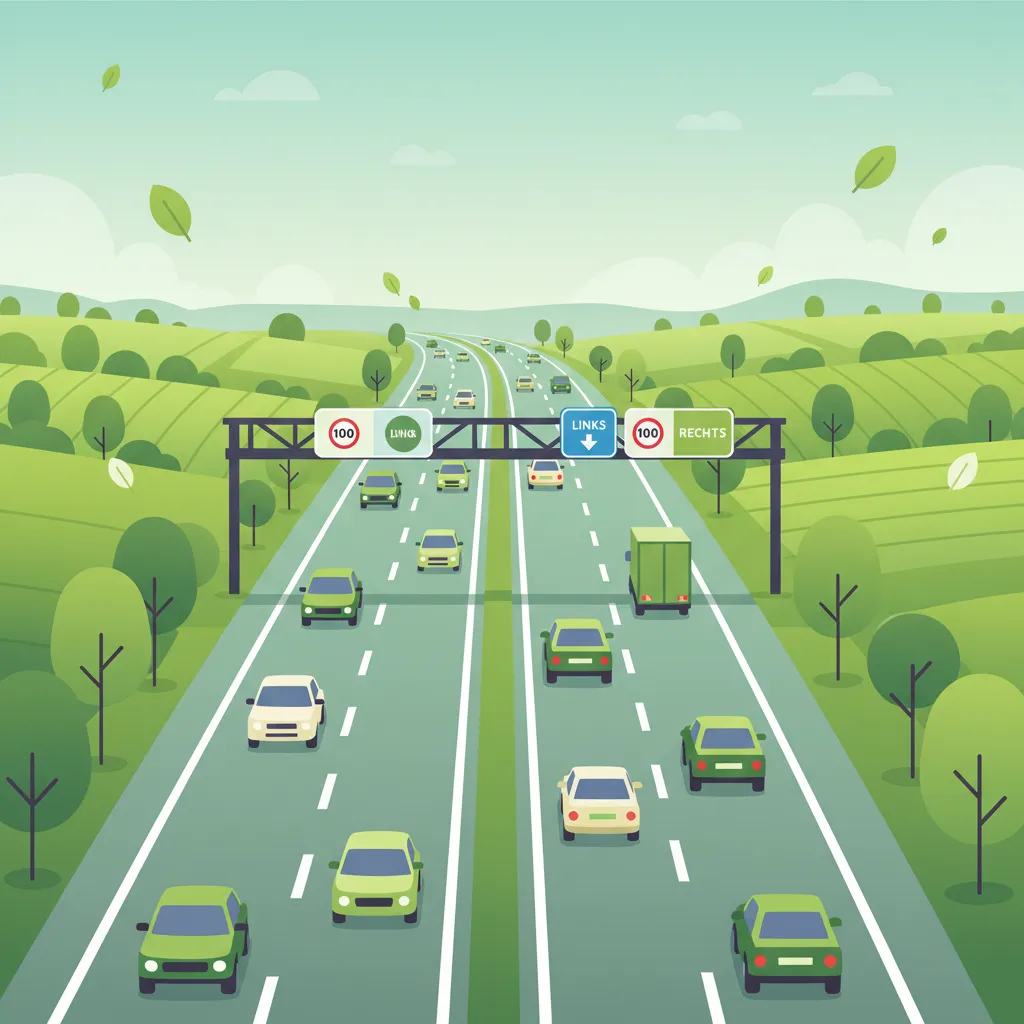
This lesson covers the specific articles of the Dutch Road Traffic Act that apply to motorways, with a primary focus on the strict rule of keeping to the rightmost available lane unless overtaking. It explains the legal and safety reasons for only passing on the left and discusses the correct positioning within a lane for maximum visibility and safety. The content also addresses the nuances of lane usage during heavy congestion, ensuring riders comply with the law and contribute to smooth traffic flow.
In the event of an accident, a calm and methodical approach is essential. This lesson details the necessary actions, from stopping safely and assessing the situation to exchanging driver and insurance details with the other party. It explains how to fill out the European Accident Statement form ('schadeformulier'), which is a vital document for insurance claims. You will also learn when it is mandatory to call the police and the importance of gathering evidence like photos and witness contact information.

This lesson provides a detailed overview of the structure of Dutch traffic legislation, focusing on the Road Traffic Act (Wegenverkeerswet 1994) and its relationship with CBR regulations. It explains the hierarchy from national statutes to local ordinances and how these rules govern rider behavior in various traffic situations. Furthermore, the lesson clarifies the mechanisms for enforcement, the types of sanctions for non-compliance, and the legislative goal of ensuring road safety for all participants.
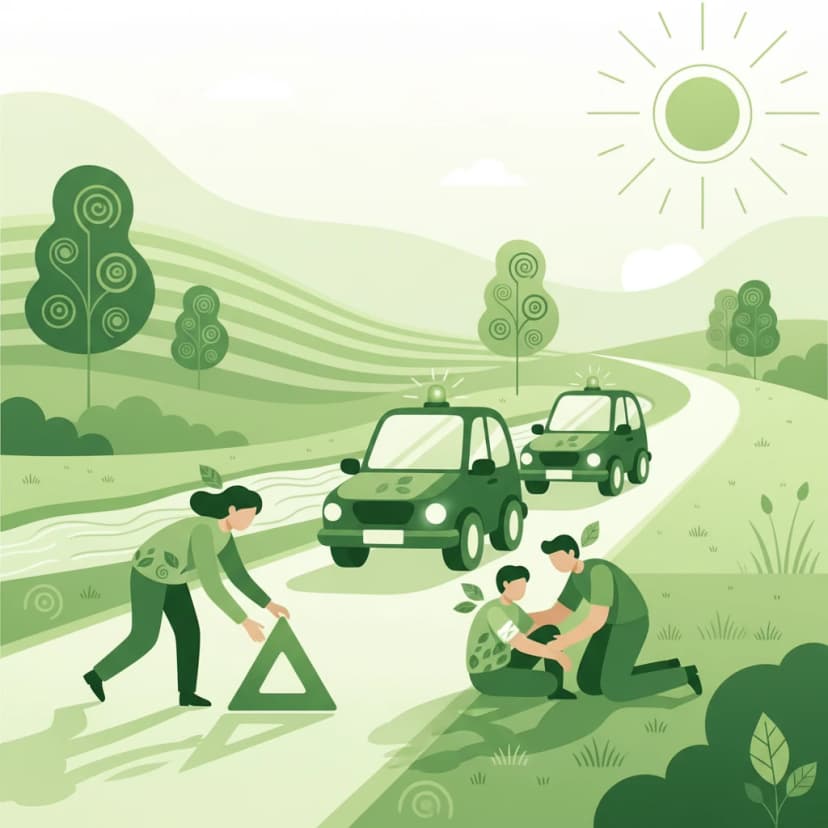
This lesson outlines the correct protocol to follow after a traffic accident. The first priority is to ensure the safety of everyone involved by securing the scene and checking for injuries. You will learn when it is mandatory to call the emergency services (112), such as when there are injuries or significant road blockage. The curriculum also explains the legal requirement to stop and exchange insurance and contact details with other parties involved. The use of the European Accident Statement form to record the details is also covered.
Find clear answers to common questions learners have about Legal Consequences and Insurance Claims. Learn how the lesson is structured, which driving theory objectives it supports, and how it fits into the overall learning path of units and curriculum progression in the Netherlands. These explanations help you understand key concepts, lesson flow, and exam focused study goals.
Your immediate priority is safety. Ensure you and any passengers are safe and move out of the traffic flow if possible. Then, check for injuries and call emergency services if needed. After that, gather information and evidence for potential insurance claims and legal proceedings.
Liability is determined based on the circumstances and adherence to Dutch traffic laws. This involves assessing which party(ies) contributed to the accident through actions like speeding, failing to yield, or improper lane changes. Police reports, witness statements, and the presence of traffic violations are key factors.
Evidence such as photos of the scene and damage, contact details of witnesses, and a detailed account of the incident provides proof of what happened. This documentation is essential for your insurance company to process your claim accurately and efficiently, and to support the determination of liability.
If you are found to be at fault due to negligence or violation of traffic laws, consequences can range from paying for damages and increased insurance premiums to fines, temporary license suspension, or even criminal prosecution in severe cases involving serious injury or fatality.
Even if there are no injuries, it is advisable to report the accident to your insurance company and, depending on the extent of damage and local regulations, potentially to the police. This ensures proper documentation and facilitates the claims process, especially if significant property damage occurred.