
Welcome to the first lesson of your Dutch Motorcycle Theory course! This module provides a crucial overview of the Dutch traffic legislation, focusing on the Wegenverkeerswet. Understanding these foundational rules is key to navigating the roads safely and successfully passing your Category A theory exam.

Navigating the roads of the Netherlands as a motorcyclist requires a thorough understanding of the country's unique and comprehensive traffic legislation. This foundational lesson, crucial for success in the Dutch CBR Category A motorcycle theory exam, delves into the intricate structure of Dutch traffic law. It explains how rules are formed, enforced, and what they mean for every motorcyclist on the road.
We will explore the hierarchy of legal sources, from national statutes to local ordinances, and examine the pivotal roles of the Wegenverkeerswet 1994 (Road Traffic Act), the Reglement Verkeersregels en Verkeerstekens 1990 (RVV 1990), and the Centraal Bureau Rijvaardigheidsbewijzen (CBR) regulations. Mastering this framework is not just about passing an exam; it's essential for ensuring your safety, the safety of others, and legal compliance during every ride.
Dutch traffic law is built upon a clear, layered structure designed to ensure consistency and prevent conflicting rules. This hierarchy dictates which legal source takes precedence when interpreting or applying traffic regulations. Understanding this order is fundamental to comprehending your obligations as a motorcyclist.
At the highest level, Dutch traffic law is influenced by European Union (EU) directives and international treaties. These directives, such as Directive 2006/126/EC on driving licences, set common standards across EU member states. While not directly applicable, they are transposed into Dutch national law, ensuring harmonisation of rules regarding licensing, vehicle safety, and other critical aspects. This means your Dutch motorcycle licence (rijbewijs) is valid across the EU, reflecting shared minimum standards.
The cornerstone of Dutch traffic legislation is the Wegenverkeerswet 1994 (Road Traffic Act 1994). This primary national statute establishes the overarching legal framework for road traffic in the Netherlands. It defines the general duties of all road users, sets out requirements for vehicles, classifies traffic offences, and grants authority to enforcement bodies like the police. All subsequent rules and regulations derive their legal basis from this Act.
Operationalising the broad principles of the Wegenverkeerswet 1994 is the Reglement Verkeersregels en Verkeerstekens 1990 (RVV 1990). This comprehensive decree details specific traffic rules and road signs. It covers everything from right-of-way regulations and speed limits to parking rules and the meaning of various traffic signals. For motorcyclists, the RVV 1990 is your daily guide, dictating how you should behave on the road and how to interpret the numerous signs you encounter.
The Centraal Bureau Rijvaardigheidsbewijzen (CBR) is the national authority responsible for driver licensing and examinations. The Regeling CBR (CBR Regulations) consists of administrative rules that govern aspects such as age requirements, medical fitness standards, the content of theory and practical exams for Category A motorcycles, and the maintenance of driver records. These regulations also underpin the penalty point system, which directly impacts your licence status.
At the lowest tier of the hierarchy are municipal ordinances (Gemeentelijke Verordeningen). These local rules address specific traffic situations within a municipality, such as temporary traffic measures, local parking restrictions, or specific local speed limits. However, municipal ordinances must always be consistent with national law. A municipality cannot impose a rule that contradicts the Wegenverkeerswet 1994 or the RVV 1990 unless explicitly authorised to do so.
When a conflict arises between different levels of legislation, the higher-level law always prevails. For instance, a municipal sign cannot overrule a national RVV sign unless the national law grants specific authority for local deviation.
Behind the complex web of rules and regulations lie several core principles that guide the entire legislative system. These principles aim to create a safe, predictable, and fair environment for all road users.
The legality principle dictates that all traffic behaviour and its consequences must be grounded in written law. This ensures predictability and fairness, meaning motorcyclists can always reference specific statutes or regulations to understand their obligations and the potential outcomes of their actions. There are no arbitrary rules; every requirement has a legal basis.
A fundamental tenet is the safety hierarchy, which prioritises measures that protect the most vulnerable road users. This includes pedestrians and cyclists, who are at a higher risk of severe injury in a collision. As a motorcyclist, this principle implies a heightened duty of care and the need to yield to vulnerable users where legally required, contributing to the overall reduction of severe injuries and fatalities.
The principle of proportionality ensures that sanctions and restrictions are fair and proportionate to the risk created by a violation. This approach avoids overly punitive measures for minor infractions while imposing stringent penalties for dangerous conduct. For example, a minor speeding offence might result in a fine, whereas reckless endangerment could lead to licence suspension or even criminal charges.
Subsidiarity means that lower-level authorities, such as municipalities, may only regulate traffic matters when national law does not fully cover a situation or explicitly grants them the authority. This principle prevents legal fragmentation and ensures a largely uniform application of traffic rules across the country, making it easier for all road users, including motorcyclists, to understand and comply. Local ordinances must not contradict national laws like the Wegenverkeerswet.
Every driver, including motorcyclists, is personally responsible for complying with traffic legislation. The CBR plays a role in maintaining driver records, allowing for targeted interventions such as mandatory courses for repeat offenders. This system of accountability ensures that accumulated offences trigger progressive penalties, encouraging sustained safe behaviour on the road.
Let's delve deeper into the primary legal documents that directly impact motorcyclists in the Netherlands.
The Wegenverkeerswet 1994 (WVW 1994) is the legislative backbone for all road traffic in the Netherlands. It defines the fundamental legal responsibilities and powers.
Articles within the WVW 1994 outline the general duty of care for all road users. This includes a broad obligation to avoid endangering or obstructing others and to prevent damage. This foundational duty applies to every aspect of riding, from maintaining your motorcycle to interacting with other traffic.
The WVW 1994 also sets out requirements for vehicles themselves. For instance, Article 19 mandates that all motor vehicles, including motorcycles, must display a valid registration plate and be registered with the Dienst Wegverkeer (RDW). It also covers aspects like technical requirements for roadworthiness and mandatory inspections.
The Act distinguishes between different types of offences, primarily administrative and criminal. This classification determines how a violation is handled, whether it leads to a simple fine or a more serious judicial process. For example, most minor speeding violations are administrative offences, while driving under the influence (DUI) is a criminal offence.
The WVW 1994 establishes the framework for sanctions, detailed in articles such as Article 40-45. This includes provisions for fines, penalty points, and the temporary or permanent suspension of a driving licence. These sanctions aim to deter dangerous conduct and ensure compliance.
The Reglement Verkeersregels en Verkeerstekens 1990 (RVV 1990) provides the concrete rules for daily traffic. It is divided into behavioural rules and definitions of traffic signs.
The RVV 1990 contains the verkeersregels – the specific rules governing how road users must behave. This includes rules on right-of-way, such as Article 10 regarding maintaining a safe following distance, and rules on overtaking, turning, and positioning on the road. Motorcyclists must internalise these rules to ride safely and legally.
The verkeerstekens are the official road signs and signals. The RVV 1990 categorises these into warning signs, regulatory signs (prohibitory and mandatory), and informational signs. You must know the exact shapes, colours, and meanings of these signs, as they convey critical instructions or warnings. Ignoring them, even unintentionally, is a violation.
While most RVV rules apply to all motorised vehicles, some have specific implications or details for motorcyclists. For instance, rules about lane usage, overtaking in specific situations, or the mandatory use of helmets are particularly relevant. Article 6 of the RVV 1990, for example, defines specific lanes, and certain signs, like the "motorcycle lane" sign (R13), are specifically for motorcycles.
The CBR regulations define the path to obtaining and maintaining your Category A motorcycle licence.
These regulations specify the age requirements, medical fitness criteria, and the specific training modules (e.g., theory, practical vehicle control, practical traffic participation) required for each motorcycle licence category (A1, A2, A). Understanding these criteria ensures you pursue the correct licence for your age and desired motorcycle type.
Integrated with the Wegenverkeerswet, the CBR manages a penalty point system (known as the Cijfersysteem). For serious traffic offences, points are registered with the CBR. Accumulating a certain number of points within a specific period, typically eight points within 12 months for novice riders, can lead to a provisional licence ban (rijbewijsontzegging).
In certain situations, the CBR may issue conditional licences with specific restrictions. This could be due to medical conditions requiring vehicle adaptations or specific limitations on the type of motorcycle that can be ridden. It is crucial to adhere to any conditions placed on your licence.
Compliance with traffic legislation is ensured through a range of enforcement mechanisms, involving both human patrols and advanced technology.
Police officers conduct roadside checks, which can include visual inspections, speed radar measurements, and alcohol/drug tests. In addition, automated enforcement is widely used throughout the Netherlands. This includes speed cameras, red-light cameras, and Automatic Number Plate Recognition (ANPR) systems that can detect uninsured vehicles or those with outstanding fines.
For more serious violations, particularly criminal offences, a judicial process is initiated. This may involve prosecution by the Public Prosecutor's Office and potential court appearances. The severity of the offence dictates whether it is handled administratively (e.g., a standard fine) or judicially (e.g., a court case with potentially more severe penalties).
Non-compliance with Dutch traffic legislation carries clear legal consequences, which vary based on the severity and type of offence.
Most minor traffic infractions, such as small speeding infringements or improper parking, result in administrative fines. These are fixed amounts, often referred to as * Mulderboetes*, and are typically issued without a court appearance. Timely payment is crucial to avoid increased charges and enforcement by a bailiff.
As mentioned, the CBR maintains a penalty point system. Specific offences, usually more severe than minor administrative ones, result in penalty points being added to your driver record.
Accumulating 8 penalty points within 12 months for Category A drivers registered with the CBR results in a provisional licence ban. This system applies to all driver categories and is a key mechanism for encouraging sustained safe behaviour.
For serious or repeated offences, your driving licence may be temporarily suspended (rijbewijsontzegging) or permanently revoked. Suspension often occurs after accumulating too many penalty points or for serious criminal offences like reckless driving or severe driving under the influence. Revocation is a more permanent measure, often reserved for extreme cases or persistent dangerous behaviour.
In certain circumstances, particularly for repeat offenders or extremely dangerous violations, a vehicle may be impounded. Additionally, for specific offences related to speed or alcohol, mandatory training courses may be imposed by the CBR or the judiciary as a condition for regaining or retaining a driving licence.
Understanding the distinction between administrative and criminal offences is important, as it determines the procedural handling and potential severity of the consequences.
Administrative offences are minor breaches of traffic rules. Examples include most parking violations, minor speeding infringements, or failing to use proper indicators. These are typically handled by law enforcement and result in administrative fines without involving the criminal justice system. They may, however, still contribute to penalty points.
Criminal offences are serious infringements that are considered a threat to public safety. Examples include reckless endangerment (gevaarlijk rijgedrag), driving under the influence of alcohol or drugs (DUI), or hit-and-run incidents. These violations can lead to prosecution, heavier fines, imprisonment, and immediate licence revocation. Article 6 of the Wegenverkeerswet specifically addresses criminal liability for endangering traffic.
Motorcyclists, like all road users, must be vigilant to avoid common infractions. Here are some examples:
Exceeding the speed limit, especially in temporary speed reduction zones like construction sites, is a common violation. The consequences vary with the degree of exceedance, often involving fines and penalty points. Incorrect overtaking, such as crossing a solid line or doing so unsafely, also falls under this category.
Failure to use appropriate lighting, such as riding without dipped beam headlights from sunset to sunrise or during reduced visibility (e.g., fog, heavy rain), compromises safety and is illegal under RVV 1990 Article 44. Faulty lighting, like a dead tail-lamp, also falls under this category.
Riding without a valid registration plate, or with an expired or unreadable one, violates Wegenverkeerswet 1994 Article 19. Similarly, failing to carry and present your driver's licence upon police request (as allowed by Article 6 of the WVW) is an offence.
Driving under the influence of alcohol (Blood Alcohol Content > 0.5‰, or > 0.2‰ for novice riders) or drugs is a serious criminal offence with severe penalties. Reckless driving, which endangers others, also constitutes a criminal offence under Wegenverkeerswet Article 6.
Ignoring the mandatory helmet use requirement, specified in RVV 1990 Article 9, is a direct safety violation and carries a fine and penalty points. Only certified helmets meeting EN 22 standards are permitted.
Traffic rules are not always static; they often require adaptation based on prevailing conditions.
Every decision you make on the road has direct safety and legal consequences. This cause-and-effect relationship underpins all traffic legislation.
| Condition | Correct Follow-Through | Result (Safety / Legal) | Violation Outcome |
|---|---|---|---|
| Rider obeys speed limits and maintains safe distance | Reduced collision risk, lower fuel consumption, lower penalty points | Enhanced personal safety; compliance with RVV 1990 Art 10 | N/A |
| Rider exceeds speed limit in wet conditions | Increased stopping distance, higher likelihood of skidding or loss of control | Potential severe injury, vehicle damage, legal sanction (fine + points) | Administrative fine, possible license suspension |
| Rider neglects helmet use | Higher risk of head injury in crash | Potential fatality, insurance claim complications | Fine + 2 penalty points |
| Rider fails to stop at a red light | Interferes with right-of-way, possible T-collision | Injury or death; traffic disruption | Fine + 3 points; possible criminal charge if endangerment |
| Rider follows CBR licensing requirements (medical fitness) | Maintain physical capability to control motorcycle | Lower accident risk, legal eligibility to ride | Avoidance of license ban, insurance validity |
Understanding the legal framework is just the beginning. The principles and specific rules outlined in this lesson form the foundation for all subsequent modules in your Dutch Motorcycle Theory course. You will build upon this knowledge when learning about priority rules, speed management, and advanced riding techniques.
Lesson content overview
Explore all units and lessons included in this driving theory course.
Explore search topics learners often look for when studying Overview of Dutch Traffic Legislation. These topics reflect common questions about road rules, driving situations, safety guidance, and lesson level theory preparation for learners in the Netherlands.
Browse additional driving theory lessons that cover connected traffic rules, road signs, and common driving situations related to this topic. Improve your understanding of how different rules interact across everyday traffic scenarios.
Understand the hierarchy of Dutch traffic laws, from national statutes like the Wegenverkeerswet to local ordinances. Learn about enforcement mechanisms and the consequences of non-compliance for motorcyclists in the Netherlands.
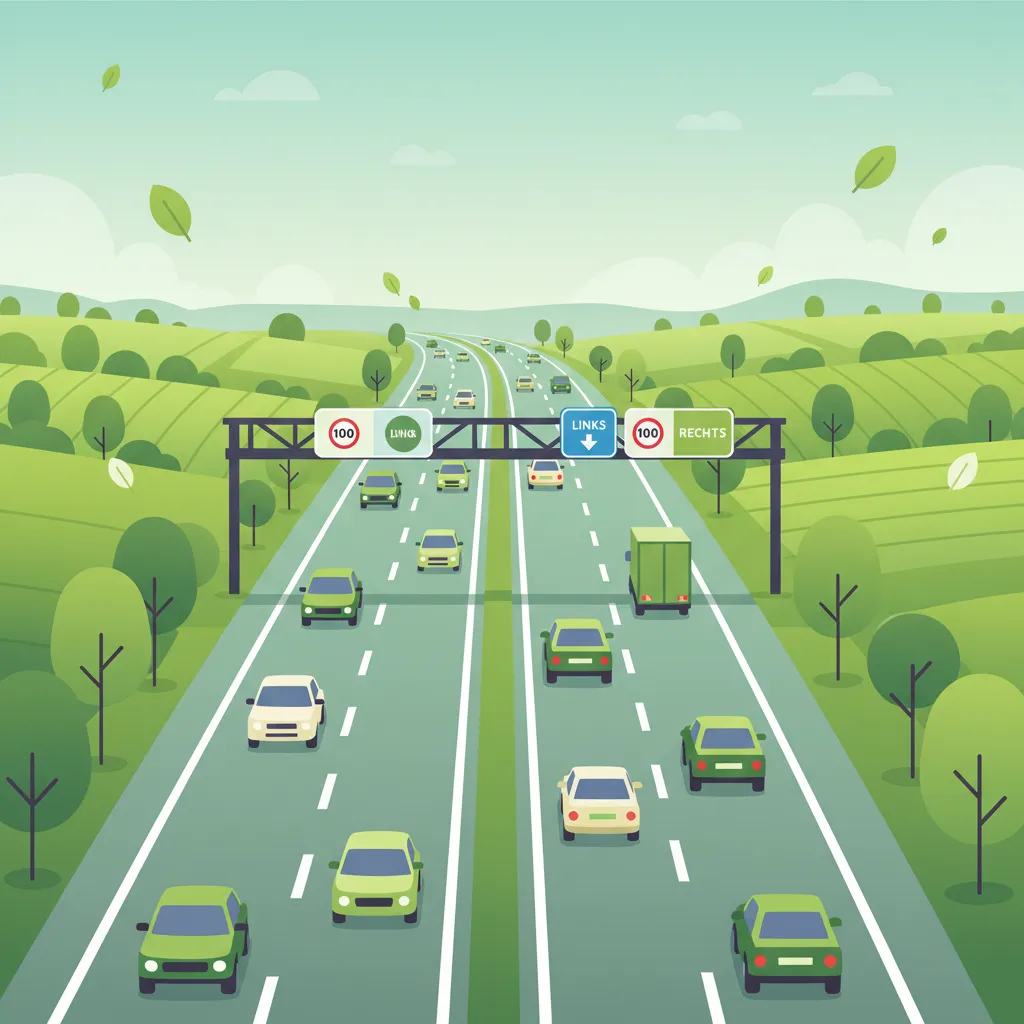
This lesson covers the specific articles of the Dutch Road Traffic Act that apply to motorways, with a primary focus on the strict rule of keeping to the rightmost available lane unless overtaking. It explains the legal and safety reasons for only passing on the left and discusses the correct positioning within a lane for maximum visibility and safety. The content also addresses the nuances of lane usage during heavy congestion, ensuring riders comply with the law and contribute to smooth traffic flow.

This lesson covers the universal Dutch road rules with a specific focus on their application to light motorcycles. It details the various speed limits for different road types, from urban areas to motorways, and explains the correct procedures for overtaking and lane positioning. The legal aspects of lane filtering in congestion are also examined, alongside mandatory equipment use like daytime running lights, to ensure riders can integrate safely and legally into traffic flow.

This lesson offers an in-depth study of Dutch regulatory signs, which impose mandatory actions or prohibitions on road users, with a specific focus on their impact on motorcyclists. It explains the visual language of prohibition symbols ('verbodsborden') and obligation symbols ('verplichtingsborden'), the contexts in which they appear, and the strict statutory consequences of non-compliance. Real-world examples are used to illustrate how these signs directly influence route planning, overtaking decisions, and speed management.

This lesson focuses on Dutch regulatory signs that enforce mandatory rules and restrictions, particularly those impacting A2 motorcyclists. You will learn to recognize and obey prohibition signs, such as those indicating a motorcycle ban (BORD 40), speed limits, and overtaking restrictions (BORD 21). The content explains the legal consequences of non-compliance and how to apply these rules in practical riding scenarios to ensure full adherence to Dutch traffic law.
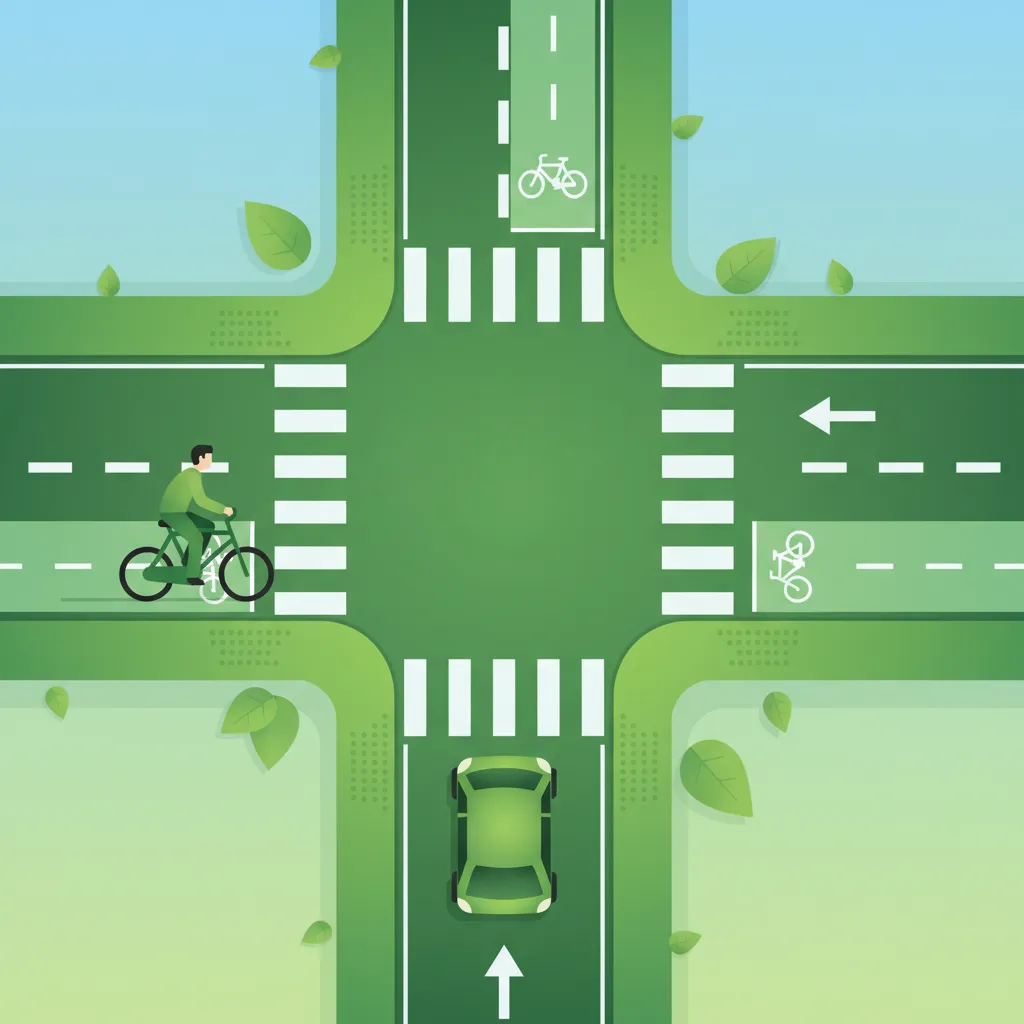
This lesson explores the legal meaning of various road surface markings, including solid and broken lane delimiters, directional arrows, and special-purpose lane indicators. It describes how markings dictate permitted maneuvers, such as overtaking and lane changes, and alert riders to upcoming hazards or changes in road layout. The content also examines the relationship between markings and road design in the Netherlands, emphasizing how a motorcyclist must interpret these visual cues for safe positioning.
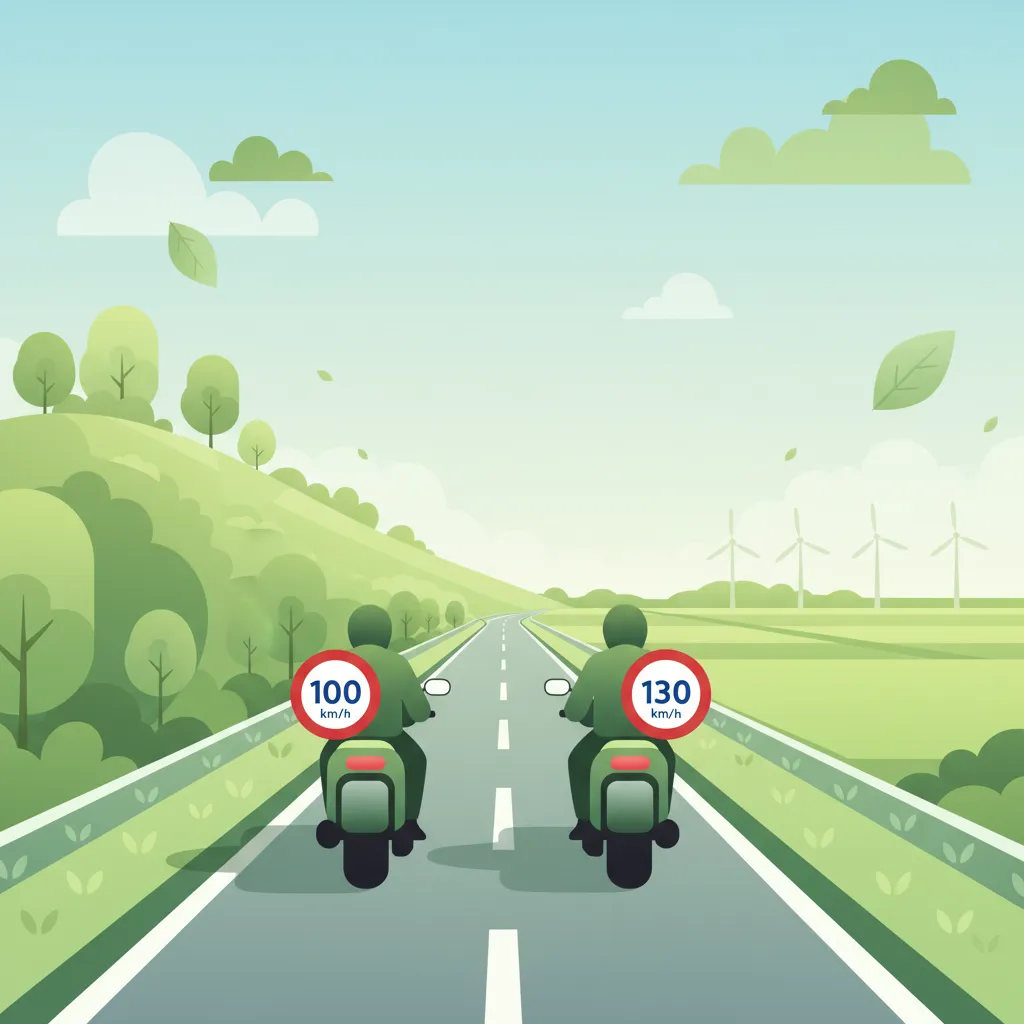
This lesson outlines the statutory national speed limits applicable to motorcycles in the Netherlands. It clearly defines the maximum permitted speeds on motorways ('snelwegen'), non-motorway rural roads ('buiten de bebouwde kom'), and within built-up areas ('binnen de bebouwde kom'). The content also addresses variations, such as time-dependent speed limits on certain motorways, ensuring riders have a complete and accurate understanding of the legal requirements for speed.

This lesson focuses on the legal requirements and safe practices for riding near pedestrian crossings ('zebrapaden') and designated school zones. It details the absolute obligation to yield to pedestrians on or about to use a crossing and the need for significantly reduced speeds and heightened vigilance in areas with children. The content underscores the importance of anticipation and being prepared for unpredictable movements from vulnerable road users to prevent serious incidents.

This lesson introduces the foundational principles of right-of-way in the Netherlands, starting with the road user hierarchy and the default rule of giving priority to traffic from the right at equal intersections. You will learn to identify a priority road, marked by sign BORD 30, and understand how this designation overrides the default rule. The content establishes the legal framework for making priority decisions in the absence of specific signs or signals.

This lesson establishes the foundational rule of priority in Dutch traffic law: yielding to traffic from the right at intersections of equal roads unless otherwise indicated. It explains how to identify an unmarked or 'equal' junction and the correct procedure for approaching, assessing, and proceeding safely. The content also introduces the primary signs and markings, such as 'shark's teeth,' that override this default rule, forming the basis for all other priority scenarios.
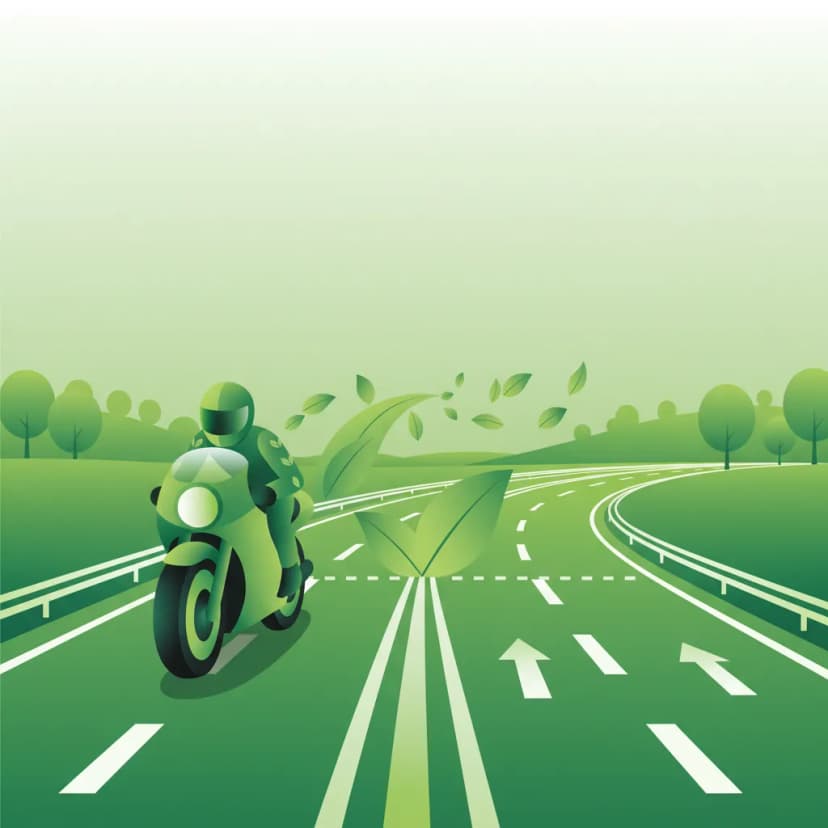
This lesson focuses on the meaning of different road markings and their implications for motorcycle lane discipline. You will learn the legal distinction between solid and broken lines regarding overtaking, how to interpret directional arrows for lane choice, and the rules for using special lanes. The content emphasizes maintaining a safe and strategic position within the lane to maximize visibility and create a safety buffer from other vehicles.
Explore common traffic offences for motorcyclists under Dutch law, distinguishing between administrative and criminal violations. Understand the associated sanctions, including fines and the penalty point system, to ensure legal compliance.
This lesson outlines the statutory national speed limits applicable to motorcycles in the Netherlands. It clearly defines the maximum permitted speeds on motorways ('snelwegen'), non-motorway rural roads ('buiten de bebouwde kom'), and within built-up areas ('binnen de bebouwde kom'). The content also addresses variations, such as time-dependent speed limits on certain motorways, ensuring riders have a complete and accurate understanding of the legal requirements for speed.

This lesson provides an overview of the various speed enforcement technologies and strategies used in the Netherlands. It explains the operation of fixed speed cameras ('flitspalen'), average speed check systems ('trajectcontrole'), and mobile enforcement units used by the police. Understanding these methods helps riders appreciate the high likelihood of being caught for speeding, reinforcing the importance of consistent compliance with all posted speed limits to avoid fines and other penalties.

This lesson prepares riders for the possibility of a routine police check ('verkeerscontrole'). It explains what officers typically inspect, which includes the required documentation, the roadworthiness of the motorcycle (e.g., tire tread depth, exhaust legality), and the rider's sobriety. The curriculum provides guidance on how to interact calmly and cooperatively with law enforcement, ensuring the stop proceeds smoothly and efficiently while being aware of one's basic rights.
This lesson covers the specific articles of the Dutch Road Traffic Act that apply to motorways, with a primary focus on the strict rule of keeping to the rightmost available lane unless overtaking. It explains the legal and safety reasons for only passing on the left and discusses the correct positioning within a lane for maximum visibility and safety. The content also addresses the nuances of lane usage during heavy congestion, ensuring riders comply with the law and contribute to smooth traffic flow.
This lesson covers the universal Dutch road rules with a specific focus on their application to light motorcycles. It details the various speed limits for different road types, from urban areas to motorways, and explains the correct procedures for overtaking and lane positioning. The legal aspects of lane filtering in congestion are also examined, alongside mandatory equipment use like daytime running lights, to ensure riders can integrate safely and legally into traffic flow.
This lesson reinforces the fundamental rule of Dutch highway driving: use the rightmost lane available and use the lanes to the left only for overtaking. You will learn the complete, safe overtaking procedure: check mirrors, signal, perform a shoulder check for the blind spot, smoothly move over, accelerate past the vehicle, and then return to the right lane when safe.
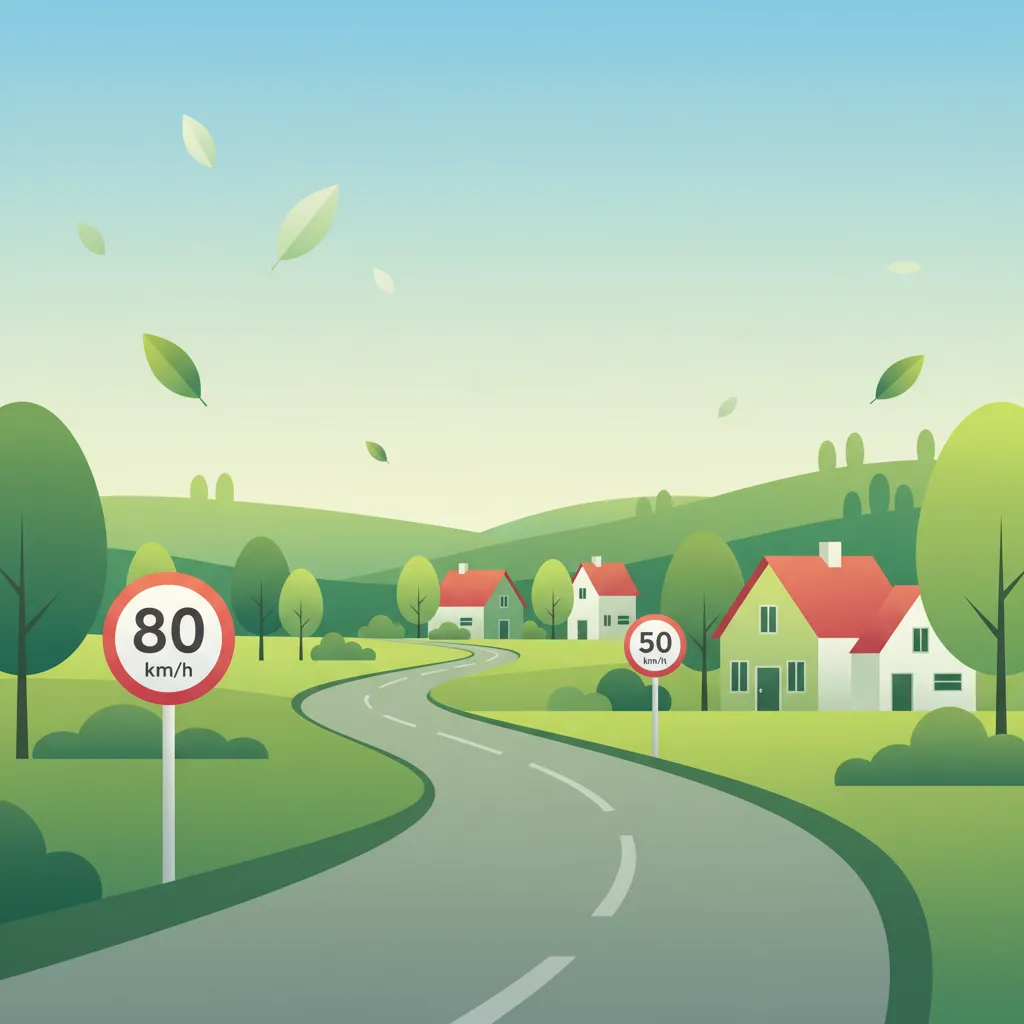
This lesson focuses on identifying different types of speed zones and understanding the rationale behind their limits. It explains how to recognize the start and end of a 'built-up area' ('binnen de bebouwde kom') via place-name signs and discusses special zones like 30 km/h zones and 'woonerven' (residential yards). The curriculum emphasizes adapting riding style to the specific hazards present in each type of zone, from high pedestrian activity in urban areas to unexpected curves on rural roads.
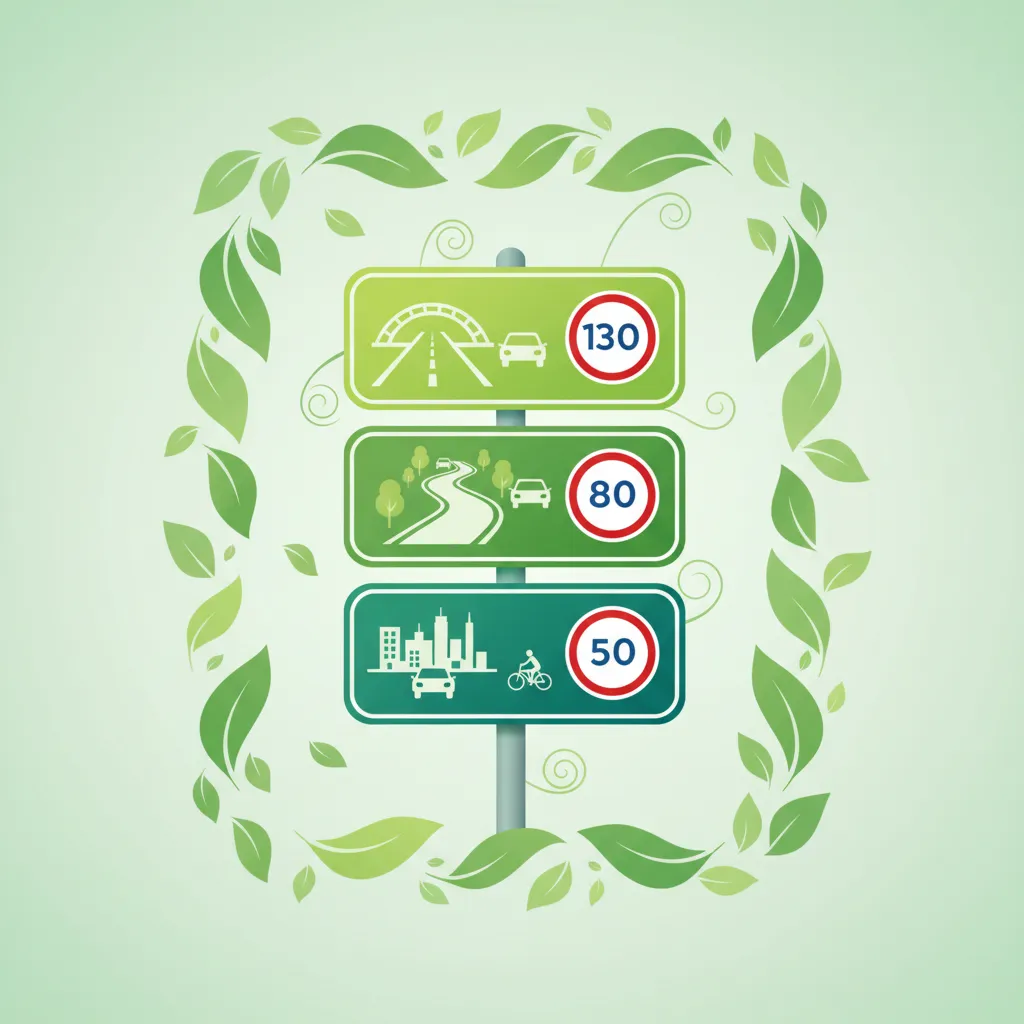
This lesson provides a definitive guide to the legal speed limits on different types of Dutch roads. It covers the rules for built-up areas (typically 50 km/h), rural roads (80 km/h), expressways ('autowegen'), and motorways ('snelwegen'), including time-dependent variations. Understanding these official limits is the first step in managing speed legally and appropriately for the road environment, a core topic on the CBR theory test.
This lesson focuses on the unique demands of riding at sustained high speeds on motorways ('snelwegen'). It covers essential topics such as strict lane discipline, safe overtaking procedures, and maintaining a greater following distance to compensate for higher reaction and braking times. The content also addresses the physical and mental challenges, including managing wind blast, increased noise levels, and maintaining heightened situational awareness over long distances to combat fatigue.
This lesson clarifies the legal status and accepted code of conduct for filtering ('gedogen') between lanes of slow or stationary traffic in the Netherlands. It explains the conditions under which it is generally tolerated, such as maintaining a small speed differential. The content focuses heavily on the associated risks, including drivers changing lanes without looking and opening doors, and emphasizes the need for extreme caution and slow speed.
Find clear answers to common questions learners have about Overview of Dutch Traffic Legislation. Learn how the lesson is structured, which driving theory objectives it supports, and how it fits into the overall learning path of units and curriculum progression in the Netherlands. These explanations help you understand key concepts, lesson flow, and exam focused study goals.
The primary law is the Wegenverkeerswet 1994 (Road Traffic Act 1994). This national statute sets out the fundamental rules for all road users, including motorcyclists. It's supplemented by various decrees, regulations, and often further detailed by the CBR for examination purposes.
The CBR is the official examination body for driving licences in the Netherlands. While they don't create the laws, their theory exams are based on the Wegenverkeerswet and related legislation. The CBR's examination standards ensure that candidates understand and can apply these rules correctly in traffic.
Non-compliance can lead to various sanctions, including fines (boetes), points on your licence, or in severe cases, suspension or revocation of your driving privileges. For the theory exam, failing to demonstrate knowledge of these laws will result in a failed test.
Yes, in addition to national legislation, municipalities can implement local ordinances (gemeentelijke verordeningen) to regulate specific traffic situations within their area, such as lower speed limits on certain streets or specific parking rules. These must, however, be consistent with the overarching Wegenverkeerswet.
Understanding the legal framework is crucial for safe riding, legal compliance, and successfully passing your theory exam. It helps you understand the 'why' behind traffic rules, enables you to anticipate potential hazards, and informs you about your rights and responsibilities on the road.