
This lesson covers the various speed enforcement technologies used in the Netherlands, including fixed cameras ('flitspalen') and average speed check systems ('trajectcontrole'). Understanding these methods is vital for Category A motorcycle riders to appreciate the consequences of speeding and ensure consistent compliance with Dutch traffic laws.

Navigating the roads safely in the Netherlands requires a thorough understanding of speed limits and the various techniques employed by law enforcement to ensure compliance. For motorcyclists, awareness of these systems is crucial not only to avoid fines and penalties but, more importantly, to enhance road safety for themselves and others. This lesson provides an in-depth look at the technologies and strategies used for speed enforcement, including fixed cameras, average speed checks, and mobile units, as part of your Dutch Motorcycle Theory – Category A Comprehensive Preparation.
Speeding is a significant factor in road accidents, contributing to both their frequency and severity. By consistently adhering to posted speed limits, motorcyclists can dramatically reduce their stopping distances, allowing more time to react to hazards and prevent collisions. The physics of speed dictates that kinetic energy, which determines the impact force in a crash, increases quadratically with speed. This means even a small increase in speed can lead to a disproportionately higher risk of severe injury or fatality. Understanding how speed is monitored helps riders appreciate the high likelihood of detection, reinforcing the importance of disciplined riding behavior.
The Dutch government employs a multi-faceted approach to speed enforcement, leveraging technology and strategic deployment to deter speeding. This system is designed to create a high perceived probability of detection, which studies show is more effective in influencing driver behavior than the severity of penalties alone. The legal framework underpinning these enforcement measures is found primarily in the Wegenverkeerswet 1994 (Road Traffic Act 1994) and the Reglement Verkeersregels en Verkeerstekens 1990 (Regulations on Traffic Rules and Traffic Signs 1990), which empower authorities to install and operate monitoring equipment for public safety.
Treat every road segment as potentially monitored. Consistent compliance with speed limits is the most reliable way to avoid penalties and ensure safety.
Fixed speed cameras, commonly known as flitspalen in the Netherlands, are permanently installed electronic devices designed to automatically detect and photograph vehicles exceeding the speed limit. These cameras play a vital role in continuous monitoring, particularly in high-risk areas.
Flitspalen can come in various forms, each with specific deployment advantages. They might be pylon-mounted, standing as conspicuous poles above the roadway, or subtly embedded within the road surface itself. Overhead gantry systems are also used to cover multiple lanes simultaneously. These devices automatically capture photographic evidence of a vehicle's registration plate and its speed when a preset limit is surpassed. While some older models might use film, modern flitspalen are digital, sending data directly to processing centers.
Flitspalen are frequently located near intersections, school zones, and dangerous curves—locations where sudden changes in speed or increased vigilance are paramount. A common misunderstanding among motorcyclists is that these cameras primarily target cars. In reality, flitspalen are designed to capture any vehicle, including motorcycles, with the same detection thresholds and accuracy.
For reasons of transparency and to uphold fairness, the deployment of fixed speed cameras is typically announced through specific road signs. According to the Reglement Verkeersregels en Verkeerstekens 1990, fixed cameras must generally be clearly signposted.
This sign, often placed approximately 250 meters before the actual camera, serves as a warning, encouraging drivers to adjust their speed proactively. However, it is important to note that in certain residential or designated low-speed zones, signposting might occasionally be omitted to foster natural speed compliance rather than reactive braking near cameras.
Many riders hold misconceptions about flitspalen. One common belief is that if you accelerate just after passing the camera, you can "beat" the system. This is incorrect. The camera measures speed at a precise point, and acceleration immediately before or after this point will not negate a detected violation. Another misconception is that these cameras are deactivated at night or in bad weather. Most modern flitspalen are equipped with infrared illumination and advanced sensors, ensuring 24-hour operation and reliable performance even in adverse conditions.
Trajectcontrole, also known as average-speed control or section control, represents a sophisticated method of speed enforcement that targets sustained speeding over a defined road segment rather than isolated speed spikes. This system measures a vehicle's mean speed between two specific points.
A trajectcontrole system typically uses two separated fixed camera installations or other sensor pairs (such as laser-based sensors or inductive loops embedded in the road surface) at the entry and exit points of a zone. When a vehicle passes the first point, its license plate is recorded, and a timestamp is taken. The same occurs at the second point. The system then calculates the time taken to travel the known distance between these two points, thereby determining the vehicle's average speed. If this average speed exceeds the posted limit for that segment, a violation is recorded.
Trajectcontrole zones are frequently deployed on motorways and long rural stretches of road, where continuous high-speed compliance is critical for safety. They are effective at discouraging drivers from briefly speeding up between conventional fixed cameras.
Just like fixed cameras, trajectcontrole zones are clearly indicated by specific signage, ensuring drivers are aware of their presence.
These signs are placed at both the entry and exit points of the zone. Legally, the distance between these points must be at least 1 kilometer for the enforcement to be valid. An important exception might occur for emergency vehicles; some systems are designed to automatically disregard measurements for these vehicles.
The key to avoiding a fine in a trajectcontrole zone is to maintain a lawful speed throughout the entire segment, not just at the entry and exit points. A common misunderstanding is that occasional brief speed spikes within the zone are harmless as long as you slow down sufficiently before the exit point. This is incorrect; any period of excessive speed that raises the average above the limit will result in a violation. For example, if you enter a 5 km zone at 80 km/h, accelerate to 100 km/h for 2 km, and then slow to 70 km/h for the remainder, your average speed might still exceed the 80 km/h limit, leading to a fine.
Maintaining a steady speed at or below the limit is crucial for trajectcontrole zones. Don't rely on last-minute braking to adjust your average.
Beyond fixed installations, law enforcement agencies in the Netherlands utilize mobile speed enforcement units to monitor and enforce speed limits. These temporary and relocatable setups offer flexibility, allowing police to address specific safety concerns or react to changing traffic patterns.
Mobile enforcement typically involves police officers using:
These units can be set up in various locations, such as accident blackspots, during large public events, or on routes known for chronic speeding. Their presence increases the perceived likelihood of enforcement, contributing to overall road safety.
For mobile speed enforcement to be legally valid, officers must adhere to specific regulations. They must possess a valid speed measurement permit, and the device used must have been calibrated by an authorized service within the past 12 months, as per RVV 1990, Annex 5. Furthermore, mobile enforcement setups are generally required to be clearly indicated by a visible police vehicle or a temporary sign stating "Police speed monitoring," upholding the principle of transparency. Riders should assume that all types of vehicles, including motorcycles, are targeted with the same accuracy by mobile units.
Both radar and LIDAR technologies are highly accurate when used correctly. Radar works reliably in most weather conditions, but its wider beam can sometimes make it less precise for targeting a single vehicle in dense traffic or when large metal objects (like buses or trucks) are present. LIDAR, with its narrow beam, offers superior precision for pinpointing individual vehicles, but its effectiveness can be reduced in heavy rain, dense fog, or other atmospheric obstructions due to laser scatter. Motorcyclists should be aware that while their smaller profile might seem less susceptible, these devices are highly capable of accurate speed measurement regardless of vehicle type.
To fully grasp how speed enforcement works, it's beneficial to understand the underlying technologies that make these systems possible.
Radar systems operate on the Doppler effect. They emit continuous microwave signals towards oncoming or receding vehicles. When these signals strike a moving vehicle, they reflect back to the radar unit with a slightly altered frequency. The change in frequency (the Doppler shift) is directly proportional to the vehicle's speed. The radar unit then calculates this frequency shift to determine the vehicle's speed. This technology is robust and works well in various environmental conditions, including light rain or fog.
LIDAR, an acronym for Light Detection and Ranging, uses infrared laser pulses to measure speed. The device emits short, rapid bursts of laser light. When these pulses strike a vehicle and reflect back, the LIDAR unit measures the time it takes for the light to return. By analyzing multiple pulses and the change in distance over time (phase shift), it precisely calculates the vehicle's speed. LIDAR is highly directional, making it excellent for targeting specific vehicles in multi-lane traffic but can be affected by heavy precipitation or dense fog due to the scattering of laser light.
Exceeding the speed limit in the Netherlands carries significant legal consequences, ranging from monetary fines to penalty points and even license suspension. These penalties are designed to be proportional to the magnitude of the speed excess, reinforcing the deterrence principle.
The Dutch penalty system for speeding is structured in categories, with fines increasing sharply as the speed excess grows. While exact amounts can be subject to annual updates, as of 2025, the structure is generally as follows:
These fines are for standard violations and can be higher in specific zones (e.g., roadworks) or for repeat offenders.
In addition to monetary fines, certain speed violations result in the allocation of penalty points, which are recorded in the rider's driving record (known as the Rijbewijsstrafschijf). The accumulation of 12 points within a 5-year period will typically lead to the revocation of the driver's license. This system acts as a strong deterrent against habitual speeding and dangerous driving behavior.
The Dutch legal framework includes an escalation clause for repeat offenses. If a rider commits another speeding violation within one year of a previous offense, an automatic additional 2-point increase is triggered, making it easier to reach the license revocation threshold. This emphasizes the importance of learning from past mistakes and maintaining consistent compliance.
Transparency is a cornerstone of Dutch speed enforcement. Road users are informed about enforcement through mandatory signage and have specific rights regarding data handling and appeals.
As discussed, specific signs are required to indicate the presence of speed enforcement:
For mobile enforcement, a visible police vehicle or a temporary sign indicating "Police speed monitoring" is generally required to maintain transparency and prevent "ambush-style" enforcement.
When a speed violation is captured, the data (including photographic evidence and speed measurement) is stored temporarily. Typically, speed-capture data is retained for a maximum of 30 days. If a violation is contested or leads to legal proceedings, the data may be kept for up to 6 months to facilitate the legal process. Riders have the right to request calibration records for the device used to measure their speed, which should confirm its accuracy within a tolerance of ±1 km/h.
If you receive a speeding fine and believe it was issued in error or that the enforcement was unlawful, you have the right to appeal. An objection can be filed with the Centrale Verwerking Strafrechtelijke Verkeersovertredingen (Central Judicial Collection Agency for Traffic Offenses) within 6 weeks of receiving the notification. If the objection is rejected, the case can then be reviewed by a rechter (court). It is crucial to gather all relevant information and documentation if you intend to challenge a fine.
Understanding common mistakes can help motorcyclists avoid unintentional speeding fines and ensure safer riding.
A frequent error is assuming that brief speed increases in a trajectcontrole zone can be offset by slowing down significantly at the end. This is incorrect. The system calculates the average speed over the entire segment. To avoid a fine, you must maintain a speed at or below the limit for the entire duration of the zone. Even if you enter slowly due to traffic, accelerating beyond the limit mid-zone will likely result in an average speed exceeding the maximum.
Many riders incorrectly assume that mobile police radar units only target cars or that they are easy to spot. Mobile units can be discreetly positioned, and handheld LIDAR guns are highly effective at singling out motorcycles. The best practice is to always ride within the speed limits, irrespective of visible enforcement. Relying on outdated GPS data for speed limits, especially after recent road changes, is another common pitfall. Always prioritize actual posted road signs over navigation system information.
Assuming enforcement devices are deactivated at certain times (e.g., unlit signs at night) or in specific weather conditions (e.g., heavy rain affecting LIDAR accuracy) is a dangerous assumption. Most systems operate 24/7, and even if weather slightly impacts a device's performance, the measured speed, if within operational criteria, remains legally enforceable. It is the rider's responsibility to adjust speed for conditions, not to assume enforcement devices are less effective.
Never assume a speed camera or mobile unit is inactive. Assume continuous operation and maintain constant vigilance.
Speed enforcement is consistent, but a rider's responsibilities to manage speed vary significantly with external conditions and vehicle state. These factors implicitly increase the risk of both accidents and violations if not properly managed.
Enforcement strategies are tailored to different road environments:
A motorcycle's performance characteristics change with load and tire condition.
Beyond avoiding fines, a deep understanding of speed enforcement should reinforce the fundamental safety principles that govern riding.
As previously mentioned, kinetic energy is proportional to the square of speed. This means that if you double your speed, your kinetic energy increases fourfold. This has direct implications for crash severity: higher kinetic energy means greater impact forces, leading to more severe injuries and damage. Reducing speed, even marginally, significantly mitigates this risk by decreasing kinetic energy and shortening stopping distances.
Riders often underestimate their actual speed, particularly on open roads or in situations where they feel comfortable. Objective measurement devices like speed cameras provide an external, unbiased check, countering this human tendency. Psychological deterrence plays a crucial role; the knowledge that enforcement is likely motivates riders to maintain compliance, even when they might otherwise be tempted to speed. Risk compensation, where riders might drive more cautiously only when a camera is visible, is addressed by the comprehensive and varied enforcement network, which aims to maintain a baseline safety level across the entire road system.
The deployment of speed enforcement technologies in the Netherlands is directly linked to road safety initiatives. Statistical evidence, such as data from CBS (Centraal Bureau voor de Statistiek), often demonstrates measurable reductions in road fatalities and serious injuries on sections where advanced enforcement systems like trajectcontrole have been implemented. This highlights the effectiveness and importance of these measures in protecting all road users.
Mastering speed management is an essential skill for any motorcyclist. Understanding the various speed enforcement techniques used in the Netherlands—from fixed flitspalen and average-speed trajectcontrole to mobile radar and LIDAR units—equips you with the knowledge to make informed decisions on the road. Remember the legal foundations, the mandatory signage, the proportional penalty structure, and your rights in case of an appeal.
Crucially, consistent speed compliance is not merely about avoiding fines; it's about safeguarding your life and the lives of others. Adjusting your speed for changing weather, road conditions, and vehicle loads, and remaining vigilant about all forms of enforcement, will make you a more responsible, safer, and legally compliant rider on Dutch roads. This lesson builds upon your knowledge of national speed limits and speed limit zones and provides critical groundwork for advanced concepts like safe following distances and emergency braking techniques.
Lesson content overview
Explore all units and lessons included in this driving theory course.
Explore search topics learners often look for when studying Speed Enforcement Techniques (trajectcontrole, flitspalen). These topics reflect common questions about road rules, driving situations, safety guidance, and lesson level theory preparation for learners in the Netherlands.
Browse additional driving theory lessons that cover connected traffic rules, road signs, and common driving situations related to this topic. Improve your understanding of how different rules interact across everyday traffic scenarios.
Understand the legal basis, your rights, and appeal procedures related to speed enforcement technologies like flitspalen and trajectcontrole. Essential knowledge for Dutch driving theory.
This lesson covers the specific articles of the Dutch Road Traffic Act that apply to motorways, with a primary focus on the strict rule of keeping to the rightmost available lane unless overtaking. It explains the legal and safety reasons for only passing on the left and discusses the correct positioning within a lane for maximum visibility and safety. The content also addresses the nuances of lane usage during heavy congestion, ensuring riders comply with the law and contribute to smooth traffic flow.
This lesson provides a detailed overview of fixed speed limits on the Dutch road network and the signs that indicate them. You will learn to identify signs for maximum speed (BORD 50) and understand the default limits that apply within built-up areas, on rural roads, and on motorways. The content emphasizes the importance of constant awareness and legal compliance to avoid penalties and ensure road safety for yourself and others.

This lesson prepares riders for the possibility of a routine police check ('verkeerscontrole'). It explains what officers typically inspect, which includes the required documentation, the roadworthiness of the motorcycle (e.g., tire tread depth, exhaust legality), and the rider's sobriety. The curriculum provides guidance on how to interact calmly and cooperatively with law enforcement, ensuring the stop proceeds smoothly and efficiently while being aware of one's basic rights.
This lesson focuses on the specific speed regulations for major highways in the Netherlands. You will learn to identify an 'autosnelweg' (motorway, G1 sign), where the speed limit is 100 km/h between 6:00 and 19:00 and often 130 km/h at other times, unless indicated otherwise. The lesson also covers the 'autoweg' (expressway, G3 sign), which typically has a speed limit of 100 km/h. Furthermore, you will study dynamic speed limits indicated on electronic signs, which can change due to traffic or weather conditions.

This lesson details the procedures of a typical traffic stop ('verkeerscontrole') from a rider's perspective. It outlines the authority of police officers to check documents, inspect the vehicle, and administer sobriety tests, while also explaining the basic rights of the rider during such an interaction. The goal is to demystify the process and encourage a calm, cooperative, and respectful demeanor, which facilitates a more positive and efficient roadside encounter for both parties.

This lesson provides a detailed overview of the structure of Dutch traffic legislation, focusing on the Road Traffic Act (Wegenverkeerswet 1994) and its relationship with CBR regulations. It explains the hierarchy from national statutes to local ordinances and how these rules govern rider behavior in various traffic situations. Furthermore, the lesson clarifies the mechanisms for enforcement, the types of sanctions for non-compliance, and the legislative goal of ensuring road safety for all participants.
This lesson reinforces the fundamental rule of Dutch highway driving: use the rightmost lane available and use the lanes to the left only for overtaking. You will learn the complete, safe overtaking procedure: check mirrors, signal, perform a shoulder check for the blind spot, smoothly move over, accelerate past the vehicle, and then return to the right lane when safe.
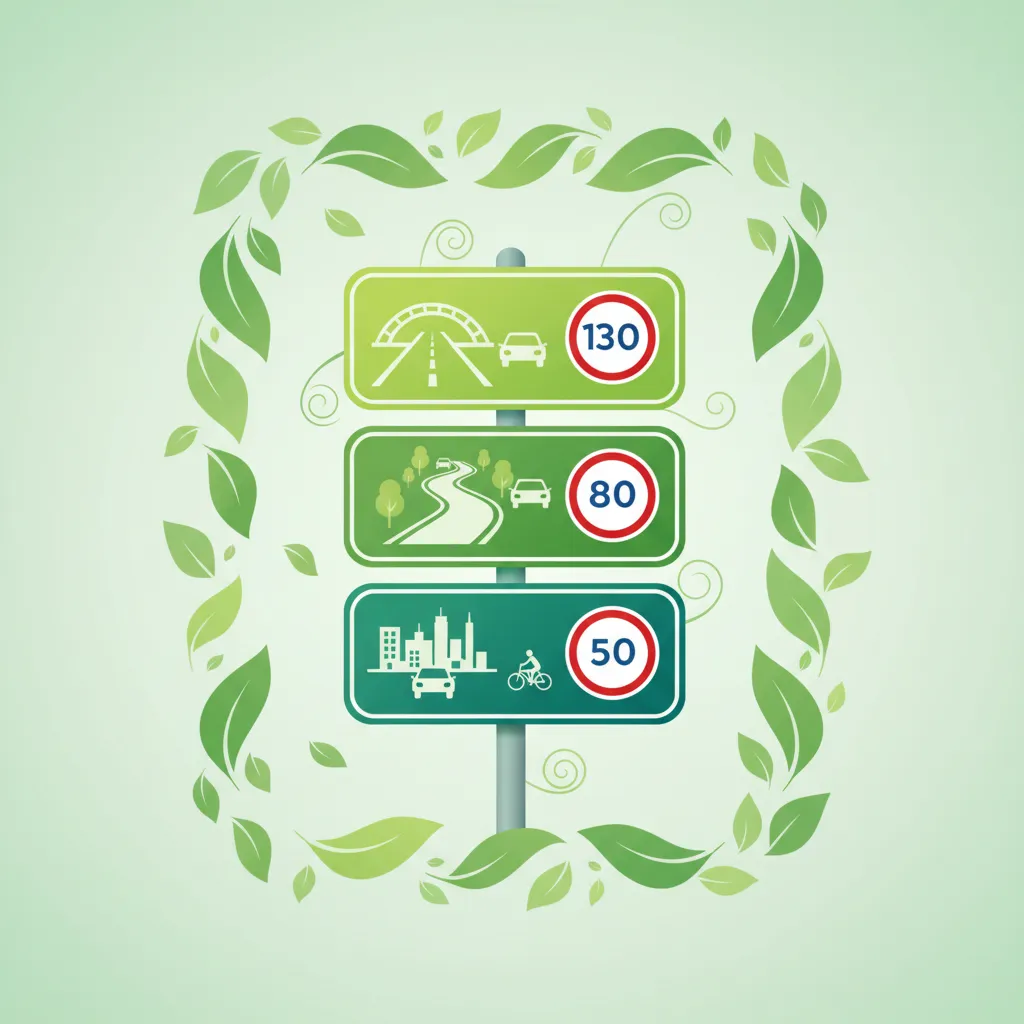
This lesson provides a definitive guide to the legal speed limits on different types of Dutch roads. It covers the rules for built-up areas (typically 50 km/h), rural roads (80 km/h), expressways ('autowegen'), and motorways ('snelwegen'), including time-dependent variations. Understanding these official limits is the first step in managing speed legally and appropriately for the road environment, a core topic on the CBR theory test.
This lesson focuses on the unique demands of riding at sustained high speeds on motorways ('snelwegen'). It covers essential topics such as strict lane discipline, safe overtaking procedures, and maintaining a greater following distance to compensate for higher reaction and braking times. The content also addresses the physical and mental challenges, including managing wind blast, increased noise levels, and maintaining heightened situational awareness over long distances to combat fatigue.

This lesson explains how to respond to variable speed limits shown on overhead electronic signs, which are used to manage traffic flow in real-time. You will learn why these limits are adjusted for factors like congestion, accidents, or bad weather, and the legal requirement to obey them. The content focuses on the importance of anticipatory riding, scanning far ahead for these signs to allow for smooth and safe speed adjustments.
Explore how weather, road conditions, vehicle load, and visibility influence safe speeds beyond posted limits. Crucial theory for adapting your riding and avoiding violations.

This lesson reinforces the critical relationship between adverse conditions, reduced traction, and massively increased stopping distances. It provides a clear framework for how much riders need to increase their following distance and reduce their overall speed to maintain a safe margin for error. The curriculum teaches riders to constantly reassess their speed based on visual feedback from the road surface and the level of visibility, ensuring they can always stop within the distance they can clearly see.
This lesson explains why the standard two-second rule is insufficient in adverse conditions and requires extension. It details how factors like rain, fog, and darkness reduce both visibility and tire grip, thereby significantly increasing total stopping distance. The content provides practical guidelines, such as extending the following gap to four seconds or more in the wet, to ensure the rider always has enough time and space to stop safely, regardless of the conditions.
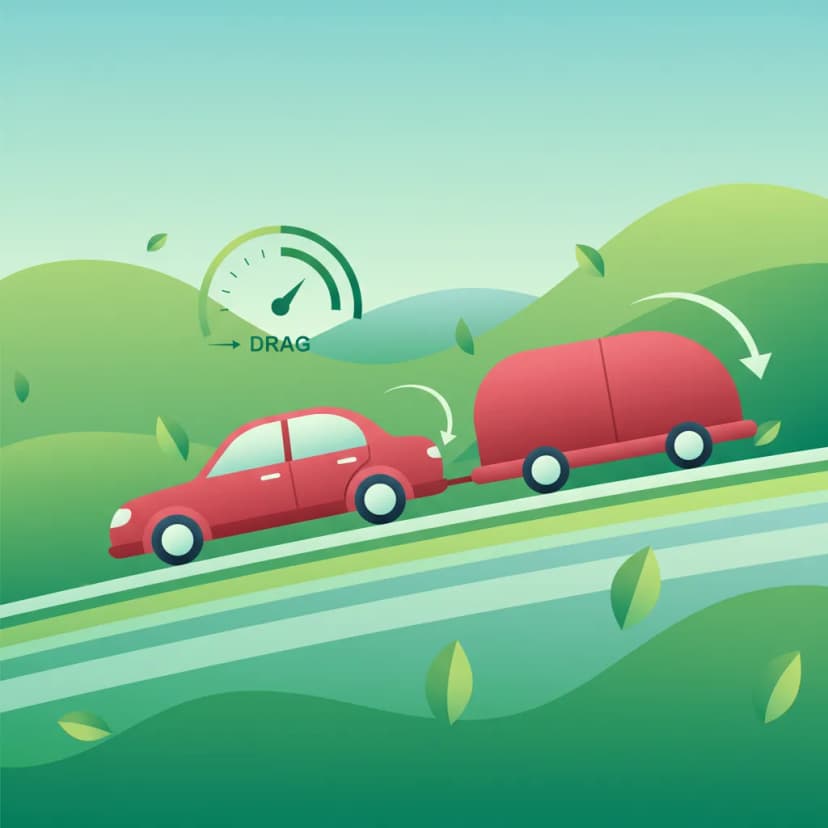
This lesson examines how adding weight, such as a pillion passenger or luggage, and changes in aerodynamics affect a motorcycle's performance and stability at speed. It explains the impact on acceleration, braking distances, and cornering ability due to a higher center of gravity and increased mass. Riders will learn how to adjust their speed and control inputs to safely manage the altered handling characteristics, especially when riding in windy conditions or at high motorway speeds.
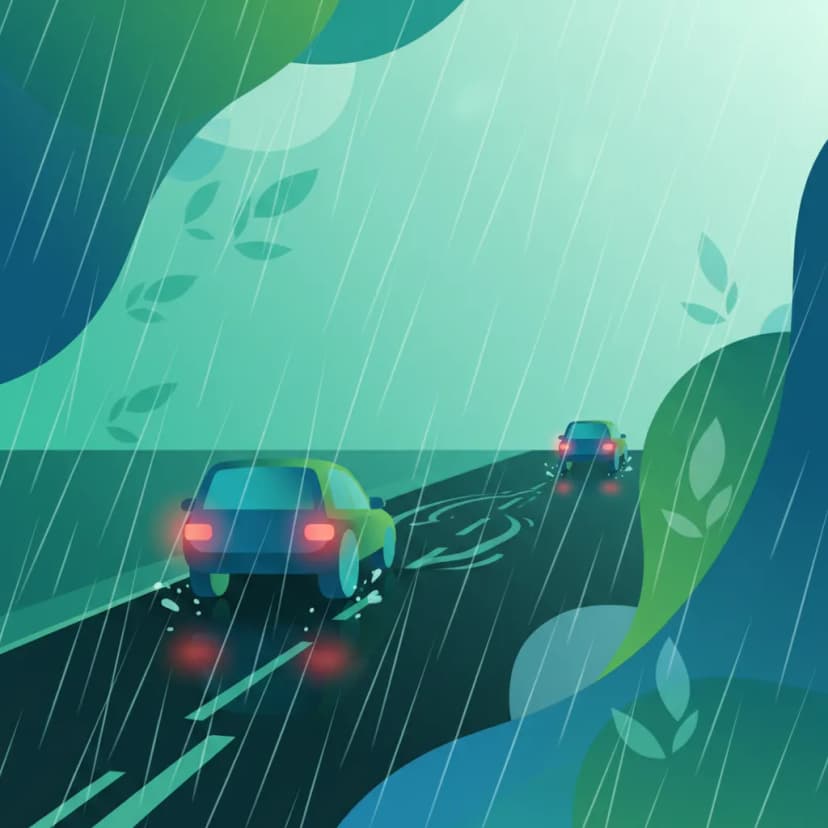
This lesson focuses on the crucial safety strategy of adjusting your riding for adverse conditions. You will learn that on wet roads, your braking distance can double, necessitating a much larger following distance (e.g., a four-second gap or more). The content covers the risks of reduced visibility in fog and at night, and the destabilizing effects of strong crosswinds, explaining how a greater space cushion provides the time and space needed to react safely.
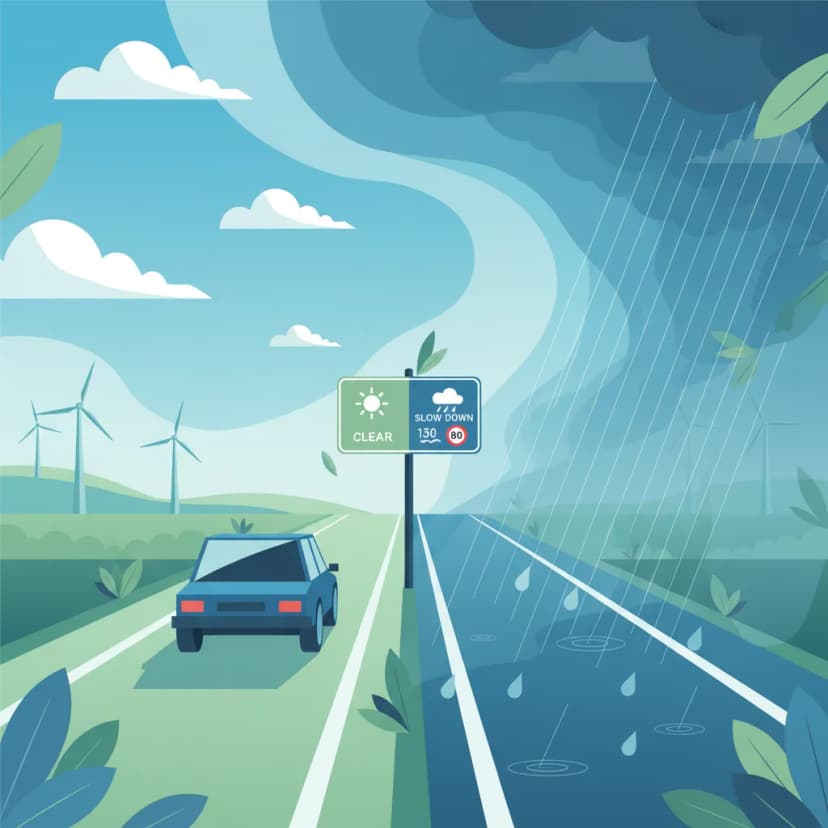
The posted speed limit is a maximum, not a target. This lesson teaches the crucial skill of adapting your speed to prevailing conditions. You will learn how to assess factors like traffic density, poor weather (rain, fog), limited visibility (at night), and slippery road surfaces. Adjusting your speed downwards in these situations provides you with more time to react to hazards and significantly reduces the risk of losing control or being involved in a collision.

This lesson teaches the crucial skill of assessing road surfaces and adjusting speed accordingly to maintain maximum traction. It covers a variety of hazardous conditions, including wet asphalt, loose gravel, oil patches, metal manhole covers, and painted road markings, all of which can significantly reduce grip. Riders will learn to constantly scan the road ahead, identify potential traction-reducing surfaces, and proactively manage their speed to prevent slides and loss of control.

This lesson focuses on how you must adapt your riding style when the motorcycle is heavily loaded. You will learn that your braking distances will be significantly longer, requiring you to increase your following distance and begin braking earlier. The content also explains that acceleration will be slower, and cornering will require smoother, more deliberate inputs to avoid upsetting the motorcycle's altered balance.

This lesson addresses the dual challenge of poor visibility: being able to see the road ahead and ensuring other road users can see you. It covers techniques for riding in fog and heavy rain, such as using appropriate lights and reducing speed to match sight distance. The lesson also discusses practical issues like helmet visor fogging and the importance of wearing high-visibility or reflective clothing to enhance conspicuity in low-light conditions.
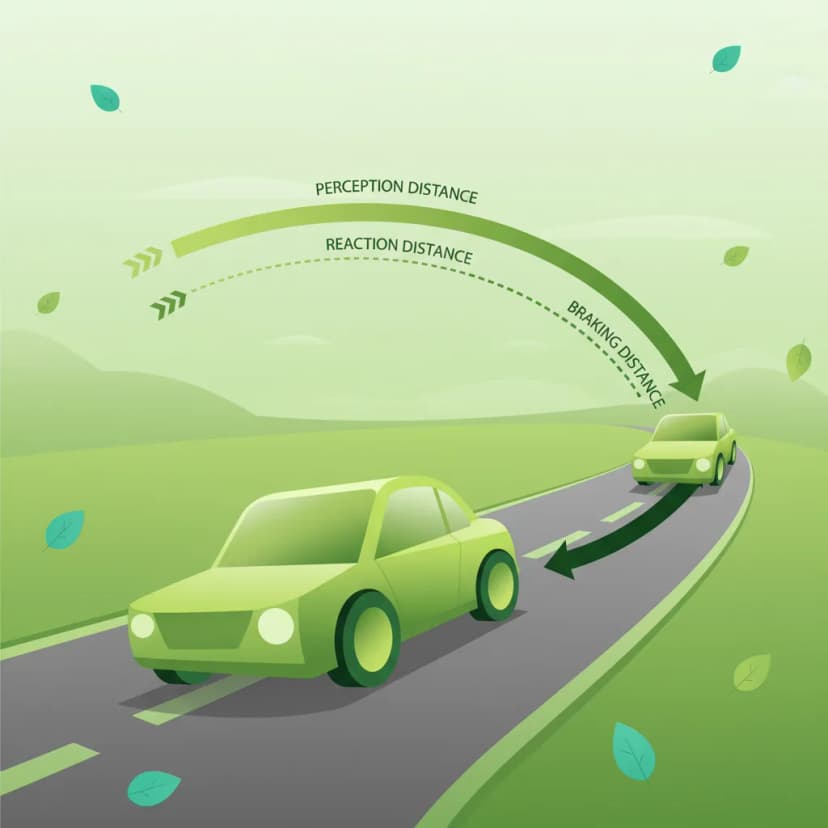
This lesson breaks down the concept of total stopping distance into its two key parts: the distance traveled during your reaction time and the distance the motorcycle travels after the brakes are applied. You will learn the formulas and rules of thumb for estimating these distances at various speeds. The content highlights how factors like rider fatigue, road surface conditions, and tyre quality can significantly increase your overall stopping distance.

This lesson provides a detailed guide to riding in wet and low-visibility conditions. You will learn to make all your control inputs—braking, accelerating, and steering—exceptionally smooth to avoid breaking traction on slippery surfaces. The content covers the dangers of painted lines and manhole covers when wet, and the importance of increasing your following distance dramatically to account for longer braking distances.
Find clear answers to common questions learners have about Speed Enforcement Techniques (trajectcontrole, flitspalen). Learn how the lesson is structured, which driving theory objectives it supports, and how it fits into the overall learning path of units and curriculum progression in the Netherlands. These explanations help you understand key concepts, lesson flow, and exam focused study goals.
Trajectcontrole measures your average speed over a specific distance. Cameras at the start and end of the monitored section record your vehicle's entry and exit times. Your average speed is then calculated based on the distance and time taken. If this average exceeds the legal limit, you will receive a fine.
A flitspaal (speed camera) measures your speed at a single point in time, typically when you pass the camera. Trajectcontrole, on the other hand, calculates your average speed over a longer stretch of road, making it harder to avoid detection by simply slowing down at the camera itself.
Yes, police in the Netherlands do use mobile speed enforcement units. These can be set up in various locations, sometimes using radar or laser devices to measure speed directly. It's important to always be aware of your surroundings and maintain legal speeds.
While the technology is the same, motorcyclists must be particularly mindful as their speeds can fluctuate more easily. The consequences of speeding, such as fines and potential licence suspension, apply equally. Understanding these systems reinforces the need for consistent speed adherence, crucial for safe motorcycle operation.
Yes, the Netherlands has strict enforcement. Even small excesses over the posted speed limit can result in fines. The exact penalty often depends on the degree of the speeding. It is always best to stay well within the legal limits.