
Navigating a police check can be daunting, but understanding the process and your rights makes it much smoother. This lesson details what to expect during a 'verkeerscontrole' in the Netherlands, covering officer authority, document checks, and vehicle inspections. By demystifying these interactions, you'll learn to respond calmly and cooperatively, ensuring a positive experience and preparing you for real-world scenarios beyond your Category A theory exam.
Riding a motorcycle in the Netherlands comes with the responsibility of adhering to traffic laws and being prepared for interactions with law enforcement. Police checks, known as a 'verkeerscontrole' in Dutch, are a routine and essential part of maintaining road safety. Understanding your rights and obligations during such an encounter is crucial for a smooth and efficient experience. This comprehensive guide outlines the procedures of a typical traffic stop from a rider's perspective, explaining the authority of police officers, the documents and vehicle items they may check, the nature of sobriety tests, and your fundamental rights during the interaction.
In the Netherlands, police officers have a clear legal mandate to conduct traffic stops. This authority is primarily derived from the Politiewet (Police Act) and the Wegenverkeerswet (Road Traffic Act), with specific procedures outlined in the Reglement Verkeersregels en Verkeerstekens 1990 (RVV 1990). These laws empower law enforcement to enforce traffic safety, verify compliance with licensing, registration, and insurance requirements, and intervene when a rider's actions or vehicle condition poses a danger to traffic.
A 'verkeerscontrole' can take various forms, each with its own purpose, but requiring the same level of rider cooperation.
Regardless of the type, Article 13 of the RVV 1990 grants police the legal power to demand a traffic stop. This means that as a motorcyclist, you must be prepared to halt your vehicle, present documents, and comply with reasonable requests whenever signaled by a police officer. Failure to do so can lead to administrative fines and potential escalation of the encounter.
When you are stopped by the police in the Netherlands, officers will primarily focus on verifying your identity, your right to operate the motorcycle, and the legality of your vehicle. Having your essential documents readily accessible and understanding what officers may inspect on your motorcycle will facilitate a quick and trouble-free stop.
As a Category A motorcyclist, you are legally obligated to carry and present specific documents upon request. These confirm your legal entitlement to operate the vehicle and that the vehicle itself is road-worthy and insured.
Common Mistakes to Avoid:
Beyond documents, police officers may conduct a visual or functional inspection of your motorcycle to ensure it complies with safety standards as per Article 9 of the RVV 1990 and the Wegenverkeerswet. This is particularly true for motorcyclists due to the inherent risks associated with riding.
Consequences of Vehicle Defects: If a defect is found, the officer may issue a 'defect notice' (berisping or aanhouding). This typically requires you to repair the issue within a certain timeframe and possibly present proof of repair. In severe cases, the motorcycle might be impounded until the repair is made or even seized if modifications are illegal and dangerous.
One of the most critical aspects of traffic safety enforcement is sobriety testing. Driving under the influence of alcohol or drugs significantly impairs judgment, reaction time, and coordination, leading to a drastically increased risk of accidents. Dutch police are authorized to conduct various tests to assess a rider's impairment.
Article 11b of the RVV 1990 is central to the police's authority to conduct sobriety tests. It mandates that road users must submit to a breathalyzer test when requested.
The penalties for driving under the influence are severe and designed to deter impaired riding.
While police officers have significant authority during a 'verkeerscontrole', you, as a rider, also have statutory rights that protect you against arbitrary actions and ensure procedural fairness. Understanding these rights is key to navigating a police interaction calmly and effectively.
One of your fundamental rights is to know why you have been stopped. Article 11 of the Police Act obliges officers to inform you of the reason for the stop upon request.
If the stop escalates beyond a routine check, especially if you are suspected of a serious offence or if questioning could lead to self-incrimination, you have the right to legal assistance. This is enshrined in Article 6 of the European Convention on Human Rights (EVRM) and sections 13-14 of the Dutch Code of Criminal Procedure.
The principle of proportionality (Politiewet Article 12) dictates that police actions must be proportionate to the suspected violation. This means that officers cannot take excessive measures that are not justified by the circumstances.
While you have rights, you also have a fundamental duty of cooperation during a police check. This 'zorgplicht' (duty of care) extends to your interactions with law enforcement and helps ensure the safety of everyone involved. A calm, cooperative, and respectful demeanor can significantly influence the outcome of the encounter.
Your obligation to cooperate means behaving in a manner that does not obstruct police work or endanger safety. This includes:
Failure to comply with lawful police requests or obstructing an officer can lead to various legal outcomes, from fines to more severe penalties.
Police checks are not static; their focus and intensity can vary depending on numerous contextual factors. Understanding these conditional variations can help you be better prepared.
Police checks are not merely about issuing fines; they are a critical component of road safety and law enforcement. Understanding the underlying principles helps appreciate their importance.
Being prepared for a police check is a fundamental aspect of responsible motorcycling in the Netherlands. By adhering to the following, you ensure your safety, legal compliance, and a positive interaction with law enforcement:
By being informed and prepared, you contribute to road safety and ensure a smoother journey on Dutch roads.
Lesson content overview
Explore all units and lessons included in this driving theory course.
Explore search topics learners often look for when studying Understanding Police Checks (controle) and Rights. These topics reflect common questions about road rules, driving situations, safety guidance, and lesson level theory preparation for learners in the Netherlands.
Browse additional driving theory lessons that cover connected traffic rules, road signs, and common driving situations related to this topic. Improve your understanding of how different rules interact across everyday traffic scenarios.
Understand the Dutch laws and regulations governing police traffic stops ('verkeerscontrole'). This lesson details the legal authority of officers and your rights during roadside checks, ensuring informed interaction and compliance with traffic legislation.
This lesson prepares riders for the possibility of a routine police check ('verkeerscontrole'). It explains what officers typically inspect, which includes the required documentation, the roadworthiness of the motorcycle (e.g., tire tread depth, exhaust legality), and the rider's sobriety. The curriculum provides guidance on how to interact calmly and cooperatively with law enforcement, ensuring the stop proceeds smoothly and efficiently while being aware of one's basic rights.
This lesson prepares you for a routine traffic stop by law enforcement. It outlines your legal obligation to stop when signaled to do so and to provide your driving license, vehicle registration certificate, and proof of insurance upon request. The lesson covers expected procedures, such as breathalyzer tests, and advises on maintaining a respectful and cooperative attitude. Understanding the process ensures any interaction with police is handled correctly and without unnecessary complications.

This lesson provides a detailed overview of the structure of Dutch traffic legislation, focusing on the Road Traffic Act (Wegenverkeerswet 1994) and its relationship with CBR regulations. It explains the hierarchy from national statutes to local ordinances and how these rules govern rider behavior in various traffic situations. Furthermore, the lesson clarifies the mechanisms for enforcement, the types of sanctions for non-compliance, and the legislative goal of ensuring road safety for all participants.
This lesson examines the statutory duties imposed on motorcyclists, with a strong emphasis on the 'duty of care' (zorgplicht) and the conditions under which legal liability arises after a traffic incident. It clarifies the relationship between personal responsibility, mandatory insurance coverage, and the legal expectation for proactive risk mitigation to prevent accidents. The content also analyzes scenarios to illustrate how liability is typically determined within Dutch traffic jurisprudence, preparing riders for their legal responsibilities.

This lesson serves as a critical reinforcement of the legal requirement to carry specific documents ('verkeersdocumenten') while riding. It explicitly lists the mandatory items—driving license, vehicle registration, and proof of insurance—and explains the legal consequences of failing to produce them on demand during a police stop. The content stresses that having these documents readily accessible is a basic and non-negotiable aspect of legal motorcycling in the Netherlands.
This lesson provides a definitive list of the documents a motorcyclist must carry at all times when riding in the Netherlands. It specifies the requirement for a valid driving license ('rijbewijs') for the correct category, the vehicle registration card ('kentekenbewijs'), and proof of valid third-party liability insurance ('verzekeringsbewijs'). The content clarifies that failure to produce these documents during a police check can result in significant fines and legal complications.
This lesson covers the specific articles of the Dutch Road Traffic Act that apply to motorways, with a primary focus on the strict rule of keeping to the rightmost available lane unless overtaking. It explains the legal and safety reasons for only passing on the left and discusses the correct positioning within a lane for maximum visibility and safety. The content also addresses the nuances of lane usage during heavy congestion, ensuring riders comply with the law and contribute to smooth traffic flow.

This lesson provides an in-depth exploration of Article 5 of the Dutch Road Traffic Act, which establishes the general 'duty of care' ('zorgplicht'). It explains that every road user has a fundamental obligation to behave in a way that does not cause danger or hindrance to others. The curriculum clarifies how this broad principle is applied in determining legal liability after an accident, especially in incidents involving vulnerable road users, reinforcing the rider's constant accountability.
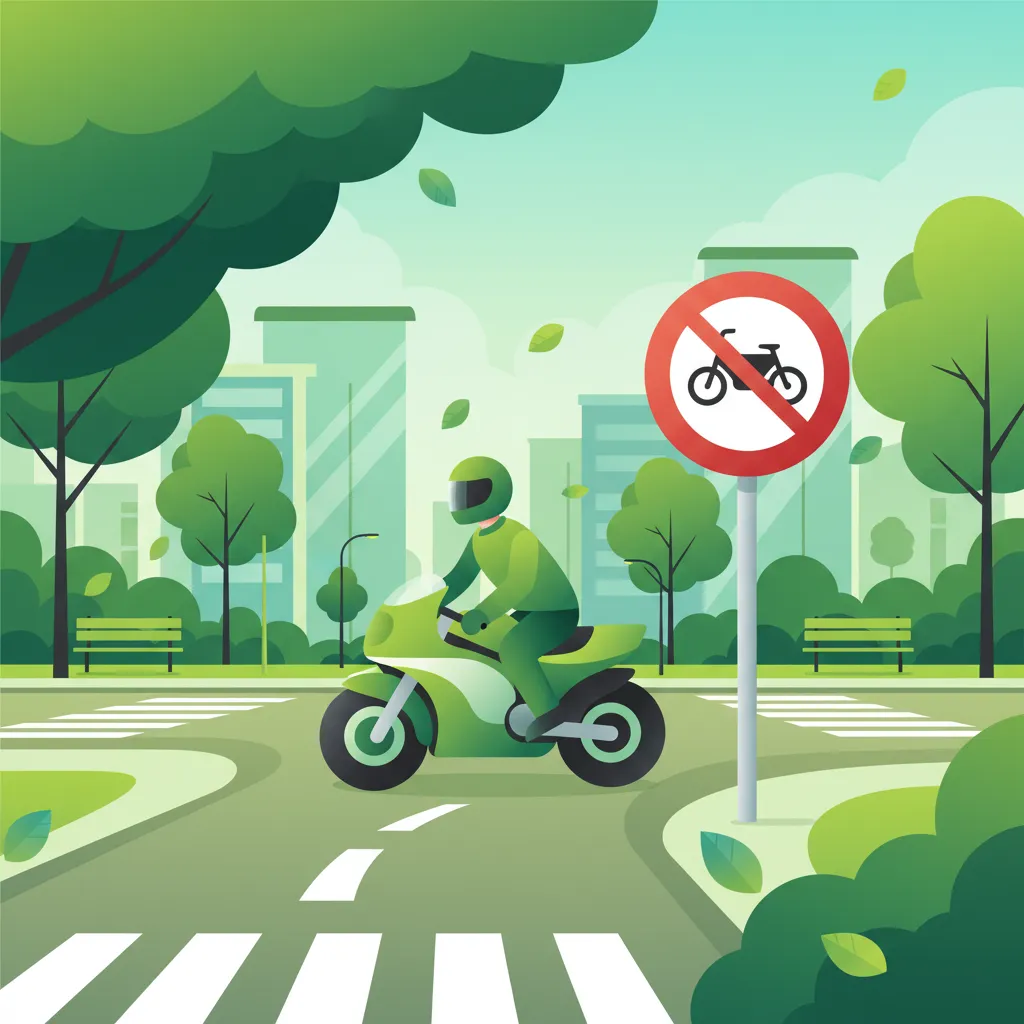
This lesson focuses on Dutch regulatory signs that enforce mandatory rules and restrictions, particularly those impacting A2 motorcyclists. You will learn to recognize and obey prohibition signs, such as those indicating a motorcycle ban (BORD 40), speed limits, and overtaking restrictions (BORD 21). The content explains the legal consequences of non-compliance and how to apply these rules in practical riding scenarios to ensure full adherence to Dutch traffic law.
This lesson focuses on the legal requirements and safe practices for riding near pedestrian crossings ('zebrapaden') and designated school zones. It details the absolute obligation to yield to pedestrians on or about to use a crossing and the need for significantly reduced speeds and heightened vigilance in areas with children. The content underscores the importance of anticipation and being prepared for unpredictable movements from vulnerable road users to prevent serious incidents.
Learn exactly which documents you must carry for your motorcycle and rider licence in the Netherlands. This lesson also covers common vehicle checks police perform, helping you avoid fines and legal issues during traffic stops.
This lesson serves as a critical reinforcement of the legal requirement to carry specific documents ('verkeersdocumenten') while riding. It explicitly lists the mandatory items—driving license, vehicle registration, and proof of insurance—and explains the legal consequences of failing to produce them on demand during a police stop. The content stresses that having these documents readily accessible is a basic and non-negotiable aspect of legal motorcycling in the Netherlands.
This lesson provides a definitive list of the documents a motorcyclist must carry at all times when riding in the Netherlands. It specifies the requirement for a valid driving license ('rijbewijs') for the correct category, the vehicle registration card ('kentekenbewijs'), and proof of valid third-party liability insurance ('verzekeringsbewijs'). The content clarifies that failure to produce these documents during a police check can result in significant fines and legal complications.
This lesson prepares riders for the possibility of a routine police check ('verkeerscontrole'). It explains what officers typically inspect, which includes the required documentation, the roadworthiness of the motorcycle (e.g., tire tread depth, exhaust legality), and the rider's sobriety. The curriculum provides guidance on how to interact calmly and cooperatively with law enforcement, ensuring the stop proceeds smoothly and efficiently while being aware of one's basic rights.
This lesson explains the legal framework for the mandatory periodic technical inspection (APK) as it applies to motorcycles in the Netherlands, although noting its specific applicability rules. It outlines the key safety and environmental components that are scrutinized during the inspection, such as brakes, tires, lighting, and exhaust emissions. Understanding these criteria helps riders maintain their vehicle in a constant state of roadworthiness and prepare for the formal inspection when required.
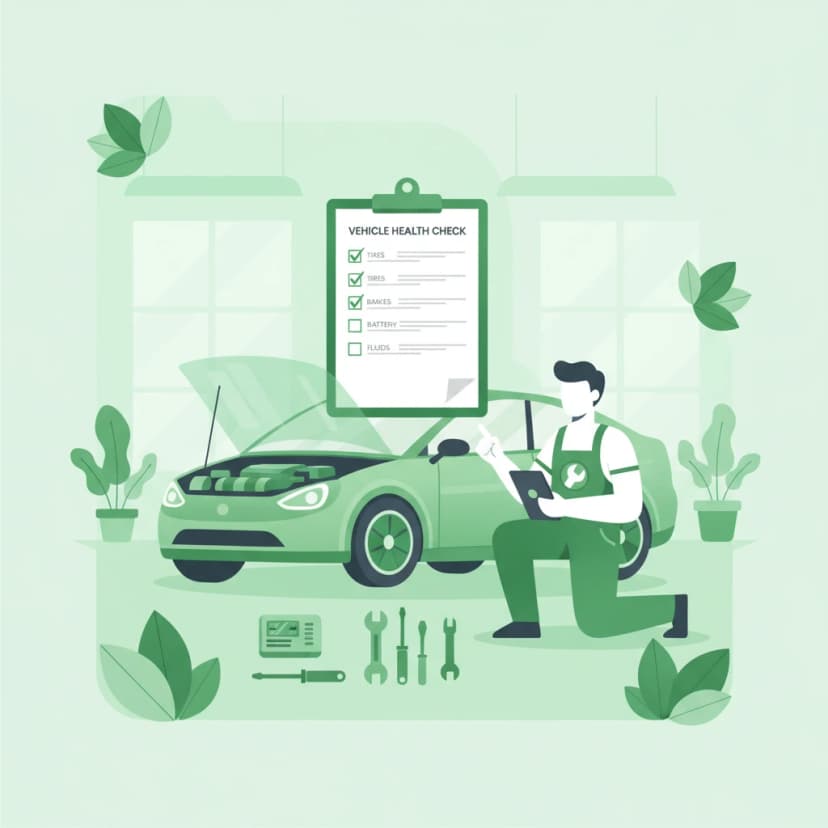
This lesson explains the purpose and frequency of the APK (Algemene Periodieke Keuring), the mandatory periodic safety and emissions inspection for vehicles in the Netherlands. You will understand what aspects of the car are checked, including brakes, steering, lights, and tires. The curriculum also details the essential documents you must have with you when driving, including the vehicle registration certificate (kentekenbewijs) and proof of insurance. Failure to comply with these requirements can result in significant fines.
This lesson details the systematic procedure for checking the functionality of all lights and indicators before a ride. This simple but critical safety check includes verifying the operation of the high and low beam headlight, the taillight, the brake light (using both front and rear brake activators), and all four turn signals. Ensuring all lights are working is a legal requirement and fundamental for visibility and communicating intentions to other road users.
This lesson covers the mandatory lighting and signaling equipment for A2 motorcycles under Dutch law, ensuring you remain visible and communicate your intentions correctly. You will learn the rules for using headlights, taillights, turn signals, and brake lights in various conditions, including daytime and adverse weather. The content also addresses the importance of maintaining this equipment and using hand signals as a valid secondary method of communication in traffic.
Holding a license and owning a vehicle comes with continuous legal responsibilities. This lesson reminds you of the importance of renewing your driving license before it expires and ensuring your vehicle's insurance policy remains active. It also covers your duty to inform the relevant authorities (like the RDW) of any changes, such as a change of address. Fulfilling these administrative obligations is essential to remaining a legal and responsible road user in the Netherlands.
Find clear answers to common questions learners have about Understanding Police Checks (controle) and Rights. Learn how the lesson is structured, which driving theory objectives it supports, and how it fits into the overall learning path of units and curriculum progression in the Netherlands. These explanations help you understand key concepts, lesson flow, and exam focused study goals.
You must always carry your valid Category A driving licence ('rijbewijs'), your motorcycle's registration certificate ('kentekenbewijs'), and proof of valid third-party liability insurance ('verzekeringsbewijs'). Failure to present these during a police check can result in fines.
Yes, Dutch police officers have the authority to stop any vehicle, including motorcycles, for routine checks. This includes verifying your driving licence, insurance, and the motorcycle's registration, as well as checking for roadworthiness.
Police officers can inspect your motorcycle for compliance with road safety regulations, such as checking lights, brakes, tyres, and noise levels. If they suspect an illegal modification or serious defect, they may require a further inspection.
Yes, if a police officer suspects you might be under the influence of alcohol or drugs, you are legally obliged to cooperate with sobriety tests. Refusing such a test can lead to severe penalties.
Remain calm, polite, and cooperative. Turn off your engine, keep your helmet on initially (unless asked to remove it), and wait for instructions. Avoid making sudden movements. Present your documents promptly when requested. This respectful approach generally leads to a smoother interaction.
While you must remain cooperative during the stop, you have the right to question the necessity of certain actions politely. If you believe your rights are being violated, you can lodge a formal complaint afterwards. However, during the stop itself, prioritising safety and de-escalation is key.