
Planning a motorcycle trip outside the Netherlands? This lesson covers the essential EU-wide regulations for Category A riders, highlighting common variations in speed limits, tolls, and required equipment. It will equip you to research and comply with the specific rules of each country you visit, ensuring a safe and legal journey.
Traveling by motorcycle across European borders from the Netherlands offers incredible freedom and adventure. However, to ensure a safe, legal, and stress-free journey, every Dutch Category A motorcycle rider must thoroughly understand the specific regulations that apply when riding in other European countries. While the European Union (EU) has harmonized many traffic rules, significant national variations still exist regarding documentation, mandatory equipment, speed limits, and road usage fees.
This lesson provides a comprehensive guide to navigating these international rules, preparing you not only for your Dutch Motorcycle Theory – Category A Comprehensive Preparation exam but also for real-world international riding. Non-compliance can lead to substantial fines, vehicle impoundment, denial of insurance coverage, or more severe legal consequences.
International motorcycle travel is increasingly popular, yet it demands a specific understanding of traffic laws beyond national borders. The European framework, built on principles like the Vienna Convention, aims to provide a predictable legal baseline across member states. This means that fundamental rules, such as general road signs and basic right-of-way principles, are often consistent.
However, each country retains the right to implement stricter or additional requirements tailored to its unique road safety contexts, environmental policies, or infrastructure funding models. Therefore, a dual-layer knowledge model is essential: a foundational understanding of EU-wide rules combined with diligent research into the country-specific overlays for every destination on your itinerary.
The concept of harmonised traffic rules across Europe is designed to facilitate safe and efficient cross-border movement. This harmonisation is achieved through various EU directives and international conventions, which set minimum standards that all participating countries must adopt.
Motorcyclists riding from the Netherlands into other European countries operate under a "dual-layer" regulatory framework. The first layer consists of EU-wide baseline rules, which provide a common foundation for traffic law. These include general principles for road signs, basic right-of-way rules, and minimum requirements for driver licensing and vehicle insurance. This baseline ensures a degree of predictability and safety for foreign riders.
The second layer involves country-specific overlays. These are additional or stricter requirements that individual member states impose. Examples include variations in speed limits, specific toll systems (vignettes or electronic tolls), mandatory safety equipment (like reflective vests or first-aid kits), and particular documentation nuances. Riders must research these national variations for each country on their route, as failure to comply can lead to fines, inconvenience, or even legal issues.
The foundation for harmonised traffic laws stems from international agreements and EU legislation:
While these frameworks provide a solid common ground, it's crucial not to assume identical rules. For instance, while the shape and colour of a "Give Way" sign might be harmonised across the EU, the exact conditions under which you must yield may have subtle national differences.
When riding your motorcycle outside the Netherlands, you must carry specific documents to prove your entitlement to ride, vehicle ownership, and insurance coverage. Police and border authorities in other countries have the right to request these at any time.
Your standard Dutch Category A driving licence is valid throughout the European Economic Area (EEA) and Switzerland. However, in countries where your licence is not issued in the official language, you may be required to carry an International Driving Permit (IDP).
A multilingual translation document, recognised under international conventions, that accompanies your national driving licence and makes it understandable to foreign authorities.
The IDP does not replace your national licence; it must always be presented alongside your valid Dutch licence. It's especially crucial for travel in countries like Italy and Spain, where local police frequently request it. IDPs are typically valid for one year from the date of issue and must be obtained from a recognised Dutch authority, such as the RDW (Rijksdienst voor het Wegverkeer), or organisations like the ANWB. Always ensure your IDP is valid for the same period as your national licence.
The Green Card, officially known as the International Motor Insurance Certificate, is definitive proof that your compulsory third-party liability insurance meets the minimum legal requirements of the countries you are visiting.
An internationally recognised document issued by your insurer that confirms your compulsory third-party liability insurance coverage is valid in all participating countries.
You must carry a valid Green Card (physical paper or electronic equivalent) whenever you ride your motorcycle in any EU country, as well as Norway, Switzerland, Iceland, Liechtenstein, and several other non-EU states. Your Dutch insurer will issue this document, often automatically. It must be valid for the entire duration of your trip. While EU directives guarantee cross-border insurance validity, presenting the Green Card streamlines police checks and accident handling abroad.
Always carry your original vehicle registration certificate (kentekenbewijs) when riding abroad. This document proves that your motorcycle is legally registered and belongs to you (or that you have permission to use it). For newer motorcycles, this usually consists of a credit card-sized document. Authorities may also request proof of recent technical inspection (APK for cars, though not mandatory for motorcycles in NL, but relevant if required in the host country).
Beyond basic riding gear, many European countries mandate specific safety equipment to be carried on or worn by motorcyclists. These requirements are designed to enhance safety and emergency preparedness.
A reflective high-visibility vest is a crucial safety item. Several European countries, including Austria, Switzerland, Czech Republic, Slovakia, and Slovenia, legally require motorcyclists to carry one. Furthermore, if you stop on the roadside or hard shoulder (e.g., due to a breakdown or emergency), you are typically required to wear the vest to increase your visibility to other road users.
Forgetting to carry a reflective vest, or failing to wear it when stopped on a motorway, can result in significant fines in countries where it is mandatory.
A properly stocked first-aid kit is another item mandated in certain countries, notably Austria, Switzerland, and the Czech Republic. While highly recommended everywhere, its absence in these specific countries can lead to administrative penalties. The kit should comply with national standards, which typically include items like bandages, antiseptic wipes, sterile dressings, and gloves.
Speed limits are among the most significant variations you will encounter when riding across European borders. While some general patterns exist, specific limits for motorways, expressways, and urban areas can differ substantially from Dutch regulations.
Do not assume that the Dutch motorway limit of 130 km/h applies universally. Here are illustrative examples of typical ranges, but always check current local signage:
Many modern GPS systems can display country-specific speed limits. However, always defer to actual road signs, which may indicate temporary or local reductions.
In addition to static speed limits, many countries impose dynamic or advisory limits based on weather conditions. For example, on German Autobahnen without a general speed limit, you are legally obliged to adjust your speed to conditions, often meaning significantly reduced speeds during heavy rain, fog, or snow. Ignoring these advisory limits or failing to reduce speed in adverse weather can lead to fines and increased liability in case of an accident. Some countries explicitly state reduced limits during rainfall, as seen in France and Austria.
Accessing certain road networks in Europe often requires payment. These systems vary widely, from electronic tolls to physical stickers.
A physical sticker or electronic permit that serves as proof of payment for using specific toll road networks in certain European countries.
In countries like Italy and Spain, motorways (autostrade/autopistas) often use pay-at-booth systems. You take a ticket upon entry and pay at an exit booth based on the distance traveled. Ensure you are in the correct lane for motorcycles or vehicles paying with cash/card. Some toll systems also offer electronic tags that allow automatic payment without stopping, which can be convenient for frequent travelers.
Always verify the correct payment method for each toll road. Attempting to use a "toll-only" lane without a valid transponder or by driving through a barrier can lead to fines.
Even within the Schengen Area, where internal border checks are largely abolished, police in any country retain the right to conduct routine traffic stops or targeted inspections. When traveling to non-Schengen countries (like Switzerland or Norway), full border controls are still in place.
During a police check, you will typically be asked to present:
Always remain calm, polite, and cooperative. If you do not understand the officer's language, politely request an interpreter or for instructions to be written down.
Within the Schengen Area, you typically won't encounter routine passport checks at internal borders. However, you must still be prepared for traffic police checks anywhere. When crossing into non-Schengen countries (e.g., Switzerland, Norway), you will undergo full passport and customs controls. Ensure your passport is valid, and be prepared to declare any unusual items or large sums of cash. Your documents, including IDP and Green Card, will be thoroughly checked.
While the Vienna Convention has harmonised many road sign designs across Europe, national variations in appearance, exact wording, and local interpretation still exist. It is essential to understand the meaning behind the signs, rather than relying solely on their exact visual appearance or Dutch equivalent.
Most European road signs adhere to the Vienna Convention's standards for shapes and colours:
Even with harmonisation, minor differences in symbols or additional text can change a sign's precise meaning. For example, a "No Overtaking" sign might use a slightly different pictorial representation or include a red diagonal line on a blue background in some countries (like Austria).
Be alert for signs that are unique to a particular country or region. For instance, specific signs might denote "Alpines Tunnelverbot" (Alpine tunnel prohibition) in mountainous regions of Austria or Switzerland, indicating restrictions for certain vehicles. Similarly, parking regulations, environmental zone signs, or priority rules at complex intersections may be communicated with locally specific signage. Always take a moment to interpret unfamiliar signs carefully.
Knowing the correct procedure to follow after an accident abroad is vital. Swift and proper action can prevent further complications with insurance claims and legal responsibilities.
Understanding common pitfalls can help you avoid unnecessary fines and complications during your international motorcycle journey.
To summarise, a successful and compliant cross-border motorcycle trip hinges on thorough preparation and adherence to a few core principles:
By meticulously preparing and remaining adaptable to local regulations, you can enjoy the unparalleled experience of motorcycle touring across Europe safely and legally.
Lesson content overview
Explore all units and lessons included in this driving theory course.
Explore search topics learners often look for when studying Cross-Border Riding Regulations (EU-rijregels). These topics reflect common questions about road rules, driving situations, safety guidance, and lesson level theory preparation for learners in the Netherlands.
Browse additional driving theory lessons that cover connected traffic rules, road signs, and common driving situations related to this topic. Improve your understanding of how different rules interact across everyday traffic scenarios.
Learn about the essential documentation, including International Driving Permits and Green Cards, plus mandatory safety equipment like reflective vests and first-aid kits required for motorcycle travel across EU countries. Understand how to prepare for international trips.

This lesson addresses the crucial topic of insurance validity for international motorcycle travel. It explains the purpose of the International Motor Insurance Card (Green Card) and clarifies in which countries it is mandatory versus recommended. The content guides riders on how to check their existing policy for territorial limits and what steps to take to ensure they have the necessary third-party liability coverage required to ride legally and be protected financially when traveling outside the Netherlands.
This lesson provides a definitive list of the documents a motorcyclist must carry at all times when riding in the Netherlands. It specifies the requirement for a valid driving license ('rijbewijs') for the correct category, the vehicle registration card ('kentekenbewijs'), and proof of valid third-party liability insurance ('verzekeringsbewijs'). The content clarifies that failure to produce these documents during a police check can result in significant fines and legal complications.

This lesson serves as a critical reinforcement of the legal requirement to carry specific documents ('verkeersdocumenten') while riding. It explicitly lists the mandatory items—driving license, vehicle registration, and proof of insurance—and explains the legal consequences of failing to produce them on demand during a police stop. The content stresses that having these documents readily accessible is a basic and non-negotiable aspect of legal motorcycling in the Netherlands.
This lesson details the legal requirements for personal protective equipment in the Netherlands, with a primary focus on the mandatory use of an approved helmet meeting ECE 22.05 or 22.06 standards. It explains the different types of helmets and the pros and cons of each. While other gear like jackets, gloves, and boots may not be legally mandatory, the lesson strongly emphasizes their critical role in injury prevention.
Explore the variations in European traffic laws, speed limits, and road sign interpretations compared to the Netherlands. This lesson covers understanding foreign signage and navigating different toll systems like vignettes for compliant motorcycle travel.
This lesson provides essential guidance on recognizing and interpreting traffic signs that may differ from Dutch standards but are commonly encountered when riding across borders within the European Union. It highlights key differences based on the Vienna Convention on Road Signs and Signals, helping riders understand variations in regulatory, warning, and informational signs. This knowledge is crucial for maintaining legal compliance and safety when navigating foreign road systems, ensuring a confident international riding experience.
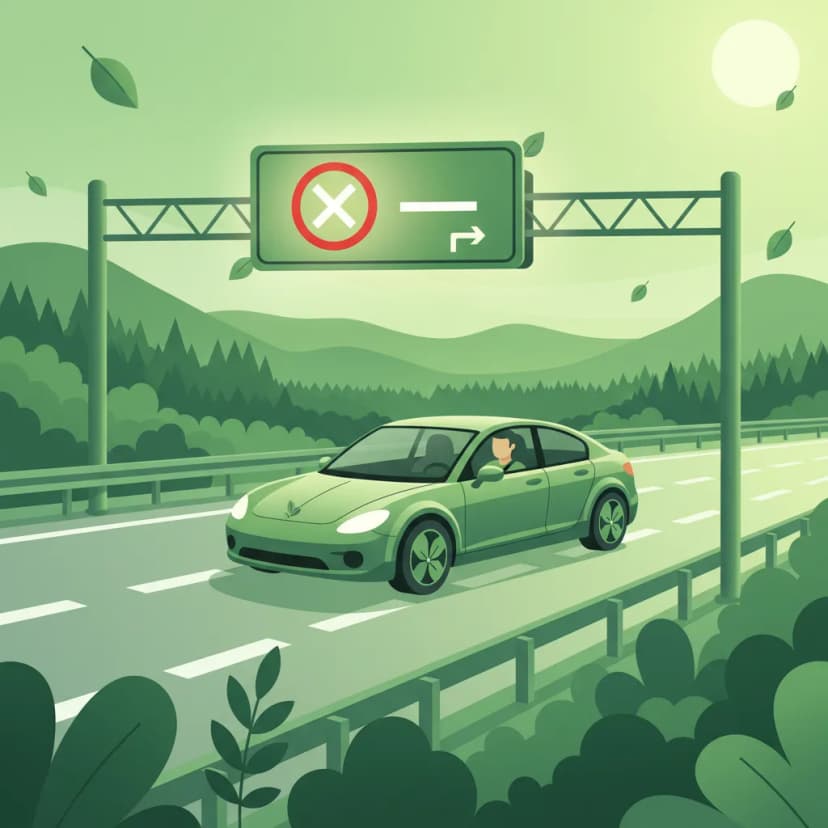
This lesson examines the function and interpretation of variable message signs (VMS) and other digital displays that provide real-time traffic information on Dutch roads. It explains how these systems communicate dynamic speed limits, congestion alerts, lane closures, and diversion routes, and how motorcyclists must legally comply with these instructions. Understanding these 'matrixborden' is critical for adapting to changing road conditions and ensuring safety on motorways and in tunnels.
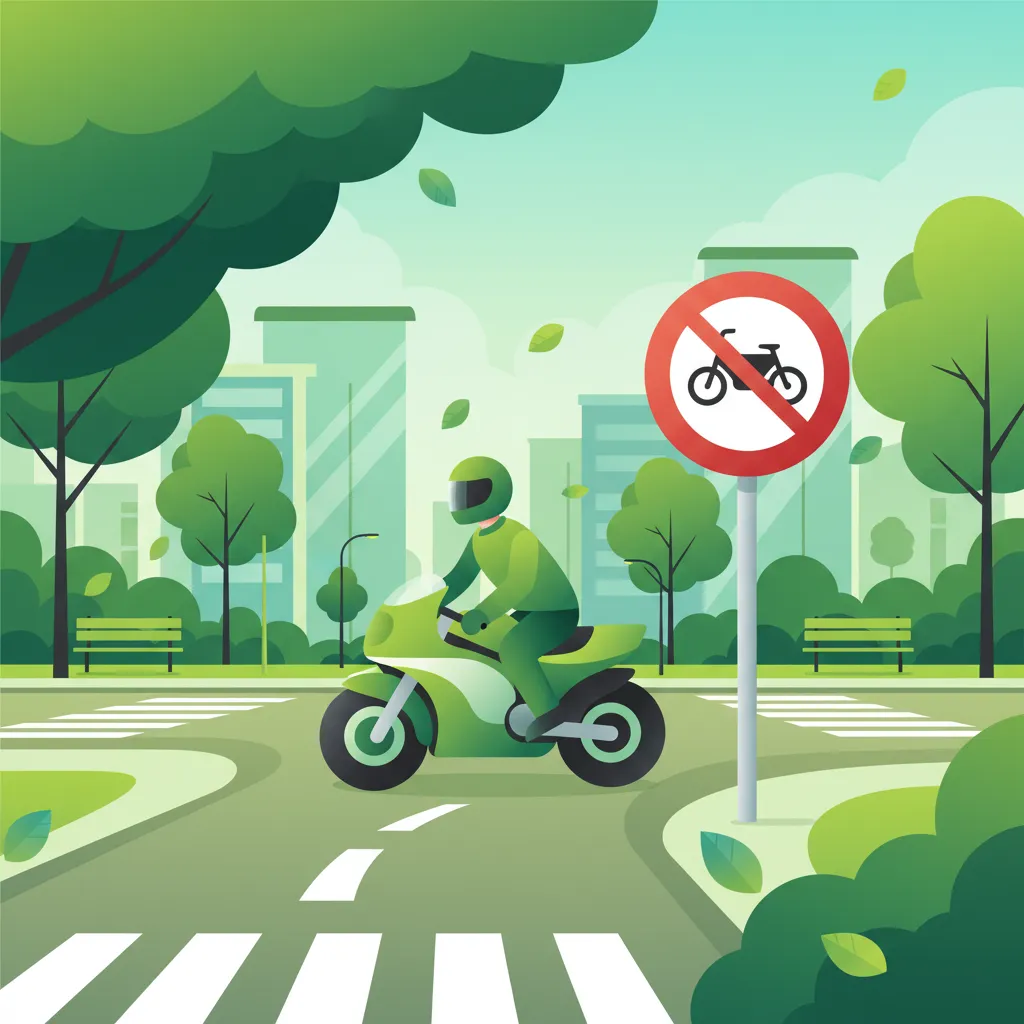
This lesson focuses on Dutch regulatory signs that enforce mandatory rules and restrictions, particularly those impacting A2 motorcyclists. You will learn to recognize and obey prohibition signs, such as those indicating a motorcycle ban (BORD 40), speed limits, and overtaking restrictions (BORD 21). The content explains the legal consequences of non-compliance and how to apply these rules in practical riding scenarios to ensure full adherence to Dutch traffic law.
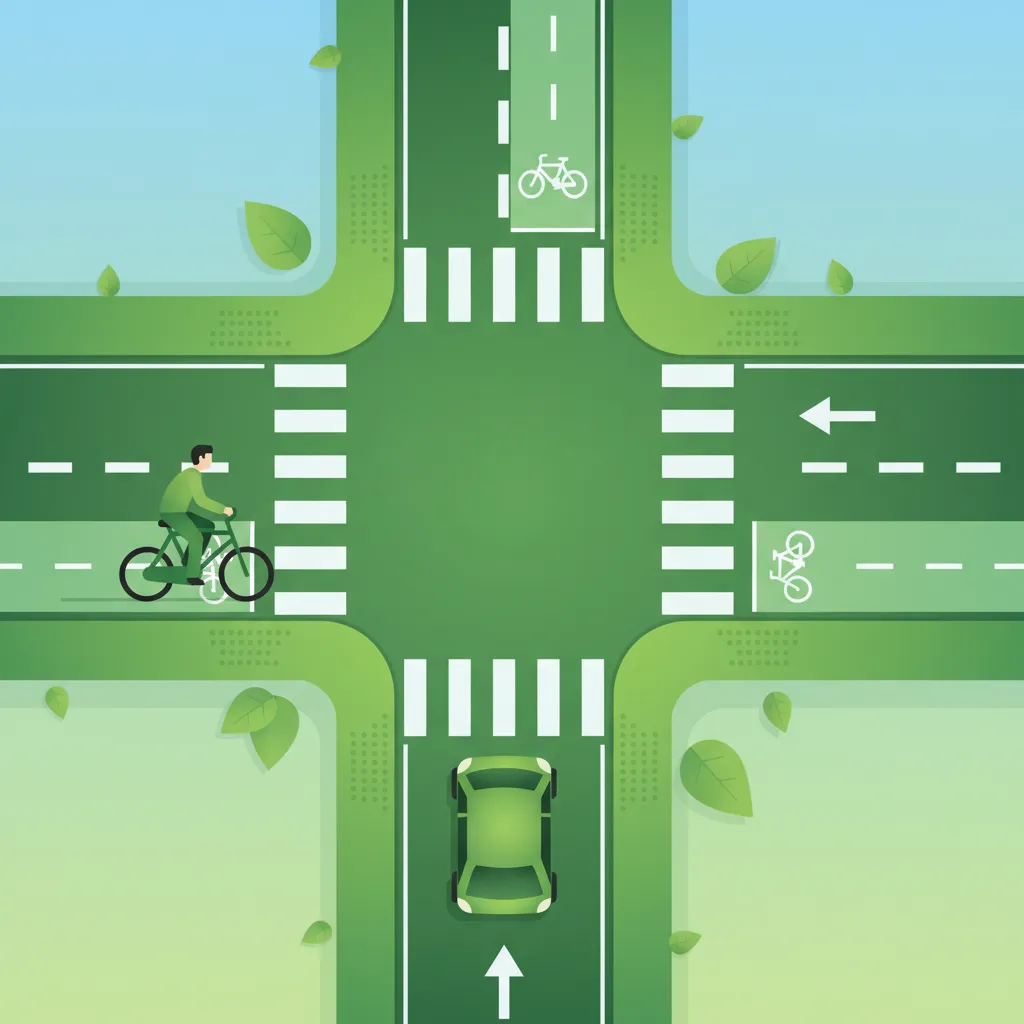
This lesson explores the legal meaning of various road surface markings, including solid and broken lane delimiters, directional arrows, and special-purpose lane indicators. It describes how markings dictate permitted maneuvers, such as overtaking and lane changes, and alert riders to upcoming hazards or changes in road layout. The content also examines the relationship between markings and road design in the Netherlands, emphasizing how a motorcyclist must interpret these visual cues for safe positioning.
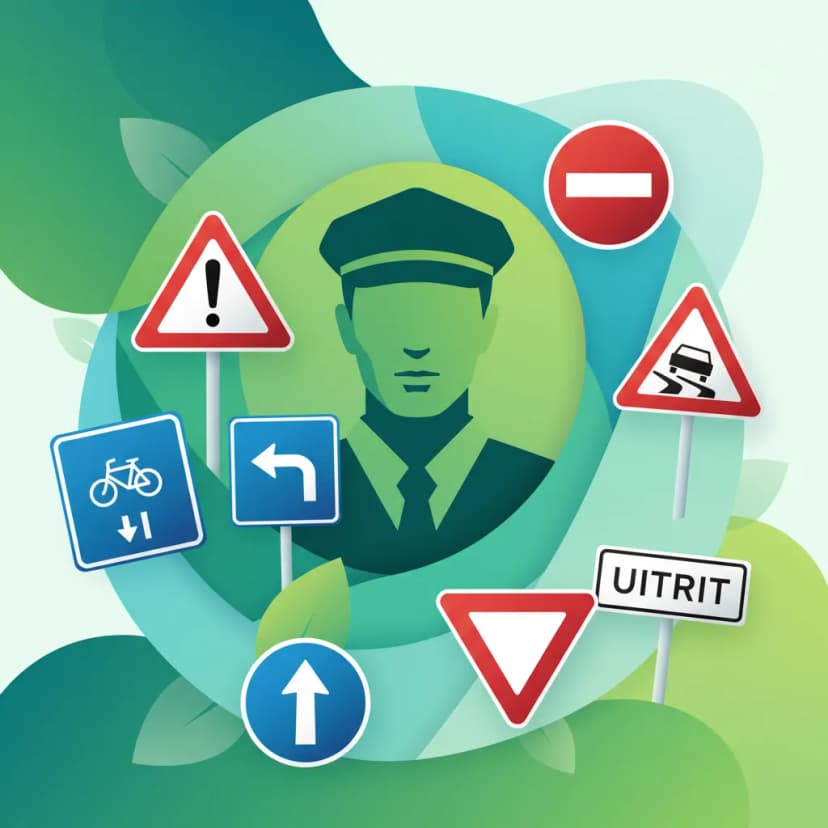
This lesson builds on the understanding of international signage by focusing on the practical recognition of common foreign road signs ('buitenlandse borden'). While many symbols are standardized under the Vienna Convention, this lesson points out subtle but important differences in design and meaning. It helps riders develop the skill of quickly interpreting unfamiliar signage, ensuring they can understand and comply with local traffic regulations when riding abroad.
This lesson covers the universal Dutch road rules with a specific focus on their application to light motorcycles. It details the various speed limits for different road types, from urban areas to motorways, and explains the correct procedures for overtaking and lane positioning. The legal aspects of lane filtering in congestion are also examined, alongside mandatory equipment use like daytime running lights, to ensure riders can integrate safely and legally into traffic flow.
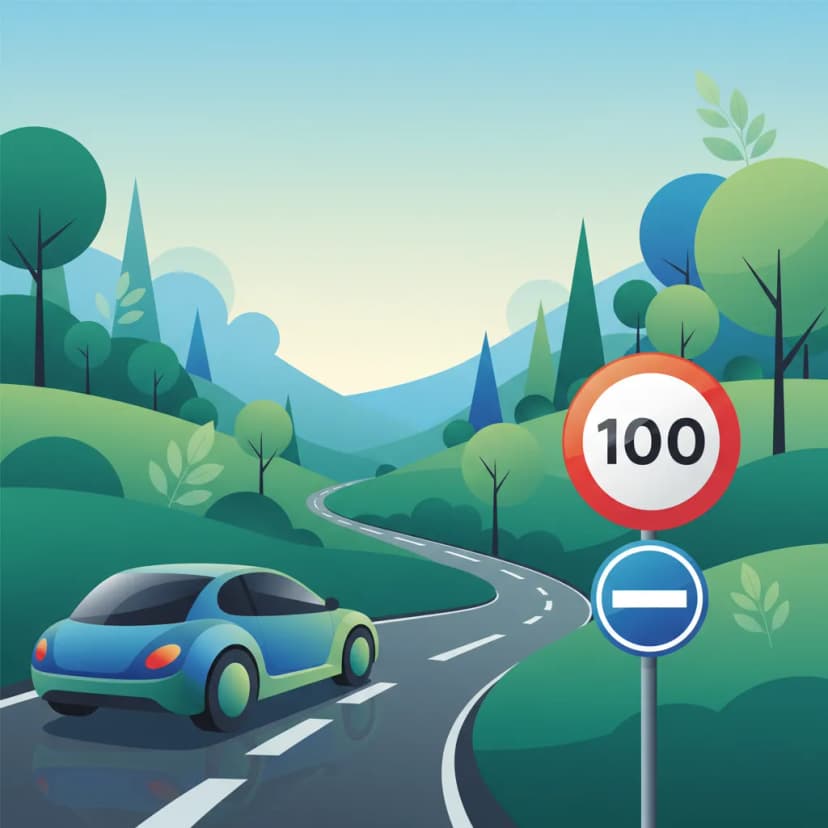
This lesson provides a detailed overview of fixed speed limits on the Dutch road network and the signs that indicate them. You will learn to identify signs for maximum speed (BORD 50) and understand the default limits that apply within built-up areas, on rural roads, and on motorways. The content emphasizes the importance of constant awareness and legal compliance to avoid penalties and ensure road safety for yourself and others.
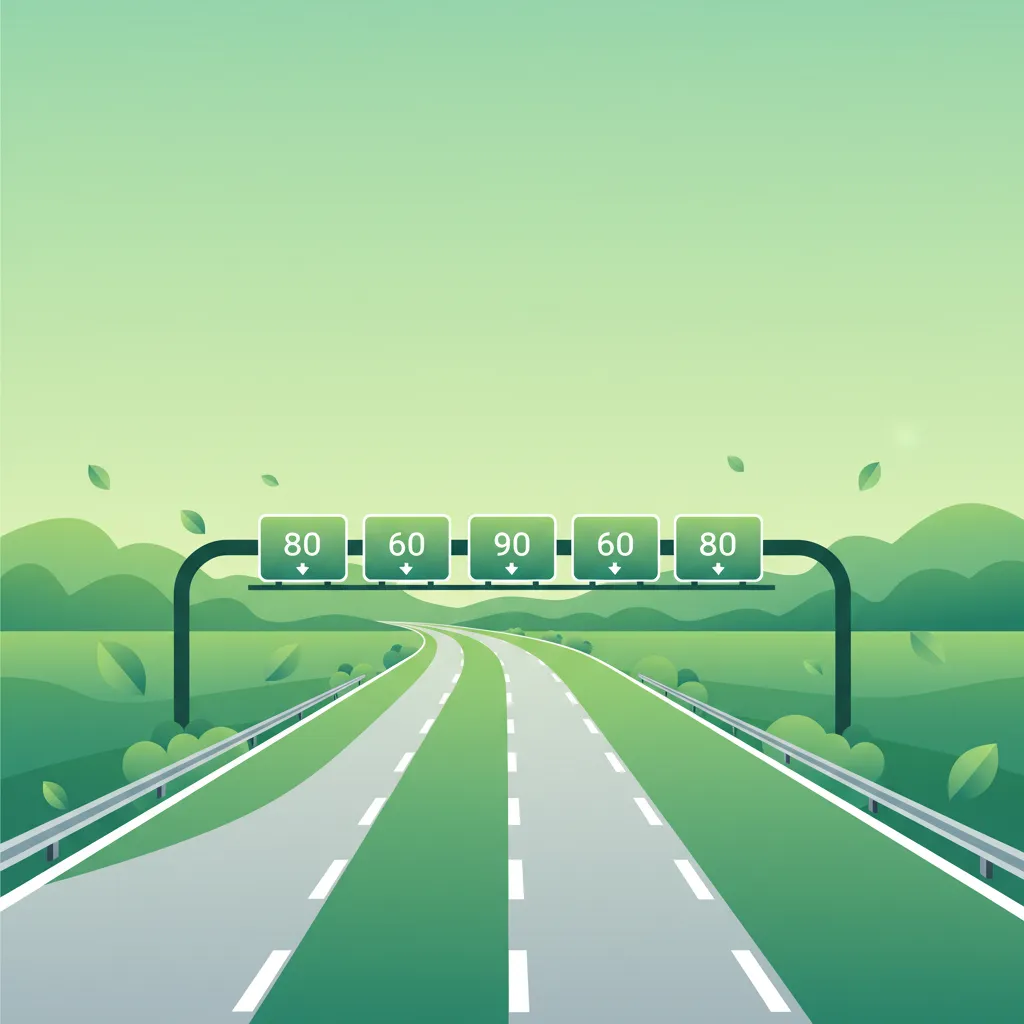
This lesson explains how to respond to variable speed limits shown on overhead electronic signs, which are used to manage traffic flow in real-time. You will learn why these limits are adjusted for factors like congestion, accidents, or bad weather, and the legal requirement to obey them. The content focuses on the importance of anticipatory riding, scanning far ahead for these signs to allow for smooth and safe speed adjustments.
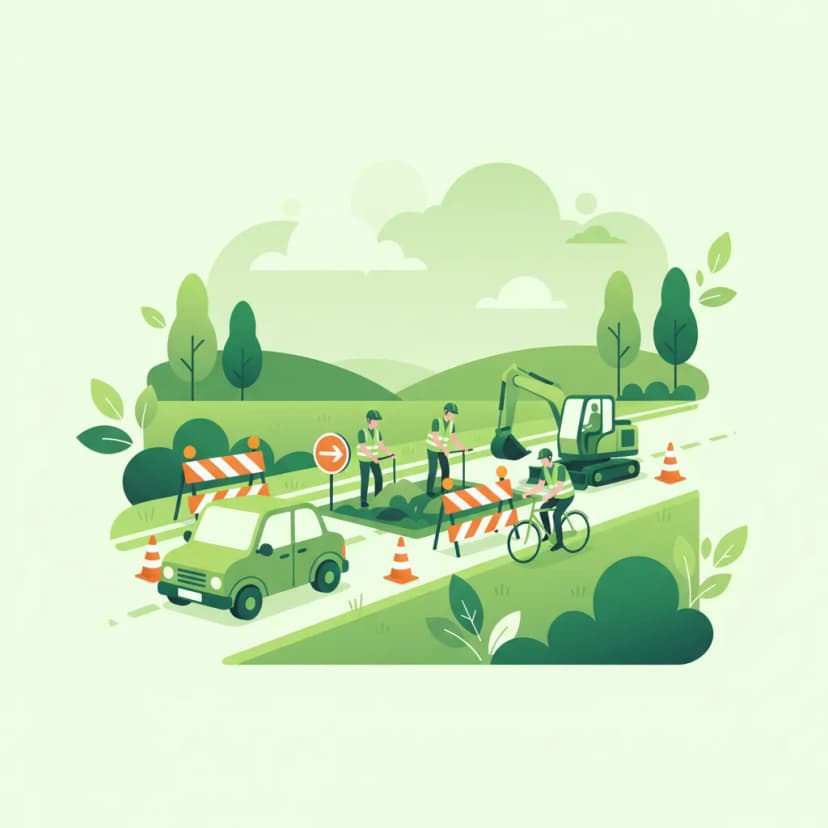
This lesson prepares riders for navigating the unique challenges of construction zones and temporary road layouts. It covers the identification of orange-colored temporary signs, understanding detour (omleiding) routes, and adhering to reduced speed limits. Special attention is given to the hazards common in work zones, such as loose gravel, uneven surfaces, and the presence of workers, emphasizing the need for heightened awareness and caution.
This lesson focuses on C-code regulatory signs, which impose legal obligations and prohibitions on road users. Learners will study signs that establish speed limits, forbid entry, mandate specific directions, and restrict overtaking or parking. Understanding these signs is non-negotiable for legal compliance and safety, as they form the basis of traffic regulation and are a major component of the CBR theory exam for motorcyclists.
Find clear answers to common questions learners have about Cross-Border Riding Regulations (EU-rijregels). Learn how the lesson is structured, which driving theory objectives it supports, and how it fits into the overall learning path of units and curriculum progression in the Netherlands. These explanations help you understand key concepts, lesson flow, and exam focused study goals.
No, while the EU has many harmonized rules, national speed limits for motorcycles can vary significantly between countries. Always research the specific speed limits for the countries you plan to visit before you ride. Some countries may also have different limits for different types of roads or in specific zones.
A vignette is a type of toll sticker that you must purchase and display on your motorcycle windshield to legally use certain motorways or highways in some European countries. Countries like Austria, Switzerland, and Slovenia commonly require vignettes for their motorways. You should buy these before entering the country or at the border.
Besides your regular riding gear and motorcycle documents, some countries require specific items like a first-aid kit, a high-visibility vest, a spare bulb kit, or even a breathalyzer. It's crucial to check the regulations for each country on your itinerary, as failure to comply can result in fines.
For travel within the EU and most European countries, your standard Dutch Category A motorcycle license is generally sufficient. However, it's always wise to confirm this with the official tourism or transport authority of the destination country, especially if traveling to non-EU European nations.
The best approach is to consult the official government or tourism websites for the country you'll be visiting. Alternatively, many motorcycle touring websites and forums provide up-to-date information on cross-border regulations, though always cross-reference with official sources where possible.