
Navigating different speed zones is crucial for motorcycle safety and passing your Category A theory exam. This lesson clarifies the Dutch rules for riding inside and outside built-up areas, as well as special zones like 30 km/h areas and woonerven. You'll learn how to recognise these zones and adjust your riding style to the specific risks and speed regulations they entail.
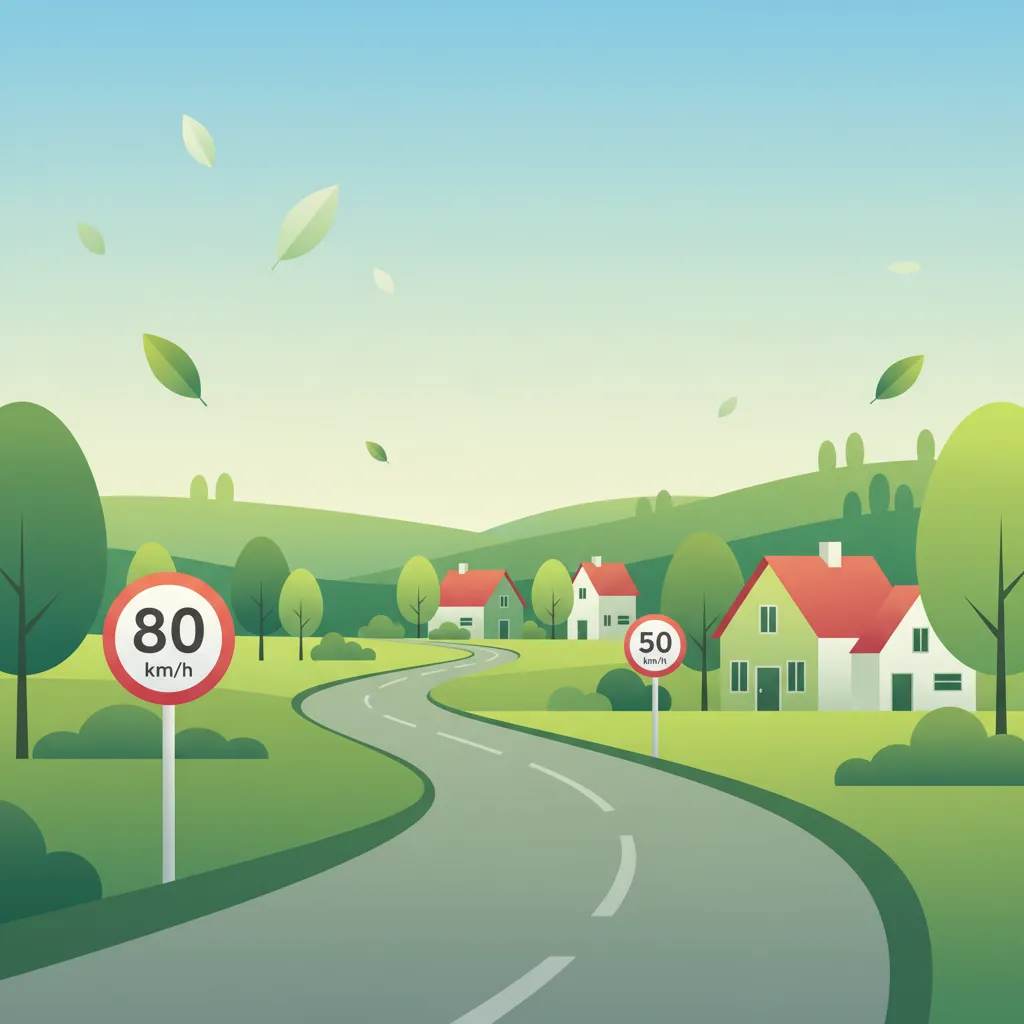
Understanding and correctly interpreting speed limit zones is fundamental for safe and legal motorcycling in the Netherlands. This lesson explores the various types of speed zones, their legal definitions, and the practical implications for riders on Dutch roads. From urban environments to open rural stretches, adapting your speed to the specific conditions and signage is crucial for minimizing risks and ensuring compliance with the Rijkswegverkeerswet (RVV 1990).
Effective speed management involves more than just adhering to a number; it requires a dynamic assessment of the environment, potential hazards, and the legal framework governing each road section. Different speed limit zones are designed to enhance safety by matching the maximum permissible speed to the inherent risks of an area, such as the presence of pedestrians, cyclists, or complex intersections. For motorcyclists, precise speed control directly impacts stopping distance, maneuverability, and overall safety, especially when operating powerful Category A machines.
Speed limits are not arbitrary; they are meticulously set based on principles of physics, road design, and human factors. Lower speeds significantly reduce kinetic energy, thereby decreasing the severity of potential impacts. They also provide more time for riders to perceive and react to hazards, making roads safer for all users, particularly vulnerable ones like pedestrians and cyclists.
The term binnen de bebouwde kom translates to "inside the built-up area" and signifies a zone where a lower default speed limit applies due to increased urban activity. Recognizing the boundaries of these zones is paramount for motorcyclists.
The primary indicator for entering or exiting a built-up area in the Netherlands is the plaatsnaamteken, or place-name sign. This white rectangular sign displays the name of a town or village and instantly triggers a change in the default speed limit. When you see this sign without a diagonal bar through it, you are entering a built-up area. The same sign, but with a red diagonal bar, indicates you are leaving the built-up area.
Once you pass a plaatsnaamteken indicating entry into a built-up area, the default maximum speed limit for motorcycles, unless otherwise signposted, becomes 50 km/h. This rule is enshrined in Dutch traffic law, specifically RVV 1990 Art. 3.2. Motorcyclists must immediately reduce their speed upon crossing the line of the sign.
Inside built-up areas, riders must anticipate frequent stops, active intersections, and a high density of other road users. This includes pedestrians, cyclists, and parked vehicles. Your riding style should become more cautious, with increased vigilance and readiness for sudden braking or evasive maneuvers.
Urban streets present specific challenges for motorcyclists. These include narrower lanes, numerous junctions, potential for parked cars opening doors, and the presence of children playing near the road. Overtaking on the right is generally prohibited within built-up areas, further emphasizing the need for disciplined lane usage and awareness. Riders should also be especially alert for cyclists, who often share lanes or use dedicated cycle paths that may intersect with the main road.
When you are outside a built-up area, the road environment changes significantly. These roads, referred to as buiten de bebouwde kom, typically have higher default speed limits and different hazards.
A non-built-up area is any road segment not enclosed by the start and end plaatsnaamteken. Upon passing an end-of-built-up-area sign, the default speed limit typically increases. The absence of an explicit speed limit sign or plaatsnaamteken means the general non-built-up area rules apply.
For motorcycles, the default maximum speed limit buiten de bebouwde kom is 80 km/h, as per RVV 1990 Art. 3.2b. This higher limit reflects the generally lower density of direct interactions with pedestrians and cyclists. However, this does not imply a lower risk. Rural roads can feature unexpected sharp curves, varying road surfaces, concealed driveways, and slower-moving agricultural vehicles.
Rural roads often include numerous curves, and calculating a safe speed for these is critical. Factors such as the curve's radius, road surface condition, and visibility into the curve dictate how fast you can safely corner. High speeds on curves increase lateral forces, raising the risk of losing traction. Riders must also be vigilant for wildlife, fallen debris, or slow vehicles entering the road from side access points.
Beyond the general built-up and non-built-up area distinctions, the Netherlands has specific zones with even lower speed limits designed to protect vulnerable road users.
30 km/h zone)A 30 km/h zone is a designated area where the maximum speed is strictly limited to 30 km/h for all motorized vehicles, including motorcycles. These zones are typically found in residential areas, near schools, hospitals, or shopping centers where pedestrian and cyclist activity is high. The zone is clearly marked by a circular blue sign with the number "30" in white.
The speed limit of 30 km/h in these zones is mandatory according to RVV 1990 Art. 3.8. It remains in effect until you see an "end 30 km/h zone" sign or a different speed limit sign. In these areas, riders must adopt a particularly cautious and smooth riding style, anticipating sudden movements from children or pedestrians.
Woonerf): A Shared SpaceA woonerf, often translated as a "residential yard" or "living street," is a unique shared space concept in the Netherlands where pedestrians, cyclists, and motorized traffic coexist with pedestrian priority. These zones are marked by a distinctive orange sign featuring a white house, car, and children playing.
Within a woonerf, motorized traffic must give way to pedestrians and cyclists at all times, and the default maximum speed limit is commonly 15 km/h, though some local ordinances may allow up to 30 km/h. Exceeding this limit or failing to yield is a serious violation under RVV 1990 Art. 4.4. Motorcyclists must be prepared for unpredictable movements, pedestrians crossing anywhere, and traffic-calming devices such as speed bumps or narrowed sections.
Beyond the primary zones, temporary or contextual speed reductions can occur. These might include school zones during pick-up/drop-off times, areas with road construction, or event zones. These are typically indicated by temporary yellow signs or variable message signs, and they always override standard speed limits.
When multiple signs are present, it's crucial to understand which sign takes precedence. This is known as the sign recognition hierarchy.
The hierarchy ensures clarity when different types of information are conveyed simultaneously. For speed limits, the order of importance generally follows this pattern:
A common mistake is to ignore a plaatsnaamteken because a specific speed limit sign appears later. The plaatsnaamteken defines the status of the road (built-up or non-built-up) first, setting the base speed. Any subsequent speed limit sign then modifies that base speed for a specific stretch. For example, if you enter a town (50 km/h default) and later see a 30 km/h zone sign, you must obey the 30 km/h. When you exit the 30 km/h zone, you revert to the 50 km/h limit for the built-up area, not 80 km/h, unless you also exit the built-up area.
Adherence to speed limits in the Netherlands is rigorously enforced to maintain road safety. Motorcyclists are subject to the same enforcement methods as other vehicle users.
Two primary automated systems are used for speed enforcement:
Exceeding the speed limit carries significant legal and financial consequences. These can include:
While posted speed limits provide a legal maximum, a truly skilled motorcyclist understands that the "safe" speed often differs from the "legal" speed, especially under varying conditions.
Adverse weather dramatically impacts grip and visibility, necessitating significant speed reductions.
Your ability to see and be seen changes with light conditions.
The condition of your motorcycle and any load it carries also influence safe speed.
In areas with high pedestrian or cyclist traffic, proactive speed reduction is a critical safety measure.
Understanding the scientific principles that underpin speed limits reinforces why adherence is so important for motorcyclists.
As established, kinetic energy increases exponentially with speed. Reducing your speed from 80 km/h to 50 km/h, for instance, cuts your kinetic energy by approximately 61%. This dramatic reduction directly translates to a lower severity of injuries and damage in the event of a collision. For a motorcyclist, who lacks the protective shell of a car, this is a life-saving difference.
Total stopping distance is the sum of two components:
Lower speeds exponentially reduce total stopping distance, providing crucial extra space and time to avoid or mitigate a collision.
In complex environments like built-up areas, riders experience higher cognitive load due to the increased amount of information to process (multiple signs, pedestrians, changing traffic lights). Lower speeds reduce this cognitive load, improving perception, decision-making time, and the ability to react effectively to unexpected events. This enhanced mental capacity is vital for defensive riding.
Mastering speed limit zones in the Netherlands means more than just memorizing numbers. It requires an active understanding of the plaatsnaamteken for built-up and non-built-up areas, recognizing special zones like 30 km/h zones and woonerven, and applying the sign recognition hierarchy. Beyond legal compliance, it's about making informed decisions to adjust your speed based on conditions, ensuring your safety and the safety of others. This foundational knowledge is crucial for anyone preparing for the Dutch CBR Category A motorcycle theory exam and for becoming a responsible rider on Dutch roads.
Lesson content overview
Explore all units and lessons included in this driving theory course.
Explore search topics learners often look for when studying Speed Limit Zones (buiten de bebouwde kom, binnen de bebouwde kom). These topics reflect common questions about road rules, driving situations, safety guidance, and lesson level theory preparation for learners in the Netherlands.
Browse additional driving theory lessons that cover connected traffic rules, road signs, and common driving situations related to this topic. Improve your understanding of how different rules interact across everyday traffic scenarios.
Explore the distinctions between built-up areas, rural roads, 30 km/h zones, and woonerven. Learn how to identify these zones and understand the specific hazards and speed regulations applicable to each in the Netherlands.
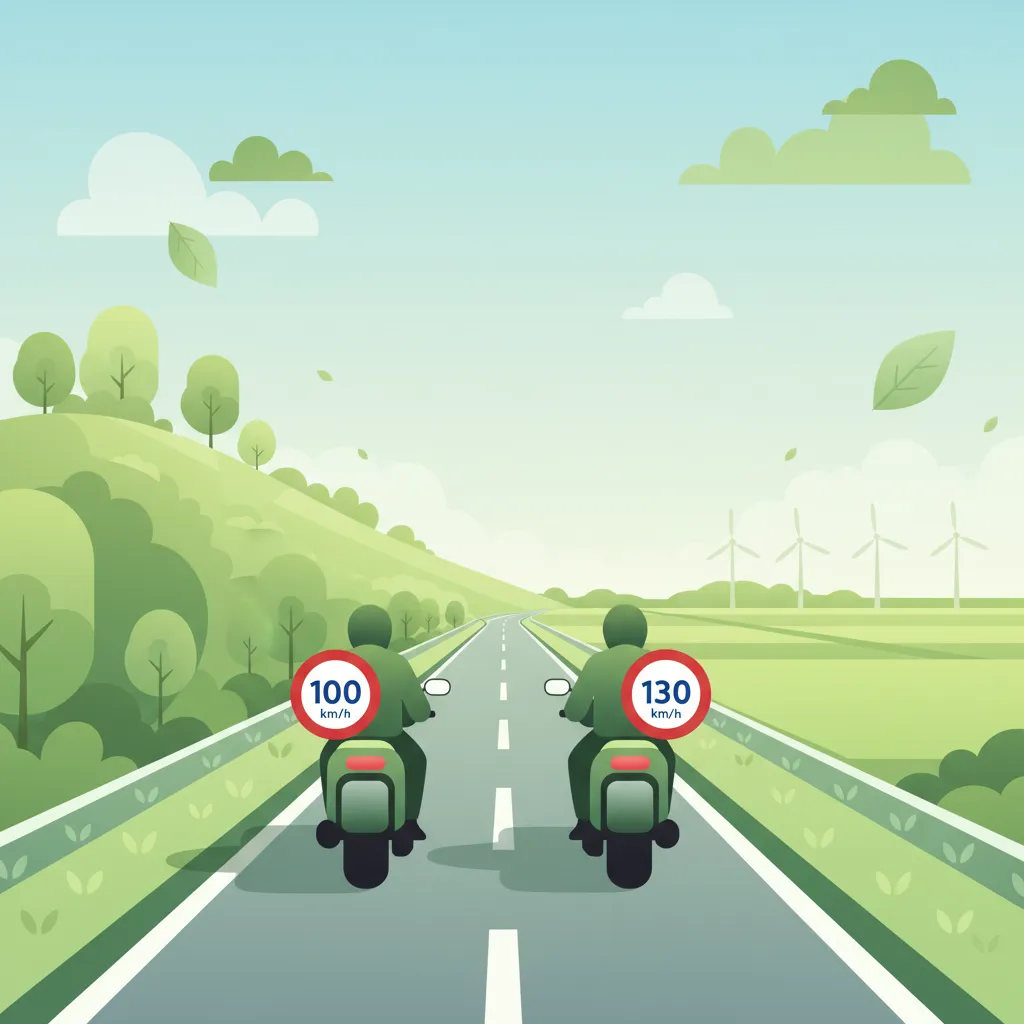
This lesson outlines the statutory national speed limits applicable to motorcycles in the Netherlands. It clearly defines the maximum permitted speeds on motorways ('snelwegen'), non-motorway rural roads ('buiten de bebouwde kom'), and within built-up areas ('binnen de bebouwde kom'). The content also addresses variations, such as time-dependent speed limits on certain motorways, ensuring riders have a complete and accurate understanding of the legal requirements for speed.
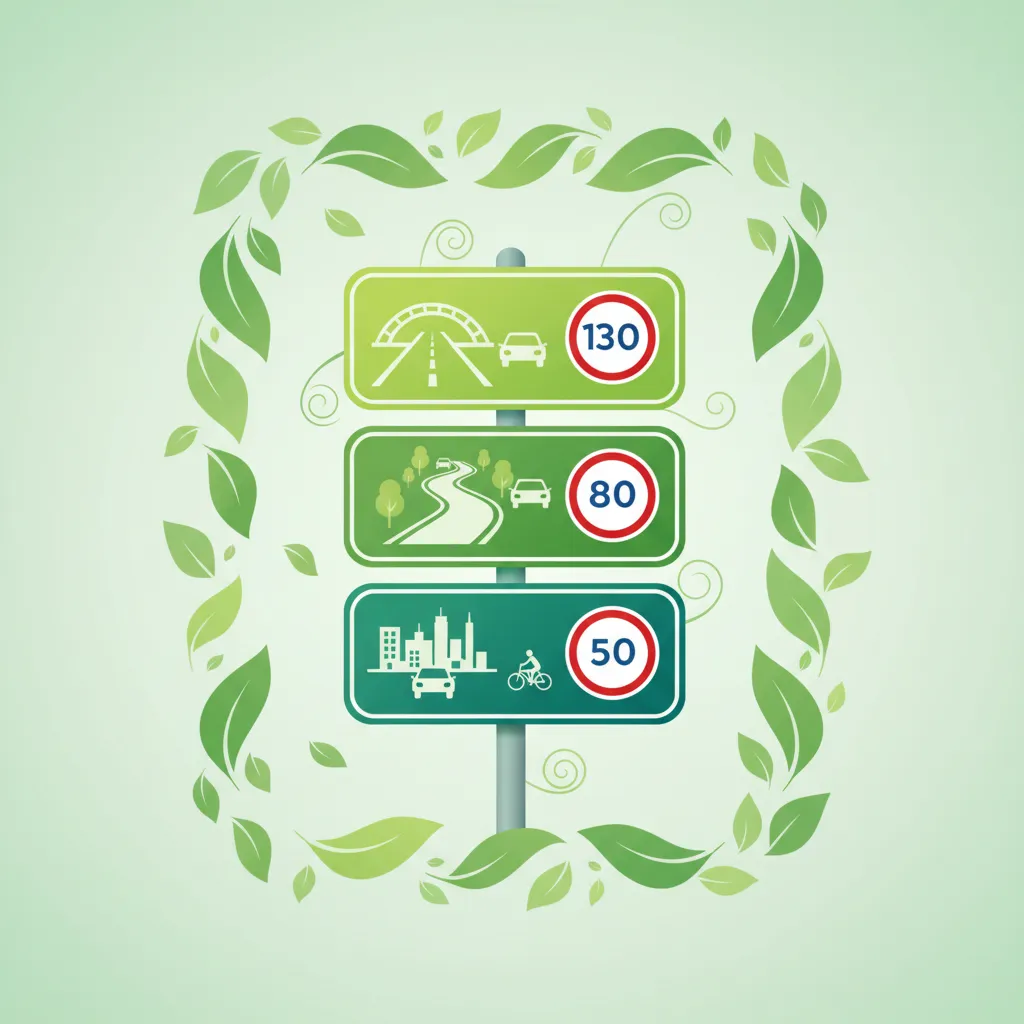
This lesson provides a definitive guide to the legal speed limits on different types of Dutch roads. It covers the rules for built-up areas (typically 50 km/h), rural roads (80 km/h), expressways ('autowegen'), and motorways ('snelwegen'), including time-dependent variations. Understanding these official limits is the first step in managing speed legally and appropriately for the road environment, a core topic on the CBR theory test.
This lesson provides a detailed overview of fixed speed limits on the Dutch road network and the signs that indicate them. You will learn to identify signs for maximum speed (BORD 50) and understand the default limits that apply within built-up areas, on rural roads, and on motorways. The content emphasizes the importance of constant awareness and legal compliance to avoid penalties and ensure road safety for yourself and others.

This lesson covers the universal Dutch road rules with a specific focus on their application to light motorcycles. It details the various speed limits for different road types, from urban areas to motorways, and explains the correct procedures for overtaking and lane positioning. The legal aspects of lane filtering in congestion are also examined, alongside mandatory equipment use like daytime running lights, to ensure riders can integrate safely and legally into traffic flow.

This lesson focuses on the legal requirements and safe practices for riding near pedestrian crossings ('zebrapaden') and designated school zones. It details the absolute obligation to yield to pedestrians on or about to use a crossing and the need for significantly reduced speeds and heightened vigilance in areas with children. The content underscores the importance of anticipation and being prepared for unpredictable movements from vulnerable road users to prevent serious incidents.
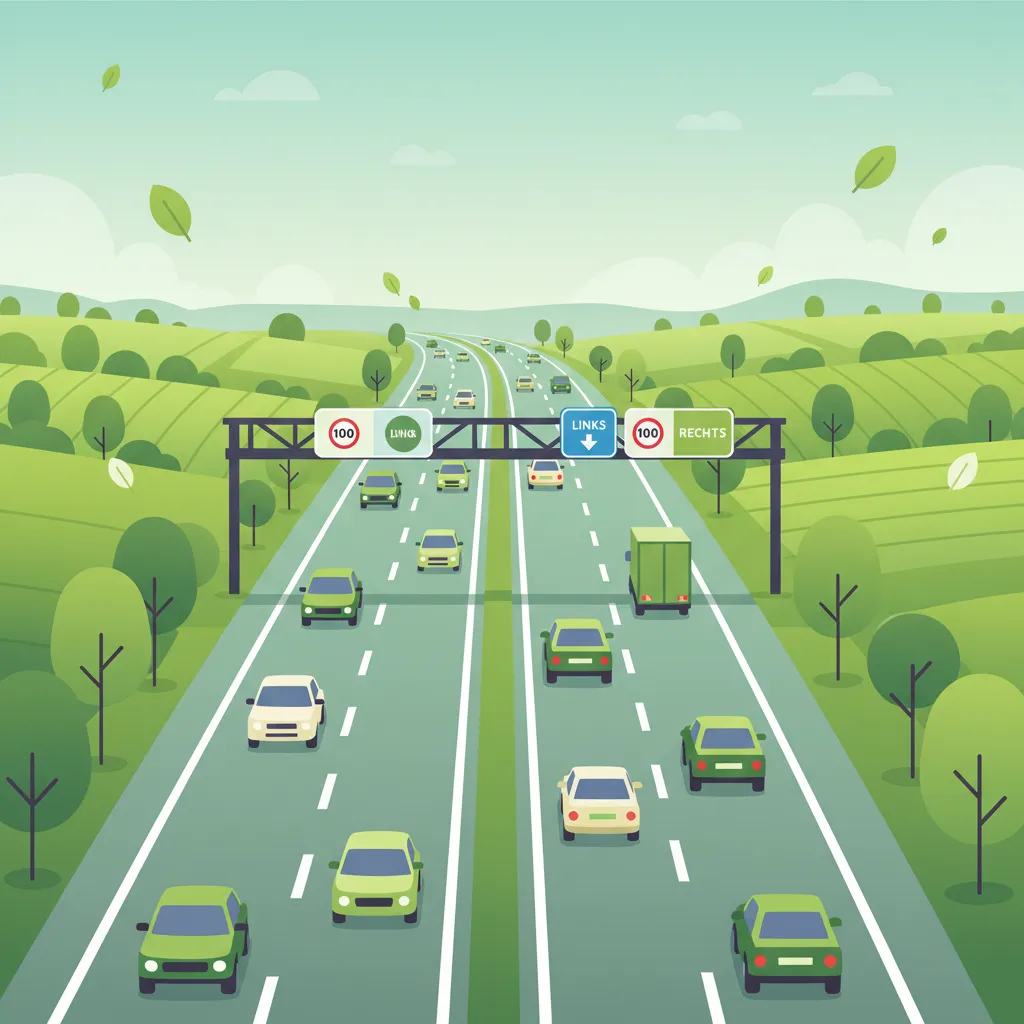
This lesson covers the specific articles of the Dutch Road Traffic Act that apply to motorways, with a primary focus on the strict rule of keeping to the rightmost available lane unless overtaking. It explains the legal and safety reasons for only passing on the left and discusses the correct positioning within a lane for maximum visibility and safety. The content also addresses the nuances of lane usage during heavy congestion, ensuring riders comply with the law and contribute to smooth traffic flow.

This lesson explains how to respond to variable speed limits shown on overhead electronic signs, which are used to manage traffic flow in real-time. You will learn why these limits are adjusted for factors like congestion, accidents, or bad weather, and the legal requirement to obey them. The content focuses on the importance of anticipatory riding, scanning far ahead for these signs to allow for smooth and safe speed adjustments.

This lesson provides a detailed overview of the structure of Dutch traffic legislation, focusing on the Road Traffic Act (Wegenverkeerswet 1994) and its relationship with CBR regulations. It explains the hierarchy from national statutes to local ordinances and how these rules govern rider behavior in various traffic situations. Furthermore, the lesson clarifies the mechanisms for enforcement, the types of sanctions for non-compliance, and the legislative goal of ensuring road safety for all participants.
This lesson focuses on the unique demands of riding at sustained high speeds on motorways ('snelwegen'). It covers essential topics such as strict lane discipline, safe overtaking procedures, and maintaining a greater following distance to compensate for higher reaction and braking times. The content also addresses the physical and mental challenges, including managing wind blast, increased noise levels, and maintaining heightened situational awareness over long distances to combat fatigue.
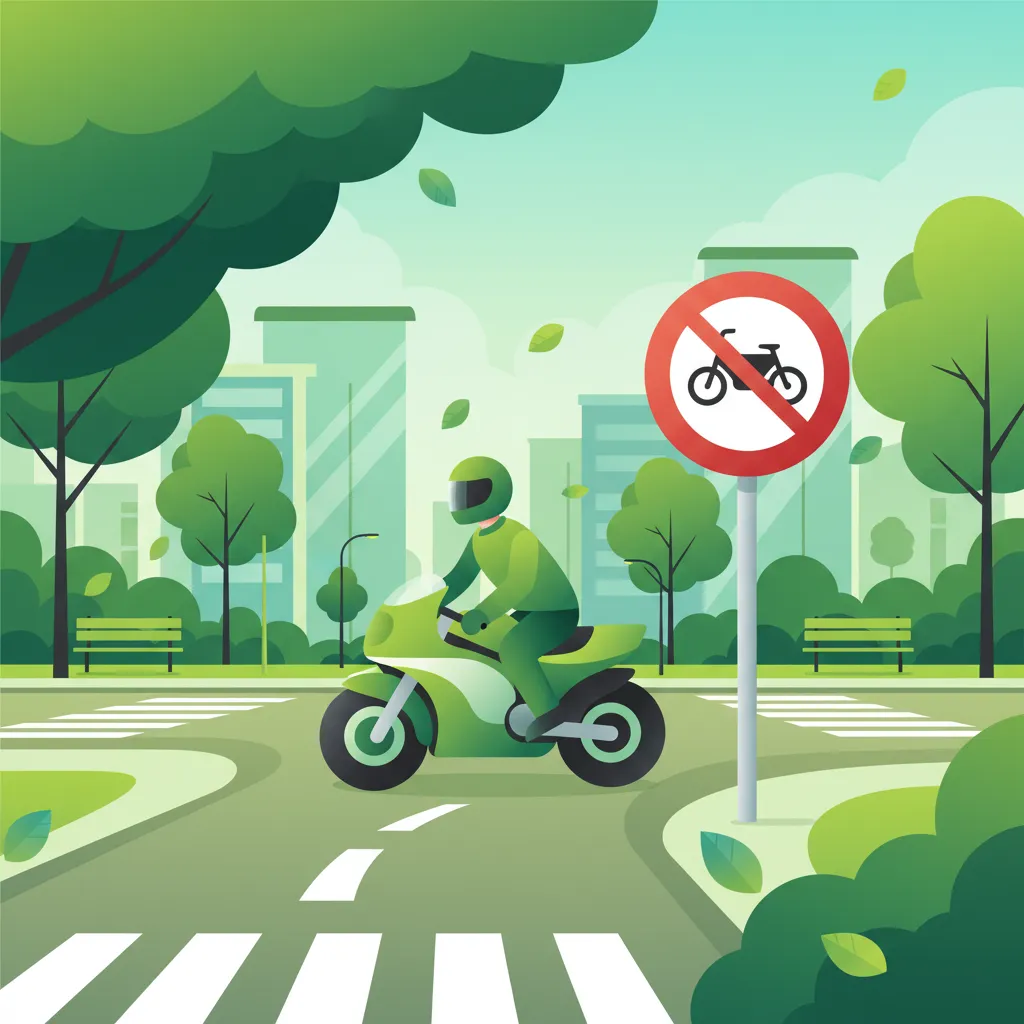
This lesson focuses on Dutch regulatory signs that enforce mandatory rules and restrictions, particularly those impacting A2 motorcyclists. You will learn to recognize and obey prohibition signs, such as those indicating a motorcycle ban (BORD 40), speed limits, and overtaking restrictions (BORD 21). The content explains the legal consequences of non-compliance and how to apply these rules in practical riding scenarios to ensure full adherence to Dutch traffic law.
Learn how weather, road surface, visibility, and vehicle load affect safe riding speeds. Understand the principles of stopping distance and kinetic energy to adjust speed dynamically for Dutch traffic scenarios.

This lesson reinforces the critical relationship between adverse conditions, reduced traction, and massively increased stopping distances. It provides a clear framework for how much riders need to increase their following distance and reduce their overall speed to maintain a safe margin for error. The curriculum teaches riders to constantly reassess their speed based on visual feedback from the road surface and the level of visibility, ensuring they can always stop within the distance they can clearly see.

This lesson addresses the dual challenge of poor visibility: being able to see the road ahead and ensuring other road users can see you. It covers techniques for riding in fog and heavy rain, such as using appropriate lights and reducing speed to match sight distance. The lesson also discusses practical issues like helmet visor fogging and the importance of wearing high-visibility or reflective clothing to enhance conspicuity in low-light conditions.
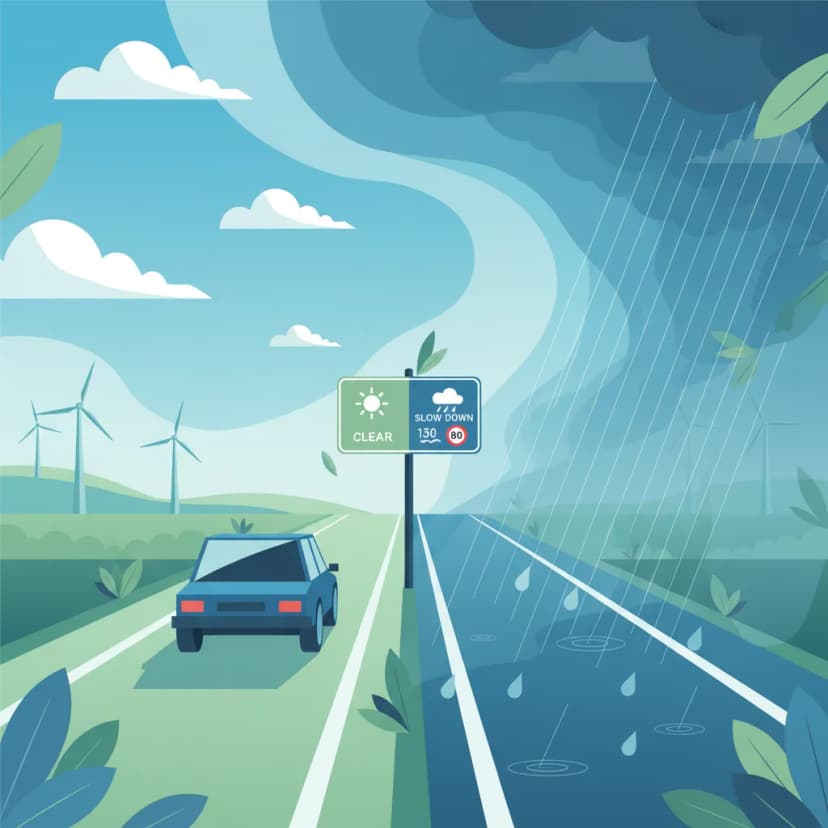
The posted speed limit is a maximum, not a target. This lesson teaches the crucial skill of adapting your speed to prevailing conditions. You will learn how to assess factors like traffic density, poor weather (rain, fog), limited visibility (at night), and slippery road surfaces. Adjusting your speed downwards in these situations provides you with more time to react to hazards and significantly reduces the risk of losing control or being involved in a collision.

This lesson explains why the standard two-second rule is insufficient in adverse conditions and requires extension. It details how factors like rain, fog, and darkness reduce both visibility and tire grip, thereby significantly increasing total stopping distance. The content provides practical guidelines, such as extending the following gap to four seconds or more in the wet, to ensure the rider always has enough time and space to stop safely, regardless of the conditions.

This lesson provides a detailed guide to riding in wet and low-visibility conditions. You will learn to make all your control inputs—braking, accelerating, and steering—exceptionally smooth to avoid breaking traction on slippery surfaces. The content covers the dangers of painted lines and manhole covers when wet, and the importance of increasing your following distance dramatically to account for longer braking distances.

This lesson explains how to counteract the effects of strong winds, which can easily upset a motorcycle's stability. It covers techniques like maintaining a relaxed grip on the handlebars and leaning into a steady crosswind. The lesson also addresses the impact of temperature, explaining how cold weather affects both the rider (risk of hypothermia, reduced concentration) and the motorcycle (reduced tire grip until warmed up), and emphasizes the need for appropriate protective gear.
This lesson emphasizes the critical importance of adapting your speed to prevailing conditions, which may require driving slower than the legal limit. You will learn how factors like rain, fog, snow, and darkness significantly increase braking distances and reduce visibility. The curriculum explains the dangers of aquaplaning on wet roads and black ice in winter. The core principle taught is that a safe driver always adjusts their speed to ensure they can stop within the distance they can see to be clear.
This lesson provides survival strategies for riding in the most challenging weather conditions, including heavy rain, snow, and potential ice. It emphasizes the importance of mental preparation, drastically reduced speeds, and hyper-smooth inputs for throttle, brakes, and steering. The content also covers identifying high-risk areas for 'black ice,' such as bridges and shaded spots, and the critical role of appropriate waterproof and insulated gear in preventing hypothermia and maintaining concentration.
This lesson explains how to respond to variable speed limits shown on overhead electronic signs, which are used to manage traffic flow in real-time. You will learn why these limits are adjusted for factors like congestion, accidents, or bad weather, and the legal requirement to obey them. The content focuses on the importance of anticipatory riding, scanning far ahead for these signs to allow for smooth and safe speed adjustments.

This lesson teaches the crucial skill of assessing road surfaces and adjusting speed accordingly to maintain maximum traction. It covers a variety of hazardous conditions, including wet asphalt, loose gravel, oil patches, metal manhole covers, and painted road markings, all of which can significantly reduce grip. Riders will learn to constantly scan the road ahead, identify potential traction-reducing surfaces, and proactively manage their speed to prevent slides and loss of control.
Find clear answers to common questions learners have about Speed Limit Zones (buiten de bebouwde kom, binnen de bebouwde kom). Learn how the lesson is structured, which driving theory objectives it supports, and how it fits into the overall learning path of units and curriculum progression in the Netherlands. These explanations help you understand key concepts, lesson flow, and exam focused study goals.
You'll typically see a blue sign with a town or village name on a white background to enter a built-up area. To exit, you'll see the same sign crossed out with a red line. Understanding these signs is key to applying the correct speed limits for your motorcycle.
In a designated 30 km/h zone, the maximum speed for all vehicles, including Category A motorcycles, is 30 km/h, regardless of whether it's within or outside a general built-up area. These zones are common in residential areas and school vicinities.
Yes, woonerven (residential yards) are special zones where pedestrians and cyclists have priority. While not always explicitly signed with a speed limit, the general rule is that you must not hinder or endanger them, implying very low speeds, often well below the standard 30 km/h, are required.
The limits differ due to varying risk factors. Built-up areas have more pedestrian activity, intersections, and potential conflicts, necessitating lower speeds for safety. Outside these areas, roads are typically straighter with fewer conflicts, allowing for higher speeds, but still requiring adaptation to road conditions and visibility.
Yes, these speed zone regulations are universal for all Category A license holders operating a motorcycle in the Netherlands. The specific motorcycle type might influence safe riding speed, but the legal limits are the same for everyone.