
Welcome to the 'Speed Management and Legal Limits' unit. This lesson focuses specifically on the National Speed Limits for Motorcycles (max. snelheden) across various road types in the Netherlands. Understanding these limits is crucial for safe riding and passing your CBR theory exam.
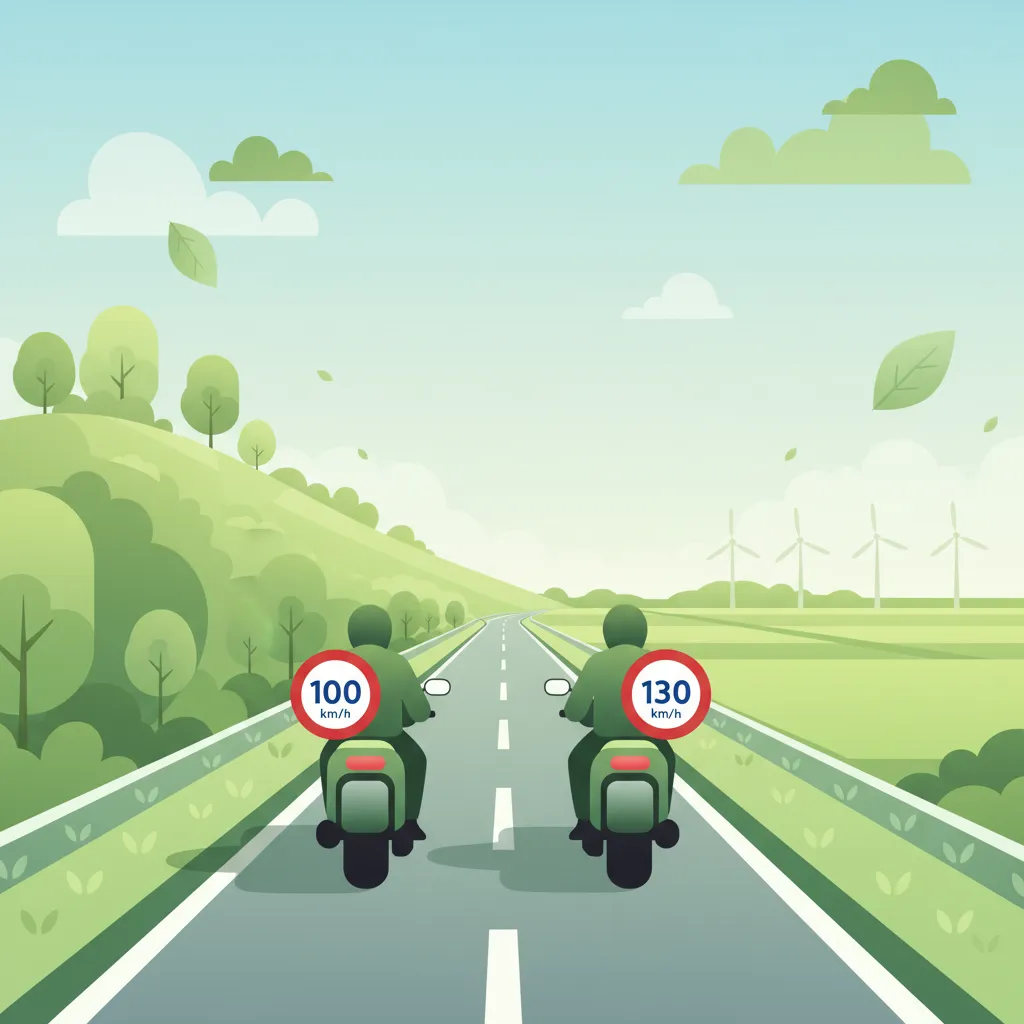
Navigating the roads safely and legally on a motorcycle requires a thorough understanding of speed limits. For motorcyclists in the Netherlands, these limits are not only crucial for compliance with traffic law but also paramount for personal safety and the safety of other road users. This lesson, part of your Dutch Motorcycle Theory – Category A Comprehensive Preparation, provides a detailed overview of the statutory national speed limits specifically applicable to motorcycles, as mandated by Dutch traffic legislation (RVV 1990).
We will explore default speed limits for various road types, delve into dynamic and time-dependent variations, and clarify the absolute maximum speed permitted for Category A motorcycles. Mastering this knowledge is essential for successfully passing the CBR Category A theory exam and for responsible riding practices across the country.
Speed limits are a cornerstone of road safety. They are designed to manage traffic flow, reduce the severity of potential collisions, and ensure adequate reaction times for all road users. For motorcyclists, understanding these regulations is particularly vital due to the inherent vulnerabilities of two-wheeled vehicles. A higher speed significantly increases kinetic energy, leading to much longer stopping distances and a greater risk of severe injury in an accident.
The legal framework for speed limits in the Netherlands balances efficient mobility with critical safety considerations. Each speed limit is set with specific road characteristics, traffic densities, and environmental factors in mind. By adhering to these limits, motorcyclists contribute to overall road safety, minimize their environmental impact, and avoid legal penalties. Ignoring posted or default limits increases the risk of crashes, fuel consumption, and can result in substantial fines or even license suspension.
The Netherlands employs a system of default speed limits based on the classification of the road, which can be overridden by specific signage. As a motorcyclist, it is imperative to recognize these default limits and the signs that denote different road types.
On Dutch motorways, known as snelwegen, the standard maximum speed limit for motorcycles is 130 km/h. Motorways are designed for high-speed travel, featuring multiple lanes, grade-separated intersections, and no opposing traffic. They are identifiable by specific blue signs with white text.
While the default is 130 km/h, it is crucial to remain vigilant for posted speed limit signs that may indicate a lower maximum. These can be temporary due to road works, or permanent on specific segments where environmental or safety concerns necessitate reduced speeds (e.g., 120 km/h, 110 km/h, or 100 km/h). Remember, even if a higher limit is theoretically possible for cars (e.g., on cross-border sections), the absolute maximum speed for motorcycles in the Netherlands is 130 km/h, as detailed later in this lesson.
Driving outside built-up areas, or buiten de bebouwde kom, presents a different set of default speed limits for motorcyclists. The specific limit depends on whether the rural road is a standard road or an expressway.
For most standard rural roads outside of urban areas, where there are no specific signs indicating otherwise, the default speed limit for motorcycles is 80 km/h. These roads often have two lanes (one in each direction) and may have direct access to properties or intersections at grade. It is common to encounter agricultural vehicles, cyclists, and pedestrians on these roads, necessitating careful speed management.
Certain rural roads are designated as autowegen, or expressways. These roads typically have fewer intersections at grade compared to standard rural roads, and are identifiable by a blue sign with a white car symbol. On these autowegen, the default speed limit for motorcycles is 100 km/h, unless a specific speed limit sign indicates a lower speed.
It is important to differentiate between autowegen and snelwegen. While both allow higher speeds than standard rural roads, autowegen are not full motorways and may have more varied traffic interactions, requiring continuous attention to road conditions and potential hazards.
When riding binnen de bebouwde kom, meaning inside a built-up area such as a town or city, the default speed limit for motorcycles significantly decreases to 50 km/h. This lower limit is enforced to protect vulnerable road users like pedestrians and cyclists, who are present in higher densities in urban environments.
The entry into a built-up area is clearly marked by a white sign featuring the silhouette of a town or village name. Upon passing this sign, the speed limit automatically changes from the rural default to 50 km/h, unless another sign indicates otherwise.
Within built-up areas, specific zones may have even lower speed limits, most commonly 30 km/h. These 30 km/h zones are often found near schools, residential areas, playgrounds, or areas with high pedestrian activity. These reduced limits are always clearly indicated by circular speed limit signs. Riders must adjust their speed immediately upon entering such a zone.
The exit from a built-up area is marked by a similar sign with a diagonal red line through it. At this point, the speed limit reverts to the default for rural roads (80 km/h or 100 km/h on expressways), unless otherwise signposted.
Beyond the static default limits, motorcyclists in the Netherlands must also contend with variable speed limits that adapt to specific conditions or times of day. These dynamic limits require constant vigilance and prompt adjustment.
On certain motorway sections, speed limits can vary depending on the time of day. This is known as a time-dependent limit. A common scenario is a higher daytime limit (e.g., 130 km/h) and a lower nighttime limit (e.g., 100 km/h). The typical schedule for this change is between 06:00 and 19:00 for the higher limit, and 19:00 to 06:00 for the lower limit, although specific times can vary by location.
This system is primarily implemented to enhance safety during periods of reduced visibility (nighttime) or higher traffic density. It is crucial for riders to be aware of these schedules, as the legal speed limit changes automatically at the prescribed times, even if no physical sign changes are visible. Onboard navigation systems or GPS devices often provide alerts for these time-dependent sections, helping riders adjust accordingly.
Variable speed limit zones utilize electronic signs, often mounted on gantries above motorways, to display temporary speed limits. These limits are dynamic and can change in real-time based on prevailing conditions such as:
When a variable speed limit sign is displayed, it supersedes all permanent and default speed limits for that section of the road. Motorcyclists must treat the displayed number as the enforceable legal limit for as long as it is shown. Ignoring these dynamic signs not only carries legal penalties but also significantly increases the risk of accidents, especially in adverse conditions.
One of the most critical rules for motorcyclists in the Netherlands is the absolute maximum speed limit of 130 km/h. This category-specific ceiling is enshrined in the national traffic ordinance (RVV 1990, Article 19.9) and applies universally.
This means that regardless of the road type, specific signage, or conditions, a motorcycle is legally prohibited from exceeding 130 km/h within the Netherlands. Even on roads where cars might theoretically be permitted to travel at higher speeds (e.g., on cross-border stretches where a sign might indicate 140 km/h for other vehicles), motorcyclists must adhere to the 130 km/h limit. This ceiling reflects considerations for motorcycle stability, handling characteristics, and the inherent risks associated with higher speeds on two wheels.
Important Note: Even if a road sign displays a speed limit higher than 130 km/h (which is rare within the Netherlands but possible in some cross-border scenarios or older signage), motorcycles are never permitted to exceed 130 km/h.
The national speed limits for motorcycles in the Netherlands are primarily governed by the Reglement Verkeersregels en Verkeerstekens (RVV 1990), which is the official Dutch traffic code. Compliance is not merely a recommendation; it is a legal obligation with clear consequences for violations.
Understanding the specific articles within RVV 1990 provides a solid foundation for legal speed management:
snelwegen) as 130 km/h, unless a specific sign indicates a lower limit.buiten de bebouwde kom): 80 km/h for standard rural roads and 100 km/h for expressways (autowegen).binnen de bebouwde kom) as 50 km/h, unless a lower limit (e.g., 30 km/h) is signposted.These regulations ensure a clear and consistent legal framework for speed management, influencing rider behavior and enforcement strategies.
Speed limits in the Netherlands are strictly enforced through various methods, making compliance essential to avoid penalties.
bebouwde kom). They detect and photograph vehicles exceeding the limit at that precise spot.Trajectcontrole is particularly effective on motorways and expressways for promoting consistent compliance.Violations of speed limits can result in substantial fines, which increase proportionally with the amount by which the limit is exceeded. For severe violations, points may be added to a driver's record, potentially leading to license suspension.
Even experienced riders can sometimes fall prey to common misconceptions or lapses in attention regarding speed limits. Awareness of these pitfalls can help prevent violations and enhance safety:
bebouwde kom entry sign. Speed cameras are often strategically placed at these transition points.autoweg (100 km/h default), or vice versa, leading to inappropriate speeds.While legal speed limits define the maximum permissible speed, a truly safe speed often lies below these limits, especially when various contextual factors come into play. A responsible motorcyclist constantly assesses these factors to adjust their speed for optimal safety.
In areas with high pedestrian or cyclist traffic, even if the posted limit is 50 km/h, a safer speed might be lower (e.g., 30 km/h or less). Riders must always be prepared to stop for unexpected movements from vulnerable road users, and lower speeds provide the necessary reaction time. The posted limit should be considered a maximum, not a target, in such sensitive environments.
Understanding national speed limits is foundational for safe and legal motorcycling. To deepen your knowledge and prepare for the CBR Category A theory exam, continue exploring related topics within the Dutch Motorcycle Theory curriculum. This includes understanding how speed is enforced and how to calculate safe speeds in various conditions.
Lesson content overview
Explore all units and lessons included in this driving theory course.
Explore search topics learners often look for when studying National Speed Limits for Motorcycles (max. snelheden). These topics reflect common questions about road rules, driving situations, safety guidance, and lesson level theory preparation for learners in the Netherlands.
Browse additional driving theory lessons that cover connected traffic rules, road signs, and common driving situations related to this topic. Improve your understanding of how different rules interact across everyday traffic scenarios.
Explore dynamic speed limits on Dutch motorways, including time-dependent changes and variable electronic signs. Essential for understanding real-time speed regulations beyond basic national limits for Category A riders.

This lesson explains how to respond to variable speed limits shown on overhead electronic signs, which are used to manage traffic flow in real-time. You will learn why these limits are adjusted for factors like congestion, accidents, or bad weather, and the legal requirement to obey them. The content focuses on the importance of anticipatory riding, scanning far ahead for these signs to allow for smooth and safe speed adjustments.
This lesson provides a detailed overview of fixed speed limits on the Dutch road network and the signs that indicate them. You will learn to identify signs for maximum speed (BORD 50) and understand the default limits that apply within built-up areas, on rural roads, and on motorways. The content emphasizes the importance of constant awareness and legal compliance to avoid penalties and ensure road safety for yourself and others.
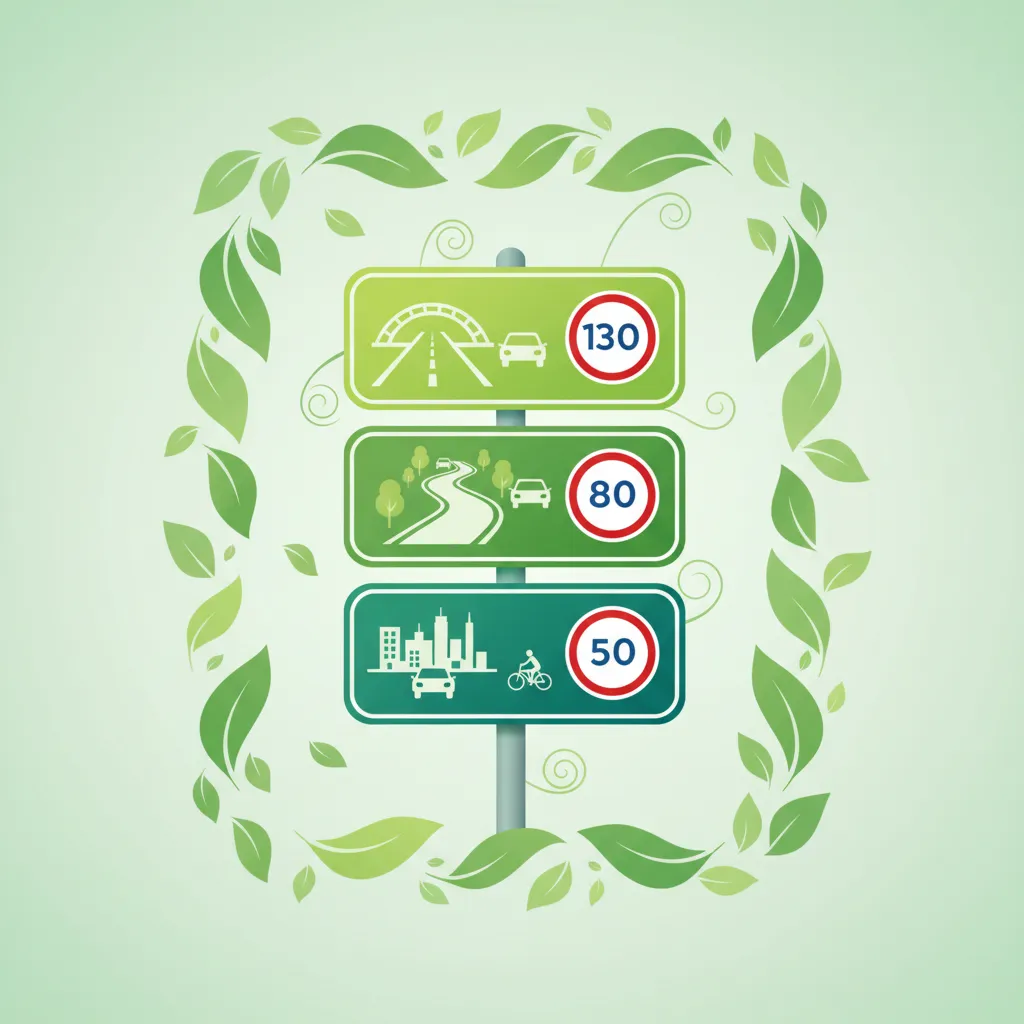
This lesson provides a definitive guide to the legal speed limits on different types of Dutch roads. It covers the rules for built-up areas (typically 50 km/h), rural roads (80 km/h), expressways ('autowegen'), and motorways ('snelwegen'), including time-dependent variations. Understanding these official limits is the first step in managing speed legally and appropriately for the road environment, a core topic on the CBR theory test.
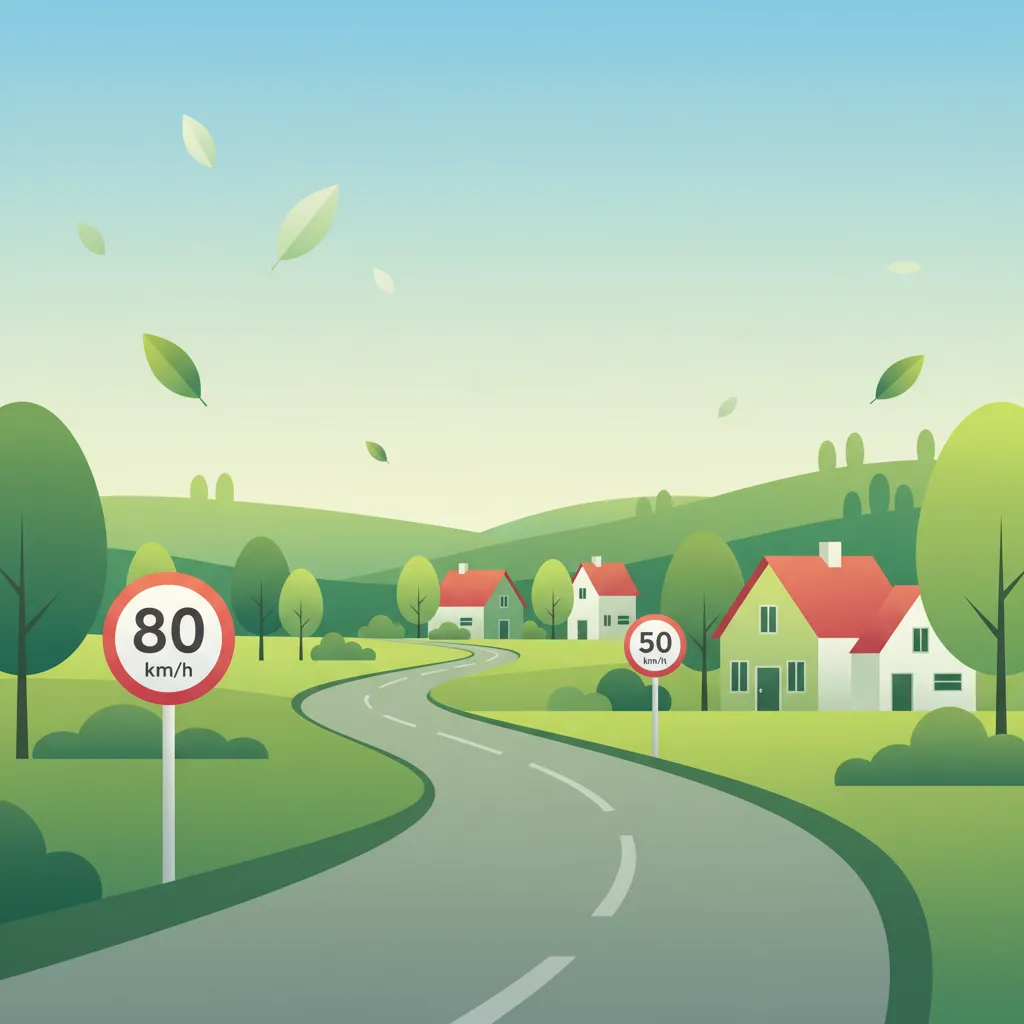
This lesson focuses on identifying different types of speed zones and understanding the rationale behind their limits. It explains how to recognize the start and end of a 'built-up area' ('binnen de bebouwde kom') via place-name signs and discusses special zones like 30 km/h zones and 'woonerven' (residential yards). The curriculum emphasizes adapting riding style to the specific hazards present in each type of zone, from high pedestrian activity in urban areas to unexpected curves on rural roads.

This lesson covers the universal Dutch road rules with a specific focus on their application to light motorcycles. It details the various speed limits for different road types, from urban areas to motorways, and explains the correct procedures for overtaking and lane positioning. The legal aspects of lane filtering in congestion are also examined, alongside mandatory equipment use like daytime running lights, to ensure riders can integrate safely and legally into traffic flow.
This lesson focuses on the specific speed regulations for major highways in the Netherlands. You will learn to identify an 'autosnelweg' (motorway, G1 sign), where the speed limit is 100 km/h between 6:00 and 19:00 and often 130 km/h at other times, unless indicated otherwise. The lesson also covers the 'autoweg' (expressway, G3 sign), which typically has a speed limit of 100 km/h. Furthermore, you will study dynamic speed limits indicated on electronic signs, which can change due to traffic or weather conditions.
This lesson focuses on the unique demands of riding at sustained high speeds on motorways ('snelwegen'). It covers essential topics such as strict lane discipline, safe overtaking procedures, and maintaining a greater following distance to compensate for higher reaction and braking times. The content also addresses the physical and mental challenges, including managing wind blast, increased noise levels, and maintaining heightened situational awareness over long distances to combat fatigue.

This lesson provides an overview of the various speed enforcement technologies and strategies used in the Netherlands. It explains the operation of fixed speed cameras ('flitspalen'), average speed check systems ('trajectcontrole'), and mobile enforcement units used by the police. Understanding these methods helps riders appreciate the high likelihood of being caught for speeding, reinforcing the importance of consistent compliance with all posted speed limits to avoid fines and other penalties.
This lesson focuses on the specific skills required for managing speed on high-speed highways (autosnelwegen). You will learn the correct technique for accelerating on the on-ramp to smoothly merge with traffic flow. The content covers how to choose an appropriate cruising speed, maintain a safe following distance, and manage the aerodynamic effects of wind and turbulence from larger vehicles at high speeds.
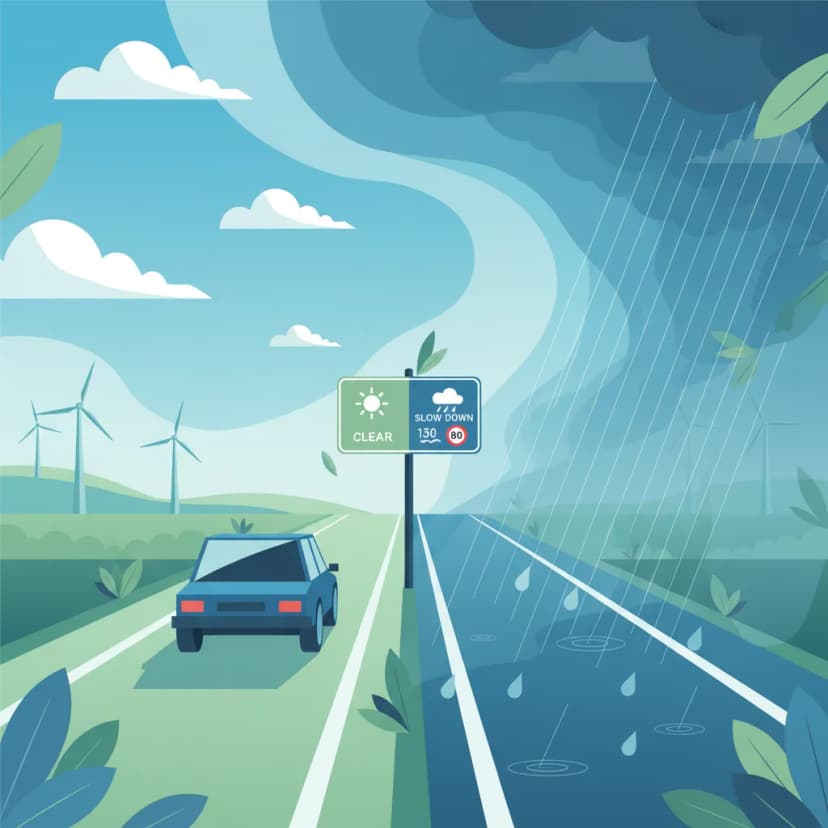
The posted speed limit is a maximum, not a target. This lesson teaches the crucial skill of adapting your speed to prevailing conditions. You will learn how to assess factors like traffic density, poor weather (rain, fog), limited visibility (at night), and slippery road surfaces. Adjusting your speed downwards in these situations provides you with more time to react to hazards and significantly reduces the risk of losing control or being involved in a collision.
Learn how weather, road conditions, and load influence safe motorcycle speeds in the Netherlands. Essential for adjusting speed appropriately beyond posted limits for enhanced rider safety and hazard awareness.
The posted speed limit is a maximum, not a target. This lesson teaches the crucial skill of adapting your speed to prevailing conditions. You will learn how to assess factors like traffic density, poor weather (rain, fog), limited visibility (at night), and slippery road surfaces. Adjusting your speed downwards in these situations provides you with more time to react to hazards and significantly reduces the risk of losing control or being involved in a collision.

This lesson focuses on hazard perception ('gevaarherkenning'), a critical section of the CBR exam. It explains how increasing speed reduces a rider's field of vision and shortens the time available to identify, process, and react to potential dangers. The content explores techniques for actively scanning the road ahead and anticipating the actions of other road users to make safe, proactive decisions rather than reactive ones.
This lesson explains how to respond to variable speed limits shown on overhead electronic signs, which are used to manage traffic flow in real-time. You will learn why these limits are adjusted for factors like congestion, accidents, or bad weather, and the legal requirement to obey them. The content focuses on the importance of anticipatory riding, scanning far ahead for these signs to allow for smooth and safe speed adjustments.

This lesson reinforces the critical relationship between adverse conditions, reduced traction, and massively increased stopping distances. It provides a clear framework for how much riders need to increase their following distance and reduce their overall speed to maintain a safe margin for error. The curriculum teaches riders to constantly reassess their speed based on visual feedback from the road surface and the level of visibility, ensuring they can always stop within the distance they can clearly see.
This lesson focuses on the unique demands of riding at sustained high speeds on motorways ('snelwegen'). It covers essential topics such as strict lane discipline, safe overtaking procedures, and maintaining a greater following distance to compensate for higher reaction and braking times. The content also addresses the physical and mental challenges, including managing wind blast, increased noise levels, and maintaining heightened situational awareness over long distances to combat fatigue.

This lesson teaches the crucial skill of assessing road surfaces and adjusting speed accordingly to maintain maximum traction. It covers a variety of hazardous conditions, including wet asphalt, loose gravel, oil patches, metal manhole covers, and painted road markings, all of which can significantly reduce grip. Riders will learn to constantly scan the road ahead, identify potential traction-reducing surfaces, and proactively manage their speed to prevent slides and loss of control.
This lesson transitions hazard perception skills to the high-speed environment of motorways and tunnels. It covers specific risks such as vehicles merging at different speeds, sudden braking and congestion ahead, road debris, and the aerodynamic effects of crosswinds and large trucks. The curriculum also addresses the challenges of riding in tunnels, including changes in light and surface conditions, and the importance of identifying emergency exits and procedures in case of an incident.

This lesson revisits the concept of following distance, emphasizing its heightened importance in the high-speed motorway environment. It explains how increased speeds dramatically lengthen both reaction and braking distances, making a minimum two-to-three-second gap absolutely critical for safety. The content also stresses the importance of maintaining a space cushion to the sides, creating potential escape routes in case of sudden incidents in adjacent lanes.
This lesson prepares you for the unique dangers of high-speed highway riding. You will learn to scan for and navigate road hazards like debris, potholes, and slippery steel expansion joints on bridges. The content also addresses the powerful air turbulence created by large trucks that can upset a motorcycle's stability and the mental challenge of maintaining focus on long, monotonous stretches of road.
This lesson provides a detailed overview of fixed speed limits on the Dutch road network and the signs that indicate them. You will learn to identify signs for maximum speed (BORD 50) and understand the default limits that apply within built-up areas, on rural roads, and on motorways. The content emphasizes the importance of constant awareness and legal compliance to avoid penalties and ensure road safety for yourself and others.
Find clear answers to common questions learners have about National Speed Limits for Motorcycles (max. snelheden). Learn how the lesson is structured, which driving theory objectives it supports, and how it fits into the overall learning path of units and curriculum progression in the Netherlands. These explanations help you understand key concepts, lesson flow, and exam focused study goals.
On most Dutch motorways, the general speed limit for motorcycles is 130 km/h. However, always pay close attention to variable message signs (dynamic speed limits) which may indicate lower limits, especially during peak hours or adverse weather conditions. Failing to observe these can lead to exam questions testing your awareness of dynamic limits.
Outside built-up areas, the standard speed limit for motorcycles on non-motorway roads is typically 100 km/h. On roads where a lower limit is indicated by signs (e.g., 80 km/h), you must adhere to that specific limit. Be aware of any upcoming signs that might signal a change in speed zone.
Within built-up areas, the maximum speed limit for motorcycles is generally 50 km/h, unless otherwise indicated by signs. In some zones, such as residential areas or school zones, the limit may be reduced to 30 km/h. Always observe local signage carefully, as these are frequent topics in theory exams.
Yes, many Dutch motorways have variable speed limits that are displayed on electronic signs. These limits can change dynamically based on traffic density, time of day, or weather conditions, often ranging from 120 km/h down to 100 km/h or even 80 km/h. It is crucial to always ride at the speed indicated on the current signage.
Exceeding the speed limit can result in significant fines and penalty points on your driving license. For theory exam preparation, understanding these limits is essential to avoid incorrect answers related to speed violations. The CBR exam frequently tests knowledge of correct speeds in different environments.