
Welcome to the 'Speed Management on Highways' lesson, a key part of the 'Highway (Autosnelweg) Rules for Motorcycles' unit. On Dutch autosnelwegen, speed management is vital for safety and compliance, especially for A2 motorcycles. This lesson builds on your understanding of general speed limits and prepares you for the specific challenges of high-speed environments.
Riding a motorcycle on Dutch autosnelwegen, or highways, presents unique challenges and demands specific skills, particularly for riders holding an A2 category license. This comprehensive lesson covers the essential techniques, legal obligations, and safety considerations for effectively managing your speed, ensuring a safe and smooth journey within the constraints of your A2 license. Mastering speed management on highways is crucial for reducing accident risks, maintaining stability, and complying with Dutch traffic laws.
Navigating Dutch highways requires a thorough understanding of the specific speed regulations applicable to all vehicles, as well as the additional restrictions for A2-licensed motorcyclists. Adherence to these rules is not merely about avoiding fines; it is fundamental to road safety and maintaining a predictable traffic flow.
Dutch autosnelwegen are designed for high-speed traffic, and as such, they have a minimum speed requirement. All vehicles capable of doing so must travel at a minimum of 60 km/h on the main carriageway. This rule is in place to prevent dangerous speed differentials that can lead to collisions.
The general maximum speed limits on Dutch autosnelwegen can vary, typically from 100 km/h during the day to 130 km/h at night, with variable speed limits often displayed on electronic signs. However, for A2 riders, a critical restriction applies: regardless of the posted speed limit, an A2-licensed motorcycle must not exceed 90 km/h. This maximum speed is a direct consequence of the 35 kW power limitation of A2 motorcycles, ensuring they operate within a safe mechanical and handling envelope.
Always remember your A2 license's maximum speed cap of 90 km/h. This limit supersedes any higher posted speed limit on the highway. Continuously monitor your speedometer.
Proper lane discipline is paramount on highways. Motorcycles must stay within the designated lane markings. Lane splitting, where a motorcycle rides between two lanes of slow-moving or stationary traffic, is generally discouraged on Dutch highways due to safety concerns and is often considered a violation of lane discipline. Riding on the hard shoulder is strictly prohibited, reserved only for emergencies or specific authorised vehicles.
The Dutch term for a divided, high-speed highway or motorway, characterized by minimum speed requirements and generally higher speed limits.
Successfully entering an autosnelweg requires a precise and controlled acceleration technique on the on-ramp, known as merge acceleration. This process is about smoothly integrating into the existing traffic flow, rather than abruptly forcing your way in.
As you enter an on-ramp, your primary goal is to accelerate to a speed that closely matches the flow of traffic on the main carriageway, ensuring you reach at least the 60 km/h minimum. This requires progressive throttle control – gradually opening the throttle to increase speed smoothly and deliberately. For A2 riders, it is essential to use appropriate gear selection to achieve sufficient torque without exceeding the 35 kW power limit. Starting in second gear, for instance, often provides a good balance of acceleration and control.
It is crucial to gauge the length of the ramp, the speed of approaching traffic, and the distance to the merge point. You should aim to be at or near the traffic's speed as you approach the end of the merge lane. Signaling your intention to merge is legally required and must be done at least 100 meters before the actual merge point. This gives other drivers ample warning to adjust their speed or lane position to accommodate you.
Before accelerating on the on-ramp, glance quickly at the highway traffic flow to estimate its speed. This pre-assessment helps you determine your target acceleration.
A frequent mistake is accelerating too slowly, which forces existing highway traffic to brake or swerve, creating a hazardous situation. Conversely, using an aggressive, full-throttle burst can exceed your A2 motorcycle's 35 kW power limit, potentially leading to a loss of traction or control, and is also illegal. Smoothness and predictability are key.
Once you have successfully merged onto the autosnelweg, the next step is to select and maintain an appropriate cruising speed. This involves balancing legal compliance, safety, and efficient riding.
Your cruising speed should always adhere to the 90 km/h maximum for A2 motorcycles and any lower posted limits. Beyond legal compliance, aim to match the general flow of traffic. Riding significantly slower than surrounding traffic can be as dangerous as riding too fast, as it forces other vehicles to constantly overtake, increasing the risk of collisions.
Consider economical cruising, typically between 70-80 km/h for many A2 bikes. This range often balances aerodynamic drag and fuel consumption, improving stability and efficiency. Continuously monitor your speedometer and adjust your throttle or gear selection as needed to maintain a steady speed without exceeding limits.
Autosnelwegen often feature variable speed limits displayed on electronic signs above the lanes. These limits change in response to traffic density, weather conditions, or roadworks. You must immediately adapt your speed to these dynamic limits, always remembering your 90 km/h A2 cap.
An electronic sign displaying a speed limit that can change dynamically based on real-time traffic, weather, or road conditions. Riders must always obey the displayed limit.
A safe following distance is one of the most critical safety measures on any road, especially at highway speeds where kinetic energy is high and reaction times are crucial.
The universally recommended safe following distance (SFD) is a temporal gap, typically at least 2 seconds. This means that after the vehicle in front of you passes a fixed point (like a bridge or road sign), you should count "one-thousand-one, one-thousand-two" before your vehicle reaches the same point. At speeds above 80 km/h, many experts recommend extending this to 3 seconds to account for the increased kinetic energy and longer stopping distances.
At 90 km/h, your motorcycle travels approximately 25 meters per second. A 3-second gap therefore corresponds to roughly 75 meters.
The physics behind following distance is simple: kinetic energy increases with the square of your velocity (). This means a small increase in speed leads to a disproportionately larger increase in the energy that needs to be dissipated during braking, thus significantly extending your stopping distance. Maintaining an adequate SFD provides the necessary space for your reaction time (average 0.75 seconds) and the physical distance required to brake safely, preventing rear-end collisions.
High speeds on the autosnelweg expose motorcyclists to significant aerodynamic forces, including cross-winds and turbulence from larger vehicles. These forces can destabilise your motorcycle, making proper management essential.
Large vehicles like trucks and buses create a turbulent zone behind them, often referred to as a turbulence cone or slipstream. Riding directly in this zone can cause sudden and unpredictable lateral forces, pushing or pulling your motorcycle and potentially leading to a loss of control.
The turbulent airflow or aerodynamic wake created behind a large vehicle, which can cause sudden lateral forces and instability for following motorcyclists.
To manage this, avoid riding directly behind large vehicles for extended periods. If you must follow one, maintain a significant safe following distance (e.g., 3 seconds) and position yourself slightly to one side of the lane (typically the left, if safe) to avoid the direct turbulence. When overtaking a large vehicle, do so swiftly and purposefully, maintaining at least a 3-meter lateral distance to minimise the effects of side-wash – the lateral wind created by the vehicle's passage.
On exposed sections of the highway, strong cross-winds can push your motorcycle sideways, requiring constant steering corrections. When encountering significant cross-winds:
The 35 kW power constraint for A2 license holders is a fundamental aspect of your riding. It's not just a legal requirement but also a factor in safe speed management, especially on highways.
Your motorcycle's power output must never exceed 35 kW. This means you need to practice throttle moderation, particularly during acceleration on on-ramps or when increasing speed. Avoid sudden, full-throttle bursts, as these can momentarily exceed the power limit and potentially lead to loss of traction.
Instead, use progressive throttle inputs and select gears that allow for smooth, controlled acceleration without over-revving the engine or demanding excessive power. Many A2 bikes are designed to deliver their maximum allowed power comfortably in certain gears at highway speeds. Understanding your motorcycle's torque curve can help you stay within the 35 kW limit while still performing necessary maneuvers.
The legal and technical requirement for A2 motorcycles to have an engine output not exceeding 35 kW (approximately 47 horsepower), necessitating careful throttle and gear management by the rider.
Maintaining proper lane discipline and adopting strategic positioning within your lane are vital for safety and visibility on the autosnelweg.
Generally, you should ride in the centre of your chosen lane. This position maximises your visibility to other drivers, provides a buffer zone on both sides, and allows you to react to hazards effectively. However, your position should not be static; it needs to adapt to conditions.
For example, when approaching or being approached by large vehicles, you might temporarily shift slightly to the left side of your lane (within lane boundaries) to increase your lateral distance and minimise the effects of their slipstream. Conversely, if there's a strong cross-wind from the left, a slight shift to the right might offer some marginal shelter.
Constantly scan the road ahead and in your mirrors to anticipate potential hazards and adjust your lane position proactively.
As mentioned earlier, lane splitting is generally prohibited and unsafe on Dutch highways. Stick to your designated lane. The hard shoulder is strictly for emergencies; never use it to bypass traffic jams or for routine riding, as it puts you at severe risk from emergency vehicles or stranded vehicles.
Effective speed management on the autosnelweg isn't just about acceleration; it also involves smooth and controlled deceleration. This is achieved through proper throttle and brake modulation.
Making small, progressive adjustments to your throttle maintains a steady speed without unsettling the motorcycle or surprising other drivers. When you need to reduce speed, gradually roll off the throttle. For more significant deceleration, use engine braking by smoothly downshifting gears. This technique helps reduce wear on your brakes and provides stable, controlled slowing, especially useful before exiting the highway or when approaching congested areas.
The process of reducing a motorcycle's speed by using the resistance of the engine when the throttle is closed or by downshifting gears, rather than relying solely on the friction brakes.
While cruising, minor speed adjustments can often be made with throttle modulation alone. However, when active braking is required, always use a balanced combination of your front and rear brakes. For A2 riders, sudden, aggressive braking, especially at high speeds, can easily lead to wheel lock-up or instability. Practice smooth, progressive application of both brakes to maximise braking efficiency and maintain control.
Highway riding conditions are rarely static. Your speed management strategies must be flexible and responsive to changes in weather, visibility, traffic density, and even your motorcycle's load.
At night, reduced visibility means your perception distance is shorter. Even with good headlights, hazards are harder to spot.
Understanding common mistakes and violations can significantly enhance your safety and prevent legal issues on Dutch highways.
Violation of speed limits or unsafe riding practices on autosnelwegen can result in substantial fines, licence points, and even confiscation of your motorcycle in severe or repeated cases.
Here are some common pitfalls and how to avoid them:
Effective speed management on Dutch autosnelwegen for A2 riders boils down to a few core principles:
By internalizing these principles and consistently applying them, you will develop the necessary skills for safe, confident, and legally compliant highway riding on your A2 motorcycle.
Lesson content overview
Explore all units and lessons included in this driving theory course.
Explore search topics learners often look for when studying Speed Management on Highways (Autosnelweg) for A2 Riders. These topics reflect common questions about road rules, driving situations, safety guidance, and lesson level theory preparation for learners in the Netherlands.
Browse additional driving theory lessons that cover connected traffic rules, road signs, and common driving situations related to this topic. Improve your understanding of how different rules interact across everyday traffic scenarios.
Explore the critical factors affecting motorcycle stability on the autosnelweg, including turbulence from other vehicles and cross-winds. Learn advanced theory for A2 riders on maintaining control at high speeds and managing aerodynamic forces for safer highway navigation.

This lesson prepares you for the challenge of riding in strong winds. You will learn to anticipate areas prone to gusts, such as exiting a tunnel or passing a large truck. The content explains how to maintain a relaxed grip on the handlebars and use subtle counter-steering inputs and body lean to counteract the force of the wind, keeping the motorcycle on its intended path.
This lesson prepares you for the unique dangers of high-speed highway riding. You will learn to scan for and navigate road hazards like debris, potholes, and slippery steel expansion joints on bridges. The content also addresses the powerful air turbulence created by large trucks that can upset a motorcycle's stability and the mental challenge of maintaining focus on long, monotonous stretches of road.

This lesson explains how to counteract the effects of strong winds, which can easily upset a motorcycle's stability. It covers techniques like maintaining a relaxed grip on the handlebars and leaning into a steady crosswind. The lesson also addresses the impact of temperature, explaining how cold weather affects both the rider (risk of hypothermia, reduced concentration) and the motorcycle (reduced tire grip until warmed up), and emphasizes the need for appropriate protective gear.
This lesson focuses on the unique demands of riding at sustained high speeds on motorways ('snelwegen'). It covers essential topics such as strict lane discipline, safe overtaking procedures, and maintaining a greater following distance to compensate for higher reaction and braking times. The content also addresses the physical and mental challenges, including managing wind blast, increased noise levels, and maintaining heightened situational awareness over long distances to combat fatigue.

Two-wheeled vehicles are particularly vulnerable to strong winds. This lesson explains how crosswinds and gusts can push you off course and upset your balance. You will learn proactive techniques to manage these effects, such as anticipating windy spots (e.g., bridges, gaps between buildings), adjusting your body position to be more aerodynamic, and applying subtle counter-steering inputs to maintain a straight line. A relaxed grip on the handlebars is key to letting the bike move slightly underneath you.
This lesson reinforces the fundamental rule of Dutch highway driving: use the rightmost lane available and use the lanes to the left only for overtaking. You will learn the complete, safe overtaking procedure: check mirrors, signal, perform a shoulder check for the blind spot, smoothly move over, accelerate past the vehicle, and then return to the right lane when safe.
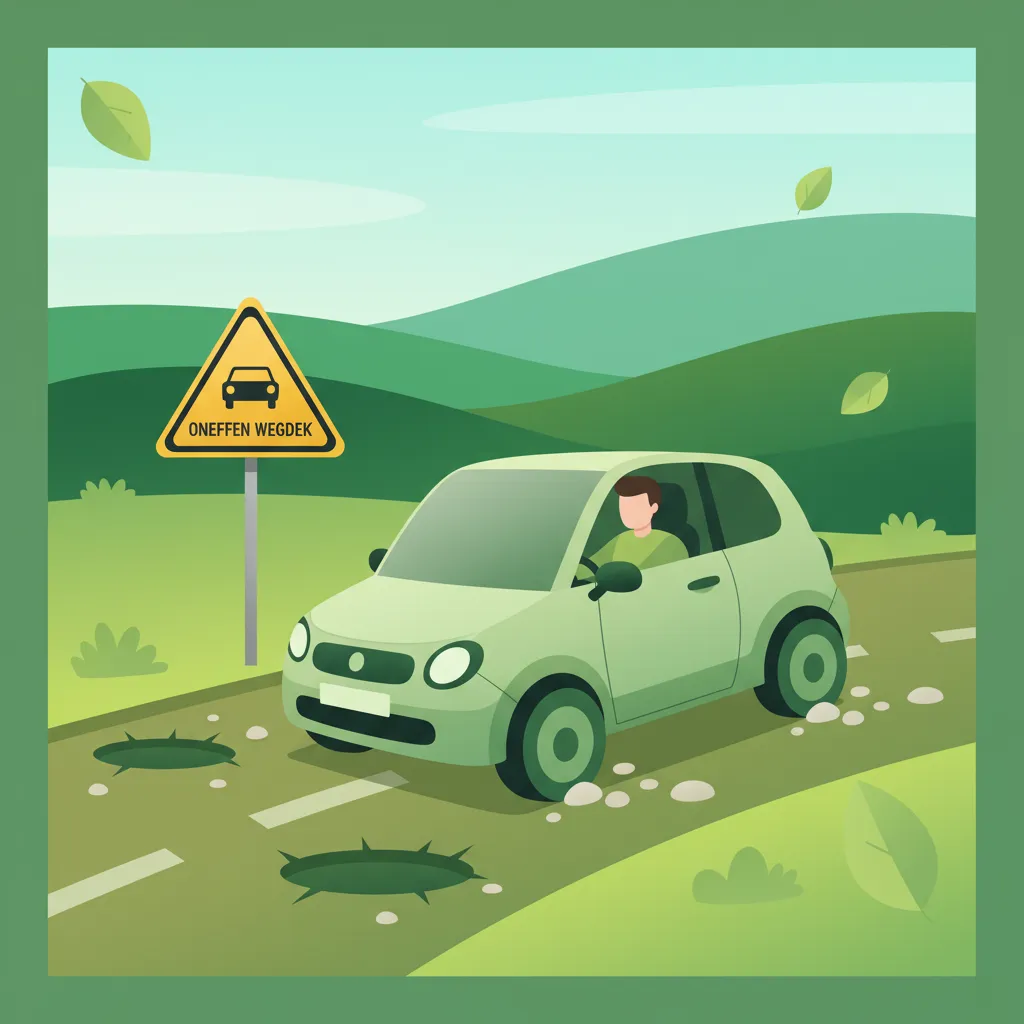
This lesson prepares you to deal with sudden changes in road surface that can cause a loss of traction. You will learn to scan for these hazards and, if they cannot be avoided, how to ride over them safely. The key technique is to keep the motorcycle upright and maintain smooth, steady control inputs—no abrupt braking, accelerating, or steering—to minimize the risk of a skid.

This lesson details the critical manoeuvres of entering and exiting a highway. You will learn to use the full length of the on-ramp to accelerate to the speed of the highway traffic before looking for a safe gap to merge into. The content also covers the process of exiting, including signaling early, moving into the deceleration lane, and adjusting your speed for the off-ramp curve.

This lesson revisits the concept of following distance, emphasizing its heightened importance in the high-speed motorway environment. It explains how increased speeds dramatically lengthen both reaction and braking distances, making a minimum two-to-three-second gap absolutely critical for safety. The content also stresses the importance of maintaining a space cushion to the sides, creating potential escape routes in case of sudden incidents in adjacent lanes.

This lesson provides a detailed guide to riding in wet and low-visibility conditions. You will learn to make all your control inputs—braking, accelerating, and steering—exceptionally smooth to avoid breaking traction on slippery surfaces. The content covers the dangers of painted lines and manhole covers when wet, and the importance of increasing your following distance dramatically to account for longer braking distances.
Understand the specific rules and techniques for merging onto Dutch autosnelwegen with an A2 motorcycle. This lesson covers required acceleration, speed limits, and safe integration into highway traffic flow, crucial for the theory exam.
This lesson details the critical manoeuvres of entering and exiting a highway. You will learn to use the full length of the on-ramp to accelerate to the speed of the highway traffic before looking for a safe gap to merge into. The content also covers the process of exiting, including signaling early, moving into the deceleration lane, and adjusting your speed for the off-ramp curve.
This lesson reinforces the fundamental rule of Dutch highway driving: use the rightmost lane available and use the lanes to the left only for overtaking. You will learn the complete, safe overtaking procedure: check mirrors, signal, perform a shoulder check for the blind spot, smoothly move over, accelerate past the vehicle, and then return to the right lane when safe.

This lesson provides a step-by-step guide to safely navigating entry ('opritten') and exit ramps ('afritten'). It focuses on the critical skill of using the acceleration lane to match the speed of motorway traffic before merging, and the importance of finding a safe gap using mirrors and shoulder checks. For exiting, it covers the correct use of the deceleration lane to slow down safely without disrupting the flow of traffic on the main carriageway.
This lesson focuses on the unique demands of riding at sustained high speeds on motorways ('snelwegen'). It covers essential topics such as strict lane discipline, safe overtaking procedures, and maintaining a greater following distance to compensate for higher reaction and braking times. The content also addresses the physical and mental challenges, including managing wind blast, increased noise levels, and maintaining heightened situational awareness over long distances to combat fatigue.
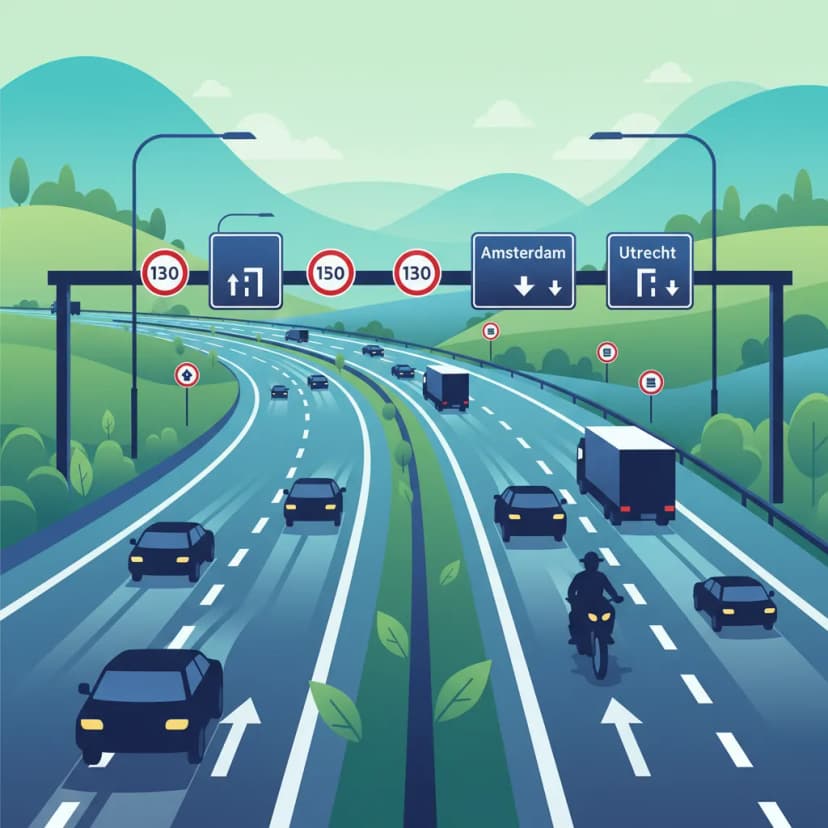
This lesson details the specific regulations for driving on Dutch motorways, identifiable by the G1 sign. You will learn the correct procedure for joining the flow of traffic using the acceleration lane and for leaving via the deceleration lane. The curriculum reinforces the 'keep right unless overtaking' rule for lane discipline. It also explains that stopping is strictly forbidden, and the hard shoulder (vluchtstrook) may only be used for genuine emergencies.
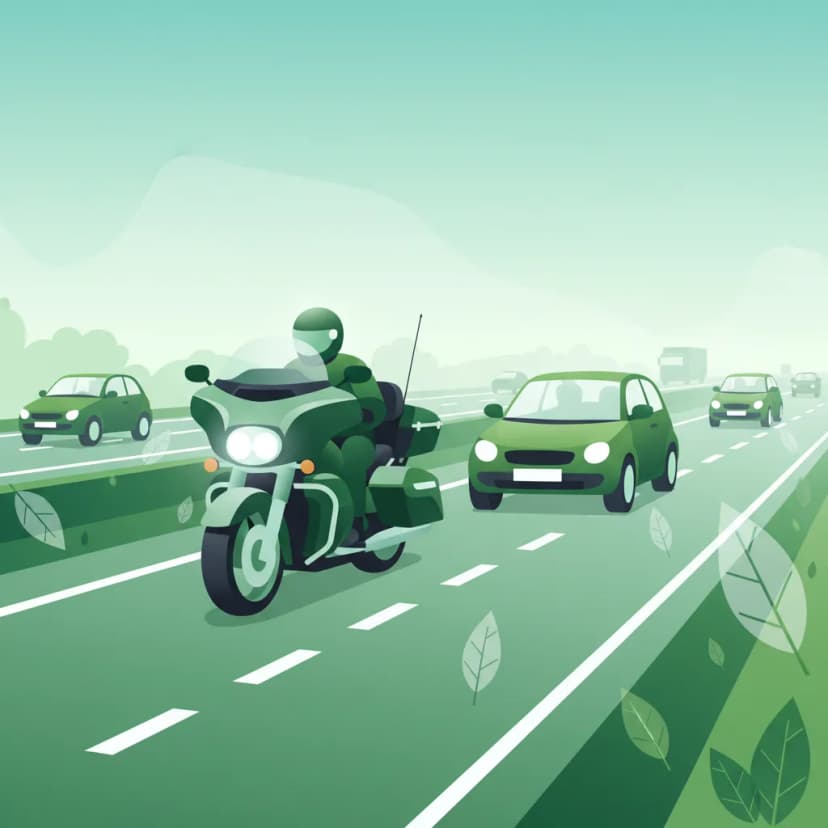
This lesson details the systematic process for safely overtaking on a multi-lane motorway, leveraging the acceleration capabilities of a Category A motorcycle. It covers the 'mirror, signal, maneuver' sequence, with a strong emphasis on the critical shoulder check to clear the blind spot before moving out. The content also discusses how to judge closing speeds, ensure adequate space before returning to the lane, and how to handle situations involving multiple lanes and slower-moving heavy vehicles.

Safely merging and changing lanes requires a systematic approach known as 'mirror-signal-blind spot'. This lesson explains the correct procedure for entering a carriageway from an acceleration lane, ensuring you match the speed of the traffic flow and find a safe gap. It also covers the technique for changing lanes, emphasizing the critical importance of checking your blind spot with a shoulder check (dode hoek) before making any lateral movement to prevent collisions.
This lesson revisits the concept of following distance, emphasizing its heightened importance in the high-speed motorway environment. It explains how increased speeds dramatically lengthen both reaction and braking distances, making a minimum two-to-three-second gap absolutely critical for safety. The content also stresses the importance of maintaining a space cushion to the sides, creating potential escape routes in case of sudden incidents in adjacent lanes.

This lesson covers the universal Dutch road rules with a specific focus on their application to light motorcycles. It details the various speed limits for different road types, from urban areas to motorways, and explains the correct procedures for overtaking and lane positioning. The legal aspects of lane filtering in congestion are also examined, alongside mandatory equipment use like daytime running lights, to ensure riders can integrate safely and legally into traffic flow.
This lesson prepares you for the unique dangers of high-speed highway riding. You will learn to scan for and navigate road hazards like debris, potholes, and slippery steel expansion joints on bridges. The content also addresses the powerful air turbulence created by large trucks that can upset a motorcycle's stability and the mental challenge of maintaining focus on long, monotonous stretches of road.
Find clear answers to common questions learners have about Speed Management on Highways (Autosnelweg) for A2 Riders. Learn how the lesson is structured, which driving theory objectives it supports, and how it fits into the overall learning path of units and curriculum progression in the Netherlands. These explanations help you understand key concepts, lesson flow, and exam focused study goals.
On the acceleration lane, build up speed to match the flow of traffic on the autosnelweg. Check mirrors and your blind spot for a safe gap. Once a gap is found, signal if necessary and merge smoothly, aiming to be at a speed consistent with other vehicles. Avoid merging too slowly or too quickly.
Always adhere to the posted speed limit, which is typically 100 km/h or 120 km/h on Dutch highways. Adjust your speed based on traffic conditions, weather, visibility, and your own comfort level. Maintaining a consistent speed that matches the general traffic flow is often safer than deviating significantly.
Strong headwinds can reduce your effective speed and require more throttle to maintain pace, while tailwinds can increase your speed. Crosswinds can cause instability. Be aware of turbulence from larger vehicles, which can push your motorcycle. Anticipate these forces and make small, smooth steering corrections to maintain control.
Yes, lane filtering ('file rijden') is generally permitted for motorcycles on Dutch highways in congested traffic. However, it must be done safely, at low speed, and only between stationary or very slow-moving vehicles in designated lanes. Always maintain awareness and avoid lanes where it is prohibited or unsafe.
Common mistakes include accelerating too slowly onto the ramp, not maintaining a safe following distance, exceeding the speed limit in adverse conditions, or being caught off guard by turbulence from trucks. Being aware of these potential pitfalls helps you avoid them.