
As a Category A motorcyclist, understanding how extra weight and aerodynamic forces affect your bike's performance is crucial for safe riding on Dutch roads. This lesson delves into how load and aerodynamics influence speed, handling, and stability, preparing you for the challenges of riding with a passenger or luggage.
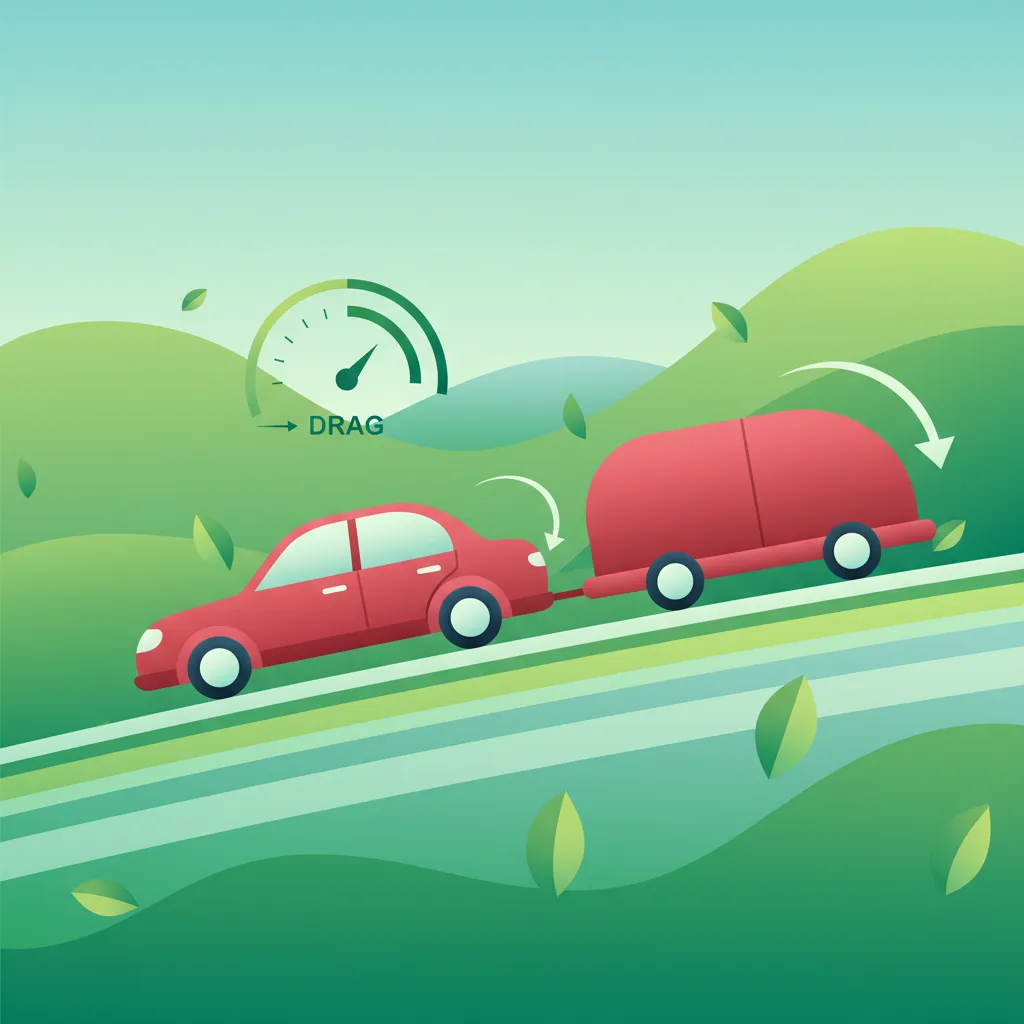
Riding a motorcycle offers unparalleled freedom, but this freedom comes with a responsibility to understand how your machine behaves under various conditions. Two significant factors that dramatically alter a motorcycle's performance, stability, and safety are its load (added weight) and its aerodynamic characteristics. This lesson, part of your Dutch Motorcycle Theory – Category A Comprehensive Preparation, will explore how carrying a pillion passenger, luggage, or facing strong winds changes your motorcycle's dynamics, influencing everything from acceleration and braking to cornering and overall control at speed. Mastering these concepts is essential for safe riding, particularly on Dutch motorways, in curves, and under challenging weather conditions.
Every kilogram added to your motorcycle, whether it's a passenger, luggage, or accessories, fundamentally changes its dynamic behaviour. This isn't just about making the bike feel heavier; it's about altering critical forces and balances that dictate how safely and effectively you can operate the machine.
When you add mass to a motorcycle, you increase its total laden mass. This term refers to the combined weight of the motorcycle itself, the rider(s), and any cargo. According to Newton's second law of motion (F=ma), a greater mass (m) requires more force (F) to achieve the same acceleration (a). This means:
The centre of gravity (CG) is the hypothetical point where the entire weight of the motorcycle-rider-load system is concentrated. Its position is crucial for how the motorcycle handles. When you add a passenger or luggage, you inevitably shift the CG:
Understanding CG shift is vital for safe cornering. A higher or rearward CG means you'll have less margin for error in a lean, and the motorcycle may not respond as predictably as it would when ridden solo.
The distribution of weight on your tyres directly affects the available grip. Load-induced tyre load variation refers to how added mass and CG shifts redistribute the vertical forces acting on the front and rear tyres.
In the Netherlands, specific regulations govern the maximum permissible weight of vehicles. Maximum Authorized Mass (MAM), often referred to as maximum laden mass, is the greatest permissible weight your motorcycle can be when fully loaded with rider(s) and cargo. This limit is set by the manufacturer and is stated in your vehicle's registration documents.
RVV 1990 §12 explicitly states: "Het gewicht van een motorvoertuig mag niet hoger zijn dan de in de toelating vermelde maximum massa." (The weight of a motor vehicle may not be higher than the maximum mass stated in the registration.)
Beyond weight, the way your motorcycle interacts with the air profoundly impacts its performance, especially at higher speeds. This interaction is governed by aerodynamics.
Aerodynamic drag is the resistance force that opposes your motorcycle's forward motion through the air. This force is primarily determined by two factors:
The key characteristic of aerodynamic drag is that it increases with the square of your speed (drag force = ½ ρ Cd A v²). This means:
Cross-winds are winds blowing perpendicular to your direction of travel. They exert a lateral (sideways) force on your motorcycle, pushing it out of its intended path.
Many riders add accessories that alter their motorcycle's aerodynamics, sometimes unintentionally:
Safe motorcycle operation with added load or in windy conditions requires conscious adjustments to your riding technique.
Given the increased inertia and altered CG:
Before any ride with added load:
Riding in cross-winds demands proactive attention:
On Dutch motorways (snelwegen), where speeds are higher, the effects of load and aerodynamics are magnified:
Adherence to Dutch traffic laws (Reglement Verkeersregels en Verkeerstekens, RVV 1990) is paramount for safety and legality.
While specific laws for every scenario might not exist, two overarching principles from the RVV 1990 govern responsible riding:
As mentioned earlier, exceeding the Maximum Authorized Mass (MAM) is a direct violation of RVV 1990 §12.
Many riders, especially those new to carrying passengers or heavy luggage, make common mistakes.
The impact of load and aerodynamics is rarely isolated. It often interacts with other environmental factors.
Your increased stopping distance and reduced manoeuvrability when loaded have implications for other road users:
Understanding and accounting for the impact of load and aerodynamics is fundamental to safe and legal motorcycle riding in the Netherlands. These factors directly influence your motorcycle's acceleration, braking, cornering, and stability.
Key Takeaways:
By internalising these principles and consciously adjusting your riding technique, you can confidently and safely manage your motorcycle, regardless of its load or the prevailing wind conditions, ensuring a responsible and enjoyable riding experience on Dutch roads.
Lesson content overview
Explore all units and lessons included in this driving theory course.
Explore search topics learners often look for when studying Impact of Load and Aerodynamics on Speed. These topics reflect common questions about road rules, driving situations, safety guidance, and lesson level theory preparation for learners in the Netherlands.
Browse additional driving theory lessons that cover connected traffic rules, road signs, and common driving situations related to this topic. Improve your understanding of how different rules interact across everyday traffic scenarios.
Compare how carrying passengers or luggage affects motorcycle handling versus aerodynamic forces. Understand the distinct impacts on speed, stability, and control according to Dutch traffic theory.

This lesson focuses on how you must adapt your riding style when the motorcycle is heavily loaded. You will learn that your braking distances will be significantly longer, requiring you to increase your following distance and begin braking earlier. The content also explains that acceleration will be slower, and cornering will require smoother, more deliberate inputs to avoid upsetting the motorcycle's altered balance.

This lesson explains the physics of how weight distribution affects a motorcycle's stability. You will learn the golden rule of packing: keep the weight as low and as close to the motorcycle's center of gravity as possible. The content provides practical advice on loading panniers evenly, placing heavier items in a tank bag rather than a high top case, and respecting the manufacturer's maximum load capacity.

This lesson prepares you for the challenge of riding in strong winds. You will learn to anticipate areas prone to gusts, such as exiting a tunnel or passing a large truck. The content explains how to maintain a relaxed grip on the handlebars and use subtle counter-steering inputs and body lean to counteract the force of the wind, keeping the motorcycle on its intended path.
This lesson prepares you for the unique dangers of high-speed highway riding. You will learn to scan for and navigate road hazards like debris, potholes, and slippery steel expansion joints on bridges. The content also addresses the powerful air turbulence created by large trucks that can upset a motorcycle's stability and the mental challenge of maintaining focus on long, monotonous stretches of road.

This lesson focuses on the unique demands of riding at sustained high speeds on motorways ('snelwegen'). It covers essential topics such as strict lane discipline, safe overtaking procedures, and maintaining a greater following distance to compensate for higher reaction and braking times. The content also addresses the physical and mental challenges, including managing wind blast, increased noise levels, and maintaining heightened situational awareness over long distances to combat fatigue.

This lesson explores the psychological factors that underpin safe riding, focusing on the concept of cognitive load—the amount of mental effort required to process information. It explains how fatigue, stress, and distractions can overload a rider's capacity to process information, leading to a loss of situational awareness and poor decisions. The content provides strategies for managing mental resources, maintaining focus, and ensuring that the rider's brain is always ahead of the motorcycle.

This lesson focuses on managing the unique acceleration characteristics of a 35 kW A2 motorcycle. You will learn about the relationship between engine power, torque, and acceleration, and how to apply throttle smoothly to maintain traction and stability. The content provides techniques for effective gear selection to ensure you have responsive power when needed for overtaking, while also preventing jerky or uncontrolled acceleration.

This lesson explains the physics of why wet roads offer significantly less traction than dry ones, highlighting particular hazards like the first rain after a dry spell. It defines aquaplaning (when a tire rides on a layer of water instead of the road) and explains how speed and tire condition contribute to this dangerous phenomenon. The content provides clear strategies for riding in the rain, including reducing speed and applying all controls with extra smoothness.
Learn essential riding adjustments for handling a loaded motorcycle and riding in windy conditions. This lesson covers speed, braking, cornering, and stability tips relevant to Dutch driving theory.

This lesson explains how to counteract the effects of strong winds, which can easily upset a motorcycle's stability. It covers techniques like maintaining a relaxed grip on the handlebars and leaning into a steady crosswind. The lesson also addresses the impact of temperature, explaining how cold weather affects both the rider (risk of hypothermia, reduced concentration) and the motorcycle (reduced tire grip until warmed up), and emphasizes the need for appropriate protective gear.

This lesson details the necessary mechanical adjustments before adding significant weight to your motorcycle. You will learn how to consult your owner's manual to set the correct tyre pressures and suspension preload for the added load, which is crucial for maintaining proper handling and stability. The content also emphasizes checking the security of any luggage and adjusting your headlight aim to avoid dazzling other drivers.
This lesson prepares you for the challenge of riding in strong winds. You will learn to anticipate areas prone to gusts, such as exiting a tunnel or passing a large truck. The content explains how to maintain a relaxed grip on the handlebars and use subtle counter-steering inputs and body lean to counteract the force of the wind, keeping the motorcycle on its intended path.

This lesson reinforces the critical relationship between adverse conditions, reduced traction, and massively increased stopping distances. It provides a clear framework for how much riders need to increase their following distance and reduce their overall speed to maintain a safe margin for error. The curriculum teaches riders to constantly reassess their speed based on visual feedback from the road surface and the level of visibility, ensuring they can always stop within the distance they can clearly see.

This lesson focuses on the crucial safety strategy of adjusting your riding for adverse conditions. You will learn that on wet roads, your braking distance can double, necessitating a much larger following distance (e.g., a four-second gap or more). The content covers the risks of reduced visibility in fog and at night, and the destabilizing effects of strong crosswinds, explaining how a greater space cushion provides the time and space needed to react safely.

This lesson addresses the dual challenge of poor visibility: being able to see the road ahead and ensuring other road users can see you. It covers techniques for riding in fog and heavy rain, such as using appropriate lights and reducing speed to match sight distance. The lesson also discusses practical issues like helmet visor fogging and the importance of wearing high-visibility or reflective clothing to enhance conspicuity in low-light conditions.
This lesson focuses on how you must adapt your riding style when the motorcycle is heavily loaded. You will learn that your braking distances will be significantly longer, requiring you to increase your following distance and begin braking earlier. The content also explains that acceleration will be slower, and cornering will require smoother, more deliberate inputs to avoid upsetting the motorcycle's altered balance.

Carrying a passenger or heavy luggage significantly changes how your vehicle handles. This lesson covers the legal regulations for carrying a passenger, including the requirement for proper seating and footpegs. It also explains the importance of adhering to the vehicle's maximum load limit. You will learn how extra weight, especially when positioned high up, raises the center of gravity and affects balance, steering, and braking distances, requiring adjustments to your riding style.

Two-wheeled vehicles are particularly vulnerable to strong winds. This lesson explains how crosswinds and gusts can push you off course and upset your balance. You will learn proactive techniques to manage these effects, such as anticipating windy spots (e.g., bridges, gaps between buildings), adjusting your body position to be more aerodynamic, and applying subtle counter-steering inputs to maintain a straight line. A relaxed grip on the handlebars is key to letting the bike move slightly underneath you.
This lesson focuses on the unique demands of riding at sustained high speeds on motorways ('snelwegen'). It covers essential topics such as strict lane discipline, safe overtaking procedures, and maintaining a greater following distance to compensate for higher reaction and braking times. The content also addresses the physical and mental challenges, including managing wind blast, increased noise levels, and maintaining heightened situational awareness over long distances to combat fatigue.
Find clear answers to common questions learners have about Impact of Load and Aerodynamics on Speed. Learn how the lesson is structured, which driving theory objectives it supports, and how it fits into the overall learning path of units and curriculum progression in the Netherlands. These explanations help you understand key concepts, lesson flow, and exam focused study goals.
A pillion passenger significantly increases the motorcycle's overall weight and raises the centre of gravity. This means longer braking distances, slower acceleration, and a reduced ability to lean deeply into corners. You'll need to adjust your speed, braking points, and cornering lines accordingly, and communicate clearly with your passenger.
Luggage adds weight, similar to a passenger, affecting acceleration and braking. If luggage is mounted high or unevenly, it can drastically alter the centre of gravity, making the motorcycle less stable. Aerodynamic drag also increases, especially with large panniers or top boxes, requiring more throttle to maintain speed and potentially causing buffeting in windy conditions.
At higher speeds, aerodynamic forces become much more significant. Wind resistance (drag) increases dramatically, meaning you need more power to maintain speed and fuel efficiency decreases. Crosswinds can exert considerable sideways force, pushing the motorcycle off its intended line, requiring active rider input to counteract. Buffeting from other vehicles, like trucks, can also be much more pronounced.
Yes, absolutely. With increased weight, your motorcycle will need more distance to stop. Apply both brakes progressively, anticipating stops earlier than you normally would. Be extra mindful of potential front-wheel lock-up if not using ABS, as the increased mass puts more demand on the braking system.
On the motorway, where speeds are higher, the effects of load and aerodynamics are amplified. Maintain a greater following distance, anticipate braking earlier, and be prepared for stronger reactions to crosswinds or turbulence from other vehicles. Smooth throttle and steering inputs are key to maintaining stability.