
Carrying a passenger or luggage can drastically alter your vehicle's handling. This lesson in Unit 8 of the Dutch Driving License Theory Course for Category AM focuses on the crucial legal rules and practical implications of exceeding load limits or carrying a passenger. Mastering this topic is essential for understanding vehicle dynamics and passing your theory exam.
Riding a moped, scooter, or speed pedelec offers freedom and efficiency, but carrying extra weight, whether a passenger or cargo, profoundly changes how your vehicle behaves. Understanding and adhering to legal load limits and passenger regulations is not just about avoiding fines; it is fundamental to your safety and the safety of others on Dutch roads. This comprehensive guide will explore the specific rules for Category AM vehicles (bromfietsen, snorfietsen, and speed pedelecs), the physical effects of additional weight, and how to adapt your riding style to maintain stability and control.
Every vehicle, including your Category AM moped, scooter, or speed pedelec, is designed to safely carry a specific amount of weight. Exceeding this limit compromises its structural integrity, handling, and braking performance. Dutch traffic law, specifically the Road Traffic Act (RVV 1990), mandates adherence to these limits.
The Maximum Permissible Load (MPL), sometimes referred to as Gross Vehicle Weight (GVW) or Maximum Load Capacity (MLC), is the highest total mass allowed for your vehicle. This includes the weight of the vehicle itself (curb weight), the rider, any passengers, and all cargo. The MPL is determined by the manufacturer and is typically indicated on the vehicle's type-approval plate, found on the frame, in the owner's manual, or registration documents.
The weight of the vehicle itself, with all standard equipment, full fuel (or charge for electric vehicles), and necessary fluids, but without any occupants or cargo. It is the vehicle's "empty" weight.
To calculate your current load, you must add your own weight, the weight of your passenger(s), and the weight of all items you are carrying. This sum must never exceed the MPL. For example, if your bromfiets has a curb weight of 90 kg and an MPL of 200 kg, you have 110 kg of capacity remaining for yourself, a passenger, and any cargo. A 75 kg rider, a 55 kg passenger, and 20 kg of groceries would exceed this limit (75 + 55 + 20 = 150 kg, which is more than 110 kg remaining capacity).
Dutch traffic law (RVV 1990, Article 16.1) explicitly states that a vehicle may not be loaded beyond the maximum permissible limit indicated by the manufacturer. Violating this rule can lead to fines and decreased safety.
Common misconceptions include believing that the maximum load only applies to luggage, overlooking the weight contribution of passengers, or assuming a "light" moped can carry more weight than specified. Always consult your vehicle's documentation to confirm its MPL.
Transporting a passenger on a moped, scooter, or speed pedelec in the Netherlands is subject to specific regulations to ensure their safety and the rider's control. It is not enough for the vehicle to simply be able to carry the weight; it must also be physically equipped for safe passenger transport.
According to Dutch law (RVV 1990, Article 16.2), a passenger may only be carried if your Category AM vehicle is specifically equipped for it. This means:
Transporting a passenger on a single-seat vehicle, or on a vehicle that lacks proper footpegs for the passenger, is illegal and highly dangerous. This includes situations where a passenger attempts to "hang on" or stand on the vehicle's rear.
There is no specific age limit for passengers on Category AM vehicles, but the passenger must be capable of sitting securely, using the footpegs safely, and following the rider's instructions. A small child who cannot reach the footpegs properly should not be transported.
Beyond legal limits, the laws of physics dictate how your vehicle responds to additional weight. Understanding the Centre of Gravity (CoG) is crucial for anticipating changes in handling and maintaining control.
The CoG is the hypothetical point where the entire combined weight of the vehicle, rider, passenger, and cargo can be considered to act vertically downwards. Imagine balancing the entire system on a single point; that point would be the CoG.
When you add weight, especially high up or far to the front or rear, the CoG shifts.
Increased mass, especially when positioned high, directly impacts your vehicle's dynamic stability – its ability to maintain its intended path without wobbling, leaning excessively, or losing traction.
Always aim to keep cargo as low and as close to the centreline of the vehicle as possible. Using under-seat storage or a low-mounted rear basket is preferable to stacking items high on a rear rack or carrying a heavy backpack.
The theoretical effects of load translate directly into real-world riding challenges. Your Category AM vehicle will perform differently when loaded, and you must adjust your riding technique accordingly.
When carrying a passenger or heavy cargo, several aspects of your riding must change:
A passenger requires active participation to maintain stability:
Safe riding with a load or passenger begins before you even start the engine. A thorough pre-ride check and continuous vigilance are essential.
Before every ride with a passenger or significant cargo, perform these checks:
Regular maintenance of your vehicle's brakes, tires, and suspension is paramount, as these components are put under increased stress when carrying additional weight.
Violating load limits or passenger regulations in the Netherlands carries significant legal consequences, in addition to the increased risk of accidents. Law enforcement actively monitors these aspects of road safety.
The Dutch Road Traffic Act (RVV 1990, Articles 16.1 through 16.4) provides the legal basis for these regulations and their enforcement. Ignorance of the law is not a defence.
The impact of load on stability and handling is not static; it interacts significantly with environmental and vehicle conditions. Riders must consider these variables to make safe decisions.
An overloaded moped or scooter takes longer to stop and is less agile. This is critical when interacting with vulnerable road users like pedestrians and cyclists, who might make sudden, unpredictable movements. Always maintain a larger safety margin and be prepared to react, knowing your vehicle's limitations.
Mastering load limits and passenger regulations is a core part of becoming a safe and responsible rider. It integrates knowledge from various aspects of motorcycle and scooter theory.
In summary, safe and legal transport of passengers or cargo on your Category AM vehicle depends on three key pillars: strict adherence to legal and manufacturer-specified load limits, ensuring the vehicle is properly equipped for passenger transport, and adapting your riding technique to account for the altered vehicle dynamics. Always perform pre-ride checks, secure your cargo, instruct your passenger, and adjust your speed and braking for the current load and conditions. This proactive approach will significantly reduce accident risk and ensure you remain compliant with Dutch traffic laws.
Lesson content overview
Explore all units and lessons included in this driving theory course.
Explore search topics learners often look for when studying Load Limits, Passenger Regulations, and Stability. These topics reflect common questions about road rules, driving situations, safety guidance, and lesson level theory preparation for learners in the Netherlands.
Browse additional driving theory lessons that cover connected traffic rules, road signs, and common driving situations related to this topic. Improve your understanding of how different rules interact across everyday traffic scenarios.
Understand the legal load limits and passenger carrying rules for mopeds, scooters, and speed pedelecs in the Netherlands. Learn how weight affects vehicle stability, handling, and braking distances.
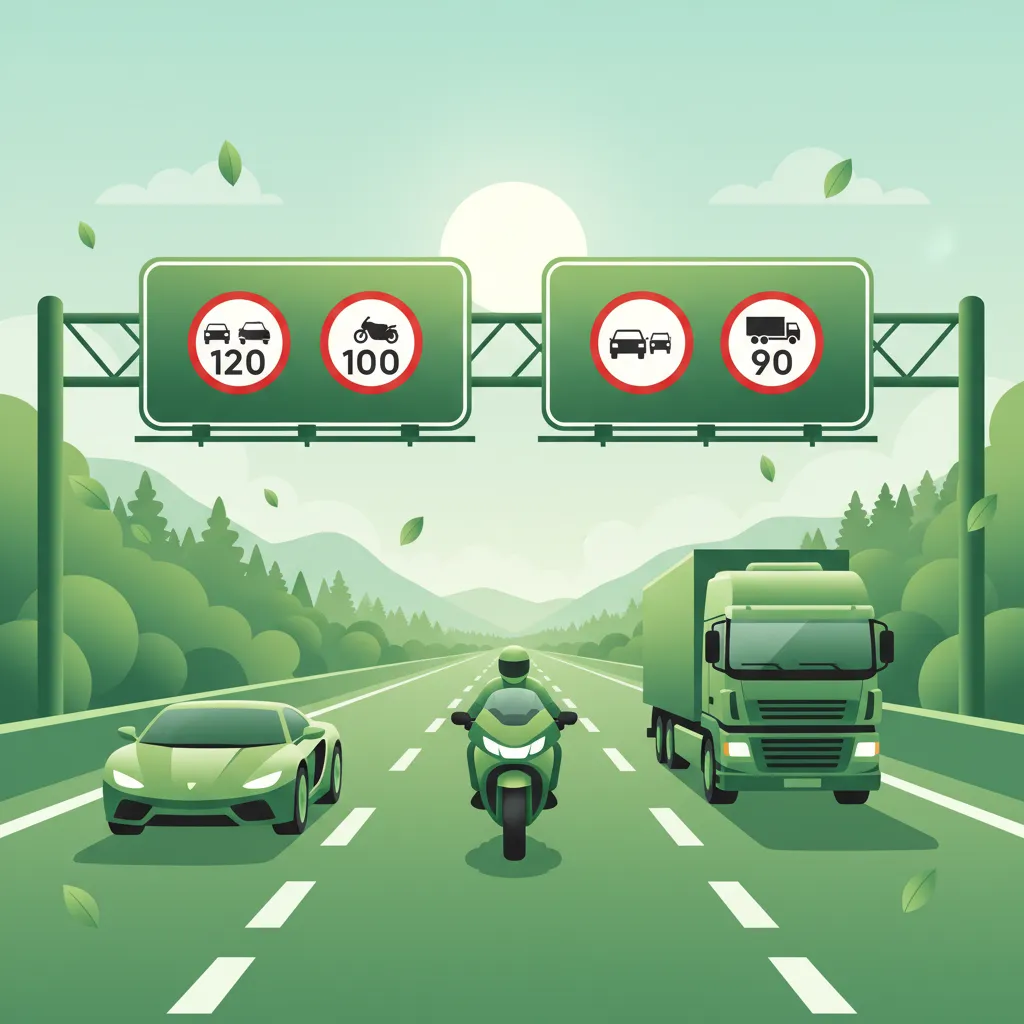
This lesson details the statutory maximum speeds for each Category AM vehicle: 25 km/h for snorfietsen, and 45 km/h for both bromfietsen and speed pedelecs on the carriageway. It explains how these limits apply within built-up areas, outside built-up areas, and on specific road types like residential zones ('woonerf'). The content covers how to interpret speed limit signs and the legal consequences of exceeding these strict limits, which is a key component of the CBR theory exam.

This lesson outlines the precise age requirements for obtaining and holding a Category AM driving license in the Netherlands. It details the minimum age for operating various AM vehicles and explains the validity period of the license and the renewal process. Furthermore, the content clarifies how an AM license relates to other categories like B (car) or A (motorcycle), and what age-related restrictions may apply to novice riders. This knowledge is crucial for ensuring full legal compliance from the start of your riding journey.
This lesson explains the specific regulations determining what kind of trailer you can legally tow with a Category B license. You will learn the two main rules: you can always tow a trailer with a Maximum Authorised Mass (MAM) of up to 750 kg, or you can tow a heavier trailer provided the combined MAM of the car and trailer does not exceed 3,500 kg. The content clarifies how to find these weights on the vehicle's registration documents and explains when a higher license category like BE is required.
This lesson provides a detailed breakdown of the official classifications for Category AM vehicles under Dutch law. You will learn to distinguish between a bromfiets, snorfiets, speed pedelec, and brommobiel based on technical criteria like maximum speed and engine power. Understanding these definitions is fundamental, as they determine which traffic rules, licensing requirements, and road access permissions apply to each vehicle type, forming the basis for the entire CBR theory exam.
This lesson details the Dutch regulations for carrying passengers on a motorcycle, including the minimum age for the passenger and the mandatory use of approved helmets. It explains the rider's legal responsibility for the passenger's safety and how to properly secure loads to avoid affecting the motorcycle's stability and balance. Understanding these rules is crucial for ensuring safety and legality when riding with a pillion or luggage.

This lesson covers the critical importance of properly securing any load to prevent it from shifting or falling off. You will learn about using nets, straps, and sheets to secure goods effectively. The content also explains the rules for loads that project from the vehicle or trailer, including the specific dimensions that require a red and white striped marker board for visibility. Proper load distribution is also discussed, as it significantly affects the stability and handling of the vehicle and trailer combination.
This lesson clarifies the regulations determining where each type of Category AM vehicle is allowed to travel. It explains the rules for using mandatory cycle paths (fietspad) and combined moped/cycle paths (bromfietspad), identified by specific road signs. You will also learn the conditions under which a bromfiets must use the main carriageway. Understanding these positioning rules is essential for legal compliance and for ensuring safety in mixed traffic environments with cyclists and cars.
This lesson details the statutory helmet regulations applicable to all Category AM vehicles. It clearly defines the mandatory helmet use for bromfiets and speed pedelec riders and the specific rules for snorfiets riders, including the required ECE safety certification for all approved helmets. The content also provides information on recommended protective gear, such as gloves and sturdy footwear, explaining how proper equipment enhances rider safety and is a key part of responsible riding culture in the Netherlands.
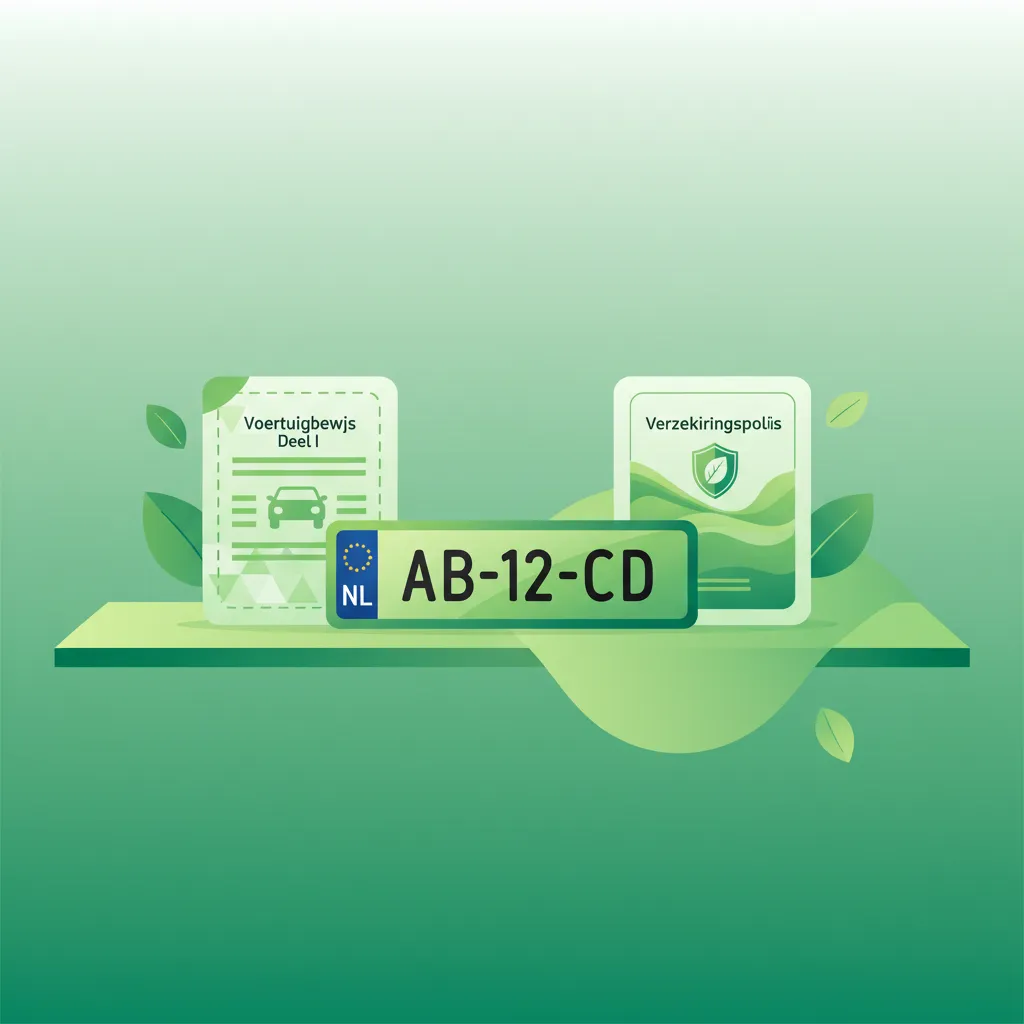
Explore the essential administrative requirements for any Category AM vehicle owner. This lesson covers the mandatory vehicle registration process, the distinction between yellow plates for bromfietsen and blue plates for snorfietsen, and the legal obligation for third-party liability insurance (WA-verzekering). You will learn what documentation is required, the consequences of non-compliance, and how these elements are verified during traffic enforcement, ensuring your vehicle is always road-legal.
This lesson covers the critical topic of driving under the influence, explaining the legal blood alcohol concentration (BAC) limits for Category AM riders. It highlights the distinction between the lower limit for novice drivers and the standard limit for experienced drivers. The lesson also addresses the zero-tolerance policy for driving under the influence of drugs, the types of police tests conducted, and the severe legal penalties, including fines, license suspension, and mandatory courses, for any violations.
Learn how to adapt your speed, braking, and cornering techniques when carrying passengers or cargo. Essential theory for maintaining control and safety on Dutch roads with increased vehicle weight.

Riding on two wheels requires special care on surfaces with reduced grip. This lesson teaches you how to handle challenging conditions like rain, ice, wet leaves, or tram tracks. Key principles include reducing speed significantly, making all control inputs (braking, accelerating, steering) much more smoothly and gradually, and increasing your following distance to allow for much longer stopping distances. Recognizing potentially slippery areas is a critical part of proactive hazard perception.
This lesson details the necessary mechanical adjustments before adding significant weight to your motorcycle. You will learn how to consult your owner's manual to set the correct tyre pressures and suspension preload for the added load, which is crucial for maintaining proper handling and stability. The content also emphasizes checking the security of any luggage and adjusting your headlight aim to avoid dazzling other drivers.
Two-wheeled vehicles are particularly vulnerable to strong winds. This lesson explains how crosswinds and gusts can push you off course and upset your balance. You will learn proactive techniques to manage these effects, such as anticipating windy spots (e.g., bridges, gaps between buildings), adjusting your body position to be more aerodynamic, and applying subtle counter-steering inputs to maintain a straight line. A relaxed grip on the handlebars is key to letting the bike move slightly underneath you.

This lesson focuses on how you must adapt your riding style when the motorcycle is heavily loaded. You will learn that your braking distances will be significantly longer, requiring you to increase your following distance and begin braking earlier. The content also explains that acceleration will be slower, and cornering will require smoother, more deliberate inputs to avoid upsetting the motorcycle's altered balance.
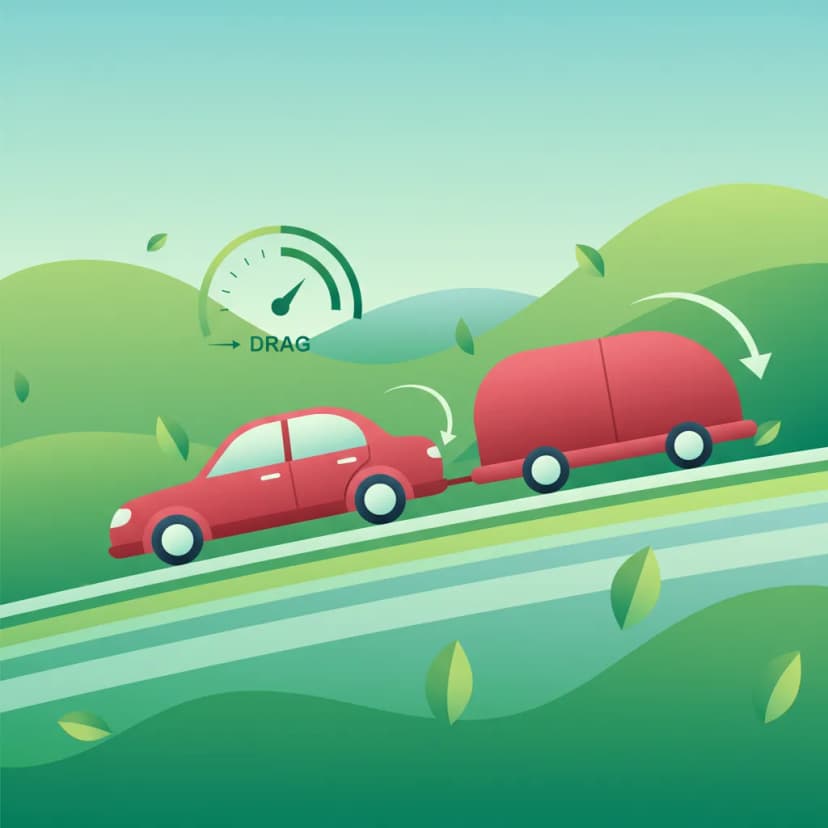
This lesson examines how adding weight, such as a pillion passenger or luggage, and changes in aerodynamics affect a motorcycle's performance and stability at speed. It explains the impact on acceleration, braking distances, and cornering ability due to a higher center of gravity and increased mass. Riders will learn how to adjust their speed and control inputs to safely manage the altered handling characteristics, especially when riding in windy conditions or at high motorway speeds.

Controlling a two-wheeled vehicle at very low speeds is a challenging but essential skill. This lesson focuses on the delicate interplay between the clutch, throttle, and rear brake to maintain balance and control without putting your feet down. You will learn the techniques for a smooth take-off from a standstill and how to come to a gentle, controlled stop, which are fundamental skills for navigating city traffic and junctions safely.
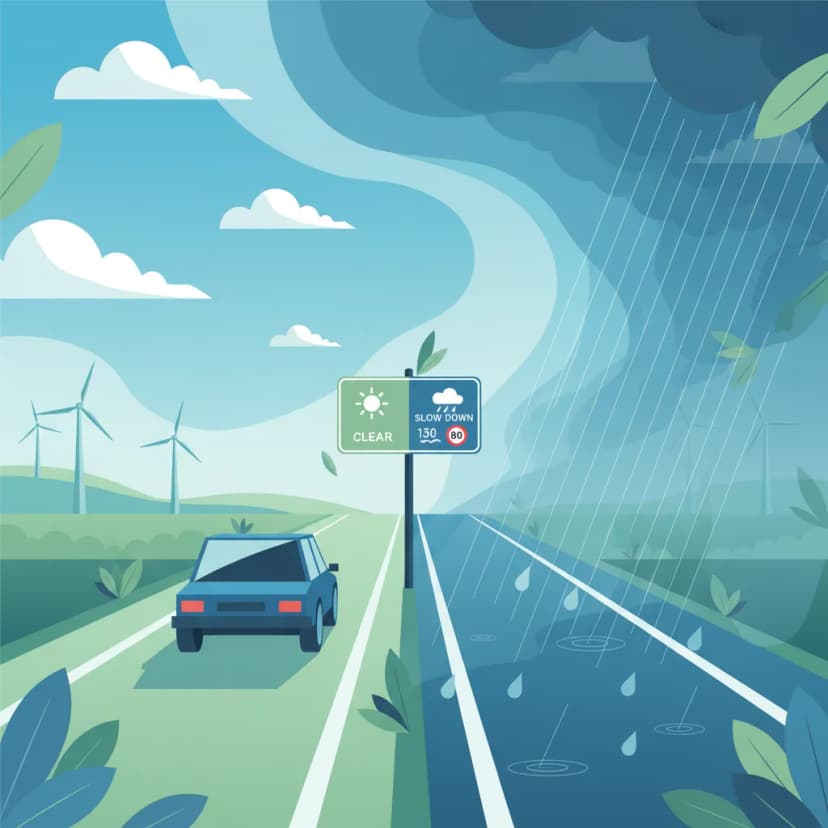
The posted speed limit is a maximum, not a target. This lesson teaches the crucial skill of adapting your speed to prevailing conditions. You will learn how to assess factors like traffic density, poor weather (rain, fog), limited visibility (at night), and slippery road surfaces. Adjusting your speed downwards in these situations provides you with more time to react to hazards and significantly reduces the risk of losing control or being involved in a collision.
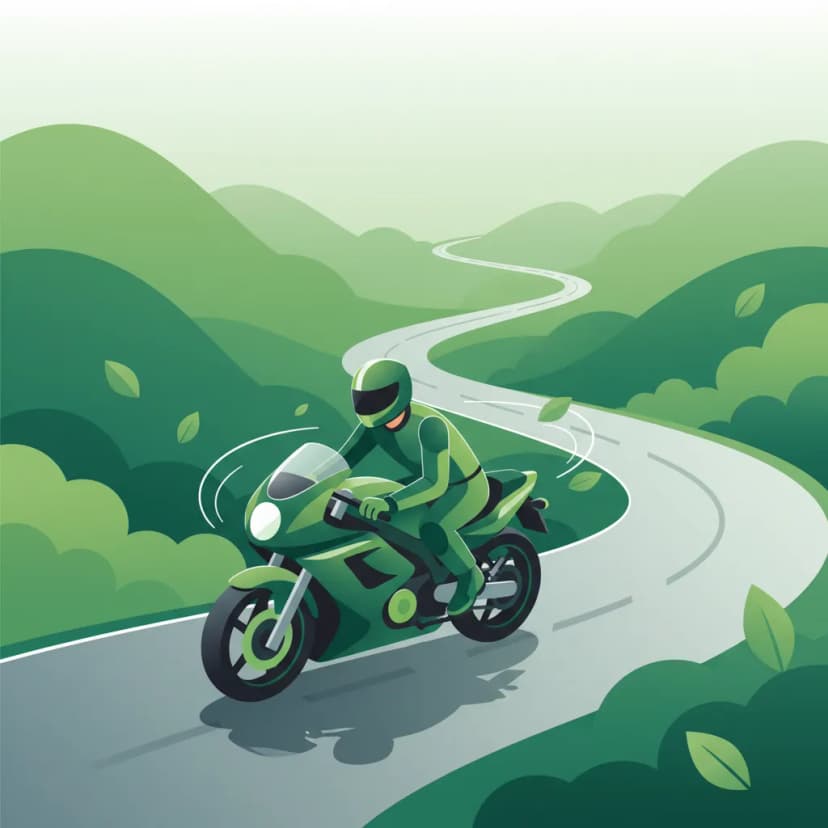
Proper cornering technique is vital for safety and stability on a two-wheeler. This lesson explains the physics of turning, including the concepts of lean angle and counter-steering. You will learn the importance of adjusting your speed before the turn, looking where you want to go, and maintaining a smooth throttle through the corner. These techniques help you maximize grip and maintain control, ensuring you can navigate bends safely.
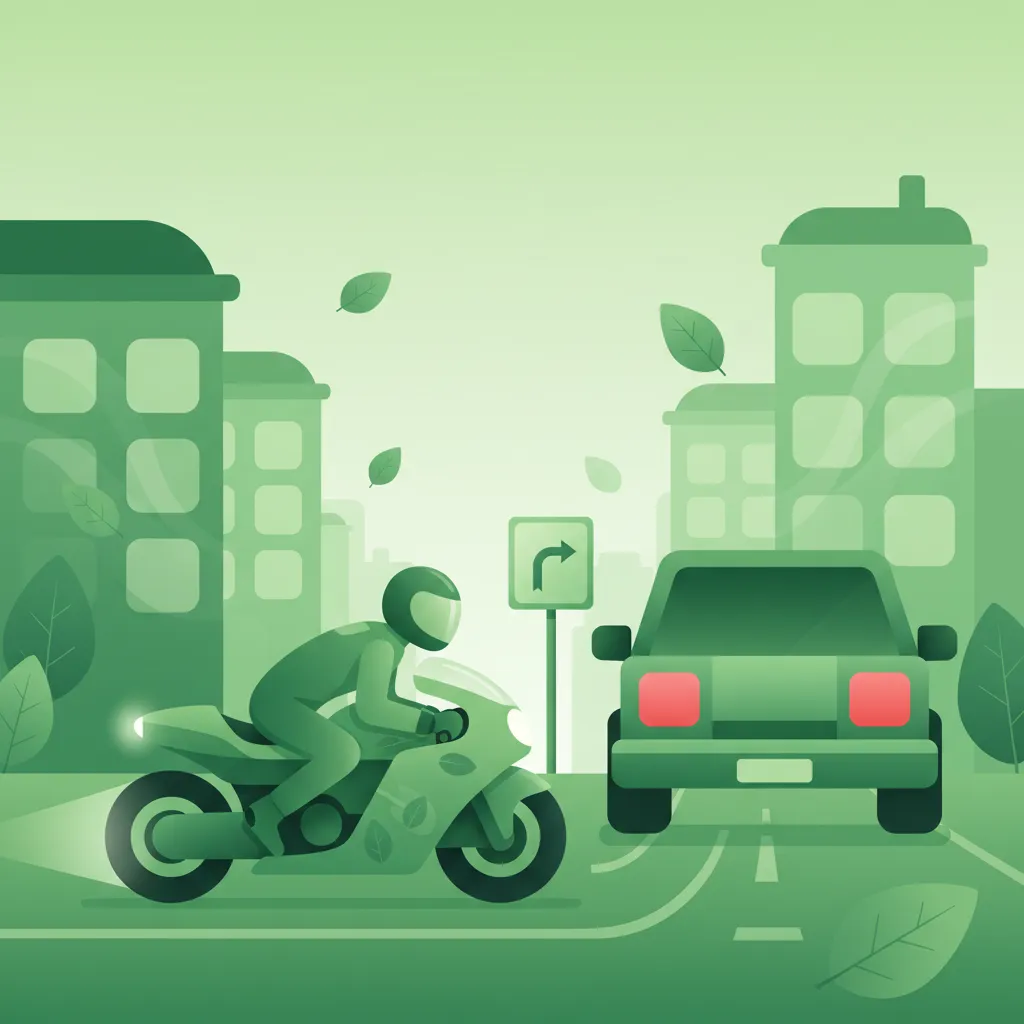
Defensive riding means riding to prevent collisions, despite the actions of others or the conditions around you. This lesson teaches the core principles of this proactive safety strategy. Key techniques include managing the space cushion around your vehicle, positioning yourself in your lane for maximum visibility, constantly planning an escape route, and communicating your intentions clearly to other road users. This mindset acknowledges your vulnerability and empowers you to take control of your own safety.
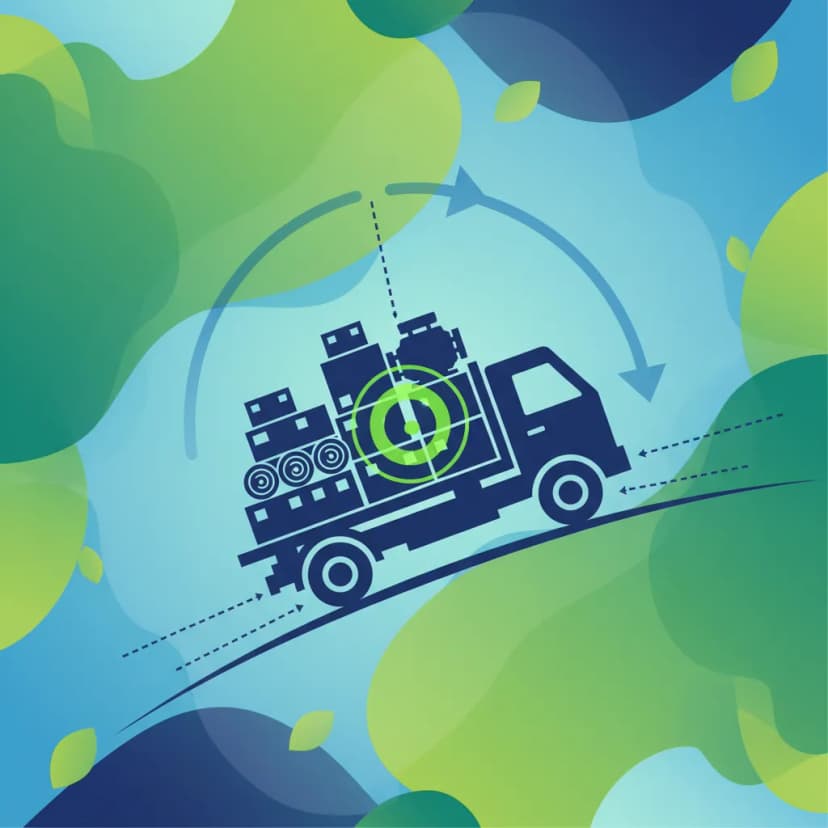
This lesson explains the physics of how weight distribution affects a motorcycle's stability. You will learn the golden rule of packing: keep the weight as low and as close to the motorcycle's center of gravity as possible. The content provides practical advice on loading panniers evenly, placing heavier items in a tank bag rather than a high top case, and respecting the manufacturer's maximum load capacity.
Find clear answers to common questions learners have about Load Limits, Passenger Regulations, and Stability. Learn how the lesson is structured, which driving theory objectives it supports, and how it fits into the overall learning path of units and curriculum progression in the Netherlands. These explanations help you understand key concepts, lesson flow, and exam focused study goals.
In the Netherlands, to carry a passenger on a bromfiets or snorfiets, the vehicle must be designed for two people, meaning it must have a proper passenger seat and footpegs. The passenger must also be at least 16 years old if you are riding a snorfiets. For speed pedelecs, specific regulations regarding passenger age and vehicle type may apply, so always check the latest rules.
Carrying a passenger significantly increases the overall weight of the vehicle, which raises the center of gravity. This makes the vehicle less stable, especially at low speeds or when cornering. You will also notice a longer braking distance and a slower acceleration. It's essential to anticipate these changes and ride more cautiously.
The maximum load limit is the total weight (rider, passenger, and any luggage) that the vehicle can safely carry, as specified by the manufacturer. Exceeding this limit can strain the engine, suspension, and brakes, and critically affects the vehicle's stability and handling. Always check your vehicle's manual or specifications for this information.
Yes, definitely. Luggage placed high up or far back will raise the center of gravity and shift the weight distribution, making the vehicle much more unstable and harder to control, especially during braking or cornering. For optimal stability, always try to carry heavy items as low and as close to the center of the vehicle as possible.
Absolutely. The increased mass means your vehicle will require a significantly longer distance to come to a complete stop. You must account for this by increasing your following distance from other vehicles and anticipating braking situations much earlier, especially in traffic or at junctions.