
This lesson focuses on the crucial aspect of securing and marking loads when towing a trailer, a topic frequently assessed in the Dutch driving theory exam. Building on previous lessons about towing and vehicle requirements, we will delve into the practicalities of using securing materials like nets and straps, and the regulations surrounding overhanging loads. Understanding these rules ensures both your safety and that of other road users.

Properly securing and marking loads is a fundamental aspect of safe driving, especially for those operating vehicles with trailers or transporting goods. In the Netherlands, strict regulations govern how cargo must be fastened and how projecting loads must be indicated to other road users. This comprehensive lesson for your Dutch Category B driving license theory will delve into the critical importance of these practices, covering everything from load distribution to specific marking requirements, ensuring your safety and compliance with traffic laws.
Failure to adhere to these rules can lead to serious consequences, including loss of vehicle control, accidents, injuries, and significant legal penalties. Understanding the principles of load securing and marking is not just about avoiding fines; it's about mitigating risks, maintaining vehicle stability, and contributing to overall road safety.
Effective load distribution is the cornerstone of safe vehicle and trailer operation. It involves carefully arranging cargo weight within your vehicle or trailer to ensure that axle loads do not exceed statutory limits and that the vehicle's center of gravity remains within safe boundaries. This practice is crucial for maintaining vehicle stability, preventing dangerous trailer sway, and ensuring optimal handling characteristics, especially during braking and steering.
When loading a vehicle, it's essential to consider how the weight is distributed across its axles. An imbalance, such as placing too much weight on the front or rear axle, can compromise steering, braking effectiveness, and tire integrity. Similarly, balancing the load from left to right prevents the vehicle from leaning excessively to one side, which can affect stability, particularly on turns or uneven roads.
Loading heavy items onto the roof, for instance, significantly raises the vehicle's center of gravity. This makes the vehicle more susceptible to rollovers, especially when cornering or encountering strong crosswinds. Conversely, placing heavier items as low and as close to the center of the vehicle as possible improves stability and handling. Adhering to these principles is essential, as improper distribution can necessitate lower speeds and increase stopping distances, making driving more hazardous.
Dutch regulations, such as those found in the RVV 1990 (Reglement Verkeersregels en Verkeerstekens 1990) and the RVD 2002 (Regeling Voertuigen, Dutch Vehicle Regulation 2002), explicitly address overload and distribution limits. It is a common misconception that any load is permissible as long as the gross vehicle weight (GVW) is within limits, neglecting specific axle limits. Always check your vehicle's and trailer's specifications for maximum permissible axle loads.
Once the load is properly distributed, the next critical step is to secure it firmly to prevent any shifting, sliding, or falling during transit. A variety of securing devices are available, each suited for different types of cargo and situations. These devices must be in good condition and used correctly to be effective.
Important Inspection: Before every trip, meticulously inspect all securing devices for signs of wear, cuts, fraying, corrosion, or damage. Damaged equipment compromises safety and is illegal under RVD 2002 R101.
Using too few straps, or straps that are too weak for the load, is a common error. The tension applied to straps and nets must be sufficient to hold the load against forces encountered during braking, acceleration, and cornering. Over-tightening, however, can damage cargo or securing devices. The RVD 2004 specifies standards for net construction and lacing patterns, emphasizing that tension must be within specifications to prevent cargo shift.
Loads that extend beyond the physical dimensions of your vehicle or trailer, known as load overhang, pose a significant hazard to other road users. To mitigate this risk, Dutch regulations mandate specific marking requirements to ensure these projections are clearly visible, especially on narrow roads, during poor visibility, or at night.
A marker board is mandatory under RVD 2002 R102 if your load overhangs:
The marker board itself is typically a red and white striped board.
These boards must be placed on the outermost point of the protruding load, ensuring it is clearly visible to approaching traffic from all relevant directions. For example, if a long metal pipe extends significantly from the rear of a trailer, the marker board must be affixed to the very end of the pipe.
Visibility requirements increase in specific conditions. According to RVD 2002 R103, in addition to the red and white striped marker board, a reflective marking is required for overhangs in:
This reflective element significantly enhances detection by other road users, especially at night or in adverse weather, giving them more time to react to the potential hazard. Failure to properly mark an overhanging load can lead to substantial fines and an increased risk of collision.
Check Your Route: Before commencing your journey, always consider the type of roads you will be using (urban vs. rural, highways) and the expected weather conditions. These factors directly influence the marking requirements for your load.
Compliance with Dutch road and vehicle regulations is not merely a formality; it is a legal and ethical imperative. The primary regulations governing load securing and marking for Category B license holders in the Netherlands are found in the RVV 1990 (Reglement Verkeersregels en Verkeerstekens 1990) and the RVD 2002 (Regeling Voertuigen 2002).
Let's break down the most relevant articles:
RVV 1990 R51: Gross Vehicle Weight Limits This rule mandates that the total weight of your vehicle, including its cargo and passengers, must not exceed the statutory limits specified for that vehicle class. Exceeding these limits can lead to structural damage to the vehicle, loss of control, and severe fines.
RVV 1990 R52: Overload and Permits If a vehicle's weight capacity is exceeded, special permits might be required. Without such permits, driving an overloaded vehicle is strictly prohibited and subject to legal penalties. This applies even if the load is perfectly secured, as the vehicle itself is not designed to safely carry such weight.
RVV 1990 R73: Preventing Accidental Detachment A fundamental rule stating that any load must be secured in a way that prevents it from accidentally detaching, shifting, or falling off the vehicle or trailer during transit. This rule underscores the overall responsibility of the driver to ensure comprehensive load safety.
RVD 2002 R101: Condition of Securing Devices All equipment used to secure loads, such as nets, straps, and anchors, must be of the correct type for the load and maintained in good, undamaged condition. This prevents device failure mid-journey, which could lead to disastrous consequences.
RVD 2002 R102: Overhang Marking Requirements As discussed, this rule specifies when a red and white striped marker board is mandatory for loads that project beyond certain dimensions (total length >3m, or front/rear/side overhang >1.25m).
RVD 2002 R103: Reflective Marking for Enhanced Visibility This regulation adds the requirement for reflective markings on marker boards under specific conditions, such as poor visibility, night driving, in urban areas, or for loads exceeding 200 kg, ensuring maximum visibility of hazards.
RVD 2002 R104: Securing Cargo Sheets When a folding sheet or tarpaulin is used to cover or contain cargo, it must be securely anchored to the vehicle or trailer to prevent it from flapping, tearing, or detaching, which could obstruct visibility or create hazards for other road users.
RVD 2004: Net Safety and Construction This specific regulation dictates standards for cargo nets, including their materials, lacing patterns, and required tension. It emphasizes using nets designed for the specific load type and ensuring they are laced and tensioned according to manufacturer and safety guidelines to effectively contain cargo.
Regulation Verification: While these rules provide a strong overview, it is always advisable to consult the latest official Dutch road and vehicle regulations (Onderdeel II, Chapter 4 of the Regeling Voertuigen) and Dutch Standards Organisation (NEN) specifications for the most current and precise details on load securing.
Understanding common mistakes can help you proactively prevent violations and ensure safety. Many incidents related to load securing stem from a lack of awareness or underestimation of potential risks.
Leaving Cargo Unsecured: A pallet or item left loose on the vehicle or trailer floor.
Using Damaged Securing Devices: Straps with cuts, frayed edges, or nets with broken mesh.
Incorrect Placement of Marker Boards: Placing a marker board on the side of a load that is less visible to oncoming or following traffic.
Not Using Reflective Markings at Night or in Poor Visibility: Relying solely on a red and white board without reflective strips.
Overloading Axles: Distributing a heavy load unevenly, causing one axle to exceed its limit even if the total vehicle weight is within bounds.
The requirements for securing and marking loads are not static; they adapt to different environmental conditions and road types. Understanding these variations, along with the underlying safety reasoning, reinforces the importance of meticulous preparation.
The regulations governing load securing and marking are not arbitrary; they are based on physics, accident data, and the need for predictable road behavior.
The principles of securing and marking loads are deeply integrated with other aspects of driving theory for your Category B license:
Securing and marking loads is a non-negotiable aspect of responsible driving in the Netherlands. It requires a thorough understanding of load distribution principles, the correct use and maintenance of securing devices, and strict adherence to marking regulations for overhanging loads. By internalizing these practices, you not only comply with Dutch traffic law but also significantly contribute to your own safety and the safety of everyone else on the road. Always remember that a properly secured and marked load is a visible and stable load, allowing for predictable vehicle behavior and a safer journey for all.
Lesson content overview
Explore all units and lessons included in this driving theory course.
Explore search topics learners often look for when studying Securing and Marking Loads. These topics reflect common questions about road rules, driving situations, safety guidance, and lesson level theory preparation for learners in the Netherlands.
Browse additional driving theory lessons that cover connected traffic rules, road signs, and common driving situations related to this topic. Improve your understanding of how different rules interact across everyday traffic scenarios.
Understand Dutch traffic regulations for securing cargo on vehicles and trailers. Learn about load overhangs, mandatory marker boards, and safe load distribution to prevent shifting and ensure road safety.

This lesson provides essential techniques for driving safely while towing. You will learn how the added weight increases your braking distance and how the extra length requires you to take wider turns. The curriculum addresses the challenging maneuver of reversing with a trailer and provides tips on how to control it. It also explains the phenomenon of 'snaking' or trailer sway, its causes (like crosswinds or improper loading), and how to correct it by gently reducing speed.

This lesson focuses on the practical and legal requirements for attaching a trailer. You will learn the correct procedure for hooking up the trailer hitch and connecting the electrical cable for the lights and indicators. The curriculum details the mandatory safety features, such as a breakaway cable for braked trailers or a secondary coupling for unbraked trailers. It also explains the rules for trailer license plates: a trailer up to 750 kg must display a white plate with the towing vehicle's registration number.

This lesson explains the specific regulations determining what kind of trailer you can legally tow with a Category B license. You will learn the two main rules: you can always tow a trailer with a Maximum Authorised Mass (MAM) of up to 750 kg, or you can tow a heavier trailer provided the combined MAM of the car and trailer does not exceed 3,500 kg. The content clarifies how to find these weights on the vehicle's registration documents and explains when a higher license category like BE is required.

This lesson covers the full range of lights and signals required on a vehicle for visibility and communication. You will learn about the mandatory requirements for headlights, taillights, brake lights, indicators, and reflectors. The curriculum emphasizes the driver's legal responsibility to ensure all lights are clean and functional before every journey. The correct use and function of the horn as an audible warning device in case of imminent danger are also explained.
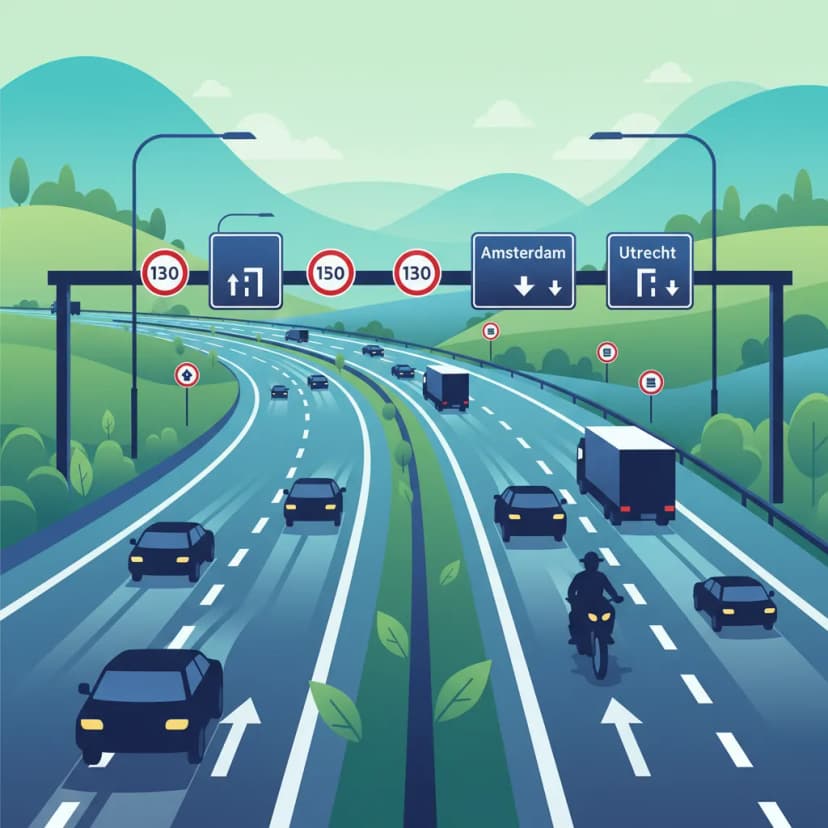
This lesson details the specific regulations for driving on Dutch motorways, identifiable by the G1 sign. You will learn the correct procedure for joining the flow of traffic using the acceleration lane and for leaving via the deceleration lane. The curriculum reinforces the 'keep right unless overtaking' rule for lane discipline. It also explains that stopping is strictly forbidden, and the hard shoulder (vluchtstrook) may only be used for genuine emergencies.
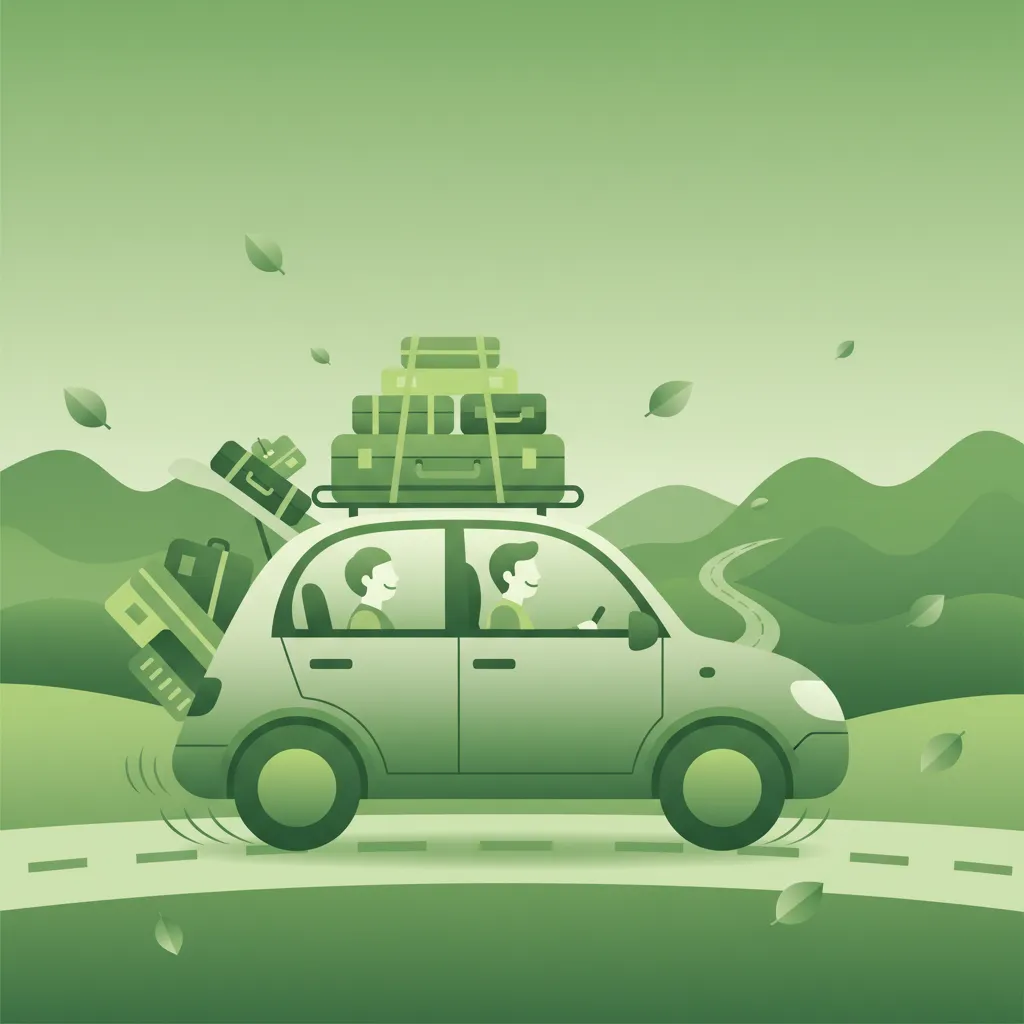
Carrying a passenger or heavy luggage significantly changes how your vehicle handles. This lesson covers the legal regulations for carrying a passenger, including the requirement for proper seating and footpegs. It also explains the importance of adhering to the vehicle's maximum load limit. You will learn how extra weight, especially when positioned high up, raises the center of gravity and affects balance, steering, and braking distances, requiring adjustments to your riding style.

This lesson provides a detailed guide on the rules and safety precautions for overtaking. You will learn that overtaking must almost always be done on the left and requires careful judgment of speed and distance. The content covers situations where overtaking is forbidden, such as before pedestrian crossings, at intersections, or where there are solid white lines. Key steps like checking mirrors, signaling intention, checking blind spots, and returning to the lane safely are explained thoroughly.

This lesson reinforces the fundamental rule of Dutch highway driving: use the rightmost lane available and use the lanes to the left only for overtaking. You will learn the complete, safe overtaking procedure: check mirrors, signal, perform a shoulder check for the blind spot, smoothly move over, accelerate past the vehicle, and then return to the right lane when safe.
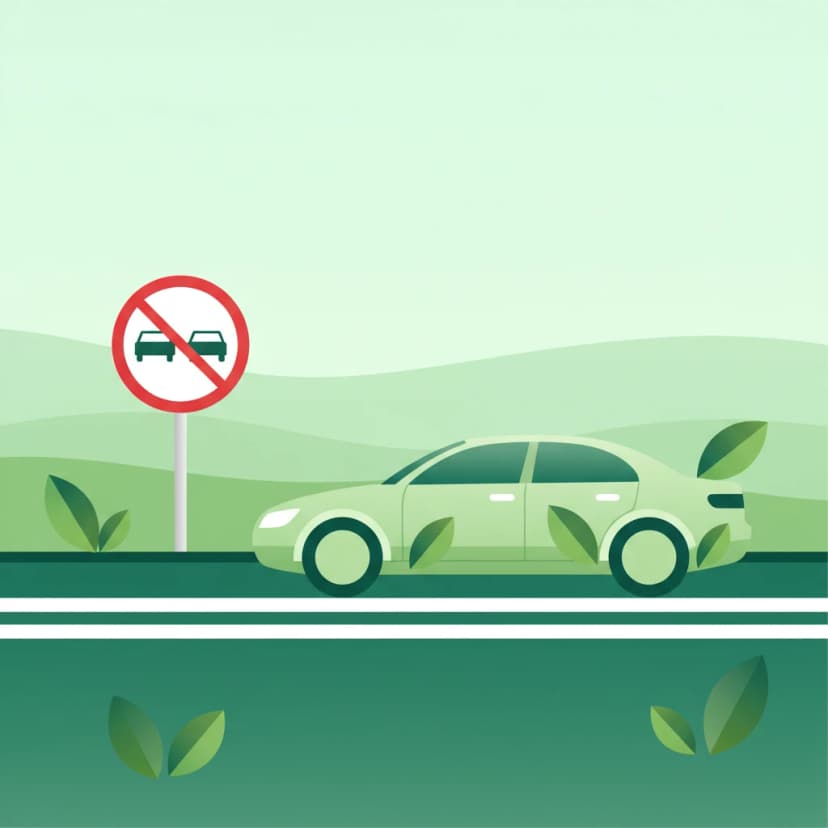
This lesson covers the core principle of road positioning in the Netherlands: drive as far to the right as is safely possible. You will learn why this rule is critical for maintaining traffic flow and preventing conflicts with oncoming and overtaking vehicles. The curriculum explains how to apply this rule on different road types, from single-lane rural roads to multi-lane motorways. It also discusses maintaining a safe lateral distance from the edge of the road, parked cars, and vulnerable road users like cyclists.

This lesson covers the procedures and safety considerations for driving in reverse and turning around. You will learn that reversing should only be done over short distances and when it does not endanger or obstruct other road users. The curriculum details techniques for turning in the road and identifies situations and locations where U-turns are prohibited. The importance of all-around observation, checking blind spots, and yielding to all other traffic is a central theme.
Explore frequent errors drivers make when securing loads and marking overhangs. Understand the serious consequences and how to avoid them to ensure safe transport according to Dutch traffic laws.

This lesson details the necessary mechanical adjustments before adding significant weight to your motorcycle. You will learn how to consult your owner's manual to set the correct tyre pressures and suspension preload for the added load, which is crucial for maintaining proper handling and stability. The content also emphasizes checking the security of any luggage and adjusting your headlight aim to avoid dazzling other drivers.
Carrying a passenger or heavy luggage significantly changes how your vehicle handles. This lesson covers the legal regulations for carrying a passenger, including the requirement for proper seating and footpegs. It also explains the importance of adhering to the vehicle's maximum load limit. You will learn how extra weight, especially when positioned high up, raises the center of gravity and affects balance, steering, and braking distances, requiring adjustments to your riding style.

This lesson explains the physics of how weight distribution affects a motorcycle's stability. You will learn the golden rule of packing: keep the weight as low and as close to the motorcycle's center of gravity as possible. The content provides practical advice on loading panniers evenly, placing heavier items in a tank bag rather than a high top case, and respecting the manufacturer's maximum load capacity.

This lesson focuses on how you must adapt your riding style when the motorcycle is heavily loaded. You will learn that your braking distances will be significantly longer, requiring you to increase your following distance and begin braking earlier. The content also explains that acceleration will be slower, and cornering will require smoother, more deliberate inputs to avoid upsetting the motorcycle's altered balance.

This lesson prepares you to deal with sudden changes in road surface that can cause a loss of traction. You will learn to scan for these hazards and, if they cannot be avoided, how to ride over them safely. The key technique is to keep the motorcycle upright and maintain smooth, steady control inputs—no abrupt braking, accelerating, or steering—to minimize the risk of a skid.
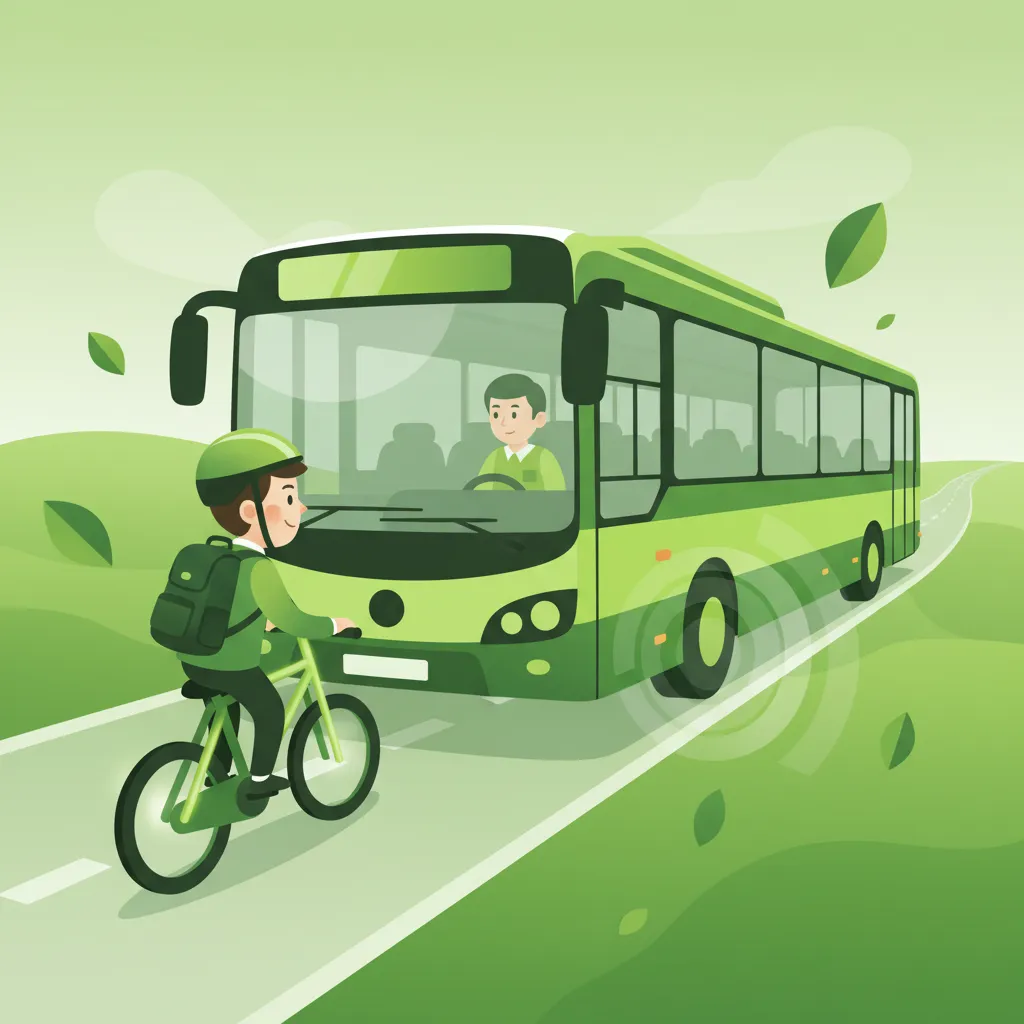
This lesson focuses on the specific hazards and techniques for safely sharing the road with heavy goods vehicles (HGVs) and buses. It provides a detailed explanation of their extensive blind spots ('dode hoek') and teaches riders where to position themselves to remain visible. The curriculum also covers how to manage the significant air turbulence created by these vehicles when overtaking and how to anticipate their wide turning circles at junctions and roundabouts.
Find clear answers to common questions learners have about Securing and Marking Loads. Learn how the lesson is structured, which driving theory objectives it supports, and how it fits into the overall learning path of units and curriculum progression in the Netherlands. These explanations help you understand key concepts, lesson flow, and exam focused study goals.
In the Netherlands, if a load projects more than 1 meter beyond the rear of the vehicle or trailer, or if it projects beyond the sides, a red and white striped marker board is required. The marker board must be positioned perpendicular to the vehicle's longitudinal axis and be clearly visible.
A load is considered properly secured if it cannot shift, fall, or otherwise cause a hazard during normal driving conditions, including braking and cornering. This typically involves using appropriate securing materials like straps, nets, ropes, or tarpaulins, and ensuring they are taut and correctly attached.
While weight itself isn't directly regulated for securing, heavier loads are more prone to shifting. It's crucial to use securing methods strong enough to counteract the weight and potential momentum of the load, especially during sudden stops or maneuvers.
Proper load distribution, typically with heavier items placed closer to the trailer's axle and slightly towards the front of the trailer, ensures stability. Poor distribution can lead to trailer sway, making the vehicle difficult to control, especially at higher speeds or in crosswinds.
If the load projects beyond the sides of the trailer, it must be made clearly visible. This usually means using a marker board or lights, depending on the situation and how far it projects, to ensure other road users are aware of its presence.