
Understanding how to correctly connect and equip a trailer is essential for safe towing and passing your driving theory exam. This lesson builds on basic towing concepts by focusing on the practical and legal aspects of trailer attachment, ensuring you know the requirements for hitches, electrical connections, and safety features like breakaway cables, all within the Dutch legal framework.

Towing a trailer significantly alters your vehicle's dynamics, braking performance, and overall footprint on the road. Understanding the correct procedure for attaching, electrically connecting, and ensuring the legal compliance of a trailer is crucial for the safety of yourself, your passengers, and other road users. This lesson provides an in-depth guide to the practical and legal requirements for towing with a Category B driving license in the Netherlands, focusing on essential equipment and connection methods.
Properly connecting a trailer is not merely a matter of mechanical attachment; it involves ensuring seamless integration with the towing vehicle's electrical and safety systems, all while adhering to strict Dutch traffic regulations. An incorrect connection can lead to instability, reduced visibility, compromised braking, and severe legal consequences.
The mechanical and electrical integrity of your trailer connection directly impacts driving safety. A securely attached trailer ensures that the combined vehicle-trailer unit maintains stability, especially during braking, acceleration, and cornering. Critical systems, such as the brake lights and turn signals, must function perfectly on the trailer to communicate your intentions to following traffic, preventing rear-end collisions. Beyond safety, adherence to specific equipment and licensing requirements for trailers up to 750 kg is mandated by Dutch traffic regulations, including the Reglement Verkeersregels en Verkeerstekens 1990 (RVV 1990) and the Dutch Vehicle Regulations.
Dutch law is explicit about the technical and operational requirements for trailers. These regulations are designed to minimize risks associated with towing, ensuring that all equipment meets specified safety standards. This includes the mechanical strength of the hitch, the reliability of electrical connections for lighting, and the presence of mandatory safety devices such as breakaway cables or secondary couplings. Understanding these legal mandates is not just about avoiding fines; it's about guaranteeing a safe journey for everyone on the road.
This lesson builds upon knowledge from previous units, including the basic rules of towing and weight limits for a Category B license (Unit 9.1), fundamental vehicle inspection procedures (Unit 7), and the importance of correct lighting and signalling in various conditions (Unit 6).
The hitch is the primary mechanical link between your towing vehicle and the trailer. Its correct attachment is paramount for safely transferring load and braking forces. The type of hitch used often depends on the trailer's size and intended use.
While many types of hitches exist, for Category B vehicles, the most common is the tow ball hitch, often referred to generally as a bumper hitch or tow bar system. This system involves a tow bar mounted to the vehicle's chassis, ending in a spherical tow ball onto which the trailer's coupling head is secured. For heavier or specialized medium trailers, a fifth-wheel hitch might be used, which typically mounts in the bed of a pickup truck, providing a more stable connection point.
The mechanical coupling that attaches a trailer to the towing vehicle, designed to transmit load and braking forces securely.
The bumper hitch is versatile and used for a wide range of smaller trailers, such as camping trailers, boat trailers, and utility trailers. The trailer's coupling head slides over the tow ball and is then secured with a locking mechanism, often involving a handle that clicks into place and sometimes a safety pin or lock. This connection must be robust enough to withstand the dynamic forces of towing.
The mechanical integrity of the hitch is non-negotiable. Before attaching any trailer, always verify that the hitch components on both the towing vehicle and the trailer are in good condition, free from rust, cracks, or excessive wear. The hitch must be rated for the combined weight of the trailer and its load. Exceeding this weight rating, which is typically stamped on the trailer manufacturer's placard, can lead to structural failure, loss of control, and serious accidents.
The even spread of mass across the trailer’s axles and the towing vehicle’s rear axle, crucial for stability and braking performance.
Proper load distribution is also critical. The hitch should be positioned to ensure the trailer's tongue weight is appropriate for the towing vehicle, typically 5-10% of the total trailer weight, to maintain balance and prevent instability. Incorrect hitch height or an off-center attachment can cause uneven load distribution, leading to a phenomenon known as "snaking" (where the trailer sways erratically) or excessive overhang on one side, which increases the risk of collisions with roadside obstacles. Always confirm the hitch is centered over the towing vehicle's rear axle.
Once the mechanical connection is secure, the next critical step is establishing the electrical link between the towing vehicle and the trailer. This connection powers the trailer's essential lighting systems, mirroring the signals from the towing vehicle.
The trailer's electrical connection supplies power to its tail lights, brake lights, and turn signals.
A set of wires connecting the towing vehicle's electrical signals and power to the trailer's lighting and sometimes other electrical systems.
Dutch vehicle regulations require that all trailer lights function correctly and respond instantly to the towing vehicle's controls. The electrical connector, typically a 7-pin or 13-pin plug, must match the towing vehicle's standard socket. The wiring inside must adhere to specific colour coding and technical specifications, such as 12V DC power for the vehicle's electrical system, with the brake light circuit requiring sufficient current capacity (e.g., 40A rated) to ensure reliable and immediate activation.
A common misunderstanding involves connecting the trailer's electrical system to an auxiliary power outlet on the car rather than the dedicated brake light circuit. This error will render the trailer's brake lights non-functional or introduce significant delays, dramatically increasing the risk of a rear-end collision. Always ensure the connection is to the correct, dedicated electrical circuits for signaling.
Beyond the primary hitch and electrical connection, Dutch law mandates additional safety devices to prevent a trailer from becoming a runaway hazard if the main coupling fails. These devices differ based on whether the trailer is braked or unbraked.
For braked trailers over 750 kg, a breakaway cable is mandatory. This is a thin cable that connects the trailer's braking system to a dedicated point on the towing vehicle. Its purpose is to activate the trailer's brakes automatically if the main hitch detaches from the towing vehicle.
An electrical or mechanical cable that activates a braked trailer's independent braking system if the primary hitch connection to the towing vehicle fails.
Should the mechanical connection fail, the breakaway cable will pull taut and activate the trailer's brakes, bringing it to a controlled stop independently of the towing vehicle. This prevents the heavy, detached trailer from continuing to roll freely, potentially causing severe damage or injury. Dutch RVV 1990 explicitly mandates these cables, and they must be rated to withstand the necessary tension without failing prematurely or causing damage. It is a common misconception that breakaway cables are only for very heavy trailers; they are required for all braked trailers exceeding 750 kg.
For unbraked trailers up to 750 kg, a secondary coupling (also known as a safety chain or cable) is legally required. This mechanical device provides a redundant connection between the trailer and the towing vehicle, acting as a failsafe if the primary hitch detaches.
A mechanical safety device (chain or cable) that provides a backup connection for an unbraked trailer, preventing it from detaching completely if the primary hitch fails.
The secondary coupling must be securely attached to a fixed point on the towing vehicle's chassis, not simply looped over the tow ball (unless specifically designed for it, but generally, a dedicated eyelet or mounting point is preferred). If the main hitch fails, the secondary coupling will keep the trailer attached to the towing vehicle, preventing it from becoming airborne or separating completely. This ensures the trailer remains under some form of control until the driver can safely stop. It is mandatory for all unbraked trailers under 750 kg being towed in the Netherlands.
In the Netherlands, trailers are subject to specific identification rules, particularly concerning their license plates, which vary based on their maximum permissible mass.
For trailers with a maximum permissible mass up to 750 kg (also referred to as light trailers), Dutch law (RVV 1990, Article 30) mandates that they display a white license plate (witte kentekenplaat). This plate must show the registration number of the towing vehicle.
A white license plate displaying the towing vehicle's registration number, required for trailers up to 750 kg in the Netherlands.
The white license plate serves a crucial purpose: it ensures that law enforcement and other road users can easily identify the towing vehicle responsible for the trailer. This is particularly important in the event of an incident or violation. The plate must be securely attached to the rear of the trailer in a clearly visible location, conforming to national signage guidelines. At night, it must be adequately illuminated by the trailer's tail lights to remain readable from a distance, typically at least 50 meters. A common misunderstanding is that larger trailers also use this white plate; however, trailers over 750 kg require their own official yellow registration number, which is provided by the RDW (Dutch Department of Motor Vehicles).
Strict adherence to Dutch traffic laws is essential for safe and legal trailer towing. These regulations cover every aspect from the equipment itself to how it is used.
Failing to comply with these mandatory regulations can result in significant fines and, in severe cases, the impoundment of your vehicle. Legal liability for accidents may also be substantially increased.
Even experienced drivers can sometimes overlook critical aspects of trailer connection. Recognizing common errors is the first step towards preventing them.
Various external factors can influence the safe operation and legal requirements for trailer towing.
Before embarking on any journey with a trailer, a thorough pre-trip inspection is paramount. This checklist summarizes the essential steps to ensure safety and legal compliance.
By diligently following this checklist, you significantly reduce the risk of accidents, ensure full compliance with Dutch traffic law, and promote responsible towing practices.
Understanding the precise terminology associated with trailer equipment and connection is vital for all drivers.
To reinforce your understanding of trailer equipment and connection, engage with practice questions and explore related topics within your Dutch Category B driving license course.
Lesson content overview
Explore all units and lessons included in this driving theory course.
Explore search topics learners often look for when studying Trailer Equipment and Connection. These topics reflect common questions about road rules, driving situations, safety guidance, and lesson level theory preparation for learners in the Netherlands.
Browse additional driving theory lessons that cover connected traffic rules, road signs, and common driving situations related to this topic. Improve your understanding of how different rules interact across everyday traffic scenarios.
Learn about the mandatory safety devices for trailers in the Netherlands, including breakaway cables for braked trailers and secondary couplings for unbraked ones. Understand the rules for white license plates for trailers up to 750 kg and their identification requirements.
This lesson explains the specific regulations determining what kind of trailer you can legally tow with a Category B license. You will learn the two main rules: you can always tow a trailer with a Maximum Authorised Mass (MAM) of up to 750 kg, or you can tow a heavier trailer provided the combined MAM of the car and trailer does not exceed 3,500 kg. The content clarifies how to find these weights on the vehicle's registration documents and explains when a higher license category like BE is required.
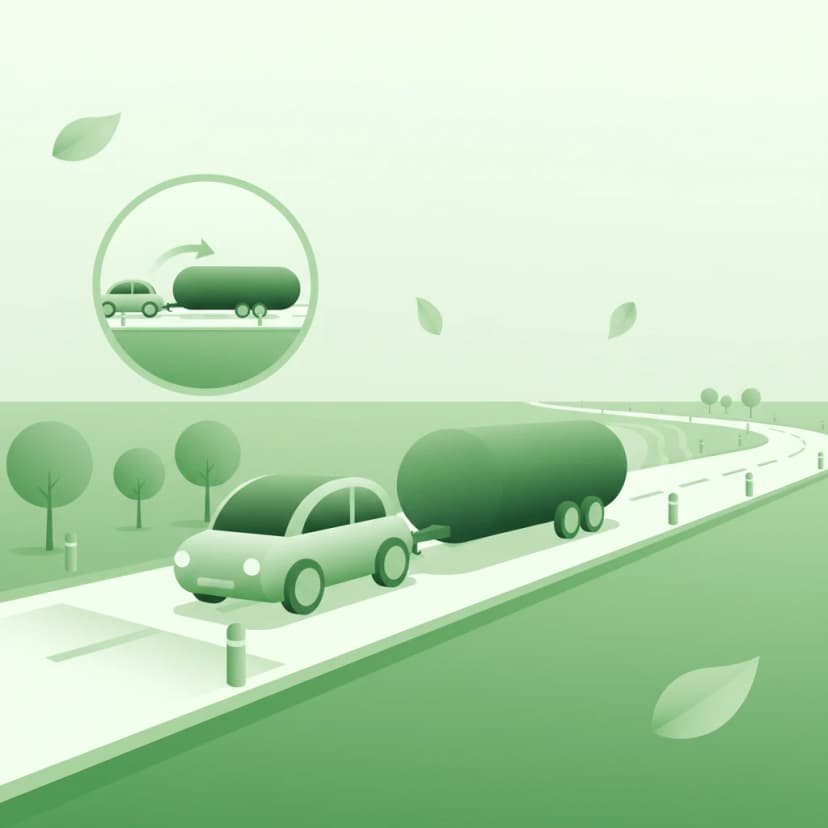
This lesson provides essential techniques for driving safely while towing. You will learn how the added weight increases your braking distance and how the extra length requires you to take wider turns. The curriculum addresses the challenging maneuver of reversing with a trailer and provides tips on how to control it. It also explains the phenomenon of 'snaking' or trailer sway, its causes (like crosswinds or improper loading), and how to correct it by gently reducing speed.
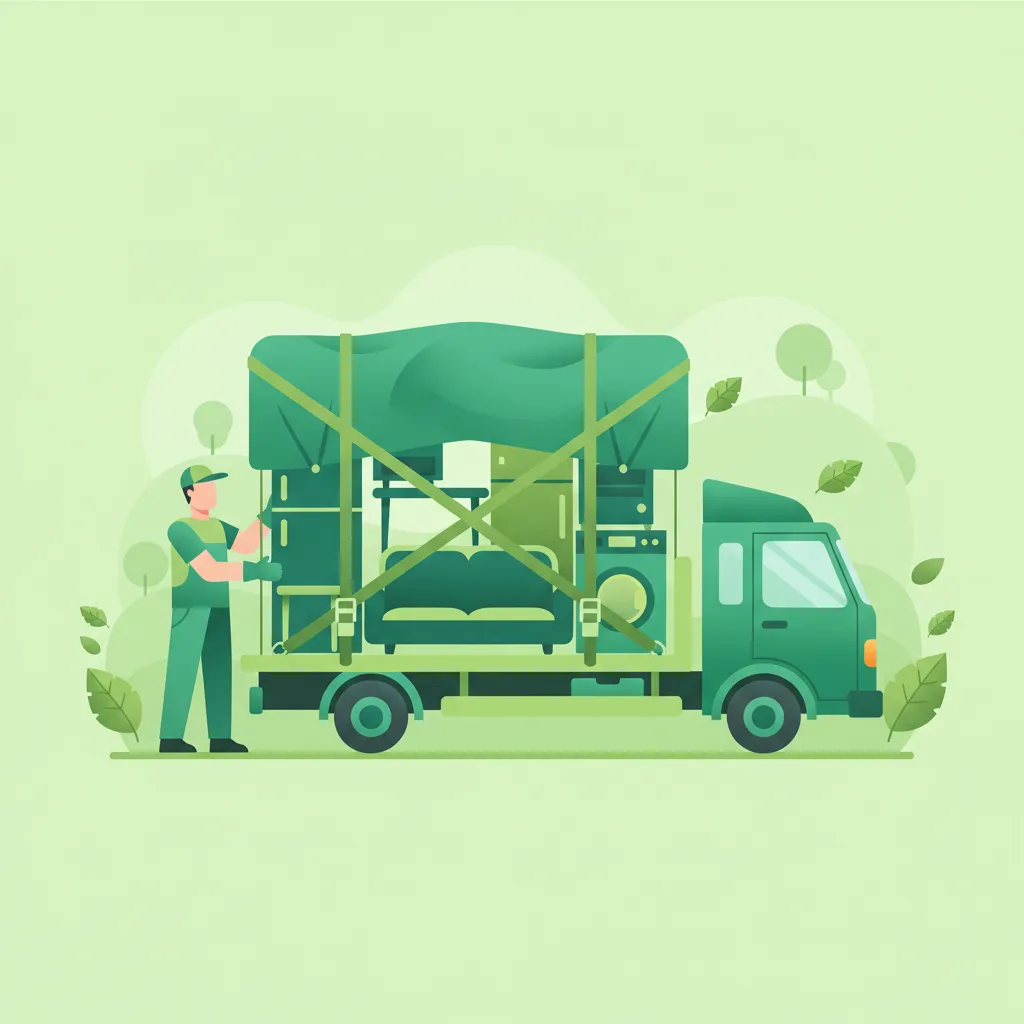
This lesson covers the critical importance of properly securing any load to prevent it from shifting or falling off. You will learn about using nets, straps, and sheets to secure goods effectively. The content also explains the rules for loads that project from the vehicle or trailer, including the specific dimensions that require a red and white striped marker board for visibility. Proper load distribution is also discussed, as it significantly affects the stability and handling of the vehicle and trailer combination.

This lesson covers the full range of lights and signals required on a vehicle for visibility and communication. You will learn about the mandatory requirements for headlights, taillights, brake lights, indicators, and reflectors. The curriculum emphasizes the driver's legal responsibility to ensure all lights are clean and functional before every journey. The correct use and function of the horn as an audible warning device in case of imminent danger are also explained.
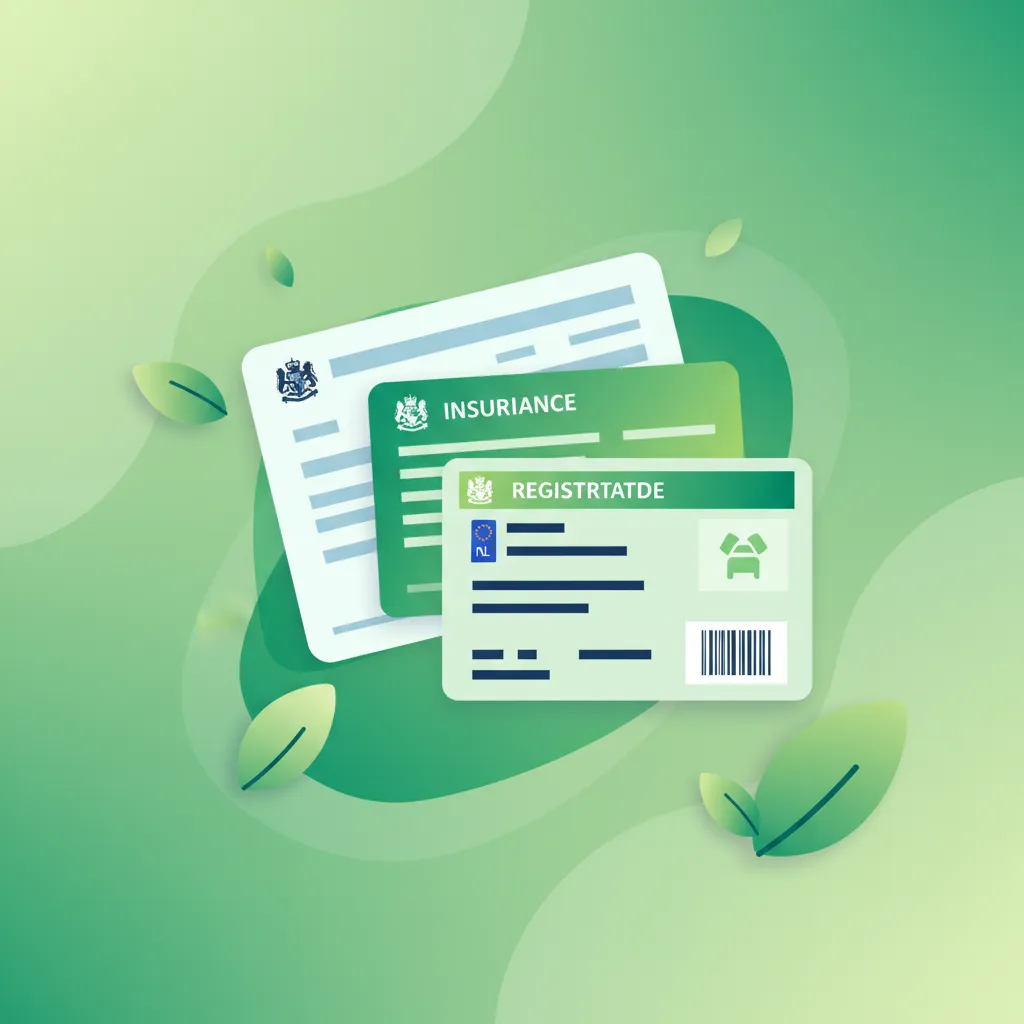
This lesson provides a definitive list of the documents a motorcyclist must carry at all times when riding in the Netherlands. It specifies the requirement for a valid driving license ('rijbewijs') for the correct category, the vehicle registration card ('kentekenbewijs'), and proof of valid third-party liability insurance ('verzekeringsbewijs'). The content clarifies that failure to produce these documents during a police check can result in significant fines and legal complications.
This lesson covers the mandatory lighting and signaling equipment for A2 motorcycles under Dutch law, ensuring you remain visible and communicate your intentions correctly. You will learn the rules for using headlights, taillights, turn signals, and brake lights in various conditions, including daytime and adverse weather. The content also addresses the importance of maintaining this equipment and using hand signals as a valid secondary method of communication in traffic.

This lesson explains the precise legal definition of a Category A1 motorcycle, including the maximum 125cc displacement and 11 kW power output. It outlines the entire CBR licensing pathway, from meeting the minimum age requirement to passing both the theory and practical exams. Key administrative obligations such as vehicle registration (kenteken), mandatory insurance, and roadworthiness inspections (APK) are also detailed, ensuring a full understanding of legal compliance.
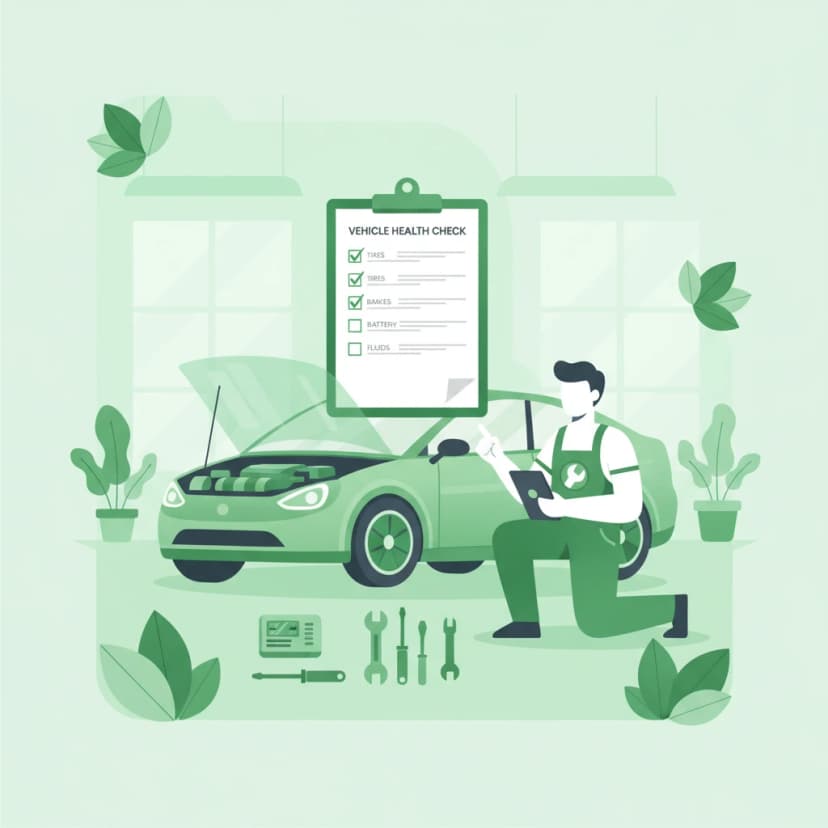
This lesson explains the purpose and frequency of the APK (Algemene Periodieke Keuring), the mandatory periodic safety and emissions inspection for vehicles in the Netherlands. You will understand what aspects of the car are checked, including brakes, steering, lights, and tires. The curriculum also details the essential documents you must have with you when driving, including the vehicle registration certificate (kentekenbewijs) and proof of insurance. Failure to comply with these requirements can result in significant fines.
This lesson focuses on the three most critical safety systems of a car. You will learn the legal minimum tire tread depth (1.6 mm) and the importance of maintaining correct tire pressure for safety and fuel efficiency. The content covers the basics of the braking system, including how to check brake fluid and recognize warning signs of worn brakes. Additionally, the lesson explains the function of the steering system and the importance of ensuring it operates smoothly and without issue.
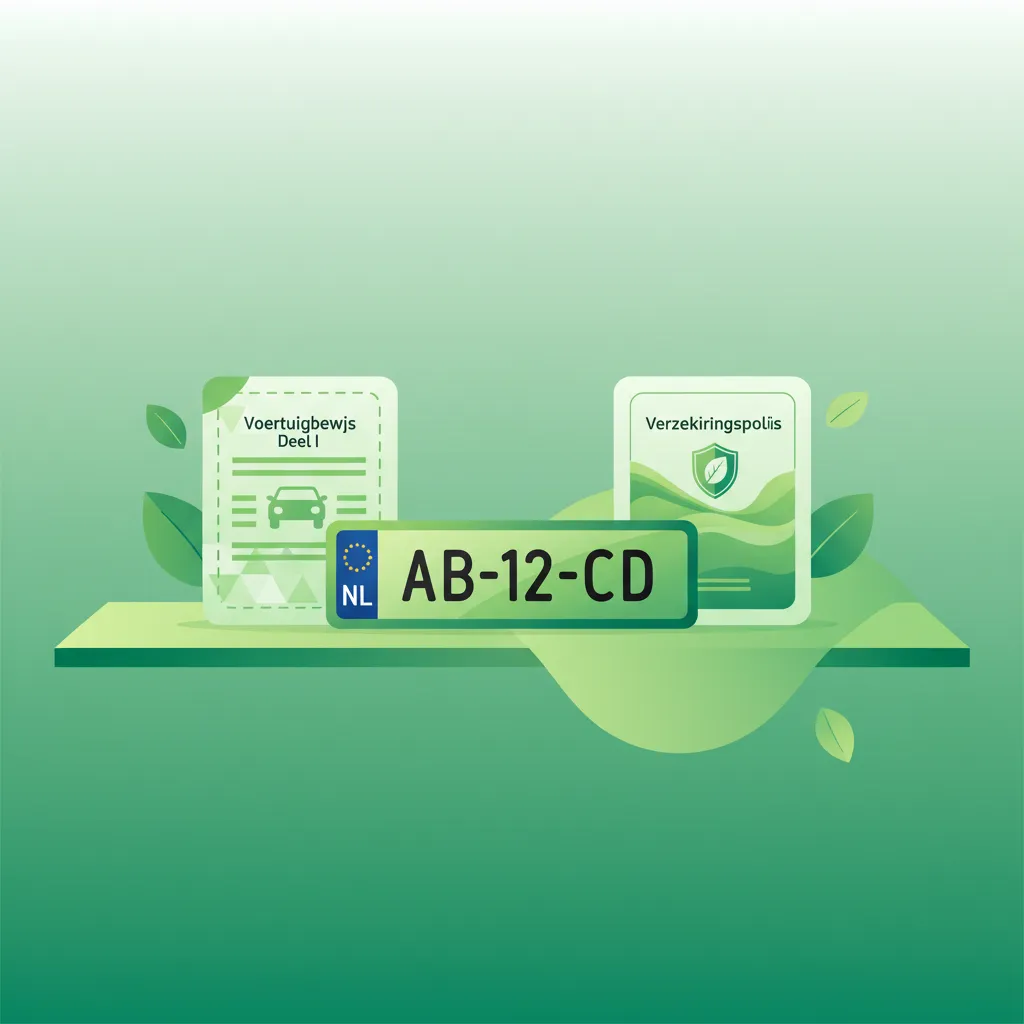
Explore the essential administrative requirements for any Category AM vehicle owner. This lesson covers the mandatory vehicle registration process, the distinction between yellow plates for bromfietsen and blue plates for snorfietsen, and the legal obligation for third-party liability insurance (WA-verzekering). You will learn what documentation is required, the consequences of non-compliance, and how these elements are verified during traffic enforcement, ensuring your vehicle is always road-legal.
This lesson details the correct procedure for mechanically hitching a trailer to your towing vehicle and connecting the electrical harness for lights and signals. Understand the importance of secure connections for safe towing in the Netherlands.
This lesson provides essential techniques for driving safely while towing. You will learn how the added weight increases your braking distance and how the extra length requires you to take wider turns. The curriculum addresses the challenging maneuver of reversing with a trailer and provides tips on how to control it. It also explains the phenomenon of 'snaking' or trailer sway, its causes (like crosswinds or improper loading), and how to correct it by gently reducing speed.
This lesson explains the specific regulations determining what kind of trailer you can legally tow with a Category B license. You will learn the two main rules: you can always tow a trailer with a Maximum Authorised Mass (MAM) of up to 750 kg, or you can tow a heavier trailer provided the combined MAM of the car and trailer does not exceed 3,500 kg. The content clarifies how to find these weights on the vehicle's registration documents and explains when a higher license category like BE is required.
This lesson covers the critical importance of properly securing any load to prevent it from shifting or falling off. You will learn about using nets, straps, and sheets to secure goods effectively. The content also explains the rules for loads that project from the vehicle or trailer, including the specific dimensions that require a red and white striped marker board for visibility. Proper load distribution is also discussed, as it significantly affects the stability and handling of the vehicle and trailer combination.
This lesson covers the full range of lights and signals required on a vehicle for visibility and communication. You will learn about the mandatory requirements for headlights, taillights, brake lights, indicators, and reflectors. The curriculum emphasizes the driver's legal responsibility to ensure all lights are clean and functional before every journey. The correct use and function of the horn as an audible warning device in case of imminent danger are also explained.

This lesson focuses on the use of specialized lights for specific situations. You will learn the strict conditions under which fog lights may be used: the rear fog light is only permitted when visibility from fog or snow is less than 50 meters, and not in rain. The lesson also explains the correct use of hazard warning lights, which are intended to warn other drivers of a stationary obstruction (like a breakdown or the tail end of a sudden traffic jam) or while being towed.

This lesson details the functions of the various lights on a car and the legal requirements for their use. You will learn the difference between dipped beams (dimlicht), which are the standard headlights for night driving and poor visibility, and main beams (grootlicht), which can only be used when they won't dazzle other road users. The content also covers the use of sidelights (stadslicht) for parking and the automatic function of Daytime Running Lights (DRLs). Correct usage is vital for visibility and avoiding blinding other drivers.

This lesson covers safety procedures for specific infrastructure. You will learn the importance of using dipped headlights in tunnels and what to do in case of a breakdown or fire inside a tunnel. The curriculum explains how to respond to the warning lights and barriers at movable bridges and railway level crossings, emphasizing that you must always stop for flashing red lights. The meaning of the St. Andrew's Crosses, indicating the number of railway tracks, is also covered.

This lesson provides a clear action plan for when your car breaks down. You will learn to pull over to a safe location, preferably the hard shoulder on a motorway, and immediately activate your hazard warning lights. The curriculum explains the legal requirement to place a warning triangle a suitable distance behind the vehicle (if safe to do so) and the strong recommendation to wear a high-visibility jacket. Crucially, it instructs that all occupants should exit the vehicle on the safe side and wait behind the guardrail for assistance.
This lesson covers the mandatory lighting and signaling equipment for A2 motorcycles under Dutch law, ensuring you remain visible and communicate your intentions correctly. You will learn the rules for using headlights, taillights, turn signals, and brake lights in various conditions, including daytime and adverse weather. The content also addresses the importance of maintaining this equipment and using hand signals as a valid secondary method of communication in traffic.
Find clear answers to common questions learners have about Trailer Equipment and Connection. Learn how the lesson is structured, which driving theory objectives it supports, and how it fits into the overall learning path of units and curriculum progression in the Netherlands. These explanations help you understand key concepts, lesson flow, and exam focused study goals.
For a trailer weighing up to 750 kg, it must display a white license plate. This plate must have the same registration number as the towing vehicle. For heavier trailers, specific rules apply regarding separate registration.
A breakaway cable is a safety feature for braked trailers. If the trailer detaches from the towing vehicle, the cable activates the trailer's brakes. It is mandatory for all braked trailers.
Yes, unbraked trailers must have a secondary coupling, often a steel cable or chain, that serves as a backup connection if the main hitch fails. This prevents the trailer from becoming completely detached.
The electrical cable powers the trailer's lights, including brake lights, indicators, and taillights. Ensuring this connection is secure and functional is vital for signalling your intentions to other road users and complying with traffic laws.
If your trailer weighs 750 kg or less, you must use a white license plate with the exact same registration number as your car. For trailers over 750 kg, separate rules regarding registration and plates apply.