
This lesson focuses on navigating specific Dutch road infrastructure: tunnels, bridges, and level crossings. Building on earlier lessons about road rules and signs, we will cover critical safety procedures and behaviours required in these unique environments. Understanding these rules is vital for the Category B theory exam and for ensuring safety on the road.

Driving in the Netherlands involves navigating diverse infrastructure, some of which presents unique challenges and requires specific safety protocols. Tunnels, bridges (especially movable ones), and railway level crossings are critical points where driver vigilance, adherence to regulations, and quick decision-making are paramount. These structures concentrate risk due to changes in visibility, road geometry, and the potential intersection of road traffic with rail or waterway traffic.
This comprehensive lesson will guide you through the mandatory procedures and best practices for safely encountering these specific types of infrastructure. You will learn about appropriate vehicle lighting in tunnels, what to do in case of an emergency underground, and the strict rules governing priority at movable bridges and railway level crossings. Understanding these rules is crucial for your safety and the safety of all road users.
The design of tunnels, bridges, and level crossings inherently alters the driving environment, demanding a higher degree of awareness and compliance from drivers. Unlike open roads, these locations often introduce reduced visibility, sudden changes in road conditions, and direct interfaces with other modes of transport. Dutch traffic regulations are meticulously crafted to mitigate these risks by enforcing clear rules, ensuring predictable driver behavior, and protecting all road users, including those on trains or waterways.
Your knowledge from other parts of your driving theory course, such as traffic sign interpretation, vehicle lighting, speed limits, and emergency procedures, converges in this lesson. By mastering the specifics of driving near or through these structures, you build a cohesive safety framework essential for obtaining your Dutch driving license category B.
Tunnels are enclosed road segments that pass through earth, under waterways, or beneath artificial structures. They dramatically change the driving environment by limiting natural light and air circulation, thus requiring specific driving behaviors to maintain safety. Tunnels are common features on motorways (autosnelwegen) and main roads (autowegen) throughout the Netherlands.
Upon approaching and entering a tunnel, one of the most critical actions is to adjust your vehicle's lighting. The primary rule is to switch on your dipped headlights (dimlicht) before entering the tunnel, regardless of whether it's daytime or nighttime outside. This ensures adequate and uniform illumination of the road ahead and makes your vehicle visible to other drivers, compensating for the sudden reduction in natural light.
Always activate your dipped headlights before entering a tunnel. This is a mandatory safety requirement in the Netherlands.
It is crucial not to use high beams (grootlicht) inside a tunnel. High beams cause excessive glare by reflecting off the tunnel walls, significantly reducing visibility for oncoming traffic and for drivers ahead of you, potentially leading to dangerous situations. Maintain a safe following distance and be prepared for changes in light levels at the tunnel exit.
An emergency situation within a tunnel, such as a breakdown or fire, poses amplified risks due to the confined space, limited escape routes, and potential for smoke accumulation. Knowing the correct protocol is vital for your safety and the safety of others.
Several common errors can increase the risk of incidents in tunnels:
Bridges are structures designed to carry a road over an obstacle, such as a river, canal, or another road. While fixed bridges usually require no special driving actions beyond standard road rules, movable bridges present unique challenges as they temporarily disrupt traffic flow to allow passage for water vessels or trains.
Bridges can be broadly categorised into:
Movable bridges are typically equipped with warning signs, traffic lights, and sometimes barriers to control road traffic flow. Be alert for signage indicating "Bridge approaching" or "Bridge opening," which will warn you of the need to slow down and prepare to stop.
When approaching a movable bridge, it is crucial to pay close attention to all signals and signs. Traffic lights, often red or amber, will regulate your approach. Flashing red lights or the lowering of barriers indicate that the bridge is about to open or is already open, and you must stop.
Never attempt to cross a movable bridge that is opening, partially open, or has flashing red lights. This is extremely dangerous and strictly prohibited.
Drivers must wait patiently until the bridge is fully closed, all barriers are fully raised, and any associated traffic lights turn green. Attempting to cross an open or partially open bridge not only puts your life at risk but also endangers the bridge structure and any vessel passing underneath.
If you encounter a movable bridge that is partially or fully open, bring your vehicle to a complete stop at the designated stopping line or a safe distance before the barriers. Engage your handbrake and, if necessary, activate your hazard warning lights if your vehicle is creating an unexpected obstruction or if visibility is poor.
Railway level crossings (spoorwegovergangen) are intersections where a road crosses a railway track at the same level. These are inherently high-risk locations due to the potential for severe collisions between road vehicles and trains. Strict rules and visual cues are in place to ensure safety.
At signalised level crossings, you will encounter various warning devices:
When approaching a railway level crossing, if flashing red lights are active, you must stop. No exceptions.
The St. Andrew's Cross (Andreaskruis) is a specific road marking found at railway level crossings, providing an additional visual cue about the number of tracks present.
While the St. Andrew's Cross provides a helpful indication, it is only a preparatory warning. You must still adhere strictly to all active traffic signals, flashing lights, and barriers. Do not assume that if a train has passed on a single-track crossing, it is immediately safe to cross. Always wait for the signals to clear completely.
The rules governing driving at tunnels, bridges, and level crossings are not merely suggestions; they are legally binding regulations designed to prevent serious accidents. Non-compliance can lead to severe penalties, including fines, penalty points, and even imprisonment in cases of dangerous driving or causing an accident.
| Rule | Statement | Applicability | Legal Status | Rationale |
|---|---|---|---|---|
| 1. Tunnel Lighting | Dipped headlights (dimlicht) must be used when entering a tunnel. | All tunnels, regardless of daylight. | Mandatory | Ensures adequate illumination and vehicle visibility; protects driver vision in changing light. |
| 2. Level Crossing Stop | Stop for flashing red lights at railway level crossings. | All railway level crossings with signals. | Mandatory | Prevents collisions with trains, which are unable to stop quickly. |
| 3. Movable Bridge Stop | Do not cross when a movable bridge is open or partially open. | All movable bridges. | Prohibited | Safety risk of falling, damaging vehicle, or obstructing bridge operation. |
| 4. Tunnel Breakdown Protocol | If a vehicle breaks down inside a tunnel, stay inside and activate hazard lights (waarschuwingslichten). | Breakdown or fire within a tunnel. | Mandatory | Minimizes exposure to smoke/fire, facilitates rescue, and prevents panic in a confined space. |
| 5. Hazard Lights Usage | Use hazard warning lights only when your vehicle is stationary and poses a danger to other traffic. | Vehicle stopped on any road, including within tunnels or at crossings. | Mandatory/Prohibited | Clearly indicates danger; misuse (e.g., while driving) can cause confusion. |
| 6. No High Beams | Use low beam (dimlicht) within tunnels and avoid high beams at level crossings. | All tunnels and crossings. | Mandatory | Prevents glare that impairs vision for other drivers and reduces visibility due to reflections. |
Violating these rules carries significant consequences. For instance, proceeding through a level crossing when the lights are flashing red or barriers are down is considered extremely dangerous and can result in substantial fines and points on your driving license. In the tragic event of a collision, the legal repercussions are severe. Similarly, reckless driving in tunnels, such as using high beams or speeding, can lead to fines and increased accident risk.
The general rules for tunnels, bridges, and level crossings might need slight adjustments depending on external conditions or vehicle specifics. Adaptability is a hallmark of a safe driver.
When driving with a trailer (aanhangwagen) or caravan, your vehicle combination is longer and heavier, affecting braking distance and maneuverability.
If your vehicle's lights malfunction near a tunnel or crossing, try to find a safe place to stop away from critical infrastructure. If a light malfunction occurs within a tunnel, use your hazard warning lights if stopped and contact emergency services. Never use hazard lights while driving, as this can mislead other road users.
Mastering the rules for tunnels, bridges, and level crossings is fundamental for safe driving in the Netherlands. By consistently applying these principles, you contribute to your own safety and the safety of all road users.
These consolidated points form an essential checklist for navigating these special infrastructure elements, integrating lighting, signaling, and emergency regulations into a cohesive and safety-focused driving strategy for the Dutch road network.
Lesson content overview
Explore all units and lessons included in this driving theory course.
Explore search topics learners often look for when studying Tunnels, Bridges, and Level Crossings. These topics reflect common questions about road rules, driving situations, safety guidance, and lesson level theory preparation for learners in the Netherlands.
Browse additional driving theory lessons that cover connected traffic rules, road signs, and common driving situations related to this topic. Improve your understanding of how different rules interact across everyday traffic scenarios.
Learn essential Dutch driving theory rules for navigating tunnels, movable bridges, and railway level crossings. Understand mandatory lighting, stopping, and emergency protocols for safer road use.
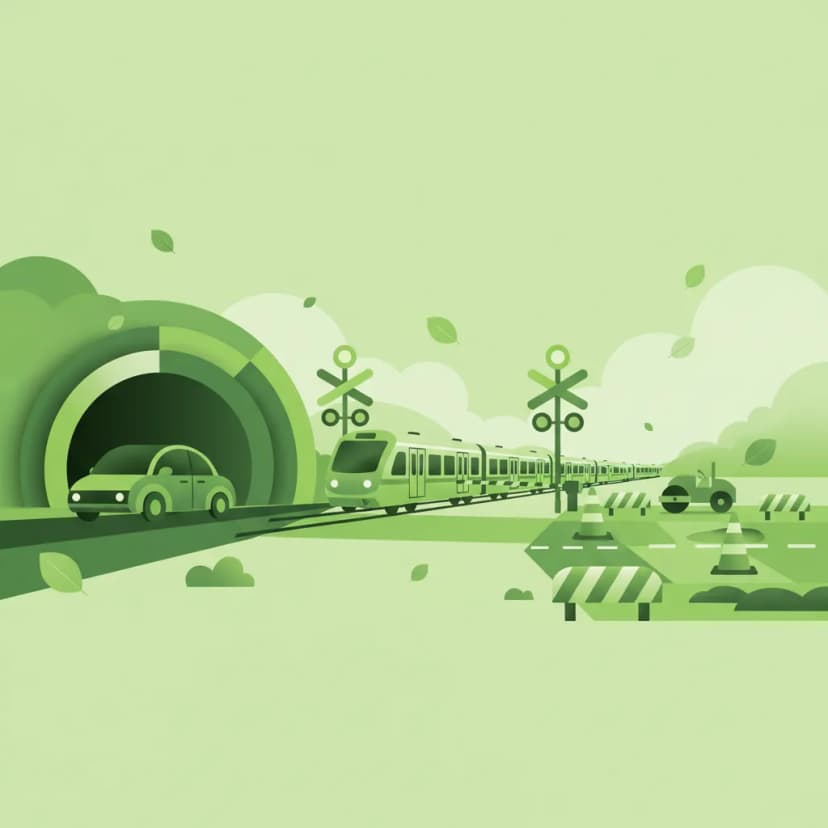
This lesson equips you with the knowledge to safely navigate special traffic situations. It covers the rules for riding through tunnels, including mandatory lighting, and the absolute priority of trains at level crossings, indicated by warning lights and barriers. You will also learn to recognize and react to the temporary signage and altered lane configurations typically found in road work zones, ensuring you can adapt your riding to maintain safety in these potentially hazardous environments.
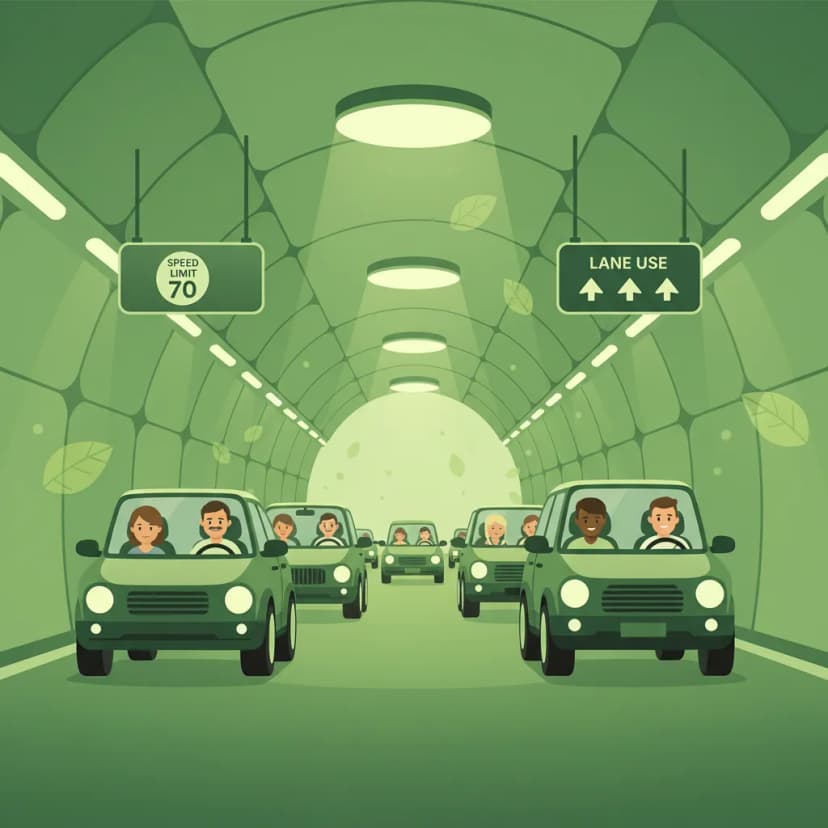
This lesson details the specific regulations ('tunnelvoorschriften') and best practices for riding through tunnels in the Netherlands. It covers key rules such as removing sunglasses before entry, maintaining a safe following distance, and understanding tunnel-specific signage and traffic lights. The curriculum also explains the location and purpose of emergency exits and refuges, and the importance of tuning into the indicated radio frequency for emergency broadcasts.
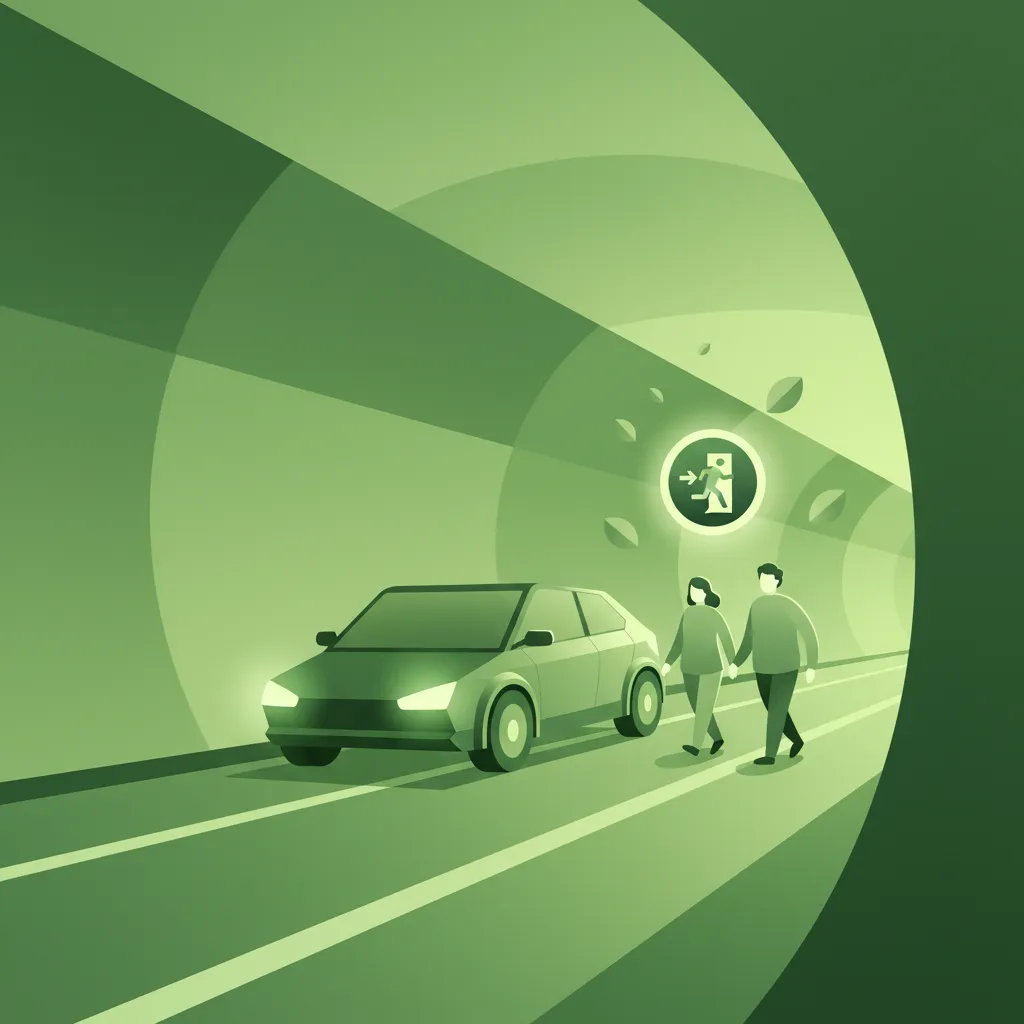
This lesson provides clear, life-saving instructions for handling an emergency stop inside a tunnel. It outlines the correct procedure: pull into an emergency bay if possible, activate hazard lights, turn off the engine, and leave the key. The content emphasizes the importance of moving to a safe location, using the emergency telephones to report the incident, and following all instructions from tunnel operators, including evacuation procedures if necessary.
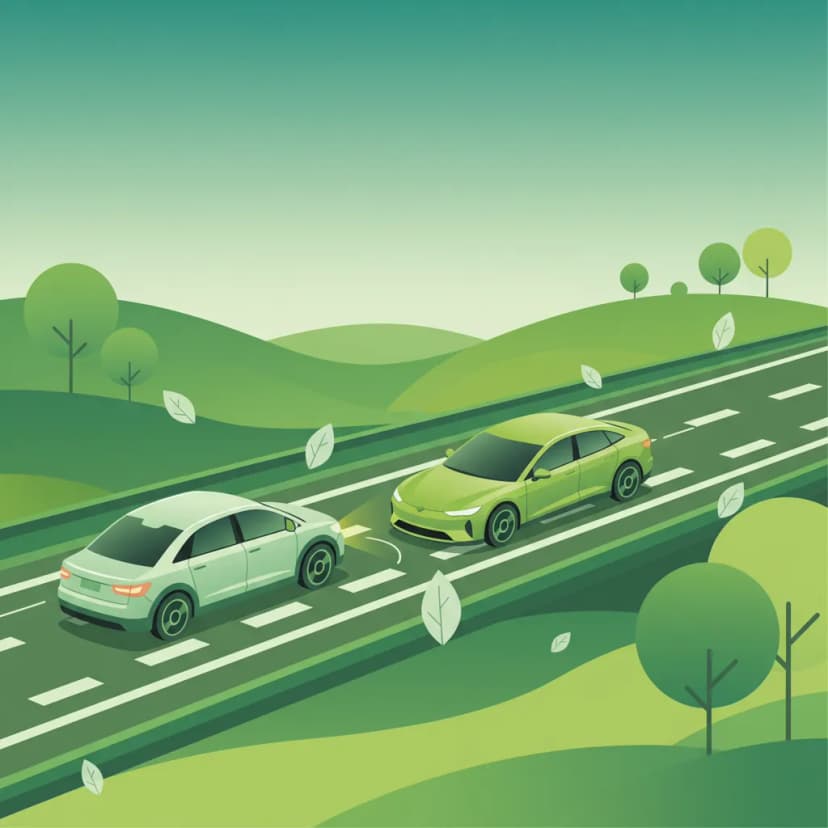
Safely merging and changing lanes requires a systematic approach known as 'mirror-signal-blind spot'. This lesson explains the correct procedure for entering a carriageway from an acceleration lane, ensuring you match the speed of the traffic flow and find a safe gap. It also covers the technique for changing lanes, emphasizing the critical importance of checking your blind spot with a shoulder check (dode hoek) before making any lateral movement to prevent collisions.
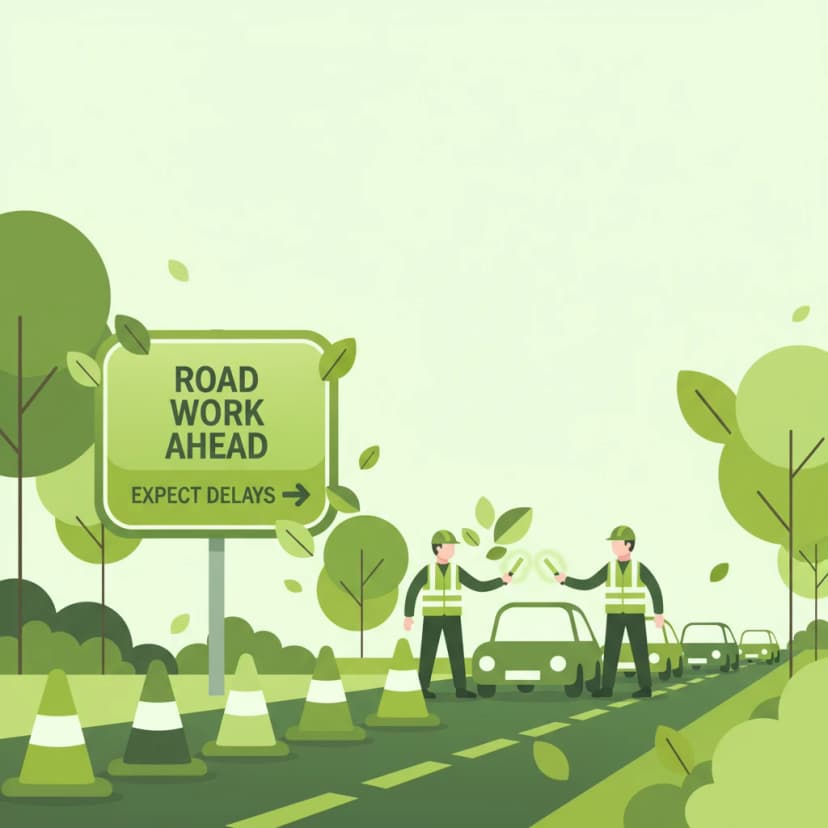
This lesson prepares you for encountering road works, a common feature on any road network. You will learn that signs and markings related to road works are often yellow and that they temporarily override permanent white markings and signs. The curriculum stresses the importance of adhering to temporary speed limits, being alert for workers and machinery, and navigating narrowed lanes. It also covers how to follow diversion routes ('omleiding') and obey instructions given by traffic controllers.
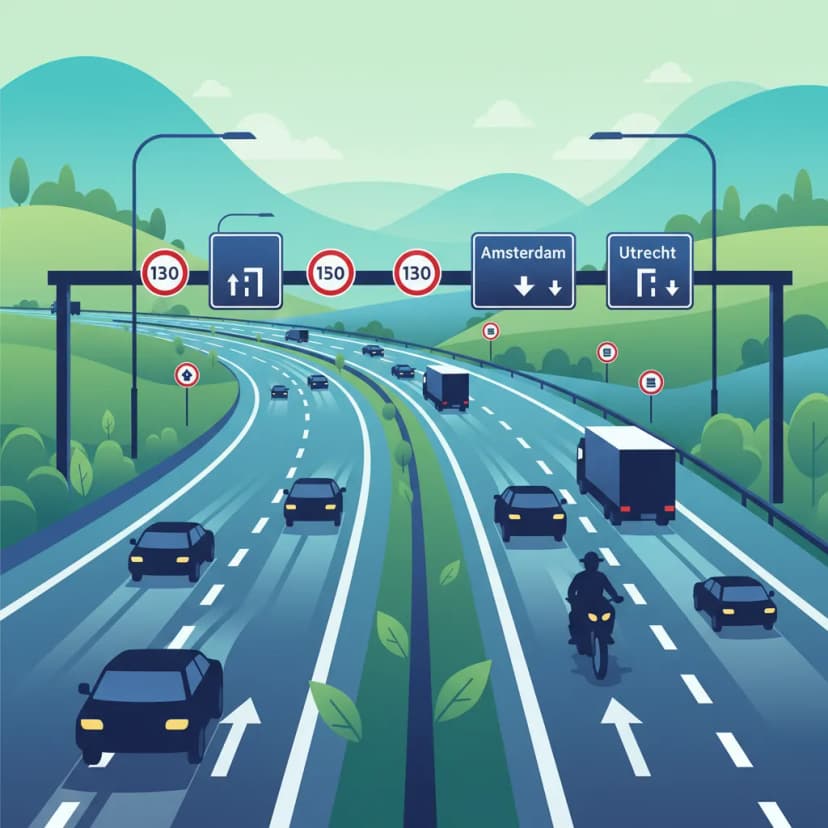
This lesson details the specific regulations for driving on Dutch motorways, identifiable by the G1 sign. You will learn the correct procedure for joining the flow of traffic using the acceleration lane and for leaving via the deceleration lane. The curriculum reinforces the 'keep right unless overtaking' rule for lane discipline. It also explains that stopping is strictly forbidden, and the hard shoulder (vluchtstrook) may only be used for genuine emergencies.

This lesson clarifies the specific Dutch regulations concerning stopping and parking for motorcycles, including designated parking bays and rules for parking on pavements. It also covers the mandatory procedures for safely navigating tunnels, such as required lighting, lane discipline, and actions to take during a breakdown or emergency. By understanding these rules, riders can avoid fines and navigate these specific traffic situations with confidence.
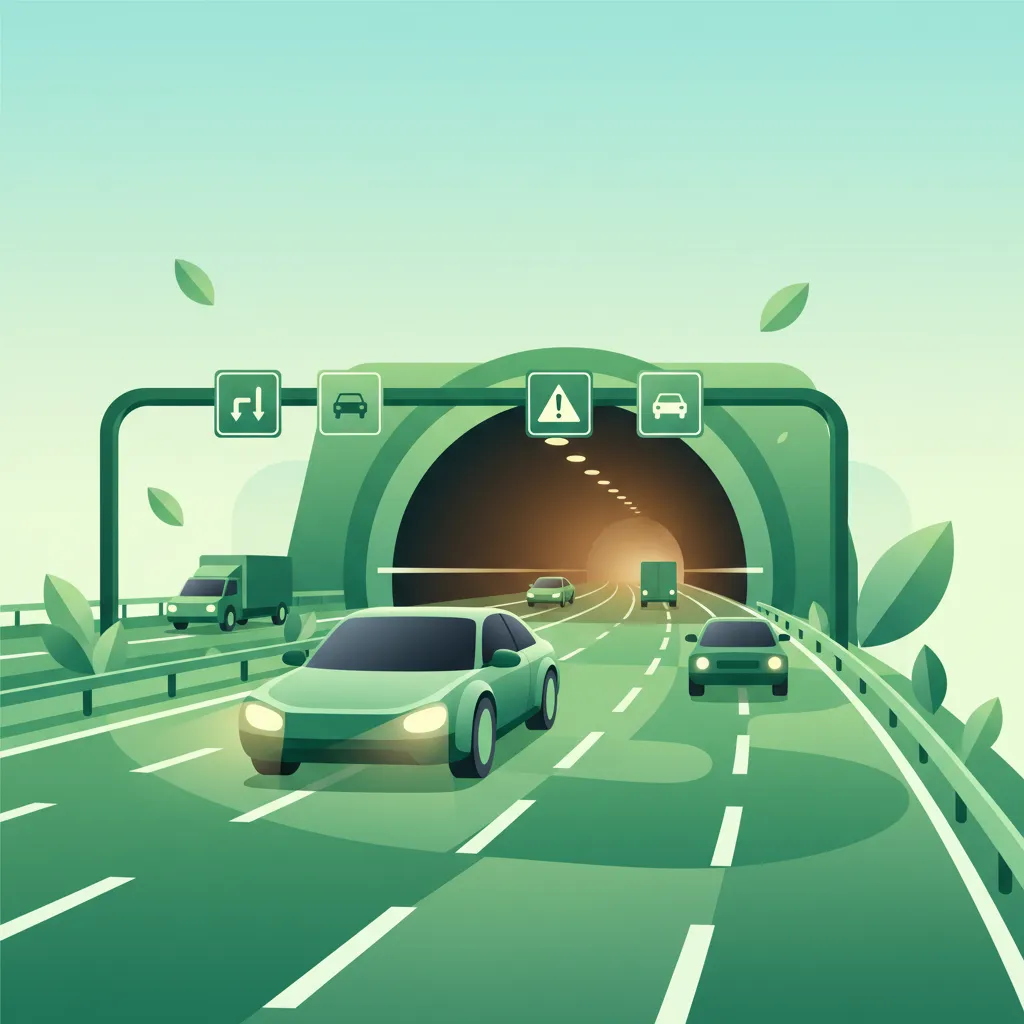
This lesson transitions hazard perception skills to the high-speed environment of motorways and tunnels. It covers specific risks such as vehicles merging at different speeds, sudden braking and congestion ahead, road debris, and the aerodynamic effects of crosswinds and large trucks. The curriculum also addresses the challenges of riding in tunnels, including changes in light and surface conditions, and the importance of identifying emergency exits and procedures in case of an incident.
This lesson provides a detailed guide on the rules and safety precautions for overtaking. You will learn that overtaking must almost always be done on the left and requires careful judgment of speed and distance. The content covers situations where overtaking is forbidden, such as before pedestrian crossings, at intersections, or where there are solid white lines. Key steps like checking mirrors, signaling intention, checking blind spots, and returning to the lane safely are explained thoroughly.
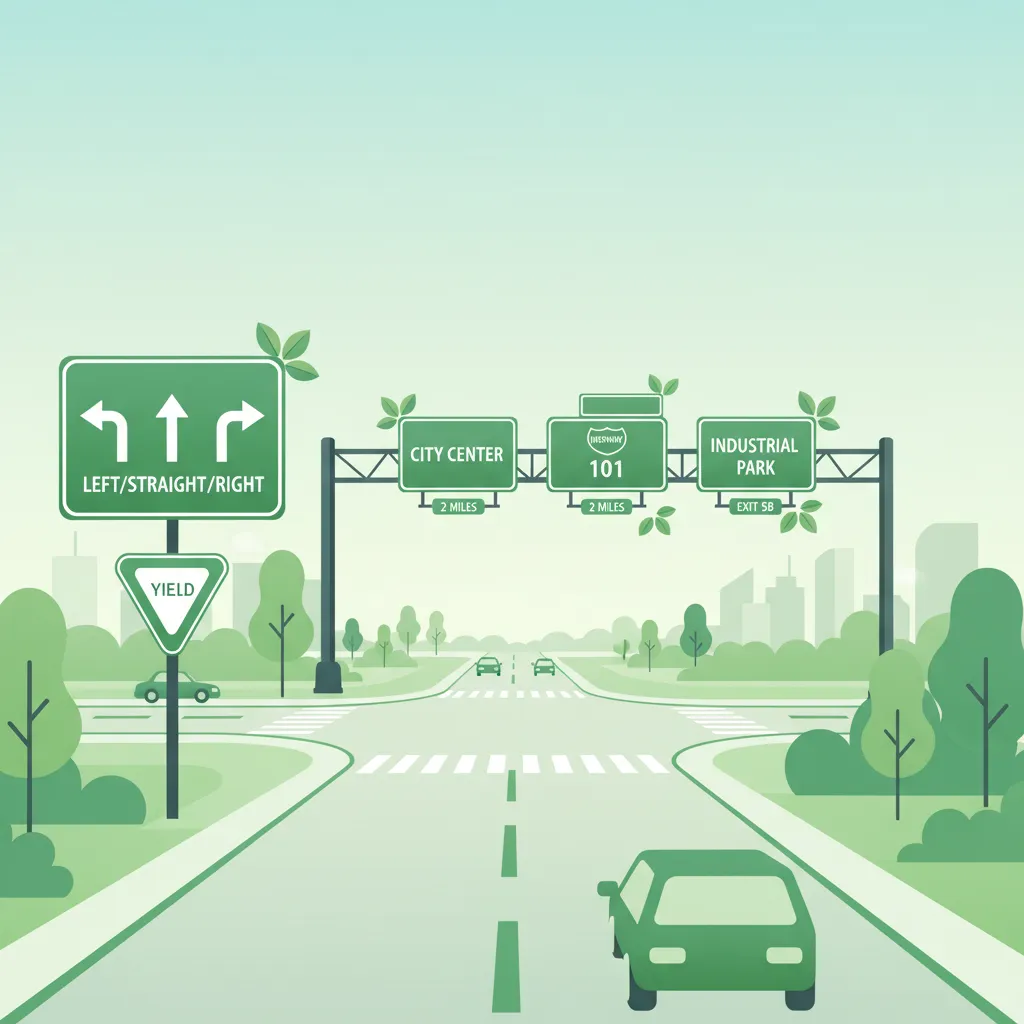
This lesson focuses on the array of signs used to manage traffic at intersections and along multi-lane roads. You will learn to interpret overhead gantry signs, lane designation signs, and markings that guide drivers into the correct lane for their intended direction. The curriculum covers signs indicating priority at upcoming junctions, such as the B3 and B4 signs, which clarify right-of-way rules in complex scenarios. Proper interpretation of these signs is essential for smooth lane changes, efficient navigation, and preventing conflicts at junctions.
Explore common driving mistakes and critical safety rules specific to tunnels, movable bridges, and railway level crossings in the Netherlands. Gain insight into hazard perception and essential theory.
This lesson equips you with the knowledge to safely navigate special traffic situations. It covers the rules for riding through tunnels, including mandatory lighting, and the absolute priority of trains at level crossings, indicated by warning lights and barriers. You will also learn to recognize and react to the temporary signage and altered lane configurations typically found in road work zones, ensuring you can adapt your riding to maintain safety in these potentially hazardous environments.
This lesson details the specific regulations ('tunnelvoorschriften') and best practices for riding through tunnels in the Netherlands. It covers key rules such as removing sunglasses before entry, maintaining a safe following distance, and understanding tunnel-specific signage and traffic lights. The curriculum also explains the location and purpose of emergency exits and refuges, and the importance of tuning into the indicated radio frequency for emergency broadcasts.
This lesson provides clear, life-saving instructions for handling an emergency stop inside a tunnel. It outlines the correct procedure: pull into an emergency bay if possible, activate hazard lights, turn off the engine, and leave the key. The content emphasizes the importance of moving to a safe location, using the emergency telephones to report the incident, and following all instructions from tunnel operators, including evacuation procedures if necessary.
This lesson transitions hazard perception skills to the high-speed environment of motorways and tunnels. It covers specific risks such as vehicles merging at different speeds, sudden braking and congestion ahead, road debris, and the aerodynamic effects of crosswinds and large trucks. The curriculum also addresses the challenges of riding in tunnels, including changes in light and surface conditions, and the importance of identifying emergency exits and procedures in case of an incident.
This lesson focuses on the rules governing interactions with pedestrians. You will learn the absolute requirement to stop for pedestrians who are on or clearly intending to cross at a designated zebra crossing. The curriculum also covers how to share the road in a 'woonerf' (home zone) where pedestrians have priority. It emphasizes being particularly cautious around children, the elderly, and disabled pedestrians, who may require more time or behave unpredictably.
Safely merging and changing lanes requires a systematic approach known as 'mirror-signal-blind spot'. This lesson explains the correct procedure for entering a carriageway from an acceleration lane, ensuring you match the speed of the traffic flow and find a safe gap. It also covers the technique for changing lanes, emphasizing the critical importance of checking your blind spot with a shoulder check (dode hoek) before making any lateral movement to prevent collisions.
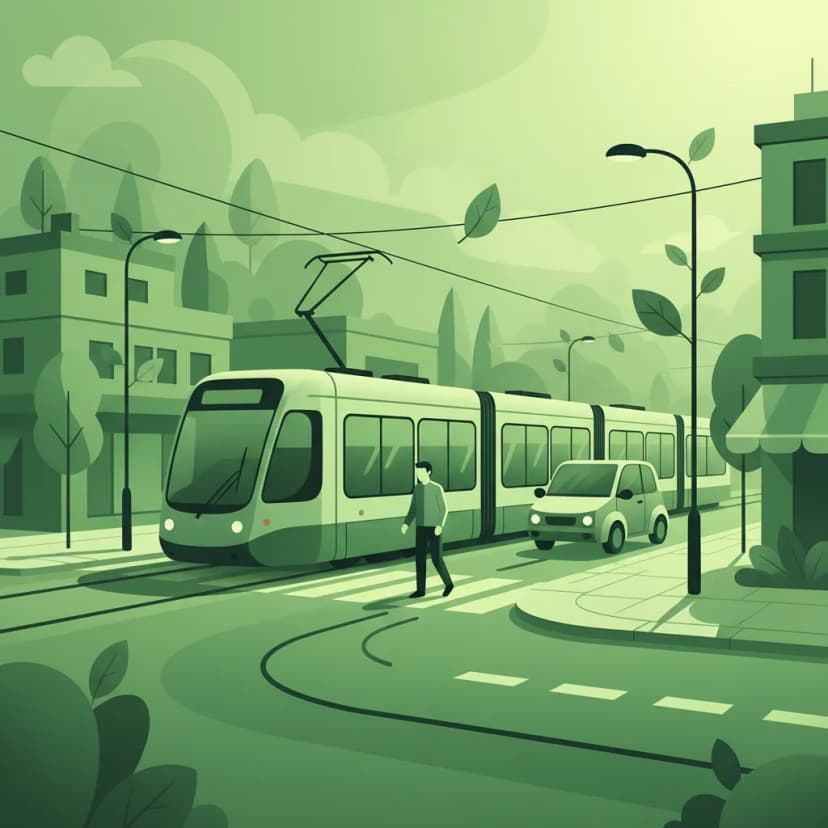
Riding in Dutch cities often means interacting with trams, which present unique risks for two-wheeled vehicles. This lesson details the absolute priority that trams have in most situations and explains how to interpret specific tram traffic signals. It provides crucial safety techniques for crossing tram tracks at a safe angle to prevent your wheels from getting stuck and emphasizes maintaining a safe distance from moving trams, which is a vital aspect of urban hazard perception.
This lesson prepares you for encountering road works, a common feature on any road network. You will learn that signs and markings related to road works are often yellow and that they temporarily override permanent white markings and signs. The curriculum stresses the importance of adhering to temporary speed limits, being alert for workers and machinery, and navigating narrowed lanes. It also covers how to follow diversion routes ('omleiding') and obey instructions given by traffic controllers.
This lesson clarifies the specific Dutch regulations concerning stopping and parking for motorcycles, including designated parking bays and rules for parking on pavements. It also covers the mandatory procedures for safely navigating tunnels, such as required lighting, lane discipline, and actions to take during a breakdown or emergency. By understanding these rules, riders can avoid fines and navigate these specific traffic situations with confidence.
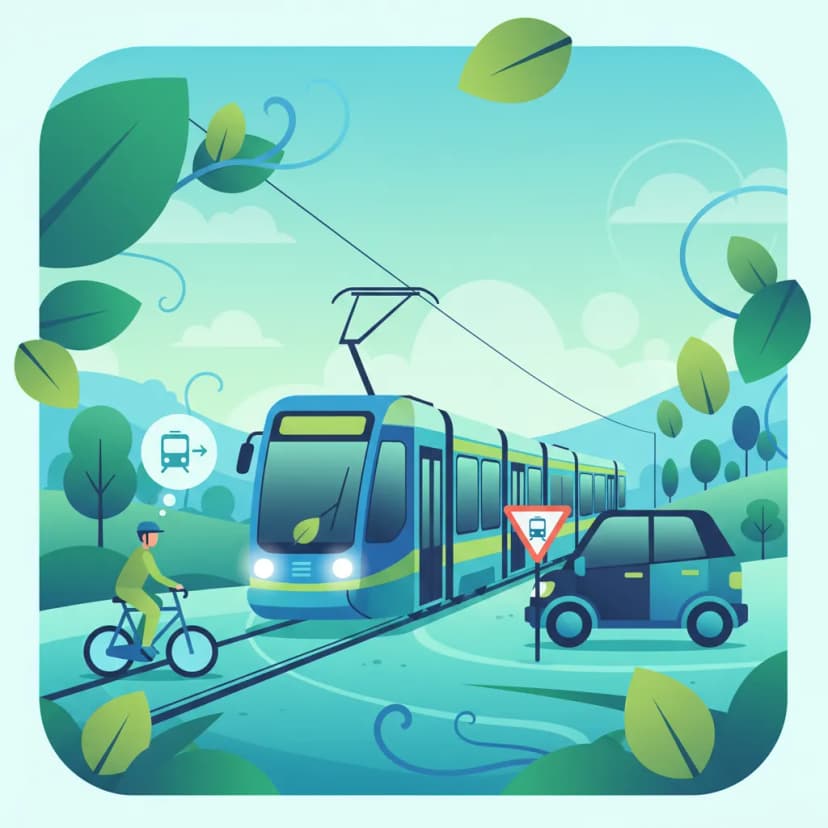
This lesson addresses the unique priority rules concerning trams in urban environments, clarifying that trams generally have priority unless signs or signals indicate otherwise. It explains the specific hazards motorcyclists face, such as slippery tracks (especially in wet conditions) and the long stopping distance of trams. Riders will learn how to safely cross tram lines, navigate shared lanes, and correctly interpret tram-specific traffic signals to avoid dangerous conflicts.
Find clear answers to common questions learners have about Tunnels, Bridges, and Level Crossings. Learn how the lesson is structured, which driving theory objectives it supports, and how it fits into the overall learning path of units and curriculum progression in the Netherlands. These explanations help you understand key concepts, lesson flow, and exam focused study goals.
In the Netherlands, you must always use your dipped headlights (dimlichten) when entering a tunnel, regardless of the time of day or external visibility. This ensures you can see and be seen by other road users inside the tunnel, which can have significantly reduced visibility.
The most critical rule at a railway level crossing with flashing red lights is to stop immediately and wait behind the barrier or the stop line. Never attempt to cross if the lights are flashing or the barrier is lowering, even if you don't see a train approaching immediately.
St. Andrew's Crosses at a railway level crossing indicate the number of railway tracks. A single cross means there is one track, while a double cross means there are two or more tracks. This information helps you gauge the potential for multiple train approaches.
If your vehicle breaks down inside a tunnel, switch on your hazard warning lights. If possible, move your vehicle to the hard shoulder or a designated emergency bay. Turn off the engine, leave the car, and seek safety outside the tunnel, typically behind barriers or in emergency exits, and contact emergency services.
While both require vigilance, bridges (especially movable ones) and level crossings have distinct signals. Movable bridges often have traffic lights and barriers to halt traffic when in operation. Level crossings are primarily indicated by flashing red lights and barriers, and the presence of St. Andrew's Crosses to show the number of tracks.