
Welcome to the 'Fundamentals of Motorcycle Theory & Dutch Traffic Law' unit. This lesson specifically defines what constitutes a Category A motorcycle under Dutch law. Understanding these classifications is key to knowing which license category applies and what rules govern these unrestricted bikes, preparing you for both the CBR exam and safe riding.

For any aspiring or current motorcycle rider in the Netherlands, a thorough understanding of motorcycle definitions and classifications is not merely academic; it is a fundamental requirement for legal and safe road use. This lesson, part of your Dutch Motorcycle Theory – Category A Comprehensive Preparation, delves into the precise technical and legal framework that distinguishes various motorcycle types, focusing primarily on the Category A licence and its related classes. Correct classification determines which licence a rider may hold, the permissible vehicles, and the legal obligations for registration, insurance, and even cross-border travel. Misclassification can lead to serious legal consequences, including fines and invalidated insurance, posing significant safety and financial risks.
The system of motorcycle classification in the Netherlands, harmonised with broader European Union (EU) directives, acts as a crucial legal framework. This framework carefully aligns vehicle performance characteristics with rider competence and safety considerations. The underlying logic is multifaceted: firstly, it addresses safety by ensuring that riders gain experience progressively. Higher-powered motorcycles inherently present greater risks, and the system staggers access to these capabilities based on age, experience, and comprehensive training. Secondly, it considers fundamental physics: the power-to-weight ratio directly influences acceleration and braking distances, and limits are imposed to protect less-experienced riders from overwhelming vehicle dynamics. Finally, the legal intent includes harmonisation across the EU through Directive 2006/126/EC, ensuring that a licence obtained in any member state is recognised elsewhere, which greatly facilitates cross-border travel and vehicle registration.
This foundational knowledge is critical for understanding subsequent lessons, particularly those on the licensing process, rider obligations, and even how certain road signs apply to specific vehicle classes.
In the context of Dutch traffic law, specifically under the Wegenverkeerswet 1990 (Road Traffic Act), a motorcycle is generally defined as any motor-driven vehicle with two wheels in contact with the ground. This broad definition encompasses a wide range of vehicles, from lightweight scooters to high-performance sport bikes. The system primarily focuses on two-wheeled motorcycles, but also includes some three-wheel vehicles (often referred to as "trikes") if their design and handling characteristics align more with motorcycles than with cars. For practical purposes, almost all motorised two-wheel vehicles on Dutch roads fall under the A-type licence system.
It is a common misunderstanding to assume that scooters, particularly those with automatic transmissions, are exempt from these classifications. In reality, they are subject to the same strict power and weight limits as traditional geared motorcycles, and riders must hold the appropriate A-type licence based on the scooter's specifications.
Motorcycles are categorised based on several key technical parameters that dictate their performance capabilities and, consequently, the required driving licence. These specifications are typically found in the vehicle's type-approval certificate (typegoedkeuring) and registration documents.
Engine displacement refers to the total volume swept by all pistons inside the engine's cylinders during one complete cycle. It is traditionally expressed in cubic centimeters (cm³), and while it serves as a general indicator of engine size, it is only one factor in classification.
For instance, Category A1 motorcycles are strictly limited to a maximum engine displacement of 125 cm³. Motorcycles exceeding 125 cm³ cannot be ridden with an A1 licence, but their exact classification (A2 or A) then depends on their power output and power-to-weight ratio. It is a misconception that a 150 cm³ engine automatically places a bike in Category A2; the actual determining factors are its power output and power-to-weight ratio.
Power output is the maximum continuous power an engine can produce, measured in kilowatts (kW). This is a critical factor in determining a motorcycle's category. For conversion purposes, one kilowatt is approximately equal to 1.341 horsepower (HP).
The power limits are clearly defined:
These power ratings are legally binding. Any aftermarket modifications that increase a motorcycle's power beyond the limits of its registered category without proper re-registration and a corresponding licence upgrade constitute an illegal act.
The power-to-weight ratio (P/W) is calculated by dividing the engine's power output (in kW) by the vehicle's kerb weight (in kg). This ratio provides a more accurate measure of a motorcycle's acceleration potential and overall performance characteristics than displacement or power alone. A lightweight bike with moderate power can still have a high P/W ratio, making it less suitable for inexperienced riders.
The P/W ratio limits are:
It is crucial that both the power output and the power-to-weight ratio conditions are satisfied simultaneously for A1 and A2 categories. Ignoring weight changes (such as installing heavy accessories or making significant modifications) can inadvertently affect this calculation if the kerb weight itself changes, although for legal classification, only the officially registered kerb weight is used.
Kerb weight refers to the total mass of the vehicle in kilograms when it is ready for road use. This includes all necessary fluids (such as oil and coolant), standard equipment, and a full fuel tank. Crucially, kerb weight excludes passengers, cargo, and optional accessories that are not part of the standard manufacturer's setup.
This value is critical because it is the denominator in the power-to-weight ratio calculation. Manufacturers provide the official kerb weight in the technical specifications, and this is the figure used for legal classification. Riders should note that while adding luggage or a passenger will increase the overall vehicle mass, it does not alter the legal kerb weight used for licence classification. However, significant structural modifications that permanently reduce or increase the vehicle's inherent weight must be declared and re-certified to ensure accurate classification and legal compliance.
The Dutch driving licence system, managed by the Centraal Bureau Rijvaardigheidsbewijzen (CBR), clearly delineates three categories for motorcycles, each with specific requirements for riders and vehicles. These categories are part of the progressive access model designed to ensure riders gain experience safely.
The Category A1 licence permits the use of "light motorcycles." This is the entry-level licence for two-wheeled motorised vehicles.
The purpose of the A1 category is to provide safe, entry-level access to two-wheel vehicles with limited performance, thereby reducing the crash risk for younger and less experienced riders. A1 licence holders cannot legally ride any motorcycle that exceeds even one of these three constraints. They are also permitted to ride mopeds (which typically have an engine capacity of ≤50 cm³ and a power output of ≤4 kW).
The Category A2 licence serves as an intermediate step, allowing riders to operate motorcycles with moderate power.
The A2 category bridges the gap between light motorcycles and unrestricted machines. It ensures that riders gain at least two years of experience on moderately powered bikes before potentially moving on to higher-performance motorcycles. A significant aspect of the A2 licence is that riders may operate a motorcycle that has been restricted (power-reduced) to meet the 35 kW ceiling, provided this restriction is officially homologated (approved) and documented in the vehicle's registration papers. It's crucial that the original, unrestricted power of the motorcycle does not exceed double the A2 limit (i.e., the original power must be less than or equal to 70 kW before restriction).
The Category A licence is the ultimate motorcycle endorsement, granting full freedom to operate any motorcycle without performance limitations.
This licence is intended for experienced riders who have demonstrated sufficient competence and maturity to handle the full range of motorcycle performance. Riders aiming for a full A licence must pass comprehensive practical tests that often include handling high-speed manoeuvres, advanced braking techniques, and complex road situations on a powerful, unrestricted motorcycle.
The Dutch licensing system offers two distinct pathways to obtain the full Category A licence, reflecting the emphasis on experience and safety.
Progressive access is the most common and recommended pathway, encouraging riders to gradually build their skills and experience.
Direct access allows individuals to obtain a full Category A licence without first going through the A1 and A2 stages.
The classification of motorcycle licences and vehicles across Europe is largely standardised by EU Directive 2006/126/EC. This directive is foundational for ensuring consistency and mutual recognition of driving licences among member states.
Dutch road traffic law, primarily the Reglement verkeersregels en verkeerstekens 1990 (RVV 1990), outlines specific articles pertaining to motorcycle definitions, age requirements, and vehicle modifications. These regulations ensure safety and clarity for all road users.
| Rule / Regulation | Statement | Applicability | Rationale | Correct Example | Incorrect Example |
|---|---|---|---|---|---|
| RVV 1990 – Article 2.1 | A motorcycle is defined as a motor vehicle with two wheels in contact with the ground, or three wheels designed primarily for a seated rider (excluding cargo vehicles). | All road users. | Provides baseline vehicle classification. | Rider on a two-wheel sport bike (Category A). | Rider on a three-wheel cargo vehicle classified as a light commercial vehicle. |
| EU Directive 2006/126/EC – Annex I | Category A1 motorcycles must have ≤125 cm³, ≤11 kW, ≤0.125 kW/kg. | Licensing, registration, road use. | Limits performance for novice riders. | A 125 cm³ scooter with 10 kW and a kerb weight of 90 kg (P/W = 0.11 kW/kg) is A1 compliant. | A 125 cm³ bike with 12 kW exceeds the A1 power limit. |
| RVV 1990 – Article 23 | Minimum age for Category A1 is 16 (or 18 for non-EU citizens). | Issuance of A1 licence. | Aligns with maturity considerations. | A 16-year-old Dutch citizen obtains an A1 licence. | A 15-year-old attempts to obtain an A1 licence. |
| RVV 1990 – Article 24 | Minimum age for Category A2 is 18. | Issuance of A2 licence. | Provides additional maturity before higher power. | An 18-year-old obtains an A2 licence. | A 17-year-old attempts to obtain an A2 licence. |
| RVV 1990 – Article 25 | Minimum age for Category A (direct access) is 24; 22 if the holder of an EU A2 licence for at least two years. | Direct access to Category A. | Ensures sufficient riding experience and maturity. | A 24-year-old passes theory & practical exams for direct A. | A 23-year-old without a valid EU A2 licence attempts direct A. |
| RVV 1990 – Article 26 | Progressive access: after 2 years of holding an A2 licence, a rider may upgrade to A with a practical test only. | Upgrade from A2 to A. | Recognises accumulated experience. | A rider with an A2 licence for 2 years passes a practical test and upgrades to A. | A rider attempts to upgrade to A after holding an A2 licence for only 1 year. |
| RVV 1990 – Article 37 | Motorcycles may not be modified to exceed the power limits of the licence they are registered under without re-registration. | Vehicle modification. | Prevents illegal performance upgrades and ensures proper classification. | An A1 rider installs a performance kit, increasing power from 10 kW to 14 kW. They must re-register the vehicle and obtain an A2 or A licence. | The rider continues riding after an illegal power increase without updating registration or licence. |
| RVV 1990 – Article 39 | Kerb weight used for P/W calculation must be the manufacturer's published value; aftermarket weight changes must be declared and re-certified. | P/W verification. | Guarantees accurate classification based on official specifications. | A rider installs heavy pannier bags for travel, but the motorcycle's legal classification remains based on its original kerb weight. | A rider reduces the vehicle's weight by removing essential equipment and claims a lower P/W ratio without official re-certification. |
| RVV 1990 – Article 61 | Foreign EU A licences are recognised provided the holder meets the Dutch age threshold (24 or 22 with EU A2). | International riding. | Implements EU reciprocity and ensures consistent application of age requirements. | A 22-year-old German national with an EU A2 licence (held for 2+ years) rides a 35 kW motorcycle legally in the Netherlands. | A 21-year-old French national with an unrestricted French A licence attempts to ride a powerful motorcycle in the Netherlands; this is illegal as they do not meet the Dutch age threshold of 24 for direct A. |
For precise legal details and any recent amendments, always consult the official text of the Reglement verkeersregels en verkeerstekens 1990 (RVV 1990) and the relevant EU Directives.
Ignorance of the law is no excuse, and misunderstandings surrounding motorcycle classifications can lead to severe penalties. Riders must be diligent in ensuring they comply with all regulations.
The meticulously structured system of motorcycle licensing is rooted deeply in safety and risk mitigation principles. Each category and its associated limits are designed to protect riders and other road users.
In essence, the entire framework is built upon the principle of progressive exposure, allowing riders to develop their skills and judgement incrementally, aligning their capabilities with the performance characteristics of the motorcycles they are legally permitted to operate.
To fully grasp the intricacies of Dutch motorcycle classification, it is helpful to be familiar with specific terms and abbreviations.
Understanding the definitions and classifications of motorcycles is a foundational step in your Dutch Motorcycle Theory – Category A Comprehensive Preparation. This knowledge underpins many other aspects of safe and legal riding. Continuing to build on this base will prepare you effectively for your theory examination and, more importantly, for safe riding on Dutch roads.
Lesson content overview
Explore all units and lessons included in this driving theory course.
Explore search topics learners often look for when studying Definitions and Classifications of Motorcycles (A-type). These topics reflect common questions about road rules, driving situations, safety guidance, and lesson level theory preparation for learners in the Netherlands.
Browse additional driving theory lessons that cover connected traffic rules, road signs, and common driving situations related to this topic. Improve your understanding of how different rules interact across everyday traffic scenarios.
Understand the nuances of Dutch Category A, A1, and A2 motorcycle licences. This lesson covers age, power (kW), and power-to-weight ratio (kW/kg) requirements, including progressive and direct access routes for your CBR theory.

This lesson explains the precise legal definition of a Category A1 motorcycle, including the maximum 125cc displacement and 11 kW power output. It outlines the entire CBR licensing pathway, from meeting the minimum age requirement to passing both the theory and practical exams. Key administrative obligations such as vehicle registration (kenteken), mandatory insurance, and roadworthiness inspections (APK) are also detailed, ensuring a full understanding of legal compliance.

This lesson outlines every stage of the motorcycle licensing pathway, from the initial application to the successful completion of the CBR theory and practical examinations. It explains the mandatory documentation, exam scheduling procedures, and the specific composition of the theory test, including hazard perception and knowledge questions. The content also covers important procedural details such as re-examination policies, time limits for completion, and the legal validity of the final issued driver's license.

This lesson covers the universal Dutch road rules with a specific focus on their application to light motorcycles. It details the various speed limits for different road types, from urban areas to motorways, and explains the correct procedures for overtaking and lane positioning. The legal aspects of lane filtering in congestion are also examined, alongside mandatory equipment use like daytime running lights, to ensure riders can integrate safely and legally into traffic flow.

This lesson details the Dutch regulations for carrying passengers on a motorcycle, including the minimum age for the passenger and the mandatory use of approved helmets. It explains the rider's legal responsibility for the passenger's safety and how to properly secure loads to avoid affecting the motorcycle's stability and balance. Understanding these rules is crucial for ensuring safety and legality when riding with a pillion or luggage.
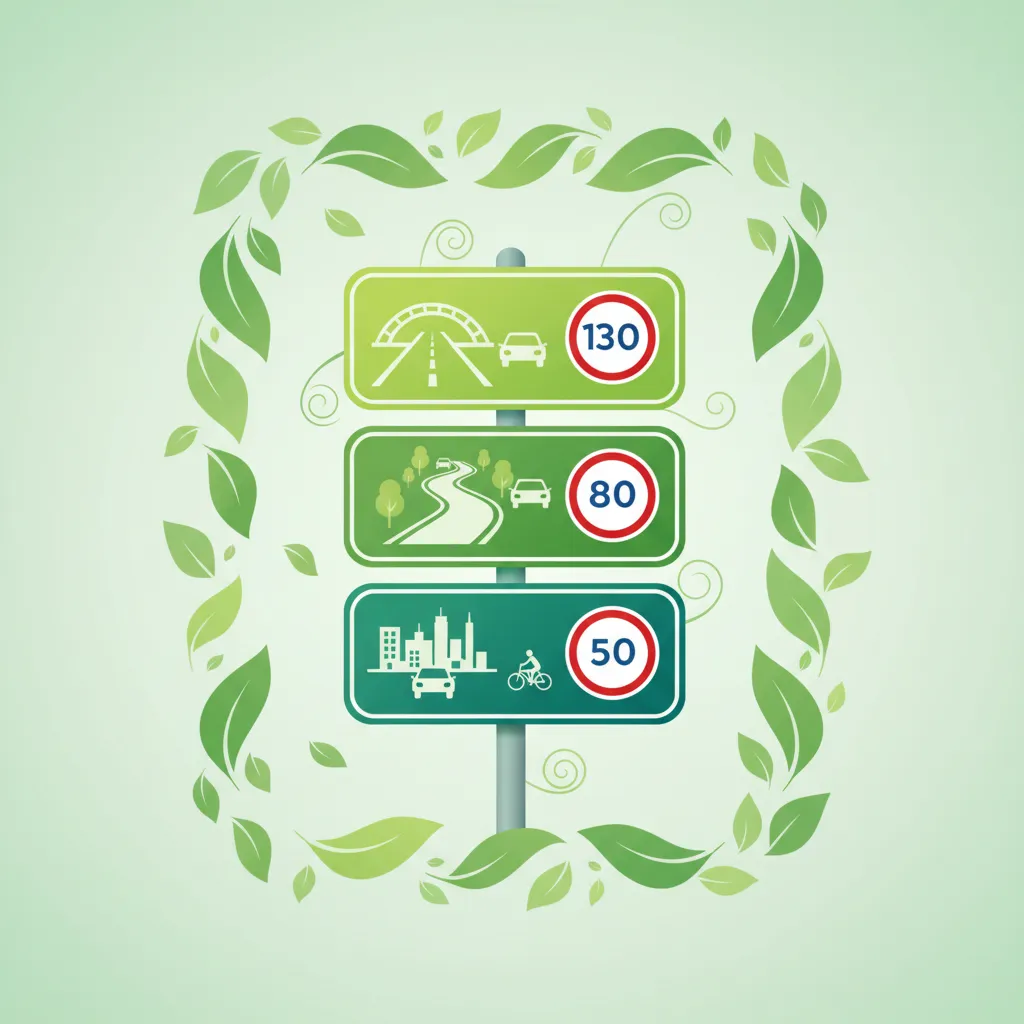
This lesson provides a definitive guide to the legal speed limits on different types of Dutch roads. It covers the rules for built-up areas (typically 50 km/h), rural roads (80 km/h), expressways ('autowegen'), and motorways ('snelwegen'), including time-dependent variations. Understanding these official limits is the first step in managing speed legally and appropriately for the road environment, a core topic on the CBR theory test.

This lesson focuses on Dutch regulatory signs that enforce mandatory rules and restrictions, particularly those impacting A2 motorcyclists. You will learn to recognize and obey prohibition signs, such as those indicating a motorcycle ban (BORD 40), speed limits, and overtaking restrictions (BORD 21). The content explains the legal consequences of non-compliance and how to apply these rules in practical riding scenarios to ensure full adherence to Dutch traffic law.

This lesson focuses on managing the unique acceleration characteristics of a 35 kW A2 motorcycle. You will learn about the relationship between engine power, torque, and acceleration, and how to apply throttle smoothly to maintain traction and stability. The content provides techniques for effective gear selection to ensure you have responsive power when needed for overtaking, while also preventing jerky or uncontrolled acceleration.
This lesson covers the mandatory lighting and signaling equipment for A2 motorcycles under Dutch law, ensuring you remain visible and communicate your intentions correctly. You will learn the rules for using headlights, taillights, turn signals, and brake lights in various conditions, including daytime and adverse weather. The content also addresses the importance of maintaining this equipment and using hand signals as a valid secondary method of communication in traffic.

This lesson provides a detailed overview of the structure of Dutch traffic legislation, focusing on the Road Traffic Act (Wegenverkeerswet 1994) and its relationship with CBR regulations. It explains the hierarchy from national statutes to local ordinances and how these rules govern rider behavior in various traffic situations. Furthermore, the lesson clarifies the mechanisms for enforcement, the types of sanctions for non-compliance, and the legislative goal of ensuring road safety for all participants.

This lesson outlines the precise age requirements for obtaining and holding a Category AM driving license in the Netherlands. It details the minimum age for operating various AM vehicles and explains the validity period of the license and the renewal process. Furthermore, the content clarifies how an AM license relates to other categories like B (car) or A (motorcycle), and what age-related restrictions may apply to novice riders. This knowledge is crucial for ensuring full legal compliance from the start of your riding journey.
Explore the precise legal definitions for A-type motorcycles in the Netherlands, focusing on engine capacity, power, and kerb weight. Understand how EU Directive 2006/126/EC impacts vehicle classification and cross-border licence recognition.
This lesson explains the precise legal definition of a Category A1 motorcycle, including the maximum 125cc displacement and 11 kW power output. It outlines the entire CBR licensing pathway, from meeting the minimum age requirement to passing both the theory and practical exams. Key administrative obligations such as vehicle registration (kenteken), mandatory insurance, and roadworthiness inspections (APK) are also detailed, ensuring a full understanding of legal compliance.
This lesson covers the universal Dutch road rules with a specific focus on their application to light motorcycles. It details the various speed limits for different road types, from urban areas to motorways, and explains the correct procedures for overtaking and lane positioning. The legal aspects of lane filtering in congestion are also examined, alongside mandatory equipment use like daytime running lights, to ensure riders can integrate safely and legally into traffic flow.
This lesson provides a detailed breakdown of the official classifications for Category AM vehicles under Dutch law. You will learn to distinguish between a bromfiets, snorfiets, speed pedelec, and brommobiel based on technical criteria like maximum speed and engine power. Understanding these definitions is fundamental, as they determine which traffic rules, licensing requirements, and road access permissions apply to each vehicle type, forming the basis for the entire CBR theory exam.

This lesson provides a definitive list of the documents a motorcyclist must carry at all times when riding in the Netherlands. It specifies the requirement for a valid driving license ('rijbewijs') for the correct category, the vehicle registration card ('kentekenbewijs'), and proof of valid third-party liability insurance ('verzekeringsbewijs'). The content clarifies that failure to produce these documents during a police check can result in significant fines and legal complications.
This lesson provides essential information for riders planning to travel outside the Netherlands into other European countries. It highlights that while many rules are harmonized, significant local variations exist regarding speed limits, motorway tolls or vignettes, and mandatory equipment (e.g., carrying a first-aid kit or visibility vest). The curriculum advises riders to research the specific regulations for each country on their itinerary to ensure a safe and legally compliant international journey.
This lesson covers the mandatory lighting and signaling equipment for A2 motorcycles under Dutch law, ensuring you remain visible and communicate your intentions correctly. You will learn the rules for using headlights, taillights, turn signals, and brake lights in various conditions, including daytime and adverse weather. The content also addresses the importance of maintaining this equipment and using hand signals as a valid secondary method of communication in traffic.
This lesson provides a detailed overview of the structure of Dutch traffic legislation, focusing on the Road Traffic Act (Wegenverkeerswet 1994) and its relationship with CBR regulations. It explains the hierarchy from national statutes to local ordinances and how these rules govern rider behavior in various traffic situations. Furthermore, the lesson clarifies the mechanisms for enforcement, the types of sanctions for non-compliance, and the legislative goal of ensuring road safety for all participants.

This lesson outlines the rider's responsibility for ensuring their motorcycle's engine and exhaust system comply with Dutch legal standards. It covers basic but vital pre-ride checks, such as verifying engine oil and coolant levels. A significant focus is placed on exhaust compliance, explaining the regulations regarding noise levels ('geluidseisen') and the rules surrounding aftermarket exhaust systems, including the requirement for approved markings and the use of 'dB-killers'.

This lesson examines the statutory duties imposed on motorcyclists, with a strong emphasis on the 'duty of care' (zorgplicht) and the conditions under which legal liability arises after a traffic incident. It clarifies the relationship between personal responsibility, mandatory insurance coverage, and the legal expectation for proactive risk mitigation to prevent accidents. The content also analyzes scenarios to illustrate how liability is typically determined within Dutch traffic jurisprudence, preparing riders for their legal responsibilities.
This lesson outlines every stage of the motorcycle licensing pathway, from the initial application to the successful completion of the CBR theory and practical examinations. It explains the mandatory documentation, exam scheduling procedures, and the specific composition of the theory test, including hazard perception and knowledge questions. The content also covers important procedural details such as re-examination policies, time limits for completion, and the legal validity of the final issued driver's license.
Find clear answers to common questions learners have about Definitions and Classifications of Motorcycles (A-type). Learn how the lesson is structured, which driving theory objectives it supports, and how it fits into the overall learning path of units and curriculum progression in the Netherlands. These explanations help you understand key concepts, lesson flow, and exam focused study goals.
Category A1 is for light motorcycles up to 125cc and 11 kW. Category A2 is for medium motorcycles up to 35 kW. Category A is for unrestricted motorcycles, meaning there are no power or capacity limits, though specific age and experience requirements apply. Understanding these distinctions is vital for the CBR theory exam.
For categories other than A (unrestricted), the power-to-weight ratio is a critical factor. For instance, Category A2 has a maximum power output of 35 kW and a power-to-weight ratio not exceeding 0.2 kW/kg. Category A has no such restrictions, making the technical definition based on these ratios important.
Yes, European harmonisation has led to standardized categories (A1, A2, A) across the EU. While the core definitions are harmonised, there might be minor national variations in implementation or specific additional rules. This is important to know for cross-border riding and is often tested in the CBR theory exam.
The theory exam will include questions that require you to identify the correct motorcycle category based on given technical specifications. Misclassifying a motorcycle can lead to selecting the wrong answer for questions about licensing, road rules, or permitted riding environments.
No, Category A, the unrestricted motorcycle license, does not have a specific minimum or maximum engine capacity. The primary focus is on the rider’s age and experience. However, understanding the capacities for A1 and A2 is essential for distinguishing them, which is tested in the exam.