
Welcome to the core of navigating Dutch intersections! This lesson tackles the fundamental 'voorrangsregels' – the rules of right-of-way. Understanding how to yield, especially at unmarked junctions where traffic from the right has priority, is crucial for your Category A motorcycle theory exam and safe riding. We’ll build your confidence by clarifying the general rule and introducing the key signs that modify it.
Navigating the roads safely and efficiently as a motorcyclist in the Netherlands requires a thorough understanding of the general rules of right-of-way, known as "voorrangsregels." These rules are fundamental to preventing collisions at intersections, promoting predictable traffic flow, and are a mandatory component of the Dutch CBR Category A motorcycle theory exam. This lesson will establish the foundational principle of yielding to traffic from the right at equal (unmarked) junctions, explain how to identify these junctions, and detail the various signs and markings that override this default rule.
The cornerstone of Dutch right-of-way rules lies in identifying an equal-road junction (gelijkwaardig kruispunt). This is any intersection where no specific traffic signs, traffic lights, or road markings are present to explicitly dictate which road user has priority. At such junctions, all approaches are considered equal in status, making the default right-of-way rule applicable.
An equal-road junction is characterized by the absence of:
These junctions are common in residential areas, quiet side streets, and rural roads where traffic volume is typically lower. As a motorcyclist, it is crucial to approach every intersection with vigilance, actively scanning for any priority indicators before assuming it is an equal-road junction. Never assume a road is 'minor' just because it looks less used; its priority status is determined solely by the presence or absence of signs and markings.
At any equal-road junction, the core principle of Dutch traffic law dictates that you must give way to traffic approaching from your right. This is known as right-hand priority (rechts-voorrang or voorrangsregel) and applies to all types of road users, including motorcyclists, cars, trucks, and even cyclists. Pedestrians on foot are generally not considered "traffic" in the context of the right-hand rule, but they have their own specific priority rules, especially at zebra crossings.
The legal obligation to give way to any vehicle approaching from your right side at an equal-road junction, where no other signs or signals dictate priority.
This rule is designed for clarity and safety, establishing a predictable order of movement that minimizes confusion and reduces the risk of collisions. When approaching an equal-road junction, your immediate action should be to reduce speed, scan your surroundings, and specifically check for traffic from your right. You must be prepared to stop if another vehicle is approaching from that direction.
A common scenario involves two vehicles arriving at an equal-road junction at precisely the same moment. In such cases, the simultaneous arrival principle clarifies that the vehicle on the right still has the legal right to proceed first. The vehicle on the left must continue to yield, even if both drivers perceive their arrival as identical. This deterministic rule helps prevent deadlocks and ensures a clear resolution to potential conflicts.
While the right-hand priority rule is fundamental, it is frequently superseded by explicit traffic signs, road markings, or traffic light signals. These override elements are essential for managing traffic flow on busier roads and at more complex intersections. As a motorcyclist, understanding the hierarchy of these controls is vital. Traffic lights always take precedence, followed by traffic signs, and then road markings. If none of these are present, the default right-hand rule applies.
A yield sign (voorrangsbord) or shark's teeth markings (haaietanden) on the road surface explicitly instruct you to give way to all traffic on the intersecting road. This means you must reduce speed, and if necessary, stop to allow other traffic to pass before proceeding. Unlike a stop sign, a complete stop is not always mandatory if the way is clearly free. However, a controlled approach and thorough check are always required.
The shark's teeth are white, triangular markings painted on the road, forming a series of triangles pointing towards the vehicle that must yield. They are often used in conjunction with a yield sign but can also appear independently. If you see these markings, you are required to give way.
When encountering a yield sign or shark's teeth, always be prepared to stop. Even if no traffic is immediately visible, a vehicle could be approaching quickly or hidden from view.
A stop sign (stopbord) is a definitive instruction that demands a complete halt before entering an intersection.
When you encounter a stop sign, you must bring your motorcycle to a complete stop before the stop line (a solid white line painted across the road). If there is no stop line, you must stop before the intersection itself, at a point where you have a clear view of the crossing traffic. After stopping, you must then give way to all traffic on the intersecting road before proceeding safely. Failing to make a complete stop is a serious offense and can lead to dangerous situations.
A priority road sign (voorrangsweg) indicates that the road you are currently on has priority over intersecting roads.
This sign grants you the right-of-way at subsequent junctions on that road, unless specifically overridden by other signs or traffic lights. Other vehicles on intersecting roads will typically have yield or stop signs. This priority remains in effect until you encounter an end of priority road sign.
Upon seeing the end of priority road sign, you must mentally reset your priority assessment for all future intersections. The default right-hand priority rule will then apply to any unmarked junctions.
Traffic light signals (verkeerslichten) hold the highest authority among all priority controls. They always override any signs or road markings that may be present.
Always obey the traffic light's instruction, regardless of the right-hand rule or other signs. Ignoring a red light is extremely dangerous and a severe traffic violation.
Approaching and navigating an intersection safely requires a systematic approach, especially for motorcyclists who are more vulnerable in traffic.
Identify the Intersection Type: As you approach, immediately look for signs (yield, stop, priority road), traffic lights, or road markings (shark's teeth, stop lines). This determines the specific priority rule that applies.
Adjust Speed and Position: Reduce your speed well in advance, allowing ample time to react. Position your motorcycle to maximize visibility of all approaches to the junction, without obstructing other traffic.
Scan for Traffic: Perform a comprehensive scan: left, center, right, and then re-scan as needed. Pay particular attention to traffic from your right at equal-road junctions. Check for pedestrians and cyclists.
Confirm Priority: Based on signs, signals, or the absence thereof, confirm who has priority. If you must yield, be prepared to stop.
Execute Yield/Proceed:
If you have priority: Proceed cautiously, but remain aware of potential errors from other drivers. Maintain your speed if safe, but be ready to brake.
If you must yield: Stop or slow down safely. Wait for a clear and safe gap in traffic before proceeding. Do not force your way in.
Look, Listen, Decide: Especially in conditions of reduced visibility or at unmarked junctions, actively listen for approaching vehicles and make a clear decision before entering the intersection.
Never assume other drivers will yield to you, even if you have the legal right-of-way. Always be prepared for unexpected actions and drive defensively.
The application of right-of-way rules can be influenced by various external factors. A skilled motorcyclist adapts their behavior to these changing conditions.
Misunderstanding or neglecting right-of-way rules is a leading cause of intersection collisions. As a motorcyclist, it's critical to be aware of common pitfalls.
Consequences of violating right-of-way rules can include significant fines, penalty points on your license, increased insurance premiums, and, most importantly, the risk of severe injury or fatality in a collision.
Mastery of right-of-way rules is not merely about passing a theory exam; it is fundamental to safe and defensive motorcycle riding.
Motorcyclists, due to their smaller size and often higher speeds, are particularly vulnerable in side-impact collisions at intersections. A split-second misjudgment of priority can have devastating consequences. Therefore, always prioritize safety, even if it means momentarily relinquishing your legal right-of-way to avoid a potential conflict.
The general rules of right-of-way in the Netherlands are codified in the Dutch Road Traffic Regulations and Traffic Signs Act of 1990 (Reglement Verkeersregels en Verkeerstekens 1990, or RVV 1990). Key articles pertaining to this lesson include:
Understanding that these rules are legally binding underscores their critical importance in daily traffic and for the theory exam.
To solidify your understanding, consider these common situations faced by motorcyclists:
You are riding your motorcycle approaching a T-junction from the 'bottom' leg. There are no signs or markings. A car is approaching from your left (the 'top' leg of the T). Another car is approaching from your right (the 'horizontal' leg of the T). Decision: You must yield to the car from your right. The car from your left must yield to you (as you are on its right). After the car from your right has passed, you can proceed, assuming the car from your left is yielding as required.
You are on a main road, and a side road merges from your right. The side road has a "shark's teeth" yield marking and a B1 yield sign. Decision: You have priority. Vehicles entering from the side road must yield to you. Remain vigilant, however, as drivers may sometimes fail to yield.
You approach a busy four-way intersection with functional traffic lights. The light for your direction is green. Decision: You may proceed through the intersection, but always double-check for any vehicles that might be running a red light or emergency vehicles. Traffic lights override all other priority rules.
You are riding with a passenger, increasing your stopping distance, and approaching an equal-road cross-junction in thick fog. A vehicle is dimly visible approaching from your right. Decision: Due to reduced visibility, increased stopping distance (passenger), and the right-hand rule, you must significantly reduce speed, be prepared to stop much earlier, and ensure the right-hand vehicle has safely passed before proceeding. Your responsibility is heightened by the conditions and vehicle state.
Lesson content overview
Explore all units and lessons included in this driving theory course.
Explore search topics learners often look for when studying General Rules of Right-of-Way (voorrangsregels). These topics reflect common questions about road rules, driving situations, safety guidance, and lesson level theory preparation for learners in the Netherlands.
Browse additional driving theory lessons that cover connected traffic rules, road signs, and common driving situations related to this topic. Improve your understanding of how different rules interact across everyday traffic scenarios.
Explore advanced priority rules beyond the basics. This lesson covers complex junctions, multi-lane scenarios, and specific situations like trams and emergency vehicles, building on fundamental right-of-way knowledge for safer driving.
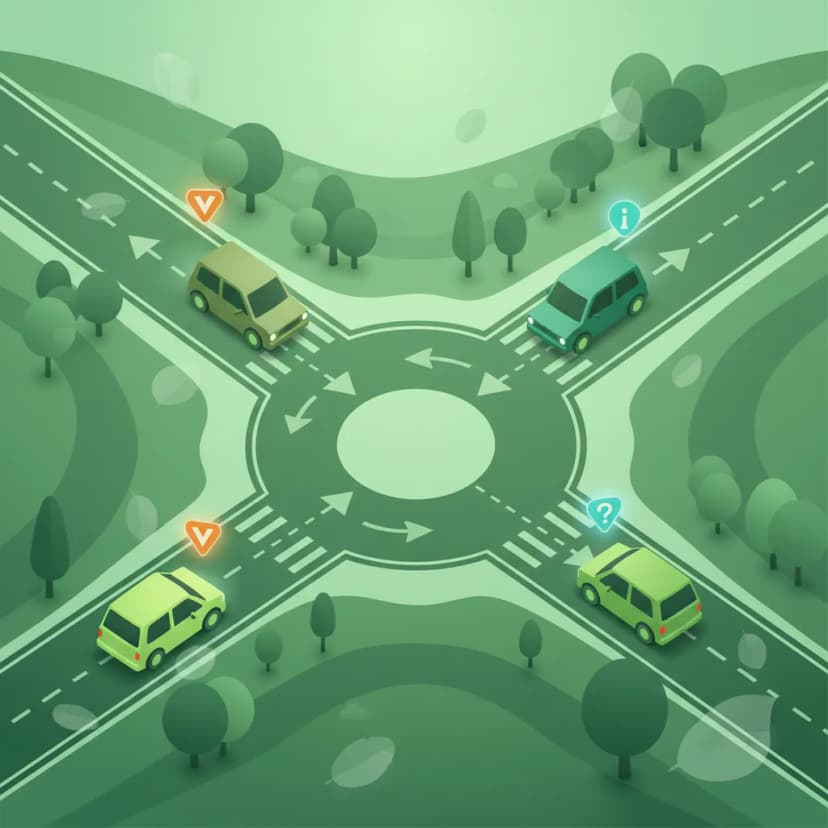
This lesson addresses the challenge of navigating equal-priority intersections, where no signs or markings dictate the right-of-way. You will master the fundamental Dutch traffic rule of giving priority to all drivers approaching from your right ('rechts voor'). The content focuses on developing advanced observational skills and clear communication to safely manage these situations, which are common in residential and urban areas.
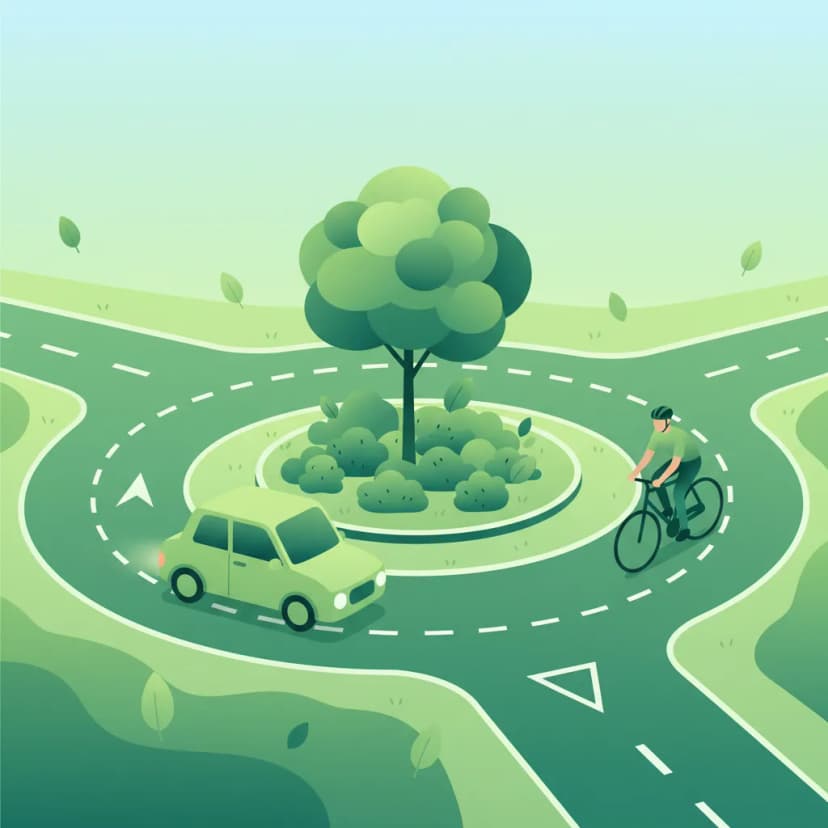
This lesson delves into the hierarchy of priority rules on Dutch roads, clarifying who has the right-of-way in various intersection scenarios. It explains the meaning of signs like 'voorrangsweg' and road markings such as shark's teeth ('haaientanden'). Special attention is given to the correct procedure for entering, navigating, and exiting roundabouts on a motorcycle, including proper signaling and lane choice to ensure safe and efficient passage.
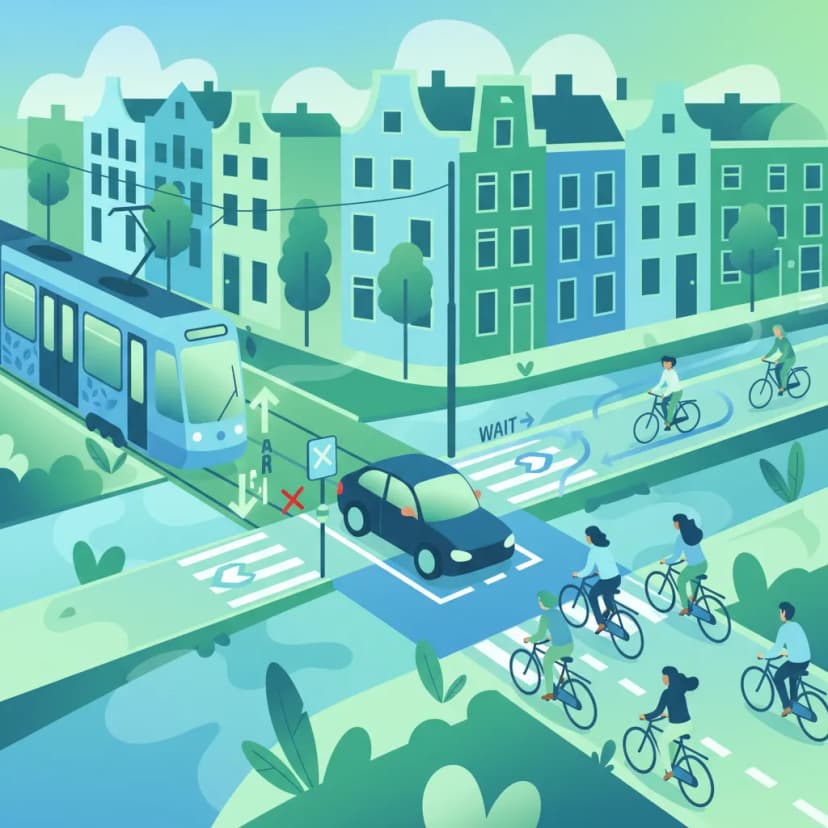
This lesson breaks down the rules of priority at intersections. You will learn to identify an 'equal' intersection where the default rule of giving way to traffic from the right applies. It also explains how priority is regulated by signs (such as the B6 Stop sign and B7 priority road sign) and road markings ('shark's teeth'). Understanding these hierarchies is crucial for making safe and correct decisions when crossing or turning at any junction.
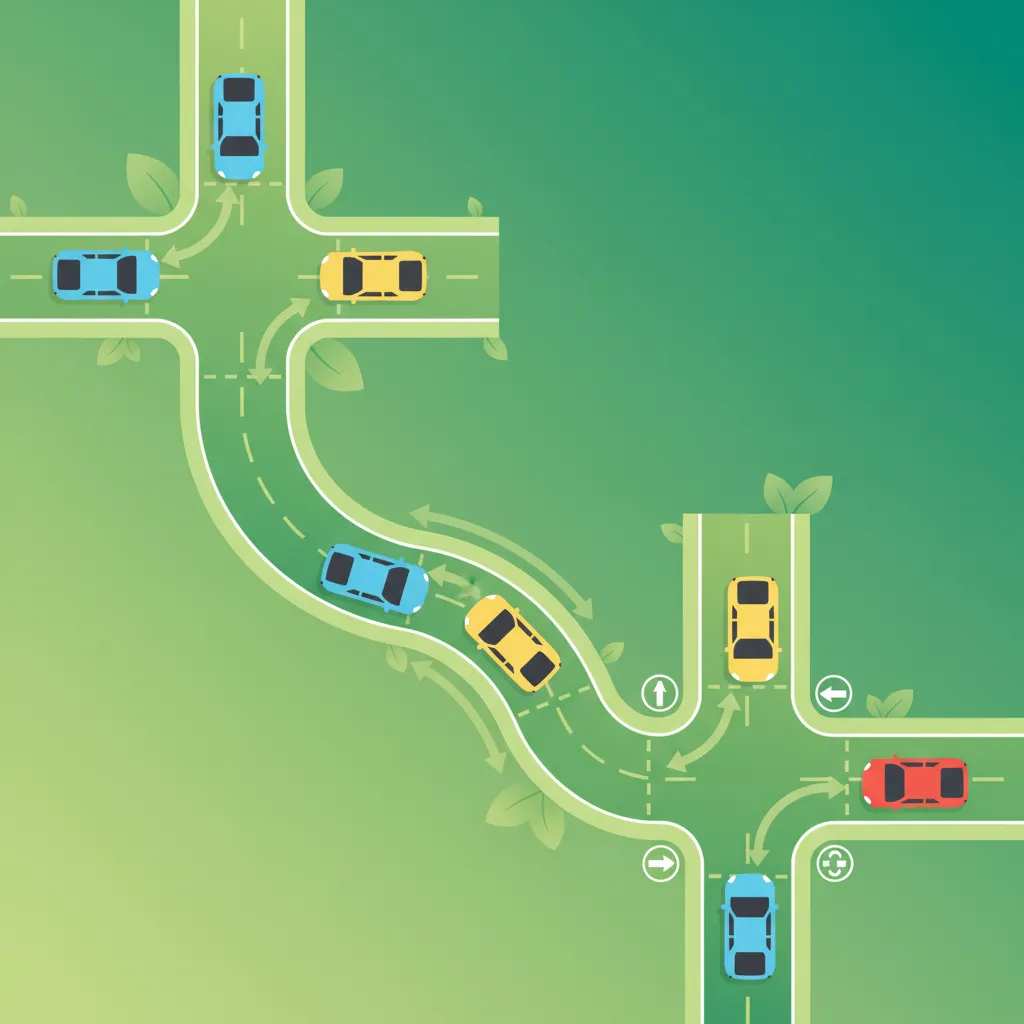
This lesson analyzes the specific challenges and priority rules associated with various common junction layouts, including T-junctions, Y-junctions, and standard crossroads. It explains how the geometry of each type of intersection influences sightlines, vehicle positioning, and the application of right-of-way rules. Riders will learn systematic approaches for assessing these junctions, positioning their motorcycle correctly for the intended maneuver, and executing turns safely and efficiently.
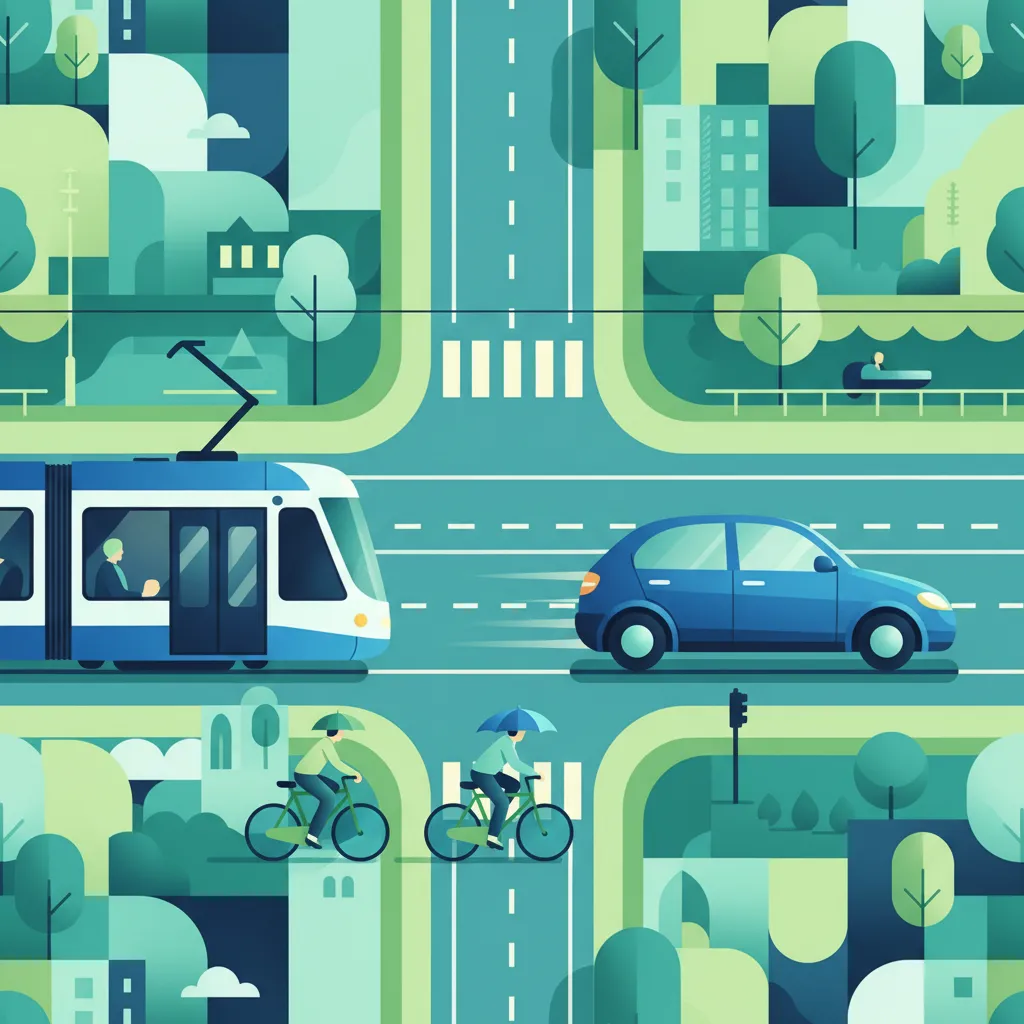
This lesson introduces the foundational principles of right-of-way in the Netherlands, starting with the road user hierarchy and the default rule of giving priority to traffic from the right at equal intersections. You will learn to identify a priority road, marked by sign BORD 30, and understand how this designation overrides the default rule. The content establishes the legal framework for making priority decisions in the absence of specific signs or signals.
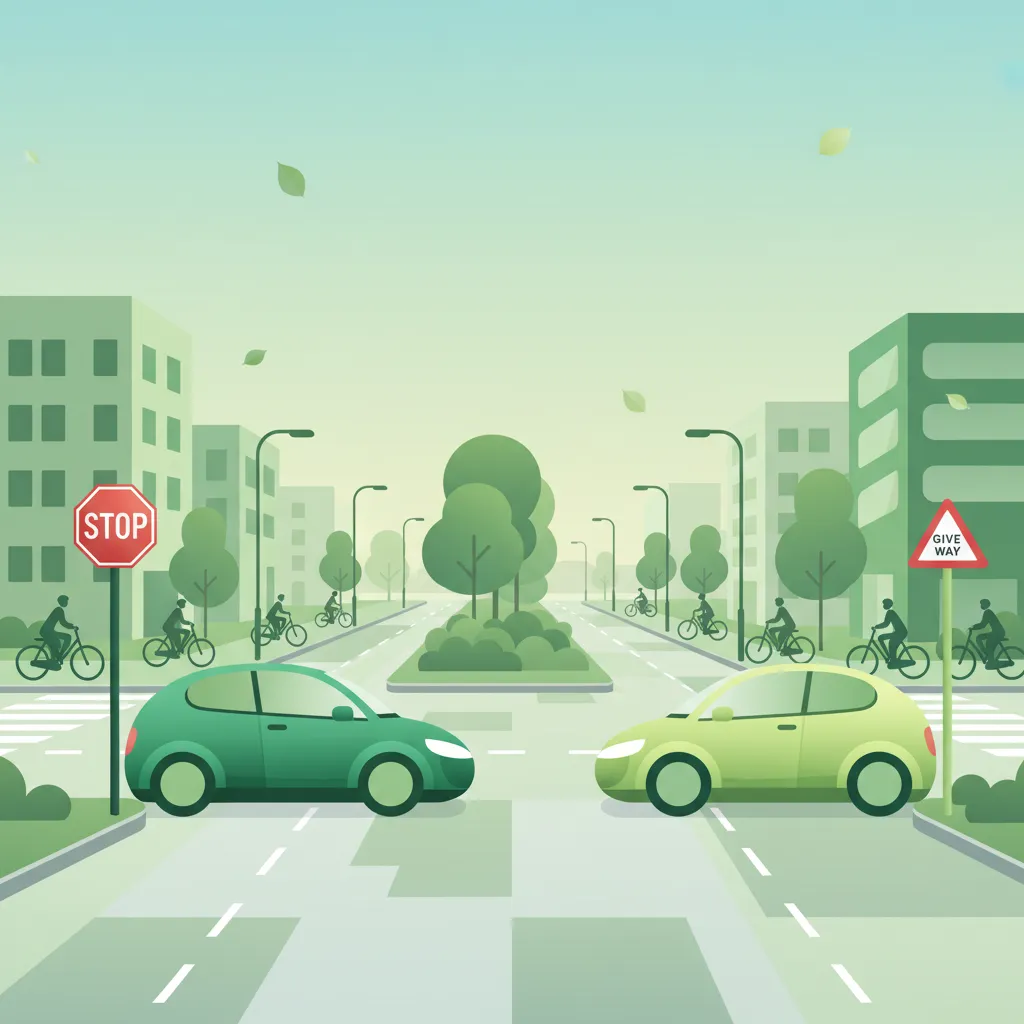
This lesson details the specific actions required at intersections controlled by 'Stop' and 'Give Way' signs. You will learn the legal requirement to come to a complete stop at a stop line (BORD 44) and the obligation to yield to all crossing traffic when encountering give-way markings ('haaientanden'). The content covers safe approach speeds and effective scanning techniques for motorcyclists to accurately assess gaps in traffic before proceeding.
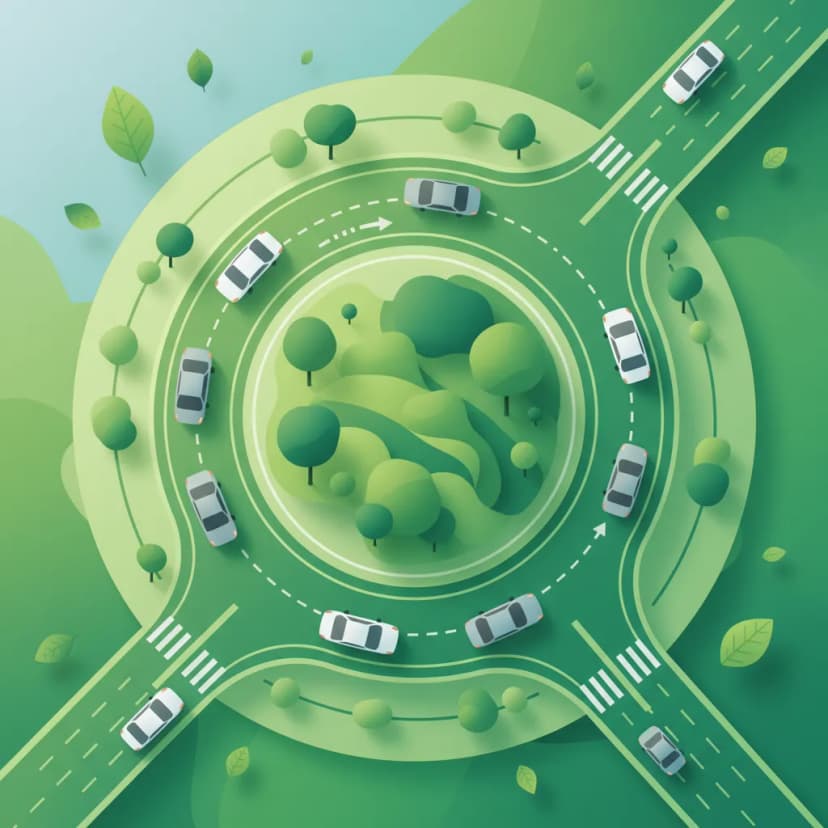
This lesson focuses on the rules and techniques for safely navigating Dutch roundabouts, a common feature of the road network. You will learn that traffic circulating on the roundabout typically has priority and that you must yield before entering. The content covers correct lane selection for your intended exit, proper use of turn signals, and maintaining awareness of cyclists who may have priority on adjacent paths.
This lesson explains the critical rules of priority involving pedestrians and cyclists to ensure the safety of vulnerable road users. You will learn the absolute requirement to stop for pedestrians on or waiting to use a 'zebrapad' (zebra crossing). The content also covers situations where you must yield to cyclists crossing your path, such as when turning across a dedicated bicycle lane (fietspad).
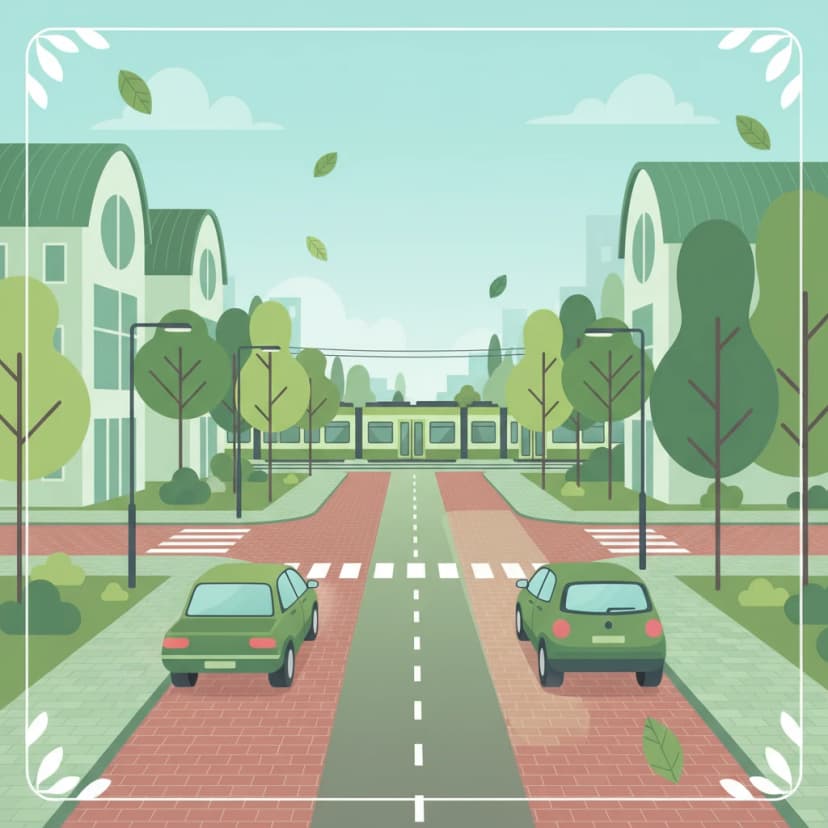
This lesson explains the foundational 'priority to the right' rule, which applies at intersections of equal roads where no other signs or markings dictate priority. You will learn to identify such junctions and understand your obligation to yield to traffic approaching from your right side. The lesson also clarifies important exceptions, such as when exiting a driveway, entering a paved road from an unpaved one, or when encountering a tram. Mastering this rule is crucial for navigating residential areas and city streets where signage is often minimal.
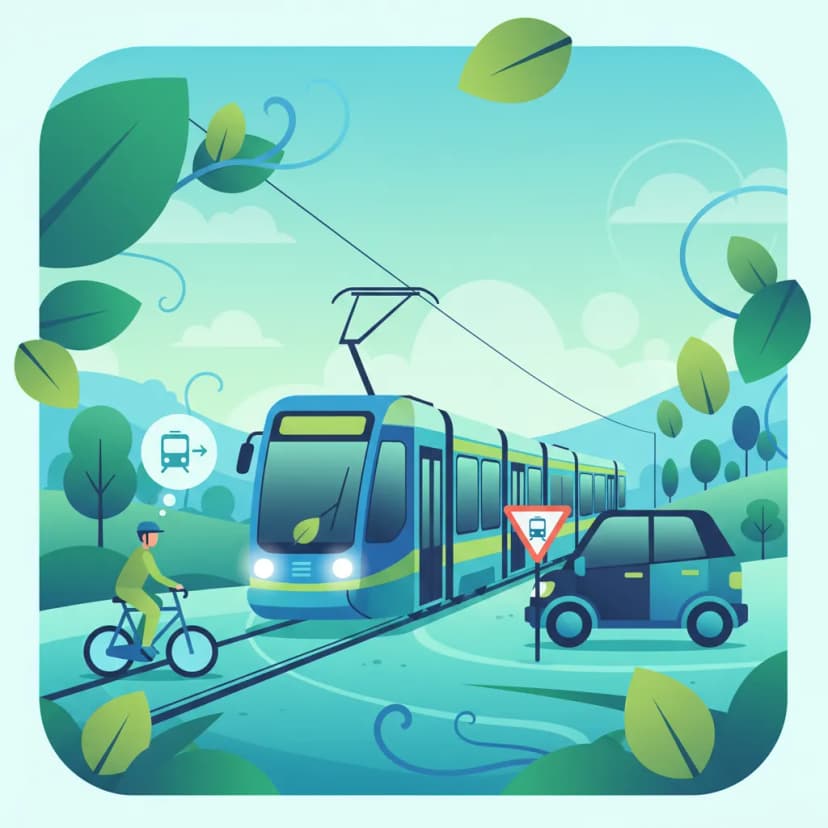
This lesson addresses the unique priority rules concerning trams in urban environments, clarifying that trams generally have priority unless signs or signals indicate otherwise. It explains the specific hazards motorcyclists face, such as slippery tracks (especially in wet conditions) and the long stopping distance of trams. Riders will learn how to safely cross tram lines, navigate shared lanes, and correctly interpret tram-specific traffic signals to avoid dangerous conflicts.
Understand typical errors drivers make with right-of-way rules and see how they play out in practical Dutch traffic situations. Learn from examples to avoid dangerous misinterpretations at junctions.
This lesson addresses the challenge of navigating equal-priority intersections, where no signs or markings dictate the right-of-way. You will master the fundamental Dutch traffic rule of giving priority to all drivers approaching from your right ('rechts voor'). The content focuses on developing advanced observational skills and clear communication to safely manage these situations, which are common in residential and urban areas.
This lesson introduces the foundational principles of right-of-way in the Netherlands, starting with the road user hierarchy and the default rule of giving priority to traffic from the right at equal intersections. You will learn to identify a priority road, marked by sign BORD 30, and understand how this designation overrides the default rule. The content establishes the legal framework for making priority decisions in the absence of specific signs or signals.
This lesson delves into the hierarchy of priority rules on Dutch roads, clarifying who has the right-of-way in various intersection scenarios. It explains the meaning of signs like 'voorrangsweg' and road markings such as shark's teeth ('haaientanden'). Special attention is given to the correct procedure for entering, navigating, and exiting roundabouts on a motorcycle, including proper signaling and lane choice to ensure safe and efficient passage.
This lesson breaks down the rules of priority at intersections. You will learn to identify an 'equal' intersection where the default rule of giving way to traffic from the right applies. It also explains how priority is regulated by signs (such as the B6 Stop sign and B7 priority road sign) and road markings ('shark's teeth'). Understanding these hierarchies is crucial for making safe and correct decisions when crossing or turning at any junction.
This lesson explains the critical rules of priority involving pedestrians and cyclists to ensure the safety of vulnerable road users. You will learn the absolute requirement to stop for pedestrians on or waiting to use a 'zebrapad' (zebra crossing). The content also covers situations where you must yield to cyclists crossing your path, such as when turning across a dedicated bicycle lane (fietspad).
This lesson explains the foundational 'priority to the right' rule, which applies at intersections of equal roads where no other signs or markings dictate priority. You will learn to identify such junctions and understand your obligation to yield to traffic approaching from your right side. The lesson also clarifies important exceptions, such as when exiting a driveway, entering a paved road from an unpaved one, or when encountering a tram. Mastering this rule is crucial for navigating residential areas and city streets where signage is often minimal.
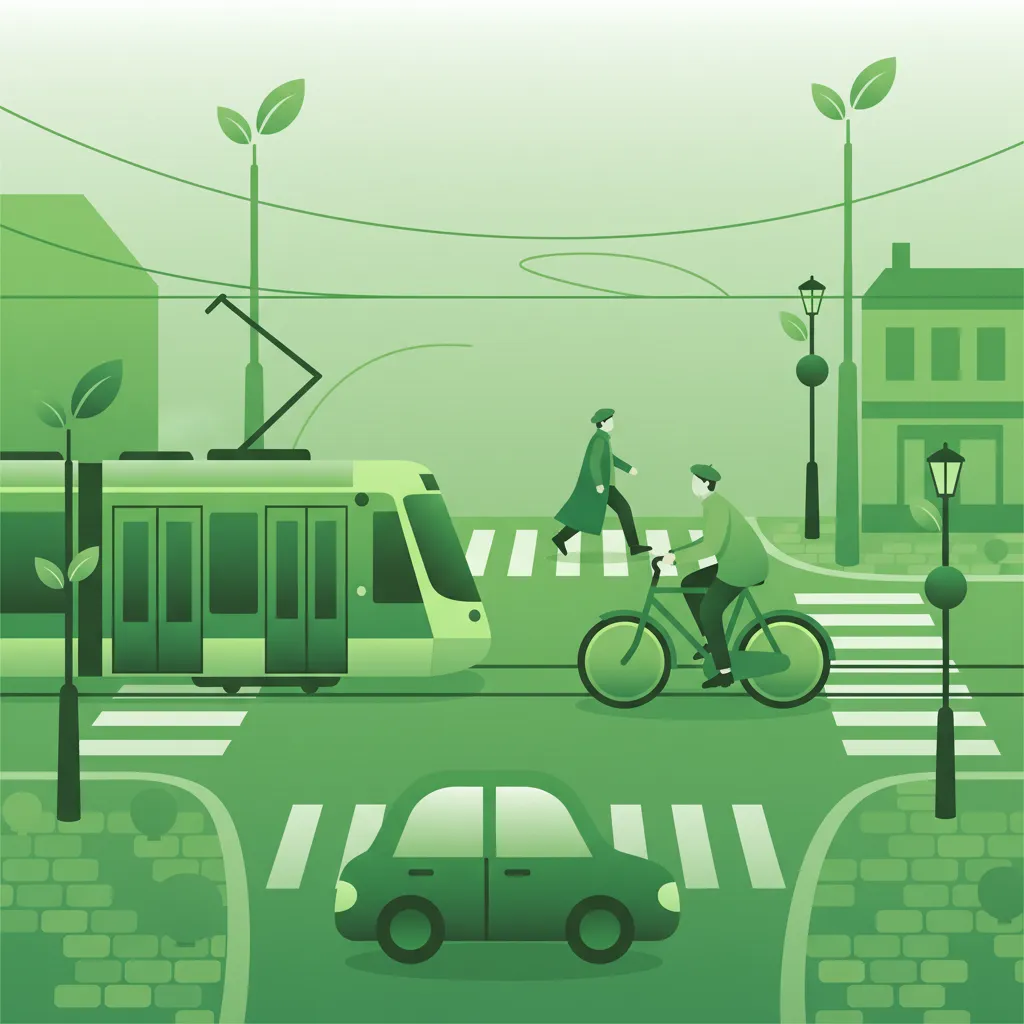
This lesson addresses special situations where standard priority rules are superseded. You will learn the absolute priority of emergency vehicles using sirens and flashing lights, and the correct procedure for giving them way safely. The content also explains the specific priority rules for trams, which often have right-of-way over other traffic, as well as for military columns and official funeral processions. Furthermore, the lesson reinforces the rules for yielding to pedestrians at designated zebra crossings.
This lesson details the specific actions required at intersections controlled by 'Stop' and 'Give Way' signs. You will learn the legal requirement to come to a complete stop at a stop line (BORD 44) and the obligation to yield to all crossing traffic when encountering give-way markings ('haaientanden'). The content covers safe approach speeds and effective scanning techniques for motorcyclists to accurately assess gaps in traffic before proceeding.
As a motorized road user, you have a special responsibility towards more vulnerable participants. This lesson focuses on the rules giving priority to pedestrians at marked zebra crossings and the importance of anticipating the movements of cyclists, children, and the elderly. You will learn about maintaining a safe lateral distance when overtaking cyclists and how to navigate shared spaces with heightened awareness, a key component of social and safe driving behavior.
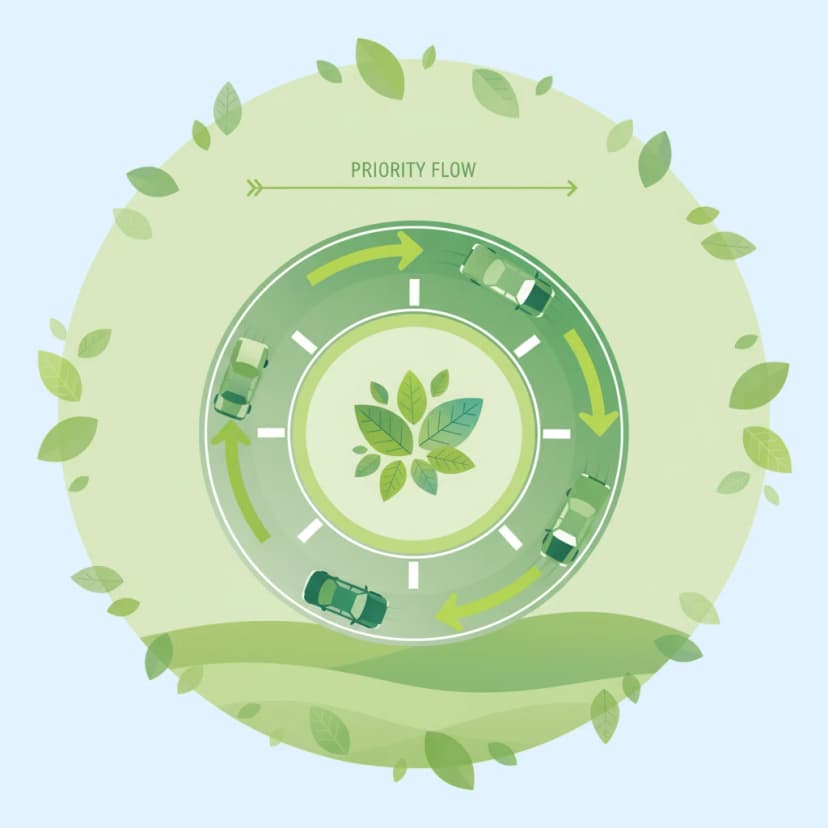
This lesson provides a detailed guide to navigating roundabouts (rotondes) in the Netherlands. You will learn the primary rule: drivers approaching a roundabout must yield to traffic already circulating on it, which is typically indicated by yield signs (B5) and shark teeth. The curriculum also covers the correct use of turn signals when entering and exiting, rules for multi-lane roundabouts, and special considerations for the priority of cyclists who may have a dedicated path around the roundabout. Correct roundabout etiquette is key to maintaining traffic flow and safety.
Find clear answers to common questions learners have about General Rules of Right-of-Way (voorrangsregels). Learn how the lesson is structured, which driving theory objectives it supports, and how it fits into the overall learning path of units and curriculum progression in the Netherlands. These explanations help you understand key concepts, lesson flow, and exam focused study goals.
The fundamental rule in the Netherlands for unmarked intersections, where no signs or road markings dictate otherwise, is that traffic approaching from the right has priority. This means if two roads meet and there are no signs indicating who should yield, you must give way to any vehicle coming from your right.
An unmarked intersection is one where there are no priority signs (like a priority road sign, give way sign, or stop sign) and no traffic lights. Road markings like the 'shark's teeth' (give way lines) also indicate a priority situation, so their absence, along with the absence of signs, signals an equal junction where the 'right-hand rule' applies.
The 'shark's teeth' are triangular markings painted on the road surface, pointing towards your vehicle. They indicate that you must give way to traffic on the road you are about to enter or cross. This is a visual cue reinforcing the 'give way' (yield) rule, overriding the general 'right-hand rule' if present.
No, the 'right-hand rule' (yielding to the right) only applies at unmarked intersections of equal importance. It is superseded by traffic signs (like a priority road sign, yield sign, or stop sign), traffic lights, police instructions, and specific road markings like 'shark's teeth'.
The CBR exam will present you with various traffic scenarios, often involving intersections. You'll need to identify who has priority based on signs, markings, and the general rules, including the 'right-hand rule', and select the correct action or outcome. Understanding these fundamentals is key to answering these questions accurately.