
In the Netherlands, winter riding presents unique challenges. This lesson focuses on how cold temperatures impact your vehicle's stability by reducing tire grip, even on dry roads, and how they can significantly decrease the range of electric vehicles like speed pedelecs. Understanding these effects is vital for safe navigation and preparation, especially as it relates to specific questions in the AM theory exam.

Riding a two-wheel vehicle like a bromfiets, snorfiets, or speed pedelec exposes you directly to environmental elements. Among these, ambient temperature plays a critical, yet often underestimated, role in influencing vehicle performance and safety. Low temperatures can significantly affect both your vehicle's physical characteristics, such as tire grip, and the operational capacity of electric components like batteries.
Understanding these temperature-driven changes is not just about comfort; it is fundamental for safe riding, proper vehicle preparation, and accurate trip planning, especially during colder seasons. This lesson delves into the science behind these impacts and outlines the essential adjustments every Category AM rider must make to ensure safety and reliability on Dutch roads.
Cold weather has a profound effect on your vehicle's tires, regardless of whether the road surface is wet or dry. The primary changes involve the physical properties of the tire rubber and the air pressure within the tires, both of which directly impact the crucial connection between your vehicle and the road.
Tires are designed to provide optimal grip within a specific temperature range. The rubber compound used in tires becomes stiffer and less elastic as temperatures drop, typically below 7 degrees Celsius. This reduction in elasticity directly lowers the coefficient of friction (μ) between the tire and the road surface. The coefficient of friction is a fundamental measure of how much grip your tires have, influencing their ability to brake, accelerate, and corner effectively.
Even on a dry road, a colder tire compound will offer less traction than a warmer one. This means your stopping distances will increase, and your maximum lean angle in corners will decrease, making maneuvers that are routine in mild weather potentially hazardous in the cold. Abrupt changes in speed or direction can lead to a loss of control, as the reduced friction offers a smaller margin for error.
Another critical factor affected by temperature is tire pressure. The air inside your tires behaves according to the Ideal Gas Law, which states that for a fixed volume, pressure is directly proportional to temperature. When the ambient temperature drops, the air inside your tires cools down, causing the pressure to decrease.
For instance, a tire inflated to 2.5 bar at a comfortable 20°C in a warm garage might show a pressure of approximately 2.1 bar when the vehicle has been left outdoors in -5°C for some time. This seemingly small drop can have significant consequences:
Therefore, regular tire pressure checks are even more crucial in colder months. It's important to check the pressure when the tires are cold—meaning the vehicle has been stationary for at least a few hours and has acclimated to the outdoor temperature.
While you won't always see ice or snow, your vehicle can still tell you that grip is reduced. Pay attention to:
These subtle cues are your vehicle's way of warning you about compromised traction. Ignoring them can lead to dangerous situations.
Always Check Cold Tire Pressure: After your vehicle has been parked outside in cold weather for an extended period, its tire pressure will have dropped. Check and adjust the pressure to the manufacturer's recommended levels before you start your journey. This ensures optimal safety and extends tire life.
For electric two-wheelers such as speed pedelecs, electric bromfietsen, and electric snorfietsen, cold temperatures pose an additional challenge by significantly impacting battery performance and overall range. These vehicles rely on lithium-ion batteries, which are inherently sensitive to temperature fluctuations.
The performance of lithium-ion batteries depends on electrochemical reactions that facilitate the movement of ions between the anode and cathode. In cold temperatures, these reactions slow down considerably. This leads to two primary issues:
The practical implication of reduced battery capacity is a shorter effective travel range. This necessitates careful range planning, especially for longer commutes or trips in rural areas where charging points might be scarce. For instance, an electric scooter advertised with a 50 km range might realistically deliver only around 35 km in winter conditions.
Similarly, reduced power output means your vehicle may not accelerate as quickly or maintain its top speed as easily. This can affect your ability to keep up with traffic or quickly move out of a dangerous situation, requiring you to anticipate these limitations and adjust your riding style accordingly.
Charging lithium-ion batteries in sub-zero temperatures can be problematic and potentially damaging. When a battery is too cold, the lithium ions struggle to intercalate into the graphite anode. Instead, they can plate on the anode's surface, a phenomenon known as lithium plating. This can permanently reduce the battery's capacity and overall lifespan. In extreme cases, it can increase the risk of internal short circuits and, in rare instances, thermal runaway.
Therefore, it is crucial to:
To counteract the negative effects of cold weather on tire grip and battery performance, Category AM riders must adopt a proactive approach, incorporating specific checks and adjustments into their routine and riding style.
A thorough pre-ride check is non-negotiable in cold weather.
Once on the road, your riding style must adapt to the reduced grip and potentially limited power. This is known as Safety Margin Adaptation.
For electric vehicles, accurate range planning is paramount in cold weather.
In the Netherlands, specific laws and regulations govern vehicle roadworthiness and driver conduct, which become particularly relevant in cold and challenging weather conditions. These regulations underscore the rider's responsibility to ensure their vehicle is safe and that they operate it with due care.
The Reglement Verkeersregels en Verkeerstekens 1990 (RVV 1990), which sets out Dutch traffic rules and signs, includes general provisions on vehicle condition.
Beyond vehicle maintenance, the RVV 1990 places a broad responsibility on the driver.
For speed pedelecs, which fall under specific EU directives (e.g., EU Directive 2002/24/EC related to L-category vehicles and sometimes interpreted within bicycle/e-bike regulations), manufacturers have an obligation to provide accurate information to users. This includes guidance on battery capacity, expected range, and how environmental factors like temperature can affect these metrics. While there isn't a specific Dutch law mandating battery range checks, the principle of "reasonable preparation for the journey" (implicit in the duty of care) means riders should heed manufacturer warnings and understand how cold affects their electric vehicle's range.
Being aware of potential pitfalls is crucial for safe cold-weather riding. Here are common mistakes and how to avoid them:
Riding with Cold-Induced Low Tire Pressure:
Ignoring Battery Range Reduction:
Maintaining Normal Speed on Cold, Dry Asphalt:
Assuming ABS/ESC Fully Compensates for Grip Loss:
Charging Battery in Sub-Zero Temperatures Without Pre-heating:
Failing to Adjust Lean Angle in Cold Conditions:
Neglecting to Warm Up Tires Before Riding:
Let's illustrate these concepts with real-world scenarios relevant to the Dutch Category AM rider.
Setting: A rider uses a snorfiets for a 5 km commute through the city, with a dry road and an ambient temperature of 0°C. Tire pressure was last checked in a heated garage at 20°C and read 2.2 bar.
Correct Behavior: Before riding, the rider takes their snorfiets outside for 30 minutes to allow the tires to acclimate. They then re-measure the pressure, finding it has dropped to approximately 2.0 bar. They inflate the tires to the manufacturer's recommended 2.3 bar. During the ride, they reduce their usual cruising speed from 30 km/h to 25 km/h and begin braking earlier when approaching traffic lights or intersections.
Why it's Correct: By adjusting tire pressure for the cold, the rider maintains optimal tire contact and grip, reducing stopping distances and preventing uneven wear. Adapting speed and braking technique further enhances safety, compensating for the inherent reduction in tire friction due to the cold rubber.
Setting: A rider plans a 20 km round-trip on a rural road using a speed pedelec. The ambient temperature is a chilly -8°C, with no precipitation. The battery currently shows 80% charge, and the manufacturer's nominal range is 50 km.
Correct Behavior: The rider recalls that cold temperatures significantly reduce battery capacity. They apply a 30% reduction factor to the nominal range, calculating an actual range of roughly 35 km (50 km * 0.70). Recognizing their 20 km trip is feasible but close to their adjusted range, they decide to charge the battery to 95% before departure. They also reduce their typical speed from 45 km/h to 35 km/h and use gentle acceleration, avoiding sudden power demands, especially on inclines.
Why it's Correct: The rider proactively accounts for temperature-induced battery capacity loss, preventing the risk of running out of power mid-journey. By reducing speed and using smooth power delivery, they further conserve energy and extend the battery's effective range, ensuring a safe and successful trip.
Setting: A 15 km ride on a suburban road. The temperature is 3°C, and there is a light drizzle, making the road surface wet. Tires were last inflated to 2.5 bar in a warm garage.
Correct Behavior: The rider understands that both cold and wet conditions severely reduce grip. They check their tire pressure, finding it has dropped to 2.2 bar. They inflate it back to 2.5 bar. During the ride, they reduce their speed to 20 km/h, maintain an even greater following distance, use very gentle and progressive braking, and avoid any abrupt cornering movements.
Why it's Correct: Correct tire pressure is vital for maintaining the optimal contact patch to displace water and grip the road. Combined with reduced speed and cautious inputs, this approach maximizes the limited available grip in the challenging conditions, minimizing the risk of skidding or hydroplaning.
For a comprehensive understanding of vehicle safety and Dutch road regulations, explore additional topics that complement this lesson.
Lesson content overview
Explore all units and lessons included in this driving theory course.
Explore search topics learners often look for when studying Temperature Impacts on Tire Grip and Battery Range. These topics reflect common questions about road rules, driving situations, safety guidance, and lesson level theory preparation for learners in the Netherlands.
Browse additional driving theory lessons that cover connected traffic rules, road signs, and common driving situations related to this topic. Improve your understanding of how different rules interact across everyday traffic scenarios.
Understand how low temperatures affect tire grip, pressure, and electric vehicle battery range. Learn essential preparation and riding adjustments for Category AM riders in the Netherlands during winter conditions.
This lesson provides practical advice for driving in challenging weather. You will learn about the risk of aquaplaning in heavy rain and how to react, as well as how to manage the effects of strong crosswinds. The curriculum covers winter driving, explaining the danger of black ice, the benefits of winter tires, and techniques for avoiding and correcting a skid. A key focus is on adjusting driving style: increasing following distances, reducing speed, and making gentle steering and braking inputs.
Riding on two wheels requires special care on surfaces with reduced grip. This lesson teaches you how to handle challenging conditions like rain, ice, wet leaves, or tram tracks. Key principles include reducing speed significantly, making all control inputs (braking, accelerating, steering) much more smoothly and gradually, and increasing your following distance to allow for much longer stopping distances. Recognizing potentially slippery areas is a critical part of proactive hazard perception.
This lesson emphasizes the critical importance of adapting your speed to prevailing conditions, which may require driving slower than the legal limit. You will learn how factors like rain, fog, snow, and darkness significantly increase braking distances and reduce visibility. The curriculum explains the dangers of aquaplaning on wet roads and black ice in winter. The core principle taught is that a safe driver always adjusts their speed to ensure they can stop within the distance they can see to be clear.
This lesson explores the often-overlooked factor of road surface temperature and its direct impact on tire grip and braking efficiency. It explains that cold tires on cold asphalt have significantly less grip, leading to longer stopping distances and a higher risk of skidding. The content discusses the importance of allowing tires to warm up through gentle riding and highlights the danger of isolated icy patches, even on otherwise clear winter days.
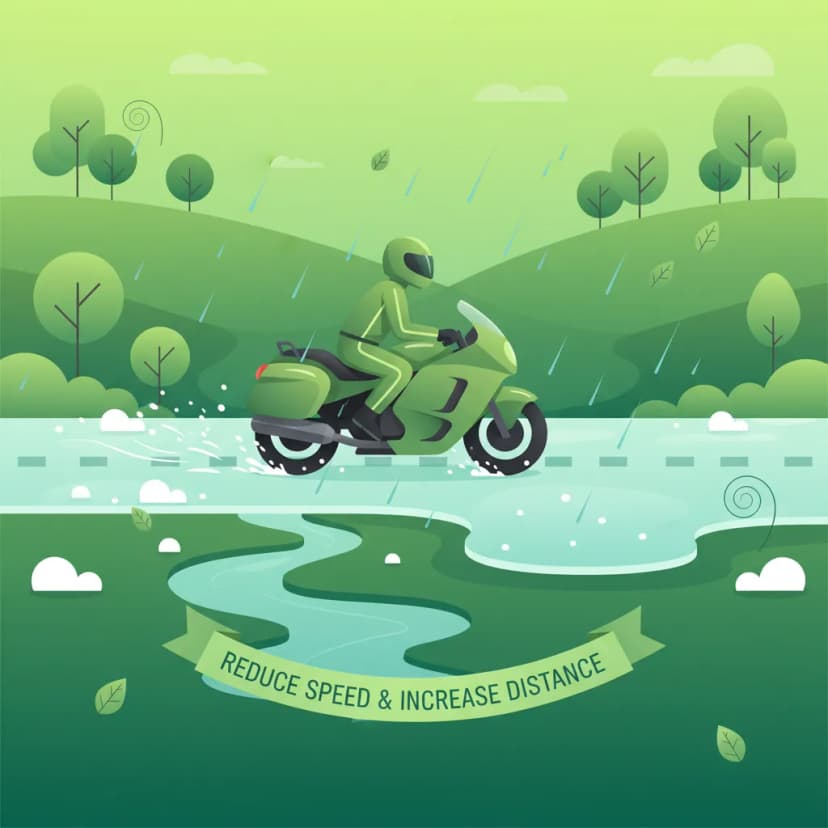
This lesson provides survival strategies for riding in the most challenging weather conditions, including heavy rain, snow, and potential ice. It emphasizes the importance of mental preparation, drastically reduced speeds, and hyper-smooth inputs for throttle, brakes, and steering. The content also covers identifying high-risk areas for 'black ice,' such as bridges and shaded spots, and the critical role of appropriate waterproof and insulated gear in preventing hypothermia and maintaining concentration.

This lesson covers the principles of selecting and using appropriate protective gear to combat the effects of low temperatures and wind chill. It explains the concept of layering with a base, mid, and outer layer to trap heat and manage moisture. The content also discusses the benefits of heated grips and clothing, effective waterproofing, and solutions like Pinlock inserts to prevent visor fogging, all of which are crucial for maintaining comfort, concentration, and control in the cold.

Each season brings unique challenges for riders. This lesson discusses common seasonal hazards, such as wet autumn leaves that are as slippery as ice, the risk of black ice in winter, and increased agricultural traffic in the summer. It also highlights the importance of seasonal vehicle maintenance. For example, after winter, it is crucial to wash away corrosive road salt, and before winter, to check antifreeze and battery health, ensuring your vehicle is prepared for the conditions ahead.

This lesson reinforces the critical relationship between adverse conditions, reduced traction, and massively increased stopping distances. It provides a clear framework for how much riders need to increase their following distance and reduce their overall speed to maintain a safe margin for error. The curriculum teaches riders to constantly reassess their speed based on visual feedback from the road surface and the level of visibility, ensuring they can always stop within the distance they can clearly see.
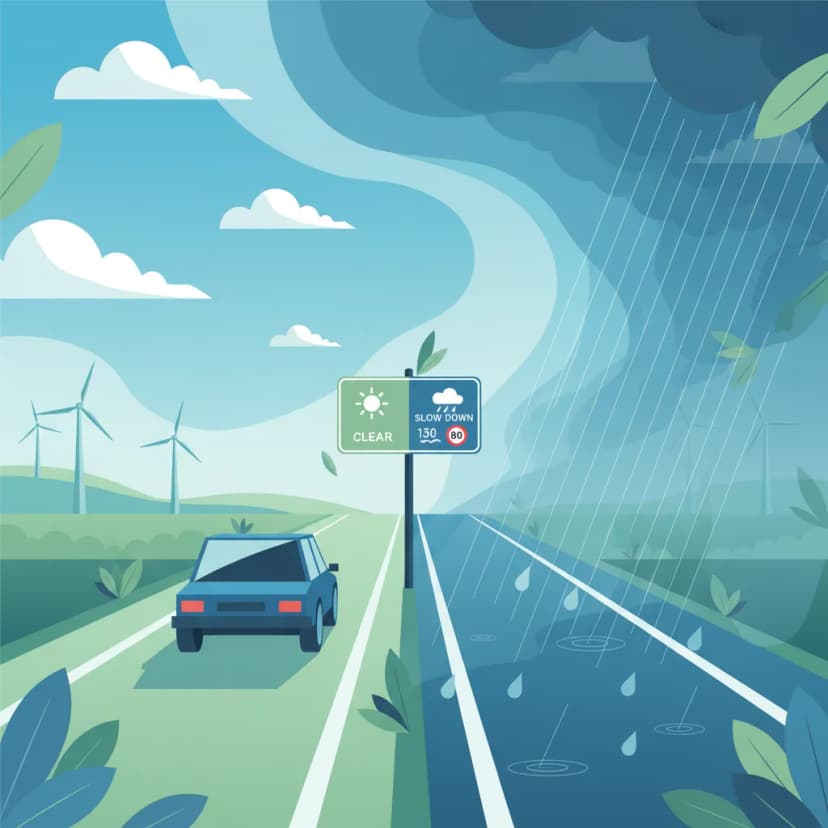
The posted speed limit is a maximum, not a target. This lesson teaches the crucial skill of adapting your speed to prevailing conditions. You will learn how to assess factors like traffic density, poor weather (rain, fog), limited visibility (at night), and slippery road surfaces. Adjusting your speed downwards in these situations provides you with more time to react to hazards and significantly reduces the risk of losing control or being involved in a collision.
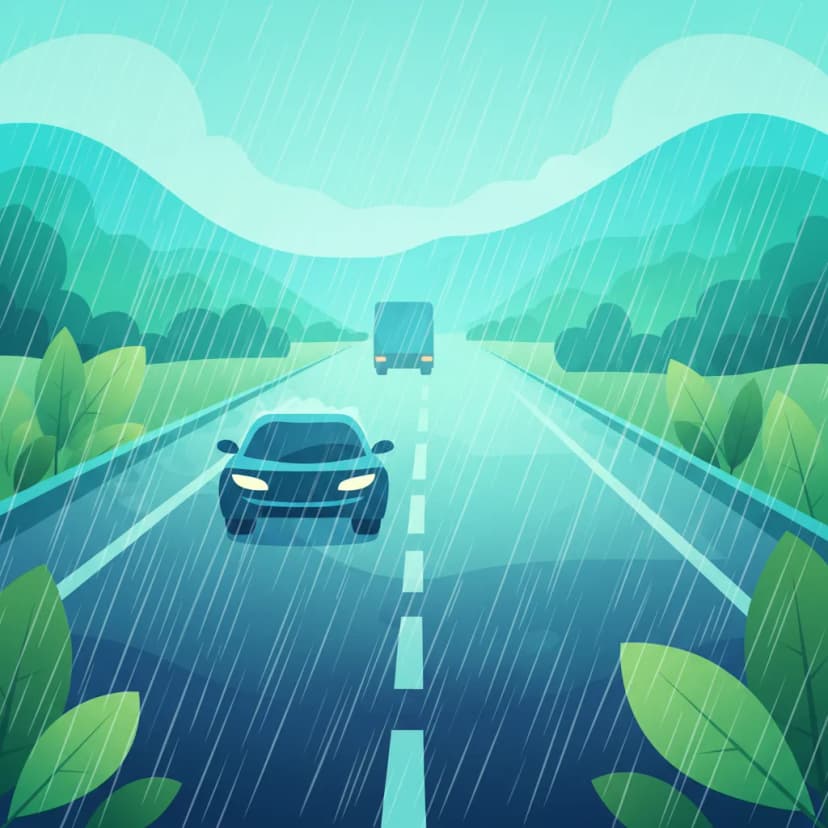
This lesson explains why the standard two-second rule is insufficient in adverse conditions and requires extension. It details how factors like rain, fog, and darkness reduce both visibility and tire grip, thereby significantly increasing total stopping distance. The content provides practical guidelines, such as extending the following gap to four seconds or more in the wet, to ensure the rider always has enough time and space to stop safely, regardless of the conditions.
Learn about frequent errors made by riders in cold conditions, such as ignoring tire pressure drops or battery range reduction. This lesson helps you avoid these pitfalls for safer winter driving.
This lesson covers the principles of selecting and using appropriate protective gear to combat the effects of low temperatures and wind chill. It explains the concept of layering with a base, mid, and outer layer to trap heat and manage moisture. The content also discusses the benefits of heated grips and clothing, effective waterproofing, and solutions like Pinlock inserts to prevent visor fogging, all of which are crucial for maintaining comfort, concentration, and control in the cold.
This lesson provides survival strategies for riding in the most challenging weather conditions, including heavy rain, snow, and potential ice. It emphasizes the importance of mental preparation, drastically reduced speeds, and hyper-smooth inputs for throttle, brakes, and steering. The content also covers identifying high-risk areas for 'black ice,' such as bridges and shaded spots, and the critical role of appropriate waterproof and insulated gear in preventing hypothermia and maintaining concentration.
Riding on two wheels requires special care on surfaces with reduced grip. This lesson teaches you how to handle challenging conditions like rain, ice, wet leaves, or tram tracks. Key principles include reducing speed significantly, making all control inputs (braking, accelerating, steering) much more smoothly and gradually, and increasing your following distance to allow for much longer stopping distances. Recognizing potentially slippery areas is a critical part of proactive hazard perception.
Each season brings unique challenges for riders. This lesson discusses common seasonal hazards, such as wet autumn leaves that are as slippery as ice, the risk of black ice in winter, and increased agricultural traffic in the summer. It also highlights the importance of seasonal vehicle maintenance. For example, after winter, it is crucial to wash away corrosive road salt, and before winter, to check antifreeze and battery health, ensuring your vehicle is prepared for the conditions ahead.
This lesson reinforces the critical relationship between adverse conditions, reduced traction, and massively increased stopping distances. It provides a clear framework for how much riders need to increase their following distance and reduce their overall speed to maintain a safe margin for error. The curriculum teaches riders to constantly reassess their speed based on visual feedback from the road surface and the level of visibility, ensuring they can always stop within the distance they can clearly see.
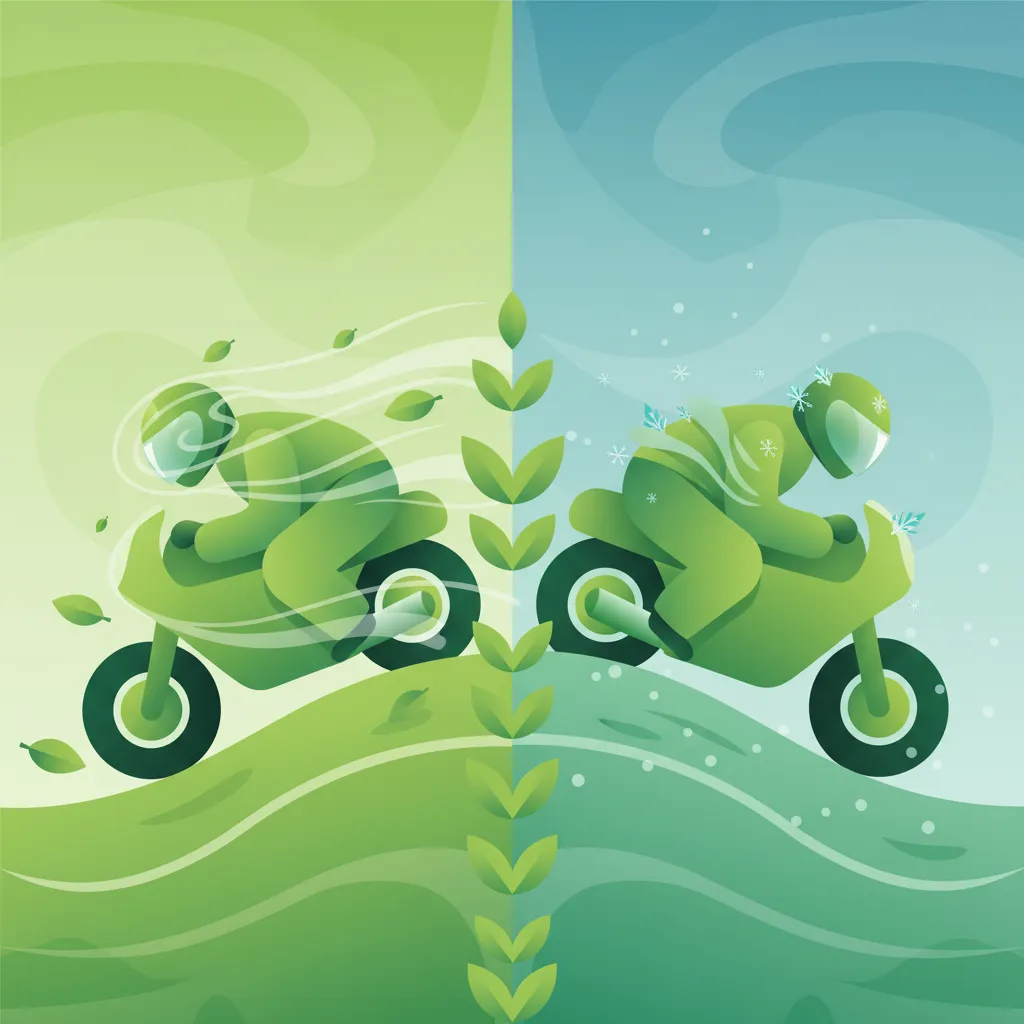
This lesson explains how to counteract the effects of strong winds, which can easily upset a motorcycle's stability. It covers techniques like maintaining a relaxed grip on the handlebars and leaning into a steady crosswind. The lesson also addresses the impact of temperature, explaining how cold weather affects both the rider (risk of hypothermia, reduced concentration) and the motorcycle (reduced tire grip until warmed up), and emphasizes the need for appropriate protective gear.
The posted speed limit is a maximum, not a target. This lesson teaches the crucial skill of adapting your speed to prevailing conditions. You will learn how to assess factors like traffic density, poor weather (rain, fog), limited visibility (at night), and slippery road surfaces. Adjusting your speed downwards in these situations provides you with more time to react to hazards and significantly reduces the risk of losing control or being involved in a collision.
This lesson explores the often-overlooked factor of road surface temperature and its direct impact on tire grip and braking efficiency. It explains that cold tires on cold asphalt have significantly less grip, leading to longer stopping distances and a higher risk of skidding. The content discusses the importance of allowing tires to warm up through gentle riding and highlights the danger of isolated icy patches, even on otherwise clear winter days.
Defensive riding means riding to prevent collisions, despite the actions of others or the conditions around you. This lesson teaches the core principles of this proactive safety strategy. Key techniques include managing the space cushion around your vehicle, positioning yourself in your lane for maximum visibility, constantly planning an escape route, and communicating your intentions clearly to other road users. This mindset acknowledges your vulnerability and empowers you to take control of your own safety.
This lesson explains why the standard two-second rule is insufficient in adverse conditions and requires extension. It details how factors like rain, fog, and darkness reduce both visibility and tire grip, thereby significantly increasing total stopping distance. The content provides practical guidelines, such as extending the following gap to four seconds or more in the wet, to ensure the rider always has enough time and space to stop safely, regardless of the conditions.
Find clear answers to common questions learners have about Temperature Impacts on Tire Grip and Battery Range. Learn how the lesson is structured, which driving theory objectives it supports, and how it fits into the overall learning path of units and curriculum progression in the Netherlands. These explanations help you understand key concepts, lesson flow, and exam focused study goals.
Yes, even on dry roads, cold temperatures can harden the rubber compound of your tires. This makes the tire less flexible and reduces its ability to conform to the road surface, resulting in less mechanical grip. It's similar to how an ice rink is slippery; the tire's interaction with the asphalt changes significantly.
Lithium-ion batteries, commonly used in electric vehicles, perform less efficiently in cold temperatures. Chemical reactions inside the battery slow down, reducing the amount of energy that can be stored and discharged effectively. This leads to a noticeable decrease in the vehicle's maximum range on a single charge.
For every 10 degrees Celsius drop in ambient temperature, tire pressure can decrease by about 1 PSI (or 0.1 bar). While this might seem small, it's enough to affect handling and grip. It's crucial to check your tire pressure regularly, especially during seasonal temperature changes, and inflate them to the manufacturer's recommended level.
Yes, the CBR AM theory exam often includes questions related to environmental conditions. You may encounter scenarios asking how to adjust your riding, what risks are present, or what checks are necessary when riding in cold or wet weather, particularly concerning tire grip and vehicle performance.
Ensure your tires are properly inflated to the correct pressure. Avoid sharp acceleration and braking. Ride at a reduced speed and increase your following distance. If possible, allow your vehicle and tires to warm up slightly before setting off on longer journeys, and always be extra cautious on potentially slippery surfaces like bridges or shaded areas.