
This lesson focuses on the critical two-second rule and its underlying principles of stopping distance. Understanding how to maintain a safe space cushion is vital for Category A riders to react to unpredictable traffic situations and avoid collisions. We will break down the components of stopping distance so you can apply them effectively on the road and in your CBR theory exam.

Navigating Dutch roads on a motorcycle demands exceptional awareness and precision, especially concerning the space you maintain around your vehicle. This lesson, crucial for Dutch Motorcycle Theory – Category A Comprehensive Preparation, delves into the fundamental principles of safe following distances: the practical Two-Second Rule and the scientific breakdown of total stopping distance. Mastering these concepts is not just about passing your exam; it's about forming the bedrock of safe and defensive riding, ensuring you have ample time and space to react to unforeseen events.
Maintaining an adequate following distance is one of the most critical safety practices for any road user, and even more so for motorcyclists. Due to a motorcycle's inherent vulnerability and distinct handling characteristics, a sufficient space cushion provides vital time for perception, decision-making, and executing maneuvers. This foundational knowledge underpins hazard perception, risk mitigation, and compliance with Dutch traffic safety objectives, preparing you for advanced riding techniques discussed in later modules.
This lesson will provide a detailed exposition of the Two-Second Rule as a practical method for establishing a safe following distance on Dutch roads. We will also completely break down total stopping distance into its constituent parts—reaction distance and braking distance—to reveal the physics behind the necessary safety buffer. Understanding this calculation is fundamental for appreciating the need for a sufficient space cushion to react to sudden events ahead.
The Two-Second Rule is a simple yet profoundly effective guideline for maintaining a safe following distance under normal driving conditions. It states that a rider should maintain at least two seconds of clear road between their motorcycle and the vehicle ahead. What makes this rule particularly useful is its time-based and speed-independent nature. Instead of trying to estimate a physical distance in metres, which changes drastically with speed, you simply count time.
To apply this rule, choose a fixed point on the road that the vehicle ahead of you passes, such as a road sign, a bridge, or a lamppost. As the rear of the vehicle ahead passes that fixed point, begin to count "one-one-thousand, two-one-thousand." If the front of your motorcycle reaches that same fixed point before you finish counting to "two-one-thousand," you are following too closely. You should then ease off the throttle to increase your distance and re-evaluate.
The Two-Second Rule provides a minimum safety buffer under good conditions. Always be prepared to increase this interval when conditions are less than ideal.
The logic behind the Two-Second Rule is rooted in the physics of stopping and human reaction times. It approximates a perception-reaction time (PRT) of approximately two seconds, which is a realistic average for alert riders. This interval accounts for the time it takes to:
Only after these three steps can your motorcycle even begin to slow down. The distance covered during this time is the reaction distance, and the two-second rule is designed to ensure that even before braking begins, you have travelled a safe distance.
While the Two-Second Rule is a recommendation and not a statutory minimum, it aligns perfectly with Dutch traffic safety policy. The Reglement Verkeersregels en Verkeerstekens (RVV 1990) Article 2.25 mandates that:
"The driver must keep a safe distance from the vehicle in front, taking into account speed, road conditions, and visibility."
This legal requirement for a "reasonable distance" (redelijke afstand) implies the need for a practical method like the Two-Second Rule to translate this general duty into observable action. Adhering to this guideline helps riders demonstrate compliance with the spirit of the law, potentially reducing liability in the event of a rear-end collision.
To truly appreciate the Two-Second Rule, it's essential to understand what dictates the actual physical space required to bring a motorcycle to a complete stop. This is known as the Total Stopping Distance (TSD). TSD is the sum of two distinct components: Reaction Distance and Braking Distance.
The total distance travelled from the moment a rider perceives a hazard until the motorcycle comes to a complete stop.
The formula for Total Stopping Distance is: TSD = Reaction Distance + Braking Distance
The Reaction Distance is the distance your motorcycle travels from the moment you perceive a hazard until you actually begin to apply the brakes. It accounts for your Perception-Reaction Time (PRT) and your speed.
The distance covered by the motorcycle during the rider's perception-reaction time (PRT) before any braking action begins.
The formula for Reaction Distance is: RD = Speed (v) × Perception-Reaction Time (tr)
Let's assume a PRT of 2 seconds:
Even before you touch your brakes, a significant distance has been covered, highlighting why sufficient following distance is crucial.
The Braking Distance is the distance your motorcycle travels from the moment you apply the brakes until it comes to a complete stop. This distance is heavily influenced by speed, the friction between your tires and the road, and the efficiency of your braking system.
The distance required to bring the motorcycle to a full stop after the brakes have been applied, assuming constant deceleration.
The formula for Braking Distance is: BD = v² / (2 × μ × g)
Speed (v²): This is the most critical factor. Braking distance increases quadratically with speed. If you double your speed, your braking distance quadruples. This non linear relationship is often misunderstood and contributes to many accidents.
Friction Coefficient (μ): This dimensionless value represents the grip between your tires and the road surface.
A lower friction coefficient means less grip, requiring a significantly longer braking distance. Tire quality and tread depth also influence this.
Gravitational Acceleration (g): A constant value of approximately 9.81 m/s².
Using a dry asphalt friction coefficient of μ = 0.8 and g = 9.81 m/s²:
These calculations clearly illustrate the dramatic increase in braking distance with higher speeds. For instance, increasing speed from 50 km/h to 100 km/h nearly quadruples the braking distance.
Many riders underestimate the quadratic impact of speed on braking distance. A small increase in speed demands a disproportionately larger stopping distance.
Combining the reaction and braking distances:
These figures underscore why simply using the Two-Second Rule, which at 100 km/h represents approximately 56 metres of physical distance, requires diligent application and adjustments in varying conditions.
The Two-Second Rule serves as a baseline for ideal conditions. However, real-world riding often presents challenges that demand a greater safety margin. This is where the concept of Adjusted Following Distance (AFD) comes into play. Riders must be prepared to multiply the base two-second interval by a factor to compensate for adverse conditions, effectively extending their time gap.
Several conditions necessitate increasing your following distance:
Weather Conditions:
Visibility:
Road Type and Speed:
Vehicle Load:
Brake Condition:
Rider State:
Following Vulnerable Road Users:
Always err on the side of caution. If in doubt, increase your following distance. A larger gap gives you more options and more time to react.
Many modern motorcycles are equipped with ABS, which prevents wheel lock-up during hard braking, especially on slippery surfaces. While ABS significantly improves control and can reduce stopping distances in certain situations, it does not eliminate the need for safe following distances. ABS assists brake modulation but cannot defy the laws of physics regarding friction and inertia. You must still increase your following distance according to road conditions, even with ABS.
Understanding the rules is one thing; applying them consistently is another. Riders often make mistakes that compromise their safety margin:
The consequences of these violations range from traffic fines and points on your license to serious rear-end collisions, potential injuries, and significant legal liability under RVV 1990 Article 2.25.
The relationship between your following distance and your safety is direct and undeniable:
Following the Two-Second Rule (and its adjusted variants):
Violating or Ignoring the Rule:
The principles of the Two-Second Rule and stopping distances are not isolated concepts; they form a crucial foundation for many other elements of the Dutch Motorcycle Theory curriculum.
Let's look at how these concepts apply in various real-world riding situations:
The Two-Second Rule is your primary heuristic for maintaining a safe following distance as a motorcycle rider. It provides a scalable, time-based safety buffer for normal conditions. However, true road safety hinges on understanding the components of Total Stopping Distance: your Reaction Distance (which increases linearly with speed and your Perception-Reaction Time) and your Braking Distance (which increases quadratically with speed and is heavily influenced by tire-road friction).
Always be prepared to apply an Adjusted Following Distance by extending your time gap in adverse conditions such as rain, snow, fog, high speeds, or when carrying heavy loads or experiencing fatigue. This proactive adjustment directly addresses the physical realities of reduced friction and increased reaction times.
Legally, the Dutch RVV 1990 Article 2.25 mandates a "reasonable distance," which the Two-Second Rule helps to operationalise. Violations, such as tail-gating or ignoring conditional multipliers, lead to insufficient stopping distances, a higher risk of rear-end collisions, and potential legal consequences.
By internalizing these principles and consistently applying them, you not only prepare effectively for your Dutch Category A motorcycle theory exam but also cultivate the essential habits of a safe, defensive, and responsible motorcycle rider.
Lesson content overview
Explore all units and lessons included in this driving theory course.
Explore search topics learners often look for when studying Two-Second Rule and Stopping Distances. These topics reflect common questions about road rules, driving situations, safety guidance, and lesson level theory preparation for learners in the Netherlands.
Browse additional driving theory lessons that cover connected traffic rules, road signs, and common driving situations related to this topic. Improve your understanding of how different rules interact across everyday traffic scenarios.
Explore the key factors that influence a motorcycle's stopping distance, including speed, road conditions, tire grip, and vehicle load. Understand how these elements impact your ability to stop safely according to Dutch traffic laws.
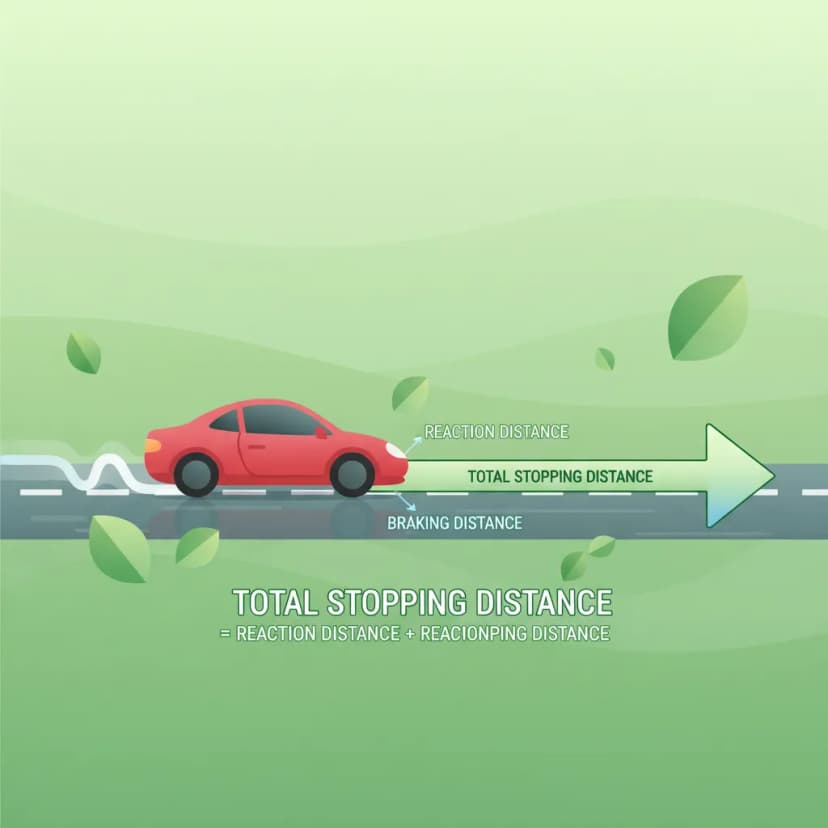
This lesson provides a theoretical understanding of the components that make up the total stopping distance. It explains how to calculate reaction distance (the distance traveled before applying the brakes) and braking distance (the distance traveled while braking). The content highlights how speed exponentially increases stopping distance and how other variables like rider alertness, road grip, and brake condition play a significant role in the final calculation.
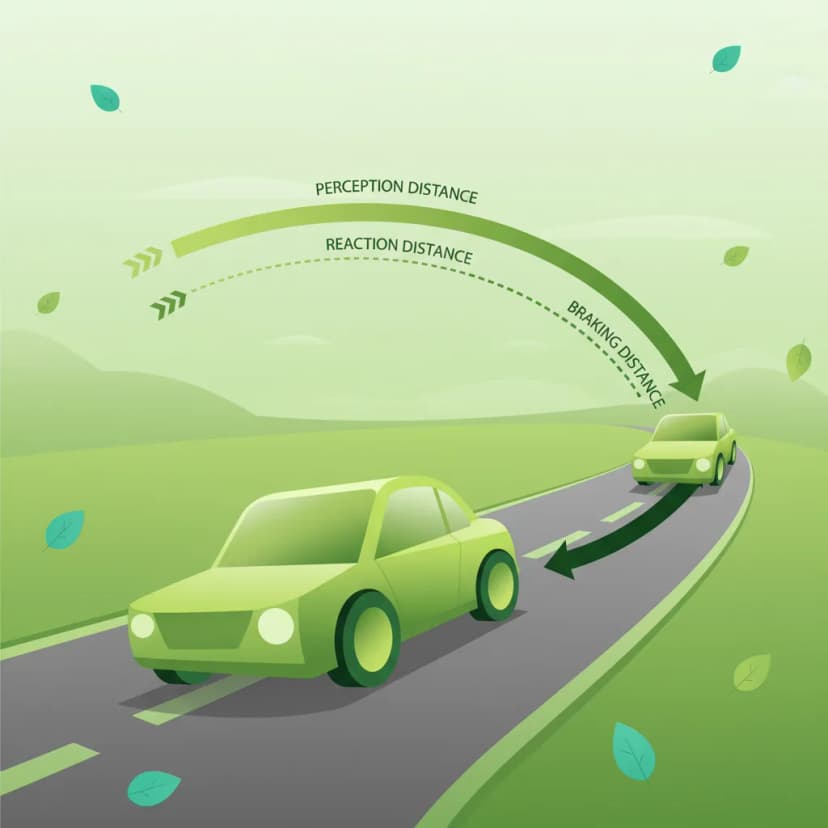
This lesson breaks down the concept of total stopping distance into its two key parts: the distance traveled during your reaction time and the distance the motorcycle travels after the brakes are applied. You will learn the formulas and rules of thumb for estimating these distances at various speeds. The content highlights how factors like rider fatigue, road surface conditions, and tyre quality can significantly increase your overall stopping distance.

This lesson reinforces the critical relationship between adverse conditions, reduced traction, and massively increased stopping distances. It provides a clear framework for how much riders need to increase their following distance and reduce their overall speed to maintain a safe margin for error. The curriculum teaches riders to constantly reassess their speed based on visual feedback from the road surface and the level of visibility, ensuring they can always stop within the distance they can clearly see.
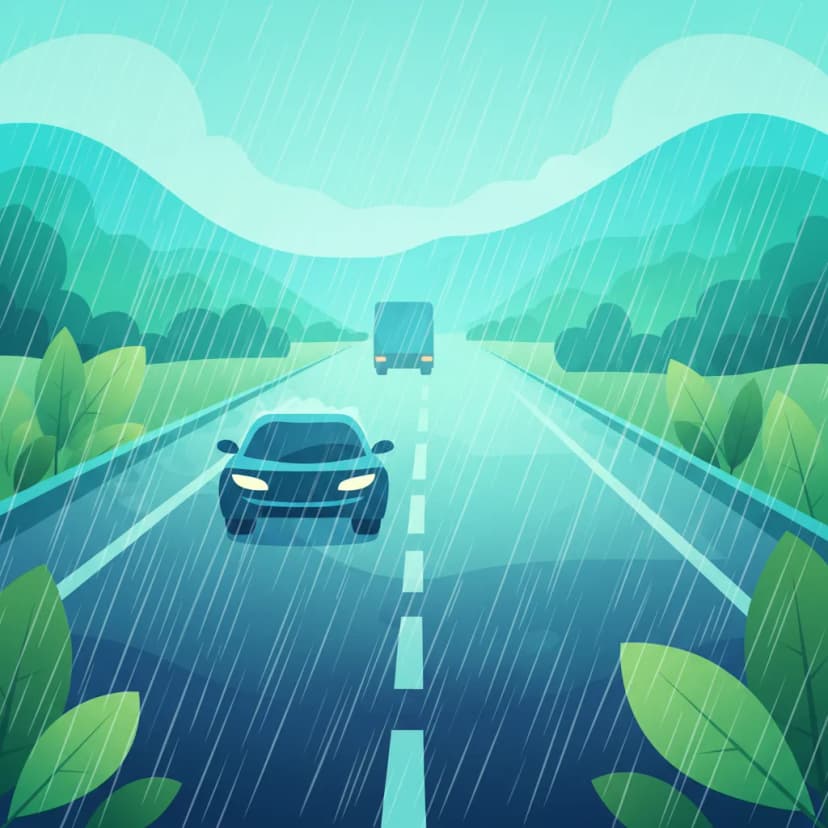
This lesson explains why the standard two-second rule is insufficient in adverse conditions and requires extension. It details how factors like rain, fog, and darkness reduce both visibility and tire grip, thereby significantly increasing total stopping distance. The content provides practical guidelines, such as extending the following gap to four seconds or more in the wet, to ensure the rider always has enough time and space to stop safely, regardless of the conditions.

This lesson teaches the principles of performing a controlled emergency stop ('noodsremmen') to achieve the shortest possible stopping distance without losing control. It details the technique of applying both brakes firmly and progressively, managing the forward weight transfer, and maintaining an upright body posture to maximize braking efficiency. The content emphasizes braking in a straight line and looking ahead to where you want to stop, not at the obstacle.
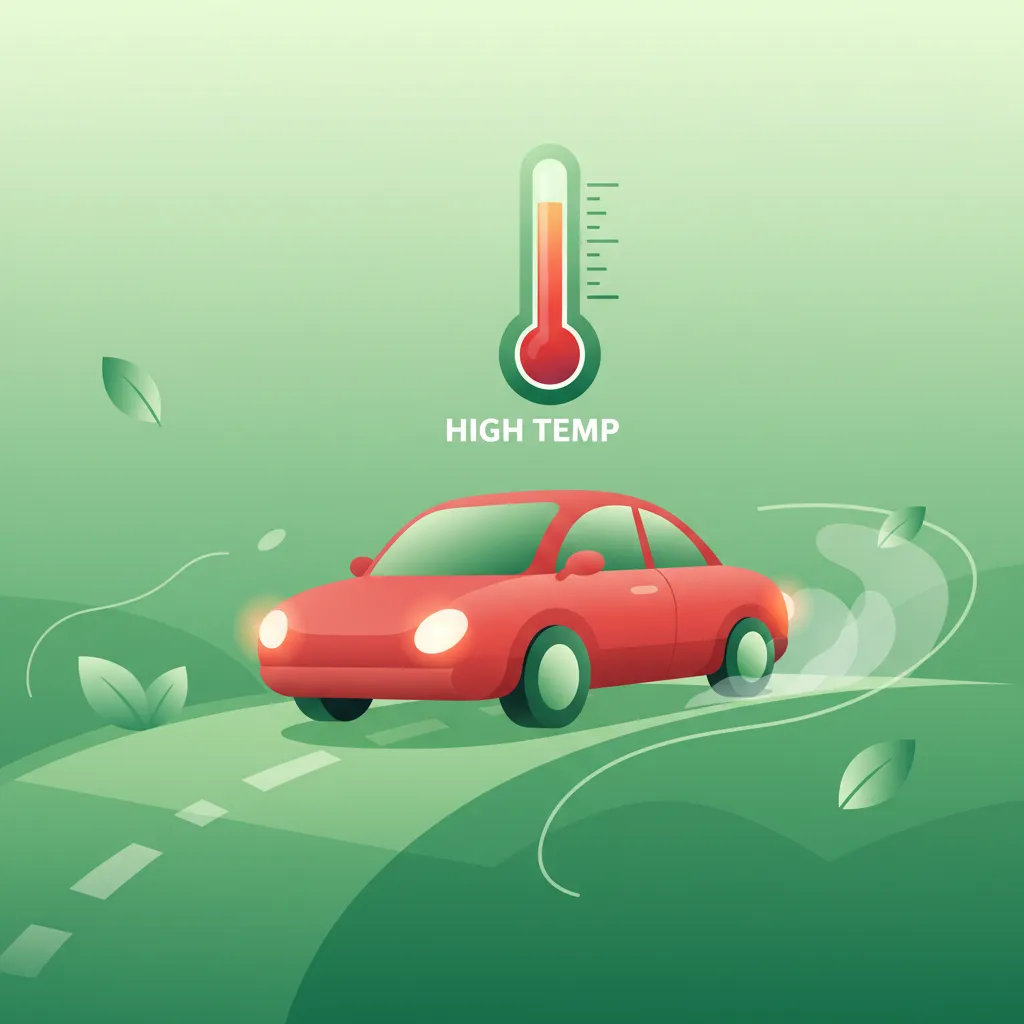
This lesson explores the often-overlooked factor of road surface temperature and its direct impact on tire grip and braking efficiency. It explains that cold tires on cold asphalt have significantly less grip, leading to longer stopping distances and a higher risk of skidding. The content discusses the importance of allowing tires to warm up through gentle riding and highlights the danger of isolated icy patches, even on otherwise clear winter days.

This lesson provides a comprehensive guide to safe and effective deceleration on a motorcycle. You will learn the principles of controlled braking, including the progressive application of both the front and rear brakes to maximize stopping power while maintaining stability. The content also explains the role of engine braking in managing speed and how the Anti-lock Braking System (ABS) helps prevent wheel lock-up during hard braking.
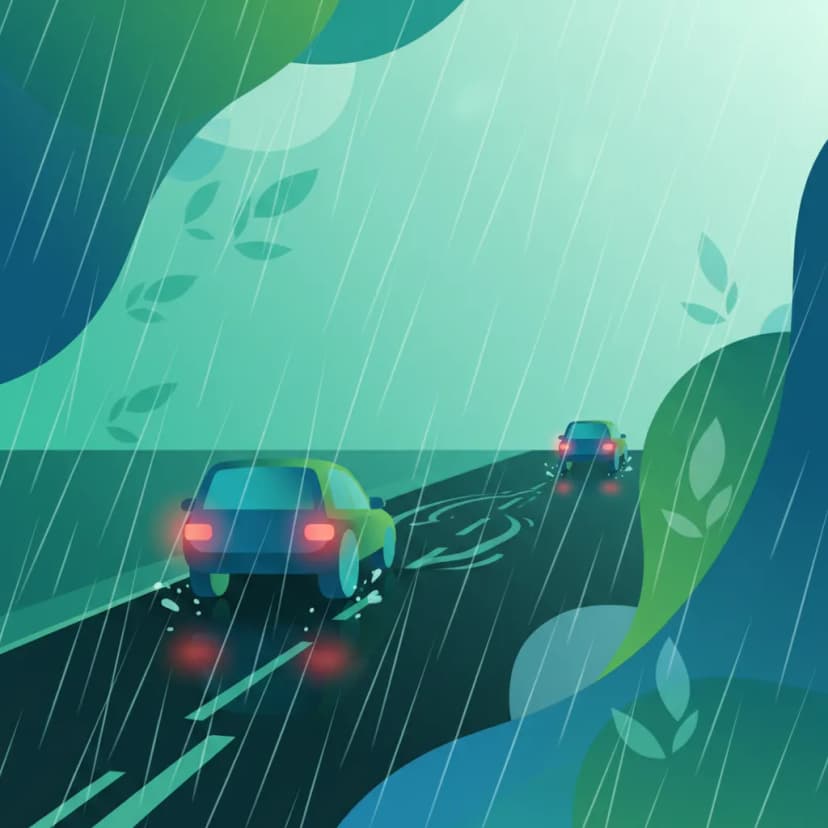
This lesson focuses on the crucial safety strategy of adjusting your riding for adverse conditions. You will learn that on wet roads, your braking distance can double, necessitating a much larger following distance (e.g., a four-second gap or more). The content covers the risks of reduced visibility in fog and at night, and the destabilizing effects of strong crosswinds, explaining how a greater space cushion provides the time and space needed to react safely.
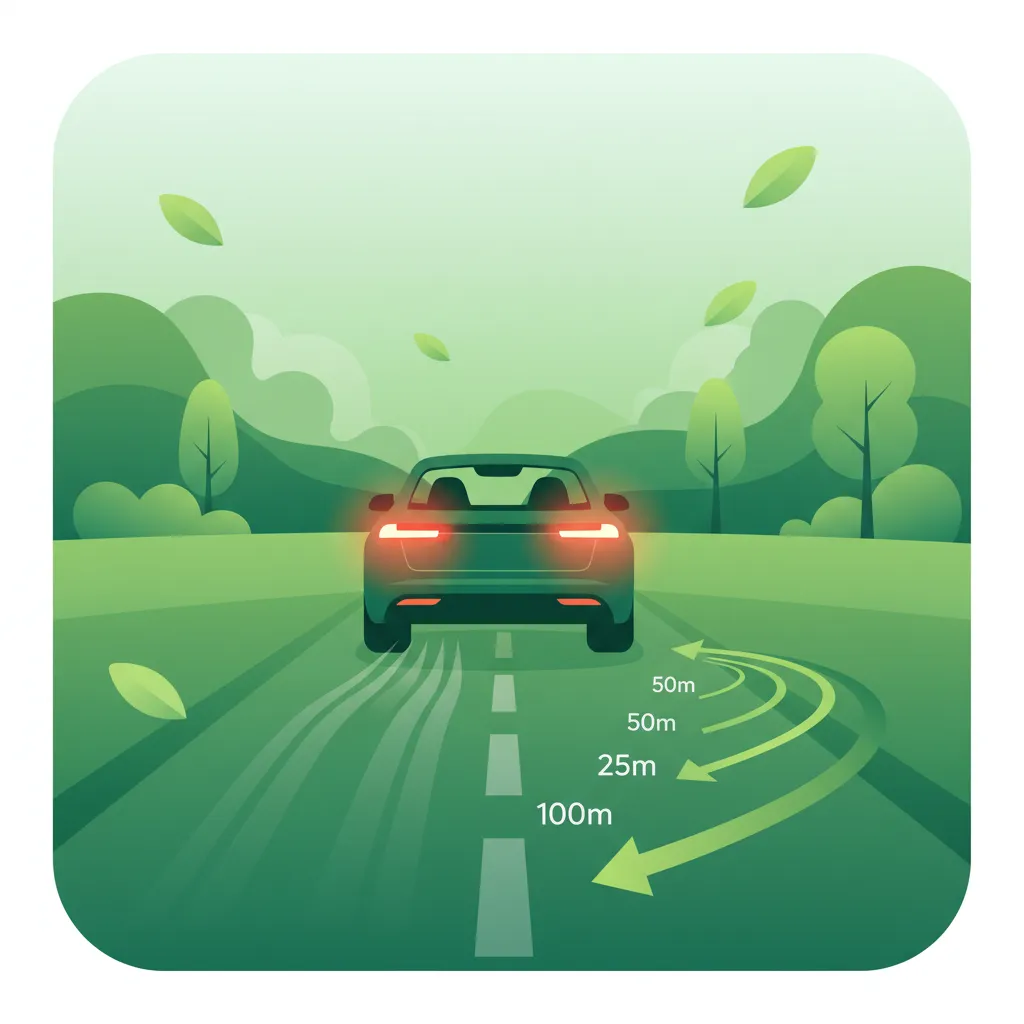
This lesson explains the components of the total stopping distance: the reaction distance (distance traveled before you start braking) and the braking distance (distance traveled while braking). You will learn the general formulas and rules of thumb for estimating these distances at different speeds. Understanding that braking distance increases exponentially with speed is a critical piece of knowledge that reinforces the importance of maintaining safe speeds and following distances.

This lesson outlines the step-by-step procedure for executing a controlled emergency stop in a straight line. It emphasizes keeping the motorcycle upright, looking ahead, and applying both brakes firmly and progressively up to the point of maximum traction (or ABS activation). Understanding this technique is critical for minimizing stopping distance in a sudden hazard scenario and is a key skill assessed in practical motorcycle training.
Learn to apply the two-second rule and safe following distances in various realistic riding scenarios. Understand how to adjust your gap based on traffic, weather, and visibility for safer motorcycle travel in the Netherlands.

This lesson focuses on the crucial safety practice of maintaining an adequate following distance to the vehicle ahead. It explains the 'two-second rule' as a minimum baseline and emphasizes the need to increase this gap to three or four seconds in adverse conditions like rain or poor visibility. For a motorcyclist, this 'space cushion' is a critical buffer that provides the necessary time and space to react to sudden hazards or stop safely.
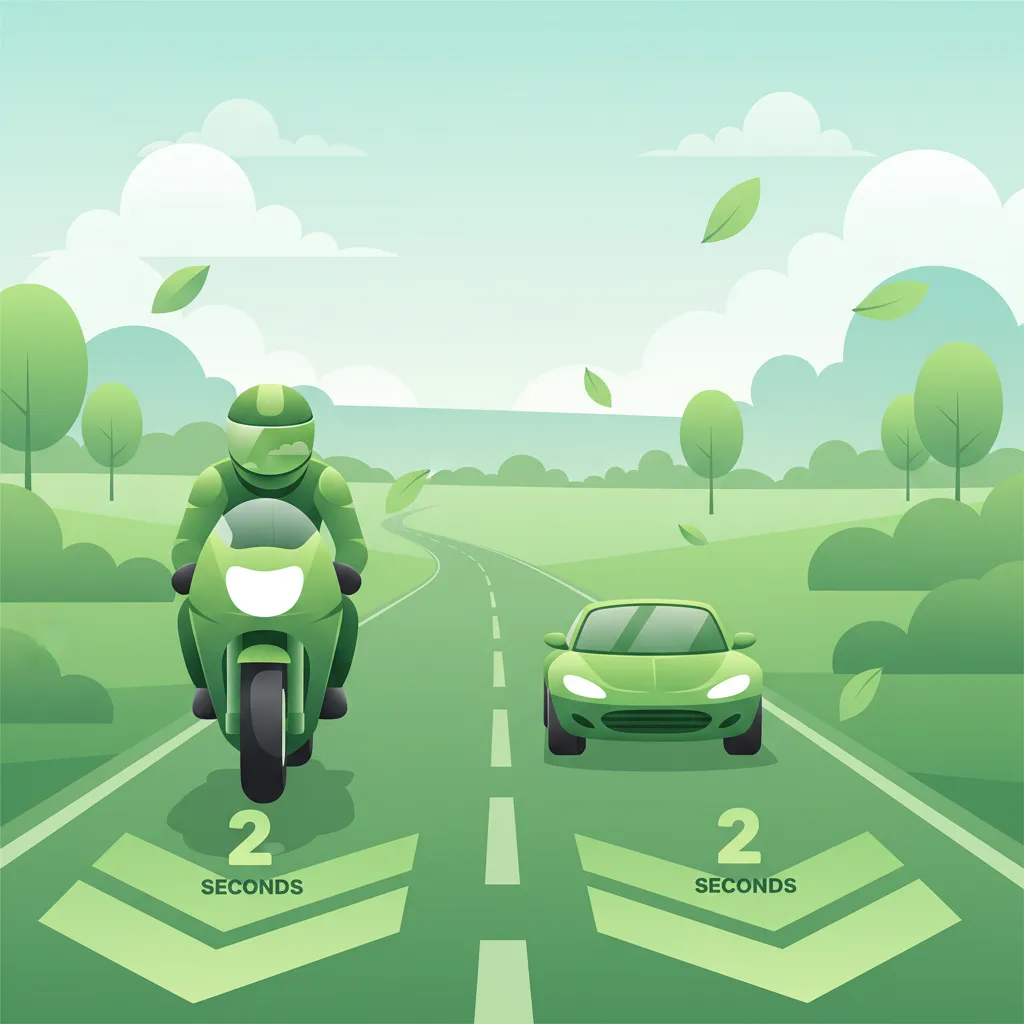
This lesson explains the two-second rule, a simple and effective technique for ensuring you have enough time to react and stop safely. You will learn how to use a fixed object on the roadside to measure the time gap between your motorcycle and the vehicle ahead. The content emphasizes why motorcyclists may need to extend this gap to three or more seconds in poor weather, at high speeds, or in heavy traffic.
This lesson explains why the standard two-second rule is insufficient in adverse conditions and requires extension. It details how factors like rain, fog, and darkness reduce both visibility and tire grip, thereby significantly increasing total stopping distance. The content provides practical guidelines, such as extending the following gap to four seconds or more in the wet, to ensure the rider always has enough time and space to stop safely, regardless of the conditions.
This lesson focuses on the crucial safety strategy of adjusting your riding for adverse conditions. You will learn that on wet roads, your braking distance can double, necessitating a much larger following distance (e.g., a four-second gap or more). The content covers the risks of reduced visibility in fog and at night, and the destabilizing effects of strong crosswinds, explaining how a greater space cushion provides the time and space needed to react safely.

This lesson revisits the concept of following distance, emphasizing its heightened importance in the high-speed motorway environment. It explains how increased speeds dramatically lengthen both reaction and braking distances, making a minimum two-to-three-second gap absolutely critical for safety. The content also stresses the importance of maintaining a space cushion to the sides, creating potential escape routes in case of sudden incidents in adjacent lanes.

This lesson provides a detailed framework for how motorcyclists must safely and legally interact with diverse road users, including cars, trucks, cyclists, and pedestrians. It covers the required communication signals, anticipatory behaviors, and specific positioning techniques necessary to coexist in complex traffic environments like urban centers and shared spaces. Emphasis is placed on legal expectations and practical methods that actively reduce collision risk and promote smooth traffic flow.
This lesson reinforces the critical relationship between adverse conditions, reduced traction, and massively increased stopping distances. It provides a clear framework for how much riders need to increase their following distance and reduce their overall speed to maintain a safe margin for error. The curriculum teaches riders to constantly reassess their speed based on visual feedback from the road surface and the level of visibility, ensuring they can always stop within the distance they can clearly see.

This lesson provides a detailed guide to riding in wet and low-visibility conditions. You will learn to make all your control inputs—braking, accelerating, and steering—exceptionally smooth to avoid breaking traction on slippery surfaces. The content covers the dangers of painted lines and manhole covers when wet, and the importance of increasing your following distance dramatically to account for longer braking distances.

This lesson introduces the Dutch concept of 'voorspellend rijgedrag,' or anticipatory riding, a proactive approach to safety. It teaches motorcyclists how to look beyond the immediate vehicle in front and scan for clues that predict the actions of other road users, such as turn signals, wheel direction, and driver head movement. By anticipating potential conflicts before they happen, riders can position themselves to avoid danger and ensure a smoother, safer journey through complex traffic.
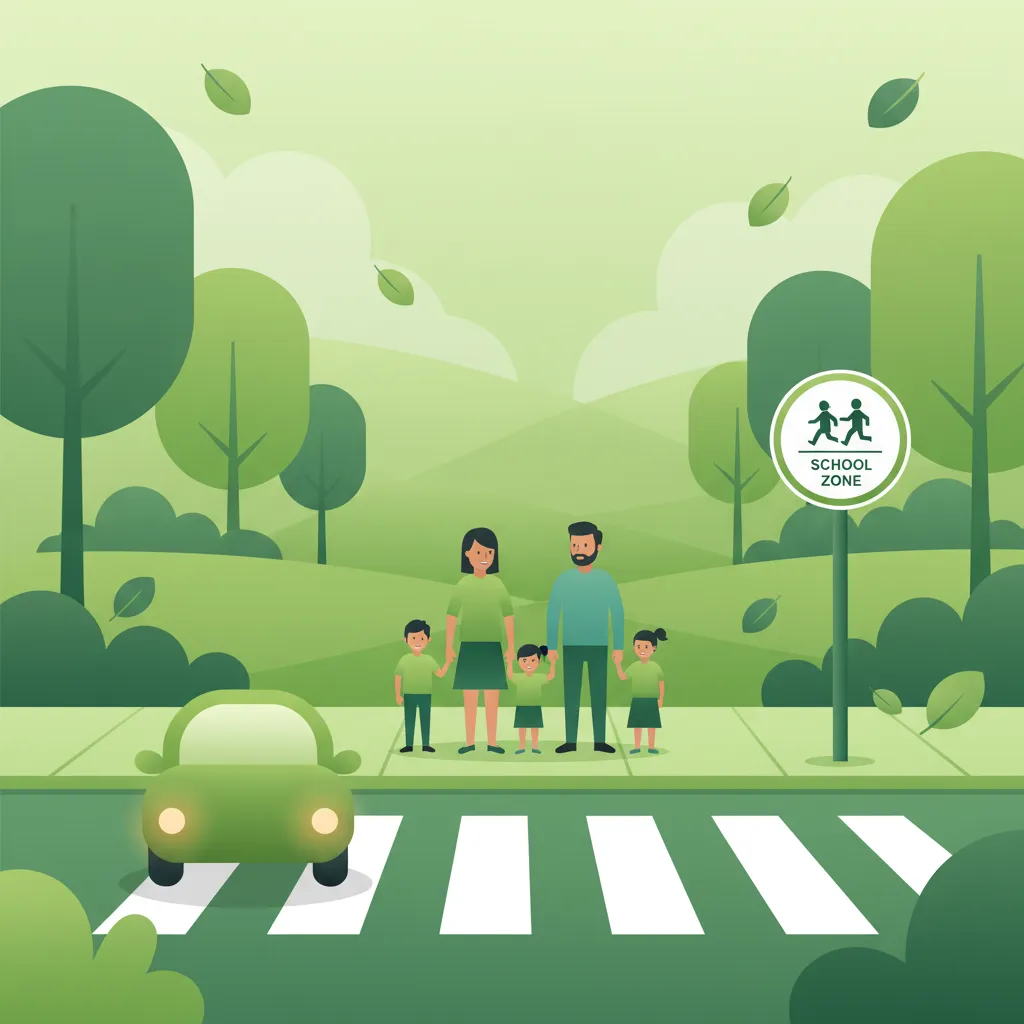
This lesson focuses on the legal requirements and safe practices for riding near pedestrian crossings ('zebrapaden') and designated school zones. It details the absolute obligation to yield to pedestrians on or about to use a crossing and the need for significantly reduced speeds and heightened vigilance in areas with children. The content underscores the importance of anticipation and being prepared for unpredictable movements from vulnerable road users to prevent serious incidents.
Find clear answers to common questions learners have about Two-Second Rule and Stopping Distances. Learn how the lesson is structured, which driving theory objectives it supports, and how it fits into the overall learning path of units and curriculum progression in the Netherlands. These explanations help you understand key concepts, lesson flow, and exam focused study goals.
The two-second rule is a simple guideline for maintaining a safe following distance. When the vehicle in front passes a fixed point (like a signpost), start counting 'one-thousand-one, one-thousand-two'. If you reach the same point before you finish counting, you are too close. This rule is a minimum in good conditions and should be increased in bad weather or heavy traffic.
Motorcycles have a smaller profile and can be harder for other drivers to see, making it crucial to maintain a greater buffer. Additionally, while motorcycles can often brake more quickly than cars, a larger gap provides more time to react to unexpected braking by the rider ahead and allows space for evasive manoeuvres.
In adverse weather conditions such as rain, snow, or ice, your motorcycle's braking distance significantly increases due to reduced tyre grip. You should extend the two-second rule to at least three or four seconds, or even more, to account for the longer stopping distances required.
Total stopping distance is made up of two main parts: reaction distance and braking distance. Reaction distance is the distance your motorcycle travels from the moment you perceive a hazard to the moment you apply the brakes. Braking distance is the distance your motorcycle travels from the moment you apply the brakes until it comes to a complete stop.
Yes, Anti-lock Braking System (ABS) helps prevent wheel lock-up during hard braking, allowing you to maintain steering control and often reducing the braking distance, especially on dry surfaces. However, it's still essential to maintain a safe following distance as ABS is not a substitute for good judgment and a sufficient safety margin.
The CBR theory exam for Category A often includes questions that test your understanding of safe following distances, hazard perception, and the factors influencing stopping distances. You may be presented with scenarios asking you to choose the safest following distance or identify risks associated with following too closely.