
Riding with a passenger significantly changes your motorcycle's dynamics and requires specific skills. This lesson, part of the Load Distribution unit for A2 riders, guides you through safely managing a pillion. You'll learn how to brief your passenger, ensure safe mounting and dismounting, and adapt your riding for two, preparing you for relevant CBR exam scenarios.

Riding a motorcycle offers a unique sense of freedom, but sharing that experience with a passenger, often referred to as a "pillion," introduces new dynamics and responsibilities. This comprehensive lesson provides a theoretical and practical framework for safely transporting a passenger on a motorcycle licensed for the Dutch Category A2 (≤35 kW). Proper passenger handling is paramount as it directly influences vehicle dynamics, braking distances, cornering stability, and legal compliance. Failure to manage a pillion safely is a common cause of motorcycle accidents.
Before embarking on this lesson, it is assumed you have a foundational understanding of basic motorcycle control, body positioning, principles of load distribution and vehicle dynamics (as covered in Lesson 6.2), and familiarity with pre-ride checks (from Lesson 6.1). This knowledge will form the basis for adapting your riding technique to accommodate an additional person.
Transporting a passenger on your motorcycle is subject to specific Dutch legal regulations and physical criteria designed to ensure safety. As the rider, you are legally obligated to ensure your passenger meets these requirements and is securely and safely carried.
Dutch road law, specifically RVV 1990 article 20.1, mandates that a passenger must be at least 12 years old. Furthermore, for their safety and stability, a passenger must be able to securely place both feet on the motorcycle's designated footpegs. This typically translates to a minimum height requirement of approximately 120 cm. A passenger who cannot reach the footpegs properly risks instability and injury, especially during turns or stops.
Allowing a passenger who does not meet the minimum age or height requirements is illegal and significantly increases the risk of an accident. Always verify these criteria before departing.
Just like the rider, any passenger on a motorcycle in the Netherlands must wear a road-legal helmet that meets the ECE 22.05 standard (or its successor, ECE 22.06). This is a non-negotiable legal requirement (Article 16 RVV 1990) aimed at significantly reducing the risk of head injury in the event of a fall or collision. Always ensure your passenger's helmet fits correctly and is properly fastened.
Your motorcycle must be designed to carry a passenger. This means it must be equipped with a designated passenger seat and footpegs (RVV 1990 art. 71). It is illegal to carry a passenger on a motorcycle that lacks these provisions. Crucially, the total weight of the motorcycle, rider, passenger, and any luggage must never exceed the manufacturer's specified Gross Vehicle Weight (GVW). Exceeding the GVW (as per Article 50 RVV 1990) compromises the motorcycle's structural integrity, braking performance, and tyre load capacity, leading to unsafe handling and potential legal consequences.
Successful and safe pillion riding begins long before the engine starts. Thorough pre-ride preparation involves verifying your passenger's readiness, adjusting your motorcycle, and establishing clear communication.
Beyond the legal age and height, assess your passenger's physical and mental readiness for the ride. They should be able to grip the designated handles, maintain an upright posture, and react calmly to sudden movements. Brief them on the typical sensations of motorcycle riding, including leaning in corners and braking forces. If your passenger is anxious or seems unable to hold on securely, it's safer to postpone the ride or adjust your plans.
The increased weight of a passenger significantly alters your motorcycle's dynamics. Before every ride with a pillion, you must perform specific adjustments:
A well-briefed passenger is a safe passenger. Before every ride, especially with a new pillion, have a clear conversation:
The moments a passenger gets on or off the motorcycle are critical. The bike is stationary, making it more prone to tipping, and sudden shifts in weight can easily lead to a loss of balance for the rider.
Article 71(2) RVV 1990 explicitly states that passengers shall not board or alight while the vehicle is in motion unless the vehicle is expressly designed for it (e.g., a sidecar). Always stop the motorcycle fully and turn off the engine for mounting and dismounting.
The additional weight of a passenger fundamentally changes how your motorcycle handles. As the rider, you must adjust your inputs and riding style to maintain stability, traction, and control.
With a passenger, your motorcycle has greater inertia. Abrupt throttle inputs will cause the bike to lurch backward, potentially unsettling your passenger and compromising stability. Use smoother, more progressive throttle application, especially from a standstill and when accelerating out of corners. Think of it as rolling on the power gently and steadily.
The increased total mass means longer stopping distances. You must initiate braking earlier and apply brake pressure more progressively than when riding solo. Your braking distance can increase by approximately 10-15% or more, depending on the passenger's weight and road conditions. Utilize both front and rear brakes smoothly and simultaneously to distribute the braking forces effectively. Communicate an impending stop to your passenger to prevent them from pushing you forward.
This is one of the most critical aspects of pillion riding. Your combined centre of mass is higher and further back, requiring more effort to lean the bike into a turn.
Your own body position becomes even more critical with a passenger.
While riding, engine noise, wind, and helmets make verbal communication difficult or impossible. A pre-established, explicit communication system is essential for coordinating actions and enhancing safety.
The most common and effective method is using tactile signals, typically light taps on the passenger's shoulders or hips. Agree on a set of simple signals before you start riding:
Practice these signals briefly before your first ride, and review them each time you ride with a new or infrequent passenger.
In low-noise environments or at a standstill, verbal cues (e.g., "Hold on," "Turning left now") can supplement tactile signals. However, tactile signals should be your primary method while moving due to their reliability and speed. The rider uses signals to pre-warn the passenger of impending maneuvers, allowing the passenger to brace and adjust their weight accordingly, preventing sudden and unexpected shifts.
Environmental factors and road conditions demand further adjustments to your pillion riding technique. The amplified effects of added weight mean that hazards are more pronounced.
Congested urban traffic often means frequent stopping and starting.
High-speed riding on motorways (autosnelwegen) magnifies all effects of a passenger.
Being aware of typical errors can help prevent dangerous situations.
Understanding the scientific principles behind pillion riding reinforces why these adjustments and precautions are so critical.
Adding a passenger significantly increases the motorcycle system's total mass (inertia). This means it requires more force and distance to accelerate, decelerate, or change direction. Furthermore, a passenger typically sits higher and further back than the rider, shifting the combined centre of mass (CM) upward and rearward.
A higher CM reduces stability and makes the motorcycle feel less agile. A rearward CM reduces the load on the front tyre, potentially affecting steering response and braking effectiveness of the front brake.
The additional load changes how tyres interact with the road. While rear tyre load increases, potentially improving rear traction under acceleration, the front tyre may have less load, reducing its grip for steering and braking. The overall braking system has to work harder to stop the increased mass, generating more heat and potentially leading to brake fade or earlier tyre lock-up if not managed properly.
When carrying a passenger, the rider's cognitive load increases due to the need to monitor and coordinate with the pillion. This can extend the rider's perception-reaction time – the time it takes to perceive a hazard and initiate a response. This necessitates maintaining larger safety margins, increasing following distance, and reducing speed, especially in complex situations.
Lesson content overview
Explore all units and lessons included in this driving theory course.
Explore search topics learners often look for when studying Safely Riding with a Passenger (Pillion). These topics reflect common questions about road rules, driving situations, safety guidance, and lesson level theory preparation for learners in the Netherlands.
Browse additional driving theory lessons that cover connected traffic rules, road signs, and common driving situations related to this topic. Improve your understanding of how different rules interact across everyday traffic scenarios.
Understand the physics behind carrying a passenger on your A2 motorcycle. Learn how added weight and a shifted centre of mass impact acceleration, braking, and cornering, and what adjustments are needed for safe operation.

This lesson focuses on how you must adapt your riding style when the motorcycle is heavily loaded. You will learn that your braking distances will be significantly longer, requiring you to increase your following distance and begin braking earlier. The content also explains that acceleration will be slower, and cornering will require smoother, more deliberate inputs to avoid upsetting the motorcycle's altered balance.

This lesson provides a comprehensive guide to safe and effective deceleration on a motorcycle. You will learn the principles of controlled braking, including the progressive application of both the front and rear brakes to maximize stopping power while maintaining stability. The content also explains the role of engine braking in managing speed and how the Anti-lock Braking System (ABS) helps prevent wheel lock-up during hard braking.

This lesson explains how you, the rider, are an active part of the motorcycle's dynamics. You will learn how shifting your body weight into the turn can reduce the required lean angle of the motorcycle itself, increasing the margin of safety and grip. The content covers correct posture, the importance of looking through the turn with your head up, and how to stay relaxed on the controls to allow the bike to work effectively.

This lesson details the Dutch regulations for carrying passengers on a motorcycle, including the minimum age for the passenger and the mandatory use of approved helmets. It explains the rider's legal responsibility for the passenger's safety and how to properly secure loads to avoid affecting the motorcycle's stability and balance. Understanding these rules is crucial for ensuring safety and legality when riding with a pillion or luggage.
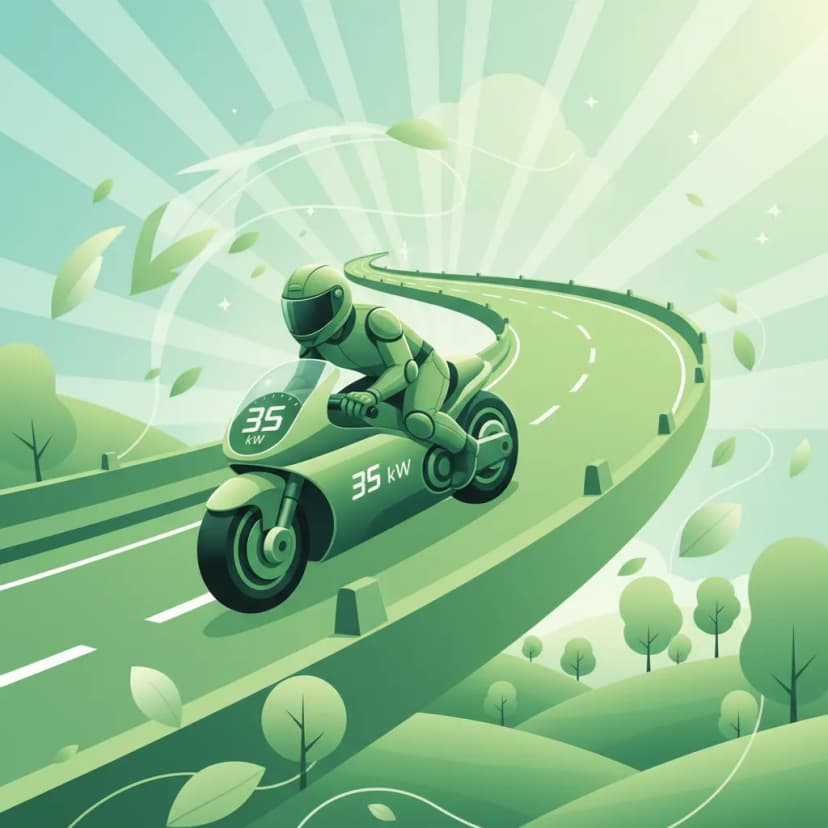
This lesson focuses on managing the unique acceleration characteristics of a 35 kW A2 motorcycle. You will learn about the relationship between engine power, torque, and acceleration, and how to apply throttle smoothly to maintain traction and stability. The content provides techniques for effective gear selection to ensure you have responsive power when needed for overtaking, while also preventing jerky or uncontrolled acceleration.
This lesson details the interpretation of Dutch warning signs, which alert riders to potential dangers and changing road conditions. You will study signs indicating sharp curves, road narrowing (BORD 30), and temporary hazards like road works (BORD 36), learning to adjust speed and road position proactively. The content emphasizes how the A2 motorcycle's characteristics require earlier hazard recognition and response compared to other vehicles for maintaining control.

This lesson explains the physics of how weight distribution affects a motorcycle's stability. You will learn the golden rule of packing: keep the weight as low and as close to the motorcycle's center of gravity as possible. The content provides practical advice on loading panniers evenly, placing heavier items in a tank bag rather than a high top case, and respecting the manufacturer's maximum load capacity.
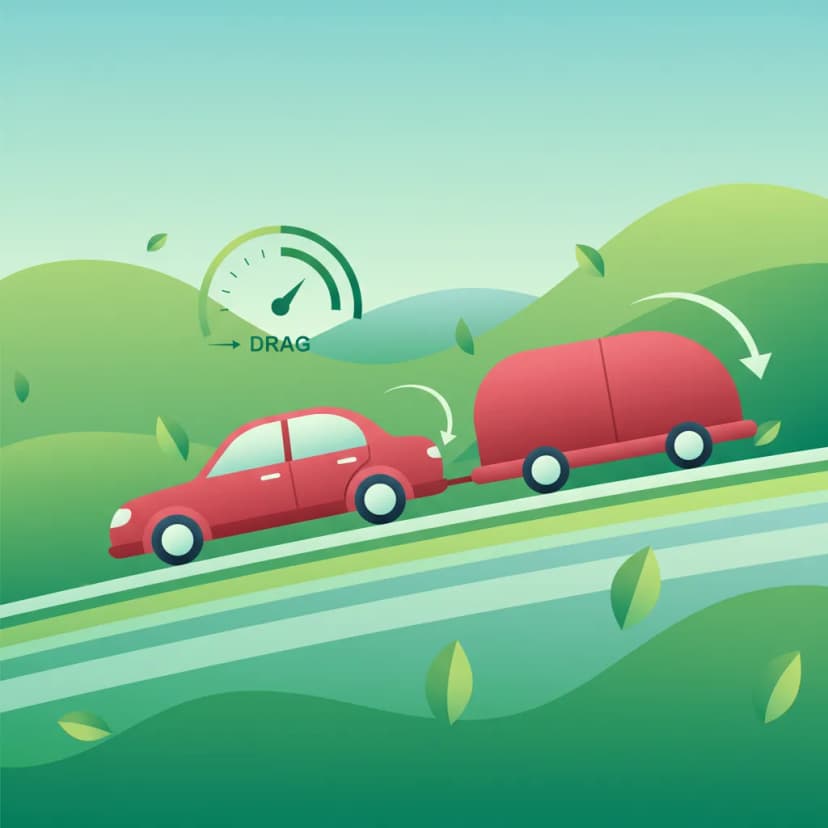
This lesson examines how adding weight, such as a pillion passenger or luggage, and changes in aerodynamics affect a motorcycle's performance and stability at speed. It explains the impact on acceleration, braking distances, and cornering ability due to a higher center of gravity and increased mass. Riders will learn how to adjust their speed and control inputs to safely manage the altered handling characteristics, especially when riding in windy conditions or at high motorway speeds.

This lesson details the necessary mechanical adjustments before adding significant weight to your motorcycle. You will learn how to consult your owner's manual to set the correct tyre pressures and suspension preload for the added load, which is crucial for maintaining proper handling and stability. The content also emphasizes checking the security of any luggage and adjusting your headlight aim to avoid dazzling other drivers.

This lesson prepares you for the challenge of riding in strong winds. You will learn to anticipate areas prone to gusts, such as exiting a tunnel or passing a large truck. The content explains how to maintain a relaxed grip on the handlebars and use subtle counter-steering inputs and body lean to counteract the force of the wind, keeping the motorcycle on its intended path.
Master the essentials of safe two-up motorcycle riding in the Netherlands. This lesson covers legal passenger requirements, proper briefing, safe mounting/dismounting, and crucial communication techniques for a secure ride.
This lesson details the Dutch regulations for carrying passengers on a motorcycle, including the minimum age for the passenger and the mandatory use of approved helmets. It explains the rider's legal responsibility for the passenger's safety and how to properly secure loads to avoid affecting the motorcycle's stability and balance. Understanding these rules is crucial for ensuring safety and legality when riding with a pillion or luggage.
This lesson covers the mandatory lighting and signaling equipment for A2 motorcycles under Dutch law, ensuring you remain visible and communicate your intentions correctly. You will learn the rules for using headlights, taillights, turn signals, and brake lights in various conditions, including daytime and adverse weather. The content also addresses the importance of maintaining this equipment and using hand signals as a valid secondary method of communication in traffic.
This lesson details the interpretation of Dutch warning signs, which alert riders to potential dangers and changing road conditions. You will study signs indicating sharp curves, road narrowing (BORD 30), and temporary hazards like road works (BORD 36), learning to adjust speed and road position proactively. The content emphasizes how the A2 motorcycle's characteristics require earlier hazard recognition and response compared to other vehicles for maintaining control.
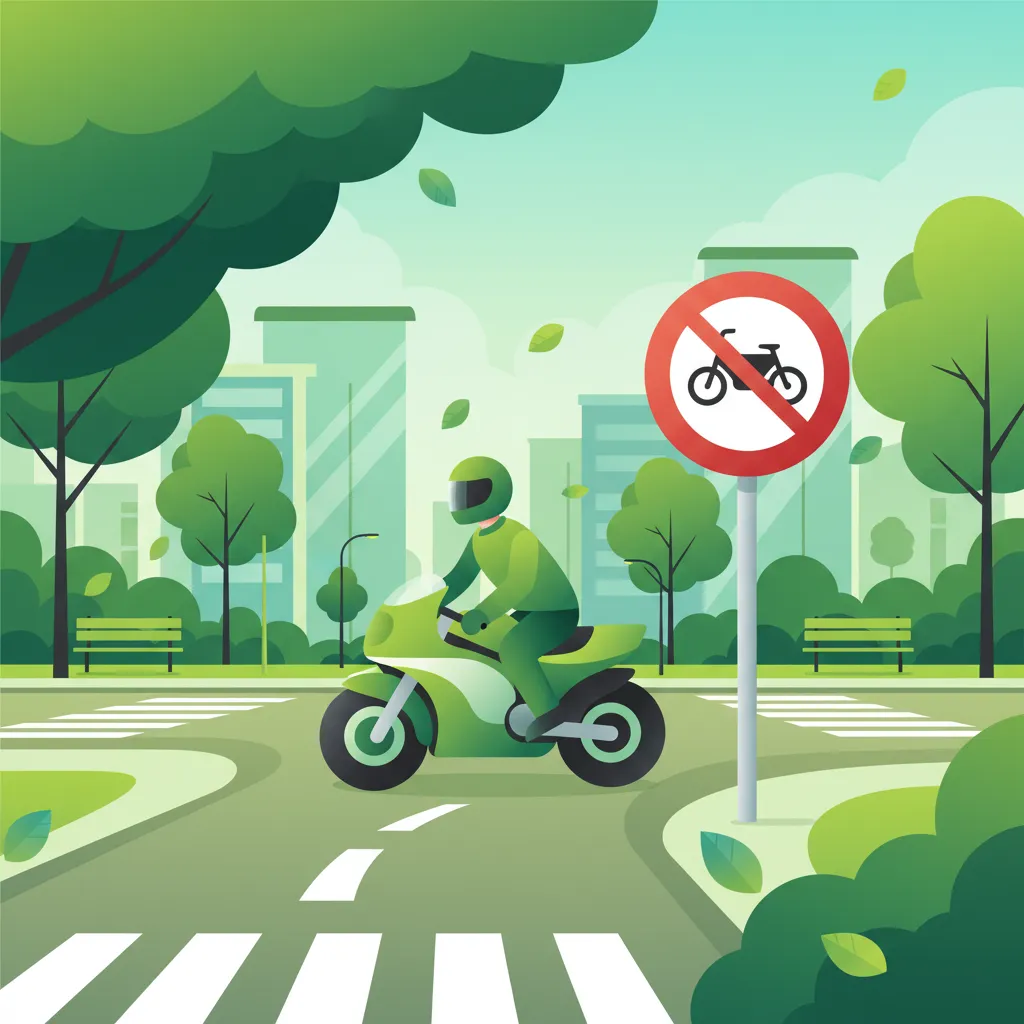
This lesson focuses on Dutch regulatory signs that enforce mandatory rules and restrictions, particularly those impacting A2 motorcyclists. You will learn to recognize and obey prohibition signs, such as those indicating a motorcycle ban (BORD 40), speed limits, and overtaking restrictions (BORD 21). The content explains the legal consequences of non-compliance and how to apply these rules in practical riding scenarios to ensure full adherence to Dutch traffic law.
This lesson focuses on how you must adapt your riding style when the motorcycle is heavily loaded. You will learn that your braking distances will be significantly longer, requiring you to increase your following distance and begin braking earlier. The content also explains that acceleration will be slower, and cornering will require smoother, more deliberate inputs to avoid upsetting the motorcycle's altered balance.
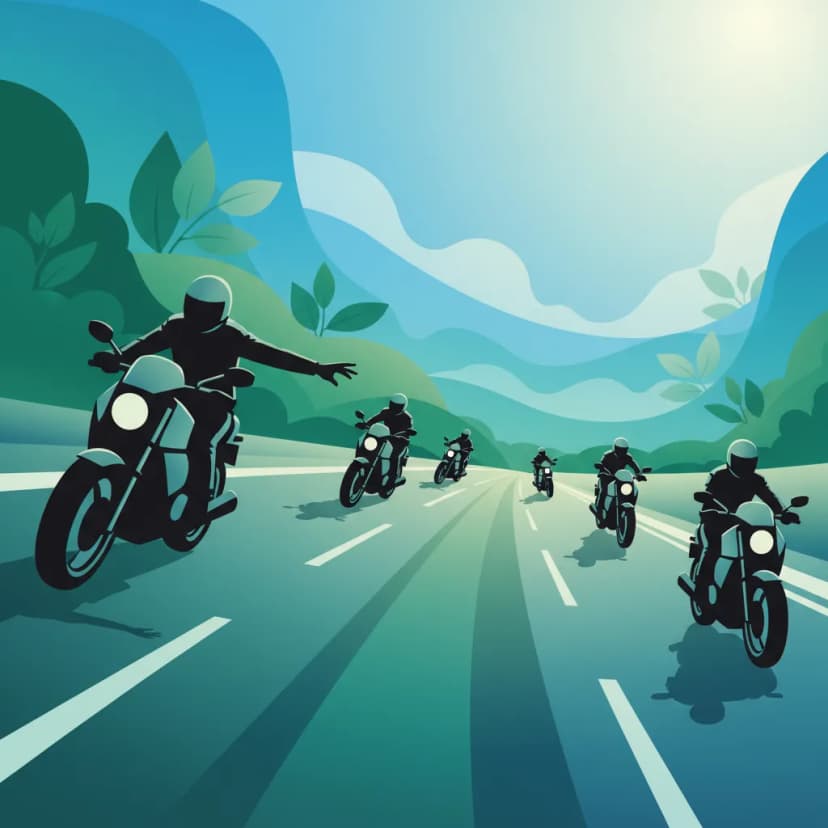
This lesson details the established conventions for safe group riding. You will learn the benefits of the staggered riding formation for maintaining a safety cushion while keeping the group compact. The content also provides a comprehensive guide to the standard hand signals used to communicate turns, stops, hazards, and other essential information to the entire group without relying on electronic systems.

This lesson focuses on the crucial safety practice of maintaining an adequate following distance to the vehicle ahead. It explains the 'two-second rule' as a minimum baseline and emphasizes the need to increase this gap to three or four seconds in adverse conditions like rain or poor visibility. For a motorcyclist, this 'space cushion' is a critical buffer that provides the necessary time and space to react to sudden hazards or stop safely.

This lesson provides a step-by-step guide to executing a safe and legal overtaking maneuver. It covers the entire process: assessing the situation for a sufficient gap in oncoming traffic, performing necessary mirror and shoulder checks, signaling intent, and accelerating decisively. The lesson also highlights situations where overtaking is prohibited by law, such as before pedestrian crossings or where there are solid white lines.
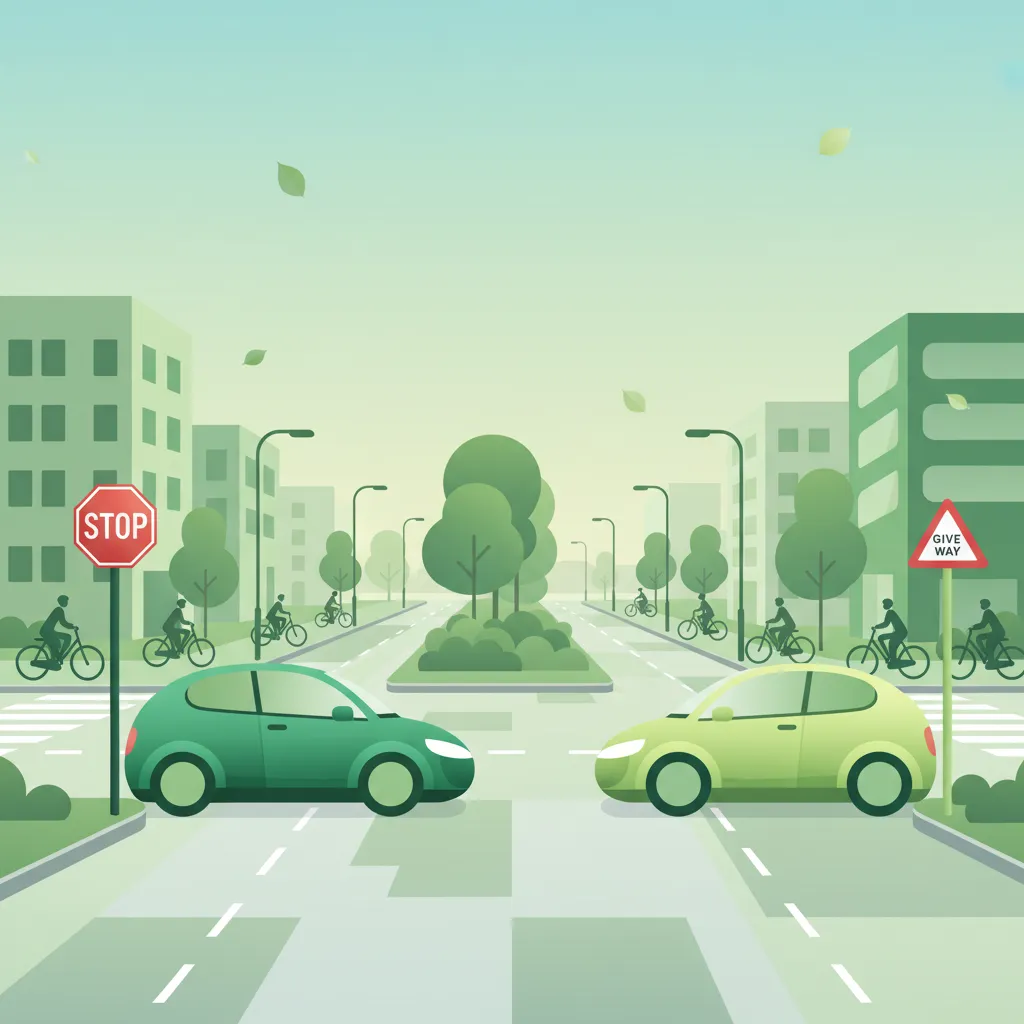
This lesson details the specific actions required at intersections controlled by 'Stop' and 'Give Way' signs. You will learn the legal requirement to come to a complete stop at a stop line (BORD 44) and the obligation to yield to all crossing traffic when encountering give-way markings ('haaientanden'). The content covers safe approach speeds and effective scanning techniques for motorcyclists to accurately assess gaps in traffic before proceeding.

This lesson provides a detailed framework for how motorcyclists must safely and legally interact with diverse road users, including cars, trucks, cyclists, and pedestrians. It covers the required communication signals, anticipatory behaviors, and specific positioning techniques necessary to coexist in complex traffic environments like urban centers and shared spaces. Emphasis is placed on legal expectations and practical methods that actively reduce collision risk and promote smooth traffic flow.
Find clear answers to common questions learners have about Safely Riding with a Passenger (Pillion). Learn how the lesson is structured, which driving theory objectives it supports, and how it fits into the overall learning path of units and curriculum progression in the Netherlands. These explanations help you understand key concepts, lesson flow, and exam focused study goals.
The most crucial instruction is to tell your passenger to lean with you in corners, not against you. Also, emphasize keeping their feet on the footpegs at all times, even when stopped, and to avoid sudden movements. This maintains the bike's balance and stability.
Carrying a passenger significantly increases the total stopping distance of your A2 motorcycle. The added weight means more momentum, requiring greater braking force and a longer distance to stop. Always increase your following distance to compensate.
While there's no legally prescribed system, establishing simple, clear signals like taps on the shoulder for "stop" or "go slower" is highly recommended. Many riders also use intercom systems for clear voice communication, especially on longer journeys.
Yes, a child can be a passenger provided they can comfortably reach the footpegs and wear an approved helmet. The motorcycle must also be designed to carry a passenger, meaning it has a passenger seat and footpegs. Ensure the child understands the safety rules.
You should ride more smoothly and deliberately. Accelerate and brake more gently, anticipate corners earlier, and increase your following distance significantly. The motorcycle will feel heavier and less agile, so smooth inputs are key to maintaining stability.